Archbishop Fulton J. Sheen — Recognizing the Face of Jesus

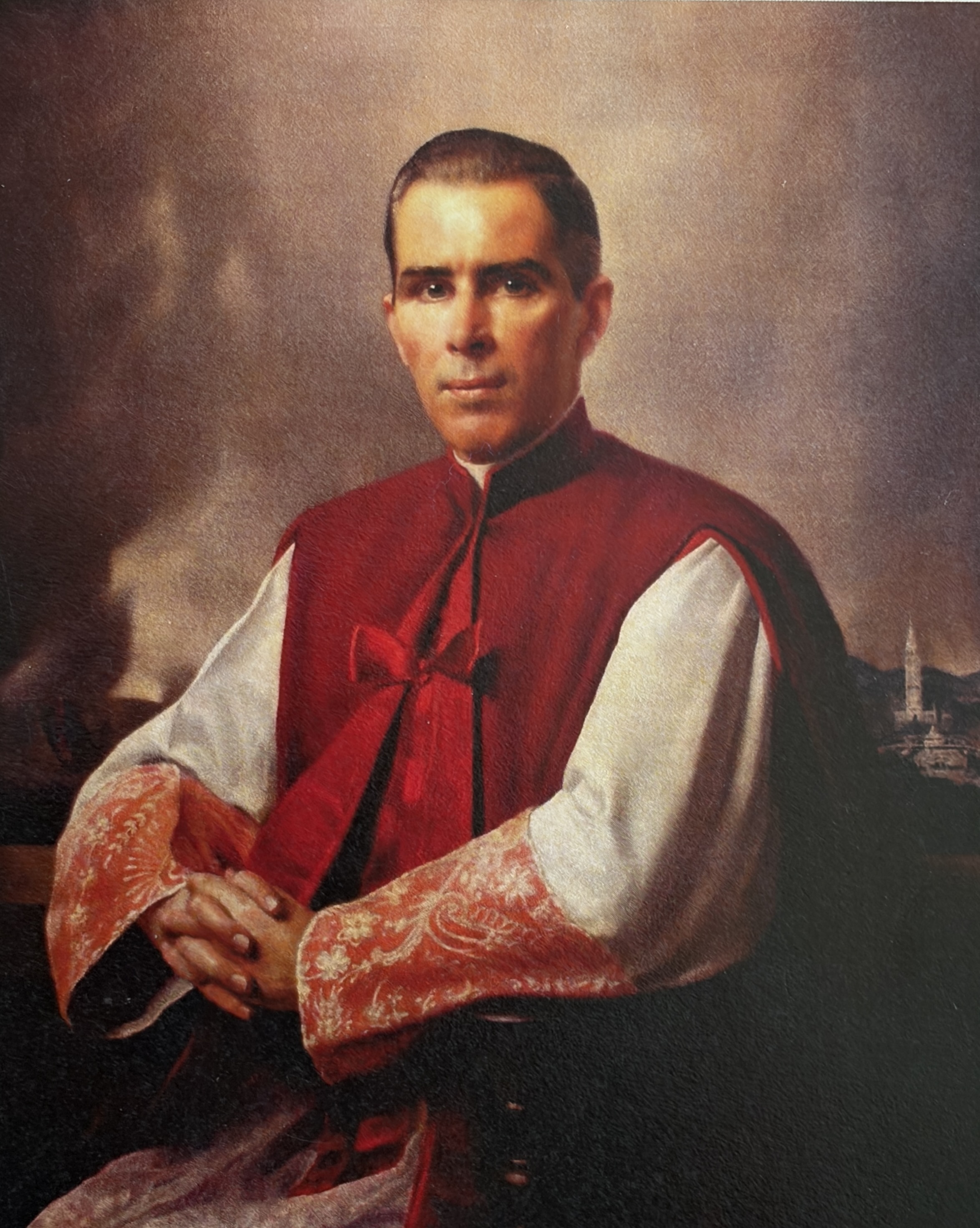
Archbishop Fulton J. Sheen

The Beatification of Archbishop Fulton J. Sheen will take place on Thursday, September 24, 2026. When Pope St. John Paul II embraced the suffering Archbishop Sheen in St. Patrick’s Cathedral on October 2nd, 1979, he told him, “You have written and spoken well of the Lord Jesus. You are a loyal son of the Church!” Just two months later, on December 9th, Fulton Sheen entered into Eternal Life.
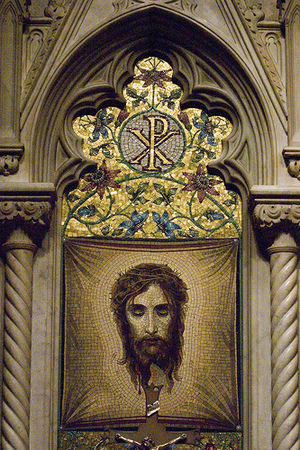
Beautiful mosaic of the Holy Face of Jesus in St. Patrick’s Cathedral in New York, where Archbishop Fulton J. Sheen served for many years.

Those who have heard or read Archbishop Sheen will know of his deep devotion to the Holy Face of Jesus. He has said that “The world’s greatest need is to rediscover the true image of Christ’s Face–a Face of mercy, not judgement; of tenderness, not wrath.” He knew from personal experience that devotion to the Holy Face is a powerful means of encounter and relationship with Jesus Christ.

Archbishop Fulton J. Sheen manifested his devotion by seeking His God’s Face through: Discipleship–to see Jesus in the Face of those in need; in the Passion of Jesus expressed in images of the wounded Face of Jesus; and through his life-long commitment to a daily “Holy Hour,” by contemplating the Face of Christ hidden in the Eucharist–where he learned to see the Face of God everywhere and in every person. These are the components of devotion to the Face of Jesus as characterized by Pope Benedict XVI, who also declared Archbishop Sheen “Venerable Servant of God,” in 2012; recognizing Sheen’s life of heroic Christian virtue. Archbishop Sheen has said, “We become what we adore.” In other words, as we contemplate the Face of Christ in these ways, we are transformed by the Holy Spirit into His Image.

Archbishop Sheen often wondered aloud if we could recognize Jesus in the many ways He comes to us? And if we did recognize Him, would we care? Would an encounter with Jesus change our life? We would have a choice to make in that moment: to either accept and embrace Him by accepting our crosses in this life, and all that it means to be a Christian; or to reject Him–or perhaps, to be indifferent. The most cruel choice of all is indifference to Him, Who died for us. Archbishop Sheen believed that indifference may have caused Christ even more pain than His suffering on Calvary.

A chilling warning to the indifferent is spoken of in the Book of Revelation when the Spirit speaks to the church in Laodicea…

“I know your works; I know that you are neither cold nor hot. I wish that you were either cold or hot. So because you are lukewarm, neither hot nor cold, I will spit you out of my mouth…” (Rev. 3:14-22)

One of the most powerful talks that Archbishop Sheen had ever given was for a Good Friday sermon–in which he recited a portion of the poem “Indifference or When Jesus Came to Golgotha” by Geoffrey Stuart-Kennedy (1883-1929)

Indifference

When Jesus came to Golgotha
They hanged Him on a tree,
They drove great nails through hands and feet,
And made a Calvary.
They crowned Him with a crown of thorns;
Red were His wounds and deep,
For those were crude and cruel days,
And human flesh was cheap. 
When Jesus came to Birmingham, 
They simply passed Him by; 
They never hurt a hair of Him, 
They only let Him die. 
For men had gown more tender, 
And they would not give pain;
They only just passed down the street,
And left Him in the winter rain
That drenched Him through and through.
The crowds went home and left the streets 
Without a soul to see;
And Jesus crouched against a wall
And cried for Calvary. 
When Jesus came to Golgotha
They hanged Him on a tree, 
They drove great nails through hands and feet,
and made a Calvary.
They crowned Him with a crown of thorns;
Red were His wounds and deep,
For those were crude and cruel days,
And human life was cheap.
When Jesus came to Birmingham,
They simply passed Him by;
They never hurt a hair of Him, 
They only let Him die. 
For men had grown more tender,
And they would not give Him pain; 
They only just passed down the street, 
And left Him in the winter rain
That drenched Him through and through.
The crowds went home and left the streets 
Without a soul to see;
And Jesus crouched against a wall
And cried for Calvary. 
Veronica’s Veil, Flemish 15th Century

Archbishop Sheen prophetically spoke against the dangers of the spread of Communism–an evil ideology which has increased in the world, in spite of its devastating harm to humanity. He proposed in its place, the Christian alternative embodied in the figure of the charitable woman, traditionally known as “Veronica” (True icon), who, in an act of love, took her veil and wiped the Face of the suffering Christ–covered with blood, sweat, dust, and spittle–on His way to Calvary. And in return for her love, He left on her veil–as well as on the veil of her soul–the imprint of His Holy Face.

“Human Beings were not all meant to carry either a sickle or a hammer. Some are meant to carry towels — to wipe away the beads on feverish brows, to stroke the aching head, and to touch the worn face as with healing wings. Such was the mission of Veronica, who dared brave a violent mob to refresh the Savior and in reward to receive on her towel the imprint of the Face that saved the world.

By that miracle, Thou didst testify, Divine Savior, that society has a place not only for toilers but also for mourners, whose delicate sympathies lighten the burden of those who must carry a cross. Grant unto the world, which is rapidly becoming so violent, an army of “Veronica’s” to wipe away the tears of the victims of violence; and do Thou also let them see that when they do it to the least of their brethren, they, like Veronica of old, do it unto Thee.” ~ Archbishop Fulton J. Sheen

“And the King will say to them in reply, ‘Amen, I say to you, whatever you did for one of these least brothers of mine, you did it for me.” (Mt. 25:40)

(Click here to learn more about “what it means to be a Veronica.”)
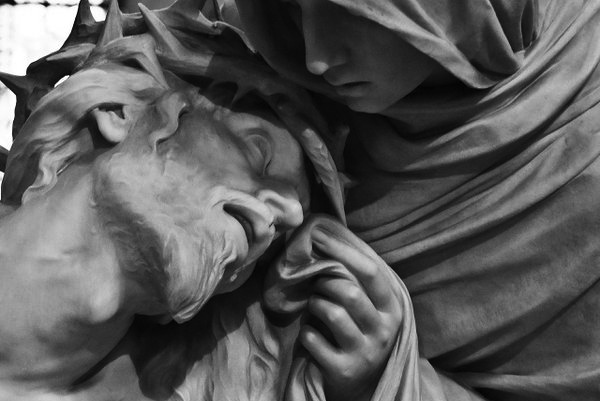
Blessed Archbishop Fulton J. Sheen, Pray for us!

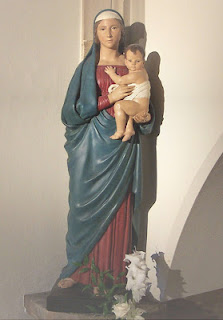
The Beauty of Mary — The Perfect Reflection of Her Son

“Thou art all fair, my love, there is no spot in thee.” (Song of Solomon 4:7)

    “From the greatness and beauty of created things comes a corresponding perception of their Creator,” “for the author of beauty created them.”  (Wisdom 13: 3, 5)

The spiritual beauty of God is reflected most perfectly in the woman He created to be His Mother.  No stain of sin would mar the beauty of His reflection in her soul. Never for one instant would she be under the power of the devil. “The Blessed Virgin Mary, in the first instance of her conception, by a singular grace and privilege granted by Almighty God, in view of the merits  of Jesus Christ, the Savior of the human race, was preserved free from all stain of original sin.” (Dogma of the Immaculate Conception)  Mary herself proclaims, “My spirit has rejoiced in God my Savior.” (Luke 1:47)

As the Immaculate Conception, Mary bears in herself the most perfect reflection of the face of God.  Pope St. John Paul II wrote, “The Blessed Virgin saw shining upon her, as no other creature, the face of the Father, rich in grace and mercy.”  What in Heaven and on earth could be more beautiful than the Mother of God?  It is God who has willed that Mary be beautiful, not only fair in face, but in the fullness of grace. Yet, beauty has a purpose, and that is to draw us by the beauty of the graces God has given her towards the Beatific Vision–the Face of God.  Mary has no greater desire than that we turn towards the Face of her Son, as she does, with eyes of love.

Strangely, there are some who see the Blessed Mother not as a gift from God who leads us to her Son, but as an obstacle. They want to separate the Mother from the Son, even resorting to violence of smashing statues and slashing paintings of her, mistakenly thinking that somehow this could be pleasing to God, but it is only pleasing to the devil. It is blasphemy. When we separate ourselves from Mary, we separate ourselves from Christ. In The Everlasting Man G.K. Chesterton tells a story from his childhood, many years before he became a Catholic, which left a deep impression on his soul:

“When I was a boy a more Puritan generation objected to a statue upon my parish church representing the Virgin and Child. After much controversy, they compromised by taking away the Child. One would think that this was even more corrupted with Mariolatry, unless the mother was counted less dangerous when deprived of a sort of weapon. But the practical difficulty is also a parable. You cannot chip away the statue of a mother from all round that of a newborn child. You cannot suspend the new-born child in mid-air; indeed you cannot really have a statue of a newborn child at all. Similarly, you cannot suspend the idea of a newborn child in the void or think of him without thinking of his mother. You cannot visit the child without visiting the mother, you cannot in common human life approach the child except through the mother. If we are to think of Christ in this aspect at all, the other idea follows I as it is followed in history. We must either leave Christ out of Christmas, or Christmas out of Christ, or we must admit, if only as we admit it in an old picture, that those holy heads are too near together for the haloes not to mingle and cross.”

Jesus alone is “the Way” that leads to the Father, but Mary is the most beautiful image and likeness of Christ, which will lead us to Him. Dostoevsky once said that “Beauty will save the world!” Mary has a spiritual beauty to share with the world that attracts and expresses what is beyond words, in the depths of her heart, the love of a mother for her Savior and Son.

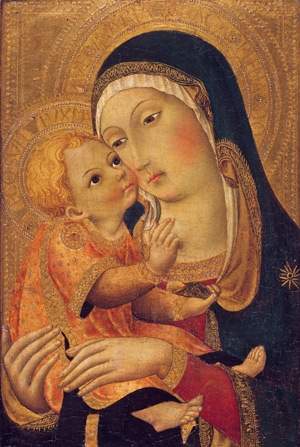
Madonna and Child from the Robert Lehman Collection, Metropolitan Museum of Art
“Our Lady, in whose face – more than any other creature – we can recognize the features of the Incarnate Word.” –Pope Benedict XVI Madonna and Child from the Robert Lehman Collection, Metropolitan Museum of Art

A Little Litany by G.K.Chesterton

When God turned back eternity and was young, Ancient of Days, grown little for your mirth (As under the low arch the land is bright) Peered through you, gate of heaven – and saw the earth.

Or shutting out his shining skies awhile Built you about him for a house of gold To see in pictured walls his storied world Return upon him as a tale is told.

Or found his mirror there; the only glass That would not break with that unbearable light Till in a corner of the high dark house God looked on God, as ghosts meet in the night.

Star of his morning; that unfallen star In the strange starry overturn of space When earth and sky changed places for an hour And heaven looked upwards in a human face.

Or young on your strong knees and lifted up Wisdom cried out, whose voice is in the street, And more than twilight of twiformed cherubim Made of his throne indeed a mercy-seat.

Or risen from play at your pale raiment’s hem God, grown adventurous from all time’s repose, Of your tall body climbed the ivory tower And kissed upon your mouth the mystic rose.

Miraculous Image of Our Lady of Guadalupe
“I am your merciful Mother.”

“Look Closely – Our Lady of Guadalupe – Not Made by Human Hands” click here.

The Beauty of Mary

“Thou art all fair, my love, there is no spot in thee.” (Song of Solomon 4:7)


“From the greatness and beauty of created things comes a corresponding perception of their Creator,” “for the author of beauty created them.”  (Wisdom 13: 3, 5)

The spiritual beauty of God is reflected most perfectly in the woman He created to be His Mother.  No stain of sin would mar the beauty of His reflection in her soul. Never for one instant would she be under the power of the devil. “The Blessed Virgin Mary, in the first instance of her conception, by a singular grace and privilege granted by Almighty God, in view of the merits  of Jesus Christ, the Savior of the human race, was preserved free from all stain of original sin.” (Dogma of the Immaculate Conception)  Mary herself proclaims, “My spirit has rejoiced in God my Savior.” (Luke 1:47)

As the Immaculate Conception, Mary bears in herself the most perfect reflection of the face of God.  Pope St. John Paul II wrote, “The Blessed Virgin saw shining upon her, as no other creature, the face of the Father, rich in grace and mercy.”  What in Heaven and on earth could be more beautiful than the Mother of God?  It is God who has willed that Mary be beautiful, not only fair in face, but in the fullness of grace. Yet, beauty has a purpose, and that is to draw us by the beauty of the graces God has given her towards the Beatific Vision–the Face of God.  Mary has no greater desire than that we turn towards the Face of her Son, as she does, with eyes of love.

Strangely, there are some who see the Blessed Mother not as a gift from God who leads us to her Son, but as an obstacle. They want to separate the Mother from the Son, even resorting to violence of smashing statues and slashing paintings of her, mistakenly thinking that somehow this could be pleasing to God, but it is only pleasing to the devil. It is blasphemy. When we separate ourselves from Mary, we separate ourselves from Christ. In The Everlasting Man G.K. Chesterton tells a story from his childhood, many years before he became a Catholic, which left a deep impression on his soul:

“When I was a boy a more Puritan generation objected to a statue upon my parish church representing the Virgin and Child. After much controversy, they compromised by taking away the Child. One would think that this was even more corrupted with Mariolatry, unless the mother was counted less dangerous when deprived of a sort of weapon. But the practical difficulty is also a parable. You cannot chip away the statue of a mother from all round that of a newborn child. You cannot suspend the new-born child in mid-air; indeed you cannot really have a statue of a newborn child at all. Similarly, you cannot suspend the idea of a newborn child in the void or think of him without thinking of his mother. You cannot visit the child without visiting the mother, you cannot in common human life approach the child except through the mother. If we are to think of Christ in this aspect at all, the other idea follows I as it is followed in history. We must either leave Christ out of Christmas, or Christmas out of Christ, or we must admit, if only as we admit it in an old picture, that those holy heads are too near together for the haloes not to mingle and cross.”


Jesus alone is “the Way” that leads to the Father, but Mary is the most beautiful image and likeness of Christ, which will lead us to Him. Dostoevsky once said that “Beauty will save the world!” Mary has a spiritual beauty to share with the world that attracts and expresses what is beyond words, in the depths of her heart, the love of a mother for her Savior and Son.

A Little Litany by G.K.Chesterton

Madonna and Child from the Robert Lehman Collection, Metropolitan Museum of Art
“Our Lady, in whose face – more than any other creature – we can recognize the features of the Incarnate Word.” –Pope Benedict XVI Madonna and Child from the Robert Lehman Collection, Metropolitan Museum of Art

When God turned back eternity and was young,
Ancient of Days, grown little for your mirth
(As under the low arch the land is bright)
Peered through you, gate of heaven – and saw the earth.

Or shutting out his shining skies awhile
Built you about him for a house of gold
To see in pictured walls his storied world
Return upon him as a tale is told.

Or found his mirror there; the only glass
That would not break with that unbearable light
Till in a corner of the high dark house
God looked on God, as ghosts meet in the night.

Star of his morning; that unfallen star
In the strange starry overturn of space
When earth and sky changed places for an hour
And heaven looked upwards in a human face.

Or young on your strong knees and lifted up
Wisdom cried out, whose voice is in the street,
And more than twilight of twiformed cherubim
Made of his throne indeed a mercy-seat.

Or risen from play at your pale raiment’s hem
God, grown adventurous from all time’s repose,
Of your tall body climbed the ivory tower
And kissed upon your mouth the mystic rose.


For post “Look Closely – Our Lady of Guadalupe – Not Made by Human Hands” click here.

Miraculous Image of Our Lady of Guadalupe
“I am your merciful Mother.”


The Divine Image


Pieta, with Holy Trinity, Blessed Mother and St. John (Jean Malouel 1400-1410 Met Museum)

The communication of the Most Holy Trinity is a communication of Persons– Father, Son and Holy Spirit — their communication is love.  God also communicates His love to all mankind so that we may know Him and love Him. We learn about God not only from His creation, but through other human beings. We are all made in His image and likeness, after all, reflecting God’s truth, goodness, and beauty.  As is written in the Book of Wisdom, “for from greatness and beauty of created things comes a corresponding perception of the Creator.” (Wis. 13:5)

We have the capacity to know God because we are created in His image and likeness; however, we also learn, from ourselves and those around us, how unlike God we are.  St. Thomas Aquinas says, “concerning God, we cannot grasp what He is, but only what He is not, and how other beings stand in relation to Him.” The internet has a great potential for real communication; that is, to convey information exchanged between persons, that could really help us learn about the love of God. Unfortunately, mass communication, such as the internet, communicates more about what God is not, than what God is.

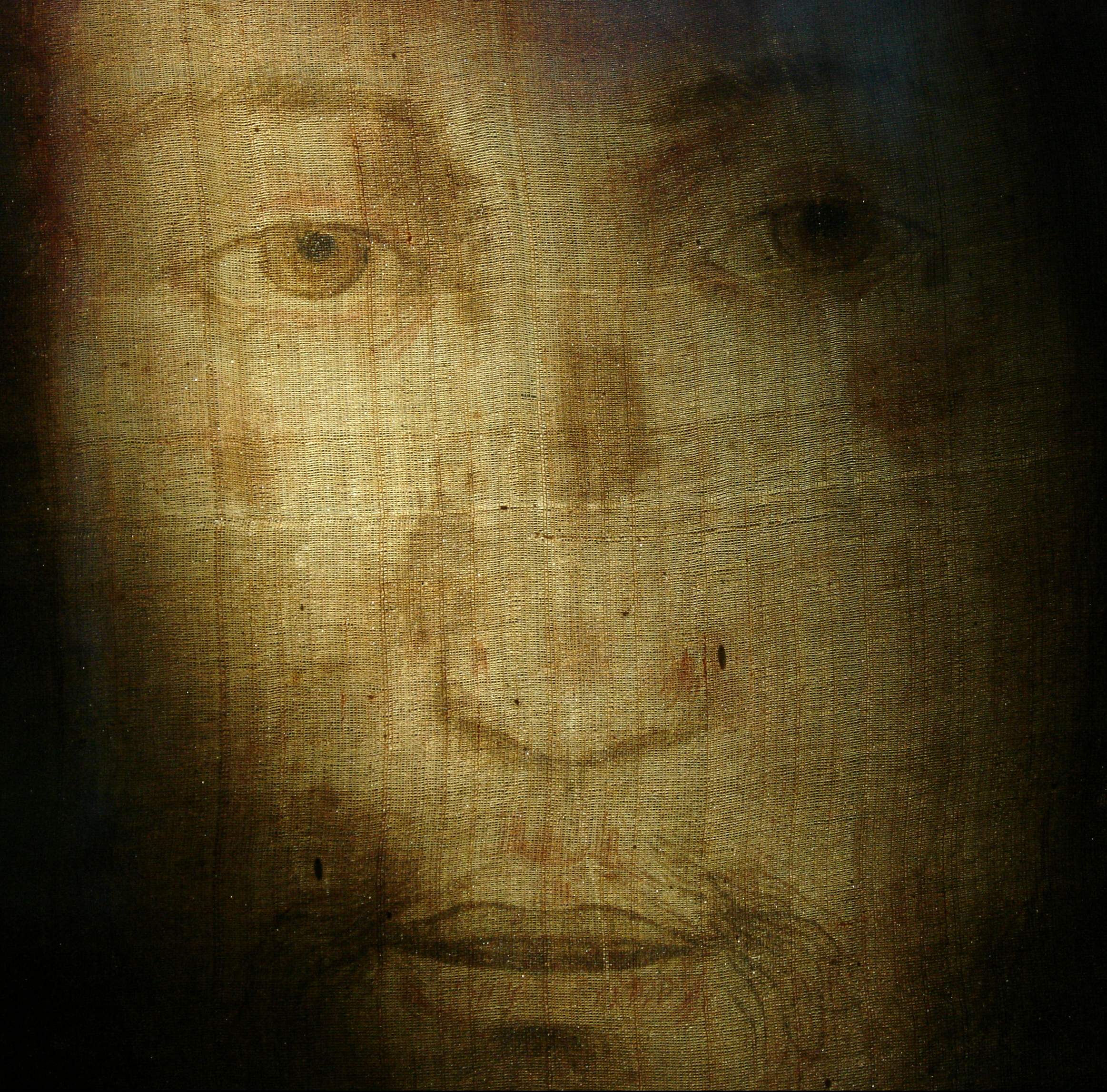
Holy Face Veil of Manoppello, Italy (Photo: Paul Badde/EWTN)

“In the world of the internet, which enables billions of images to appear on millions of screens throughout the world, the Face of Christ needs to be seen and his voice heard, for ‘if there is no room for Christ, there is no room for man’.” –Pope Benedict XVI, Verbum Domini


Those who love God, therefore, would naturally desire to communicate His love to other human beings through the Face of Christ–using the means which God Himself has chosen to communicate His love to us.  The Face of Christ needs to “be seen and His voice heard” on the internet. But where do we see the Face of Christ on the internet?  Where do we hear His voice?

Sadly, even some Christians on the internet present “a face and voice” more like the evil one, than that of Jesus Christ. Most often Jesus’s Face is hidden in a nauseating ocean of hatred, anger, banality, and filth. But He is still present there in our internet “neighbors” whose faces pass by as we scroll down our screens each day: The innocent children in danger, victims of natural disasters, violence, terrorism, addiction, human trafficking, the spiritually blind and lame — all manner of human suffering, together with perpetrators of crime equally in need of our prayers.  Though we are separated from them by a computer screen, the suffering Face of Jesus is present in all their faces and voices. 

The first element of Devotion to the Holy Face, says Pope Benedict XVI, is “discipleship and orientation of one’s life towards an encounter with Jesus, to see Jesus in the face of those in need.”  We need to begin by seeking out the Divine Image in them, and also by becoming the “face and voice of Christ” to them. In order to do this, “believers first need to become better acquainted with Jesus through the Eucharist,” allowing ourselves first to be transformed by the Holy Spirit into His image, thereby reflecting the Face of Christ to other souls made in His image–to be communicators of His love.

Holy Face of Manoppelllo (Photo: Paul Badde/EWTN)

The Divine Image

To Mercy, Pity, Peace and Love
All pray in their distress;
And to these virtues of delight
Return their thankfulness.

For Mercy, Pity, Peace and Love
Is God, our Father dear,
And Mercy, Pity, Peace and Love
Is man, His child and care.

For Mercy has a human heart,
Pity a human face,
And Love, the human form divine,
And Peace, the human dress.

Then every man, of every clime,
That prays in his distress,
Prays in the human for divine,
Love, Mercy, Pity, Peace.

And all must love the human form,
In heathen Turk, or Jew;
Where Mercy, Love, and Pity dwell
There God is dwelling too.

— William Blake