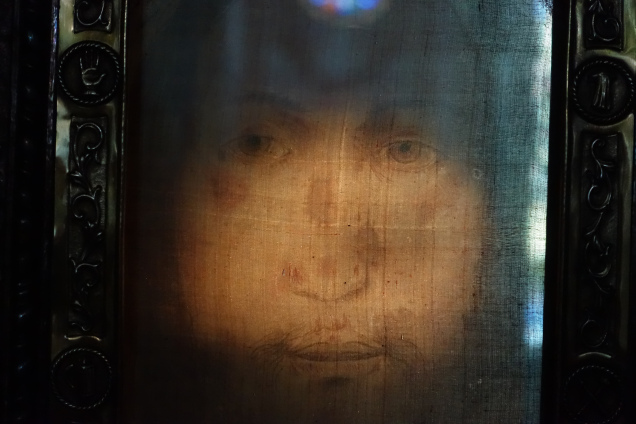
Jesus Christ is the Face of the Father’s Mercy

“Write this: before I come as the Just Judge, I am coming first as the King of Mercy.” –Our Lord to St. Faustina

“Jesus Christ is the face of the Father’s mercy. These words might well sum up the mystery of the Christian faith…Whoever sees Jesus sees the Father (cf. Jn 14:9). Jesus of Nazareth, by his words, his actions, and his entire person reveals the mercy of God.” (Misericordiae Vultus)

Divine Mercy in the waters of Baptism

St. Thomas Aquinas wrote in his Summa Theologiae that “It is proper to God to exercise mercy, and he manifests his omnipotence particularly in that way.” The greatness of God’s mercy reveals the great love of a Father for His only begotten Son, Jesus–and in Jesus–His great love for His children through the waters of Baptism. So then, throughout our lives as Christians, “with our eyes fixed on Jesus and his merciful gaze, we experience the love of the Most Holy Trinity.” (Misericordiae Vultus)
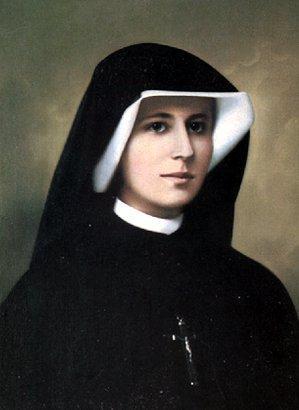
St. Faustina “Apostle of Mercy”

St. Faustina Kowalska, “the Apostle of Mercy” was known as a mystic and visionary. Her diary Divine Mercy in my Soul is a record of the journey of her soul, written under obedience to her spiritual director. Our Lord granted to St. Faustina a deep understanding of the love and mercy of God which she was to share with the world. Jesus emphasized to St. Faustina the need of putting mercy into action, Jesus told her: “I demand from you deeds of mercy which are to arise out of love for me. You are to show mercy to your neighbors always and everywhere. You must not shrink from this or try to excuse yourself from it.” These words of Jesus are meant for each of us as well and are to be carried out by practicing the “Corporal and Spiritual Works of Mercy.” We are called to be merciful to each other and seek the face of Christ in our neighbor. (Click here to answer “What are the Corporal and Spiritual Works of Mercy?)
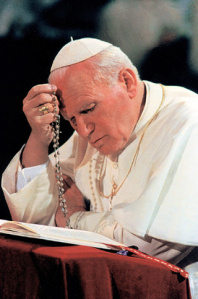
Pope St. John Paul II (CNS Photo)

“At no time…especially at a moment as critical as our own–can the Church forget the prayer that is a cry for the mercy of God. The Church has the right and duty to appeal to the God of mercy ‘with loud cries.'” (Pope St. John Paul II, Rich in Mercy, 15) “No one can escape from the fundamental questions: What must I do? How do I distinguish good from evil? The answer is only possible thanks to the splendor of the truth which shines forth deep within the human spirit, as the Psalmist bears witness: “There are many who say: “O that we might see some good! Let the light of your face shine upon us, O Lord'” (Psalm 4:6).

“The light of God’s face shines in all its beauty on the countenance of Jesus Christ, ‘the image of the invisible God’ (For 1:15), the reflection of God’s glory’ (Heb 1:13), ‘full of grace and truth’ (Jn 1:14). Christ is ‘the way, and the truth, and the life’ (Jn 12:6).'” Consequently the decisive answer to man’s questions in particular; is given by Jesus Christ himself, as the Second Vatican Council recalls: “In fact, it is only in the mystery of the Word Incarnate that light is shed on the mystery of man. For Adam, the first man, was a figure of the future man, namely, of Christ the Lord. It is Christ, the last Adam, who fully discloses man to himself and unfolds his noble calling by revealing the mystery of the Father and the Father’s love.” (Pope St. John Paul II, Veritatis Splendor 1993)

Mary adored Jesus beneath the Eucharistic Veil of the appearance of bread.
The Virgin of the Host, by Jean-Auguste-Dominique Ingres

The devotion to the Holy Face has been characterized by Pope Benedict XVI as Discipleship — encountering Jesus in the Face of those in need; The Passion of Jesus, and suffering expressed by images of the Face of Jesus; and in the Eucharist, “the great school in which we learn to see the Face of God, which is woven between the other two. [elements of devotion] “Our whole life should be directed toward encountering Him; toward loving Him.” (Pope Benedict XVI)

In His infinite mercy, Jesus, descends to us in His Most Holy Sacrament of Love. St. Faustina wrote in her diary, “The mercy of God, hidden in the Blessed Sacrament, the voice of the Lord who speaks to us from the throne of mercy [says]: ‘Be not afraid of your Savior; O sinful soul. I make the first move to come to you, for I know that by yourself you are unable to give yourself to me. Child do not run away from your Father; be willing to talk openly with your God of Mercy who wants to speak words of pardon and lavish graces on you. How dear your soul is to me! I have inscribed your name upon my hand; you are engraved as a deep wound on my heart.” (Divine Mercy in My Soul, (1485)

We each have a precious opportunity that God has given us at this particular time in history to be instruments of His mercy, and to plead “with loud cries” for God’s “mercy on us and on the whole world.”

“This Mercy of God which has a concrete face, [is] the Face of Jesus, the risen Christ.” –Pope Francis

“Mercy has become living and visible in Jesus of Nazareth, reaching it’s culmination in Him…We need to constantly contemplate the mystery of mercy. It is a wellspring of joy, serenity, and peace. Our salvation depends on it…The mission Jesus received from the Father was that of revealing the mystery of Divine Love in its fullness. ‘God is love’ (1 Jn 4:8,16).'” (Misericordiae Vultus)

Jesus is the face of the mercy of God the Father: ‘God so loved the world […] [that] the world might be saved through him [the Son]” (John 3:16, 17)
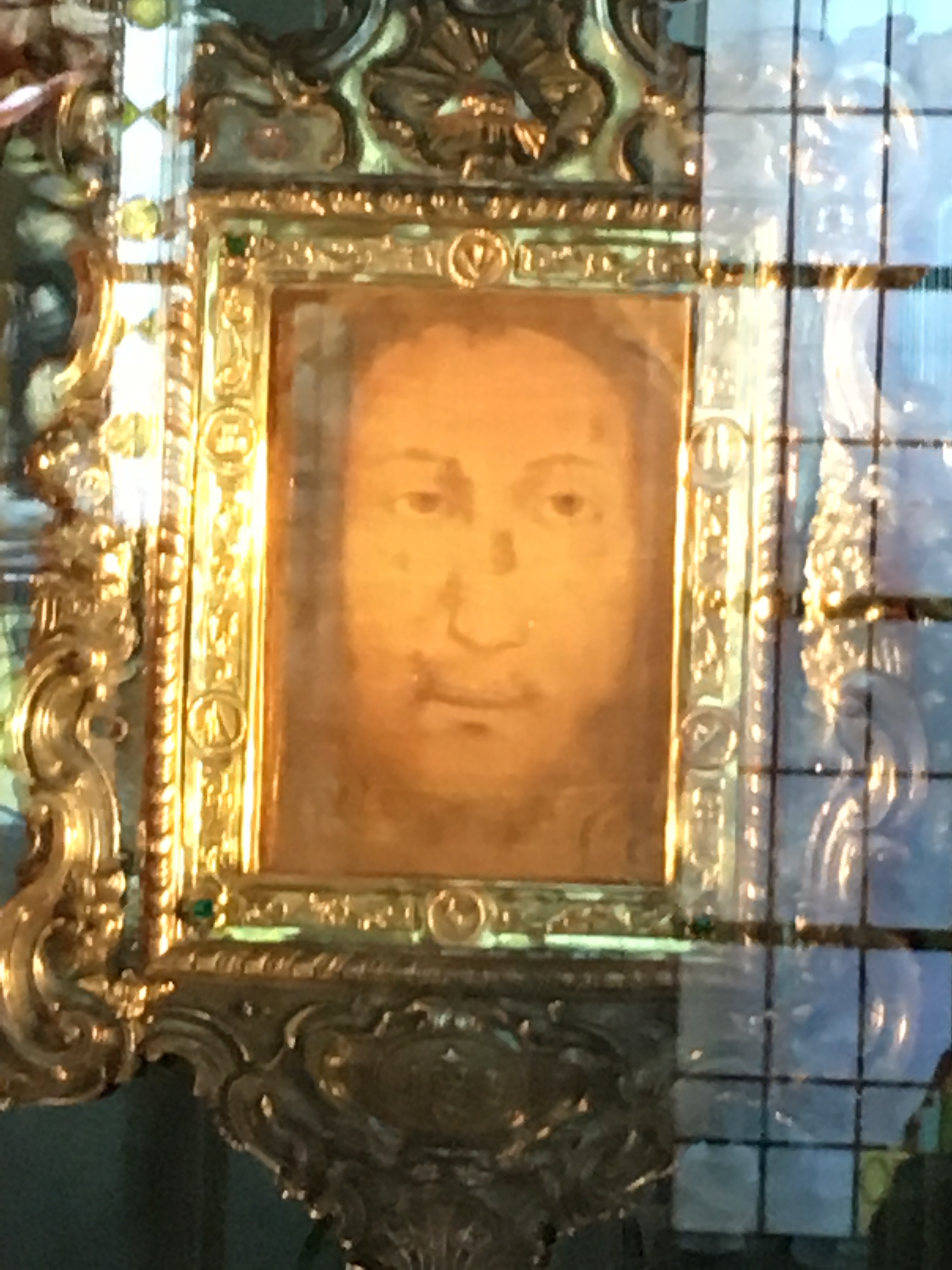
“The contemplation of Christ’s Face cannot stop at the image of the Crucified One. He is the Risen One!”~St. Pope John Paul II (Photo of the Holy Face of Manopello, Italy: Patricia Enk)

Show us, O Lord, we pray you,, Your Face ever new; that mirror, mystery-laden, of God’s infinite mercy. Grant that we may contemplate it with the eyes of our mind and our hearts: the Son’s face, radiance of the Father’s glory and the imprint of His Nature (cf. Hb 1:3), the human Face of God that has burst into history to reveal the horizon’s of eternity. The silent Face of Jesus, suffering and risen, when loved and accepted changes our hearts and lives. ‘Your Face, Lord do I seek, do not hide Your Face from me. ‘ (Psalm 27, 8ff)” (Excerpt from the Prayer of Pope Benedict commemorating his pilgrimage to the Holy Face of Manoppello, Sanctuary in Manoppello, Italy. “That mirror mystery-laden of God’s infinite mercy!”2006)
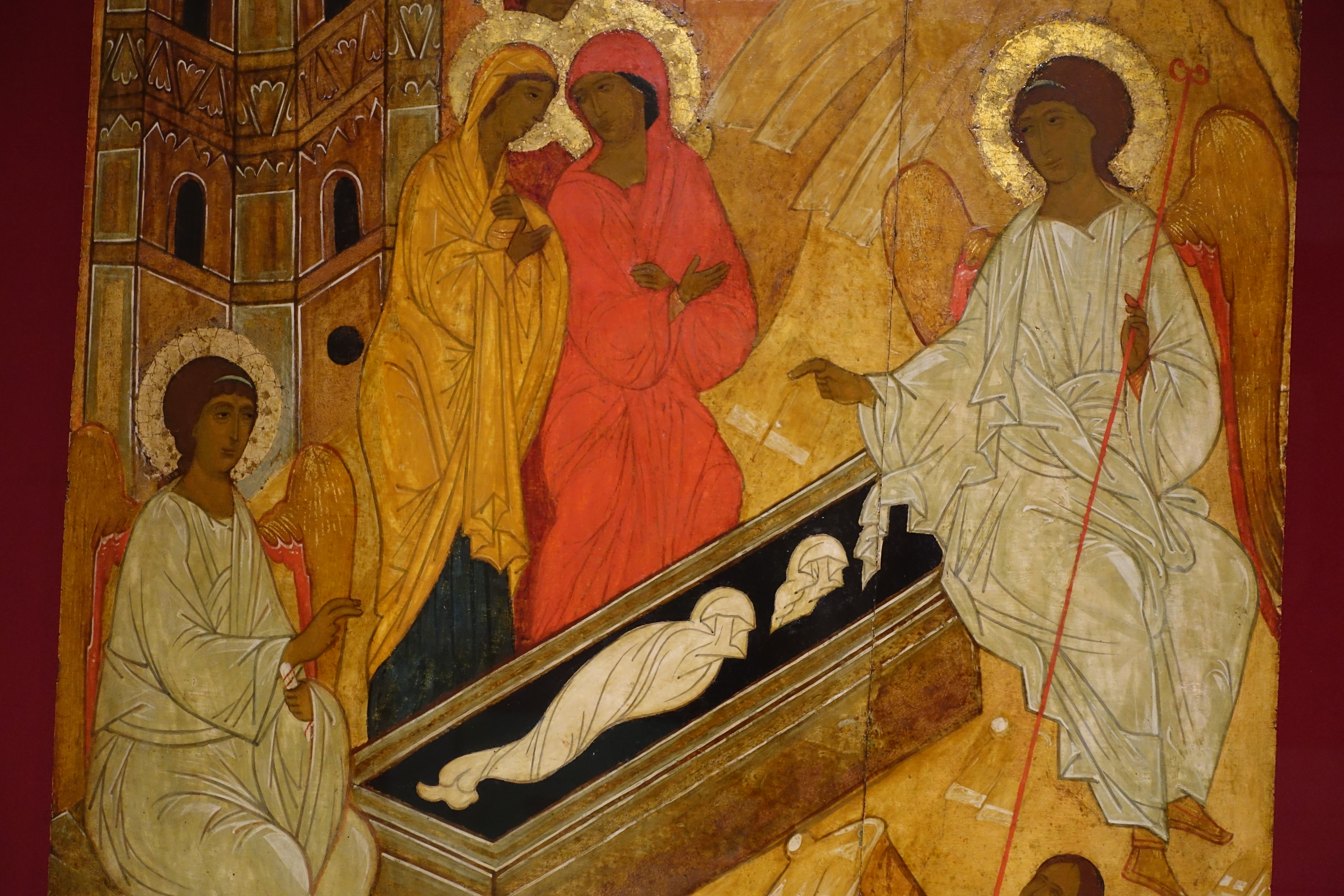
“He saw and Believed” The Burial Cloths of Jesus

“The glory of Jesus’ resurrection;
bright angels attesting,
The shroud and napkin resting.
Yes, Christ my hope is arisen;
to Galilee he goes before you.”
Christ indeed from death is risen, our new life obtaining.
Have mercy, victor King, ever reigning!
Amen. Alleluia.”

There were several burial cloths of Christ that were found in the tomb; and among them: the Shroud of Turin, the Cloth of Oviedo, and the precious byssus veil that was believed to cover the Face of Christ in the tomb – known as “Il Volto Santo” – The Holy Face of Manoppello. Possibly the very reason that St. John “Saw and believed.”

The Disciples Peter and John Running to the Sepulchre on the Morning of the Resurrection, Eugene Burnand, 1898

So Peter and the other disciple went out and came to the tomb.
They both ran, but the other disciple ran faster than Peter
and arrived at the tomb first;
he bent down and saw the burial cloths there, but did not go in.
When Simon Peter arrived after him,
he went into the tomb and saw the burial cloths there,
and the cloth that had covered his head,
not with the burial cloths but rolled up in a separate place.
Then the other disciple also went in,
the one who had arrived at the tomb first,
and he saw and believed.
For they did not yet understand the Scripture that he had to rise from the dead.  (John 20: 1-9)

At the time of Jesus, the Jewish law required several “cloths” to be used for burial, and as many as six for someone who had died a violent death. Christian tradition has preserved six cloths as relics that are associated with the burial of Jesus – 1.) The Shroud of Turin, Italy 2.) the Sudarium of Oviedo in Spain, 3.) The Sudarium Veil of Manoppello, Italy 4.) The Sudarium of Kornelimunster in Germany, 5.) The Sindon Munda of Aachen, Germany, 6.) The Cap of Cahors in France.

Three  of the cloths in particular stand out as extraordinary “witnesses” to the Passion, Death, and Resurrection of Jesus, and together they bear a powerful testimony to the truth of the Gospels. Each one bearing an imprint or image of the Face of Jesus. They are: The Sudarium of Oviedo, The Shroud of Turin, and the Sudarium Veil of Manoppello. The remarkable relationship between these three “cloths” leave little doubt that each came in contact with the face of the same man at the time of burial.

The Sudarium of Oviedo directly touched Jesus’s head following His Crucifixion. Blood was considered sacred to the Jews, so this cloth was used to soak up the Precious Blood of Jesus, by wrapping it around Jesus’s Head, as He was taken down from the Cross. The largest bloodstains are from the nose, other stains are from the eyes and other parts of the face.  There is also an imprint on the sudarium of the hand of the person who held this cloth to Jesus’s Face to staunch the flow of blood. It takes one’s breath away to see that the bloodstains on the Sudarium of Oviedo, when overlaid with the Face on the Shroud of Turin and the Sudarium Veil of Manoppello, correspond perfectly. The blood type is AB, the same as on the Shroud of Turin.

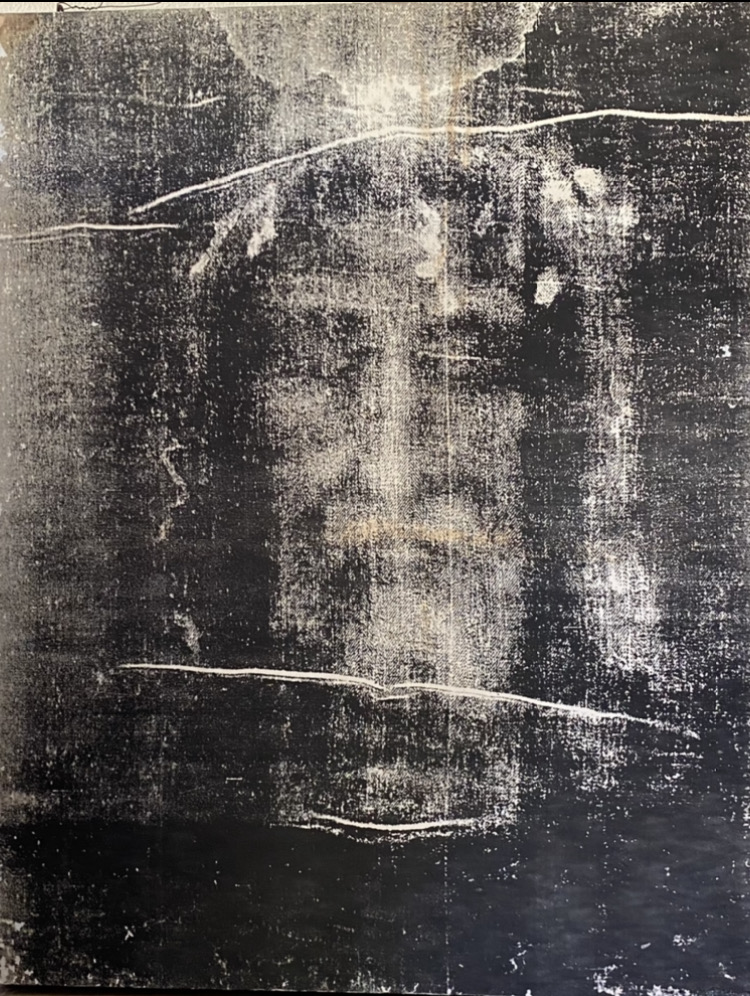
Photo of the Face on the Shroud of Turin

(An excellent, and beautifully done EWTN documentary on the Shroud of Turin may be viewed by clicking here.)

“He went into the tomb and saw the burial cloths there.

The Shroud of Turin; the sindone, or linen burial shroud, was believed to have been used to wrap the entire body of Christ. It is the most famous and studied of the three cloths. The faint but visible imprint on the Shroud of Turin gives witness to the violent torture of a man as described in the Passion and Death of Jesus in the Scripture. The world was amazed when Secondo Pia first photographed the Face on the Shroud in 1898; the negative of the photo incredibly became visible as a positive image. The Shroud of Turin caused an entire branch of science to be dedicated to its research called Sindonology.

Photo: Holy Face Veil of Manoppello, Italy (Paul Badde/EWTN)

‘…and the cloth that had covered his head,
not with the burial cloths but rolled up in a separate place.

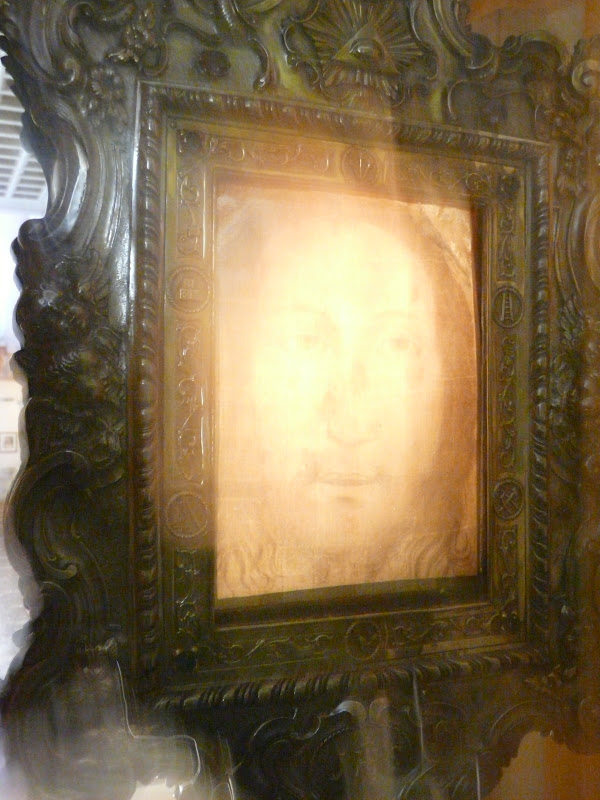
Reliquary containing the transparent veil on which the image of the Holy Face becomes visible, according to the light and position of the viewer. Photo: Paul Badde

The Sudarium Veil of the Holy Face of Manoppello, Italy is perhaps the least known of the three burial “cloths.” The Veil bears the image of the living Face of Jesus. This “miracle of light,” “not made by human hands,” was protected and hidden in an isolated church in the Abbruzzi Mountains for centuries. It is believed to be the “cloth” that covered the Face of Jesus in death, showing traces of the Passion: Bruises, swelling, wounds from the Crown of Thorns, and plucked beard.  But, it is also believed to have recorded in light the Face of Jesus at the moment of His Resurrection. No, this is not a contradiction. Yes, the image changes. It shows suffering, but it also shows life! It is believed to be “The cloth that covered His head.”

“Il Volto Santo” The Holy Face Veil of Manoppello.
Photo: Patricia Enk

An explanation about the tradition of a face cloth for burial may be helpful in understanding its profound significance:  In the funeral rites for priests in some Eastern churches, the veil which was used to cover the chalice and paten were placed on the face of the deceased priest. (The cloth used to cover the chalice and paten had a particular liturgical symbolism linked to the Face of Christ as well.) It was done as a symbol of both the strength and protection of God, and also of the tomb of Christ–an expression of belief in the Resurrection. In Jewish burial custom, a deceased priest’s face would be anointed with oil and then covered with a white cloth, and would have been done for Jesus.

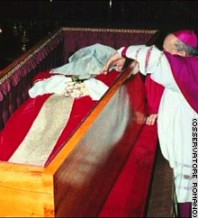
Funeral of Pope St. John Paul II, Archbishop Dziwisz covers the pope’s face with a veil.

When Pope St. John Paul II was being laid in his coffin, Archbishops Marini and Stanley Dziwisz had the honor of placing a white silk veil over the face of the pope. Poignantly, the choir sang the words from Psalm 42, “My soul thirsts for God, the living God; when will I come and see the Face of the Lord?” Many wondered about the action of covering the pope’s face with a veil because this was the first time it had been done, but was at the request of Pope John Paul II, who had dedicated the millennium to the Face of Christ.

Byssus “Pinna Nobilis” fit for a King! Photo: Paul Badde/EWTN

The cloth that would cover the Face of Christ would have to be made of a material fit for a King, a High Priest, and a God. Byssus, mentioned in the Bible forty times, also known as “sea-silk,” is more rare and precious than gold and it has an exceedingly fine texture which can be woven. Made from the long tough silky filaments of Pinna Nobilis mollusks that anchor them to the seabed, it is strong enough to resist the extreme hydrodynamic forces of the sea. Byssus has a shimmering, iridescent quality which reflects light. It is extremely delicate, yet strong at the same time. It resists water, weak acids, bases, ethers, and alcohols. Byssus cannot be painted, as it does not retain pigments, it can only be dyed; and then, only purple.  It can also last for more than 2000 years.

Kurt Cardinal Koch contemplates the Veil “not made by human hands” of Manoppello. Sheer and delicate, yet the Face is visible. Photo: Paul Badde/EWTN

The Sudarium Veil of Manoppello is also made of rare, precious, byssus silk.  The skill needed to weave a byssus veil as fine as the Veil of the Holy Face of Manoppello is exceedingly great.  Chiara Vigo, known as “the last woman who weaves byssus,” has said that neither she nor anyone alive today could duplicate the gossamer-thin veil, which is sheer enough to read a newspaper through.  The weave is so delicate, she says, that only the nimble fingers of a very skillful child could weave something so fine.

Photo: Paul Badde

It is only through light that this shimmering image of the Face of Jesus may be seen, and at times appears as a “living image” as though it were reflected in a mirror, at other times the image completely disappears.  Although no camera can adequately capture the image, thanks to the many amazing photos of journalist Paul Badde, the changes that occur when viewing the veil may be better appreciated.  (Click here for more photos, and information about Paul Badde’s books and videos about the Holy Face.)

While the Face on the Shroud of Turin clearly shows the Face of Jesus in death with eyes closed, the Sudariam of Manoppello has eyes open–bearing witness to the Resurrection. That was the ardent belief of the former Rector of the Basilica Shrine of the Holy Face, Servant of God Padre Domenico da Cese.  

Sevant of of God Padre Doemnico da Cese, former Rector of the Shrine of “Il Volto Santo.”
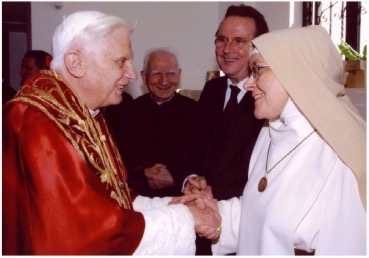
L to R: Pope Benedict XVI came as a pilgrim to Manoppello on September 1, 2006, Fr. Heinrich Pfeiffer, S.J., Paul Badde, and Sr. Blandina Schlomer

There are many physiological reasons too for believing that the Face Cloth captures the first breath of the Resurrection. Sr. Blandina Paschalis Schlomer, who shares that belief, has provided meticulous research about the Veil in her book JESUS CHRIST, The Lamb and the Beautiful Shepherd, The Encounter with the Veil of Manoppello.  Sr. Blandina together with Paul Badde, and Fr. Fr. Heinrich Pfeiffer, S.J., Professor at the Pontifical Gregorian University in Rome, have each demonstrated that the Holy Face on the Veil of Manoppello is the proto-image of the earliest icons, and other works of art depicting the Face of Jesus.

“…and he saw and believed. For they did not yet understand the Scripture that He had to rise from the dead.”

What did St. John see in the tomb that would cause him to believe? A cloth of blood, such as the Oviedo? The Shroud of Turin? The Shroud bears a miraculous image, but it shows the Face of a dead man. A third witness was needed in order for the disciple to believe. It could only have been evidence of something as astounding as the Resurrection; proof that Jesus was alive!

Holy Veil of Manoppello. Photo: Paul Badde/EWTN

It is human nature to want to see things for ourselves. Many pilgrims, humble and great, have felt called to make the journey to visit the miraculous relic. If it is God’s handiwork, and I believe that is true, then one can only wonder at its existence, and gaze in silent contemplation, giving thanks for this tremendous gift of God… so we too may “see and believe.”

As the first rays of light entered the tomb, John and Peter, upon entering, “saw and believed.”   Sudarium Veil of Manoppello, Photo: Paul Badde/EWTN
Pope Benedict XVI contemplates the ‘Veronica’s Veil’ during a visit to the Shrine of the Holy Face in Manoppello, central Italy, September 1, 2006.

“While we too seek other signs, other wonders, we do not realize that He is the real sign, God made flesh; He is the greatest miracle of the universe: all the love of God hidden in a human heart, in a human face.”

~ Pope Benedict XVI
Holy Face of Jesus of Manoppello (photo: Paul Badde/EWTN)

“We cannot stop at the image of the Crucified One; He is the Risen One!”

~ Pope St. John Paul II

Pope Leo XIV called the peace of the Risen Christ “The most silent revolution:” (read more here)

Alleluia! Alleluia! Alleluia!