“May the LORD bless you and keep you! The LORD let his face shine upon you, and be merciful to you! The LORD turn His Countenance towards you and give you peace!“–Num 6:22-27
Peace is the fruit of devotion to the Face of Christ; it is, in fact, the greatest gift of God. Devotion to the Holy Face is not narrow; it is not limited to prayers or venerating images of the Face of Jesus. Although these things are good in themselves and a means of orienting ourselves toward the Face of God, they are not enough. Devotion to the Holy Face is as high and as wide as the Cross of Christ–extending to each person made in the image and likeness of God and respecting their dignity. Pope Francis wrote in his message for the World Day of Peace,
“All of us want peace. Many people build it day by day through small gestures and acts; many of them are suffering, yet patiently persevere in their efforts to be peacemakers. In 2017, may we dedicate ourselves prayerfully and actively to banishing violence from our hearts, words and deeds, and to becoming nonviolent people and to building nonviolent communities that care for our common home. Nothing is impossible if we turn to God in prayer. Everyone can be an artisan of peace”.
We can become an “artisan of peace” by turning toward the Face of God in prayer, especially before the Eucharistic Face of Jesus, from which we draw the strength to love our neighbor, respecting the Face of Jesus within them, even when it is marred by sin–or what St. Teresa of Calcutta called “the distressing disguise of Jesus.”
“Mary, Mother of the Holy Face, help us to have ‘hands innocent and a heart pure,’ hands illumined by the truth of love and hearts enraptured by divine beauty, that transformed by the encounter with Christ, we may gift ourselves to the poor and the suffering, whose faces reflect the hidden presence of your Son Jesus. Amen.” — Pope Emeritus Benedict XVI
Begin the year by recalling God’s goodness in the maternal face of Mary, in the maternal face of the Church, in the faces of our own mothers, protects us from the corrosive disease of being “spiritual orphans”. –Pope Francis Jan. 1, 2017
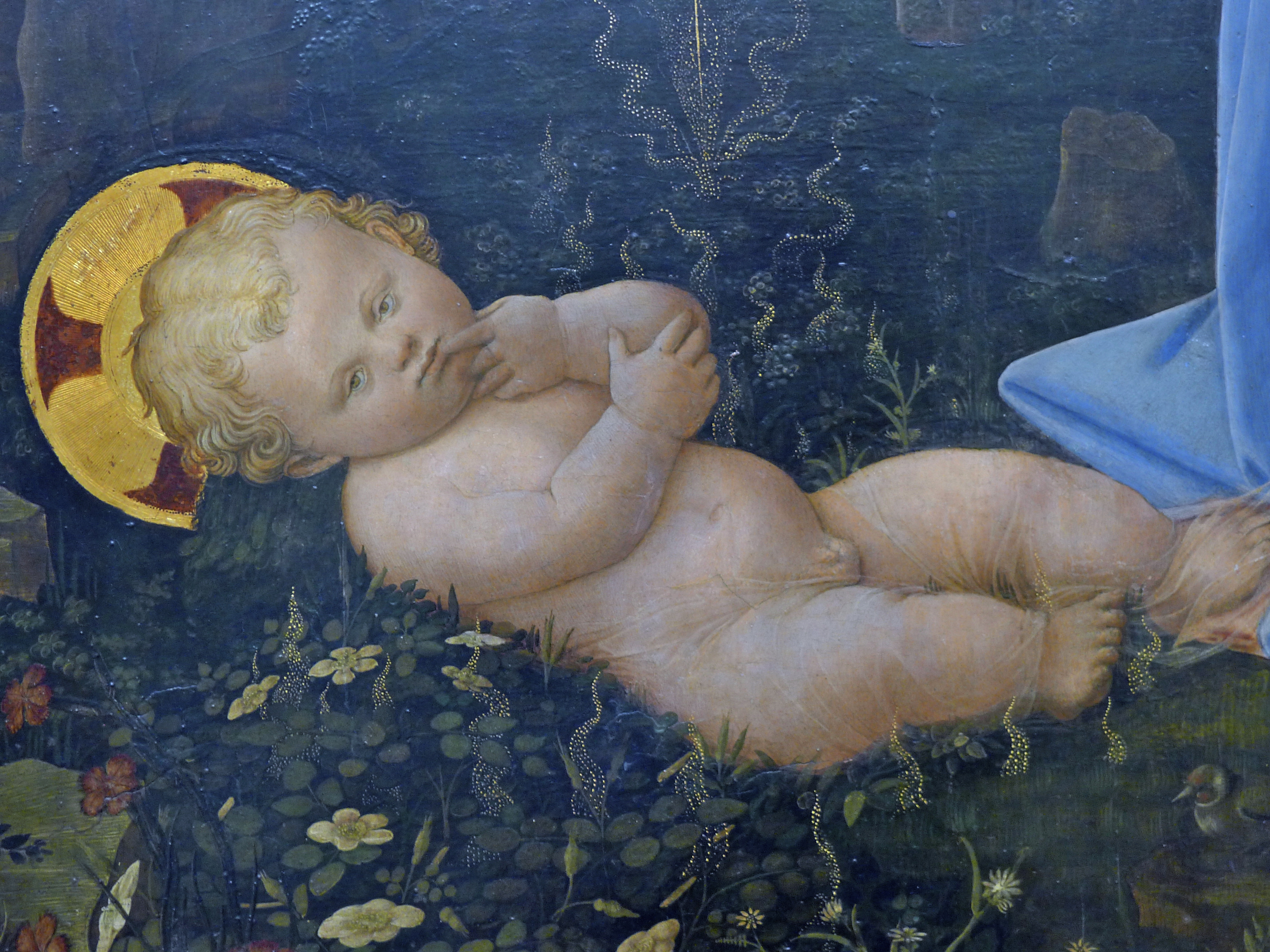
Infant Jesus wrapped in sheer Byssus, fit for a King, a High Priest, and God *(about byssus, see below)
What does it mean to “see” God?
When Christ comes, God will be seen by men
(From St. Ireneaus) “There is one God, who by his word and wisdom created all things and set them in order. His Word is our Lord Jesus Christ, who in this last age became man among men to unite end and beginning, that is, man and God.
The prophets, receiving the gift of prophecy from this same Word, foretold his coming in the flesh, which brought about the union and communion between God and man ordained by the Father. From the beginning the word of God prophesied that God could be seen by men and would live among them on earth; he would speak with his own creation and be present to it, bringing it salvation and being visible to it. He would free us from the hands of all who hate us, that is from the spirit of sin, and enable us to serve him in holiness and justice all our days. Man was to receive the Spirit of God and so attain to the glory of the Father.
The prophets, then, foretold thatGod would be seen by men. As the Lord himself says: Blessed are the pure of heart, for they shall see God. In his greatness and in expressible glory no one can see God and live, for the Father is beyond our comprehension. But in his love and generosity and omnipotence he allows even this to those who love him, that is, even to see God, as the prophets foretold. For what is impossible to men is possible to God.
By his own powers man cannot see God, yet God will be seen by men because he wills it. He will be seen by those he chooses, at the time he chooses, and in the way he chooses, for God can do all things.He was seen of old through the Spirit in prophecy; he was seen through the Son by our adoption as his children, and he will be seen in the kingdom of heaven in his own being as the Father. The Spirit prepares man to receive the Son of God, the Son leads him to the Father, and the Father, freeing him from change and decay, bestows the eternal life that comes to everyone from seeing God.
As those who see light are in the light sharing its brilliance, so those who see God are in God sharing his glory, and the glory gives them life. To see God is to share in life.” ~St. Ireneaus
Merry Christmas! May His Face shine upon you and your loved ones, today and always!
“In Thee God will manifest the splendor of His presence, for the whole world to see”~Baruch 4
Detail of byssus veil wrapping the babe’s tiny feet
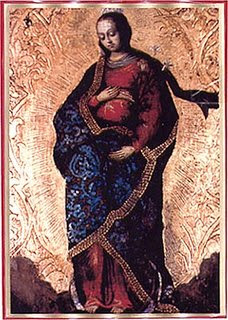
Our Lady of the Bowed Head, Vienna, Austria (with byssus veil)
*What is Byssus?– Byssus is a cloth of exceeding fine texture used by the ancients. Fit for Royalty, a King, a High Priest, and God. Known as “sea-silk,” it is more rare and precious than gold. Made from the long tough silky filaments of Pinna Nobilis mollusks that anchor them to the seabed–strong enough to resist the extreme hydrodynamic forces of the sea. Byssus has a shimmering, iridescent quality which reflects light. Byssus is extremely delicate, yet strong at the same time. It resists water, weak acids, bases, ethers, and alcohols. It can’t be painted, as it does not retain pigments, it can only be dyed; and then, only purple. It can also last for more than 2000 years.
Byssus is mentioned in the Bible forty times–For just a few examples: in Genesis, Pharaoh took off his ring from his hand, and put it on Joseph’s hand, and arrayed him in clothes of byssus, and put a gold chain on his neck. (Genesis 41) The curtains of the tabernacle (Exodus 26) were twined with byssus. Kingly and priestly garments were made with byssus. (Exodus) Solomon made a veil for the Holy of Holies with cherubim embroidered upon it in byssus.
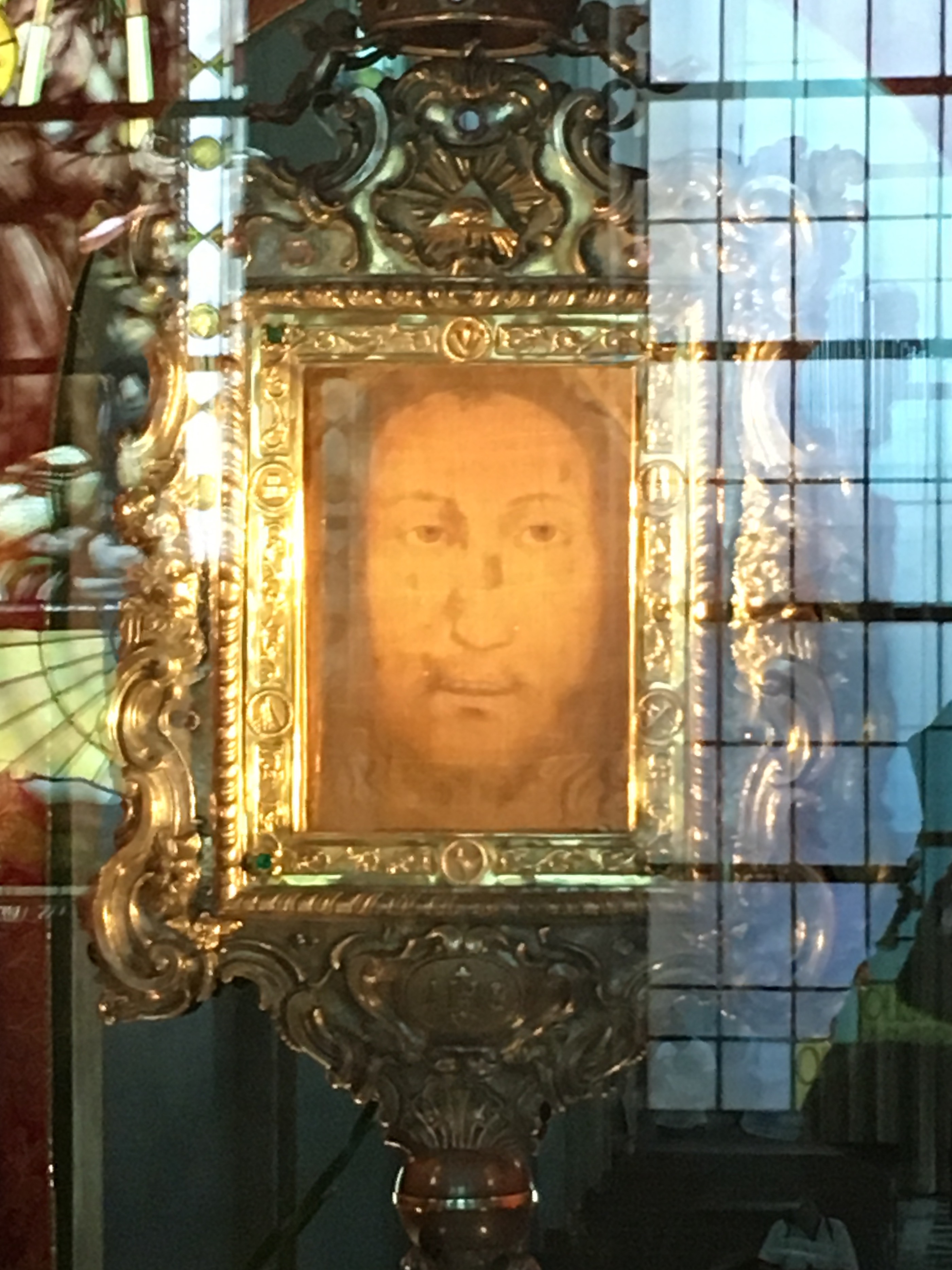
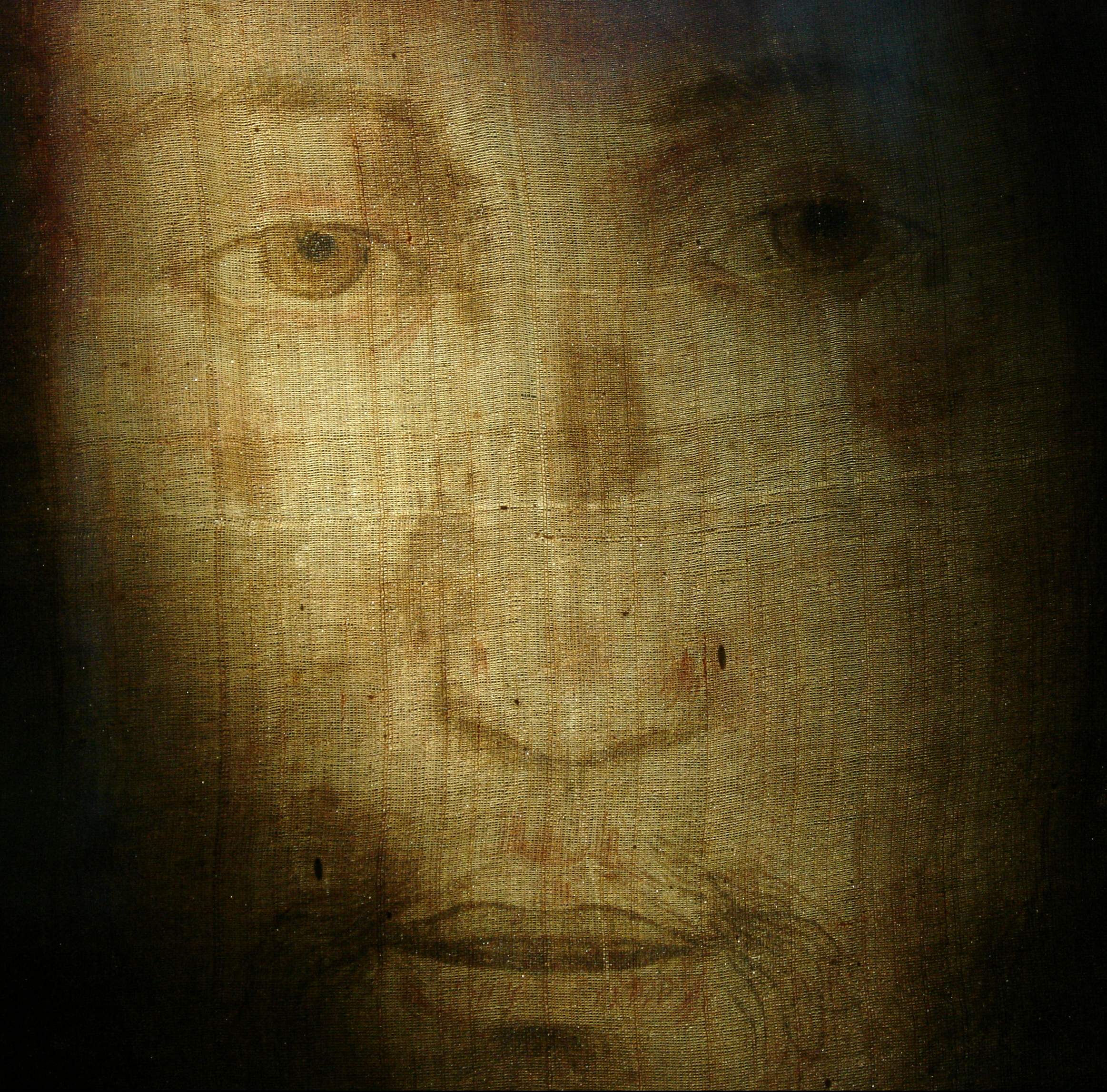
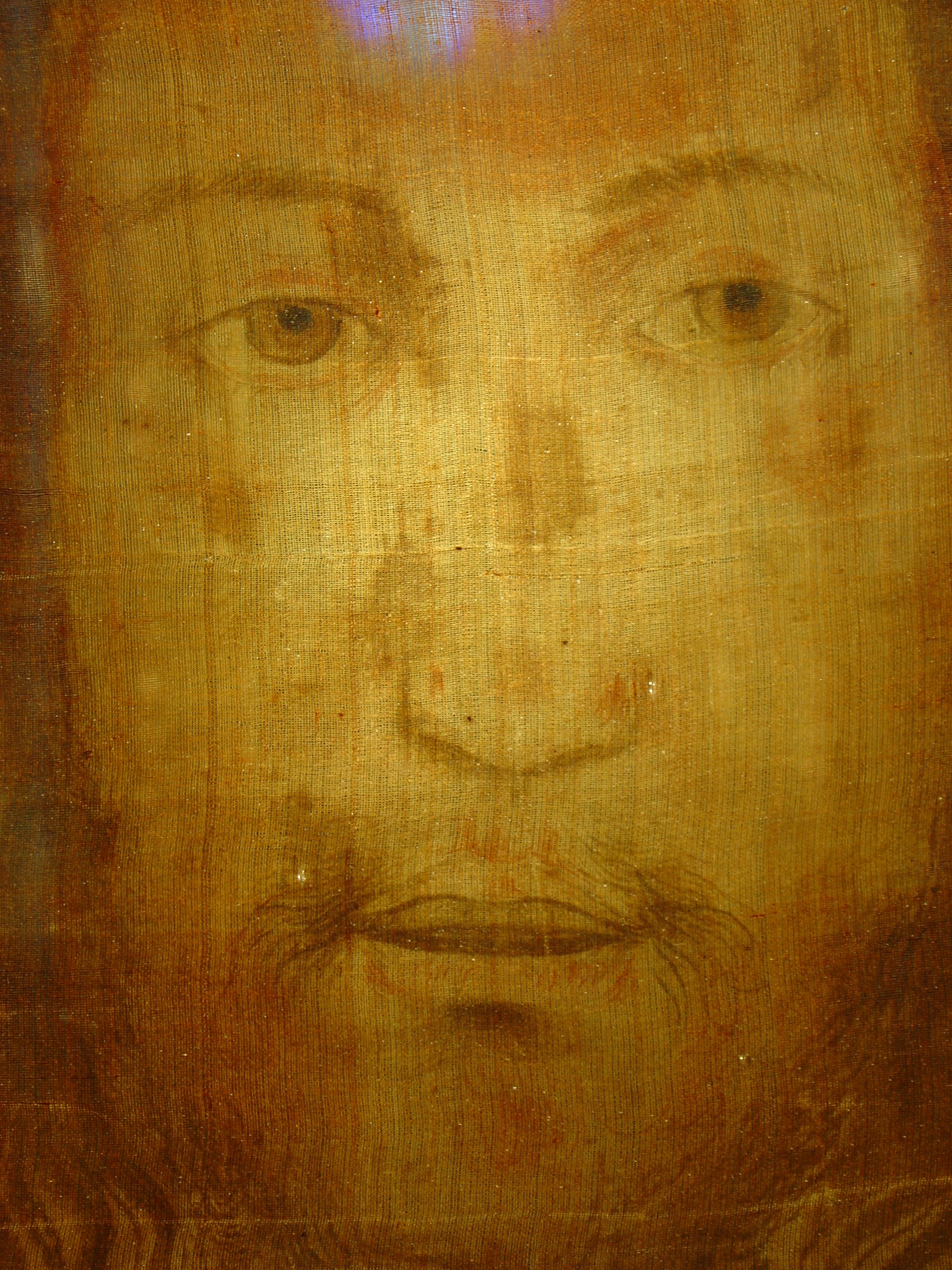
Sheer and delicate, yet the Face of Christ is miraculously visible. Photo by Paul Badde
The Veil of the Holy Face of Manoppellois also made of rare, precious byssus silk. The skill needed to weave a byssus veil as fine as the Veil of the Holy Face of Manoppello is exceedingly great. Chiara Vigo, known as “the last woman who weaves byssus” has said that neither she or anyone alive today could duplicate the gossamer-thin Veil, which is sheer enough to read a newspaper through. The weave is so delicate, she says, that only the nimble fingers of a very skillful child could weave something so fine.
Miraculous Holy Face Veil of Manoppello Photo: Paul Badde
It has been speculated–perhaps even the young Blessed Virgin Mary learned to weave byssus, as a young child in the temple, for the priestly garments. Perhaps, she herself wove this particular miraculous Veil with her own pure hands, which was placed as a face-cloth (sudarium) on the Face of Jesus in the tomb, and is thought to have recorded the very moment of the Resurrection of Jesus, true God and true Man, High-Priest and King!
Pinna Nobilis
(Click here for a BBC article on the last woman who weaves byssus, Chiara Vigo.)
“The church is like Mary awaiting a birth. Like her, we should say of Jesus and mean with our hearts: Come! I want to see your face!”–Pope Francis
“A love that desires to see God may not have reasonableness on it’s side, but it is evidence of filial love.“
(Please see update below-Prayers needed)
Love desires to see God. So says St. Peter Chrysologus: “When God saw the world falling to ruin because of fear, He immediately acted to call it back to Himself with love…” By an invitation of grace, love and compassion God called Noah, Abraham, Jacob and Moses–and a “flame of love” was enkindled in their hearts, “it’s intoxication overflowed into men’s senses. Wounded by love, they longed to look upon God with their bodily eyes, yet how could our narrow human vision apprehend God, whom the whole world cannot contain?” St. Chrysologus writes, “It is intolerable for love not to see the object of it’s longing!”No matter what good the saints did to merit a reward, they could not see the Lord. “A love that desires to see God may not have reasonableness on it’s side, but it is evidence of filial love. It gave Moses the temerity to say: If I have found favor in your eyes, show me Your Face. It inspired the psalmist to make the same prayer: Show me Your Face.Even the pagans made their images for this purpose: they wanted to see what they mistakenly revered.” (from sermon of St. Peter Chrysologus)
God Himself initiates the longing to see His Face, extending this grace to all who are willing to accept it, which is why the Blessed Virgin Mary “Full of Grace” had the greatest, deepest longing to see the Face of God–more than any creature on earth. In the third week of Advent, the Church celebrates this longing to see God’s Face, together with Mary, with a Triduum (three days of prayer) and a Feast–It is called The Feast of the Expectation of the Blessed Virgin Mary, Longing to See His Face. (a bit of the history may be found here.) The Triduum begins on December 15th and continues until the feast day which is on December 18th. (The prayer, found below, for the Triduum and Feast Day may also be prayed on the days leading up to Christmas.)
There are two very important aspects of Advent mentioned in this prayer that should not be overlooked as they are necessary for us to prepare our hearts for Jesus on Christmas Day: preparation and penance (that “Jesus may find no obstacle in our hearts.”) Sometimes the greatest obstacle to opening our hearts to God is our own self-love. Let us have confidence in Mary’s intercession to help us overcome this self-love, “removing all obstacles” to her Son so that we will be prepared to receive Him Christmas morning and share her joy in the redemptive love shining on the Face of Jesus.
Prayer for the Triduum and Feast of the Expectation of the Blessed Virgin Mary, Longing to See His Face
“Mary, your life with Jesus was one of the purest, most fervent, most perfect emotions of longing and most eager expectation of the Birth of the Divine Child! How great must have been that longing! You were longing to see the Face of God and to be happy in the vision. You were soon really to see the Face of God, the created image of divine perfection, the sight of which rejoices heaven and earth, from which all being derive life and joy; the Face whose features enraptured God from all eternity, the Face for which all ages expectantly yearned. You were to see this Face unveiled, in all the beauty and grace as the face of your own child.
Most just indeed it is, O Holy Mother of God, that we should unite in that ardent desire which you had to see Him, who had been concealed for nine months in your chaste womb; to know the features of this Son of the heavenly Father, who is also your own; to come to that blissful hour of His birth, which will give glory to God in the highest, and on earth, peace to men of good will. Yes, dear Mother, the time is fast approaching, though not fast enough to satisfy your desires and ours. Make us re-double our attention to the great mystery; complete our preparation by your powerful prayers for us, so that when the solemn hour has come, our Jesus may find no obstacle to His entrance into our hearts. Amen.” (Prayer by Rev. Lawrence Lovasik, S.V.D.)
UPDATE: In your charity, please pray for the soul of Archbishop Edmond Farhat, who died in Rome on December 17. He said this in his homily January 17, 2016 about the Holy Face of Manoppello:
Archbishop Edmond Y. Farhat giving blessing with Holy Face.
“It is not an object of another time; it is the icon of the eternal face, the face of goodness and of friendship, of mercy and of peace. The face that speaks, that examines, that asks, that awaits a response. It seems to say: ‘Look at me, you who are tired. Come to me and I will give you rest.’…” We fix our gaze on the Holy Face and we will be transformed by God’s mercy. The sign is not an end in itself; the sign is a pointer on the way of the return, the return to the Father.”
Eternal rest grant unto him, O Lord, and let perpetual light shine upon him. Through the mercy of God may he rest in peace and may he gaze upon Your Face this day. Amen.
“Hide yourself, my love; turn your face toward the mountains, and do not speak; but look at those companions going with her through strange islands.”–Stanza 19, Spiritual Canticle, St. John of the Cross
The great mystical Doctor of the Church, St. John of the Cross, wrote a beautiful commentary on Stanza 19 of his Spiritual Canticle, on prayer–the desire of the soul to communicate with God, the need of silence on the part of the soul, and the darkness or obscurity of faith in the soul who is seeking God’s Face.
St. John says that the bride-soul asks four things of the Bridegroom (Christ): First, that He “communicate very inwardly” in the hidden place of the soul. Second, that He inform and “shine on her faculties” with His glory. Third, “that this communication be so sublime and profound that she may neither desire nor know how to give a description of it…” Fourth, that He be enamored of the graces and virtues He has placed in her.”
“Hide yourself, my love;”
St. John says this means to ask God “to communicate Yourself in secret, manifest Your hidden wonders, alien to every mortal eye.”
“turn your face toward the mountains”
“The ‘Face’of God is the divinity and the ‘mountains’ are the soul’s faculties (memory, intellect, and will).” The verse is saying: “Let your divinity shine on my intellect by giving divine knowledge, and on my will by imparting to it divine love, and on my memory with the divine possession of glory.” The soul, St. John writes, “can only be satisfied with God’s Face.”
“and do not speak”
The communication God grants to the soul are too high and deep to be apprehended by the senses. “Let the depth of the hiding place, which is spiritual union, be of such a kind that the senses will be unable to feel or speak of it…,” says St. John of the Cross.
“but look at those companions”
“When God looks, He loves and grants favors. And the companions whom the soul tells God to look at are the many virtues, gifts, perfections, and other spiritual riches He has placed in her as the pledges, tokens, and jewels of betrothal.” This verse, says St. John is like saying, “But, Beloved, first turn to the interior of my soul, and be enamored of the company–the riches–You have placed there, so that loving the soul and through them You may dwell and hide in her. For, indeed, even though they are Yours, since You gave them to her, they also belong to her.
“going with her through strange islands.”
Here the soul is saying, “Since I go to you through a spiritual knowledge strange and foreign to the senses, let Your communication be so interior and sublime as to be foreign to all of them.”
To “seek God’s Face” is to seek Him in prayer; to “look at Him” is to take the time to contemplate Him. When we do this, St. John of the Cross tells us, God is doing great things in our soul…He shines His Face upon us!
Drawing of vision of the Crucifixion by St. John of the Cross, Feast: December 14
The Lord is the Spirit, and where the spirit of the Lord is, there is freedom. And we all, with unveiled face, beholding the glory of the Lord, are being changed into His likeness from one degree of glory to another; for this comes from the Lord who is the Spirit. (2 Cor 3:17-18)
“I will wait for the Lord who hath hid His Face from the house of Jacob, and I will look for Him.” (Isaiah 8)
Virgin in Prayer Artist: Sassoferrato 1640-50
Is there anyone who enjoys waiting? Our human nature rebels against all forms of it: there is the mundane waiting we must endure in lines, in traffic, at ball games, practices, and in doctor’s offices; the anxious waiting for phone calls, for results, or for the end of sufferings; the joyful waiting for birthdays, anniversaries, graduations and other celebrations. Then there is the heavy combination of all three types of waiting–which is of a mother waiting for the birth of her child.
Our weak human nature does not like to wait. We want to “get there” right away, to “know” right away, for something to be “done” right away. Waiting requires patience and most of humanity has very little. But wait we must, and since everything in life is permitted by God solely for our good, waiting must be very good for us since we spend so much of our lives doing it.
If waiting is indeed good for us, then it is certain that the evil one will do everything possible to trip us up as he did with the children of Israel while they were waiting, waiting, waiting for Moses to come down from the mountain with the Ten Commandments. When God was telling Moses, “I am the Lord, thy God: thou shall not have strange Gods before me,” the devil was tempting them to pride; the Israelite’s did not want to endure waiting to see the Face of God so they fashioned an idol, the “work of their own hands.” Here lies the temptation for us all in what should be a grace-filled period of time: distraction in turning the eyes of our soul away from the Face of God and toward the false faces or idols of the world–bright, sparkly, enticing and all around us. How can we resist falling into the traps of idolatry?
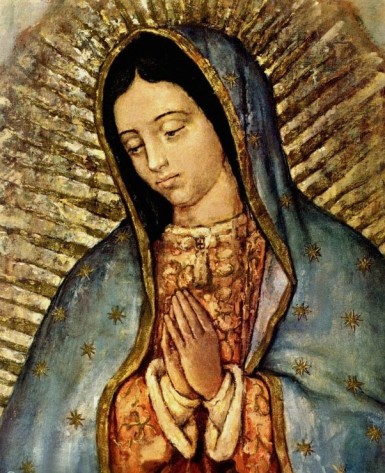
Our Lady of Guadalupe
The ultimate good is to see the Face of God and therefore Mary must have waited like no one has ever waited before! Mary, for the love of God, waited in patience, humility, faith, charity, in hope, and in supreme fortitude. She did this by fixing the eyes of her soul on Jesus, her Redeemer and God–Whose Face she could not yet see within her womb. Mary’s uncomplaining acceptance of God’s Will–to seek His Face and only His Face–bore the most sublime fruit in Mary’s soul of divine PEACE, which the world can never take away. So, this Advent and in all times of waiting, wait with Mary, and her reward will also be ours…to see the Face of her Son!
“Mary and Eve” by Sr. Grace Remington, OCSD ( for print- link here)
“This Year of Mercy invites us to discover the core; to return to what is essential. This time of mercy calls us to look at the true Face of Our King, the one that shines out at Easter, to rediscover the youthful, beautiful Face of the Church…” –Pope Francis, close of the Year of Mercy. November 20, 2016
“Your eyes will behold the King in His beauty.” Isaiah 33:17 (photo:Patricia Enk)
Sunday, November 20th, 2016 will be the Solemnity of Our Lord Jesus Christ, King of the Universe and Living Face of the Father’s Mercy. The Jubilee Year of Mercy will be at an end.
“On that day,” says Pope Francis, “as we seal the Holy Door, we shall be filled, above all, with a sense of gratitude and thanksgiving to the Most Holy Trinity for having granted us an extraordinary time of grace. We will entrust the life of the Church, all humanity, and the entire cosmos to the Lordship of Christ, asking Him to pour out His mercy upon us like the morning dew, so that everyone may work together to build a brighter future….May the balm of mercy reach everyone, both believers and those far away, as a sign that the Kingdom of God is already present in our midst!”
I would be remiss if I didn’t express gratitude to God for this Year of Mercy and most especially for His incredible, miraculous gift of His Holy Face on the Veil of Manoppello–the Face of all faces–the Face of the Mercy of God! Look at His Face! Look at those eyes filled with mercy and peace! It has been said that His eyes look both like a lion’s and a lamb’s.
This has been a very turbulent year in the world, and the next may become even more turbulent, as the enemies of Christianity wage war against the followers of Christ. It is all the more necessary that we keep our eyes fixed on the Face of the King and the Lamb.
“They will wage war against the Lamb, and the Lamb will overcome them, because He is the Lord of lords and the King of kings, and those who are with Him are called chosen and faithful.” (Rev. 17:14)
So, keep fighting the good fight and keep your eyes on His Holy Face, because…
Face of Jesus Christ, Bl. Fra Angelico c. 1446-471293, Pietro Cavallini, St. Cecilia in Trastevere in Rome
A change in appearance of the Veronica of Rome and an appearance of a Veil in Manoppello
Before the Sack of Rome in 1527 everyone knew quite well what the Veronica looked like. The veil was displayed to the many pilgrims at the Vatican; it was carried publicly in procession; artists made reproductions of the image for the faithful to use for veneration, prayer, and contemplation. The specially made reliquary (which was later broken) had not one, but two panes of crystal, so that the veil could be viewed from either side. Prior to 1527, when pilgrims viewed the Veronica they saw these general characteristics:
Detail from Mass of St. Gregory, Michael Wolgemut,c. 1450-70
“the Face of the living Christ on a sheer veil or cloth–a human face of a man who has suffered, with traces of wounds, bruises, and swelling visible, especially on the left cheek. His wavy hair is long and parted with a small, short lock of curls at the center. His beard is sparse as though torn, and divided in two. His open eyes are peaceful and looking slightly to one side. His mouth is partially opened.” (Pt. 1)
Opusculum by Giacamo Grimaldi (altered date of 1618)
However, after the Sack of Rome, the image at the Vatican was shown less, and what was being presented as the Veronica Veil caused a change in the reaction of the pilgrims and in artists’ portrayals. The painted images began to depict the Face of Christ in more diverse and imaginative ways, more often with the Crown of Thorns, or as merely a veil with a reddish smudge, or even as the face of a dead man with eyes and mouth closed.
Giacomo Grimaldi, a canon who had the task of illustrating and recording inventory for the Vatican, recorded the Veronica Veil on an inventory document called the Opusculum (shown left with an obviously altered date of 1618). Grimaldi noted that the living face shown (with wavy hair, parted in the middle, and the eyes open) was faithful to the image that he saw in 1606 (before the first demolition of the Old St. Peter’s). A copy made in 1635 by Francesco Speroni of the Grimaldi Opusculum inventory shows a dramatically different drawing–with the Face of Christ appearing as a dead man. (below)
Opusculum of the Holy Face by Francesco SperoniOne of the copies made of Veronica Veil by Pietro Strozzi, Vienna 1617
Pope Paul V, in 1616, had prohibited any copies to be made of the Veronica without permission and later Urban VIII ordered that all copies of the Veronica be handed in to a local priest or bishop under pain of excommunication. In 1629, the image with the death-like face was placed in the newly completed Veronica Altar in St. Peter’s Basilica–covered with another outer veil–and a notice was placed nearby stating that anyone who removed the veil covering the Holy Face without papal approval would be excommunicated. It was only shown once a year from a distance of 20 meters. All that could be seen was a dark cloth within a frame in the shape of a face. Not surprisingly, interest in the Veronica and therefore devotion to the Holy Face soon dwindled.
While one must be very careful not to ascribe any sort of malicious motive to the apparent incongruity and change of the appearance of the image; one must also be honest in saying that the two images on the Opusculum couldn’t be more different. It is certainly a great mystery which remains to be unraveled.
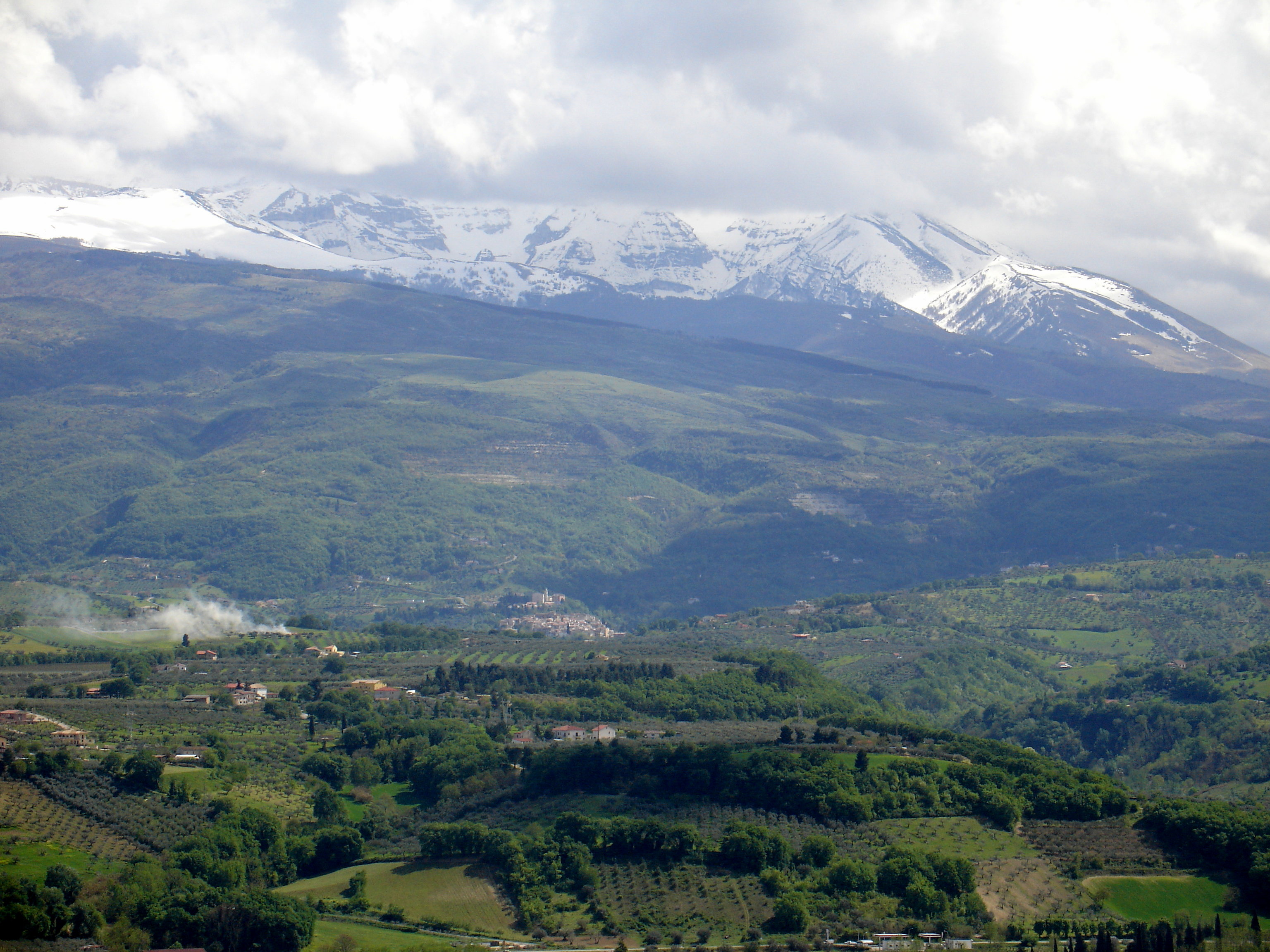
Manoppello, Italy
In 1638, on the other side of Italy, towards the Adriatic coast, “a devout and well-respected man” named Don Antonio Fabritiis donated a precious Veil bearing the Face of Christ to the Capuchin monastery in the small, isolated mountain village of Manoppello, Italy. A document entitled Relazione Historica re-telling the local legend of the Veil was written by Capuchin Donato da Bomba and notarized in 1646 and then, certified by sixteen local witnesses. The story told of the arrival of the Veil in Mannoppello, “in around 1506,”(the date was vague) in the hands of a mysterious stranger who was thought to have been a holy angel. (Aside from the “angel,” the main characters in the story have been historically verified.)
The recorded story told was this: “There lived in Manoppello the very famous Giacomo Antonio Leonelli, doctor in medicine…one day when he was out in the public square just outside of the door of the Mother church of the town of Manoppello, St. Nicholas Bari, in honest conversation with other peers, and while they were speaking a pilgrim arrived unknown by anyone, with a very venerable religious appearance, who having greeted this beautiful circle of citizens, he said, with many terms of manners, and of humility to Dr. Giacomo Antonio Leonelli that he had to speak with him about a secret thing which would be very pleasing, useful and profitable for him. And thus, taking him aside just inside the doorway of the church of St. Nicholas Bari, gave him a parcel, and without unfolding it told him that he ought to hold this devotion very dear, because God would do him many favors, so that in things both temporal and spiritual he would always prosper.” So the doctor took the parcel and turning towards the holy water fount carefully opened it, and “seeing the Most Sacred Face of Our Lord Christ…he burst into most tender tears…and thanking God for such a gift…turned to the unknown pilgrim to thank him…but he did not see him anymore.” When the good doctor, “shaken” and “filled with wonder,” went outside to his friends and asked where the man went, his friends replied that they never saw him exit the church. They searched high and low but never found the mysterious pilgrim, “hence all judged that the man in the form of a pilgrim to be a heavenly Angel, or else a Saint from Paradise.”
Photo: Ibanez (CNA/EWTN)
The Holy Veil remained the property of the Leonelli family for nearly a century, until a family member in need of money sold the Veil to Don Antonio Fabritiis, who in turn gave it to the Capuchins in 1638. The Holy Veil, called the “Il Volto Santo,” was kept in a dimly lit side chapel until the church was renovated in 1960, when it was decided that the Veil should be moved to a more prominent place behind the altar.
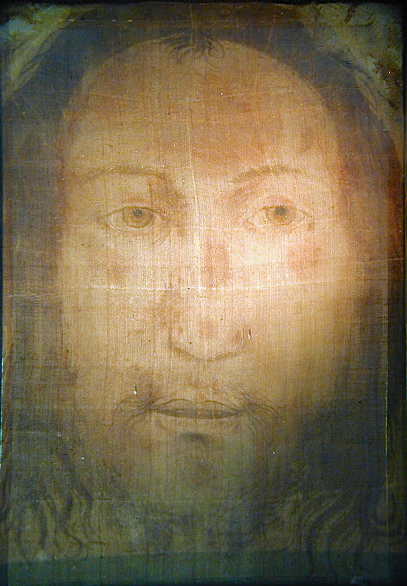
What did the Face on the gossamer-thin Veil look like? Here are portions of a description that Capuchin Donato da Bomba gave of the Holy Face: “He has a rather long, well-proportioned face, with a venerable and majestic look. His hair, or locks are long with thin twisted curls–in particular at the top of the forehead about fifty hairs wind into a little corkscrew, distinct from each other and well arranged. His left cheek is swollen and bigger than the other because of a strong blow across the cheek. The lips are very swollen. His teeth show. It seems the Holy Face is made of living flesh, but flesh that is afflicted, emaciated, sad, sorrowful, pale and covered in bruises around the eyes and on the forehead. The eyes of Christ are similar to those of a dove…He is serene and tranquil.”
Holy Face “Il Volto Santo” of Manoppello
“Those who gaze on it are never satisfied with contemplating it, and wish to always have it before their eyes. And when they eventually leave it, with heavy sighs full of love, they are forced to leave Him their hearts, bathed in tears.” –Capuchin Donato da Bomba 1646
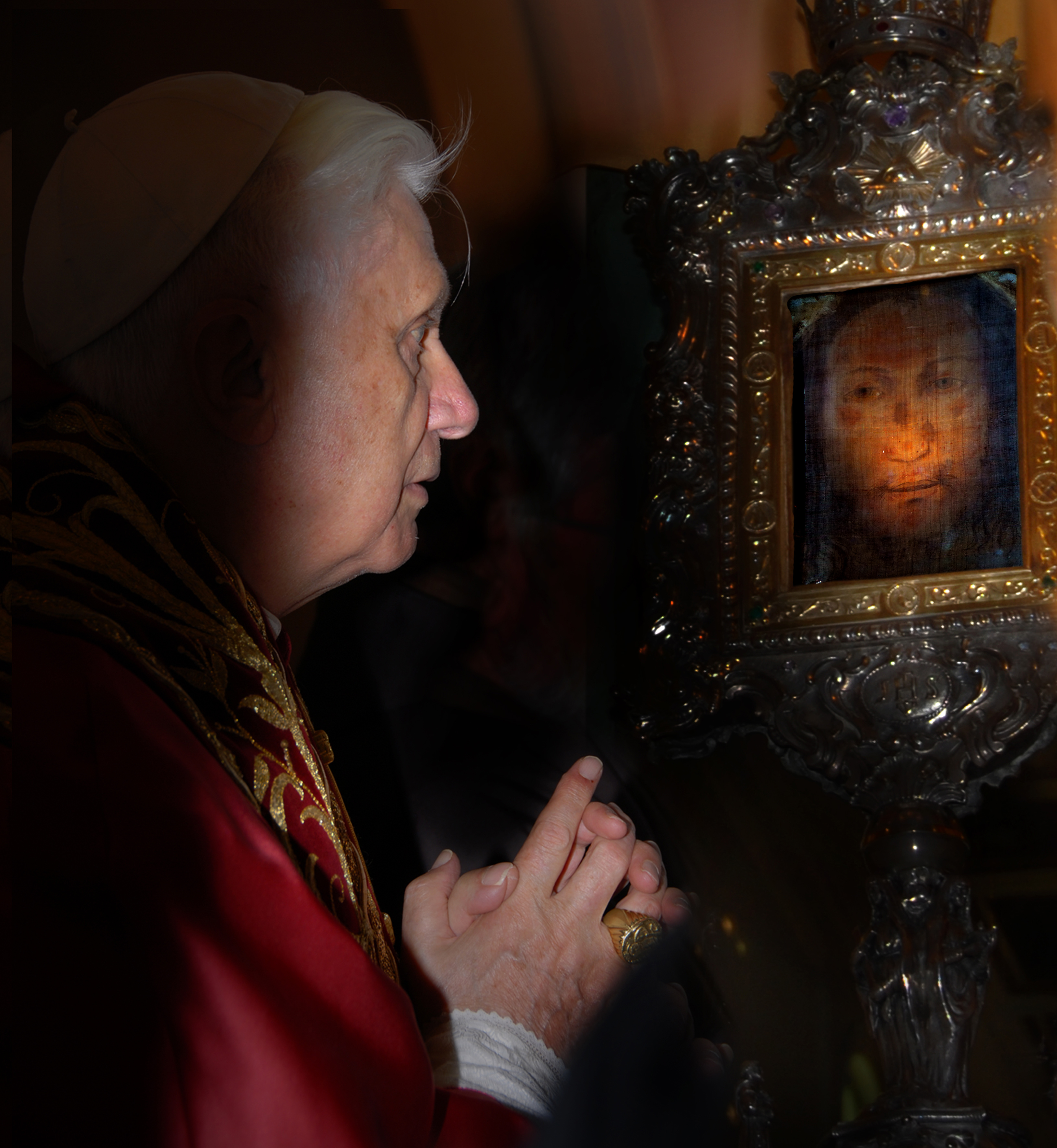
On September 1, 2006, another pilgrim (some also may say an “angelic pilgrim”) came to Manoppello to see for himself the Holy Face of Jesus on the Veil–Pope Benedict XVI, who has elevated the status of the Shrine to a Sanctuary Basilica. “Your Face O Lord I seek–seeking the Face of Jesus must be the longing of all Christians, indeed, we are ‘the generation’ which seeks His Face in our day, the Face of the ‘God of Jacob.’ If we persevere in our quest for the Face of the Lord, at the end of our earthly pilgrimage, He, Jesus, will be our eternal joy, our reward and glory forever.”–Pope Benedict XVI, September 1, 2006
“Come and you will see”(Jn 1:39) Pope Benedict XVI and the Holy Face of Manoppello
The Face of Manoppello, which may be viewed from both sides, is described as “dark,” “light,” “bluish”, “golden” or it may even “vanish completely”…all are different, but, it is one Face!
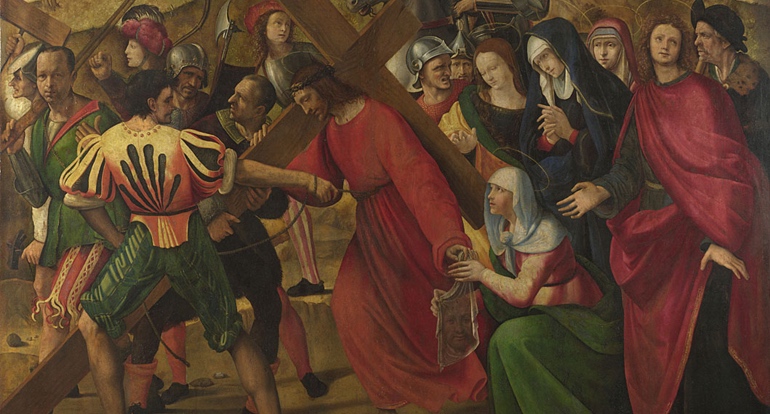
Ridolfo Ghirlandaio, 1483 – 1561 The Procession to Calvary ca. 1505, detail, National Gallery
The Name
In the crowd walking towards the place of Agony–did you open up a gap at some point or were you opening it from the beginning? And since when? You tell me, Veronica. Your name was born in the very instant in which your heart became an effigy: the effigy of truth. Your name was born from what you gazed upon. –Karol Woytyla
Fresco painting of sacellum in the Oratory of John VII(ca. 1608)
The Veronica–Although historians are still uncertain as to how the veil came to Rome, there is an interesting fresco in the grottoes beneath St. Peter’s Basilica. The fresco, commissioned ca. 1608 by Paul V in the area near the tomb of St. Peter, was to preserve the memory of monuments of the old Basilica that had been demolished 12 years earlier. Among the frescoes is the Oratory (dated ca. 708) of Pope John VII. It protected the sacellum or small shrine containing the Holy Veil, which by some accounts, brought by John VII to Rome from Constantinople.
The inscription reads: SACALLVM SS. SVDARII VERONIC(ae), ET DEIP(arae) VIRG(inis) A IONNE VII—“The oratory of the Holy Sudarium Veronica and of the Virgin Mother of God, built by John VII” (Scholars dispute whether the shrine was actually built by John VII or much later by Celestinus III–which is another mystery–why would one pope build a shrine, then credit it to another pope?)
(The Latin word “Veronic” in the inscription means “True Image” and the word “sudarium” is Latin for “sweat cloth.” “Sudarium” is specifically used to refer to the two cloths that are associated with the Passion of Jesus: One is known as the “Oviedo,” which bears no image, but was used to soak up blood from Jesus’s Face after His death on the Cross; and the second is known as the “Veronica Veil.” The Shroud of Turin is known as the “Sindone”or burial cloth.)
Veronica displaying the Sudarium, Flemish ca.1450-1455 Getty Museum
“The Veronica” was the name given to the veil itself, but several legends sprang up about a woman named Veronica (who was sometimes associated with the woman Berenice, the bleeding woman, who touches the hem of Jesus’s garment in the Gospel). The oldest legend, tells a tale much like the Legend of Edessa—the Cura Sanitatis Tiberii, in which a woman named Veronica, having painted a portrait of the Lord, was summoned from Jerusalem to Rome by the Emperor Tiberius, who was cured of leprosy by touching the sacred image. Then there is a version that tells of Veronica wiping sweat from the Face of Jesus, written in 1191 called Joseph d’ Arimathie by Robert de Boron. The stories are many and varied, but the legend that most people are familiar with today is traced to a version by Roger d’Argenteuil in the 1300’s–it is that of Veronica, which is associated with the sixth station of the Cross–the compassionate woman, wiping the Face of Jesus on the way to Calvary with a cloth, upon which He leaves an image of His Face. The big question is– did a woman, later named for the holy Veronica Veil, exist? The Catholic Encyclopedia deftly answers the delicate question: “These pious traditions cannot be documented, but there is no reason why the belief that such an act of compassion did occur should not find expression in the veneration paid to one called Veronica.”
Holy Face, St. Lorenz, Nueremberg, Germany
It was Pope Innocent III who brought the Holy Veil out of hiding, by instituting a procession with the Veronica on the Sunday after the Octave of the Epiphany, which was dedicated to the Wedding at Cana. The procession traveled from St. Peter’s Church to Spirito Santo Hospital in Rome. Alms were given along the way (3 denarii) to the poor, which was enough to buy milk, bread, and wine. (This procession was reenacted for the first time in many centuries in Rome on January 17, 2016. Details here.) Soon after Innocent III’s procession, the Veronica Veil became the most famous relic in Rome. Pilgrims flocked to see the Veronica and artists created many reproductions for the pilgrims. During next four centuries, the ordinary pilgrims included saints and other notable persons who saw the Holy Face for themselves and recorded their experience.
Venice, Illustration of the Beatific Vision of the Face of God for Dante’s Paradiso, 13th Century
Dante, who came to Rome as a pilgrim and saw the Veronica Veil himself, later wrote in Paradiso of the Divine Comedy of“A pilgrim from Croatia, far indeed, comes to set his gaze on our Veronica, and cannot fulfill so long a hunger for that food. But while the relic’s shown he says, in thought, ‘And did you look like this, was this your face, O Jesus Christ my Lord and very God?'” (Canto 31,103-106)
Flemish 15th Century
The appearance of the Face on the Veil had mysterious, changeable attributes recorded in art and writing: The veil was described as sheer, almost transparent, and luminous. While the face of Jesus was sometimes suffering or serene, in color it was “dark,” “bright,” “bluish,” “black” or “golden”…or even vanished completely.
St.Gertrude the Great described the Veronica in 1289, explaining that both the darkness and brightness of the Veronica was related to the Passion and Resurrection of Jesus as well as the fact that Christ was both human and divine. St. Julian of Norwich wrote of the Holy Veil in Rome, “which He hath portrayed with His own blessed Face when He was in His hard Passion, with steadfast will going to His death, and often changing of color…diverse changing of color and countenance, sometime more comfortably and life-like, sometime more ruefully and death-like.”
Even Martin Luther gave a rather incredulous description of the Veronica, which he saw (or rather, didn’t see) on a visit to Rome in 1511: “It is simply a square black board on which a transparent piece of cloth hangs and above this is another veil. There poor Jena Hans cannot have seen anything more than a piece of transparent cloth that covers a black board. This is the Veronica which is shown.”
In 1506, Pope Julius II (the pope who harangued Michaelangelo to complete the Sistine Chapel) began the great renovation of St. Peter’s Basilica including the construction of a magnificent Veronica pillar, which was to contain the precious Veil. In 1527, Rome was sacked by the mercenary troops of Charles the V; within eight days homes, palaces, and churches were looted, pillaged, and destroyed, including the Vatican. (Sack of Rome) As in all times of crisis, the rumors flew…it was feared that the Veronica had been stolen. “A letter written to the Duchess of Urbino by her representative, Urban, dated May 21, 1527, reads, Holy relics have been thrown out onto the streets. The Veronica has been stolen and passed around in taverns from person to person without a word of protest‘”… (To be continued in “Four Stories – One Face, Pt. 4)
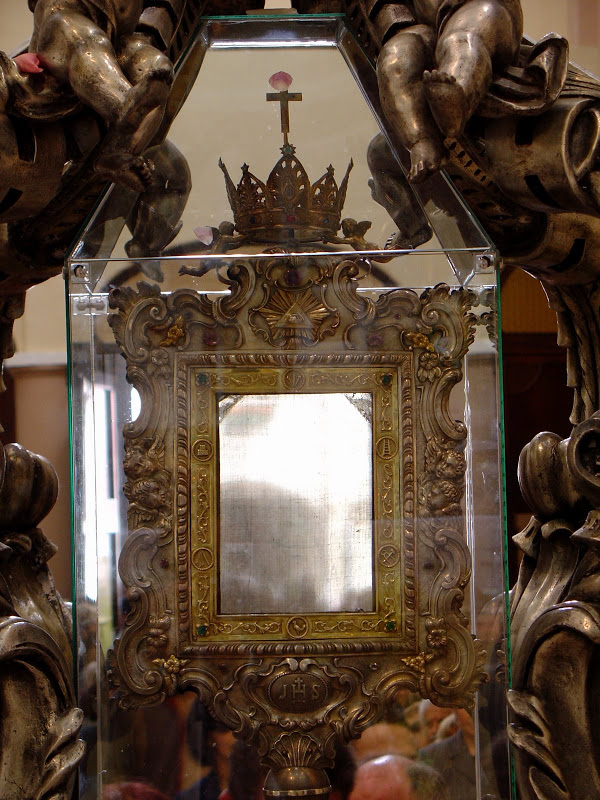
The reliquary frame which formerly held the Veronica Veil on display in the Vatican Museum.
(The 14th century reliquary frame, built to display the miraculous veil. The frame was likely broken and the rock crystal cracked during the Sack of Rome in 1527. The crystal is the largest known example of rock crystal in the world.)
Important Update: October 30–6.1 Earthquake centered at Norcia.There are no reports of damage or injury at the Sanctuary Basilica of the Holy Face. Let us pray that God keeps His little place in Manoppello safe.
Central Italy has once again been hit by a terrible earthquake. “I am praying for the injured and the families who have suffered the most damage, as well as for rescue and First Aid workers,” Pope Francis told the crowds at St. Peter’s Square this morning.
Please pray for those affected by the earthquake in Italy in Central Italy. Jesus is present in all who suffer and can bring good, we pray, even out of this catastrophic event.
“O, Lord of Hosts, restore us; Let Your Face shine on us,that we may be saved.” (Ps. 80:4)
(Padre Domenico, predicted, in 1915, a devastating earthquake as a small boy, which hit that region the next morning, killing 30,000 people, including two of his sisters and burying he and his father in the rubble of their church. A man he didn’t know, pulled him from the rubble to safety, whose face he later recognized when he first visited the Shrine of the Holy Face as the Face of Jesus on the miraculous veil. When he knelt before the Holy Face on the Veil, he exclaimed, “This is the man who saved me from the rubble…” He asked to remain at the Shrine and was there until the time of his death.)
13th Century Surrender of the Mandylion in Constantinople
”Does any one who has divine knowledge and spiritual understanding not recognize that [iconoclasm] is a ruse of the devil? For he does not want his defeat and shame to be spread abroad, nor the glory of God and his saints to be recorded.”
— St. John Damascene
Iconoclasm–the name means “image breaking”; it is a heresy which maintained that the veneration of religious images was unlawful. It has been disputed as to whether it began due to Muslim influence, which regarded all representation of the human form to be an abominable idol, or, as some historians believe, whether it came about for political reasons. A resurgence of iconoclasm among radical Muslims is in fact prevalent today, as evidenced by statues and holy images that have been destroyed in churches across the face of the globe. However, there are also some Christians, even today, who believe that venerating images is idolatry. Iconoclasm was condemned as unfaithful to Christian tradition at the Second Council of Nicaea in 787.
The iconoclast persecution was raging in the 8th century, and though iconoclasts destroyed images and tore evidence of the Holy Face of Camulia from holy books, there were also Early Church Fathers, who opposed iconosclasm like St. John Damascene, a Doctor of the Church who wrote many works strongly defending the use of such images.
The Mandylion of Edessa
“Previously, God, Who has not a body or a face, absolutely could not be represented by an image. But now, that He has made Himself visible in the flesh, and has lived with people, I can make an image of what we have seen of God…and contemplate the glory of the Lord, His Face unveiled.”–St. John Damascene
King Abgar with Veil, Monastery of St. Catherine Sinai, Egypt 8th Century
The Edessa-Another image “not made by human hand” of the Face of Jesus, was mentioned many times at the Council; It was known as the Mandylion of Edessa. St. John Damascene wrote this regarding the Mandylion (which means “towel” or “handkerchief” in Arabic):
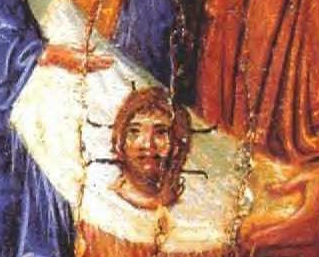
“It is said that King Abgarus of Edessa had sent a painter to make a portrait of Christ. But he was not able to do it because of the light that shone out of the Lord’s Face. So, taking a veil and placing it before his holy and life-giving face, Jesus impressed his image on it and sent it to King Abgarus, thus satisfying his desire.” –St. John Damascene (source)
St. Jude Thaddeus, holding the Face of Jesus
According to one tradition (there are several), the poor King suffered from leprosy and gout and hearing of the miracles of Jesus, sent a letter to Jesus with his secretary Ananias, (who also happened to be the wonderful painter mentioned above). It was St. Jude Thaddeus who brought the Holy Veil to the King. After hearing St. Jude Thaddeus preach, and receiving the holy image the King was healed. King Abgarus, who brought Christianity to his kingdom, is venerated as a saint in the Eastern Church.
Reference to the Holy Face of Edessa has been found in historical sources dated back to 590. “Arab sources also mention the cloth on which Jesus imprinted the image of His Face.” (source) Although there was disagreement over the centuries as to the question of how the image of the living face of Jesus was formed on the cloth, everyone agreed that it was indeed miraculous.
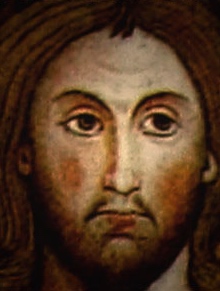
Christ Pantocrator, St. Catherine Monastery, Sinai 6th or 7th Century
Many reproductions were made of the image, some appearing miraculously on tile that had covered the sacred cloth. The Mandylion was brought eventually to Constantinople, “the queen of all cities,” on August 16, 944, which is still celebrated as a feast day in the Eastern calendar. It was recorded as being kept in a golden vessel, and only taken out once a year from the Sacred Chapel, where other precious relics of the Passion were also kept until the sack of Constantinople in 1204.
There are many who believe that the image of Edessa was possibly The Shroud of Turin folded in four, others believe it may have actually been the Camulia . (source) The faint image, is difficult to see on the Shroud of Turin, and is not the face of a living man. (The face on the Shroud could not be seen clearly until it was first photographic negatives were produced in 1898.)
(In attempting to untangle these intricate threads of history, one must look at references to the earliest icons derived from a common source–the “proto-image.” One of the earliest known icons is Christ Pantocrator, portraying the Face of Christ. There have been several versions of the icon since, each apparently striving to be faithful to a specific original “proto-image”–an image referred to as acheiropoieta “not made by human hands.” Often the icons also depict a unique characteristic and intriguing clue–a short tuft of hair at the center part, which becomes very important in discovering the “proto-image.”)
But what happened to the Camulia Veil? Before disappearing from the radar of historians during the iconoclast persecution, the Camulia Veil had been ordered by Emperor Justinian II to be brought to Constantinople. The Veil, sometimes carried as a standard in battle by the emperor, was for the most part hidden away, and taken out once a year for the emperor’s eyes only–but only after he had gone to confession and received communion. Justinian’s reign was turbulent, however, and the wise patriarch of Constantinople, Kallinikos, who was later blinded by Justinian II (one hopes that Justinian went back to Confession), entrusted the Veil to the hands of a Greek man to be brought to safety in Rome. In the year 705, that Greek man became Pope John VII and the new pope built a Chapel in St. Peter’s known as the “Veronica Chapel” to house a precious relic…(To be continued in “Four Stories – One Face, Pt. 3)
“The whole earth is a living icon of the face of God.”

“Mary, Mother of the Holy Face, help us to have ‘hands innocent and a heart pure,’ hands illumined by the truth of love and hearts enraptured by divine beauty, that transformed by the encounter with Christ, we may gift ourselves to the poor and the suffering, whose faces reflect the hidden presence of your Son Jesus. Amen.” — Pope Emeritus Benedict XVI


















 Illumina Domine Blog - Devotion to The Holy Face