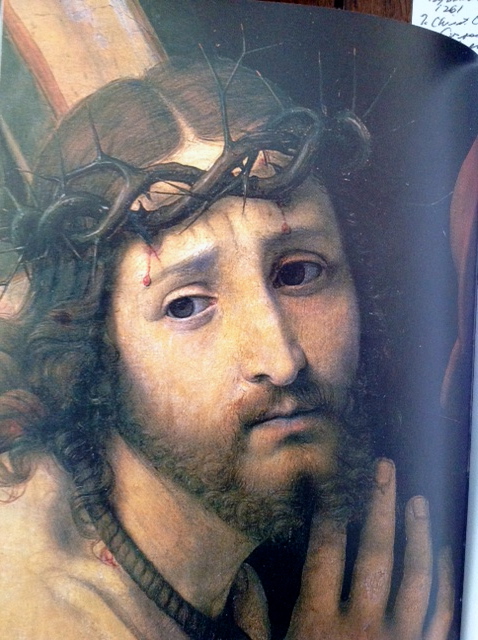
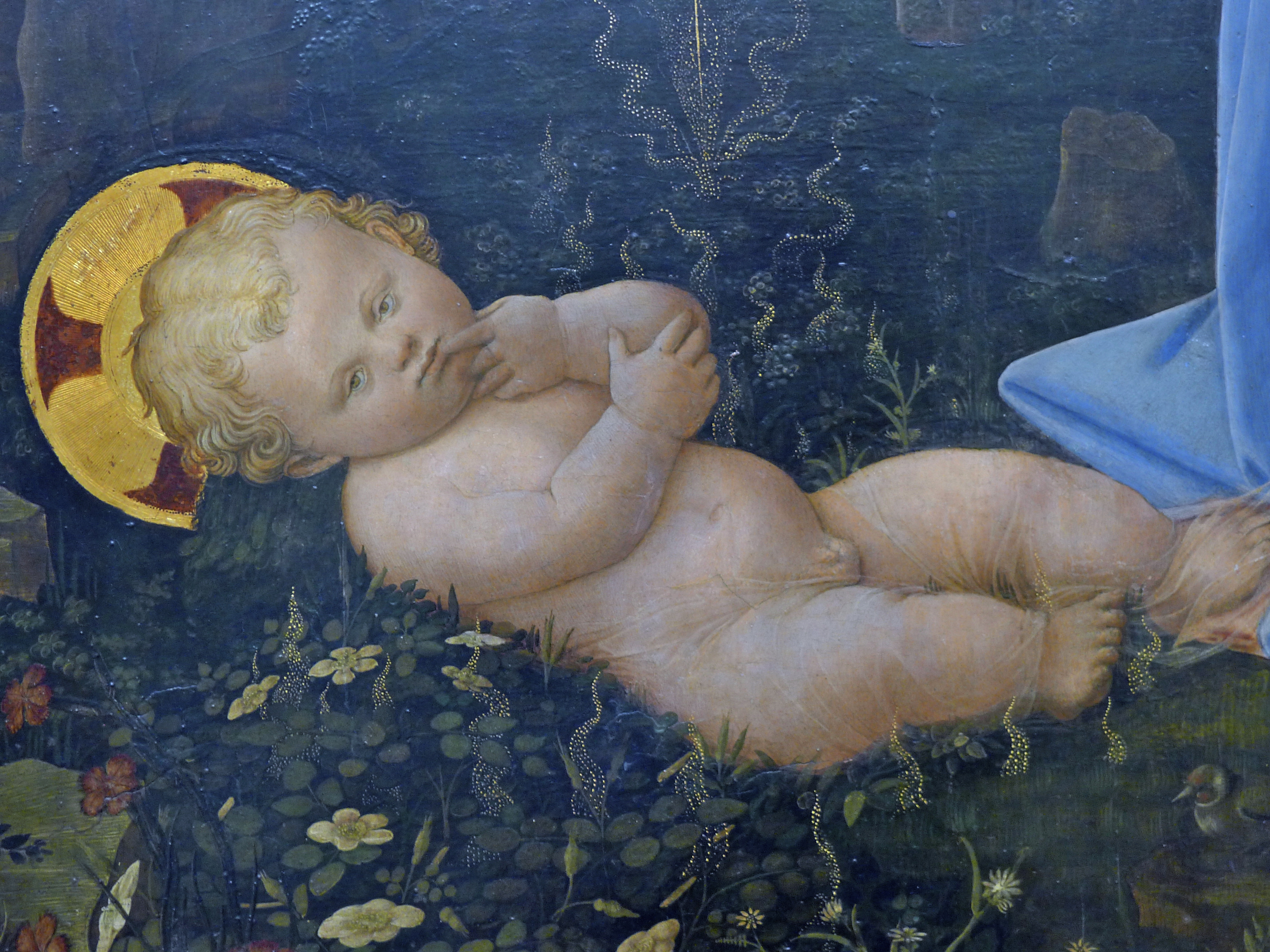
Ridolfo Ghirlandaio, 1483 – 1561 The Procession to Calvary ca. 1505, detail, National Gallery
The Name
In the crowd walking towards the place of Agony–did you open up a gap at some point or were you opening it from the beginning? And since when? You tell me, Veronica. Your name was born in the very instant in which your heart became an effigy: the effigy of truth. Your name was born from what you gazed upon. –Karol Woytyla
Fresco painting of sacellum in the Oratory of John VII(ca. 1608)
The Veronica–Although historians are still uncertain as to how the veil came to Rome, there is an interesting fresco in the grottoes beneath St. Peter’s Basilica. The fresco, commissioned ca. 1608 by Paul V in the area near the tomb of St. Peter, was to preserve the memory of monuments of the old Basilica that had been demolished 12 years earlier. Among the frescoes is the Oratory (dated ca. 708) of Pope John VII. It protected the sacellum or small shrine containing the Holy Veil, which by some accounts, brought by John VII to Rome from Constantinople.
The inscription reads: SACALLVM SS. SVDARII VERONIC(ae), ET DEIP(arae) VIRG(inis) A IONNE VII—“The oratory of the Holy Sudarium Veronica and of the Virgin Mother of God, built by John VII” (Scholars dispute whether the shrine was actually built by John VII or much later by Celestinus III–which is another mystery–why would one pope build a shrine, then credit it to another pope?)
(The Latin word “Veronic” in the inscription means “True Image” and the word “sudarium” is Latin for “sweat cloth.” “Sudarium” is specifically used to refer to the two cloths that are associated with the Passion of Jesus: One is known as the “Oviedo,” which bears no image, but was used to soak up blood from Jesus’s Face after His death on the Cross; and the second is known as the “Veronica Veil.” The Shroud of Turin is known as the “Sindone”or burial cloth.)
Veronica displaying the Sudarium, Flemish ca.1450-1455 Getty Museum
“The Veronica” was the name given to the veil itself, but several legends sprang up about a woman named Veronica (who was sometimes associated with the woman Berenice, the bleeding woman, who touches the hem of Jesus’s garment in the Gospel). The oldest legend, tells a tale much like the Legend of Edessa—the Cura Sanitatis Tiberii, in which a woman named Veronica, having painted a portrait of the Lord, was summoned from Jerusalem to Rome by the Emperor Tiberius, who was cured of leprosy by touching the sacred image. Then there is a version that tells of Veronica wiping sweat from the Face of Jesus, written in 1191 called Joseph d’ Arimathie by Robert de Boron. The stories are many and varied, but the legend that most people are familiar with today is traced to a version by Roger d’Argenteuil in the 1300’s–it is that of Veronica, which is associated with the sixth station of the Cross–the compassionate woman, wiping the Face of Jesus on the way to Calvary with a cloth, upon which He leaves an image of His Face. The big question is– did a woman, later named for the holy Veronica Veil, exist? The Catholic Encyclopedia deftly answers the delicate question: “These pious traditions cannot be documented, but there is no reason why the belief that such an act of compassion did occur should not find expression in the veneration paid to one called Veronica.”
Holy Face, St. Lorenz, Nueremberg, Germany
It was Pope Innocent III who brought the Holy Veil out of hiding, by instituting a procession with the Veronica on the Sunday after the Octave of the Epiphany, which was dedicated to the Wedding at Cana. The procession traveled from St. Peter’s Church to Spirito Santo Hospital in Rome. Alms were given along the way (3 denarii) to the poor, which was enough to buy milk, bread, and wine. (This procession was reenacted for the first time in many centuries in Rome on January 17, 2016. Details here.) Soon after Innocent III’s procession, the Veronica Veil became the most famous relic in Rome. Pilgrims flocked to see the Veronica and artists created many reproductions for the pilgrims. During next four centuries, the ordinary pilgrims included saints and other notable persons who saw the Holy Face for themselves and recorded their experience.
Venice, Illustration of the Beatific Vision of the Face of God for Dante’s Paradiso, 13th Century
Dante, who came to Rome as a pilgrim and saw the Veronica Veil himself, later wrote in Paradiso of the Divine Comedy of“A pilgrim from Croatia, far indeed, comes to set his gaze on our Veronica, and cannot fulfill so long a hunger for that food. But while the relic’s shown he says, in thought, ‘And did you look like this, was this your face, O Jesus Christ my Lord and very God?'” (Canto 31,103-106)
Flemish 15th Century
The appearance of the Face on the Veil had mysterious, changeable attributes recorded in art and writing: The veil was described as sheer, almost transparent, and luminous. While the face of Jesus was sometimes suffering or serene, in color it was “dark,” “bright,” “bluish,” “black” or “golden”…or even vanished completely.
St.Gertrude the Great described the Veronica in 1289, explaining that both the darkness and brightness of the Veronica was related to the Passion and Resurrection of Jesus as well as the fact that Christ was both human and divine. St. Julian of Norwich wrote of the Holy Veil in Rome, “which He hath portrayed with His own blessed Face when He was in His hard Passion, with steadfast will going to His death, and often changing of color…diverse changing of color and countenance, sometime more comfortably and life-like, sometime more ruefully and death-like.”
Even Martin Luther gave a rather incredulous description of the Veronica, which he saw (or rather, didn’t see) on a visit to Rome in 1511: “It is simply a square black board on which a transparent piece of cloth hangs and above this is another veil. There poor Jena Hans cannot have seen anything more than a piece of transparent cloth that covers a black board. This is the Veronica which is shown.”
In 1506, Pope Julius II (the pope who harangued Michaelangelo to complete the Sistine Chapel) began the great renovation of St. Peter’s Basilica including the construction of a magnificent Veronica pillar, which was to contain the precious Veil. In 1527, Rome was sacked by the mercenary troops of Charles the V; within eight days homes, palaces, and churches were looted, pillaged, and destroyed, including the Vatican. (Sack of Rome) As in all times of crisis, the rumors flew…it was feared that the Veronica had been stolen. “A letter written to the Duchess of Urbino by her representative, Urban, dated May 21, 1527, reads, Holy relics have been thrown out onto the streets. The Veronica has been stolen and passed around in taverns from person to person without a word of protest‘”… (To be continued in “Four Stories – One Face, Pt. 4)
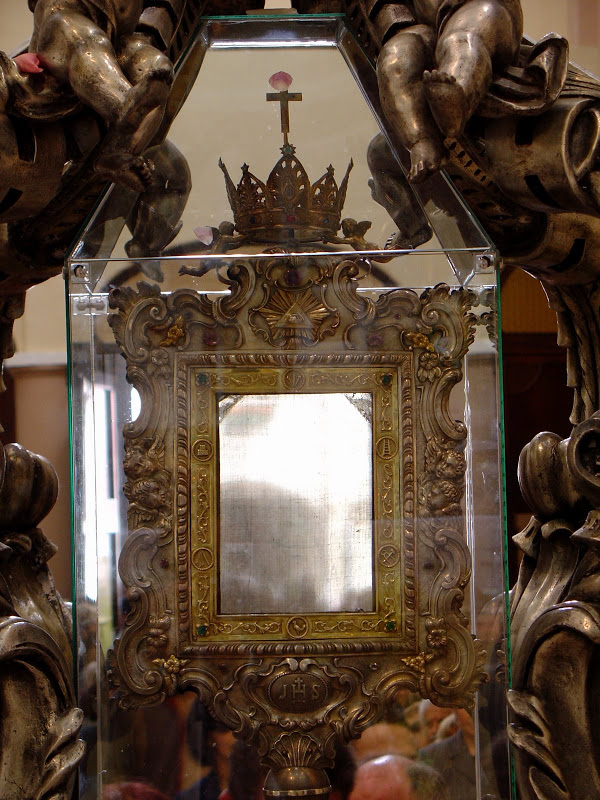
The reliquary frame which formerly held the Veronica Veil on display in the Vatican Museum.
(The 14th century reliquary frame, built to display the miraculous veil. The frame was likely broken and the rock crystal cracked during the Sack of Rome in 1527. The crystal is the largest known example of rock crystal in the world.)
Important Update: October 30–6.1 Earthquake centered at Norcia.There are no reports of damage or injury at the Sanctuary Basilica of the Holy Face. Let us pray that God keeps His little place in Manoppello safe.
Central Italy has once again been hit by a terrible earthquake. “I am praying for the injured and the families who have suffered the most damage, as well as for rescue and First Aid workers,” Pope Francis told the crowds at St. Peter’s Square this morning.
Please pray for those affected by the earthquake in Italy in Central Italy. Jesus is present in all who suffer and can bring good, we pray, even out of this catastrophic event.
“O, Lord of Hosts, restore us; Let Your Face shine on us,that we may be saved.” (Ps. 80:4)
(Padre Domenico, predicted, in 1915, a devastating earthquake as a small boy, which hit that region the next morning, killing 30,000 people, including two of his sisters and burying he and his father in the rubble of their church. A man he didn’t know, pulled him from the rubble to safety, whose face he later recognized when he first visited the Shrine of the Holy Face as the Face of Jesus on the miraculous veil. When he knelt before the Holy Face on the Veil, he exclaimed, “This is the man who saved me from the rubble…” He asked to remain at the Shrine and was there until the time of his death.)
13th Century Surrender of the Mandylion in Constantinople
”Does any one who has divine knowledge and spiritual understanding not recognize that [iconoclasm] is a ruse of the devil? For he does not want his defeat and shame to be spread abroad, nor the glory of God and his saints to be recorded.”
— St. John Damascene
Iconoclasm–the name means “image breaking”; it is a heresy which maintained that the veneration of religious images was unlawful. It has been disputed as to whether it began due to Muslim influence, which regarded all representation of the human form to be an abominable idol, or, as some historians believe, whether it came about for political reasons. A resurgence of iconoclasm among radical Muslims is in fact prevalent today, as evidenced by statues and holy images that have been destroyed in churches across the face of the globe. However, there are also some Christians, even today, who believe that venerating images is idolatry. Iconoclasm was condemned as unfaithful to Christian tradition at the Second Council of Nicaea in 787.
The iconoclast persecution was raging in the 8th century, and though iconoclasts destroyed images and tore evidence of the Holy Face of Camulia from holy books, there were also Early Church Fathers, who opposed iconosclasm like St. John Damascene, a Doctor of the Church who wrote many works strongly defending the use of such images.
The Mandylion of Edessa
“Previously, God, Who has not a body or a face, absolutely could not be represented by an image. But now, that He has made Himself visible in the flesh, and has lived with people, I can make an image of what we have seen of God…and contemplate the glory of the Lord, His Face unveiled.”–St. John Damascene
King Abgar with Veil, Monastery of St. Catherine Sinai, Egypt 8th Century
The Edessa-Another image “not made by human hand” of the Face of Jesus, was mentioned many times at the Council; It was known as the Mandylion of Edessa. St. John Damascene wrote this regarding the Mandylion (which means “towel” or “handkerchief” in Arabic):
“It is said that King Abgarus of Edessa had sent a painter to make a portrait of Christ. But he was not able to do it because of the light that shone out of the Lord’s Face. So, taking a veil and placing it before his holy and life-giving face, Jesus impressed his image on it and sent it to King Abgarus, thus satisfying his desire.” –St. John Damascene (source)
St. Jude Thaddeus, holding the Face of Jesus
According to one tradition (there are several), the poor King suffered from leprosy and gout and hearing of the miracles of Jesus, sent a letter to Jesus with his secretary Ananias, (who also happened to be the wonderful painter mentioned above). It was St. Jude Thaddeus who brought the Holy Veil to the King. After hearing St. Jude Thaddeus preach, and receiving the holy image the King was healed. King Abgarus, who brought Christianity to his kingdom, is venerated as a saint in the Eastern Church.
Reference to the Holy Face of Edessa has been found in historical sources dated back to 590. “Arab sources also mention the cloth on which Jesus imprinted the image of His Face.” (source) Although there was disagreement over the centuries as to the question of how the image of the living face of Jesus was formed on the cloth, everyone agreed that it was indeed miraculous.
Christ Pantocrator, St. Catherine Monastery, Sinai 6th or 7th Century
Many reproductions were made of the image, some appearing miraculously on tile that had covered the sacred cloth. The Mandylion was brought eventually to Constantinople, “the queen of all cities,” on August 16, 944, which is still celebrated as a feast day in the Eastern calendar. It was recorded as being kept in a golden vessel, and only taken out once a year from the Sacred Chapel, where other precious relics of the Passion were also kept until the sack of Constantinople in 1204.
There are many who believe that the image of Edessa was possibly The Shroud of Turin folded in four, others believe it may have actually been the Camulia . (source) The faint image, is difficult to see on the Shroud of Turin, and is not the face of a living man. (The face on the Shroud could not be seen clearly until it was first photographic negatives were produced in 1898.)
(In attempting to untangle these intricate threads of history, one must look at references to the earliest icons derived from a common source–the “proto-image.” One of the earliest known icons is Christ Pantocrator, portraying the Face of Christ. There have been several versions of the icon since, each apparently striving to be faithful to a specific original “proto-image”–an image referred to as acheiropoieta “not made by human hands.” Often the icons also depict a unique characteristic and intriguing clue–a short tuft of hair at the center part, which becomes very important in discovering the “proto-image.”)
But what happened to the Camulia Veil? Before disappearing from the radar of historians during the iconoclast persecution, the Camulia Veil had been ordered by Emperor Justinian II to be brought to Constantinople. The Veil, sometimes carried as a standard in battle by the emperor, was for the most part hidden away, and taken out once a year for the emperor’s eyes only–but only after he had gone to confession and received communion. Justinian’s reign was turbulent, however, and the wise patriarch of Constantinople, Kallinikos, who was later blinded by Justinian II (one hopes that Justinian went back to Confession), entrusted the Veil to the hands of a Greek man to be brought to safety in Rome. In the year 705, that Greek man became Pope John VII and the new pope built a Chapel in St. Peter’s known as the “Veronica Chapel” to house a precious relic…(To be continued in “Four Stories – One Face, Pt. 3)
“The whole earth is a living icon of the face of God.”
There are at least four separate historical accounts of a veil or cloth of miraculous origin, “not made by human hands,” bearing an image of the Face of Jesus Christ. Each account relates, in its own way, that the Sacred Image came into contact with the living Face of Jesus. Human nature, being what it is, has altered the story, over the centuries, like the old game of “telephone” where one child whispers a story to the first child in line and by the time it has reached the last child the narrative has become very different.
Humanity has journeyed through millennia of dangers, persecution, wars, and intrigue since Christ walked on the earth (and on water), which obscured the facts of the origin of the Holy Veil of the Face of Jesus. The stories of the Veil were handed down to us today by way of history, tradition, literature, art, and music. Somewhere within these intertwined stories is the truth, but, one must have the humility to acknowledge before such a great mystery that we don’t know the whole of the story because God, whose “ways are not our ways,” has allowed them to be hidden.
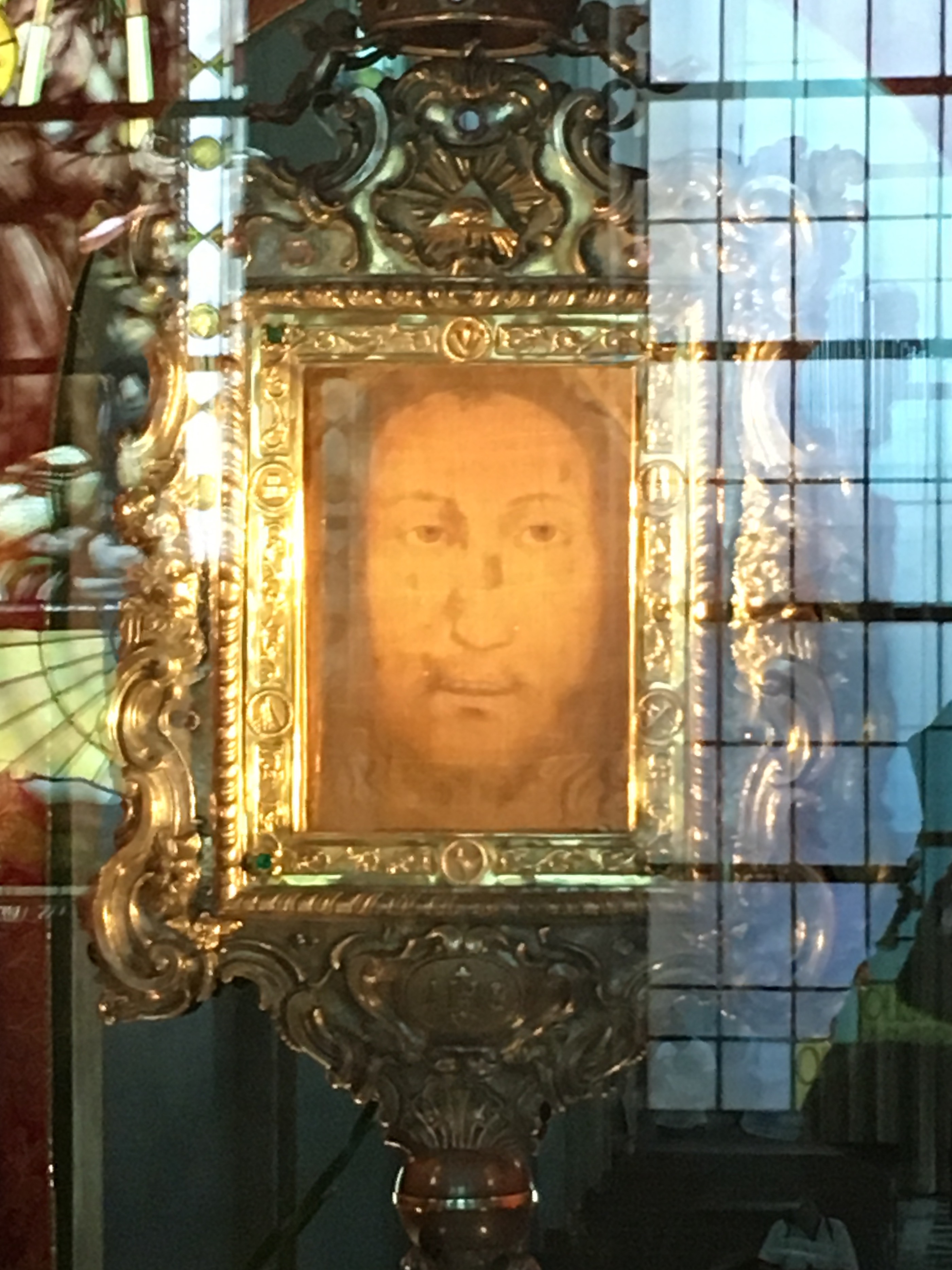
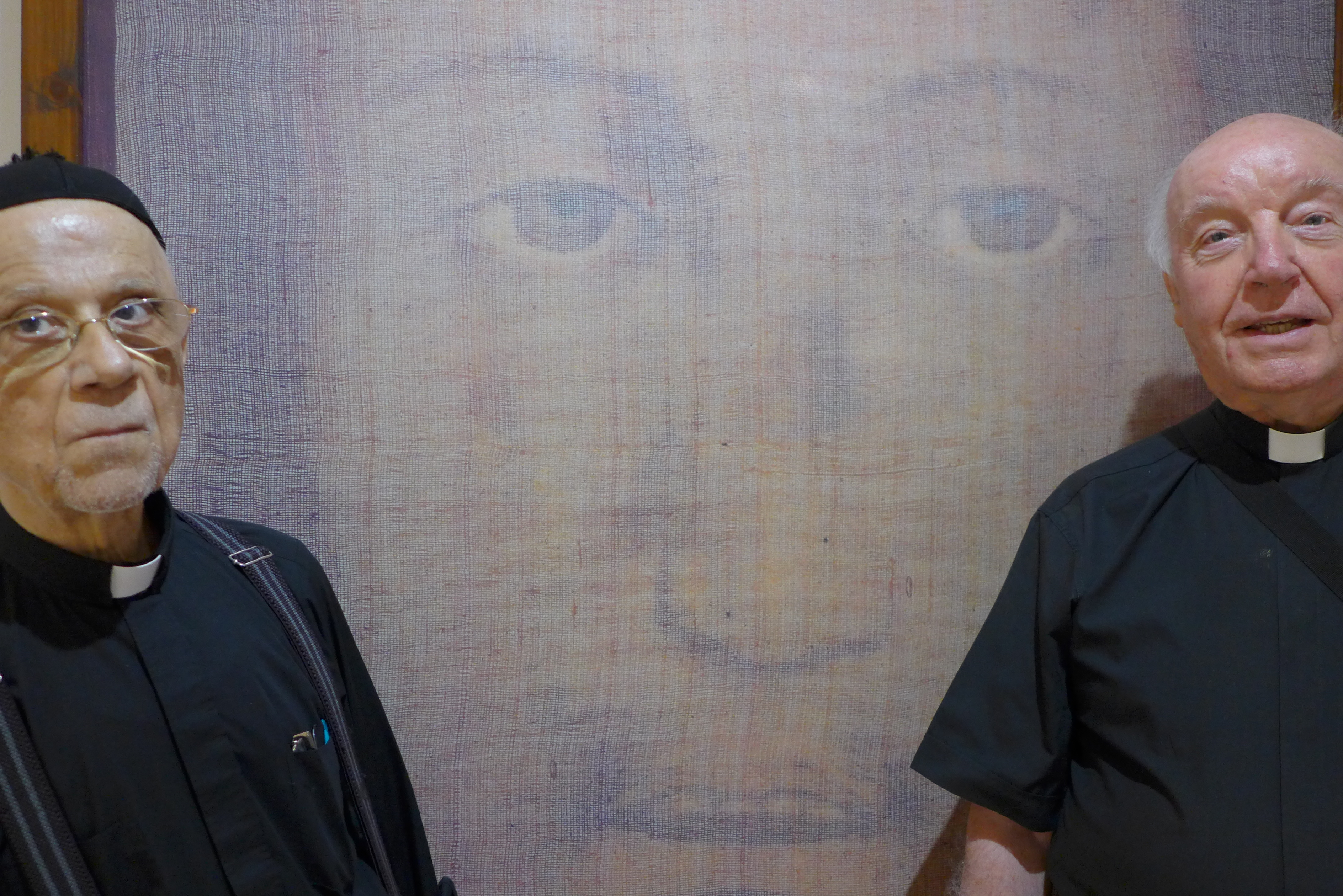
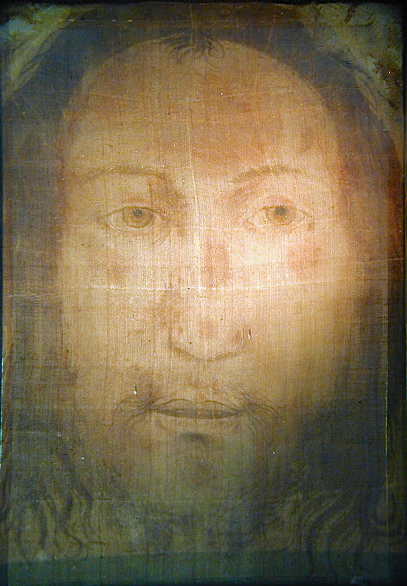
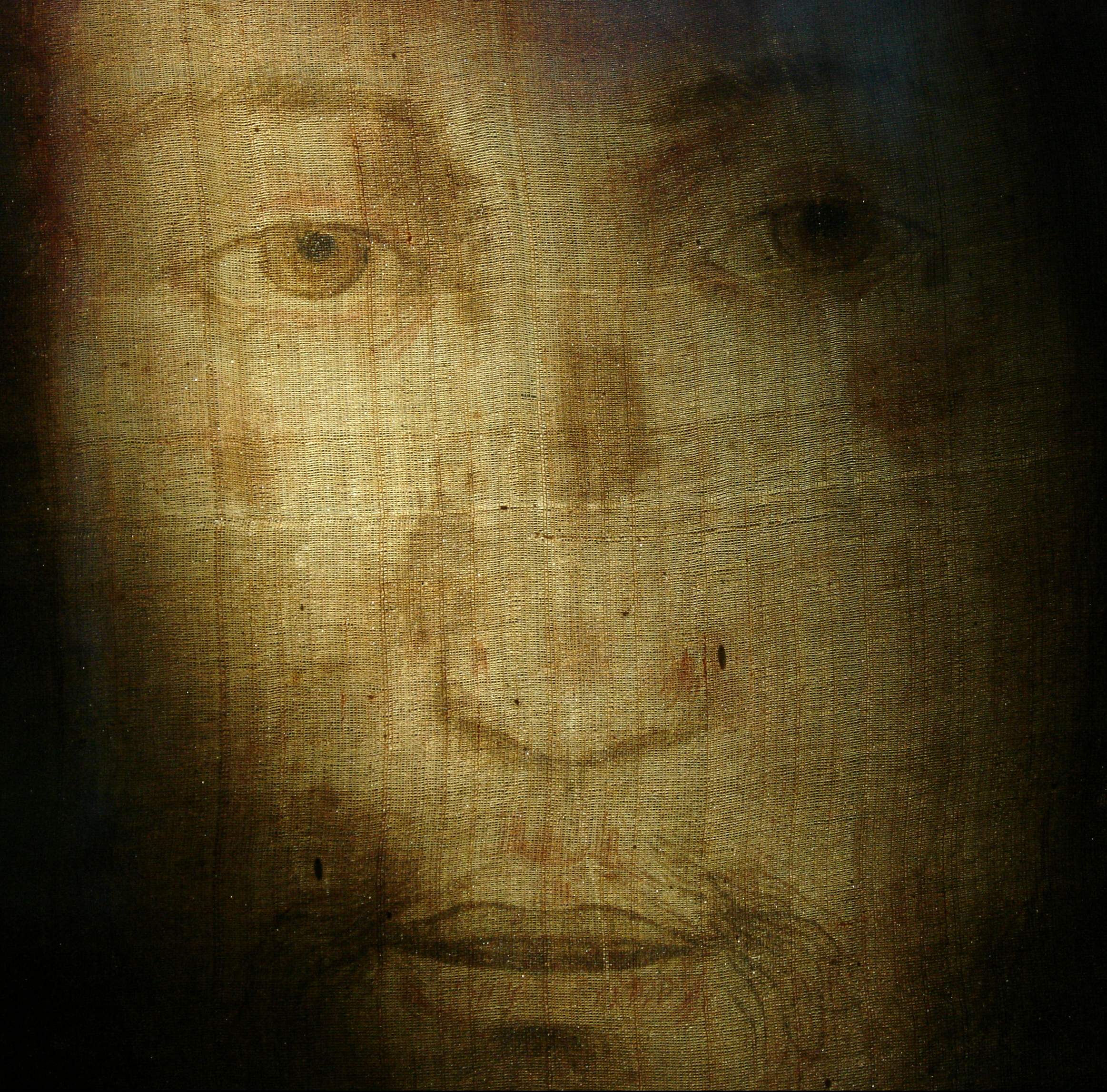
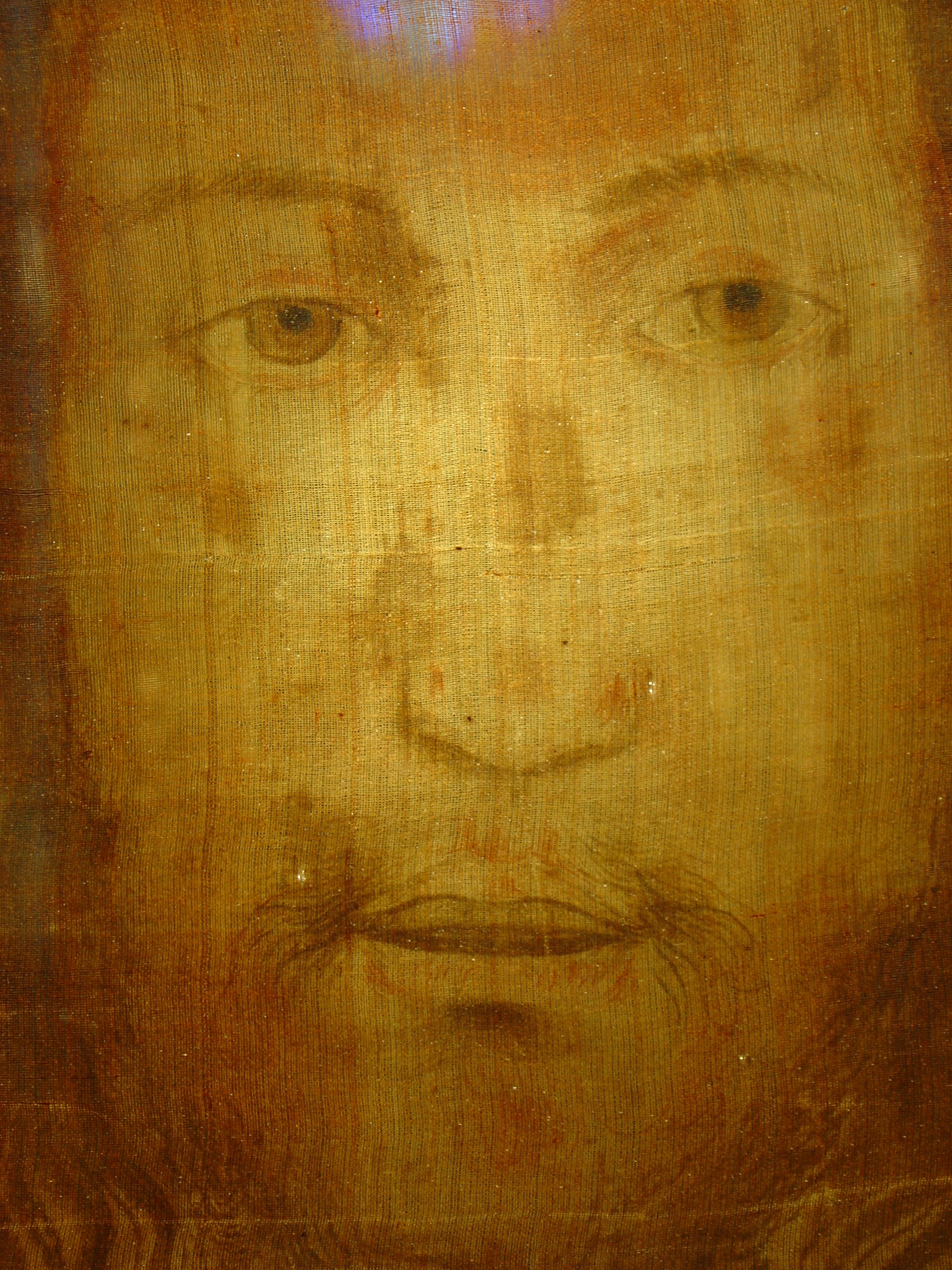
To begin, each are said to depict the Face of the living Christ on a sheer veil or cloth–a human face of a man who has suffered, with traces of wounds, bruises, and swelling visible, especially on the left cheek. His wavy hair is long and parted with a small, short lock of curls at the center. His beard is sparse as though torn, and divided in two. His open eyes are peaceful and looking slightly to one side. His mouth is partially opened. The images each were reported to have been miraculous not only in appearance, but also as an instrument of healing.
The Camulia-The oldest story of such an image is the Camulia—named for where it was found, the town of Kamuliana, in Cappodocia, Turkey. The story is of a pagan woman name Hypatia who was receiving Christian instruction and had difficulty believing in Jesus unless she could see Him. “How can I worship Him when He is not visible and I cannot see Him?” She asked. One day she drew from the water of a well, a cloth, with His Holy Face. She became a believer from that moment on. Although there is no longer any trace in art history of the Camulia, the image was described by Theophylactus Simocattus as “the image of the God incarnate…said since ancient times and to the present day that divine art created it, that it was not produced either by a weaver’s hands nor was it painted by the colors of a painter.”The Camulia was cited as a historical image during the iconoclast war against sacred images. During the second council of Nicaea in 787, a deacon named Cosmos demonstrated how the iconoclasts wanted to destroy evidence of testimony of the Eastern Fathers in favor of images of the Face of Jesus. He held up a martyrology from which pages of the story of the Camulia had been ripped out. That was the last mention of the Camulia in history. (source)
The history of the Camulia overlaps with another historical narrative, also originating in Turkey, of an image of the Face of Christ–The Mandylion of Edessa– which will be continued in the next post, “Four Stories – One Face, Part 2.”
“It is Your continual desire to associate Yourself with Your creatures…How can I better satisfy Your desire than by keeping myself simply and lovingly turned towards You, so that You can reflect Your own image in me, as the sun is reflected through pure crystal? …We will be glorified in the measure in which we will have been conformed to the image of His divine Son. So, let us contemplate this adored Image, let us remain unceasingly under it’s radiance so that it may imprint itself on us.”
–Saint Elizabeth of the Trinity, O.C.D.
Elizabeth, a strong-willed three year old.
We have a new Saint in the Church as of October 16th–the French Discalced Carmelite nun, St. Elizabeth of the Trinity! Elizabeth Catez, known to her family as “Sabeth,” was born July 18th, 1880, near Bourges, Frances, the daughter of a military officer. Early in life she lost her father. Under the firm guidance of her mother, Elizabeth, a very strong-willed child, learned to master her temper. (Just look at that glare!) At the age of fourteen, Elizabeth heard in her heart a call to be a Carmelite nun but due to her mother’s objections she was not able to enter Carmel until the age of 21. Her life was “a praise of glory” of the Most Blessed Trinity present in her soul and loved amid interior darkness and excruciating illness. A praise of glory “is a soul that dwells in God, loves Him with a love that is pure and disinterested… a silent soul, which remains like a lyre beneath the mysterious touch of the Holy Spirit…a soul that gazes steadfastly upon God in faith and simplicity; it is a reflection of all that He is…”
In the mystery of the divine indwelling she found her “heaven on earth.”
“It seems to me that I have found my Heaven on earth because Heaven is God, and God is in my soul. The day I understood this, everything became clear to me, and I would like to proclaim this secret aloud to those whom I love, so that they also may always cling to God in everything.”
Elizabeth suffered greatly from the effects of Addison’s disease. As she was dying she realized that God had also chosen her to be “conformed to the image of His Son” and that this meant “sharing in His sufferings and becoming like Him in His death.” She died on November 9th, 1906, after five brief years in Carmel. Her Feast day is November 8th.
O My God, Trinity Whom I Adore
O My God, Trinity Whom I Adore, help me to forget myself entirely that I may be established in You as still and as peaceful as if my soul were already in eternity. May nothing trouble my peace or make me leave You, O my unchanging One, but may each minute carry me further into the depths of Your Mystery. Give peace to my soul, make it Your heaven, Your beloved dwelling and Your resting place. May I never leave you there alone but be wholly present, my faith wholly vigilant, wholly adoring, and wholly surrendered to Your creative action. O my beloved Christ, crucified by love, I wish to be a bride for Your Heart; I wish to cover You with glory; I wish to love You…even unto death! But I feel my weakness, and I ask You to clothe me with Yourself, to identify my soul with all the movements of Your Soul, to overwhelm me, to posses me, to substitute Yourself for me that my life may be but a radiance of Your life. Come to me as Adorer, as Restorer, as Savior, O Word Eternal, Word of my God. I want to spend my life listening to You, to become wholly teachable that I may learn all from You. Then, through all nights, all voids, all helplessness, I want to gaze on You always and remain in Your great light. O my beloved Star, so fascinate me that that I may not withdraw from your radiance. O consuming Fire, Spirit of Love, come upon me, and create in my soul a kind of Incarnation of the Word; that I may be another humanity for Him, in which He can renew His whole Mystery. And You, O Father, bend lovingly over your poor little creature; cover her with your shadow, seeing in her only the Beloved in whom You are well pleased. O my Three, my All, my Beatitude, infinite Solitude, Immensity in which I love myself, I surrender myself to You as Your prey. Bury Yourself in me that I may bury myself in You until I depart to contemplate in Your light the abyss of Your greatness. November 21, 1904 — St. Elizabeth of the Trinity
When he placed the New Millennium under “the Radiant sign of the Face of Christ” Pope St. John Paul II wrote, “To contemplate the Face of Christ, and to contemplate it with Mary, is the ‘program’ which I have set before the Church at the dawn of the third millennium…It is the Church’s task to reflect the light of Christ in every historical period, to make His Face shine also before new generations of the new millennium. Our witness, however, would be hopelessly inadequate if we ourselves had not first contemplated His Face.” The Rosary is a traditional Christian prayer directed to the contemplation of Christ’s Face. “Without contemplation, the Rosary is a body without a soul,” says Pope St. John Paul II, “and runs the risk of becoming a mechanical repetition of formulas, in violation of the admonition of Christ.”
Contemplation is a gift, a grace, from God. It is a communion in which God transforms a soul into His likeness. To put it more simply, as St. Teresa of Jesus says, contemplation is “a close sharing between friends…taking time frequently to be alone with Him who we know loves us.” Contemplation is not something beyond our reach however–we have an incomparable model in Mary; the eyes of her heart were always turned toward His Face. To dispose our souls to receive this great gift of God we need only reach for a Rosary and pray it with humility, listening attentively in the Spirit together with Mary, in silent love–that veil of mystery–to the Father’s voice. When we contemplate the scenes or mysteries of the Rosary in union with Mary, the Rosary becomes an unceasing praise of God; a way to learn from her about her son, Jesus, to discover His secrets and understand His message for us.
To recite the Rosary, which can be called a compendium of the Gospel, Pope St. John Paul II says, “is to contemplate the Face of Christ in union with, and at the school of, His Most Holy Mother…Against the background of the words of the Ave Maria the principal events of the life of Jesus Christ pass before the eyes of the soul. They take shape in the complete series of the joyful, [luminous,] sorrowful and glorious mysteries, and they put us in living communion with Jesus through–we might say through the heart of his Mother…The Rosary belongs among the finest and most praiseworthy traditions of Christian contemplation…To look upon the Face of Christ, to recognize its mystery amid the daily events and sufferings of His human life, and then to grasp the divine splendor definitively revealed in the Risen Lord, seated in glory at the right hand of the Father; this is the task of every follower of Christ and therefore the task of each one of us. In contemplating Christ’s Face we become open to receiving the mystery of Trinitarian life, experiencing ever anew the love of the Father and delighting in the joy of the Holy Spirit. St. Paul’s words can then be applied to us ‘Beholding the glory of the Lord, we are being changed into His likeness, from one degree of glory to another; for this comes from the Lord who is the Spirit.'” (Rosarium Virginus Mariae)
“The contemplation of Christ’s Face cannot stop at the image of the Crucified One. He is the Risen One!”~ Pope St. John Paul II
The entire month of October is dedicated to the Holy Rosary and October 7th is celebrated as the feast of Our Lady of the Rosary. The feast, originally named for Our Lady of Victory, commemorated the stunning victory, against all odds, obtained by Our Lady in the Battle of Lepanto through the prayer of the Rosary–which saved Christendom on October 7th, in 1571. By keeping our eyes fixed on the Face of Jesus as we pray the Rosary, together with Mary, through her maternal intercession, we too may obtain great victories through the heart of her Son Jesus, who obtained for all mankind the greatest victory over sin and death by His Resurrection.
Within the Basilica of St. Francis in Assisi is a precious relic: a small, crumpled piece of yellowed parchment with the writing of St. Francis, now displayed in a silver reliquary. It was written on Mount La Verna after St. Francis had received the stigmata. The first biographer of St. Francis, Bl. Thomas of Celano wrote that for a long time St. Francis’s friend, Brother Leo, had greatly desired to have some memorial from the words of Our Lord written by St. Francis:
St. Francis of Assisi
“One day Blessed Francis called him, saying, ‘Bring me paper and ink, for I wish to write the words of God and His praises which I have been meditating in my heart.’ What he asked for being straightway brought, he writes with his own hand the praises of God and the words which he [his companion] wished, and lastly a blessing of the brother, saying: ‘Take this sheet for thyself and until the day of thy death guard it carefully.’ All temptation was at once driven away; the letter is kept and worked wonders for the time to come.” Brother Leo kept it faithfully; folding it in four, he carried it in his pocket and guarded it jealously for a good forty-six years. The text in the middle, written in black, and marked with a large “Tau” cross is in Francis’s own handwriting, he writes the praises of God* and grants to Brother Leo the blessing from the Book of Numbers 6: 22-27 which later became known as “the Blessing of St. Francis.”
St. Francis of Assisi by Jose Beniliure y Gil
Pope Emeritus Benedict XVI, in his homily for the World Day of Peace, 2013, spoke of this blessing from the Book of Numbers which was for the priests and the people of Israel. “The blessing repeats the three times Holy Name of God, a Name not to be spoken, and each time linked to two words indicating an action in favor of man. Peace is the summit of these six actions of God in our favor, His most sublime gift, in which He turns toward us the splendor of His Face.”
The Shroud of Turin
This is the great blessing that St. Francis desired to impart to his friend, Brother Leo:
“May the Lord bless and keep you; may He make His Face shine upon you and be merciful to you; may He turn His Countenance toward you and give you His Peace!” (Num. 6:22-27)
Amen!
*(St. Francis’s “Praises of God” are now now quite faded, but, this much can be still read: “Thou art holy, Lord God, who alone workest wonders. Thou art strong. Thou art great. Thou art most high. Thou art the Almighty King, Thou, holy Father, King of heaven and earth. Thou art the Lord God Triune and One; all good. Thou art good, all good, highest good, Lord God living and true. Thou art charity, love. Thou art wisdom. Thou art humility. Thou art patience. Thou art security. Thou art quietude. Thou art joy and gladness. Thou…”)
“Jesus, Your ineffable image is the star which guides my steps. Ah, You know, Your sweet Face is for me Heaven on earth.”
Prayers for Sinners By St. Therese of The Child Jesus and The Holy Face
Eternal Father, since Thou hast given me for my inheritance the adorable Face of Thy Divine Son, I offer that Face to Thee, and I beg Thee, in exchange for this coin of infinite value, to forget the ingratitude of souls dedicated to Thee, and to pardon all poor sinners.
Drawing of The Shroud of Turin by Sr. Genevieve of the Holy Face (Celine Martin, the sister of St. Therese)
O Jesus, Who in Thy bitter Passion didst become “the most abject of men, a man of sorrows, “ I venerate Thy Sacred Face whereon once there did shine the beauty and sweetness of the Godhead; but now it has become for me as if it were the face of a leper! Nevertheless, under those disfigured features, I recognize Thy infinite Love and I am consumed with the desire to love Thee and make Thee loved by all men. The tears which well up abundantly in Thy sacred eyes appear to me as so many precious pearls that I love to gather up, in order to purchase souls of poor sinners by means of their infinite value.
St. Therese – Feast day Oct. 1st
O Jesus, Whose adorable Face ravishes my heart, I implore Thee to fix deep within me Thy Divine Image and to set me on fire with Thy Love, that I may be found worthy to come to the contemplation of Thy glorious Face in Heaven. Amen.
Father, through Saint Therese, help us to trust with a childlike disposition in your mercy and love. Saint Therese, remember your promise to do good on earth. Shower down roses on us and hear our prayers. Amen.
Saint Therese’s Canticle to the Holy Face
Jesus, Your ineffable image
Is the star which guides my steps.
Ah, You know, Your sweet Face
Is for me Heaven on earth.
My love discovers the charms
Of Your Face adorned with tears.
I smile through my own tears
When I contemplate Your sorrows.
Oh! To console You I want
To live unknown on earth!
Your beauty, which You know how to veil,
Discloses for me all its mystery.
I would like to fly away to You!
Your Face is my only homeland.
It’s my Kingdom of love.
It’s my cheerful meadow.
Each day, my sweet sun.
It’s the Lily of the Valley
Whose mysterious perfume
Consoles my exiled soul,
Making it taste the peace of Heaven.
It’s my Rest, my Sweetness
And my melodious Lyre
Your Face, O my Sweet Savior,
Is the Divine Bouquet of Myrrh
I want to keep on my heart!
Your Face is my only wealth.
I ask for nothing more.
Hiding myself in it unceasingly,
I will resemble You, Jesus
Leave in me, the Divine Impress
Of Your features filled with sweetness,
And soon I’ll become holy.
I shall draw hearts to You.
So that I may gather
A beautiful golden harvest,
Deign to set me aflame with Your Fire.
With Your adorned mouth,
Give me soon the Eternal Kiss!
Veil of Manoppello (hand of Kurt Cardinal Koch seen through transparent veil) Photo: Paul Badde
“We saw in the Face the mercy of God”: A dialogue with Cardinal Koch
Paul Badde interviews the president of the Pontifical Council for the Promotion of Christian Unity on a special event
By Paul Badde
(Manoppello, September 2016 / 9:15 a.m.)
Kurt Cardinal Koch observes the transparency of the Veil of Manoppello. Photo: Paul Badde
In 2017, it will be 500 years since in the West the Lutheran brothers and sisters began to separate themselves from the Pope and from the Roman Catholic Church. However, even older than the Reformation and the division of the Western Church is the Great Schism of the East, and the division of Christianity into the Church of the East and the Roman Catholic Church in the West, which occurred in 1054 between Rome and Constantinople. Only on December 7, 1965 Pope Paul VI from Rome and the Ecumenical Patriarch Athenagoras from Istanbul solemnly cancelled the reciprocal anathemas “from the memory and from the center of the Church” “abandoning them to oblivion.” But the Eastern Church and the Western Church remained estranged, above all from the cultural point of view. Now, however, at the invitation of Archbishop Bruno Forte of Chieti-Vasto, on September 18, 2016, seventy Orthodox bishops celebrated the “Divine Liturgy” of Saint John Chrysostom under the Face of Christ, there exposed above the principal altar, together with two cardinals and numerous other prelates of the Roman Catholic Church in the Basilica of the Holy Face of Manoppello.
CNA: Lord Cardinal, Archbishop Bruno Forte calls the “Holy Face” of Christ “the polar star of Christianity.” For him, there is no reasonable cause to doubt that the image on the veil is the sudario of Christ that John cites in the Holy Sepulchre near the burial clothes. But is it not also a provocation for the Orthodox brothers?
Cardinal Koch: Christians believe in one God who showed his concrete face in Jesus Christ. When we know more closely the Face of Christ and when we more deeply identify ourselves with him, the more deeply we become one, as well. For this is a miraculous event to be in front of the Face of Christ, to pray, to venerate the Face, because it fulfills his [Christ’s] desire that we be one.
Catholics have something to bring to the Orthodox. Also for the Orthodox it is so, as for instance for their culture of the veneration of icons. Could it be that from this day forward also in the Catholic Church the images can come to be understood and evaluated in a new way – in the midst of that mighty “Iconic Turn” that the experts of communication today note, in which the images expect a general role in communications like never before?
Yes, the very profound mystery of ecumenism is an exchange of gifts. Today the Church has her gifts. And a particular gift the Orthodox have are the icons. So I think that also many Christians in the West can find a new access to the icons and thus deepening the faith. It is a great gift. It is very important that we also re-evaluate the images in the Western tradition. With the Reform of the sixteenth century, we have placed a whole new accent on the word. But the Word has become flesh, the Word became visible, so also the images belong to the faith. This is a gift from the Orthodox that we welcome gratefully. At Chieti, in these recent days the delicate question of the theological and ecclesiological relations between primacy and synodality in the life of the Church, then the role of Peter and that of all bishops, was discussed within the commission that has come on pilgrimage to Manoppello. Ten years ago Peter came here in the vesture of Pope Benedict. Since then, there has been an enormous turning point in the evaluation of this image of Manoppello that has become famous throughout the world. What significance do you think will be given to this day of pilgrimage, in which the synod of bishops gathered here?
It is very beautiful that we could come here on this anniversary ten years later. Pope Benedict came in the name of the whole Catholic Church. Today is present here the Church of the East and of the West. So this anniversary maybe can also help in the search for the unity between the Church in the East and the Church in the West. You, as president of the Pontifical Council for the Promotion of Christian Unity, are responsible to Rome for ecumenism. In this regard, Pope Francis affirmed: “Look at Christ and go ahead with courage!” Which next step would indicate to you today to go with courage to encounter Christ, in a day in which notwithstanding the difference between the Eastern Church and the Western Church you have come together before this image?
In reality, we are always on the way towards Christ. Because it is His Will that we find unity, it is not a human project. Christ himself on the eve of His Passion prayed that His disciples might be one, that the world might believe. The credibility of this testimony depends on the fact that we are one. This is also a particular request of Pope Francis, when he says that when we can walk on the same road toward Christ, then we find unity.
“Misericordiae Vultus”: with these first Latin words begins the Bull of Indiction with which Pope Francis announced this year of the Jubilee of Mercy. The “Face of Mercy” has given to this year a very particular meaning. What do you sense today being here before the merciful gaze of Jesus, who looks at us from this wonderful veil?
It is a magnificent message that we can have a merciful God, for which we know that there are no cases without hope. Per as long as a man can fall down, he can never fall lower than the hands of God. Now you can really see this face, encounter it, it is naturally a marvelous deepening of this message of the Holy Year. The men of today need nothing more than the mercy of God. And if they can look on the Face of the merciful God it is a marvelous gift. And what will you tell Pope Francis about this event in case you will have the opportunity?
I will certainly tell him that we saw in the Face his great message of the mercy of God. And that this Face is important for the whole Church. It is in a certain way the manifesto of the Church: the merciful Face of God!
Kurt Cardinal Koch contemplates the Holy Veil of Manoppello Photo: Paul Badde
(Re-printed with the Author’s permission) Translation from the Italian by Fr. Daren J. Zehnle
The Holy Face of Jesus on a miraculous veil in Manoppello, Italy bought together over seventy Orthodox and Roman Catholic Bishops to celebrate Divine Liturgy and for theological dialogue on September 18th, 2016, taking one more important step toward fulfilling the prayer of Jesus at the Last Supper “that all may be one.” (Jn. 17:21)
A Sacred Dream – Originally at Catholic News Agency, re-printed here with permission of the author, Paul Badde
Veil of Manoppello photo: Paul Badde
A Sacred Dream by Paul Badde
It was a single word that brought about the decisive split between the Eastern and Western churches. It happened in May 581, at the Council of Toledo, when the bishops of the Visigoth kingdom added the Latin word “filioque” to the then-200-year-old Catholic creed of the Council of Nicea-Constantinople.
In English, the word means: “and the Son.” Ever since that day, Christians of the West pray in their creed: “We believe in the Holy Spirit, the Lord, the giver of life, who proceeds from the Father and the Son,” whereas in the Eastern Churches to this day they pray: “We believe in the Holy spirit, the Lord, the giver of life, who proceeds from the Father.” This addition first attained the rank of dogma under Pope Benedict VIII, and then again in 1215, by which time alienation between East and West had substantially increased.
However, it was but this single word that became both a stumbling block and a milestone in the separation process between the Eastern and Western Church. Thousands upon thousands of highly erudite words only further deepened the rift and never could heal it.
Metropolitan Job Getcha of Telmessos giving homily. Photo: Daniel Ibanez (CNA/EWTN)
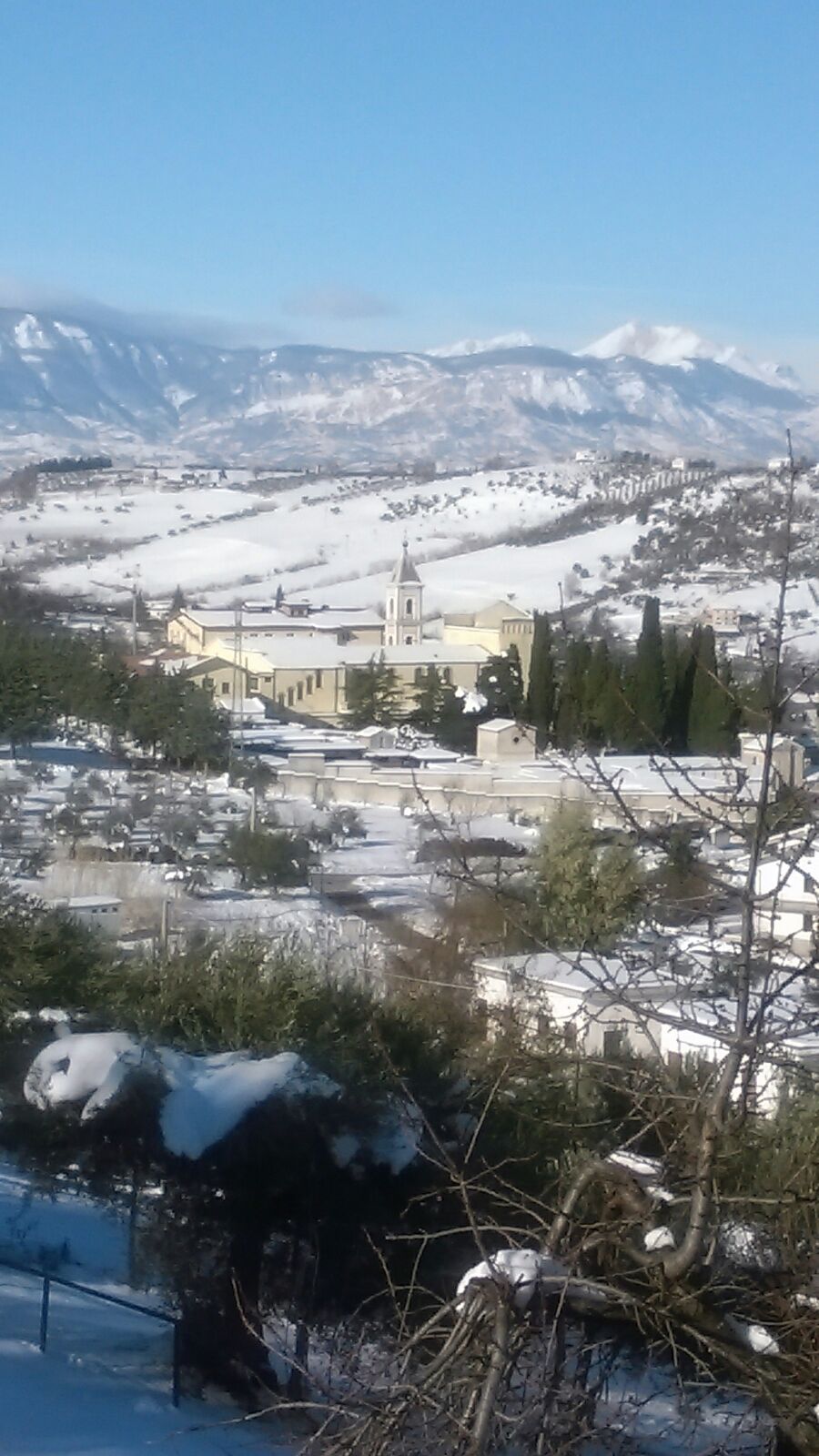
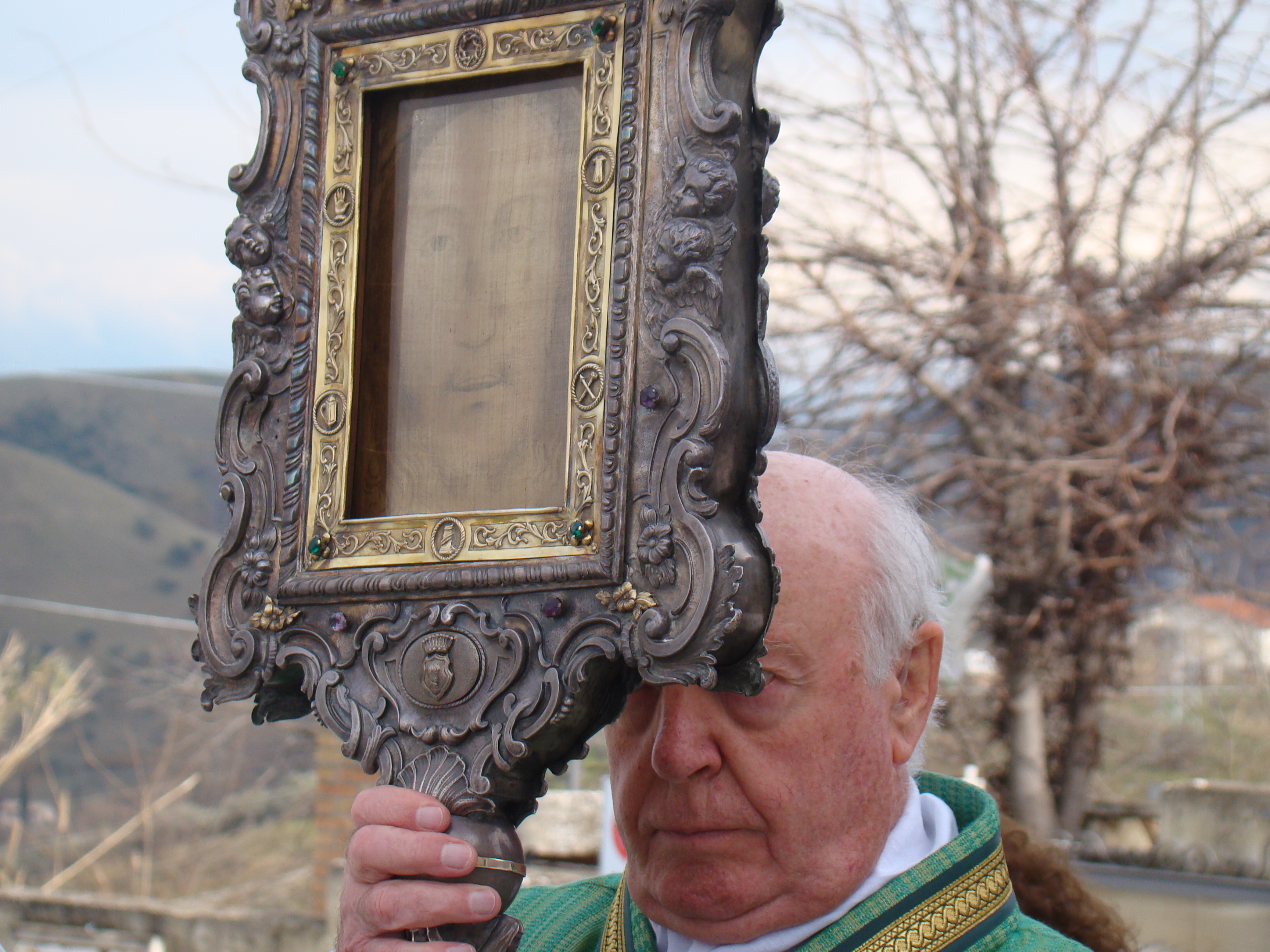
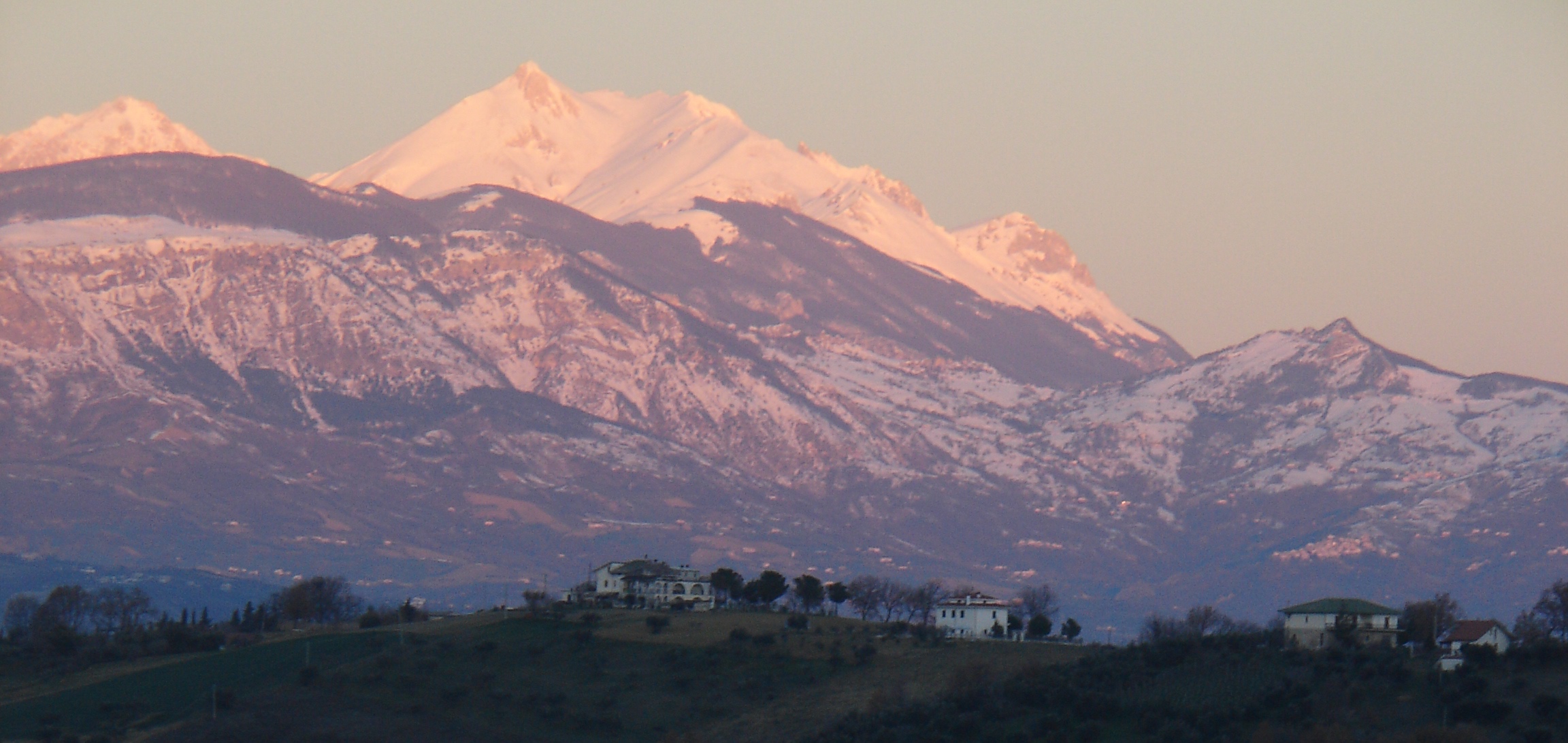
But this week, in a quiet ceremony unnoticed by most media, a single image brought the Eastern and Western Church together in way that arguably has never happened before. On this Sunday, Sept. 18, in the small town of Manoppello in the Abruzzi mountains, 70 Orthodox bishops celebrated, together with two cardinals and many Roman Catholic bishops and clergymen, the Divine Liturgy of St. John Chrysostom before the image of the “Holy Face.” The holy veil had been hidden for more than 300 years in a side chapel of St Michael’s Church, until, after the great earthquake of 1915, it was publicly displayed for the first time again, in the year 1923, over the main altar of a newly constructed building, where it can be visited and adored every day.
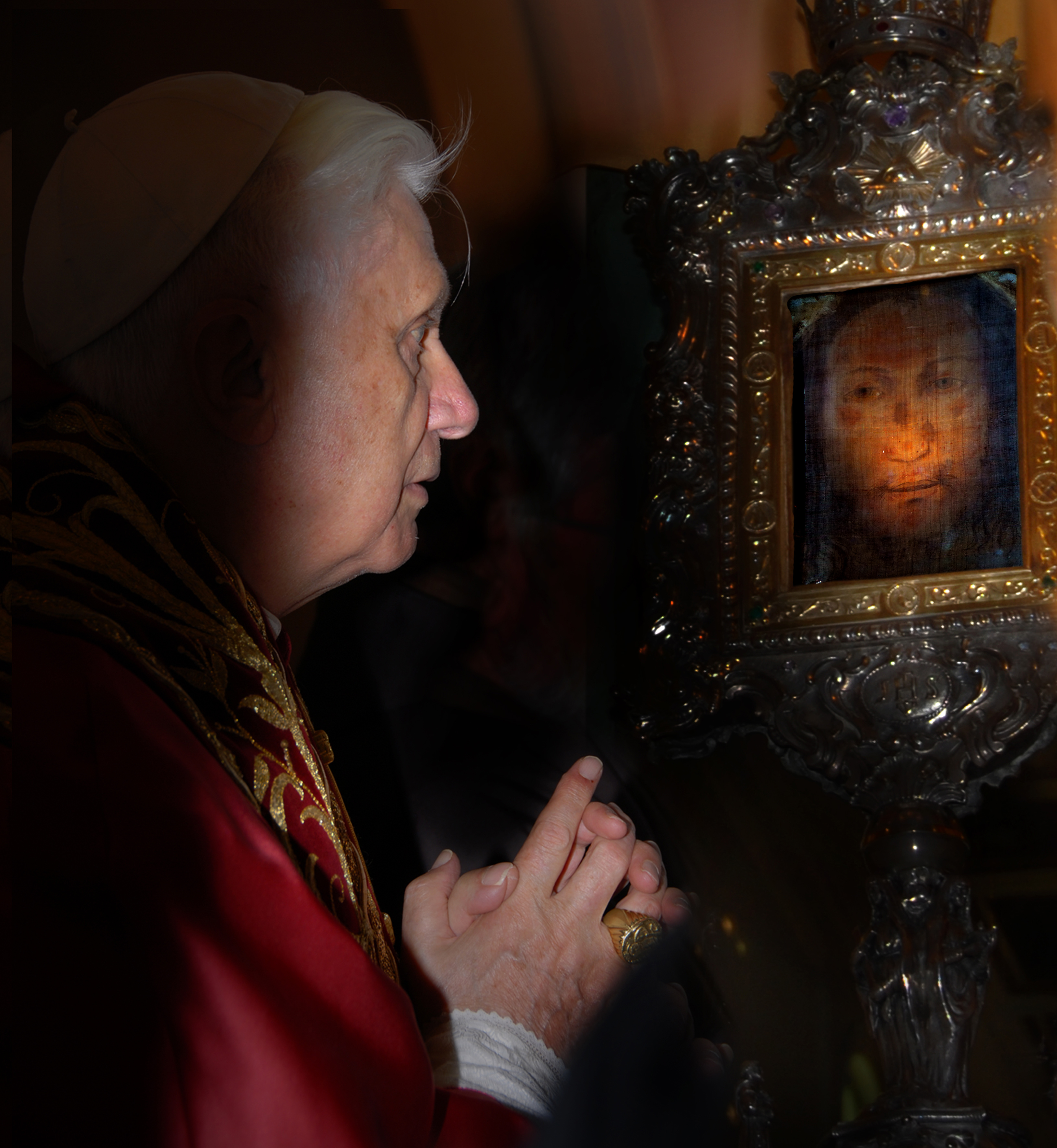
Pope Benedict XVI Visit to the Holy Face of Manoppello in 2006
Ten years after the September 2006 visit of Pope Benedict XVI, this visit of a mixed Orthodox synod, together with their Latin brothers, marked a most significant event in the process of re-discovery of this mysterious, original icon of Christ. It had long been worshiped in Constantinople as “Hagion Mandylion,” and later in Rome as “Sanctissimum Sudarium,” before it was also given the name of “Sancta Veronica Ierosolymitana.”
There were metropolitans and bishops of the Ecumenical Patriarchate of Constantinople (from Finland, Estonia, Crete, Patmos, Malta, Great Britain, America, Australia, the Exarchate of the Philippines, from Europe and from Mount Athos) and patriarchs, metropolitans and archbishops of Alexandria, Antioch, Damascus, Jerusalem, the autonomous Church of Mount Sinai, and the Orthodox churches of Russia, Georgia, Serbia, Cyprus, Romania, Greece Poland, Albania, Czech Republic and Slovakia, which came before the Holy Face and celebrated the Eucharist. Only the Bulgarian Church had sent no representative.
The antiphons of the liturgy were in Italian, Russian, Greek, English, Romanian and French. In his homily, given in English, Metropolitan Job Getcha of Telmessos, who headed the service as representative of the Ecumenical Patriarch Bartholomew of Constantinople, praised the “image of Christ, not made by human hand” of Manoppello. He pointed out that – according to some scholars – the Image is identical with that of the Soudarion from the Gospel of the Resurrection according to John, while another tradition holds that a certain Veronica wiped the face of Jesus with this veil on his way to the Cross, though she is not mentioned in the canonical Gospels.
Archbishop Bruno Forte from nearby Chieti knows that neither bloodstains nor any residue of paint can be found in the veil. It had been his idea and initiative to bring the bishops before the face of Christ, which he likes to praise as the “North Star of Christendom.” He invited the group to Manoppello and had given the visitors a scholarly introduction on the bus trip from his diocesan town of Chieti to Manoppello.
In Chieti, the pilgrims had all participated in the 14th General Assembly of a Joint International Commission for Theological Dialogue between Catholics and Orthodox. They had discussed a document entitled “Towards a common understanding of synodality and primacy in the service of the unity of the Church.” It was a debate that began in the previous plenary meeting in the Jordanian capital Amman in 2014 and was continued in 2015 in Rome. The Commission is the official organ of the theological dialogue between Catholics and Orthodox. It was founded in 1979 and unites 14 autocephalous Orthodox churches, which are each represented by two theologians who are mostly bishops, together with Catholic representatives.
And now the same group practically traced, as a synodal pilgrimage, that first spectacular step towards the face of Christ that Benedict XVI undertook ten years ago, against much resistance, the first pope to do so after more than 400 years.
His successor Pope Francis later – on Nov 30, 2014 while flying from Istanbul back to Rome – told journalists travelling with him: “Be careful: the Church does not have a light of its own. She needs to gaze upon Jesus Christ! On that path, we must move forward courageously.”
And following on this path, the Divine Liturgy before the Divine Face this Sunday became a milestone of reconciliation on the way to unity. Heavy rainfall had been announced. But only a few drops ended up falling.
“Pray for the Christians in the Middle East as you pray before the Holy Face. They are suffering unspeakably,” an Oriental bishop said right after the final blessing to the German sister Petra-Maria Steiner, who introduces countless pilgrims to the mystery of the light of this image in Manoppello. Earlier, at the conclusion of the celebration, Anatoliy Grytskiv, Protopresbyter of Chieti, had hailed the “miracle” of the encounter in a passionate summary in Italian.
Miraculous Holy Face Veil of Manoppello Photo: Paul Badde
Whereto from here? “Today we have gazed upon the face of God,” Cardinal Kurt Koch told CNA outside the main entrance of the Basilica after the celebration. “Probably only in view of the face of the Redeemer may unity come about. But surely it will be difficult. After all this is like a divorce, after you have grown apart – it is hard to get back together. In this case…thousand years of separation are standing between us.”
Kurt Cardinal Koch Photo: Daniel Ibanez (CNA/EWTN)
“Yes, but fortunately it is said in the Scriptures: A thousand years are with the Lord as one day,” Sister Petra-Maria responded with a smile to the cardinal’s sober skepticism. “Perhaps now the new day of unity arises. With God, nothing is impossible. Perhaps today we have seen the dawn of this new day. This new beginning is as thin and delicate as the Volto Santo.”
Were it so, the image of Christ would indeed have briefly bridged that abyss on this Sunday, an abyss carved out, like a primeval river, by the countless words between East and West, a Grand Canyon into the very foundation of Christianity.
At those very depths, the holy “sudarium” might yet intervene, in a healing fashion, in the ancient Filioque controversy about that first word of separation. For if the veil, as John writes, was indeed lying in the grave of Christ, on the face of the Lord, it must also have absorbed the first breath of the Risen One – when the Spirit of God woke Jesus Christ from the dead – as that Spirit that is the Lord, the giver of life, who proceeds from the Father and the Son.