Each days prayers will be posted for the novena and the Act of Consecration to the Holy Face will be posted on The Feast of the Holy Face. (All Novena prayers may also be found in the tab above.) Urgent Prayer Request: In your charity please pray for our friend the author and journalist Paul Baddewho is recovering from heart bypass surgery. He is an ardent lover of the Holy Face of Jesus and gives everything he has to make the Holy Face of Manoppelloknown and loved in the world!
Holy Face Novena Alpha-Omega Prayer and Act of Consecration to The Holy Face for ourselves and our families
“I firmly wish that my face reflecting the intimate pains of my soul, the suffering and love of my heart, be more honored! Whoever gazes upon me already consoles me.” (Our Lord to Blessed Mother Pierina De Micheli)
Veil of Veronica C. 1618-22 National Gallery “While we too seek other signs, other wonders, we do not realize that He is the real sign, God made flesh; He is the greatest miracle of the universe: all the love of God hidden in a human heart, in a human face.” — Pope Benedict XVI
Day 4: Daily Preparatory Prayer
O Most Holy and Blessed Trinity, through the intercession of Holy Mary, whose soul was pierced through by a sword of sorrow at the sight of the passion of her Divine Son, we ask your help in making a perfect Novena of reparation with Jesus, united with His sorrows, love and total abandonment.
We now implore all the Angels and Saints to intercede for us as we pray this Holy Novena to the Most Holy Face of Jesus and for the glory of the most Holy Trinity, Father, Son and Holy Spirit. Amen.
Fourth Day
Psalm 51: 8-9
Indeed you love truth in the heart; then in the secret of my heart teach me Wisdom. O purify me, then I shall be clean; O wash me, I shall be whiter than snow.
O Lord Jesus, who has said, learn of me for I am meek and gentle of heart, and who did manifest upon The Holy Face the sentiments of Thy divine heart, grant that we may love to come frequently and meditate upon Thy divine features. We may read there Thy gentleness and Thy humility, and learn how to form our hearts in the practice of these two virtues which Thou desires to see shine in Thy servants. Mary our Mother and St. Joseph, pray for us.
Through the merits of your precious blood and your Holy Face, O Jesus, grant us our petition, …Pardon and mercy.
Sorrowful Mother
Prayer in Honor of the Sorrows of The Blessed Virgin
O Most Holy and afflicted Virgin, Queen of Martyrs! Who stood beneath the Cross, witnessing the agony of your dying Son, look down with a mother’s tenderness and pity on us as we kneel before you to venerate your Sorrows and place our requests, with filial confidence, in the sanctuary of your wounded heart. Present them on our behalf to Jesus, through the merits of His most sacred Passion and Death, together with your sufferings at the foot of the Cross, and through the united efficacy of both, obtain the favor which we humbly ask. To whom shall we go in our wants and miseries if not to you. O Mother of Mercy, who having so deeply drunk of the chalice of your Son, graciously alleviate the sufferings of those who still sigh in this land of exile. Amen.
Prayer to the Souls in Purgatory
My Jesus, by the sorrows you suffered in your agony in the garden, in your scourging and crowning with thorns, in the way to Calvary, in your crucifixion and death, have mercy on the souls in Purgatory, and specially on those that are most forsaken. Deliver them from the dire torments they endure. Call them and admit them to your most sweet embrace in Paradise. Amen.
Pray one (1) Our Father, three (3) Hail Mary’s, one (1) Glory Be.
O Bleeding Face, O Face Divine, be every adoration Thine. (3 times)
“I seek for Veronica’s to wipe and honor my Divine Face, for it has few worshipers.” –Our Lord to Sr. Marie St. Pierre
Holy Face Novena Alpha-Omega Prayer and Act of Consecration to The Holy Face for ourselves and our families
Each days prayers will be posted for the novena and the Act of Consecration to the Holy Face will be posted on The Feast of the Holy Face. (All Novena prayers may also be found in the tab above.) Urgent Prayer Request: In your charity please pray for our friend the author and journalistPaul Badde who is recovering from heart bypass surgery. He is an ardent lover of the Holy Face of Jesus and gives everything he has to make the Holy Face of Manoppello known and loved in the world!
“I firmly wish that my face reflecting the intimate pains of my soul, the suffering and love of my heart, be more honored! Whoever gazes upon me already consoles me.” (Our Lord to Blessed Mother Pierina De Micheli)
O Most Holy and Blessed Trinity, through the intercession of Holy Mary, whose soul was pierced through by a sword of sorrow at the sight of the passion of her Divine Son, we ask your help in making a perfect Novena of reparation with Jesus, united with His sorrows, love and total abandonment.
We now implore all the Angels and Saints to intercede for us as we pray this Holy Novena to the Most Holy Face of Jesus and for the glory of the most Holy Trinity, Father, Son and Holy Spirit. Amen.
Third Day – Holy Face Novena
Psalm 51: 6-7
You are just when you pass sentence on me, blameless when you give judgement. You know I was born guilty, a sinner from the moment of conception.
Bl. Pope Pius IX
Prayer of Pope Pius IX
O Jesus! Cast upon us a look of mercy; turn your Face towards each of us as you did to Veronica; not that we may see it with our bodily eyes; for this we do not deserve, but turn it towards our hearts, so that, remembering you, we may ever draw from this fountain of strength the vigor necessary to sustain the combats of life. Amen. our Mother Mary, and St. Joseph, pray for us.
Through the merits of your precious blood and your Holy Face, O Jesus, grant us our petition, …Pardon and mercy.
Prayer of St. Francis
All highest, glorious God, cast your light into the darkness of our hearts, give us true faith, firm hope, perfect charity and profound humility, so that with wisdom, courage and perception, O Lord, we may do what is truly your holy will. Amen.
To the Angels and Saints
We salute you, through the Holy Face and Sacred Heart of Jesus, all you holy Angels and Saints of God. We rejoice in your glory, and we give thanks to our Lord for all the benefits which He has showered upon you; we praise Him, and glorify Him, and offer you for an increase of your joy and honor, the most Holy Face and gentle Heart of Jesus. Pray that we may become formed according to the heart of God. Amen.
Pray one (1) Our Father, three (3) Hail Mary’s, one (1) Glory Be.
O Bleeding Face, O Face Divine, be every adoration Thine. (3 times)
“Their Face is the Face of Christ” –Pope Francis
“The Face of God is like that of a merciful Father that always has patience and is willing to forgive…All of us have felt joy, sadness, and sorrow in our lives. Have we wept during the darkest moment? Have we that gift of tears that prepare the eyes to look, to see the Lord?” — Pope Francis
Each days prayers will be posted for the novena and the Act of Consecration to the Holy Face will be posted on The Feast of the Holy Face. (All Novena prayers may also be found in the tab above.) Urgent Prayer Request:In your charity please pray for our friend the author and journalist Paul Baddewho is recovering from heart bypass surgery. He is an ardent lover of the Holy Face of Jesus and gives everything he has to make the Holy Face of Manoppelloknown and loved in the world!
Image of Jesus crucified which hung in Bl. Mother Teresa’s room. It was one of her last sights before dying.
Holy Face Novena Alpha-Omega Prayer and Act of Consecration to The Holy Face for ourselves and our families
“I firmly wish that my face reflecting the intimate pains of my soul, the suffering and love of my heart, be more honored! Whoever gazes upon me already consoles me.” (Our Lord Jesus Christ to Bl. Mother Pierina De Micheli)
Day 2:
“All those who attracted by my love, and venerating my countenance, shall receive, by virtue of my humanity, a brilliant and vivid impression of my divinity. This splendor shall enlighten the depths of their souls, so that in eternal glory the celestial court shall marvel at the marked likeness of their features with my divine countenance.” (Our Lord to St. Gertrude)
Daily Preparatory Prayer
(to be said each day as you console the Holy Face)
O Most Holy and Blessed Trinity, through the intercession of Holy Mary, whose soul was pierced through by a sword of sorrow at the sight of the passion of her Divine Son, we ask your help in making a perfect Novena of reparation with Jesus, united with His sorrows, love and total abandonment.
We now implore all the Angels and Saints to intercede for us as we pray this Holy Novena to the Most Holy Face of Jesus and for the glory of the most Holy Trinity, Father, Son and Holy Spirit. Amen.
Image of the Holy Face of Jesus that captivated St. Teresa of Avila
Psalm 51: 5-6
My offenses truly I know them; My sin is always before me. Against you, you alone, have I sinned; What is evil in your sight I have done.
Most Holy Face of Jesus, we are truly sorry that we have hurt you so much by constantly doing what is wrong; and for all the good works we have failed to do. Immaculate Heart of Mary, Saint Joseph, intercede for us, help us to console the Most Holy Face of Jesus. Pray that we may share in the tremendous love Thou hast for one another, and for the most Holy and Blessed Trinity. Amen.
Through the merits of your precious blood and your Holy Face, O Jesus, grant us our petition, …Pardon and mercy.
Prayer to The Holy Spirit
Come Holy Spirit
Come, Holy Spirit, Sanctifier, all powerful God of love, Thou who didst fill the Virgin Mary with grace, Thou who didst wonderfully transform the hearts of the apostles, Thou who didst endow all Thy martyrs with a miraculous heroism, come and sanctify us, illumine our minds, strengthen our wills, purify our consciences, rectify our judgments, set our hearts on fire and preserve us from the misfortune of resisting Thine inspirations. We consecrate to Thee our understanding, our heart and our will, our whole being for time and for eternity. May our understanding be always submissive to Thy heavenly inspirations and to the teachings of Thy Holy Catholic Church, of which Thou art the infallible guide; may our heart be ever inflamed with love of God and neighbor; may our will be ever conformed to the divine will, and may our whole life be a faithful imitation of the life and virtues of our Lord and Savior, Jesus Christ, to whom with the Father and Thee be honor and glory forever. Amen.
Pray one (1) Our Father, three (3) Hail Mary’s, one (1) Glory Be.
O Bleeding Face, O Face Divine, be every adoration Thine. (3 times)
“O God, Who did constitute Your only begotten Son the Savior of mankind, and did command that He should be called JESUS; grant in Your kindness that our heart’s joy in Heaven may be the Face of Him Whose Holy Name we venerate on earth.” Amen. — Blessed Mother Pierina De Micheli
The Holy Face Novena this year begins on January 31st, and continues for the nine days preceding The Feast of the Holy Face of Jesus on Tuesday, February 9th (or Mardi Gras Tuesday, the day before Ash Wednesday). Each days prayers will be posted for the novena and the Act of Consecration to the Holy Face will be posted on The Feast of the Holy Face. (All Novena prayers may also be found in the tab above.)
“I firmly wish that my face reflecting the intimate pains of my soul, the suffering and love of my heart, be more honored! Whoever gazes upon me already consoles me.” (Our Lord to Blessed Mother Pierina De Micheli)
Holy Face Novena Alpha-Omega Prayer and Act of Consecration to The Holy Face for ourselves and our families
Shroud of Turin
Bl. Mother Maria Pierina De Micheli known for her extraordinary devotion to The Holy Face of Jesus and The Holy Face Medal
Daily Preparatory Prayer
(to be said each day as you console the Holy Face)
O Most Holy and Blessed Trinity, through the intercession of Holy Mary, whose soul was pierced through by a sword of sorrow at the sight of the passion of her Divine Son, we ask your help in making a perfect Novena of reparation with Jesus, united with His sorrows, love and total abandonment.
We now implore all the Angels and Saints to intercede for us as we pray this Holy Novena to the Most Holy Face of Jesus and for the glory of the most Holy Trinity, Father, Son and Holy Spirit. Amen.
“All those who, attracted by my love, and venerating my countenance, shall receive, by virtue of my humanity, a brilliant and vivid impression of my divinity. This splendor shall enlighten the depths of their soul, so that in eternal glory the celestial court shall marvel at the marked likeness of their features with my divine countenance.” (Our Lord Jesus Christ to St. Gertrude)
First Day
Psalm 51: 3-4
Have mercy on me, O God in your goodness, in your great tenderness wipe away my faults; wash me clean of my guilt, purify me from my sin. (Psalm 51:3-4)
O most Holy Face of Jesus, look with tenderness on us who are sinners. You are a merciful God, full of love and compassion. Keep us pure of heart, so that we may see Thee always. Mary, our mother, intercede for us. Saint Joseph, pray for us.
Through the merits of your precious blood and your Holy Face, O Jesus, grant us our petition, …Pardon and mercy.
Holy Face of Tours, France
Prayer to Our Almighty Father
Almighty Father, come into our hearts, and so fill us with your love that forsaking all evil desires, we may embrace you, our only good. Show us, O Lord our God, what you are to us. Say to our souls, I am your salvation, speak so that we may hear. Our hearts are before you; open our ears; let us hasten after your voice. Hide not your Face from us, we beseech you, O Lord. Open our hearts so that you may enter in. Repair our ruined mansions, that you may dwell therein. Hear us, O Heavenly Father, for the sake of your only Son, Our Lord Jesus Christ, who lives and reigns with you and the Holy Spirit, one God, now and forever. Amen. (St. Augustine)
Pray one (1) Our Father, three (3) Hail Mary’s, one (1) Glory Be.
O Bleeding Face, O Face Divine, be every adoration Thine. (3 times)
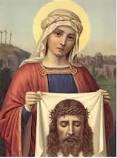
St. Veronica, model of reparation to The Holy Face
“Behold, O God, our protector, and look upon the Face of Thy Christ!”
“Each child that is unborn… bears the Face of Christ.” –Pope Francis
On this infamous anniversary of the legalization of abortion in The United States, we reflect on the millions of faces which we will never see and the blindness of those who deny the humanity of unborn babies.
Unborn babies are not material to be used or blobs of tissue to be dissected and sold. We must recognize the humanity of the baby in the womb; we must look at their faces and see there the Face of Christ. Pope Francis has emphasized this truth, “Each child that is unborn, but is unjustly condemned to be aborted bears the Face of Christ. They cannot be discarded, as the culture of waste proposes! They cannot be discarded!”
Science and technology has made it possible to see this reality in an undeniable way, as shown in the ultrasound picture of the smiling baby in the photo above. They have a face and unique identity; he or she is created in the image and likeness of God! God has a plan and a mission for each unborn child. They are the hope of this broken world – if only the innocent unborn are able to live and grow to fulfill their part in His divine plan.
May they gaze on the Face of God and intercede for us before the throne of God that the horrors of abortion may finally be at an end. May Jesus, in His infinite mercy, remove the blindness from the eyes of those who support abortion so that, they, together with the millions of babies who have been killed in abortions, may one day together see God face to Face.
O Jesus, whose adorable human Face was formed and hidden in the womb of the Blessed Virgin Mary for nine months — have mercy on us!
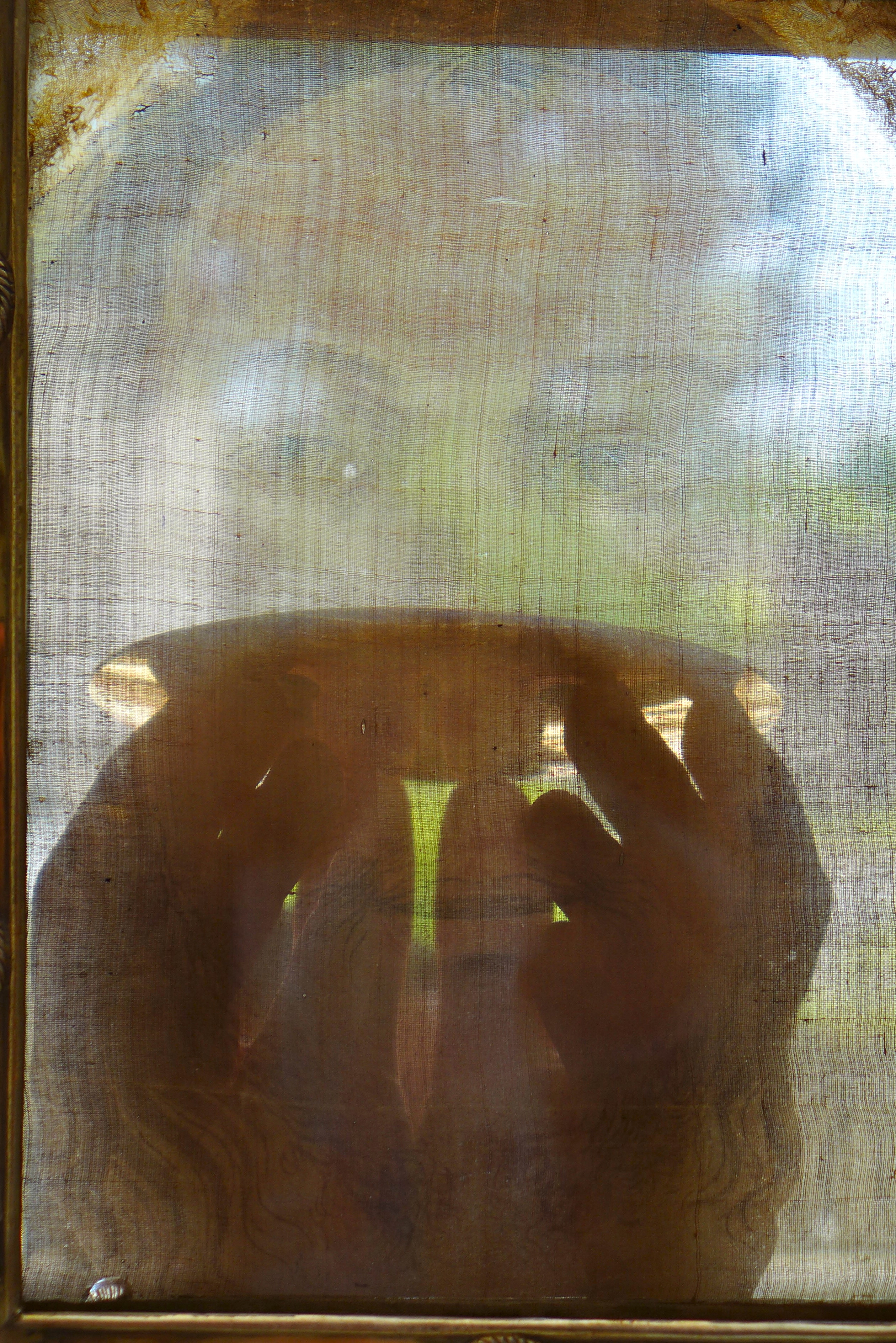
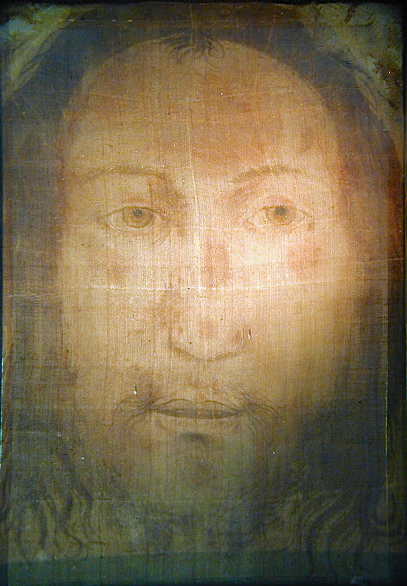
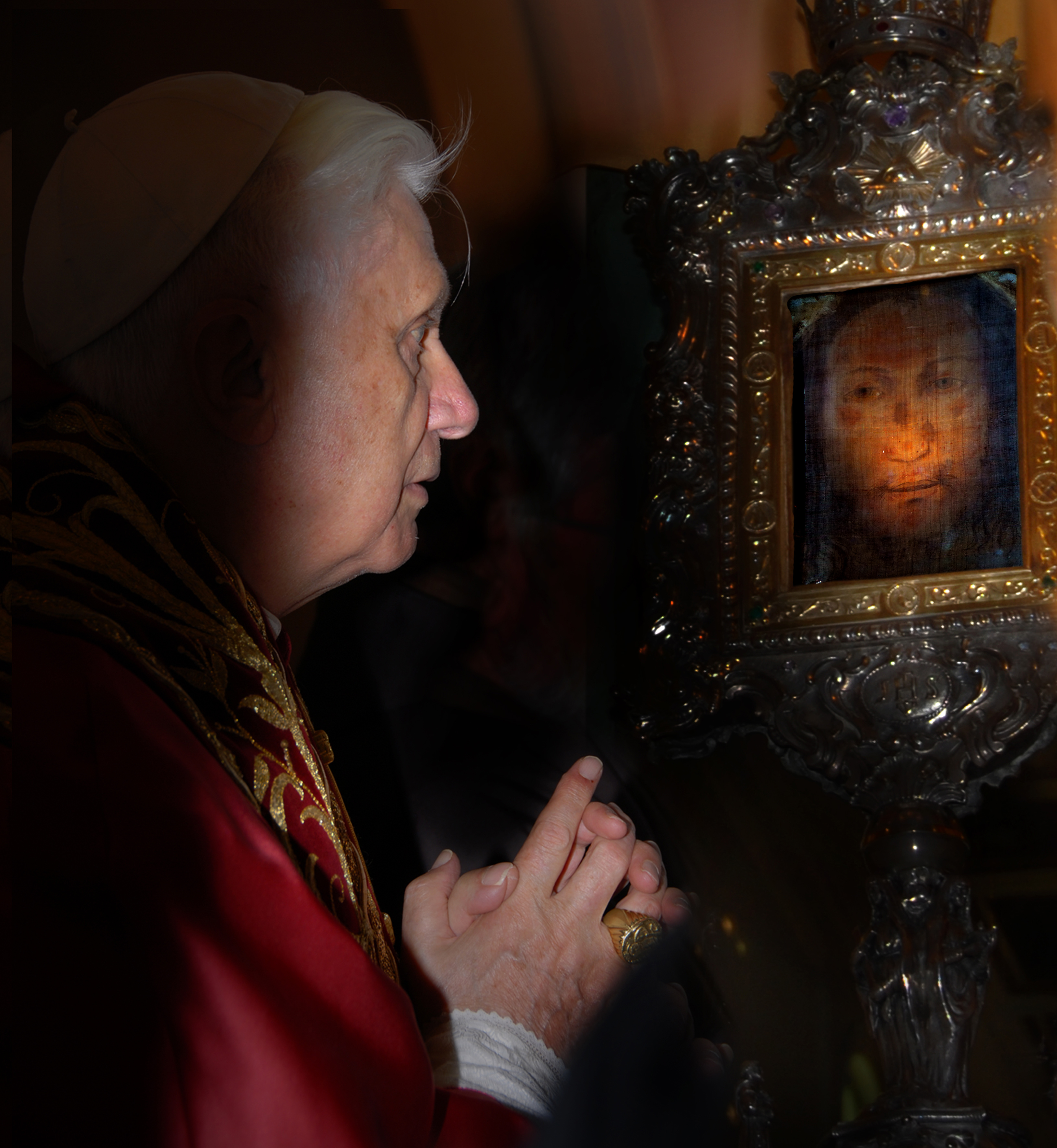
Have Mercy on us! Holy Face of Manoppello Photo: Paul Badde
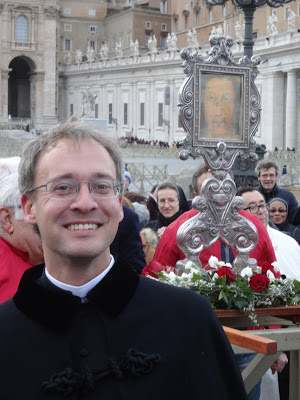
Rev. Daren J. Zehnle in Roman Pilgrimage of Holy Face photo: Edward Pentin
A historic pilgrimage of the Holy Face has taken place in Rome, though few were aware of its importance or of the great spiritual significance of the quiet procession by devoted pilgrims carrying a replica of the Holy Face of Manoppello this weekend.
Rev. Daren J. Zehnle of the United States was present for the joyous event and has posted wonderful photos and a moving, first-hand description of the procession through the Door of Mercy in St. Peter’s Basilica to the Pieta, altar of St. Veronica and to the Church of the Holy Spirit for veneration of the Holy Face and the Rosary. Mass was offered by His Excellency the Most Reverend Georg Ganswein, Prefect of the Papal Household and Secretary to Pope Emeritus Benedict XVI. (Fr. Zehnle’s excellent post may be found here.)
“Show us…Your Face, that mirror mystery-laden, of God’s infinite mercy.”–Pope Benedict XVI
Archbishop Georg Ganswain’s spoke these words in his homily at Spirito Santo Church. “808 years ago, for the first time, Pope Innocent III carried in procession the Holy Sudarium of Christ from St. Peter’s to Santo Spirito. It was the holy veil that shows ‘the human Face of God’, which Pope Benedict XVI will never get tired of speaking about; and ‘the living face of the Father’s mercy’ to which Pope Francis has dedicated this Jubilee Year. And also back then, in January of 1208, the Divine Face of God here in this church, was connected to the concrete mercy of men; this church which much later, in 1994, St. John Paul II dedicated to the ‘Divine Mercy,’ in honor of Saint Faustina Kowalska, whose relics we venerate here. The Polish Pope was also a visionary and once more we experience that here today.”
Devotion to the Holy Face is the antidote for the ever-increasing evil in the world. The greatest sins are those against God Himself: atheism, blasphemy, the profanation of the Holy Name and the Holy Day of Sunday. The importance of Devotion to the Holy Face of Jesus, in this Jubilee Year of Mercy cannot be over stressed. “Lord, God of Hosts, bring us back. Let Your Face shine on us and we shall be saved!” (Psalm 80)
Holy Face of Manoppello Photo by Paul Badde “Jesus Christ is the FACE of the Father’s Mercy.” –Pope Francis
“Omnis terra adoret te, Deus, et psallat tibi!” (“Let all the earth adore you, O God and sing psalms to you”) (Psalm 65)
Homily of Archbishop Georg Ganswain at Spirito Santo
Archbishop Ganswain with Holy Face of Manoppello at Spirito Santo in Rome. photo:Paul Badde
Dear sisters and brothers!
Sunday today is called “Omnis Terra” in the words of Psalm 65 that we heard at the beginning of the Mass: “Omnis terra adoret te, Deus, et psallat tibi!” (“Let all the earth adore you, O God and sing psalms to you”). This Sunday was also called this eight hundred years ago ; and even then, as now, in all Catholic churches the Gospel of the wedding at Cana was proclaimed. Since then empires have fallen, swept away like autumn leaves; the Church has seen the succession of ninety popes; violent revolutions and wars have shaken Europe; fatal divisions have torn Christianity. So it seems almost a miracle the tranquility with which, in this Sunday’s liturgy, we sing today as then: Praise the Lord, all you nations!
With this praise, however, today we also remember the fact that here 808 years ago, for the first time, Pope Innocent III carried in procession the Holy Sudarium of Christ from St. Peter’s to Santo Spirito. It was the holy veil that shows “the human Face of God”, which Pope Benedict XVI will never get tired of speaking about; and “the living Face of the Father’s mercy” to which Pope Francis has dedicated this Jubilee Year. And also back then, in January of 1208, the Divine Face of God here in this church, was connected to the concrete mercy of men; this church which much later, in 1994, St. John Paul II dedicated to the “Divine Mercy”, in honor of Saint Faustina Kowalska, whose relics we venerate here. The Polish Pope was also a visionary and once more we experience that here today.
In fact, 808 years ago, in that very first procession, Pope Innocent III decreed that the holy image was not brought to the nobles of Rome, but to the sick pilgrims and the poor of the city, whose most important abode back then was this hospital of Santo Spirito. He also ordered that the papal chaplain, drawing from Peter’s Pence, should distribute three coins to each of the three hundred sick and the thousand poor who were invited to attend the ceremony and who came from all over the city: one for bread, one for wine and the third for meat. He also connected substantial indulgences to visiting the “true image” and for participating in its procession.
In fact it was an anticipation of the Holy Year, which only later, in 1300, was introduced to Rome by Boniface VIII. This all began right here!
From that time to the present modern age processions and expositions of the Holy veil have never ended. Soon there were countless pilgrims to Rome who wanted to contemplate the Face of God. Later, it was in one of these processions that Dante learned to know the Face of God. It is the Face before which he ends the “cosmic excursion” of his Divine Comedy, as Pope Benedict XVI said ten years ago, when he presented his encyclical Deus Caritas Est. It is the Face of the love that “moves the sun and the other stars”, as Dante wrote in the best known passage in Italian literature.
It is the love of God who rejoices in us as “the bridegroom to the bride,” as we have just heard in the words from the prophet Isaiah; and the strength of the Holy Spirit of whose various gifts St. Paul has once again made us aware in this church of Santo Spirito. And yet, nowhere else does this Spirit speaks more clearly and with more evidence as in the silent Face of Christ, before whom we are gathered here today.
Because “this is the vocation and the joy of every baptized person: to bring and give Jesus to others”, as Pope Francis said on January 3. And this is exactly what today is given to us – to become witnesses, in the moment when the good Capuchin friars of Manoppello here “bring and give Jesus”, in whose Face God himself shows his Face.
In conclusion I would add just one thing on the Gospel of the wedding at Cana, about which so many instructive things have been said: who, in fact, could still wonder that Jesus worked his first public miracle exactly in favor of marriage and the family which are in such danger today that Pope Francis has dedicated synods to each of these! Indeed, in this time of Christmas in which we are still, we can understand perfectly that first miracle as a necessary extension of the mystery of the incarnation of God. For it is only within a family that we become human! With a mother and a father and – if we are lucky – with brothers and sisters. For this reason Christian artists have always portrayed the Face of Jesus referring to his mother’s, and vice versa. Because if God is the Father of Jesus, His Face should and can only look like hers. And it is this most ancient Face that today in an almost miraculous way has returned to Santo Spirito in Sassia, that Face which seems to be almost identical to the Face of the Divine Mercy which has been venerated here for more than two decades.
It is a copy of that ancient original that Pope Innocent III showed the pilgrims and which for four hundred years was kept in Abruzzo, on the Adriatic, in an outlying area of Italy, which today for the first time has been brought back to where its public worship began. From here, countless copies brought all over the world the true Face of God that Christians knew. Precisely in this lies the deeper meaning of this moment. Before coming to Rome, the Holy Veil was kept in Constantinople, earlier in Edessa and even before in Jerusalem. It is not possible, in fact, that this Face could be the property, could be the treasure of anyone, not even of the Pope. It is the signature of Christians. Only we know that God has a Face – how and who He is. For this reason, the Face of Christ is the first, the most noble and most precious treasure of all Christendom, even more: of all the earth. Omnis Terra! Before this Face we ought to open ourselves again and again. Always as pilgrims; always to the outlying areas; and always having before our eyes one goal: that moment when we will be before him face to Face.
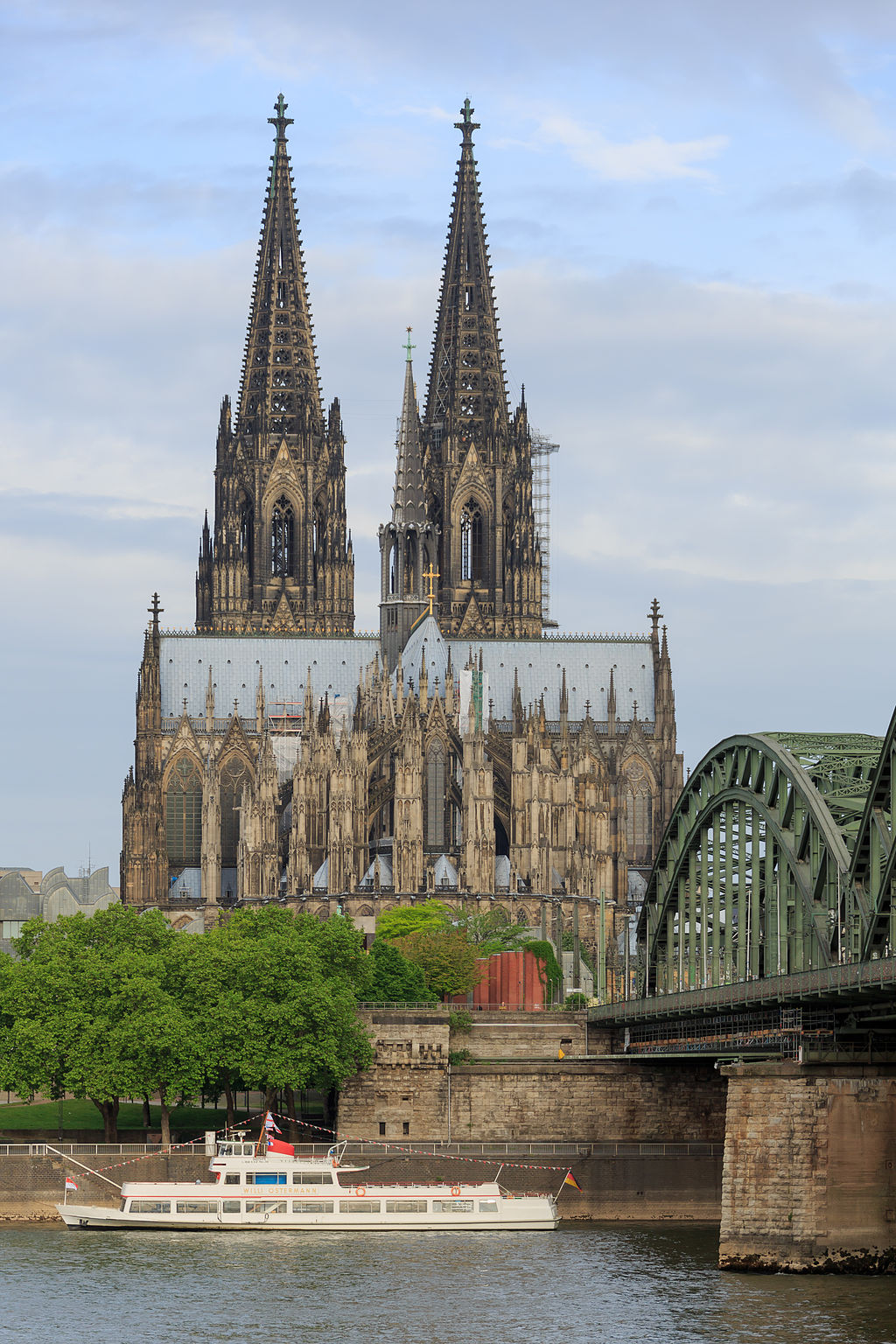
On New Years Eve, beneath the shadow of the Cologne Cathedral in Germany, one of the most important places of pilgrimage in Europe, about 1,000 drunk and aggressive men of Arab or North African appearance, surrounded groups of young women in order to molest, rob and rape. The young women, who no doubt felt they were safe in the company of friends, were separated by the “men” (the cowardly vermin who attacked those who are weaker) whose primary objective was to perpetrate violence and sexual assault, and to degrade and dehumanize the young women. A video soon surfaced, which originated from the attackers themselves, bragging about their rape of “a virgin” by several of the “men,” some of whom spit upon her as she lay on the ground beaten and bleeding, covered in filth.
To add to the humiliation of the victims, the mayor pointed a finger of blame at the women of the city. The police were blamed for failing in their duty to defend and protect. The men of Germany were equally blamed for not protecting their woman. While politicians avoided blaming the actual perpetrators, there were actually those who would blame God for not protecting the innocent from the wicked.
But it is God Himself who suffers. He suffers in the young women, made in His image, who were assaulted and spit upon. It is God Himself who is blasphemed, either directly or indirectly by those who have malice toward Him, by acts of hatred carried out in the name of their religion.
“You are no God who loves evil; no sinner is your guest. The boastful shall not stand their ground before your Face. You hate all who do evil: you will destroy all who lie. The deceitful and bloodthirsty man the Lord detests.” (Psalm 5)
It is not a coincidence that the violence took place in the shadow of the Holy Cathedral. It is also no coincidence that the attack was upon women. Satan hates “the woman” who is Mary, the Mother of God and directs his attacks upon on all women. “I will put enmity between you and the woman, and between your offspring and hers. He will strike at your head, while you strike at his heel.” (Gen 3:15) “When the dragon saw that he had been hurled to the earth, it pursued the woman who had given birth to the male child.” (Rev. 12:13) Thus, all women are the special object of his hatred, so we see in our culture a flood of pornography, abortion, and degradation of women, not only by degenerate men, but even by other women.
So, what is the answer to this violence and contempt expressed in blasphemy against other human beings made in God’s image, blasphemy which is ultimately against the Face of God? Wringing our hands over the news and at the culture that has permitted the evil is not the answer. We are not entirely helpless and we have the means in our power to fight against evil: the opposite of blasphemy would be praise of God, the sole object of our exalted esteem, honoring and extolling His Holy Name publicly, to make reparation before the Holy Face of Jesus, who became man and whose Face can be seen, in His images, in our neighbor and in the Eucharist. Blasphemy can also be countered by honoring and reverencing the Virgin Mary, as He has given her the greatest honor and dignity by choosing her to be the mother of His Son, Jesus.
On February 9th, 2016, the “Feast of The Holy Face”will be celebrated. My parish, along with many other Catholic parishes, will be having evenings of Prayer and Adoration on this day. This feast day coincides each year with “Mardi Gras Day,” the Tuesday before Ash Wednesday. It is an opportunity to make reparation for blasphemy by coming before the Face of Jesus to honor Him. Beginning January 31st, I will post each day the Novena to the Holy Face leading up to the Feast of the Holy Face and Act of Consecration. Please join in the Novena or read the prayers of reparation (here) if you are able. They are powerful weapons against those who would spit in the Face of God!
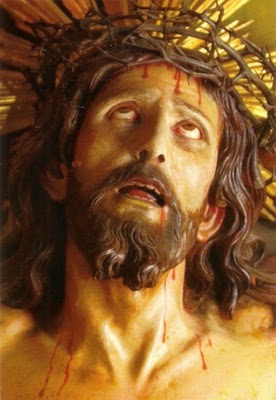
Eternal Father I offer you the Most Holy Face of Your Beloved Son Jesus, covered with blood, sweat, dust and spittle, in reparation for the crimes of communists, blasphemers, profaners of the Holy Name and of the Holy Day of Sunday. (Miraculous Limpias Crucifix)
Eternal Father, turn away Your angry gaze from our guilty people whose face has become unsightly in your eyes. Look instead upon the Face of Your Beloved Son, for this is the Face of Him in Whom You are well pleased. We now offer You this Holy Face, covered with shame and disfigured by bloody bruises in reparation for the crimes of our age in order to appease Your anger, justly provoked against us. Because Your divine Son, Our Redeemer, has taken upon His Head all the sins of His members, that they might be spared, we now beg of You, Eternal Father, to grant us Mercy. Amen.
“May the Lord bless and keep you, may He make His Face shine upon you and be merciful to you: May the Lord turn His Countenance toward you and give you His PEACE.” (Num. 6:22-27)
Peace, Pope Emeritus Benedict XVI has said, is the summit of the six actions of God in this blessing, which are in our favor; “His most sublime gift, in which He turns toward us the splendor of His Face.”
January 1st is the Feast of Mary, Mother of God, who is the Queen of Peace and this is also the World Day of Peace. Today Pope Francis said, “She is the Mother of Mercy, because she bore in her womb the very Face of Divine Mercy, Jesus, Emanuel, the Expectation of the nations, the “Prince of Peace.” (Is. 9:5) Jesus has given us His Mother so that we may never be left alone on our pilgrimage through life, especially in times of trouble and uncertainty.
Pope Francis has also said, “Our eyes need to focus on the particular signs God has given us, to see His merciful love first-hand.” The Holy Father recalled the suffering, violence and death of many innocent people in the previous year, but he also noted the many acts of kindness, love and solidarity that go unnoticed but should not be obscured “by the arrogance of evil.” “The good always wins,”said Pope Francis, “even if at times it can appear weak and hidden.”
One of the “particular signs God has given us, to see His merciful love first-hand” is the Face of Christ which He offers to all humanity as “the supreme revelation of the Father’s Mercy.” By contemplating and rejoicing in the splendor of His Face through devotion to the Holy Face we may obtain the peace that the world so desperately needs.
Pope Francis concluded his blessing by appealing to Mary saying, “Send us your blessing on this day consecrated to your honor. Show us the Face of Jesus your Son, who bestows upon the entire world mercy and peace.” Finally, the Pope concluded by calling on the faithful to pray each morning for God to “shine his face” on us, and invited those in the square to repeat after him:“Today, the Lord makes His Face to shine upon me.”
Pope Emeritus Benedict XVI has written, “To rejoice in the splendor of His Face means penetrating the mystery of His Name made known to us in Jesus, understanding something of His interior life and of His will, so that we can live according to His plan for humanity. Jesus lets us know the hidden Face of The Father through His human face; by the gift of The Holy Spirit poured into our hearts.” “This,” Pope Benedict XVI says, “is the foundation of our Peace, which nothing can take from us.”
+Peace and have a Blessed New Year!
“Mary, Mother of the Holy Face, help us to have ‘hands innocent and a heart pure,’ hands illumined by the truth of love and hearts enraptured by divine beauty, that transformed by the encounter with Christ, we may gift ourselves to the poor and the suffering, whose faces reflect the hidden presence of your Son Jesus. Amen.” — Pope Emeritus Benedict XVI
“So when we hear tell of the birth of Christ, let us be silent and let the Child speak. Let us take his words to heart in rapt contemplation of his face.” –Pope Francis
The desire to see the Face of God has been the deep longing of all humanity “since the world began to be.” Yet deeper still is God’s desire to show His Face to us…
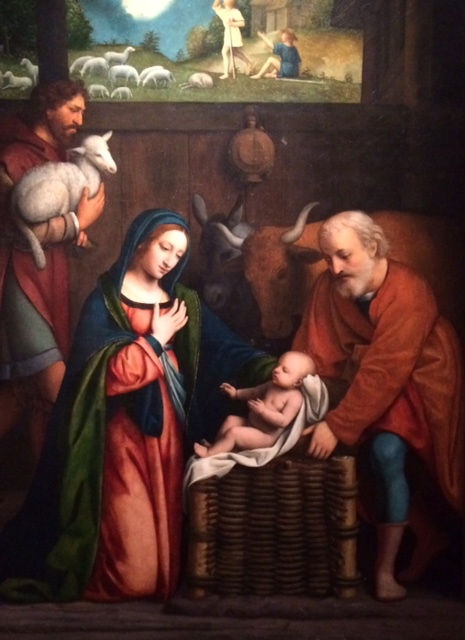
Adoration of the Christ Child and Annunciation to the Shepherds by Bernardino Luini
God’s love for mankind is so great that He desired to become visible to men. In the fullness of time, when earth was covered in darkness, the bright dawn of the Word made flesh descended to the womb of a Virgin, so that, for the first time in the history of the world, on the day of His birth, God’s Face could be seen. He could be looked upon without fear and trembling because in the supreme manifestation of His merciful love He allowed us to gaze upon Him as a tiny baby, who is the redemption and light of all mankind.
The darkness of sin and death is overcome by the light emanating from the Face of the Infant Jesus, shining first upon the Blessed Virgin Mary, then St. Joseph, the humble shepherds and kings and on and on. The divine light extends to all peoples, down through the centuries to each of us. As we contemplate and adore Jesus, we in turn, must make the light of His Face shine to others, to all we meet, until finally the darkness is dispelled forever by the Glory of His Face… “evermore and evermore.”
Below is the beautiful Christmas Hymn “Of the Father’s Love Begotten,” sung by the Benedictine Sisters of Mary. Enjoy!
Of the Father’s love begotten, Ere the worlds began to be, He is Alpha and Omega, He the source, the ending He, Of the things that are, that have been, And that future years shall see, Evermore and evermore!
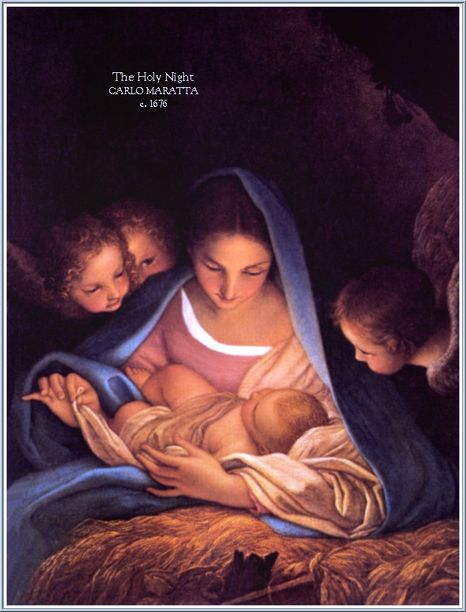
“He comes in splendor, the King who is our peace; the whole world longs to see Him.” The Holy Night by Carlo Maratta
O that birth forever blessèd, When the virgin, full of grace, By the Holy Ghost conceiving, Bore the Savior of our race; And the Babe, the world’s Redeemer, First revealed His sacred face, evermore and evermore!
O ye heights of heaven adore Him; Angel hosts, His praises sing; Powers, dominions, bow before Him, and extol our God and King! Let no tongue on earth be silent, Every voice in concert sing, Evermore and evermore!
Christ, to Thee with God the Father, And, O Holy Ghost, to Thee, Hymn and chant with high thanksgiving, And unwearied praises be: Honor, glory, and dominion, And eternal victory, Evermore and evermore!
Merry Christmas! May His Face shine upon you today and always!
Every expectant mother shares something with the Blessed Virgin Mary — the longing to see the face of her child. The mother cannot yet kiss or caress her baby, she cannot hear the sound of a cry, or smell that baby-sweetness, so she waits in loving attentiveness for the stirring of the babe beneath her heart, that fills her with joy and knowledge of the baby’s presence within.
Virgin in Prayer Artist: Sassoferrato 1640-50
During the 3rd week of Advent, on December 18th, in some places in the world the Church celebrates a beautifully contemplative feast which is called the Expectation of the Blessed Virgin Mary. The feast has it’s origin in the year 656 in Spain and spread throughout the Middle Ages. Because the ancient law of the Church prohibited the celebration of feasts during Lent, the Church transferred the Feast of the Annunciation from March 25th to the season of Advent. The Tenth Council of Toledo assigned the feast to the 18th of December. It was kept as a solemn octave, eight days leading to Christmas. When the ancient laws regarding fasts were changed, the Annunciation was celebrated twice, on March 25th and December 18th.
On this day and the days leading up to Christmas we are invited to contemplate, together with Mary, the Divine Child within her womb, who is Our Savior. We too, through sanctifying grace, bear the supernatural image of God within us. Like Mary, we desire to become a peaceful sanctuary for the living God. We are called to be attentive, in prayer, to the faint stirrings of His presence in our hearts, which will fill us with a deep longing to see His Face as we pray:
“Mary, your life with Jesus was one of the purest, most fervent, most perfect emotions of longing and most eager expectation of the Birth of the Divine Child! How great must have been that longing! You were longing to see the Face of God and to be happy in the vision. You were soon really to see the Face of God, the created image of divine perfection, the sight of which rejoices heaven and earth, from which all being derive life and joy; the Face whose features enraptured God from all eternity, the Face for which all ages expectantly yearned. You were to see this Face unveiled, in all the beauty and grace as the face of your own child. Most just indeed it is, O Holy Mother of God, that we should unite in that ardent desire which you had to see Him, who had been concealed for nine months in your chaste womb; to know the features of this Son of the heavenly Father, who is also your own; to come to that blissful hour of His birth, which will give glory to God in the highest, and on earth, peace to men of good will. Yes, dear Mother, the time is fast approaching, though not fast enough to satisfy your desires and ours. Make us re-double our attention to the great mystery; complete our preparation by your powerful prayers for us, so that when the solemn hour has come, our Jesus may find no obstacle to His entrance into our hearts. Amen.” Prayer by Rev. Lawrence Lovasik, S.V.D.
This prayer may be prayed as a Triduum from December 15th to the Feast Day on December 18th, or continue to be prayed on the days leading up to Christmas.