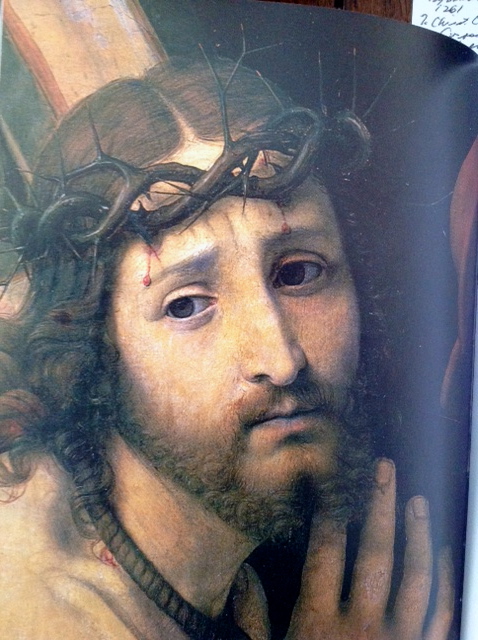
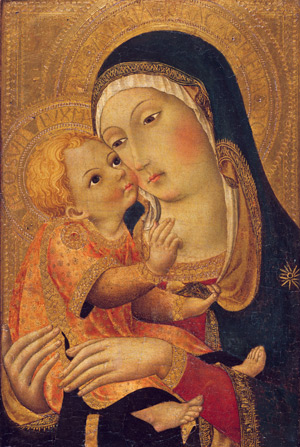
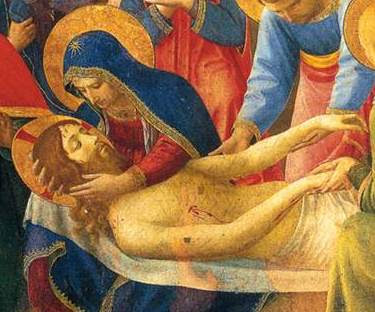
St. Jude and the Holy Face of Jesus

Long before the legends of St. Veronica appeared in the Middle Ages, there were other ancient accounts of a miraculous veil bearing the living face of Jesus Christ. And like the story of St. Veronica, there is a very similar and deep meaning. One of these stories was associated with the Apostle St. Jude Thaddeus–the patron saint of impossible causes–who brought healing, restoration, and transformation by means of the Face of Jesus to a king with leprosy…

King Abgar with Veil, Monastery of St. Catherine Sinai, Egypt 8th Century

The Mandylion of Edessa

King Abgar V, (c. 1st century to 50 AD) was known as”the Black” or, as described by a contemporary historian, Tacitus, as “King of the Arabs.” St. John Damascene wrote this regarding “The Mandylion of Edessa,” (which means “towel” or “handkerchief in Arabic. Many versions of this legend may be found in historical sources dating back to 590 A.D.):

“King Abgar suffered from leprosy and hearing of the miracles of Jesus, sent a letter to Jesus with his secretary Ananias.” (Who also happened to be a wonderful painter.)

The king’s letter to Jesus had been recorded and copied many times, and have survived in Syriac, Armenian, and Greek on papyrus, parchment and stone. The text of the letter, and the response of Jesus, essentially read:

Abgar, ruler of Edessa, to Jesus the good physician who appeared in the country of Jerusalem, greeting. I have heard reports of you and of your cures as performed by you without medicines or herbs. For it is said that you make the blind to see and the lame to walk, that you cleanse lepers and cast our impure spirits and demons, and that you heal those afflicted with lingering disease, and raise the dead. And having heard all these things, concerning you, I have concluded that one of two things must be true: either you are God, and having come down from heaven, you do these things, or else you, who does these things, are the son of God. I have therefore written to you to ask you if you would take the trouble to come to me and heal all the ill which I suffer. For I have heard that the Jews are murmuring against you and are plotting to injure you. But I have a very small yet noble city which is great enough for us both.”

Jesus, it was written, gave the messenger the reply to return to Abgar:

Blessed are you who hast believed in me without having seen me. For it is written concerning me, that they who have seen me will not believe in me, and that they who have not seen me will believe and be saved. But in regard to what you have written me, that I should come to you, it is necessary for me to fulfill all things here for which I have been sent, and after I have fulfilled them, thus to be taken up again to him that sent me. But after I have been taken up, I will send to you one of my disciples, that he may heal your disease and give life to you and yours.

“It is said that the King Abgarus of Edessa had sent a painter to make a portrait of Christ. But he was not able to do it because of the light that shone out of the Lord’s Face. So, taking a veil and placing it before his holy and life-giving face, Jesus impressed his image on it and sent it to King Abgarus, thus satisfying his desire.” –St. John Damascene

It was St. Jude Thaddeus, one of Jesus’s seventy-two disciples, who brought the Holy veil to the king. After hearing St. Jude preach, and receiving the holy image, King Abgar was healed of his leprosy. King Abgarus, who brought Christianity to his kingdom, is venerated as a saint in the Eastern Church.

13th Century Surrender of the Mandylion in Constantinople

Arab sources also mention the cloth on which Jesus imprinted the image of His Face. Although there was disagreement over the centuries as to the question of how the image of the living face of Jesus was formed on the cloth, everyone agreed that it was indeed miraculous.

Through the centuries, many reproductions were made of the image, some appearing miraculously on tile that had covered the sacred cloth. The Mandylion was eventually brought to Constantinople, “The Queen of all cities,” on August 16th, 944, which is still celebrated as a feast day in the Eastern calendar. It was recorded as being kept in “a golden vessel,” and only taken out once a year from the Sacred Chapel, where other precious relics of the Passion of Christ were also kept until the sack of Constantinople in 1204.

The miraculous healing of the king’s leprosy was brought about through the Holy Face and the intercession of St. Jude. But the story of the “impossible” healing of the horrible, disfiguring disease of leprosy, gives not only hope of healing to the sick, but an even greater hope of spiritual healing, restoration, and transformation of the soul to each sinner in the Sacrament of Reconciliation. In that sacrament a repentant sinner, after coming face to face with the Person of Christ through the Priest to confess their sins, may once again have the image of Christ healed, restored, and transformed in their soul. It is an even greater miracle of divine grace: “Though your sins are like scarlet, they shall be as white as snow; though they are red as crimson, they shall be like wool.” (Isaiah 1:18)

St. Jude Thaddues, Patron Saint of impossible causes, holding the Face of Jesus

Pope St. John Paul II and the Face of Christ

“Christianity is born, and continually draws new life from this contemplation of the glory of God shining on the Face of Christ.”

image-39
“The Eucharist is the great school in which we learn to see the Face of God.” “In the Eucharist, the Face of Christ is turned toward us.”

Many Catholics are unaware of the fact that this millennium was dedicated to the Face of Christ by Pope St. John Paul II. He lifted high before the Church the banner of the Holy Face of Jesus at the dawn of the millennium. The Face of Christ was to be the standard for the faithful to follow in this spiritual battle that exists in the world between light and darkness.

King Abgar receives the Veil of the Holy Face

In ancient times, there existed a veil bearing the Face of Jesus, which by the order of the emperor Justin II, in the sixth century, was also carried into battle as a standard. The veil, considered a relic, was a divine inspiration to those fighting. It was “…created by God Himself and had not been woven or painted by man.” (Teofilakios Simokattes). 

The lines of the battle have been drawn. On the side of light: the Face of the One, Living, and True God, and on the side of darkness: legions of false faces, which are idols.

In Veritatis Splendor Pope St. John Paul II writes, “As a result of that mysterious original sin, committed at the prompting of Satan, the one who is ‘a liar and the father of lies’ (Jn 8:44), man is constantly tempted to turn his gaze away from the living and true God in order to direct it toward idols (cf. 1 Thes 1:9), exchanging ‘the truth about God for a lie’ (Rom 1:25).  Man’s capacity to know the truth is also darkened, and his will to submit to it is weakened.  Thus, giving himself over to relativism and scepticism (cf. Jn 18:38), he goes off in search of an illusory freedom apart from truth itself.”  This is the very description of our modern world. 

The Holy Face of The Miraculous “Limpias Crucifix”

“But, no darkness of error or of sin can totally take away from man the light of God the Creator.  In the depths of his heart there always remains a yearning for absolute truth and a thirst to attain full knowledge of it… No one can escape from the fundamental questions:  What must I do? How do I distinguish good from evil?  The answer is only possible thanks to the splendor of the truth which shines forth deep within the human spirit, as the Psalmist bears witness:

“There are many who say: ‘O that we might see some good!  Let the light of your face shine upon us, O Lord’” (Ps 4:6)

The light of God’s face shines in all its beauty on the countenance of Jesus Christ, “the image of the invisible God” (Cor 1:15), the “reflection of God’s glory” (Heb 1:3), “full of grace and truth” (Jn 1:14).  Christ is “the way, and the truth, and the life” (Jn 14:6). Consequently the decisive answer to every one of man’s questions, his religious and moral questions in particular, is given by Jesus Christ, or rather is Jesus Christ himself, as the Second Vatican Council recalls: “In fact, it is only in the mystery of the Word Incarnate that light is shed on the mystery of man.  For Adam, the first man, was a figure of the future man, namely, of Christ the Lord.  It is Christ, the last Adam, who fully discloses man to himself and unfolds his noble calling by revealing the mystery of the Father and the Father’s love.” As Pope St. John Paul II spoke so clearly about in Veritatis Splendor, to win the battle for souls, the Church must bring the light of the Face of Christ to our darkened world.

Although the existence of a miraculous veil of the Face of Jesus existed from the earliest centuries of Christianity, about the time this miraculous veil first appeared in Rome, in the Middle Ages, the name “Veronica”  referred to the veil itself–“Veronica”  meaning “vera” or true, and “icon” meaning image, or even more precisely, “to be present.” Those who gazed upon the veil bearing the true Face of Jesus stood in God’s presence. They were turned toward His Face. The veil of the Face of Christ has a particular importance for us today. Pope St. John Paul II wrote this beautiful meditation on St. Veronica in 2000, the same year in which he dedicated the millennium to the Face of Christ:

Sixth Station, St. Theresa Church, Ashburn, Virginia

“Veronica does not appear in the Gospels. Her name is not mentioned, even though the names of other women who accompanied Jesus do appear.
It is possible, therefore, that the name refers more to what the woman did. In fact, according to tradition, on the road to Calvary a woman pushed her way through the soldiers escorting Jesus and with a veil wiped the sweat and blood from the Lord’s face. That face remained imprinted on the veil, a faithful reflection, a “true icon”. This would be the reason for the name Veronica. If this is so, the name which evokes the memory of what this woman did carries with it the deepest truth about her…The Redeemer of the world presents Veronica with an authentic image of his face. The veil upon which the face of Christ remains imprinted becomes a message for us.

In a certain sense it says: This is how every act of goodness, every gesture of true love toward’s one’s neighbor, strengthens the likeness of the Redeemer of the world in the one who acts that way. Acts of love do not pass away. Every act of goodness, of understanding, of service leaves on people’s hearts an indelible imprint and makes us ever more like the One who ’emptied himself, taking the form of a servant’ (Phil 2:7). This is what shapes our identity and gives us our true name.”

This is the deep meaning and call to every Christian revealed in the presence of the unknown woman we call “St. Veronica”– each act of charity, every act of compassion will leave the imprint of the Face of Jesus in our souls, transforming us into His own Image.  This is how the battle may be fought; by “knowing and contemplating the Face of God,” as Pope St. John Paul II tells us, leading to self-emptying and compassion.

Sr. Lucia’s vision of The Trinity at Tuy

Contemplation of the Face of Jesus, together with the Blessed Virgin Mary in praying the Rosary, is the key to victory in this battle for souls. The Church, Pope St. John Paul II writes, must “Stand like your Virgin Mother, at the glorious Cross, and at the crosses of all people to bring about consolation, hope and comfort.”  Through the Holy Spirit we are transformed by contemplation of the the light shining on the Face of Christ — looking at the Lord in faith and love — in the Rosary, the Scriptures, in our neighbor, in images of the Face of Jesus, and above all, in the Eucharist. By turning to the light of the Face of Christ we may then give that light to other souls. “For God, who said, ‘Let light shine out of darkness,’ made his light shine in our hearts to give us the light of the knowledge of God’s glory displayed in the Face of Christ.” (2 Cor. 4:6)

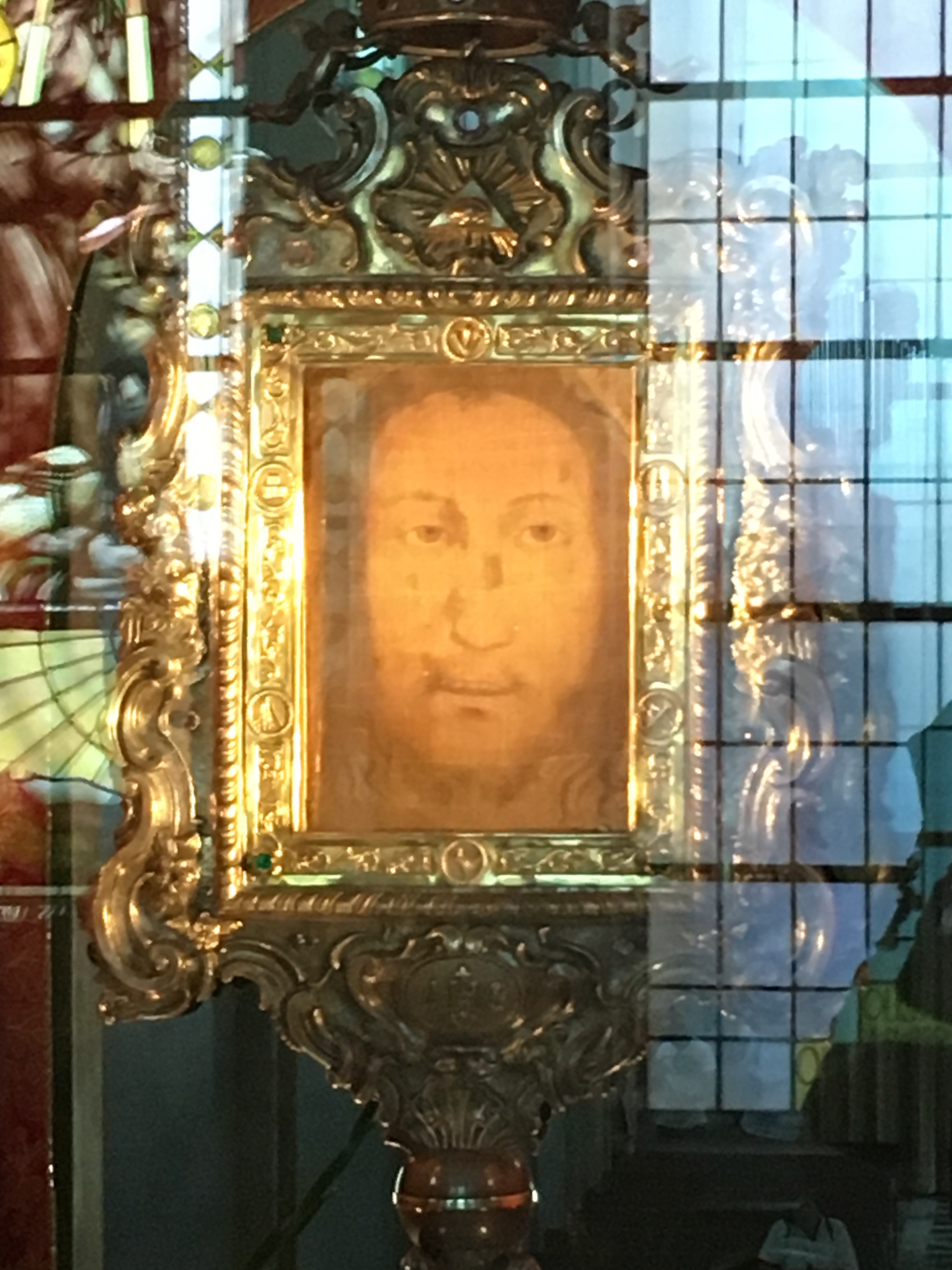
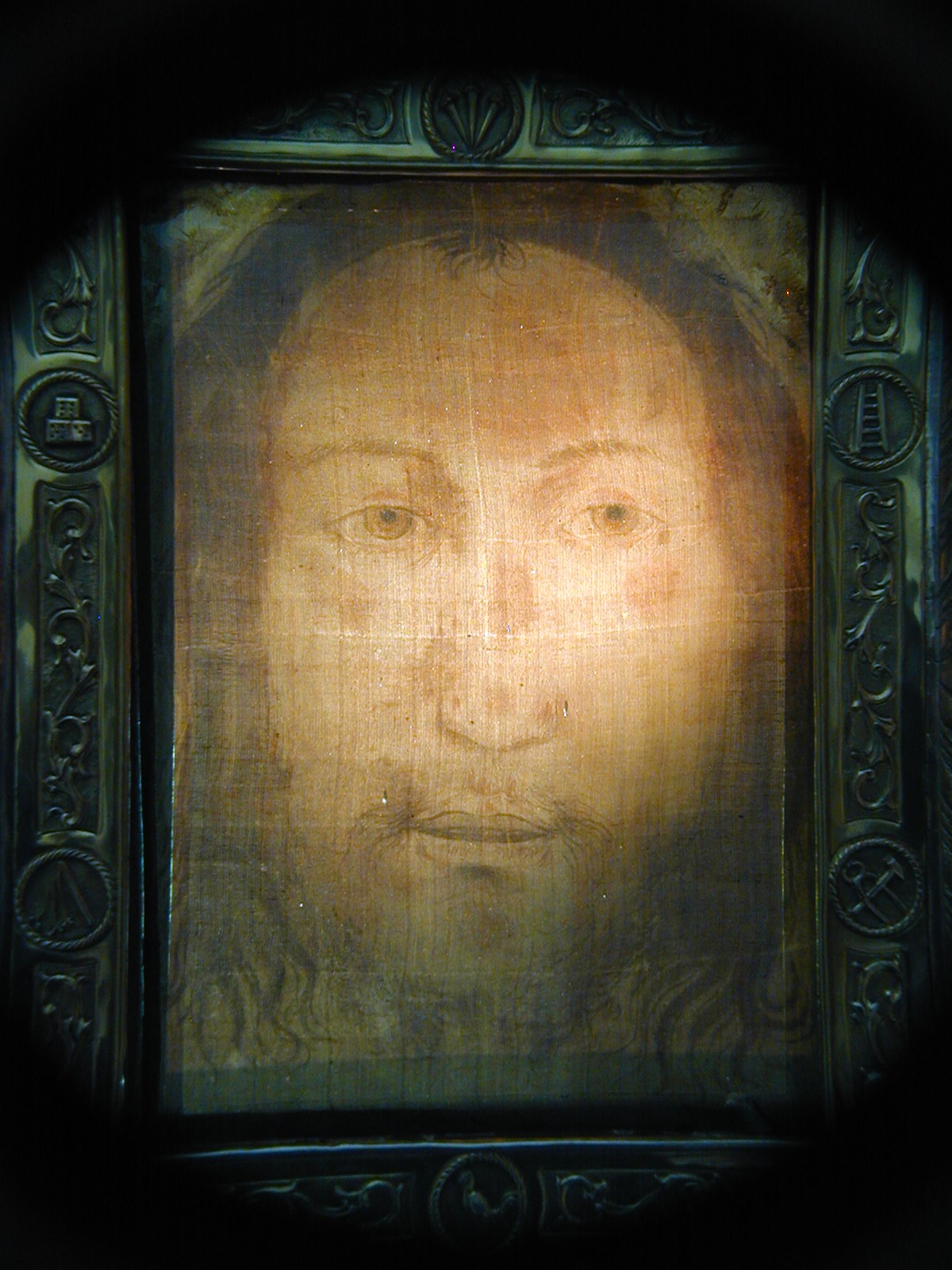
The Veil of the Holy Face of Manoppello, photo by Paul Badde/EWTN

“In your glorified Face we learn to overcome every form of egoism, to hope against every hope, to choose works of life against the actions of death. Give us grace to place you at the centre of our life, to remain faithful amidst dangers and the changes of the world, to our Christian vocation; to announce to all people the power of the Cross and the Word which saves; to be watchful and active, to attend the needs of the little ones; to understand the need of true liberation, which had its beginning in you and will have its end in you… May the Holy Spirit which you have granted, bring to maturation your work of salvation, through your Holy Face, which shines forever and ever.”

“I dare to summon the whole Church bravely to cross this new threshold, to put into the deep, …so that now as in the past the great engagement of the Gospel and culture may show to the world ‘the glory of God on the Face of Christ’ (2 Cor 4:6). May the Lord bless all those who work for this aim.”  

“May the Lord grant that in the new millennium, the Church will grow ever more in holiness, that she may become in history a true epiphany of the merciful and glorious Face of Christ the Lord.” ~Pope St. John Paul II

+++

“Whoever gazes upon me already consoles me.” – Our Lord to Bl. Mother Pierina De Michelli

The Rosary and Contemplation of the Face of Christ

IMG_1246

When he placed the New Millennium under “the Radiant sign of the Face of Christ” Pope St. John Paul II wrote, “To contemplate the Face of Christ, and to contemplate it with Mary, is the ‘program’ which I have set before the Church at the dawn of the third millennium…It is the Church’s task to reflect the light of Christ in every historical period, to make His Face shine also before new generations of the new millennium. Our witness, however, would be hopelessly inadequate if we ourselves had not first contemplated His Face.”  The Rosary is a traditional Christian prayer directed to the contemplation of Christ’s Face. “Without contemplation, the Rosary is a body without a soul,” says Pope St. John Paul II, “and runs the risk of becoming a mechanical repetition of formulas, in violation of the admonition of Christ.”

Contemplation is a gift, a grace, from God. It is a communion in which God transforms a soul into His likeness. To put it more simply, as St. Teresa of Jesus says, contemplation is “a close sharing between friends…taking time frequently to be alone with Him who we know loves us.”  Contemplation is not something beyond our reach however–we have an incomparable model in Mary; the eyes of her heart were always turned toward His Face. To dispose our souls to receive this great gift of God we need only reach for a Rosary and pray it with humility, listening attentively in the Spirit together with Mary, in silent love–that veil of mystery–to the Father’s voice. When we contemplate the scenes or mysteries of the Rosary in union with Mary, the Rosary becomes an unceasing praise of God; a way to learn from her about her son, Jesus, to discover His secrets and understand His message for us.

IMG_0915-1

To recite the Rosary, which can be called a compendium of the Gospel, Pope St. John Paul II says, “is to contemplate the Face of Christ in union with, and at the school of, His Most Holy Mother…Against the background of the words of the Ave Maria the principal events of the life of Jesus Christ pass before the eyes of the soul. They take shape in the complete series of the joyful, [luminous,] sorrowful and glorious mysteries, and they put us in living communion with Jesus through–we might say through the heart of his Mother…The Rosary belongs among the finest and most praiseworthy traditions of Christian contemplation…To look upon the Face of Christ, to recognize its mystery amid the daily events and sufferings of His human life, and then to grasp the divine splendor definitively revealed in the Risen Lord, seated in glory at the right hand of the Father; this is the task of every follower of Christ and therefore the task of each one of us. In contemplating Christ’s Face we become open to receiving the mystery of Trinitarian life, experiencing ever anew the love of the Father and delighting in the joy of the Holy Spirit. St. Paul’s words can then be applied to us ‘Beholding the glory of the Lord, we are being changed into His likeness, from one degree of glory to another; for this comes from the Lord who is the Spirit.'” (Rosarium Virginus Mariae) 

"The contemplation of Christ's Face cannot stop at the image of the Crucified One. He is the Risen One!"~St. Pope John Paul II
“The contemplation of Christ’s Face cannot stop at the image of the Crucified One. He is the Risen One!”~ Pope St. John Paul II

The entire month of October is dedicated to the Holy Rosary and October 7th is celebrated as the feast of Our Lady of the Rosary. The feast, originally named for Our Lady of Victory, commemorated the stunning victory, against all odds, obtained by Our Lady in the Battle of Lepanto through the prayer of the Rosary–which saved Christendom on October 7th, in 1571. By keeping our eyes fixed on the Face of Jesus as we pray the Rosary, together with Mary, through her maternal intercession, we too may obtain great victories through the heart of her Son Jesus, who obtained for all mankind the greatest victory over sin and death by His Resurrection.

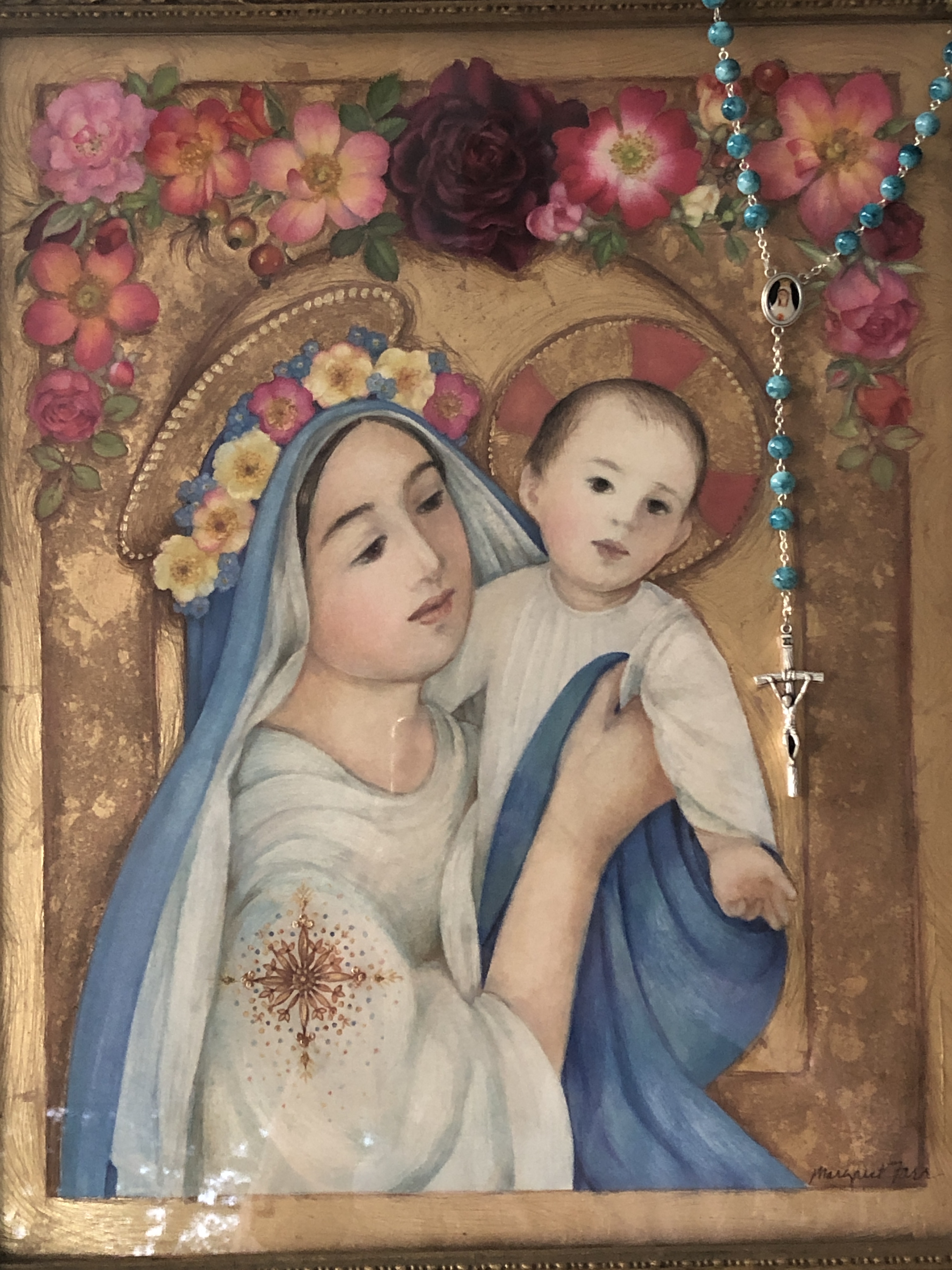
“Through her, may we see Him. Made sweeter, not made dim. And her hand leaves His light, sifted to suit our sight.” ~ Gerard Manley Hopkins (Painting of the Blessed Mother and the Child Jesus by Margaret Farr)

May the Lord Bless and Keep You! The Blessing of St. Francis

Il Transito di San Francisco, 1590

Within the Basilica of St. Francis in Assisi is a precious relic: a small, crumpled piece of yellowed parchment with the writing of St. Francis, now displayed in a silver reliquary. It was written on Mount La Verna after St. Francis had received the stigmata. The first biographer of St. Francis, Bl. Thomas of Celano wrote that for a long time St. Francis’s friend, Brother Leo, had greatly desired to have some memorial from the words of Our Lord written by St. Francis:

“The Blessing of St. Francis” in reliquary.
St. Francis of Assisi

“One day Blessed Francis called him, saying, ‘Bring me paper and ink, for I wish to write the words of God and His praises which I have been meditating in my heart.’ What he asked for being straightway brought, he writes with his own hand the praises of God and the words which he [his companion] wished, and lastly a blessing of the brother, saying: ‘Take this sheet for thyself and until the day of thy death guard it carefully.’ All temptation was at once driven away; the letter is kept and worked wonders for the time to come.” Brother Leo kept it faithfully; folding it in four, he carried it in his pocket and guarded it jealously for a good forty-six years.  The text in the middle, written in black, and marked with a large “Tau” cross is in Francis’s own handwriting, he writes the praises of God* and grants to Brother Leo the blessing from the Book of Numbers 6: 22-27 which later became known as “the Blessing of St. Francis.”

St. Francis of Assisi by Jose Beniliure y Gil

Pope Emeritus Benedict XVI, in his homily for the World Day of Peace, 2013, spoke of this blessing from the Book of Numbers which was for the priests and the people of Israel. “The blessing repeats the three times Holy Name of God, a Name not to be spoken, and each time linked to two words indicating an action in favor of man. Peace is the summit of these six actions of God in our favor, His most sublime gift, in which He turns toward us the splendor of His Face.”

This is the great blessing that St. Francis desired to impart to his friend, Brother Leo:

“May the Lord bless and keep you; may He make His Face shine upon you and be merciful to you; may He turn His Countenance toward you and give you His Peace!”  (Num. 6:22-27)

Amen!

*(St. Francis’s “Praises of God” are now now quite faded, but, this much can be still read: “Thou art holy, Lord God, who alone workest wonders. Thou art strong. Thou art great. Thou art most high. Thou art the Almighty King, Thou, holy Father, King of heaven and earth. Thou art the Lord God Triune and One; all good. Thou art good, all good, highest good, Lord God living and true. Thou art charity, love. Thou art wisdom. Thou art humility. Thou art patience. Thou art security. Thou art quietude. Thou art joy and gladness. Thou…”)

Holy Face on the Veil of Manoppello
The Shroud of Turin
Holy Face from The Shroud of Turin

St. Therese–“His Veiled Gaze is Our Heaven”

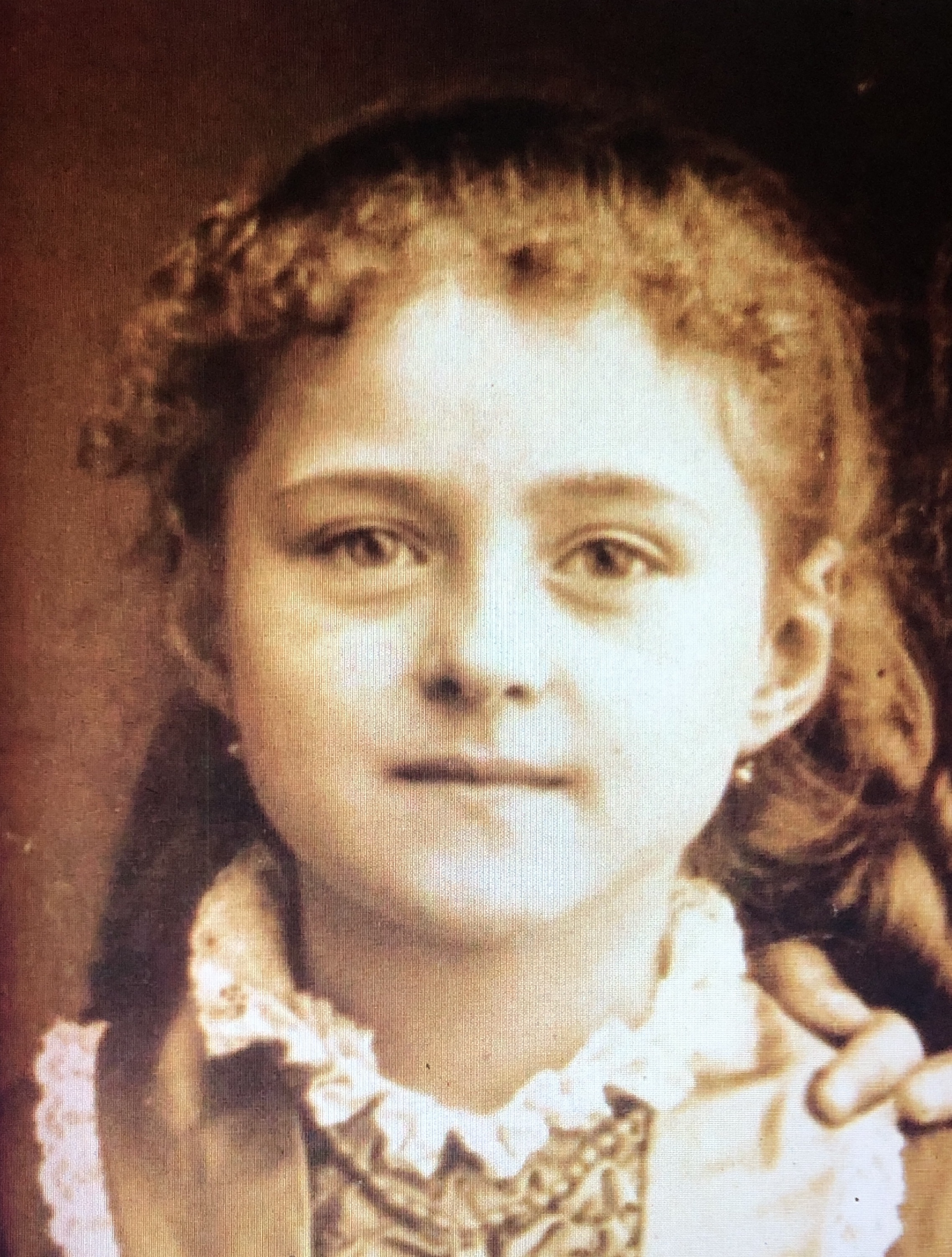
St. Therese of Lisieux as a child

 St. Therese of the Child Jesus and the Holy Face is more commonly known for her way of “Spiritual Childhood” and devotion to The Child Jesus, however, her sister, Mother Agnes gave this testimony for St. Therese’ beatification:

“Devotion to the Holy Face was the Servant of God’s special attraction.  As tender as was her devotion to the Child Jesus, it cannot be compared to her devotion to the Holy Face.”  

St. Therese’ sister Celine (Sr. Genevieve of the Holy Face), also wrote: “Devotion to the Holy Face was, for Therese, the crown and complement of her love for the Sacred Humanity of Our Lord.  The Blessed Face was the mirror wherein she beheld the Heart and Soul of her Well-Beloved.  Just as the picture of a loved one serves to bring the whole person before us, so in the Holy Face of Christ Therese beheld the entire Humanity of Jesus.  We can say unequivocally that this devotion was the burning inspiration of the Saint’s life… Her devotion to the Holy Face transcended, or more accurately, embraced, all the other attractions of her spiritual life.”

St. Therese

Canticle to the Holy Face

Jesus, Your ineffable image Is the star which guides my steps. Ah, You know, Your sweet Face Is for me Heaven on earth. My love discovers the charms Of Your Face adorned with tears. I smile through my own tears When I contemplate Your sorrows.

Oh! To console You I want To live unknown on earth! Your beauty, which You know how to veil, Discloses for me all its mystery. I would like to fly away to You!

Your Face is my only homeland. It’s my Kingdom of love. It’s my cheerful meadow. Each day, my sweet sun. It’s the Lily of the Valley Whose mysterious perfume Consoles my exiled soul, Making it taste the peace of Heaven.

It’s my Rest, my Sweetness And my melodious Lyre Your Face, O my Sweet Savior, Is the Divine Bouquet of Myrrh I want to keep on my heart!

Your Face is my only wealth. I ask for nothing more. Hiding myself in it unceasingly, I will resemble You, Jesus Leave in me, the Divine Impress Of Your features filled with sweetness, And soon I’ll become holy. I shall draw hearts to You.

So that I may gather A beautiful golden harvest, Deign to set me aflame with Your Fire. With Your adorned mouth, Give me soon the Eternal Kiss! ~St. Therese

“Look at His adorable Face, His glazed and sunken eyes, His wounds. Look Jesus in the Face. There you will see how He loves us.”

The Holy Veil of Manoppello, believed to be the Face of the Risen Christ. (Photo: Paul Badde)

“Your Veiled Gaze is Our Heaven…”

Holy Face Veil of Manoppello, Italy (Photo: Paul Badde)

“O Adorable Face of Jesus! Our souls understand Your language of love; we want to dry Your gentle Face and to console You for the forgetfulness of the wicked. In their eyes You are still as one hidden; they look upon You as an object of contempt…

O Face more beautiful than the lilies and roses of springtime! You are not hidden from our eyes…The Tears that veil Your divine look seem to us like precious Diamonds which we want to collect to buy the souls of our brothers and sisters with their infinite value.

Veil of Manopello, Photo: (Paul Badde)

From Your Adorable Mouth we have heard Your loving complaint. Since we know that the thirst which consumes You is a thirst for Love, we would wish to have an infinite Love to quench Your thirst…Beloved Bridegroom of our souls, if we had the love of all hearts, all that love would be for You! Then, heedless of our exile on the banks of Babylon, we will sing for your Ears the sweetest melodies. Since You are the true, the only Homeland of our hearts, we will not sing our songs in an alien land.

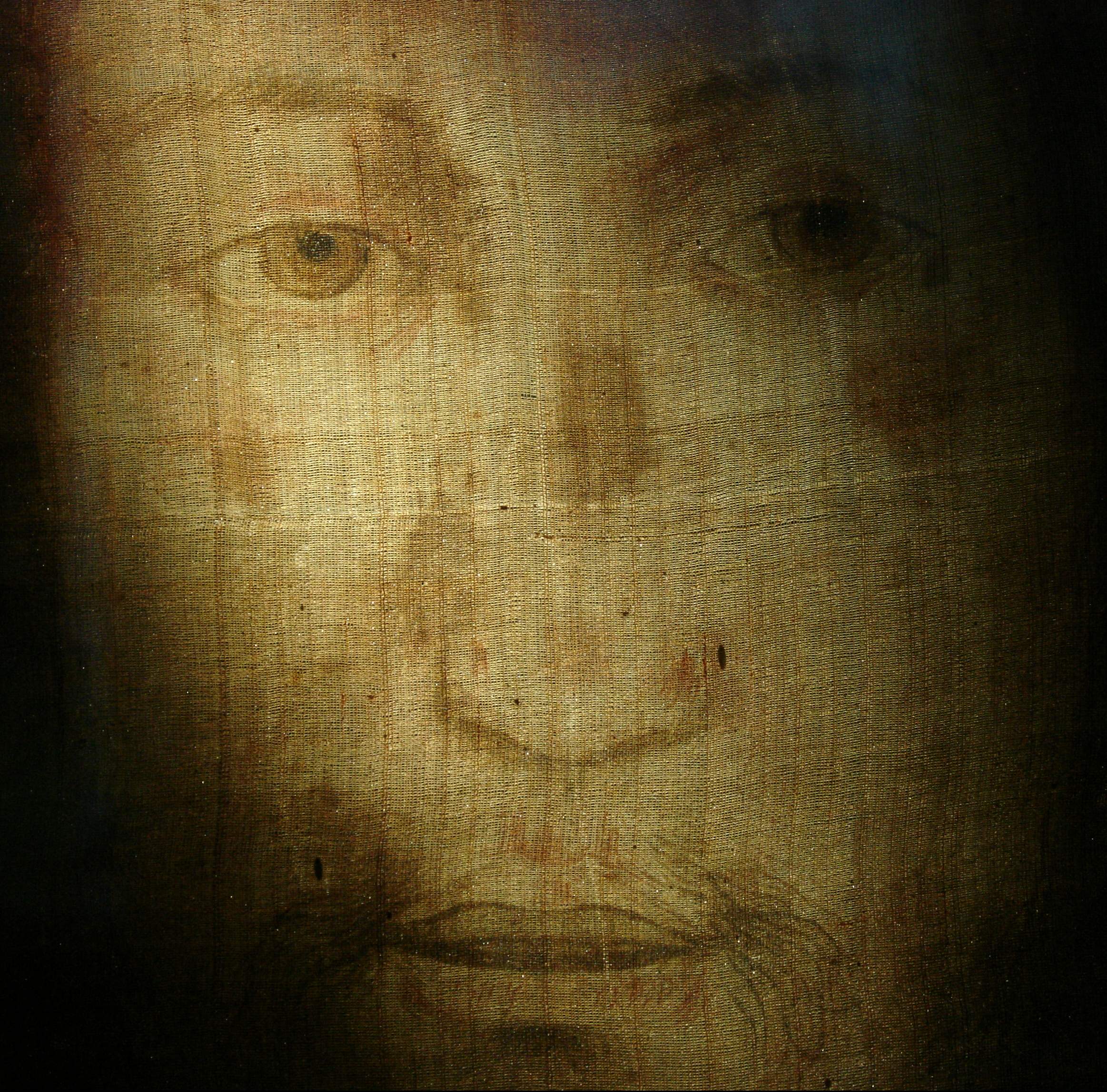
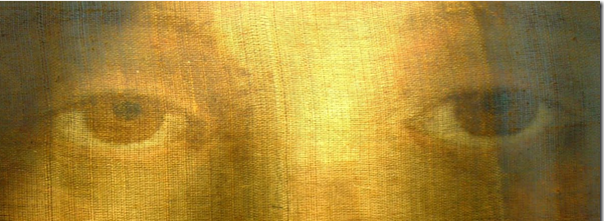
Eyes of Manoppello, (photo: Paul Badde)
“The Living Face” of The Veil of Manoppello
(Photo: Paul Badde)

O Beloved Face of Jesus! As we await the everlasting day when we will contemplate Your infinite Glory, our one desire is to charm Your Divine Eyes by hiding our faces too so that here on earth no one can recognize us…O Jesus! Your Veiled Gaze is our Heaven!” –St. Therese of the Holy Face and the Child Jesus

St. Therese reliquary covered with rose petals. Shrine of the Holy Face of Manoppello. Nov. 4, 2006 (Photo: Paul Badde)

 “O Jesus, whose adorable Face ravishes my heart, I implore Thee to fix deep within me Thy divine image and to set me on fire with Thy Love, that I may be found worthy to come to the contemplation of Thy glorious Face in Heaven.”

St. Therese shortly after her death