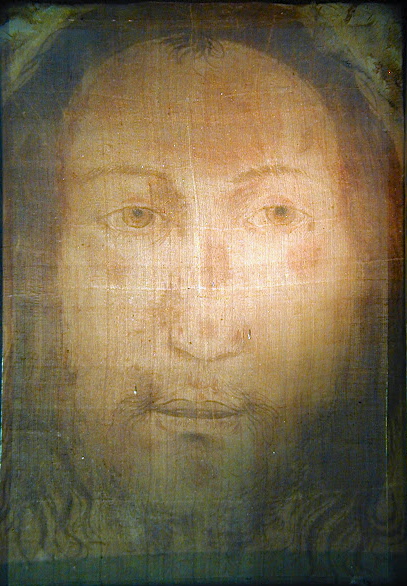
“Your face, O Lord, I seek” (Psalm 27:8) Relecting on the Face of Jesus in his Apostolic Letter Novo Millennia Ineunte, Pope St. John Paul II writes: The ancient longing of the Psalmist could receive no fulfillment greater and more surprising than the contemplation of the face of Christ. God as truly blessed us in him and has made “his face to shine upon us” (Psalm 67:1). At the same time, God and man that he is, he reveals to us also the true face of man, “fully revealing man to man himself.” Pope St. John Paul II continues, “In order to “bring man back to the Father’s face, Jesus not only had to take on the face of man, [at the Incarnation] but he had to burden himself with the “face” of sin. “For our sake he made him to be sin who knew no sin, so that in him we might become the righteousness of God (2 Cor. 5:21)
JPII goes on to write, “we shall never exhaust the depths of this mystery.” “But her contemplation of Christ’s face cannot stop at the image of the Crucified One. He is the Risen One! Were this not so, our preaching would be in vain and our faith empty (cf. 1 Cor. 15:14) “The Resurrection was the Father’s response to Christ’s obedience. ” (Novo Millennia Ineunte)
The Devotion to the Holy Face is not meant to be solely a list of prayers to be recited, but is a means of encounter and relationship with Jesus Christ. Charity–Love of God and love of neighbor–are at the heart of this devotion to the Holy Face, which encompasses the whole spiritual life of a Christian and is intensely Eucharistic:
Benedict XVI has characterized devotion to The Holy Face as having three separate components:
1. Discipleship – an encounter with Jesus, to see Jesus in the Face of those in need.
2. The Passion of Jesus, and suffering expressed by images of the wounded Face of Jesus.
3. The Eucharist, “the great school in which we learn to see The Face of God”, which is woven between the other two. The eschatological element then builds on awakening to Christ by contemplating His Face hidden in The Eucharist.
“Our whole life should be directed toward encountering Him,” writes Benedict, “toward loving Him; and in it, a central place must be given to love of one’s neighbor, that love that in the light of The Crucified One, enables us to recognize the Face of Jesus in the poor, the weak, the suffering.” The pope goes on to explain the fruits of this contemplation: “From contemplation of the Face of God are born, joy, security, Peace.”
Pope St. John Paul II, in Veritatis Splendor, tells us that to win the battle for souls, we must first contemplate the Face of Christ ourselves in order to bring light into this darkened world that does not know God’s love:
“The light of God’s Face shines in all its beauty on the countenance of Jesus Christ, “the image of the invisible God” (Cor. 1:15), “the reflection of God’s glory” (Web 1:3), “full of grace and truth” (Jn1:14). Christ is “the way, and the truth, and the life” (Jn. 14:6). Consequently the decisive answer to every one of man’s questions is Jesus Christ himself, as the Second Vatican Council recalls: “In fact, it is only in the mystery of the Word Incarnate that light is shed on the mystery of man. For Adam, the first man, was a figure of the future man, namely, Christ the Lord. It is Christ, the last Adam, who fully discloses man to himself and unfolds his noble called by revealing the mystery of the Father and the Father’s love.” (Veritatis Splendor)
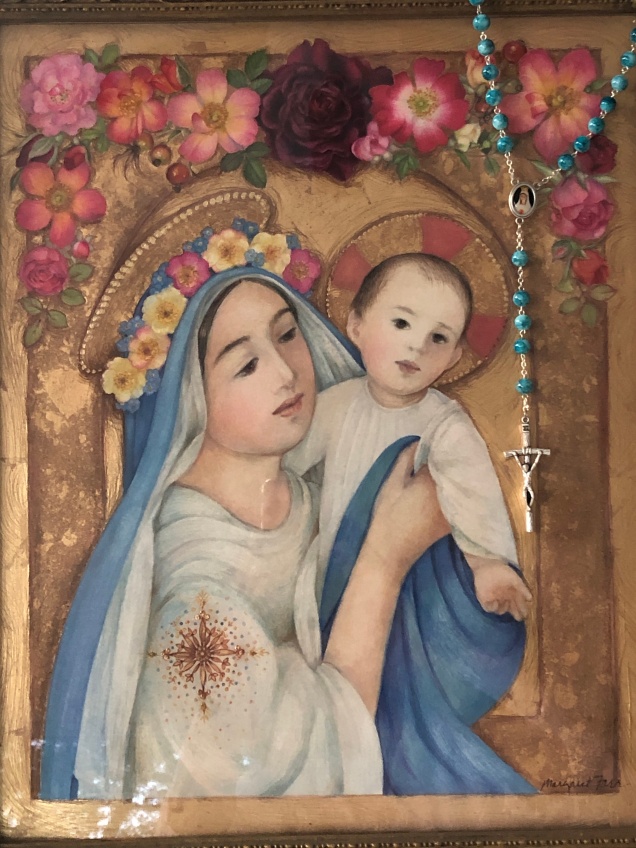
Contemplation of the Face of Jesus in the Rosary, together with the Blessed Virgin Mary, is another very important way, as Pope St. John Paul II writes in Rosarium Virginis Mariae: “to contemplate the face of Christ in union with, and at the school of, his Most Holy Mother. To recite the Rosary is nothing other than to contemplate with Mary the face of Christ...” “…to stand like your Virgin Mother, at the glorious Cross, and at the crosses of all people to bring consolation, hope, and comfort.”
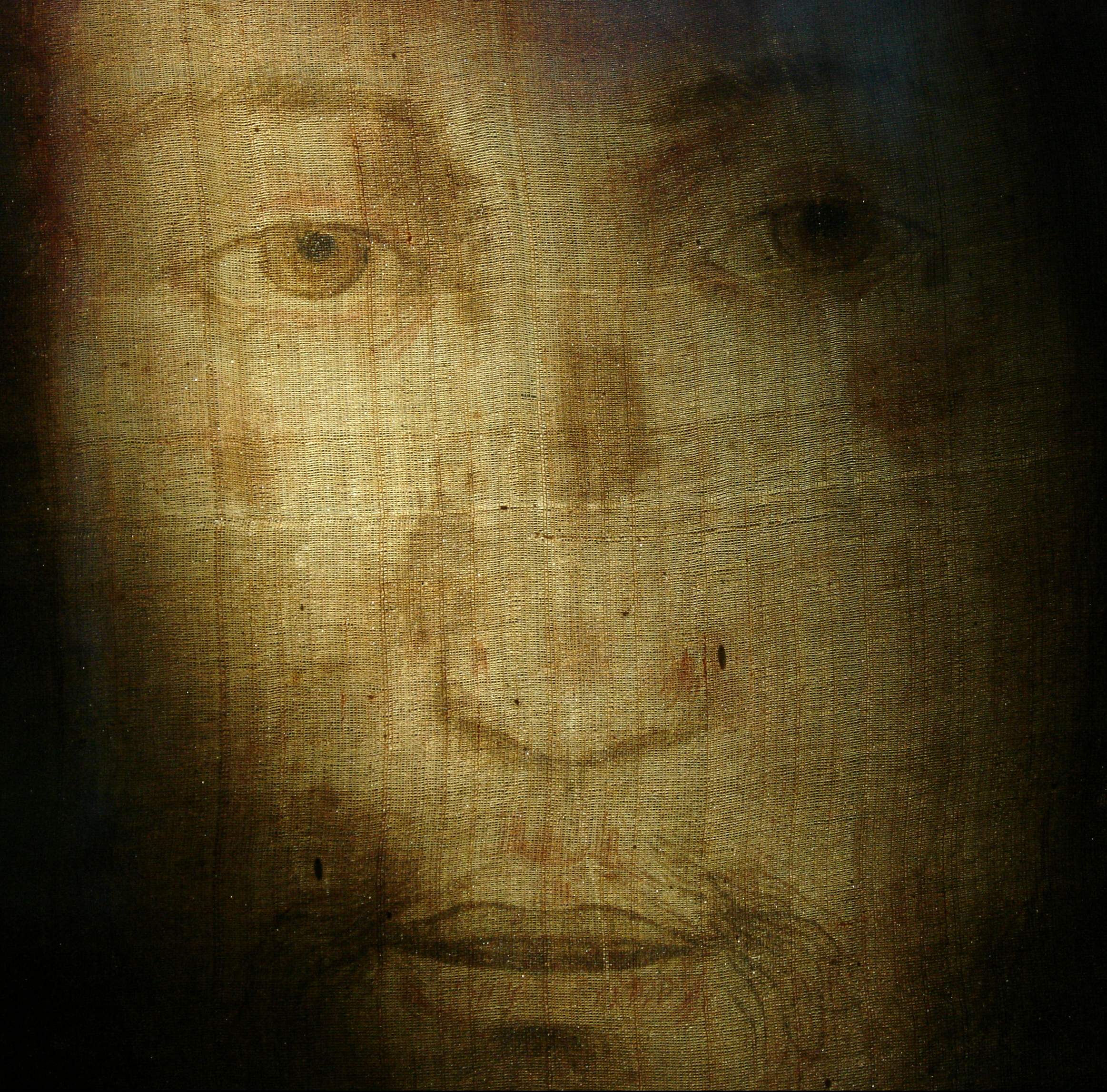
For God who said, “Let light shine out of darkness,” has shone in our hearts to bring to light the knowledge of the glory of God on the Face of Jesus Christ. (2 Cor. 4:6)

