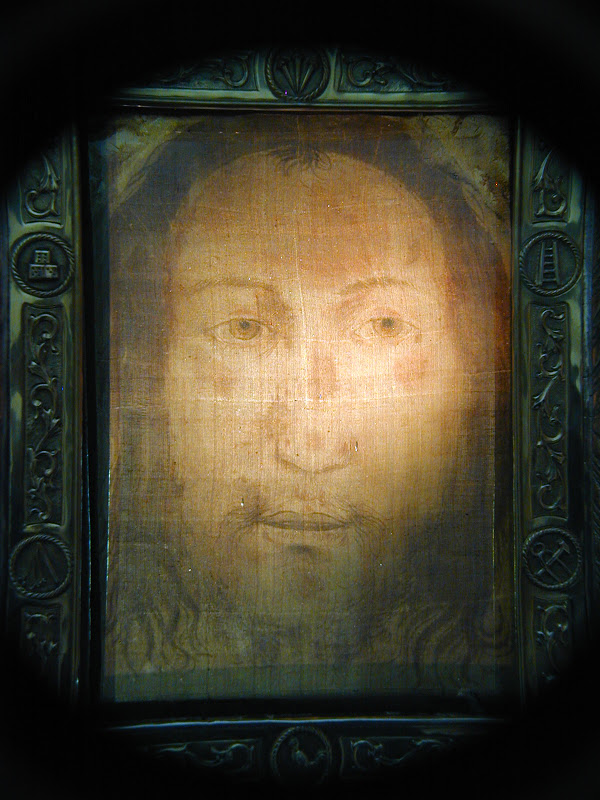
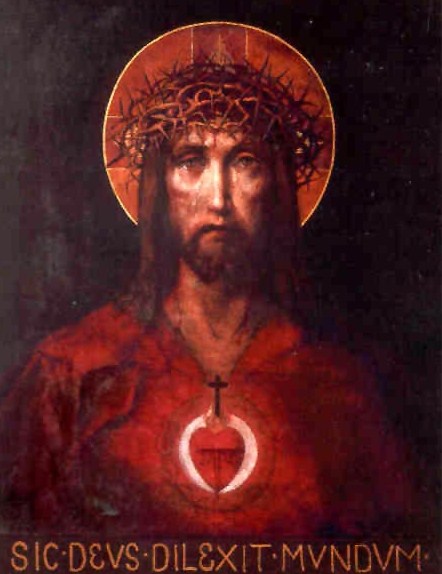
“Love is tireless, it feeds on silence and humility and is heart to heart with our Beloved, deriving from His Heart the powerful force which makes love tireless to do much, to do well the tiniest everyday things to please Him alone. How many pearls we can collect each day to make Jesus forget the insults He receives each day? How many kisses–it will be a smile–a word held back–an act of charity–docile obedience–temptation promptly resisted–and in moments in which nature, pride, self-love, sensuality, desire to hold sway–a glance at the Holy FACE–that blood, those Divine Eyes veiled with grief and love and we will say nothing?” –Blessed Mother Maria Pierina de Micheli, Missionary of the Holy Face
Day 4:
Alpha-Omega Holy Face of Jesus Novena Prayer
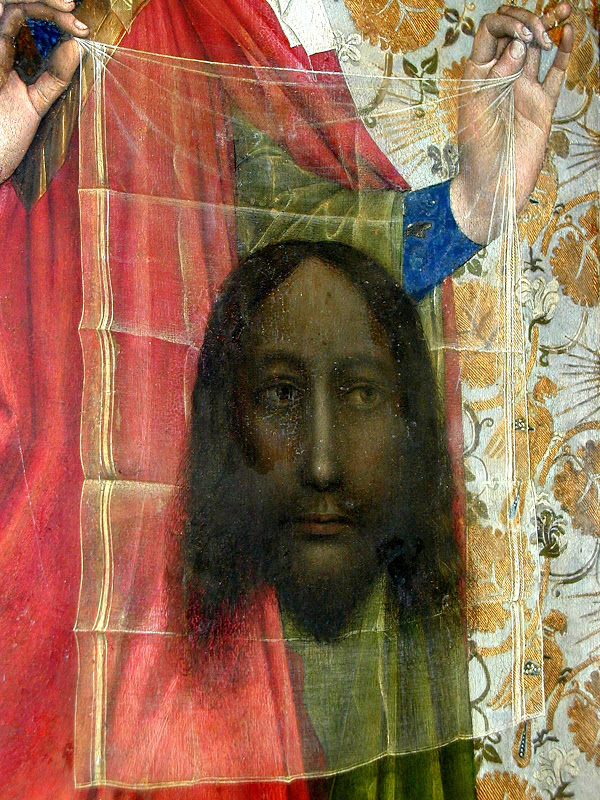
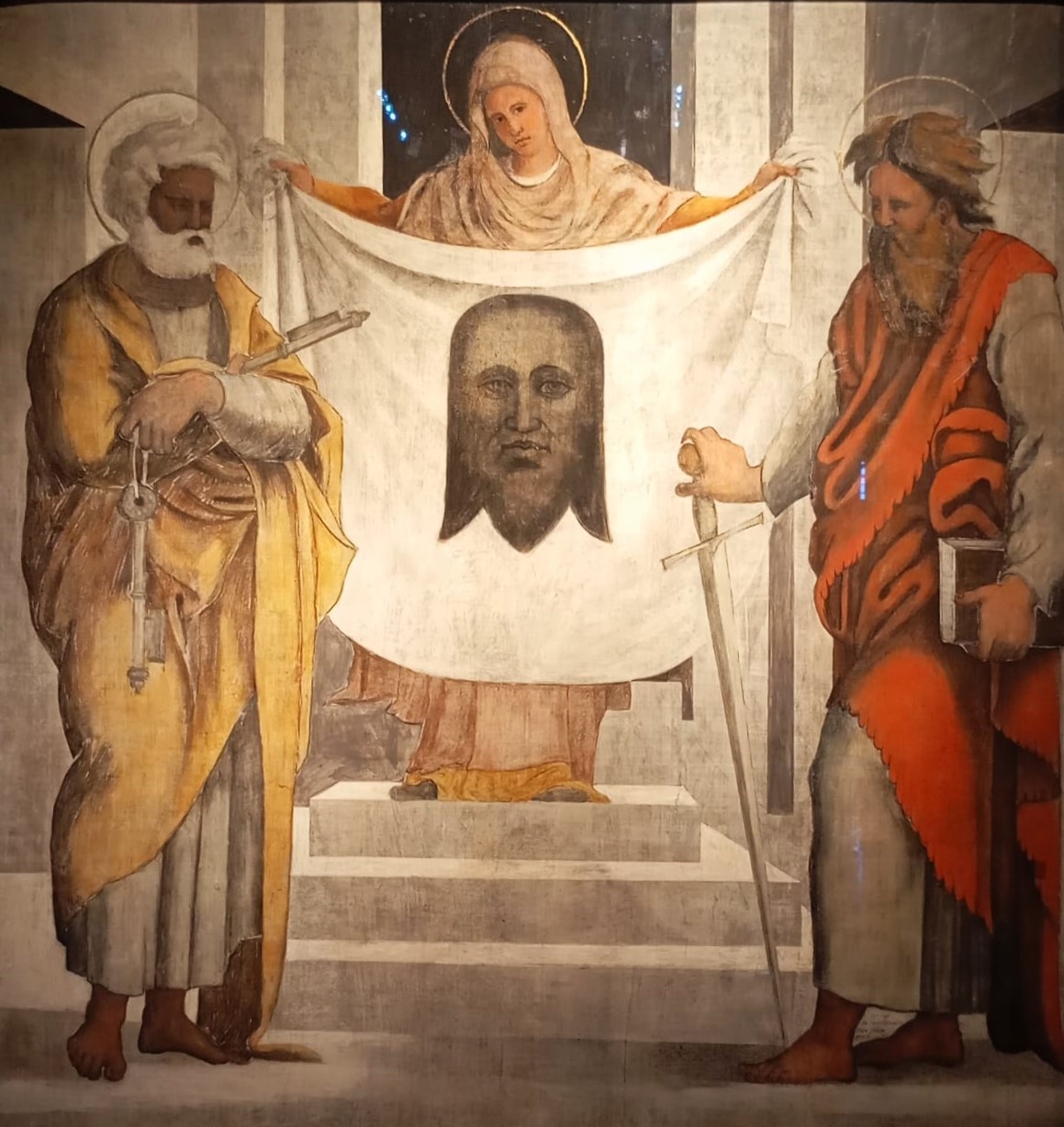
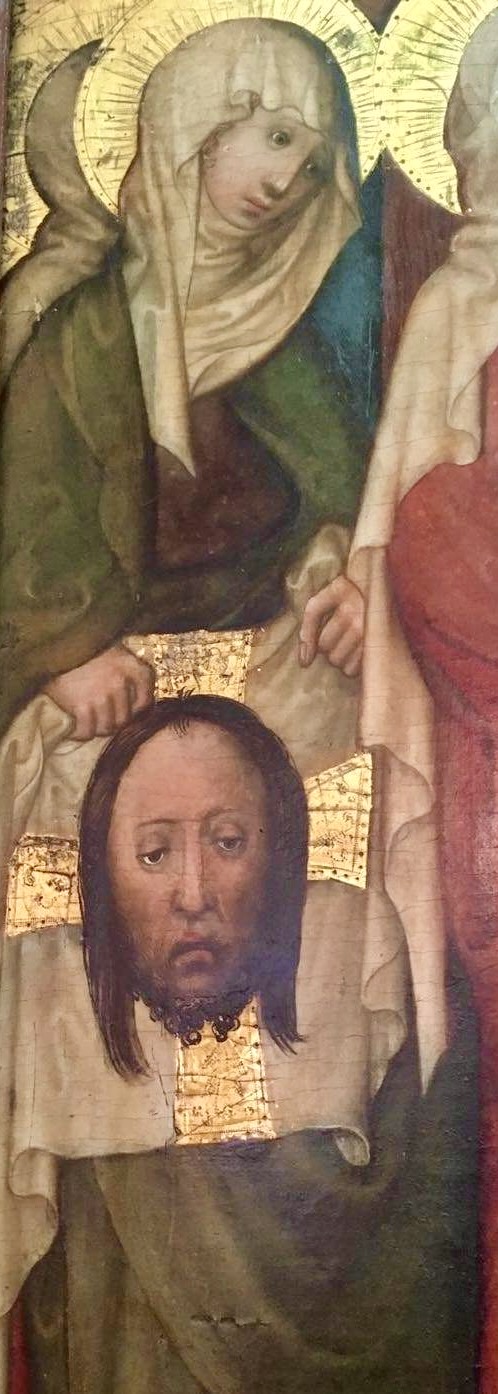
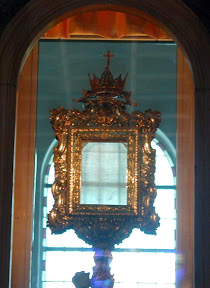
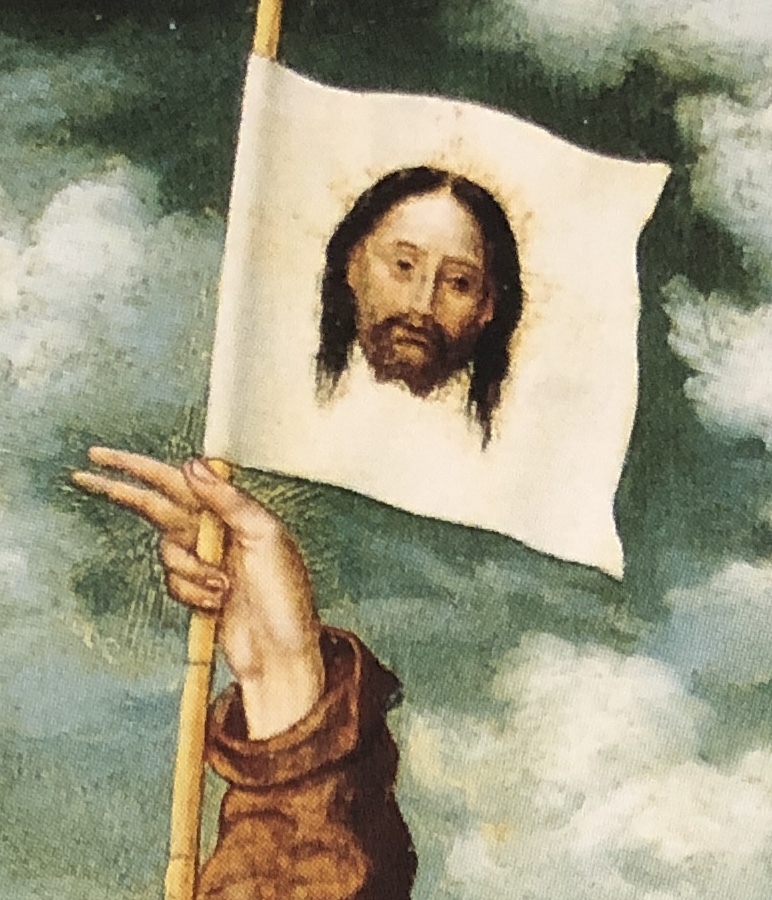
Veil of Veronica C. 1618-22 National Gallery
Daily Preparatory Prayer
O Most Holy and Blessed Trinity, through the intercession of Holy Mary, whose soul was pierced through by a sword of sorrow at the sight of the passion of her Divine Son, we ask your help in making a perfect Novena of reparation with Jesus, united with His sorrows, love and total abandonment.
We now implore all the Angels and Saints to intercede for us as we pray this Holy Novena to the Most Holy Face of Jesus and for the glory of the most Holy Trinity, Father, Son and Holy Spirit. Amen.
Fourth Day
Psalm 51: 8-9
Indeed you love truth in the heart; then in the secret of my heart teach me Wisdom. O purify me, then I shall be clean; O wash me, I shall be whiter than snow.
O Lord Jesus, who has said, learn of me for I am meek and gentle of heart, and who did manifest upon The Holy Face the sentiments of Thy divine heart, grant that we may love to come frequently and meditate upon Thy divine features. We may read there Thy gentleness and Thy humility, and learn how to form our hearts in the practice of these two virtues which Thou desires to see shine in Thy servants. Mary our Mother and St. Joseph, pray for us.
Through the merits of your precious blood and your Holy Face, O Jesus, grant us our petition, …Pardon and mercy.
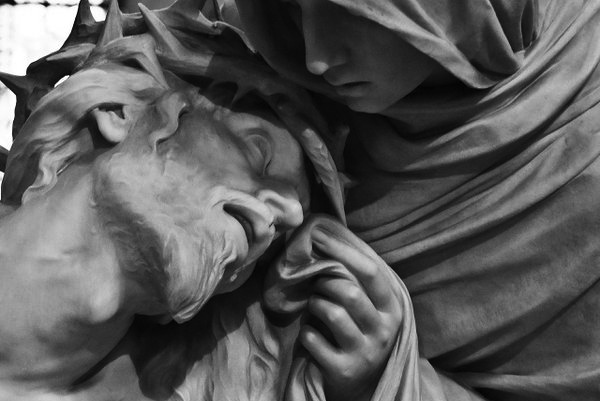
Sorrowful Mother
“O Holy Face of my sweet Jesus, by the tenderness of the love and most deep sorrow with which Mary most holy contemplated You in Your Passion, grant to our souls to share in her love and grief and fulfill Your Most Holy Will as perfectly as possible. Amen. “
–Bl. Mother Maria Pierina de Micheli, “Missionary of the Holy Face”
Prayer in Honor of the Sorrows of The Blessed Virgin
O Most Holy and afflicted Virgin, Queen of Martyrs! Who stood beneath the Cross, witnessing the agony of your dying Son, look down with a mother’s tenderness and pity on us as we kneel before you to venerate your Sorrows and place our requests, with filial confidence, in the sanctuary of your wounded heart. Present them on our behalf to Jesus, through the merits of His most sacred Passion and Death, together with your sufferings at the foot of the Cross, and through the united efficacy of both, obtain the favor which we humbly ask. To whom shall we go in our wants and miseries if not to you. O Mother of Mercy, who having so deeply drunk of the chalice of your Son, graciously alleviate the sufferings of those who still sigh in this land of exile. Amen.
Prayer to the Souls in Purgatory
My Jesus, by the sorrows you suffered in your agony in the garden, in your scourging and crowning with thorns, in the way to Calvary, in your crucifixion and death, have mercy on the souls in Purgatory, and specially on those that are most forsaken. Deliver them from the dire torments they endure. Call them and admit them to your most sweet embrace in Paradise. Amen.
Pray one (1) Our Father, three (3) Hail Mary’s, one (1) Glory Be.
O Bleeding Face, O Face Divine, be every adoration Thine. (3 times)
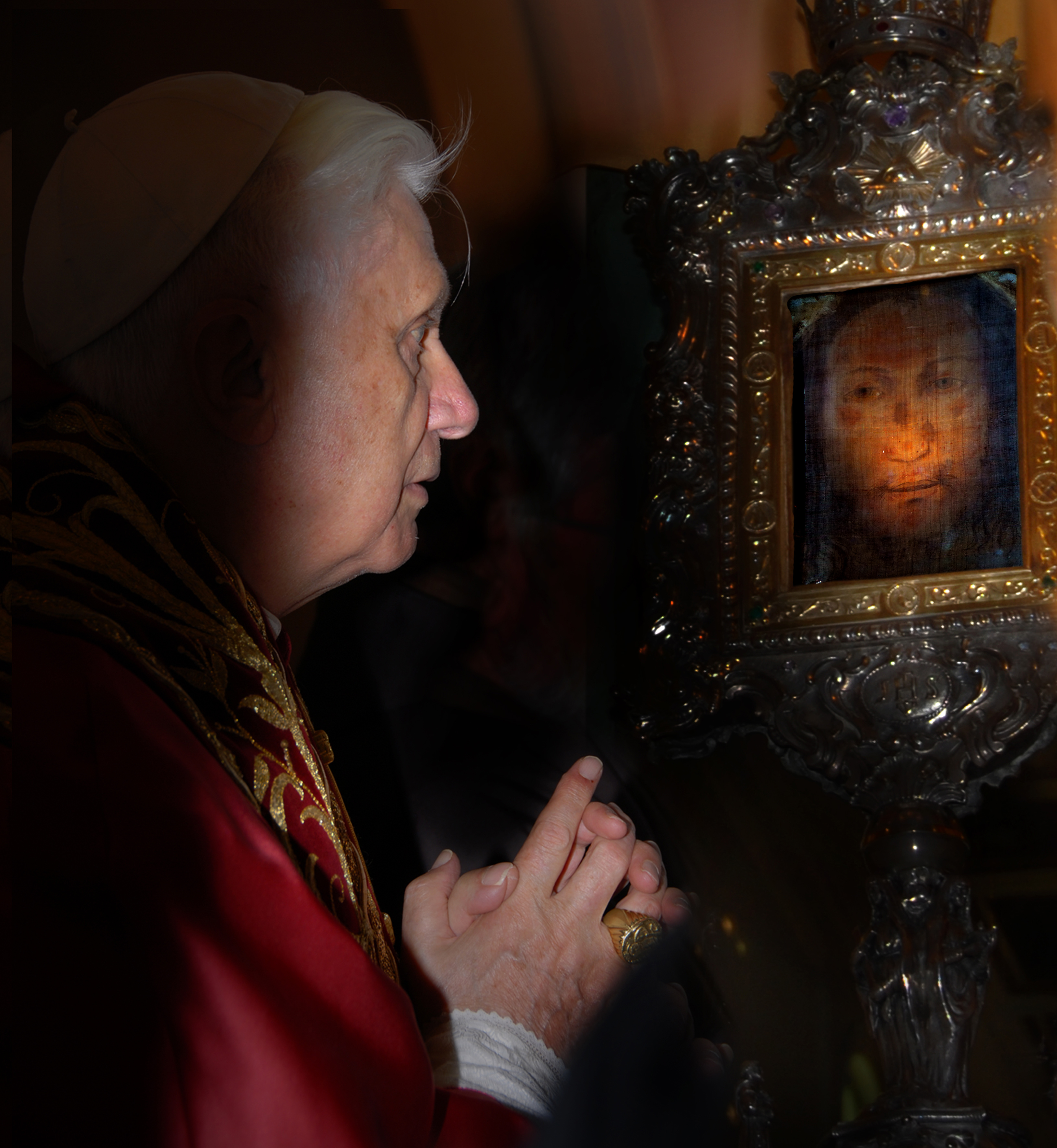
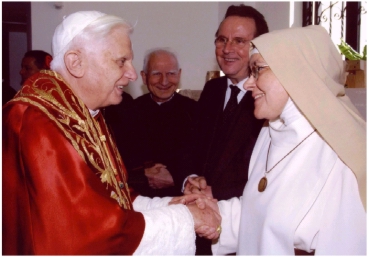
Pope Benedict XVI gazes at the Veil of the Holy Face of Manoppello. Photo: Paul Badde
“While we too seek other signs, other wonders, we do not realize that He is the real sign, God made flesh; He is the greatest miracle of the universe: all the love of God hidden in a human heart, in a human face.” — Pope Benedict XVI
“All those who attracted by my love, and venerating my countenance, shall receive, by virtue of my humanity, a brilliant and vivid impression of my divinity. This splendor shall enlighten the depths of their souls, so that in eternal glory the celestial court shall marvel at the marked likeness of their features with my divine countenance.” (Our Lord to St. Gertrude)
Daily Preparatory Prayer (to be said each day as you console the Holy Face) O Most Holy and Blessed Trinity, through the intercession of Holy Mary, whose soul was pierced through by a sword of sorrow at the sight of the passion of her Divine Son, we ask your help in making a perfect Novena of reparation with Jesus, united with His sorrows, love and total abandonment. We now implore all the Angels and Saints to intercede for us as we pray this Holy Novena to the Most Holy Face of Jesus and for the glory of the most Holy Trinity, Father, Son and Holy Spirit. Amen.
Second Day Psalm 51: 5-6 My offenses truly I know them; My sin is always before me. Against you, you alone, have I sinned; What is evil in your sight I have done. Most Holy Face of Jesus, we are truly sorry that we have hurt you so much by constantly doing what is wrong; and for all the good works we have failed to do. Immaculate Heart of Mary, Saint Joseph, intercede for us, help us to console the Most Holy Face of Jesus. Pray that we may share in the tremendous love Thou hast for one another, and for the most Holy and Blessed Trinity. Amen. Through the merits of your precious blood and your Holy Face, O Jesus, grant us our petition, …Pardon and mercy.
Prayer to The Holy Spirit
Come Holy Spirit
Come, Holy Spirit, Sanctifier, all powerful God of love, Thou who didst fill the Virgin Mary with grace, Thou who didst wonderfully transform the hearts of the apostles, Thou who didst endow all Thy martyrs with a miraculous heroism, come and sanctify us, illumine our minds, strengthen our wills, purify our consciences, rectify our judgments, set our hearts on fire and preserve us from the misfortune of resisting Thine inspirations. We consecrate to Thee our understanding, our heart and our will, our whole being for time and for eternity. May our understanding be always submissive to Thy heavenly inspirations and to the teachings of Thy Holy Catholic Church, of which Thou art the infallible guide; may our heart be ever inflamed with love of God and neighbor; may our will be ever conformed to the divine will, and may our whole life be a faithful imitation of the life and virtues of our Lord and Savior, Jesus Christ, to whom with the Father and Thee be honor and glory forever. Amen. Pray one (1) Our Father, three (3) Hail Mary’s, one (1) Glory Be.O Bleeding Face, O Face Divine, be every adoration Thine. (3 times)
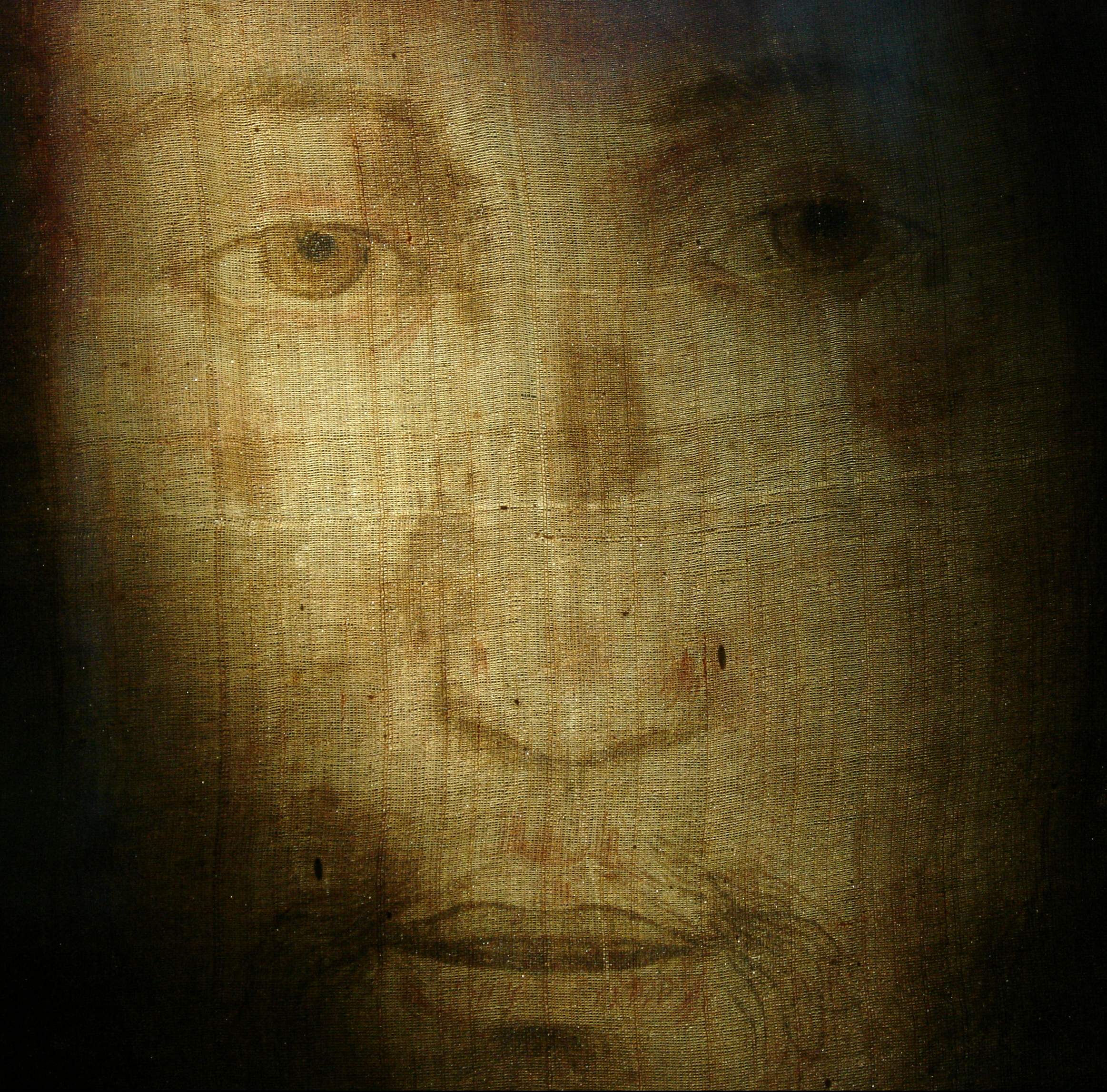
Holy Face Veil of Manoppello, which shows traces of bruises and wounds of the Passion. (photo: Paul Badde)
“O God, Who did constitute Your only begotten Son the Savior of mankind, and did command that He should be called JESUS; grant in Your kindness that our heart’s joy in Heaven may be the Face of Him Whose Holy Name we venerate on earth.” Amen. — Blessed Mother Pierina De Michelli, “Missionary of the Holy Face”
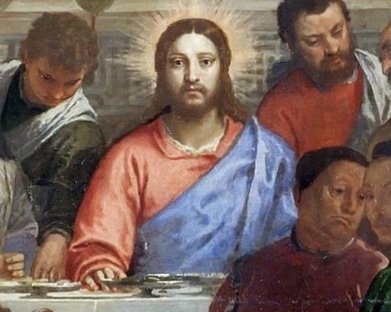
Detail from The Wedding at Cana by Paolo Veronese (1528-1588)
Omnis Terra, Latin for “All the Earth, ” is the name given to the Second Sunday in Ordinary time, when the Gospel of the Wedding at Cana is read. In the midst of the wedding feast, Mary whispers to her son Jesus, “They have no wine.” At Mary’s words, Jesus then performed his first miracle: “the beginning of his signs at Cana in Galilee, and so revealed His glory, and His disciples began to believe in Him.” (John 2: 1-11) The revelation of His glory is the cause for all the earth rejoicing, giving praise to His Name at the wedding feast of the Lamb!
Omnis Terra Celebration 2025
This Holy Jubilee Year of Hope pilgrims from all over the world will be very fortunate to have an opportunity to participate in a Eucharistic celebration, procession, and blessing at the Basilica Shrine of the Holy Face in Manoppello, Italy, on Omnis Terra Sunday, January 19th. The Eucharistic Celebration will be presided over by His Excellency, Mons. Bruno Forte, Metropolitan Archbishop of Chieti-Vasto. Concelebrants will be Fr. Simone Calvarese, Provincial Minister of the Capuchin Friars Minor of Central Italy, and Fr. Antonio Gentili, Rector of the Sanctuary. At the end of the celebration there will be a procession and blessing with the reliquary of the Holy Face.
“To rejoice in the splendor of His Face means penetrating the mystery of His Name made known to us in Jesus, understanding something of His Interior life and of His will, so that we can live according to His plan for humanity. Jesus lets us know the hidden Face of the Father through His human Face; by the gift of the Holy Spirit poured into our hearts.” ~Pope Benedict XVI
This Jubilee Year of Hope, 2024-2025, will mark ten years since the rite of “Omnis Terra,” which had originally begun in 1208, was once again renewed during the Jubilee Year of Mercy, 2015-2016. At that time, a facsimile of the Merciful Face of of Christ on the Holy Veil of Manoppello was carried in a historic procession once again through the streets of Rome. 2016 was the first year that the Holy Face was processed in Rome since the ancient procession of Pope Innocent III from St. Peter’s Basilica to the nearby hospital of Santo Spirito in Sassia in 1208. The Omnis Terra celebration was later continued at the Basilica Shrine of Il Volto Santo in Manoppello. This significant event, celebrating the revelation of His glory is certainly a reason for all the earth to rejoice, as though at a wedding feast!
The first “Omnis Terra” Procession of Pope Innocent III in 1208 carrying “the Veronica” Face of Christ (from “Liber Regulae Sancti Spiritus in Saxia” manuscript 1350)
detail of Face of Jesus on the Holy Veil from the precious manuscript “Liber Regulae Sancti Spiritus in Saxia”
Let all the earth worship and praise You, O God; may it sing in praise of Your Name, O Most High. Shout joyfully to the Lord all the earth; sing a psalm in honor of His Name, praise Him with magnificence!
–Omnis Terra Introit
Salve! Sancta Facies! Hail, Holy Face!
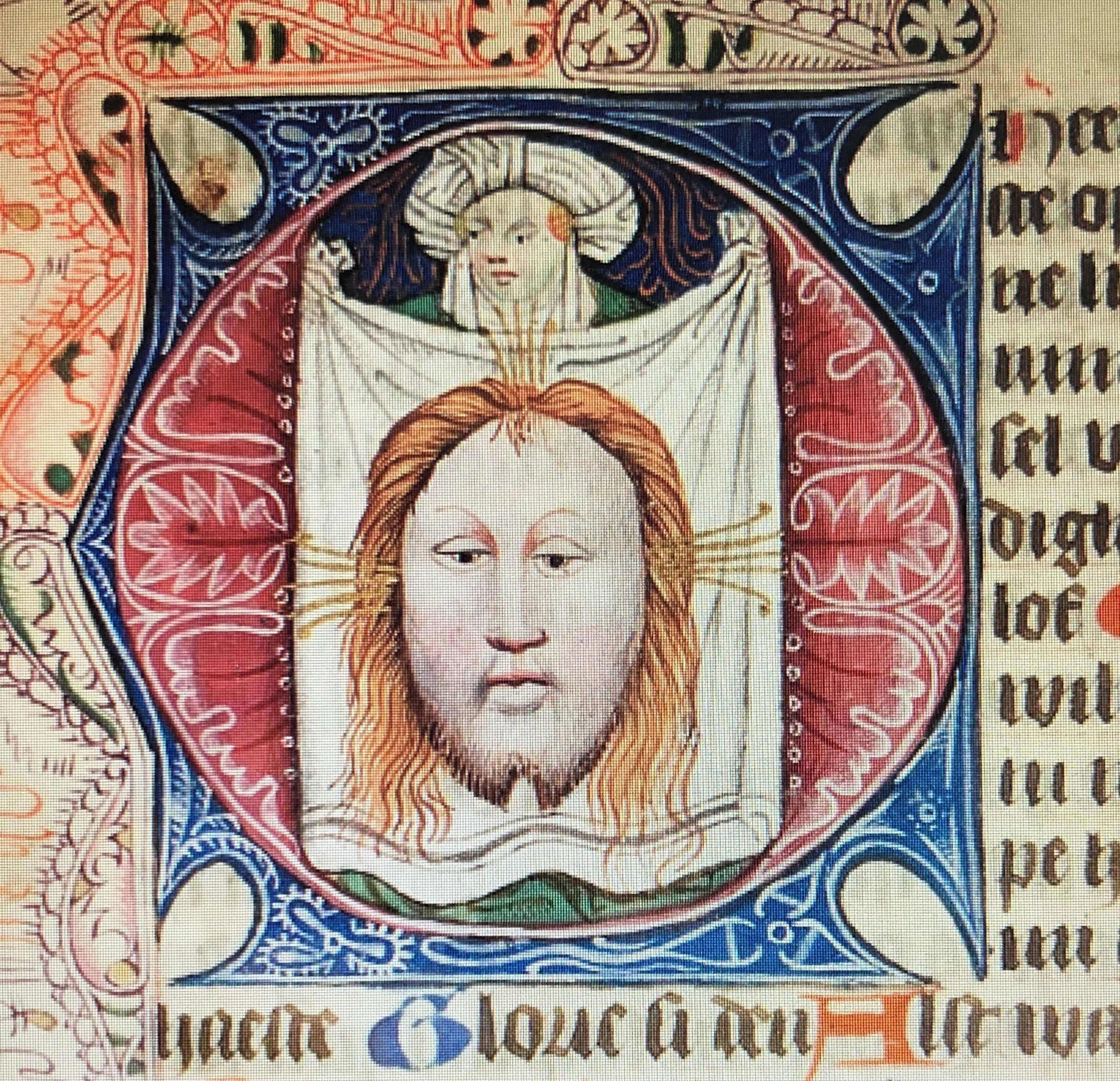
Salve, Sancta Facies! Hail, Holy Face (c. 1450-1455), Willem Vrelant (1481) and associates, Walters Art Gallery, Baltimore, MD.
The exquisite illuminated manuscripts of the Middle Ages reflect the great love and devotion shown to the Holy Face, as well as provide evidence of what the Holy Face of Jesus looked like, as it was seen on a miraculous veil, known as “the Veronica.” “The Veronica,” or Veil of the Holy Face of Jesus, was the greatest relic in Rome at that time. To gaze upon the veil was the great desire of pilgrims, who came from far and wide, to see for themselves the sheer veil bearing the Face of Jesus. Beginning with public exhibitions and processions of the Holy Veil by Pope Innocent III in the mid thirteenth century, the miraculous veil could be viewed by all. Then, the artists got to work on paintings, illustrations, poetry, prayers, and hymns in honor of the Holy Face. ( “The Veronica Route” website wonderfully catalogues many of these “Veronica” artworks that may be found throughout the world.)
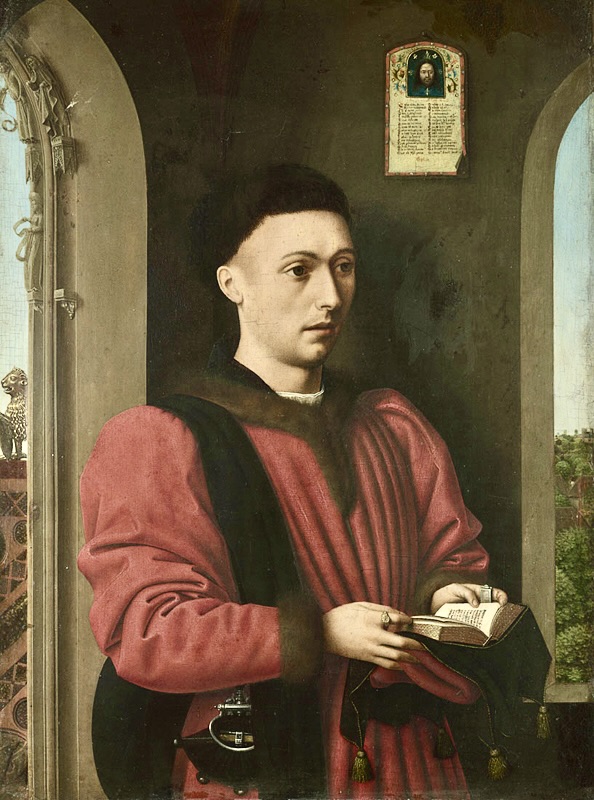
Portrait of a Young Man, 1450-60, Petrus Christus, London National Gallery. Seen above the prayerful young man, on the wall, the Holy Face and the Salve! Sancta Facies Hymn
Pope John XXII, who was elected Pope in 1316, composed a beautiful hymn in honor of the Holy Face, and he also granted a special indulgence to those who recited it — and for those who could could not read, the Pope granted the same indulgence to the faithful for reciting five Our Fathers, Hail Marys, and Glory Be’s. (For an understanding of indulgences, this EWTN article,Primer on Indulgences by James Akin is very helpful.)
Hymn in Honor of the Holy Face by Pope John XXII (translated from the original Latin)
Hail! Holy Face of our Redeemer, hail!
Which shines in all its majesty divine
Upon the spotless veil, a priceless gift
To Saint Veronica; of love the sign.

Hail! Glory of all time, mirror-glass of the Saints,
Wherein the blessed love for eye to gaze;
Destroy within us every stain of sin,
And with the elect our souls towards Thee raise.

Hail, Face of God! With His own gifts adorned,
Whose splendor through the ages shall not cease;
Oh! make Thy light descend into our hearts,
And from their earthly toils our souls release.

Hail! Mighty bulwark of the Christian faith,
Of heresy and lies the Victor Thou;
King in the Sacred Bread, renew the strength
Of all the faithful who before Thee bow.

Hail! all our joy in this hard life below,
So frail and fugitive, so quickly over;
Sweet Picture, lead us onwards to the skies,
That we may there the Face of Christ adore.

Hail! noblest of all gems, celestial pearl,
In Thee innumerable graces shine;
No hand depicted Thee, no chisel carved,
Thou wert of God alone the work divine.

The tints with which Thy features He has traced
Will never alter and will never fade;
Changeless amidst the ravages of time,
The everlasting King Thy Face may see.

Forever incorrupt and free from stain,
The living Christ we honour still in Thee;
Thou turnest into joy our sighs and tears,
Oh! grant that we, in heaven, thy Face may see.

Be thou, we pray, our buckler and defense,
Our consolation and refreshment sweet,
That nothing hostile may our spirits harm,
Till, after death, we rest at Jesus’ feet.  Amen.
Prayer
Shed, O Lord, joy over the faces of Thy faithful, and turn them away from the depths of hell, that, protected by the contemplation of Thy divine Face, we may have strength to tread underfoot the desires of the flesh, and that we may behold Thee face to face, without fear, Lord Jesus Christ, when Thou will come to judge us. Amen.
The “tints” of the image, written in light, have never altered or faded through the centuries. Holy Face Veil of Manoppello,( photo: Patricia Enk)
“The tints with which Thy features He has traced, Will never alter and will never fade; Changeless amidst the ravages of time, The everlasting King Thy Face may see.”
Below is a new video of a talk by Fr. Chris Alar, of the Divine Mercy Shrine in Stockbridge, Massachusetts that is well worth a watch!
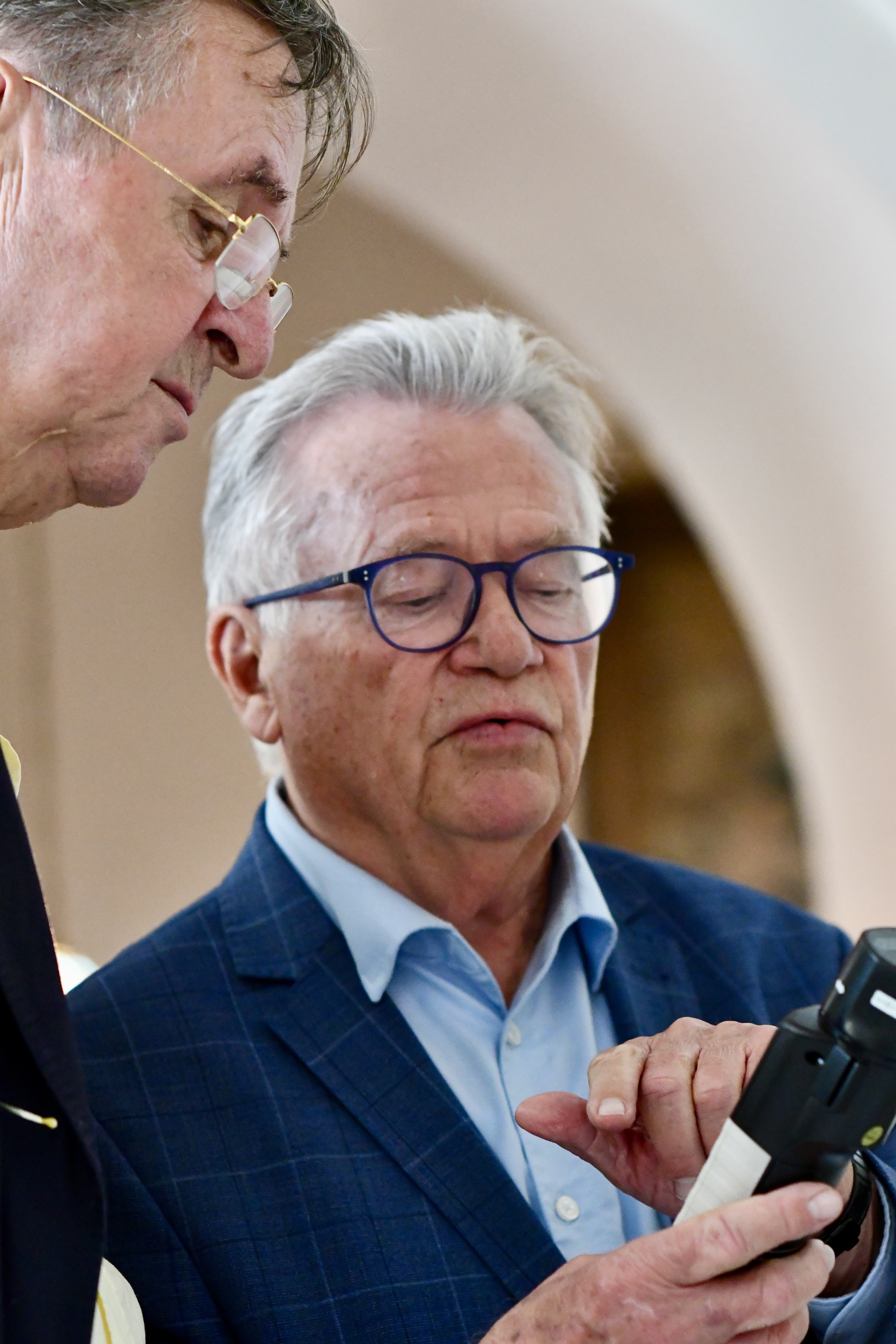
“The Holy Face contains light” Prof. Dr. Gosbert Weth holding the nuclear medicine measuring device used for examining the Veil of Manoppello. (Photo: Marco Gandolfo/EWTN)
The Holy Face Veil of Manoppello has been proven to radiate light energy!
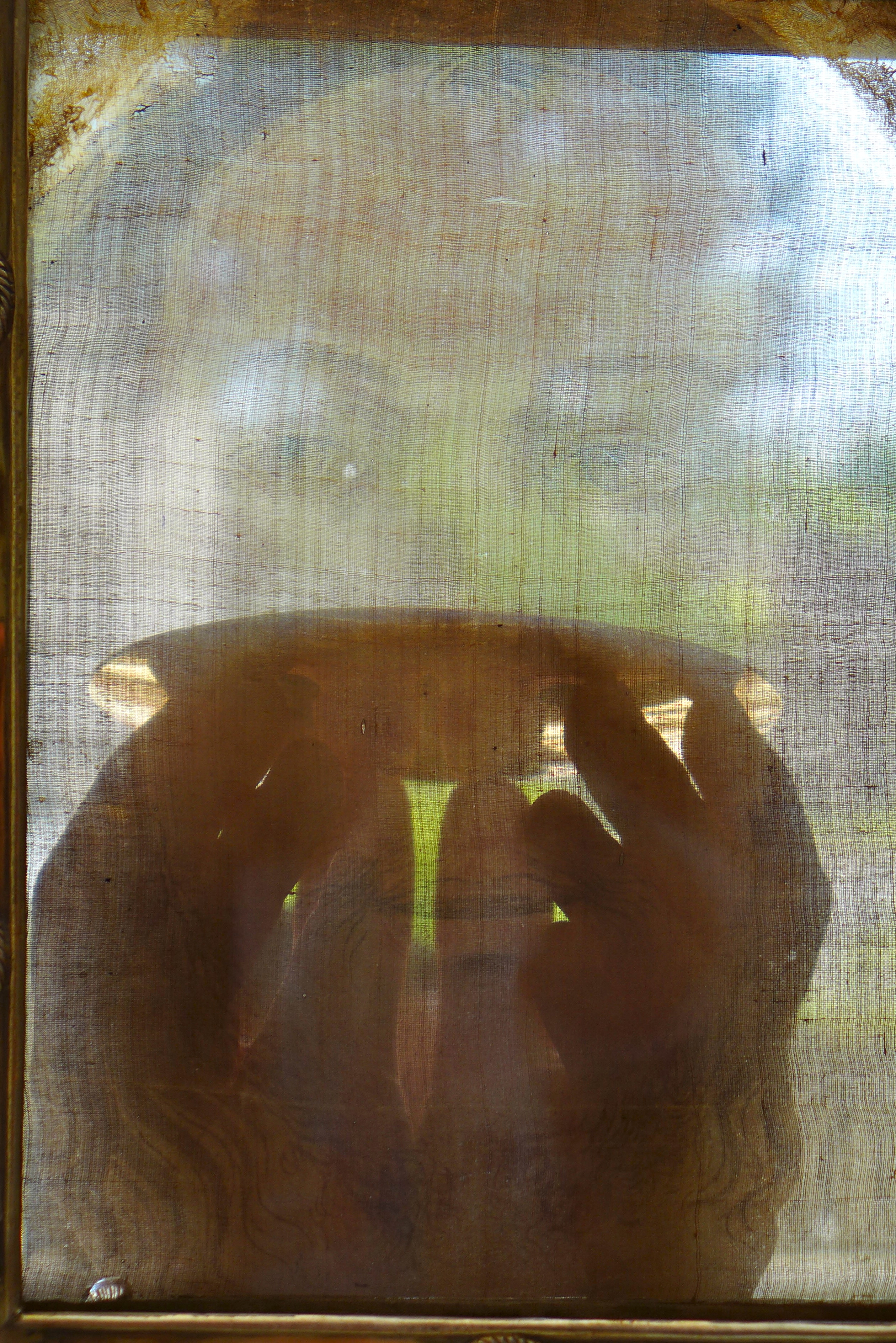
Hand viewed through the gossamer-thin Veil of the Holy Face (Photo: Paul Badde/EWTN)
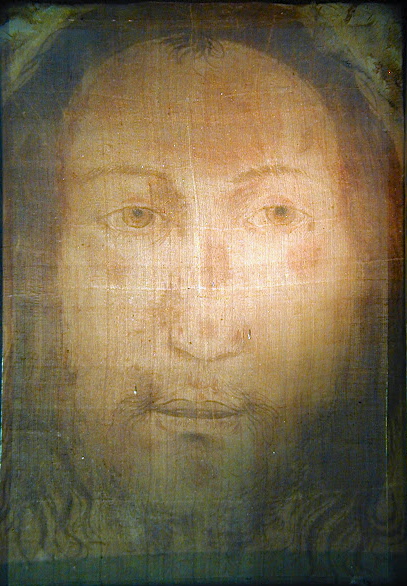
It seems that in Manoppello, Italy, an intriguing and sacred mystery to mankind has been slowly unfolding for centuries: the existence of a changeable, “living” image of the face of Jesus; visible on a sheer veil, from either side. The presence of the image appears to be a miracle of light; seen without any traces of drawing, paint or brush. It is a contradiction–“an inexplicable phenomenon” which begs to be investigated by science. I had written earlier this year, a post on the topic of testing relics, specifically in regards to known Holy Face relics: “The Church, the testing of Relics, and the Holy Face.” The difficulty of conducting research on ancient relics is daunting, but not impossible. But who could undertake such a delicate task, and how…?
Enter an eminent German doctor, Gosbert Weth, who has recently conducted non-invasive investigations on the relic of the Holy Face Veil of Manoppello, using a special nuclear medicine device which measures alpha, beta, and gamma rays. Beta rays are invisible, energetic, and are released during nuclear fission. It has been determined that the veil of Manoppello has such a high level of beta radiation that it fills the Basilica!
EWTN and Ave Maria Radio host Teresa Tomeo has also interviewed Paul Badde, who is in Rome. The “Catholic Connections” interview may be listened to by clicking here: Catholic Connections interview with Paul Badde. There is a slight audio delay, coming from overseas, so it is a little difficult to hear Paul’s words in spots, but fortunately… With permission, Paul Badde has graciously allowed me to print a translation of his original piece on the examination of the relic, which provides additional precious details of the historic investigation of Dr. Weth, and the astounding conclusions:
“Il Volto Santo,” the sudarium veil of the Holy Face of Jesus (Photo: Paul Badde/EWTN)
Living Source for the Holy Year by Paul Badde
In the First Holy Year ever, which Pope Boniface VIII (1294-1303) introduced as a Christian jubilee for the year 1300, the most important destination for all pilgrims to Rome was not the Pope, nor even the tombs of the Apostles, but [to see] a gossamer-thin veil with the face of Christ. The veil was the greatest treasure of St. Peter’s Basilica, which at that time was called “Sanctum Sudarium” [meaning a burial face-cloth] in Latin, and was also known as the “Veronica.” The relic was considered to be the ‘Holy Sweat Cloth’ from the tomb of Christ, which is first mentioned in the account of the resurrection of the Evangelist John, together with the long linen cloth [Shroud] that is venerated today in Turin. In January 1208, Pope Innocent III was the first Pope to carry this Holy Veil in a crystal monstrance, publicly and barefoot, from St. Peter’s Basilica to the nearby Santo Spirito Hospital in Sassia in Rome, making it known throughout the Catholic world of the West.
Pope Innocent III carrying the reliquary with the Veil of the Holy Face in Procession.
Pope Benedict XVI praying before the ‘Veronica’s Veil’ during a visit to the Holy Face shrine in Manoppello, central Italy, September 1, 2006. (Osservatore Romano)
Since 1620, the same cloth has been venerated as the “Holy Face” (Volto Santo) in a Capuchin church on a hill outside Manoppello, on the slopes of Magellan massif in Abruzzo, where Pope Benedict XVI visited on September 1, 2006, becoming the first Pope [to visit] in over 400 years. It is a veil with many mysteries that has also puzzled Dr. Gosbert Weth from Schweinfurt in Germany ever since he heard about it and saw photos of the veil.
Rector Antonio Gentili OFM Capuchin, and Prof. Dr. Gosbert Weth in front of the relic Veil of the Holy Face. (Photo: Marco Gandolfo/EWTN)
Dr. Gosbert Weth is 78 years old, a former chief physician, doctor of medicine and natural sciences (chemistry), with a “picture-book” academic career. As senior physician and head of the hormone laboratory at the University of Würzburg, he worked on the largest centenarian study in the world with 575 participants, aged 100. He has developed groundbreaking developments for tumor therapies, has also received the German Inventor Award as the holder of several patents, and has been a speaker at the several world congresses for geriatrics and gerontology. Today he is involved in research into new uses of hydrogen, and is a doctor for hopeless cases in Bad Kissengen.
However, because he is convinced that the true “image” on the holy veil cannot have a paint or technical cause, Dr. Weth came to the Papal Basilica of the Holy Face in Manoppello on the eve of the next Holy Year 2025, on September 26th, with a special device from nuclear medicine for measuring alpha, beta, and gamma rays. Here, [in the Basilica] Rector Antonio Gentile of the Capuchin convent of the sanctuary, willingly opened the armored glass door of the display case in which the holy Sudarium has been sealed in its reliquary between two crystal panes in a frame made of walnut and fish glue since 1714. It was on the memorial feast of the holy doctors [of the Church] Cosmos and Damian, when the doctor from Bad Kissengen [Dr. Gosbert Weth] was given two hours here during the lunch break of the monks, and another hour on the following Saturday for his examinations.
Dr. Gosbert Weth examining the Veil of the Holy Face (Photo: Marco Gandolfo/EWTN)
“As a doctor, I can see,” he began his findings, “that this person must have suffered severe torture. Hematomas [bruises] are clearly visible on both the nose and in the area of the right cheek. Intense blows are necessary in order to cause these hematomas, which are always considered to be more serious injuries in medical examinations. There are no traces of paint or blood detected on the image. Therefore, the ‘image’ must have come into existence only after death. There is a pronounced hematoma on the nose (on the left side), which must be older than two to three days. No other bodily fluids such as blood or sweat are visible. This cloth can therefore only have been placed on a person who has already died. There is a double hematoma that can also be seen in the area of the right cheek. Normally, as is still the case in medicine today, the eyes of every dead person are closed. But the man in this portrait, however, has his eyes wide open. This ‘picture’ is an inexplicable phenomenon.”
Miraculous Veil of the”Holy Face of Manoppello” in Italy Photo: Paul Badde/EWTN
At the end of his investigation, however, Dr. Weth recorded the following: “All in all, there is only one explanation for the formation of the image of the sacred face. The atomic change from nitrogen (N14) to carbon (C14) must have occurred under the influence of enormous neutron radiation (light energy). The light energy present in the veil is the atomic evidence of the conversion of nitrogen (N14) to carbon (C14). Since the carbon is dark in color, the image is deposited as dark matter in the cloth. This also explains the alternating color shades. The ‘image’ is therefore not due to any application of paint, but to the nuclear-modified fibers of the carrier material.“
In this context, we must remember that most rays, in contrast to light rays, are invisible, but in many cases are extremely powerful–such as electromagnetic X-rays, or the almost invisible infrared light. All of these rays are full of energy.
Holy Face of Manoppello (photo: Paul Badde/EWTN)
Dr. Weth continued: “The radio carbon method provides evidence that carbon-C14 was formed. Carbon-C14 decays into nitrogen-N14 with a half-life of 5730 years, releasing beta radiation, which is produced by the radioactive decay of atomic nuclei. The formation of carbon-C14 leads back to nitrogen-N14. Since carbon is dark, this image is also darkly colored and optically visible due to the conversion of nitrogen to carbon. So once again: the image on the Manoppello [sudarium] cloth was not created by coloring, but by an atomic change to the nitrogen molecules present in the organic substance.”
“We therefore tried to measure the beta radiation released by the Manoppello cloth,” he said. “That was not so easy because the shroud is enclosed between two glass plates. Nevertheless, we were able to measure this radiation, which took place around 2000 years ago, and of which around 50 percent has already been consumed.”
We know that the decay of carbon C14 under beta radiation decays by half within 5730 years. It should therefore still be possible to measure this radiation– which was actually the case:
This basic radiation on the image veil was significantly higher than outside in the open air of nature. We therefore tried to measure this basic radiation as precisely and closely as possible. If we held the measuring device on the side of the reliquary, i.e. on the left and right at the places where there was no glass shielding, there was an increase of around 40 percent in beta radiation as a result of the conversion of carbon-C14 to nitrogen-N14. Overall, this beta radiation, which is also present everywhere outside in nature, was considerably higher in the protected basilica than [it is] outside. This is actually a contradiction. The reason for this higher density of beta rays can only lie in the existence of the Volto Santo [Holy Face Veil] inside the basilica.
“This can also explain the radiation of the Manoppello cloth at night,” Weth said with conviction. “It is visible in the dark because the conversion of C14 to nitrogen-N14 releases energy that is not one released from light quanta, but also from electrons, as they are raised to higher orbitals [wave function] in a conventional lamp. When the electrons fall back to their orbitals, light is released, which explains the radiance of the Manoppello sudarium cloth at night.”
Holy Face Veil of Manoppello (Photo: Paul Badde)
In one sentence: The Holy Face contains light within itself. The “True Icon” (Vera Eikon), as the veil has also been called for centuries, radiates from within itself. This image veil is therefore not only identical to the Holy Sudarium from Jerusalem and the “Veronica” from Rome. It is “the human face of God” that Pope Benedict XVI has repeatedly spoken of– and also a source of energy that inexplicably even fills the church’s interior, where rays should not normally be measured at all.
Basically, the experience that the Volto Santo is a source of power is nothing new. It is familiar to almost every pilgrim who has ever visited the shrine. However, since Dr. Gosbert Weth’s investigation before the next Jubilee Year, the statement is no longer a mere assertion, but a physical fact that can be measured. –Paul Badde
Paul Badde and Dr. Gosbert Weth (Photo: Marco Gandolfo/EWTN)
+
It makes one ponder…if a cloth that had been placed on Christ’s Holy Face in the tomb measurably radiates such powerful light energy that is not seen with our eyes, what tremendous power there must be when we come before His Eucharistic Face– where Jesus is fully present, Body, Blood, Soul and Divinity?
-Pope Benedict XVI (photo:Paul Badde/EWTN)
“O most awe-inspiring King, we bow before You and pray; May Your Reign, Your Kingdom, be recognized on earth!”
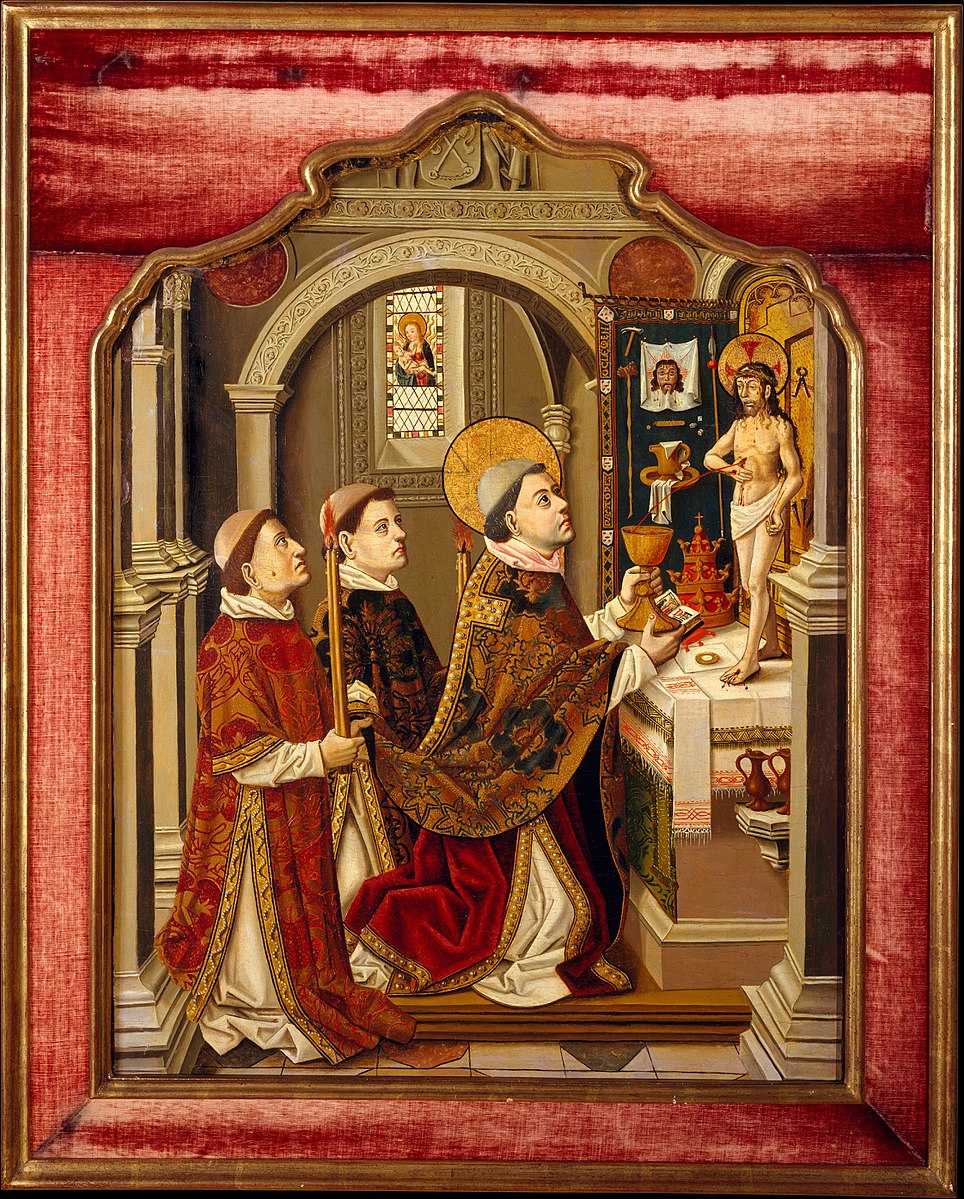
Mass of St. Gregory, attributed to Israel van Meckenem, circa 1440-1503
There are many beautiful versions of artworks portraying the story of the “Mass of St. Gregory.” The earliest version was found in an 8th-century biography of St. Gregory from the 8th century. One version, by John the Deacon, tells the story of Pope St. Gregory saying Mass when suddenly, from within the Church, a woman began to laugh. It was just at the moment of the Consecration. It turns out, that the laughing woman was the one who had baked, the bread to be consecrated, herself, and so told her companion that she didn’t believe that the host could be Jesus Christ. St. Gregory, when he heard the mocking laughter, prayed for a sign and the host began to bleed, thus confirming the True Presence of the Body and Blood of Jesus in the Eucharist.
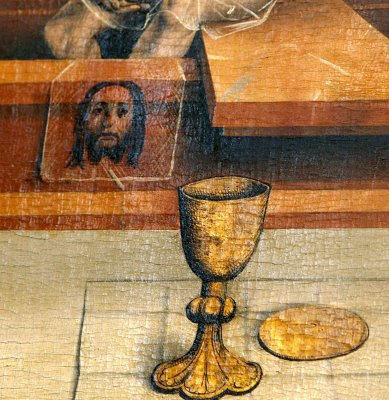
Other versions of the story also tell of St. Gregory’s vision of Jesus appearing on the altar in His Passion. Many works often included the instruments of the Passion, and prominent among them, one sees the Veil of the Holy Face of Jesus. Pilgrims to Rome, as well as many great artists, were able to see for themselves the “Greatest relic of the Church,” when the Holy Face Veil was publicly displayed from the reign of Pope Innocent III up until the Sack of Rome in 1527. Thankfully, therefore, we have many historic representations of what the Holy Veil actually looked like:
Detail of face of Jesus on veil in painting of the Mass of St. Gregory by Michael Wolgemut, who was the teacher of Albrecht Durer. The “Veil of Veronica” in artwork before the early 1500’s resemble the “Il Volto Santo” of Manoppello.“
The Mass of St. Gregory I by Robert Campin 15th Century
The Holy Face of Jesus on the Veil is a visible, tangible sign of the reality of Jesus’s presence in the world: He is “The Word made flesh” who dwells among us; Jesus Christ, who lived, suffered, died and rose again from the tomb, and who is truly present to us in the Eucharist at each Mass until the end of time.
St. Augustine in Meditation, Bartolome Esteban Murillo
“I have sought Thy face. I have sought for Thee and none other beside Thee. Thy face is my only reward. I will seek Thy face, O Lord: in this demand will I persevere. Indeed I will not look for any unworthy object, but only Thy face that I may love Thee more generously, because I find none other more precious. Thy face is the reward of the elect. The righteous shall dwell under Thine eyes, and when they will love Thy face, they will eat the bread of the sweat of their brow.
Let us return, wiping away the sweat, let us end the weariness and the weeping that we may shine in Thy all satisfying face. Neither let us search any more, because there is nothing better. Let us not abandon Thee, and we shall not be abandoned by Thee. Because what was said about the Lord, after the Resurrection? I will be filled with overflowing joy with Thy face, because without Thy face, there would not be joy for us.” ~ St. Augustine
Boticelli’s Deposition
From the Confessions of Saint Augustine, bishop:
“Lord, you know me. Let me know you. Let me come to know you even as I am known. You are the strength of my soul; enter it and make it a place suitable for your dwelling, a possession without spot or blemish. This is my hope and the reason I speak. In this hope I rejoice rightly. As for the other things of this life, the less they be lamented; and the more they deserve tears, the less likely will men sorrow for them. For behold, you have loved the truth, because the one who does what is true enters into the light. I wish to do this truth before you alone by praising you, and before a multitude of witnesses by writing of you. O Lord, the depths of man’s conscience lie exposed before your eyes. Could anything remain hidden in me, even though I did not want to confess it to you? In that case I would only be hiding you from myself, not myself from you. But now my sighs are sufficient evidence that I am displeased with myself; that you are my light and the source of my joy; that you are loved and desired. I am thoroughly ashamed of myself; I have renounced myself and chosen you, recognizing that I can please neither you not myself unless you enable me to do so.
Whoever I may be, Lord, I lie exposed to your scrutiny. I have already told of the profit I gain when I confess to you. And I do not make my confession with bodily words, bodily speech, but with the words of my soul and the cry of my mind which you hear and understand. When I am wicked, my confession to you is an expression of displeasure with myself. But when I do good, it consists in not attributing this goodness to myself. For you, O Lord, bless the just man, but first you justify the wicked. And so I make my confession before you in silence, and yet not in silence. My voice is silent, but my heart cries out.
Joan Mates, Mourning over the body of Christ
You, O Lord, are my judge. For though no one knows a man’s innermost self except the man’s own spirit within him, yet there is something in a man which even his own spirit does not know. But you know all of him, for you have made him. As for me, I despise myself in your sight, knowing that I am but dust and ashes; yet I know something of you that I do not know of myself.
True, we see now indistinctly as in a mirror, but not yet face to face. Therefore, so long as I am in exile from you, I am more present to myself than to you. Yet I do know that you cannot be overcome, while I am uncertain which temptations I can resist and which I cannot. Nevertheless, I have hope, because you are faithful and do not allow us to be tempted beyond our endurance, but along with the temptation you give us the means to withstand it.
I will confess, therefore, what I know of myself, and also what I do not know. The knowledge that I have of myself, I possess because you have enlightened me, while the knowledge of myself that I do not yet possess will not be mine until my darkness shall be made as the noonday sun before your face.”
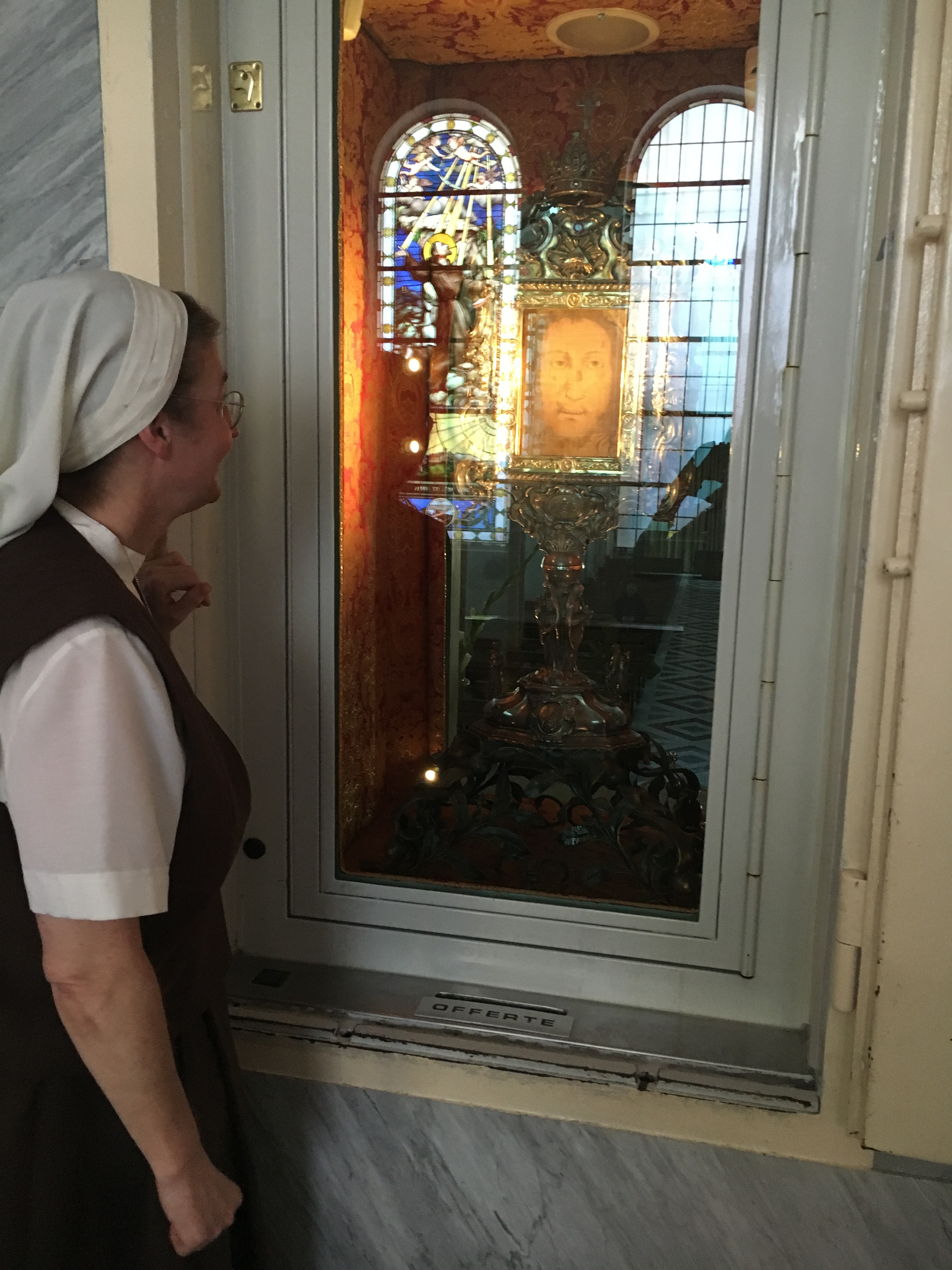
Sr. Petra-Maria before the Holy Face of Manoppello, Italy (Photo: Patricia Enk)
“Once while some Israelites were burying a man, suddenly they saw a band of raiders; so they threw the man’s body into Elisha’s tomb. When the body touched Elisha’s bones, the man came to life and stood up on his feet.” (2 Kings 13:21)
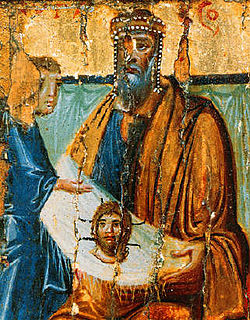
4th century fresco of the King of Edessa, who was healed of leprosy after being brought a miraculous face cloth of Jesus by St. Jude, according to one legend.
“So extraordinary were the mighty deeds God accomplished through the hands of Paul that when face cloths or aprons that touched his skin were applied to the sick, their diseases left them and the evil spirits came out of them.” (Acts 19: 1-12)
“A woman suffering hemorrhages for twelve years came up behind him [Jesus] and touched the tassel on his cloak. ‘She said to herself, ‘If only I can touch his cloak, I shall be cured.’ Jesus turned around and saw her, and said, ‘Courage, daughter! Your faith has saved you.'” (Mat 9:20-22)
The Catholic Church is often criticized for its veneration of relics, but who would not like to touch the “face cloth” mentioned in the Bible that St. Paul may have once used to wipe his brow, or touch the hem of Jesus’s garment? A letter written by Pope Pelagius II in the sixth century declared that any common object placed in contact with the grave of a saint would acquire its sanctifying power. St. Helena discovered the True Cross when God used that relic to bring a dead man from death to life the moment his body came in contact with it.
“How do we know if a relic is true?”
That is a question often heard regarding purported relics. Skeptics often cite the many dubious relics that were forged; such as the “heads” or “teeth” of St. John the Baptist that abounded in the Middle Ages. While the Church wants to treasure and preserve what is genuine, it also seeks answers to the question, “How do we know…?” How does the Church determine the authenticity of a relic? Outside of a miracle, today there are many forms of scientific research, such as carbon dating, that are now available. Naturally, this is a very controversial subject, as testing done the wrong way could degrade or destroy the relic itself. It may also be a very risky business spiritually, with a potential to do something far worse: Disputes over a relic’s authenticity or errors in testing have caused scandal, resulting in the loss of faith of many individuals.
Then, there are also many classes of relics to be considered: Relics are divided into three classifications. A first class relic is a body part of a saint, such as a bone, blood, or flesh. Second class relics are possessions that a saint owned, and third class relics are objects that have been touched to a first or second class relic or to the saints himself or herself. In verifying relics, there is also the great risk to be considered in exposing what may be a very precious ancient relic to invasive tests that could further degrade the relic. Great care must be taken, not only to preserve and protect the Church’s treasures, but also the souls of the faithful. This is why the Church sometimes moves so slowly in these matters.
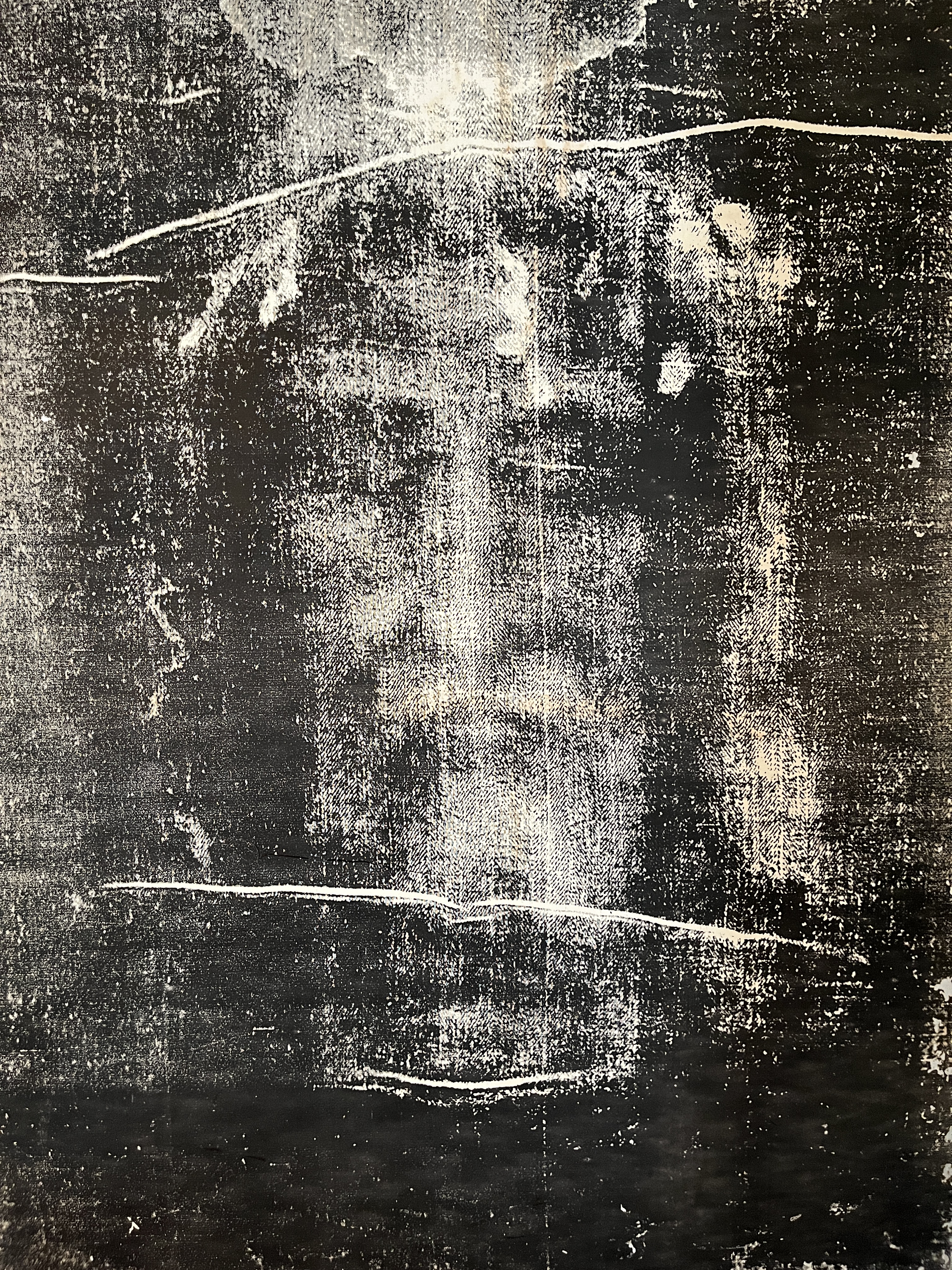
Digital scan of the Face of Christ on the Shroud of Turin
Despite the many scientific advances in carbon dating, and other testing, errors have been made in the past which have led to false results causing a great deal of harm; as was the case in the false carbon dating of the Shroud of Turin to medieval times, which made front page news at the time, labeling the Shroud of Turin a medieval fraud. It was later proven that the sample for the carbon dating of the Shroud was actually taken from a repair patch, and not the original shroud, which, when re-tested, was then dated to the first century–making the back page news, of course.
Face of Jesus known as the “Uronica” in the “Holy of Holies Chapel of Sancta Sanctorum in Rome.
Recently, the testing of relics is once more in the news. Most people who have traveled to Rome are familiar with the “Scala Sancta” or the “Holy Stairs,” near St. John Lateran. They are twenty-eight marble steps that were brought from Jerusalem that lead up to a chapel known as “Sancta Santorum or Holy of Holies.” Named for the original place in Jerusalem that contained the ark of the covenant, the chapel is said to contain the some of the holiest relics in Christendom, including relics of the earliest martyrs, and the “Uronica,” an “acheiropoieta,” not made by human hands, of Jesus, Ruler of the Universe, attributed to St. Luke–which, “according to legend,” was finished by the angels. In 816, Pope Leo III placed the reliquary box under the altar of the chapel. The relics remained hidden there, until 1903, when Pope Leo XIII permitted experts to examine them. It turned out to be an arduous task, and, unfortunately, later important data was lost due to a rivalry between French and German scholars. To protect the relics from falling into the wrong hands, they were eventually moved to the Vatican Library, and then, to the Vatican Museum.
Barbara Jatta, head of the Vatican museums, recently gave a press conference, on May 23, 2024, on the Catholic Church’s attempt to bring some “clarity and provenance” to two of the ancient relics that had been kept for centuries in the “Holy of Holies” chapel: the relic tunics of St. Peter and St. John the Evangelist. Jatta announced a new permanent exhibition that will display these two purported relics and the tests they have undergone that have shed light on which of the two may be authentic: EWTN Vatican has a good article by Matthew Santucci summarizing the conference: “The Tunics of St. Peter and St. John, Two Extraordinary Relics of the Sancta Sanctorum.” The Vatican Museum should be applauded for this admirable work that has been carefully carried out in pursuit of the truth.
Note the distinctive folds of the veil in this painting detail.
“The Veronica Veils” and the question of which relic is true?
One hopes that the Vatican Museum will continue to seek the truth in the case of other controversial relics, by whatever reasonable means are available, to discover their origins. The issue of testing relics has increasingly been brought up in the case of two “Veronica Veils:” one, held at the Vatican, and another, known as the “Veil of Manoppello.” Acrimonious debates that have erupted in recent decades regarding the two veils have caused division among many Catholic devotees of the Holy Face. Some claim as well that the authority of the Church on the subject the devotion to the Holy Face ended with Pope Leo XIII; thus, passing over what has been been uncovered or written about regarding the devotion since that time, including: the discoveries and research on the Shroud of Turin, or writings by Pope St. John Paul II, Pope Benedict XVI, or Pope Francis; thus, making it very difficult to enter into dialog on the subject. It will ultimately be for the Church to decide whether or not to investigate the relics to help provide the “clarity and provenance” needed to confirm their authenticity.
Fresco of ciborium that existed in 708 containing sudarium of the “Veronic” True Icon
The authenticity of the Vatican relic of the “Veronica Veil” has come into question due to the abundant historic research that points to the relic “Veil of Manoppello” as being the original “proto-image” for icons, frescos, and paintings of the face of Jesus, as seen in so many of the earliest works of art depicting the “Veronica”; such as the “Liber Regulae Sancta Spiritus in Saxia,” or in other more ancient works, such as the “Godescic Manuscript” of 781, both pictured below:
Godescic Manuscript, 781
This illustration of the first public procession of the “Veronica” on the feast of “Omnis Terra” (All the Earth), depicts Pope Innocent III, in 1207, carrying the crystal reliquary displaying the “Veronica Veil” (from “Liber Regulae Sancti Spiritus in Saxia” manuscript ,1350).
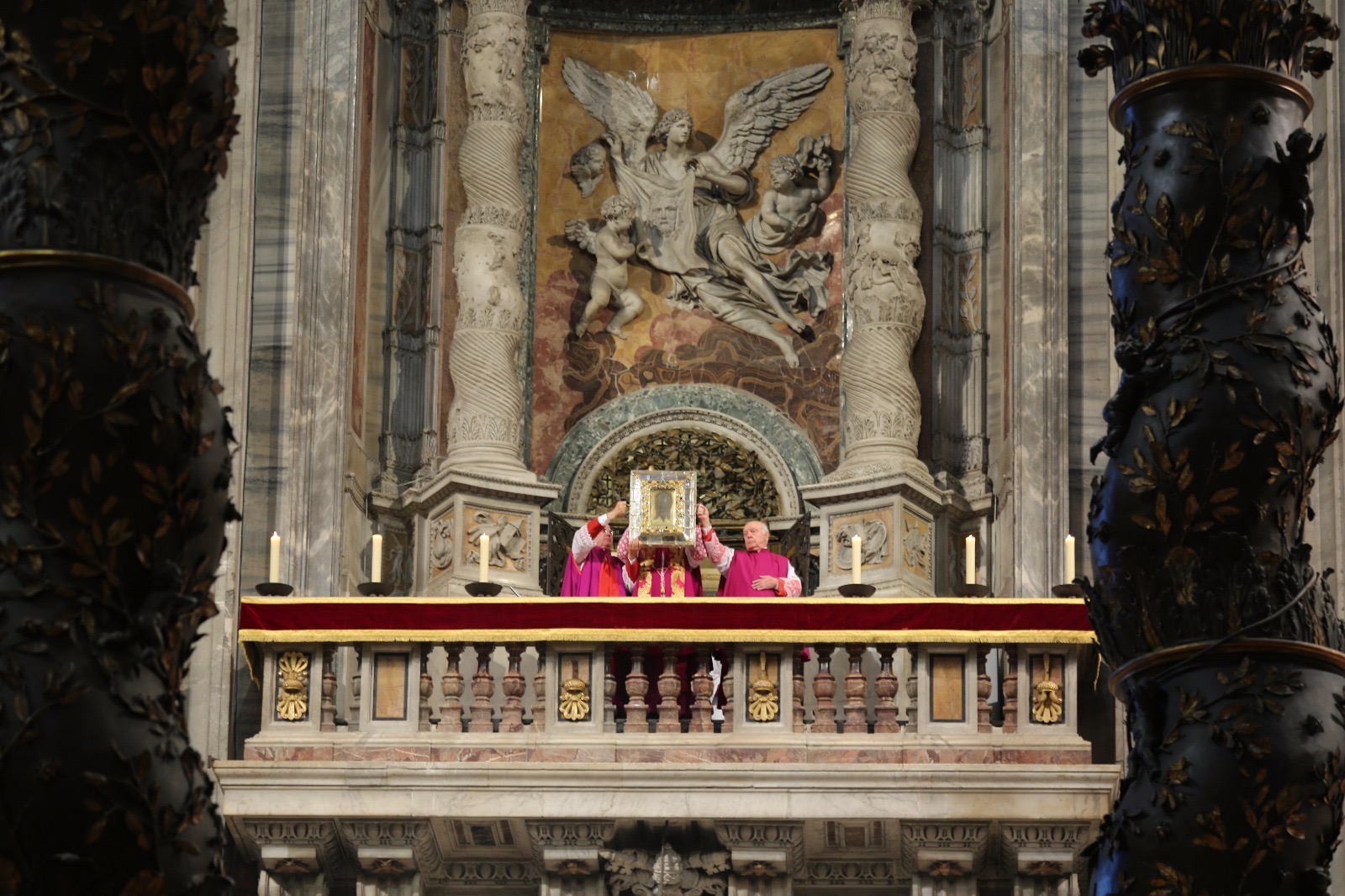
The Vatican “Veronica veil” is displayed at a great distance during Holy Week. No face can be discerned on the darkened cloth that is displayed in a face-shaped frame.
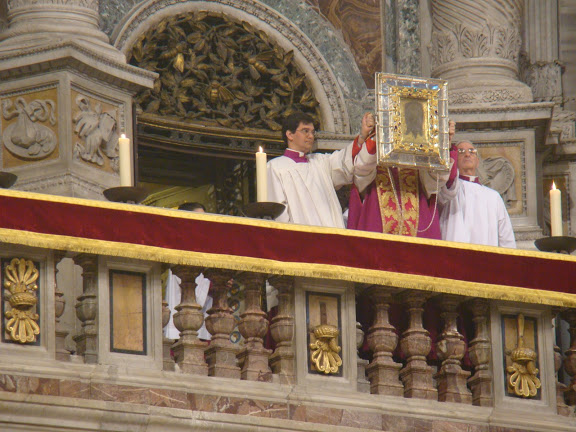
A closer look at the Veronica Veil being presented for veneration at the Vatican, April 7, 2019. Photo: Daniel Ibanez
First, in order to explain anything about the images known as “Veronicas,” it must be understood that the Church has a very rich 2,000 year history, and that there are hundreds, if not thousands, so-called “Veronicas” representing the true image of the Face of Christ in museums, churches and basilicas. Secondly, the term “Veronica” refers to the image itself, and not a Saint called Veronica. The various legends of a St. Veronica did not appear until the Middle Ages. There a many, many earlier legends that name other persons such as woman named Hypatia, who drew the miraculous image from a well; or a woman named Bernice, whose name is associated with the woman with the hemorrhage in the Gospels; or St. Jude; who was said to bring the Holy Face Veil to the King of Edessa to cure him.
The Veronica, Hans Memling, 1479
“These pious traditions cannot be documented, but there is no reason why the belief that such an act of compassion did occur should not find expression in the veneration paid to one called Veronica.” —The Catholic Encyclopedia
Pope St. John Paul II explored the deep meaning behind these legends before he dedicated the millennium to the Face of Christ (Found here) and has written beautifully on the compassionate woman who is known as “Veronica” and what the significance the Image of the Face of Christ on the veil has for Christians. Most “Veronica” images are copies of an original or “proto-image,” others are imaginative, and a few are believed to be of Divine origin, that is, “made by God’s Hand.” Only one, however, can be the original and true image.
For centuries following the first time the Veil was publicly displayed and processed by Pope Innocent III in 1207 any pilgrim could see for themselves the Holy Face of Jesus on a Veil from either side of the sometimes transparent veil. Artistic works also called “Veronicas” were produced at that time for the many pilgrims who flocked to Rome to gain an indulgence by seeing the relic Veil for themselves…and take home a souvenir, of course, of a copy for themselves, or for their local Church. That was up until the Sack of Rome in 1527, when it was feared that the Veronica Veil had been stolen:
The broken crystal frame that displayed the Veronica, from the Vatican Museum
“A letter written to the Duchess of Urbino by her representative, Urban, dated May 21, 1527, reads, ‘Holy relics have been thrown out onto the streets. The Veronica has been stolen and passed around in taverns from person to person without a word of protest‘”
The large reliquary framed that was created to display the miraculous image from both sides, between two large crystal panes, was found broken. (It is now on display in the Vatican Museum.) When the dust settled, following the Sack of Rome, the image was no longer displayed publicly. Pope Paul V, in 1616, prohibited any copies to be made of the Veronica without permission, and later Pope Urban VII ordered that all copies of the Veronica be handed in to a local priest or bishop under pain of excommunication. In 1629, a noticeably different image with a death-like face was placed in the newly completed Veronica Altar in St. Peter’s basilica–covered with another outer veil–and a notice was placed nearby stating that anyone who removed the veil covering the Holy Face without papal approval would be excommunicated. Some have speculated that the “outer veil” mentioned may have been what remained after the Sack of Rome, and put in the place of the original, or possibly another of the many copies was put in its place–but that is only speculation. The facts were that from then forward, the darkened image was then only shown rarely, once a year from a distance of 20 meters, and its appearance was quite different than what was seen and copied by artists previously. In fact, the difference between early and later depictions of the “Veronica” was shocking. Not surprisingly, the interest in the Veronica and therefore devotion to the Holy Face soon dwindled.( More detail found in “Four Stories–One Face”)
Veronica’s Veil 1420 as it was depicted in paintings prior to the Sack of Rome.
BERTRAM, Holy Face c. 1390-1400
Painting made after the Sack of Rome, in 1617, by Pietro Strozzi
Painting of Veronica Veil which bears strong resemblance to the Holy Veil “Il Volto Santo” of Manoppello, Italy.
Which is the original “true image?” The two relic veils now in question are the Vatican “Veronica Veil” and the “Il Volto Santo” Holy Face Veil of Manoppello, both claiming to be the original Veil of the Face of Christ:
The Vatican “Veronica Veil” which is housed in St. Peter’s Basilica’s “Veronica Pillar” is a darkened brown cloth, in a frame shaped like a face. Pilgrims are now only permitted to see this relic from a great distance. The cloth does not appear to be transparent, and is only shown from one side. It’s measurements are larger than the original, broken frame.
The Vatican Veil Being displayed for veneration
During the exile of the Pope Pius IX at Gaeta in 1849, he ordered that the Veronica Veil be exposed, at a time of crisis, for public prayer and veneration, from Christmas to Epiphany. On the third day of exposition, the Veil, which had darkened to the point that a face could no longer be discerned, became visible, as if it were illuminated by a soft light. The Pope invited artists to make copies of the miraculous image, which were later touched to the relic of the veil, as well as the relics of the Passion, held in the Veronica Pillar at the Vatican.
This image is often associated with the revelations of of Sr. Marie St. Pierre, who died in 1848, and so had never seen the drawings. The “Epiphany Miracle,” as it was called, was regarded by some as a confirmation of her revelations regarding her devotion to the Holy Face. Although many of the prayers related to her revelations were approved, her writings as a whole were not. Sometime later, a layman, Leon Du Pont, who was a friend of Sr. Marie St. Pierre, placed an oil lamp before a reproduction of the image in his home. “The Holy Man of Tours,” as he was known, prayed for the sick there, and anointed them with oil from the lamp. It was said that hundreds of cures were obtained through his intercession before the image. St. Therese of the Child Jesus and the Holy Face had a copy of the image pinned to her bed curtains as she lay dying. She and her family had a great devotion to the Face of Jesus, and belonged to the Archconfraternity of the Holy Face that was in existence at that time, and into the 20th century, but no longer exists today.
“Vera Effigies” drawing of the wounded Holy Face, depicting closed, weeping eyes, and slightly parted lips. The upper forehead and other artistic elements were an imaginative addition to what was originally viewed by witnesses.
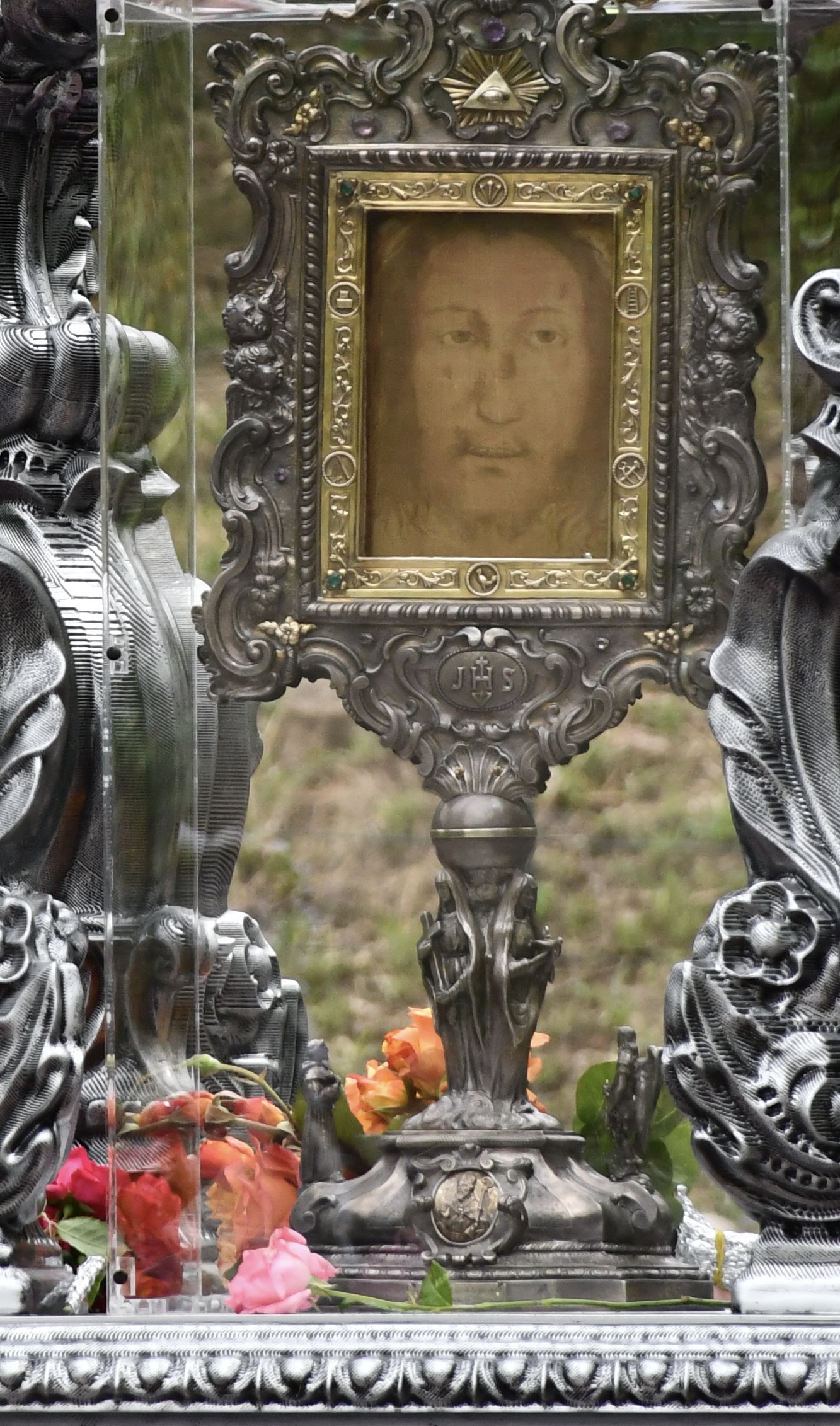
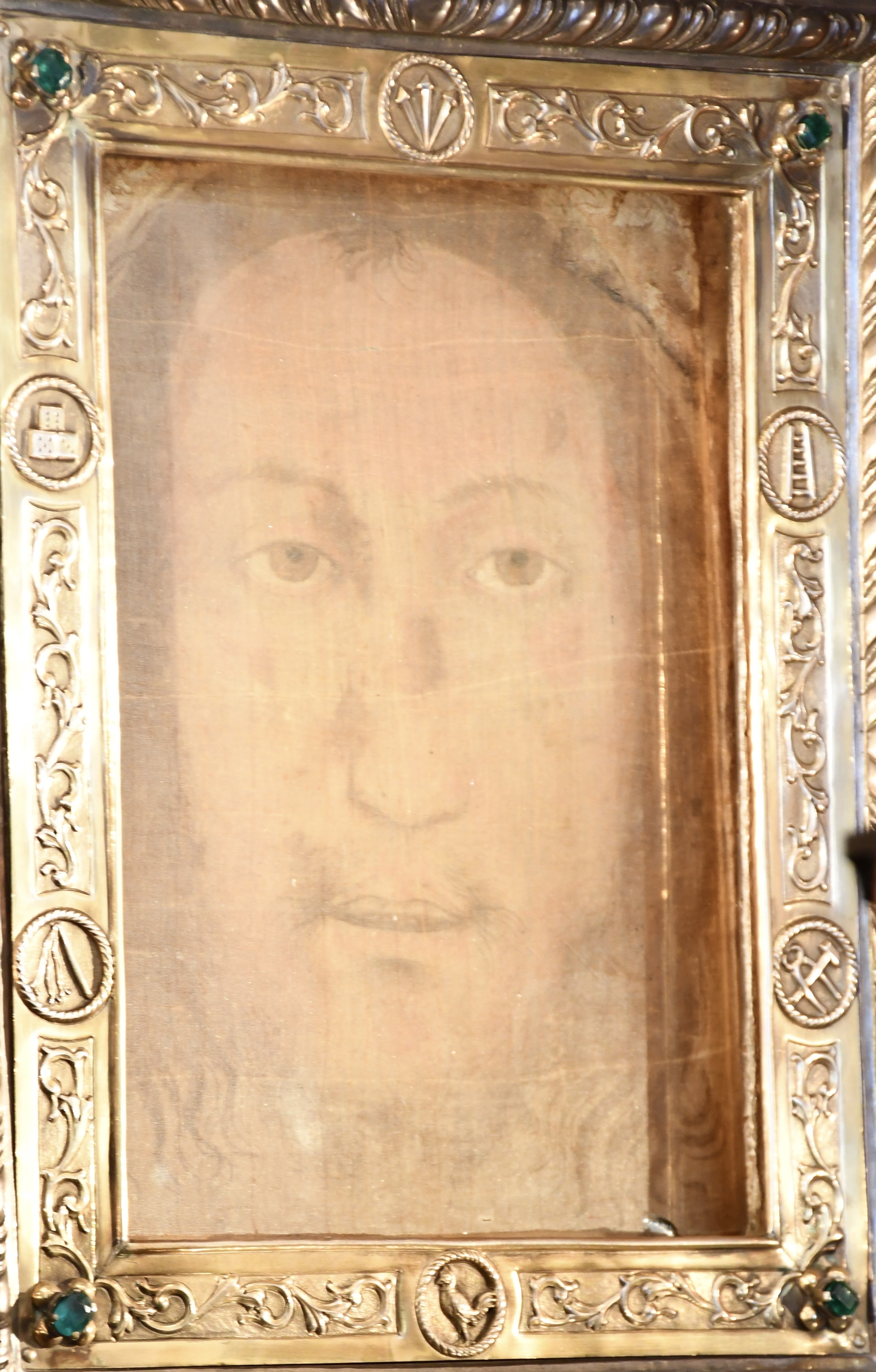
The Holy Face on the Veil of Manoppello (Photo: Paul Badde)The distinctive lock of hair, and folds on the veil may be seen in this photo.
Transparent Veil of Manoppello
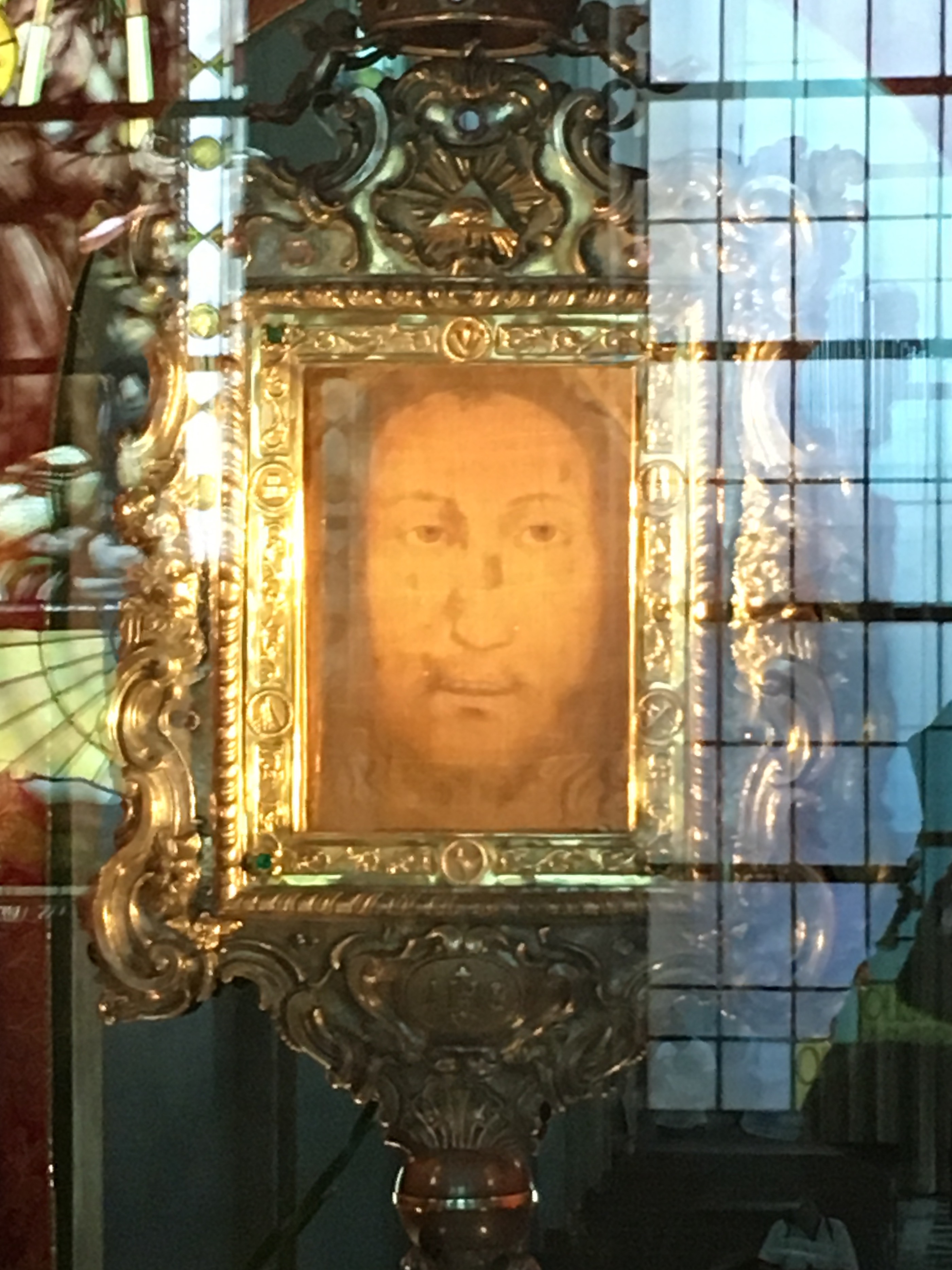
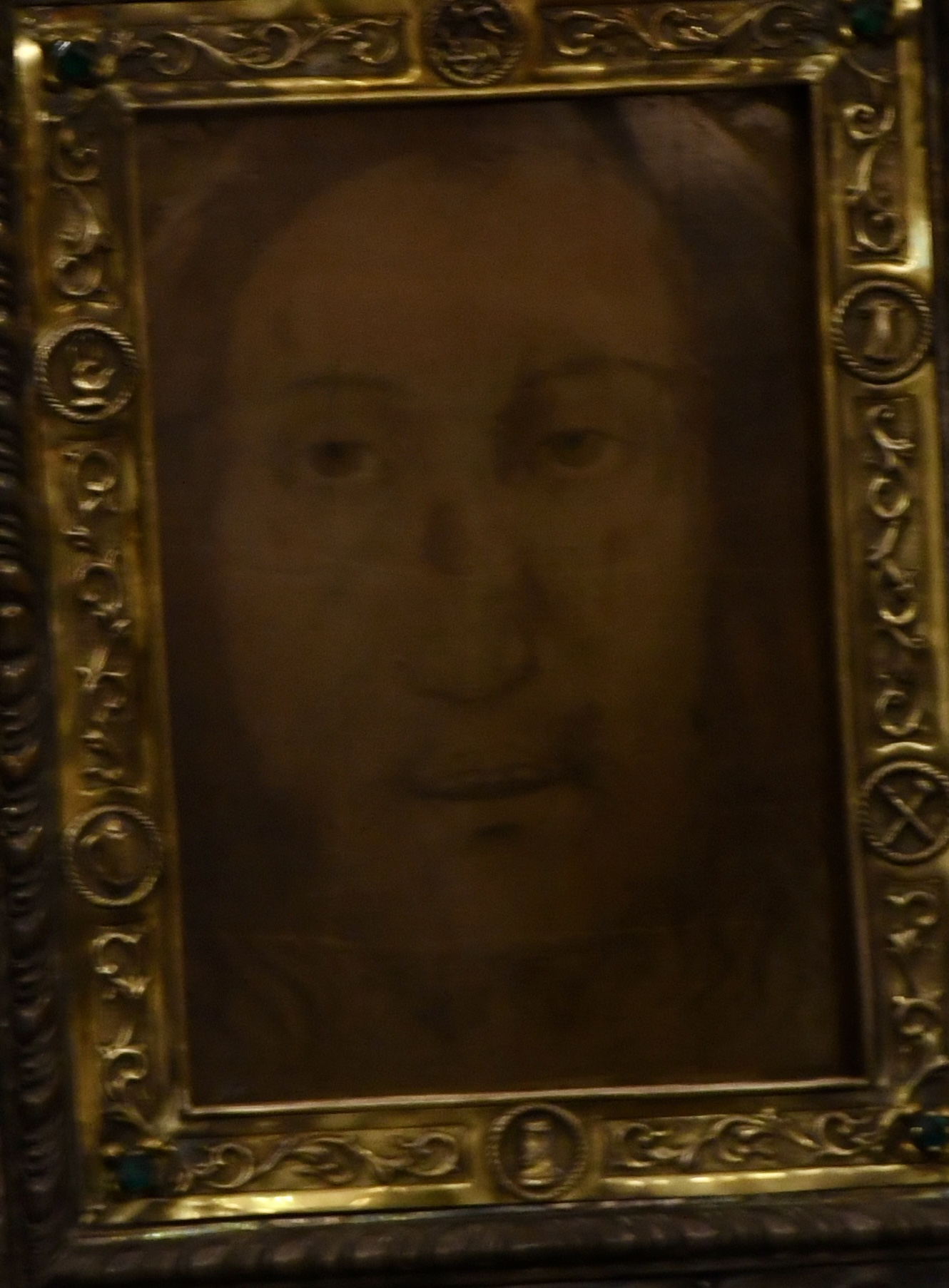
The other “Veronica” relic is the Holy Veil of Manoppello. It is not a painting; the image is truly present in a mysterious way on a sheer veil, made of a precious sea-silk called byssus. The Veil and Image itself are a “miracle of light:” the delicate veil, held between two panes of glass, can appear transparent. The image of the Face appears and changes according to light and the direction from which it can be viewed from either side. The veil closely matches centuries-old artwork and written accounts of those witnesses who made pilgrimages to Rome when the “Veronica” was publicly displayed–including written accounts and works of art dating to the early Church–before the veil was known as “the Veronica,” but was known by other names such as the Camulia, or the Edessa, or the Mandylion. The veil was once much larger, but was trimmed down over the centuries. The wounded, yet peaceful countenance of Jesus is visible with open eyes and parted lips, sparse beard, wavy hair, and a distinctive lock of hair at the center of the forehead, which is often depicted in many eastern icons, and paintings of the face of Jesus through the centuries. The Manoppello Veil is not a painting, but an “achieropoieta”–an image not made by human hands.
Hand seen from the other side of the Veil of the Holy Face of Manoppello–which is so sheer a newspaper can be read through it. Photo: Paul Badde
Copy of the “Veronica” from 1373 painted on an altarpiece with the distinctive lock of hair at the center of Jesus’ forehead…
…Also seen in this beautiful depiction of the Veronica that is in the Getty Museum…
…as well as this manuscript and many others.
In this remarkable “Meister of St. Laurenz” painting of the Holy Trinity, the faces of both God the Father and the Son are portrayed similarly, each bearing a strong resemblance to the face on the Holy Veil of Manoppello. Photo taken in Cologne, Germany by Paul Badde.
The late, highly respected Heinrich Pfeiffer S.J. was an eminently qualified teacher of art history and Christian iconography at the Pontifical Gregorian University in Rome. He was also an expert “sindonologist.” Sindonology is the study of the Shroud of Turin, which is its own branch of science. In the course of his many years of research he traveled to the Shrine of the Holy Face in Manoppello. Upon seeing the Veil for himself, he immediately recognized it as the “proto-image” or original from which most icons, paintings, and other representations of “the Veronica” had been derived. The incredible “Veronica” of Manoppello was believed to be the veil that covered the Face of Jesus in the tomb. (Author Paul Badde has written much about this search for the “rediscovered face” in his books: The Face of God – the Rediscovery of the True Face of Jesus, The True Icon: From the Shroud of Turin to the Veil of Manoppello, and The Holy Veil of Manoppello: The Human Face of God.)
Christ’s Face being covered with a sheer veil or sudarium in the tomb.
When, as a scholar, Fr. Pfeiffer joyfully and dutifully reported the fruits of his research, “all hell broke loose.” Instead of being met with rejoicing over the historic discovery of the “proto-image” of the Veronica–a miraculous image that corresponds to historic accounts and countless works of art in museums and churches around the world–Fr. Pfeiffer was roundly vilified by persons who, while accusing him of perpetrating fraud, also refused to look at his evidence. Any requests that Fr. Pfieffer or other scholars and researchers made to look into the authenticity of the relic veil held in the Vatican were declined by bureaucrats.
The indisputable abundance of centuries of art history, that even a child can see, points to the Veil of Manoppello as the original proto-image. But piles of comparisons are not enough to satisfy the outraged critics. Fr. Pfeiffer’s vast research that led him to Manoppello continues to be rejected out of hand, and ignored by those who refuse to look at the data. Unless the relic at the Vatican is examined, the controversy between the two relics of the Face of Jesus will remain at a stalemate, and continue to be a unhappy source of division in the Body of Christ. It was the cause of much suffering for Fr. Pfeiffer in his lifetime, but he was committed to speaking and writing about what he had discovered until he died in 2021.
Pope Benedict XVI greets Sr. Blandina Paschalis Schlomer, an expert in iconography, renown for her expertise and forensic comparisons of ancient images of the Face of Christ. Looking on are Fr. Heinrich Pfeiffer S.J., and Paul Badde, author of many books about the Holy Veil of Manoppello (September 1, 2006).
Pope Benedict XVI gazes at the ‘Veronica’s Veil’ during a visit to the Holy Veil in Manoppello, Italy (September 1, 2006).
Streams of pilgrims, from the greatest to the least, have travelled the world to visit the Basilica Shrine of the Holy Face Veil in Manoppello, to see for themselves and experience the grace and peace flowing through their encounter with the Face of Christ. Hopefully, one day the Church will see the way clear to safely examine the relics, as it has done in the case of the relics of Sancta Santorum, to bring light, peace and truth once again to the faithful through their devotion to the Face of Jesus.
“To contemplate The Face of Christ, and to contemplate it with Mary, is the ‘program’ which I have set before The Church at the dawn of the third millennium.” — Pope St. John Paul II
“From contemplation of the Face of God are born, joy, security, PEACE”–Pope Benedict XVI
PAX ET BONUM!
UPDATE: Stunning results of testing on the Veil of Manoppello in November, 2024 conclude that the Holy Veil radiates light energy — May be read here.
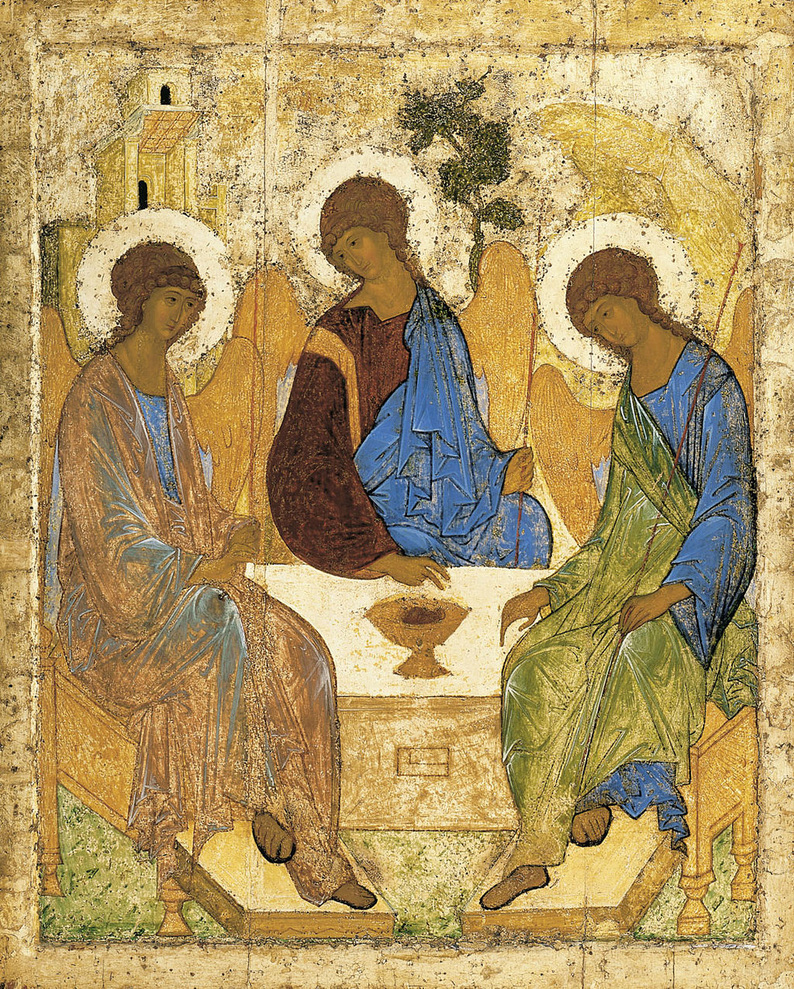
“Jesus, has shown us the Face of God, One in substance and Triune in Persons; God is all and only Love, in a subsisting relationship that creates, redeems, and sanctifies all: Father, Son, and Holy Spirit.”
~Pope Francis
A Discalced Carmelite nun who lived in the mid-1800’s, Sr. Marie St. Pierre, had many interior visions regarding the Holy Face of Jesus — including a sublime conception of the The Holy Trinity and the Holy Face — which she tried to express in these words she received from Our Lord:
Sr. Marie St, Pierre
“Remember, O my soul, the instruction which thy celestial Spouse has given thee today on His adorable Face! Remember that this Divine Head represents the Father who is from all eternity, that the mouth of this Holy Face is a figure of the Divine Word, engendered by the Father, and that the eyes of this mysterious Face represent the reciprocal love of the Father and the Son; for these eyes have but one and the same light, the same knowledge, producing the same love, which is the Holy Spirit. In his beautiful silken hair contemplate the infinitude of the adorable perfections of the Most Holy Trinity in this majestic head, the most precious portion of the Sacred Humanity of thy Saviour; contemplate the image of the unity of God. This, then, is the adorable and mysterious Face of the Saviour, which blasphemers have the temerity to cover with opprobrium: thus they renew the sufferings of His Passion, by attacking the Divinity of which it is the image.”
Sacred Heart of Jesus, have mercy on us!
Our Lord told Sr. Marie St. Pierre that she could comfort and console Him by her praises, such as in The Golden Arrow Prayer: “May the most holy, most sacred, most incomprehensible and ineffable Name of God be forever praised, blessed, loved, adored and glorified by all the creatures of God, and by the Sacred Heart of Our Lord Jesus Christ in the Most Blessed Sacrament of the Altar. Amen.
Holy Face Veil of Manoppello, Italy (Photo: Paul Badde/EWTN)
“According to the diligence you will manifest in repairing my image disfigured by blasphemers, so will I have the same care in repairing your soul which has been disfigured by sin. I will imprint thereon my image, and I will render it as beautiful as when it came forth from the baptismal font… Oh! could you but behold the beauty of My Face!–But your eyes are yet too weak.” –Our Lord to Sr. Marie St. Pierre
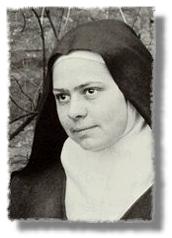
St. Elizabeth of The Trinity
Another Discalced Carmelite Nun, St. Elizabeth of the Trinity, also directs our gaze to the Face of the Son in order to contemplate the beauty of the Holy Trinity and and reflect God’s image:
“It is Your continual desire to associate Yourself with Your creatures…How can I better satisfy Your desire than by keeping myself simply and lovingly turned towards You, so that You can reflect Your own image in me, as the sun is reflected through pure crystal? …We will be glorified in the measure in which we will have been conformed to the image of His divine Son. So, let us contemplate this adored Image, let us remain unceasingly under its radiance so that it may imprint itself on us.” –Saint Elizabeth of the Trinity, O.C.D.
O My God, Trinity Whom I Adore
O My God, Trinity whom I adore, help me to forget myself entirely that I may be established in You as still and as peaceful as if my soul were already in eternity. May nothing trouble my peace or make me leave You, O my unchanging One, but may each minute carry me further into the depths of Your Mystery. Give peace to my soul, make it Your heaven, Your beloved dwelling and Your resting place. May I never leave you there alone but be wholly present, my faith wholly vigilant, wholly adoring, and wholly surrendered to Your creative action. O my beloved Christ, crucified by love, I wish to be a bride for Your Heart; I wish to cover You with glory; I wish to love You…even unto death! But I feel my weakness, and I ask You to clothe me with Yourself, to identify my soul with all the movements of Your Soul, to overwhelm me, to posses me, to substitute Yourself for me that my life may be but a radiance of Your life. Come to me as Adorer, as Restorer, as Savior, O Word Eternal, Word of my God. I want to spend my life listening to You, to become wholly teachable that I may learn all from You. Then, through all nights, all voids, all helplessness, I want to gaze on You always and remain in Your great light. O my beloved Star, so fascinate me that that I may not withdraw from your radiance. O consuming Fire, Spirit of Love, come upon me, and create in my soul a kind of Incarnation of the Word; that I may be another humanity for Him, in which He can renew His whole Mystery. And You, O Father, bend lovingly over your poor little creature; cover her with your shadow, seeing in her only the Beloved in whom You are well pleased. O my Three, my All, my Beatitude, infinite Solitude, Immensity in which I love myself, I surrender myself to You as Your prey. Bury Yourself in me that I may bury myself in You until I depart to contemplate in Your light the abyss of Your greatness. November 21, 1904 — St. Elizabeth of the Trinity
The relic Veil of the Holy Face (on left) carried in procession. (Photo: Alexandra Prandell)
Procession as it winds though the streets of Manoppello (Photo: Alexandra Prandell)
Little Angels accompany the Holy Veil of Manoppello (Photo: Alexandra Prandell)
Rose petals are dropped gently on the reliquary from above. (Photo: Alexandra Prandell)
A centuries old tradition is continued each May in Manoppello, Italy…
There are three solemn feast days celebrated each year to honor of the Holy Face in Manoppello, Italy: the “Transfiguration” on August 6th, “Omnis Terra” in January, and the May memorial of the mysterious arrival of the “Veronica” to Manoppello in the early 1500’s.
Capuchin friars surrounding the Holy Face (Photo: Alexandra Prandell)
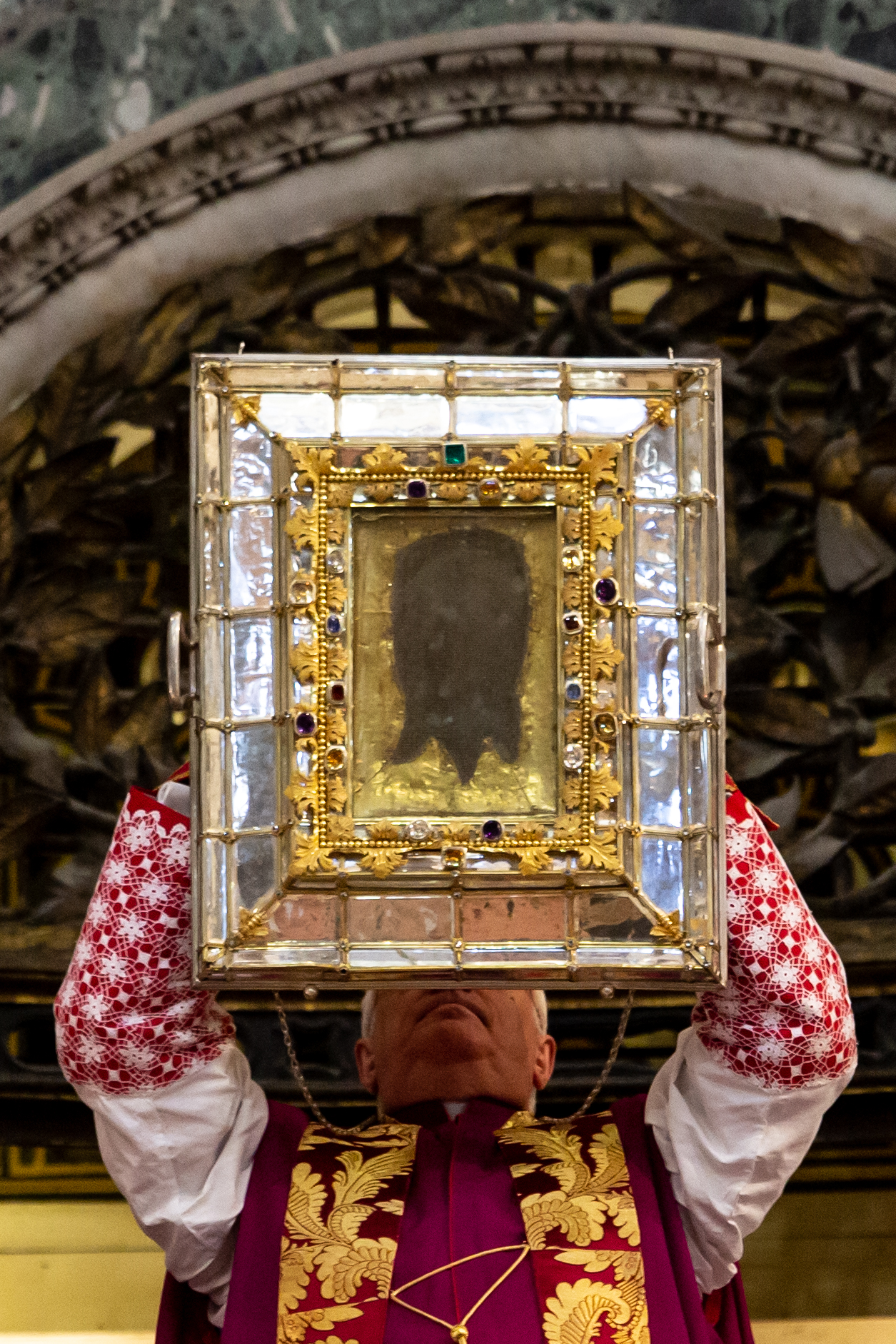
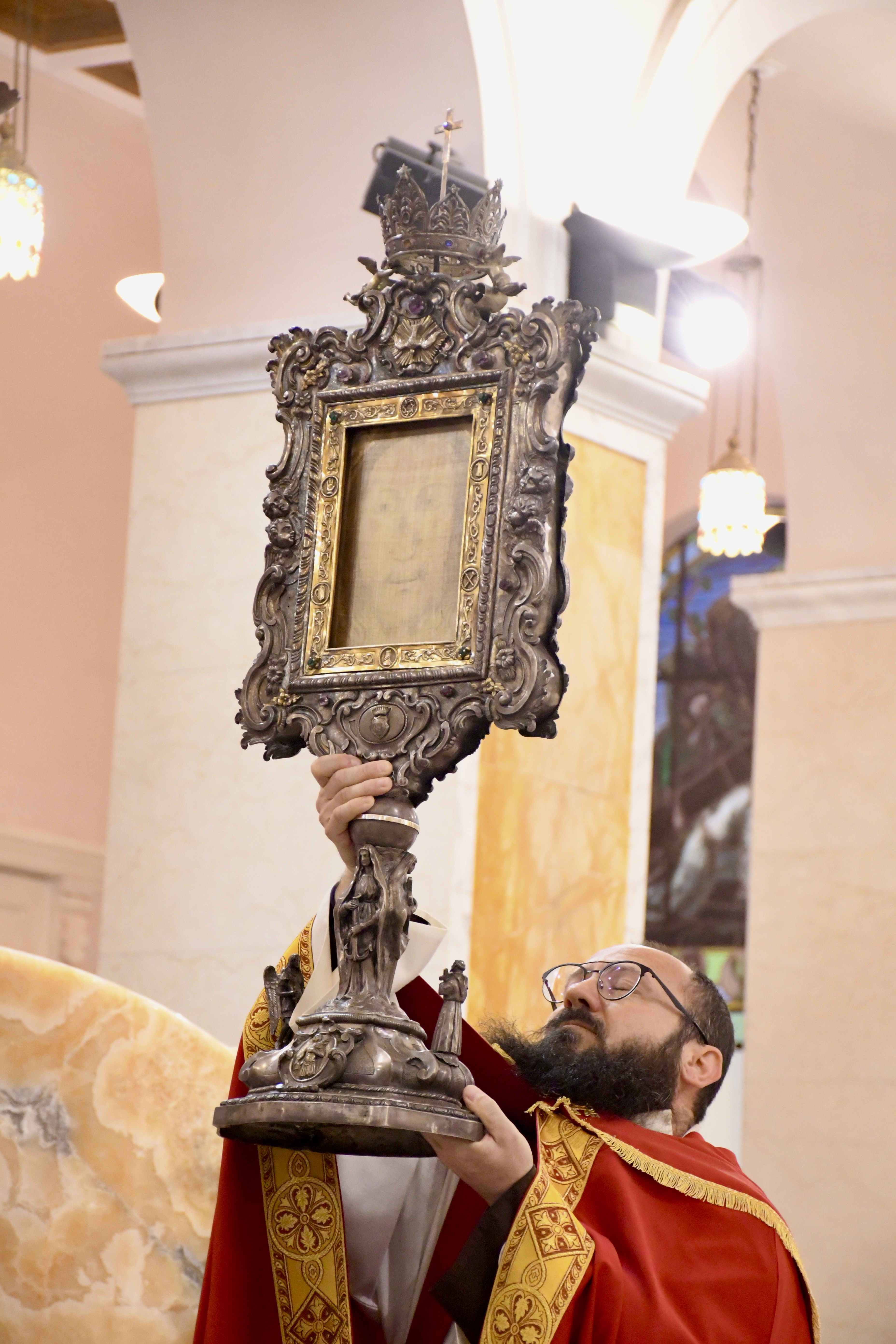
The Capuchin Friar and Rector of the Basilica Shrine of “Il Volto Santo” Padre Antonio Gentili raises the Veil of the Holy Face to bless the people. (Photo: Alexandra Prandell)
The Capuchin Friars minor have guarded the precious “Veronica” relic veil of the Face of Jesus since 1638, when “a devout and well-respected man” named Don Antonio Fabritiis donated the holy veil bearing the Face of Christ to the Capuchin monastery in the small, isolated mountain village of Manoppello. A document entitled Relazione Historica re-telling the local legend of the Veil was written by Capuchin Donato da Bomba and notarized in 1646 and then, certified by sixteen local witnesses. The story told of the arrival of the Veil in Manoppello, “in around 1506,”(the date was vague) in the hands of a mysterious stranger who was thought to have been a holy angel, who later, suddenly disappeared. (Aside from the “angel,” the main characters in the story have been historically verified.)
The recorded story told was this: “There lived in Manoppello the very famous Giacomo Antonio Leonelli, doctor in medicine…one day when he was out in the public square just outside of the door of the Mother church of the town of Manoppello, St. Nicholas Bari, in honest conversation with other peers, and while they were speaking a pilgrim arrived unknown by anyone, with a very venerable religious appearance, who having greeted this beautiful circle of citizens, he said, with many terms of manners, and of humility to Dr. Giacomo Antonio Leonelli that he had to speak with him about a secret thing which would be very pleasing, useful and profitable for him. And thus, taking him aside just inside the doorway of the church of St. Nicholas Bari, gave him a parcel, and without unfolding it told him that he ought to hold this devotion very dear, because God would do him many favors, so that in things both temporal and spiritual he would always prosper.” So the doctor took the parcel and turning towards the holy water fount carefully opened it, and “seeing the Most Sacred Face of Our Lord Christ…he burst into most tender tears…and thanking God for such a gift…turned to the unknown pilgrim to thank him…but he did not see him anymore.” When the good doctor, “shaken” and “filled with wonder,” went outside to his friends and asked where the man went, his friends replied that they never saw him exit the church. They searched high and low but never found the mysterious pilgrim, “hence all judged that the man in the form of a pilgrim to be a heavenly Angel, or else a Saint from Paradise.”
Photo taken of the Holy Veil during the night vigil by Alexandra Prandell.
— Relazione Historica
The Holy Veil remained the property of the Leonelli family for nearly a century, until a family member in need of money sold the Veil to Don Antonio Fabritiis, who in turn gave it to the Capuchins in 1638. The Holy Veil, called the “Il Volto Santo,” was kept in a dimly lit side chapel until the church was renovated in 1960, when it was decided that the Veil should be moved to a more prominent place behind the altar of the church of St. Michael, the Shrine of “Il Volto Santo,” which was elevated to the status of a Sanctuary Basilica by Pope Benedict XVI in 2006.
According to the light, the image fades on the sheer veil. (Photo: Alexandra Prandell)
The Face once again appears! (Photo: Alexandra Prandell)
The veil is sheer enough to read through, and in light, can disappear, and yet miraculously appears on each side with subtle differences, such as the lock of hair at the forehead, and even greater differences in the eyes and the mouth. It is not humanly possible to reproduce the image with paint and retain its mysterious changeability as well as transparency. This image is known as an archeiropoieta–made not by human hand but by the Hand of God!
The Face of Christ on the Holy Veil of Manoppello (Photo: Alexandra Prandell)
Grazie mille!!! to Alexandra Prandell, who sent me so many marvelous photos from the festivities that it was very difficult to choose from them! To view more of Alexandra’s remarkable photos of the Holy Face Veil of Manoppello, Italy, please visit her Instagram account at this link: https://instagram.com/voltosantomanoppello?igshid=MmIzYWVlNDQ5Yg==
Holy Veil of Manoppello (Photo: Alexandra Prandell)
Veil of Manoppello, Photo: Alexandra Prandell
Crowds of pilgrims fill the Church as the relic of the Holy Face is brought in. (Photo: Alexandra Prandell)
Light streams through the veil from an open door. (Photo: Alexandra Prandell)
Veil of the Holy Face of Manoppello, (Photo: Alexandra Prandell)
Blessed be God! Now and Forever! (Photo: Alexandra Prandell)
Pope Benedict XVI contemplates the Veil of the Holy Face in Manoppello, Photo:Paul Badde/EWTN
Lord Jesus, show us, we pray you, your face ever new. That mirror, mystery laden, of God’s infinite mercy. Grant that we may contemplate it with the eyes of our mind and our hearts: the human face of God that has burst into history to reveal the horizons of eternity. The silent face of Jesus, suffering and risen, when accepted changes the heart and life. We want to draw from your eyes, that look on us with tenderness and compassion. The force of love and peace which shows us the way of life, and the courage to follow you without fear or compromise, so as to be witnesses of your Gospel, with concrete signs of acceptance, love and forgiveness. O Holy Face of Christ, light that enlightens the darkness of doubt and sadness, life that has defeated forever the force of evil and death, o inscrutable gaze that never ceases to watch over men and people, face concealed in the Eucharistic signs and in the faces of those that live with us, make us pilgrims in this world, longing for the infinite and ready for the final encounter, when we shall see you, Lord, “face to face” (1 Cor.13,12), and be able to contemplate you forever in heavenly Glory. Amen!
Pope Benedict XVI, Excerpt of his 2007 prayer to commemorate his visit to the Shrine of the Holy Face in Manoppello, Italy in September 2006.
“The Face of Christ is the supreme revelation of Christ’s Mercy.”–Pope Benedict XVI (photo:Paul Badde/EWTN)
“I don’t prepare for an end, but for an encounter” — Pope Benedict XVI
This beautiful quote has been my Lenten meditation each day — what else should one be doing each day, but to prepare for the “Final Encounter” ?