We need a Chaplain – Fr. Willie Doyle, S.J.

Military Chaplain for the 8th Royal Irish Fusiliers WWI

We Christians are in the midst of a battle raging all around us.  We are assailed on every side by terrorism, violence, murder, racism, human slavery, trafficking, degradation of the family and by the most deplorable evil of all, abortion. Videos that reveal horrors surpassing Nazi death camps, show babies ripped from the wombs of mothers, crushed, dissected and their parts sold off to the highest bidder.  We pray and pray as it seems the battle has been lost.  Battle-weary Christians are in danger of despair.

If Christians are indeed soldiers in Christ, then I would say at this point in the battle, we need a chaplain.  I recommend one to you, my hero: Fr. Willie Doyle S.J.  It may seem rather incongruous that a mother, grandmother and by all accounts a church-mouse, should have for her hero a WWI Irish Military Chaplain who traversed the bloody, muddy, battlefields of Ypres in 1917.  Fr. Doyle ministered to exhausted soldiers of all faiths or none, with little or no sleep himself, little food, no relief, suffering from the cold, waist-deep mud in flooded, stagnant trenches, gas-attacks and all the horrors of war.  Risking his own life at each moment, he administered absolution, anointing with oil faces smashed by shells, and then amid bursting shells buried the dead.  Once, he even laid face down in the mud of a trench, in order that a sick doctor could get a little sleep by lying on his back.  He died on August 16th, 1917, his body never found, he was last seen running back and forth across the battle fields giving absolution to dying men. But that is not why he is my hero.

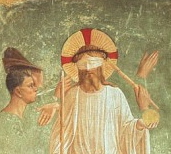
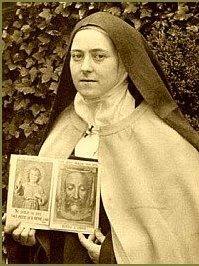
Fr. Doyle’s life had a profound influence on the lives of a young Mother Teresa of Calcutta, as recounted in “Come Be My Light,” and on St. Josemaria Escriva and many others, not for what he did in the battlefields of Ypres, but in the battlefield of his own soul.  Fr. Doyle’s great love of the Sacred Heart and the Holy Face of Jesus was made manifest in small sacrifices, born of a heartfelt desire to console Jesus, hated and outraged, blasphemed and spit upon.  Like St. Therese of the Child Jesus and the Holy Face, to whom he had a great devotion, he followed her “Little Way” of abandonment and trust, practicing hidden works of virtue, accepting each little cross or small sacrifice.  He wrote,

St. Therese of the Child Jesus and The Holy Face

“Kneeling at the grave of the Little Flower, I gave myself into her hands to guide and to make me a saint. I promised her to make it a rule of my whole life, every day without exception, to seek in all things my greater mortification, to give all and refuse nothing.  I have made this resolution with great confidence, because I realize how utterly it is beyond my strength; but I feel the Little Flower will get me the grace to keep it perfectly.”

“How many deceive themselves in thinking sanctity consists in the ‘holy follies’ of the saints!  How many look upon holiness as something beyond their reach or capability, and think that it is to be found only in the performance of extraordinary actions.  Satisfied that they have not the strength for great austerities, the time for much prayer, or the courage for painful humiliations, they silence their conscience with the thought that great sanctity is not for them, that they have not been called to be saints.  With their eyes fixed on the heroic deeds of the few, they miss the daily little sacrifices God asks them to make; and while waiting for something great to prove their love, they lose the countless little opportunities of sanctification each day bears within its bosom.”

Fr. Doyle made daily sacrifices that even I could handle, such as the first battle of getting out of bed when the alarm goes off. “Self-love,” Fr. Doyle has said, “is our own greatest enemy.”  Yet we are all capable of “little things.” This is why he is my hero.  St. Josemaria Escriva wrote to a friend of an example that set him on the road to sainthood.  It was known as “The Butter Battle.”

“We were reading — you and I — the heroically ordinary life of that man of God. [Fr. Doyle] And we saw him fight whole months and years at breakfast time: today he won, tomorrow he was beaten… He noted: ‘Didn’t take butter…; did take butter!’  I have read quickly the life of Fr. Doyle:  how well I understand the butter tragedy.”  [For St. Josemaria, his own battle was not reading newspapers.] “Not reading newspapers, is  for me no small mortification.  Nevertheless, with God’s grace, I stayed faithful to it… What battles these struggles of mine were!  These epics can be understood only by those who have gone through similar ones.  Sometimes conquering; more often, being conquered.” 

Inspired by the mortification of Carmelite Nuns to whom Fr. Doyle had given a retreat, he begged God earnestly for the grace to give up butter, sugar in his coffee, salt and so on.  Little things are of great importance to God.  It was by being “faithful in little things” those small sacrifices, that he was prepared to make the ultimate sacrifice “to lay down ones life for ones friends.” Let us pray, like Fr. Doyle, “to be faithful in little things.”  Fr. Doyle knew better than anyone the value of making those small sacrifices of love that become mighty weapons in the hand of the Living God – and He will win the war!

Below is a passage from Fr. Doyle’s writing showing his devotion to the Face of Christ, and possibly the passage which most inspired Bl. Mother Teresa.

“The greatest thirst of Jesus on the Cross was His thirst for souls.  He saw then the graces and inspirations He would give me to save souls for Him. 

In what way shall I correspond and console my Savior?  I went on

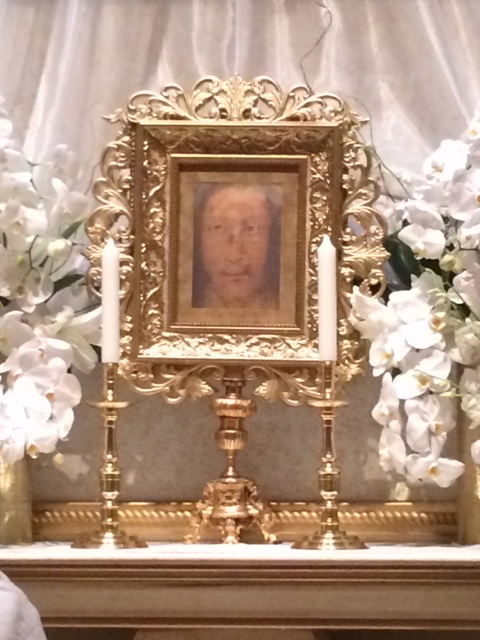
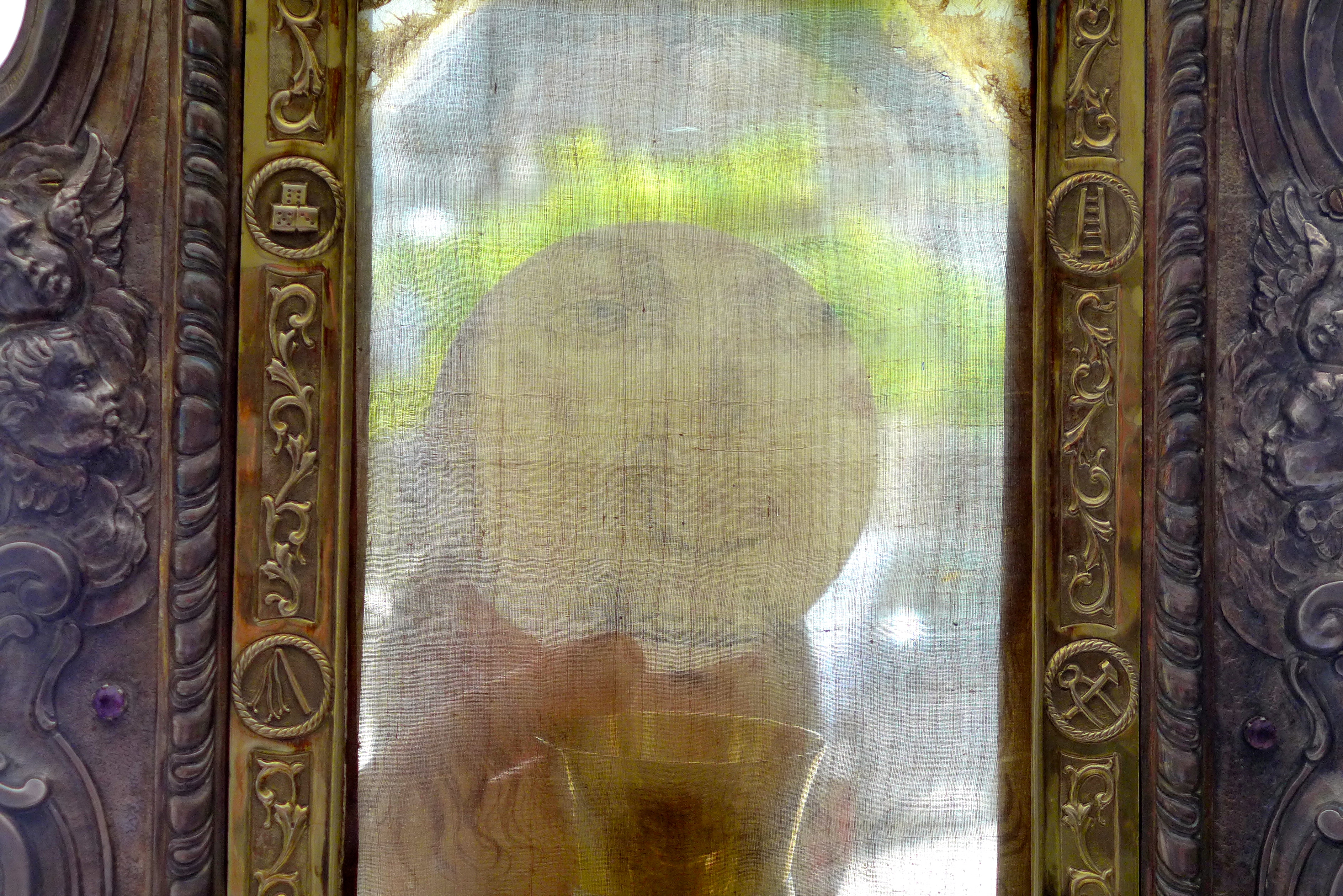
We don't know the Crucifix Fr. Doyle spoke of but this is The Holy Face of The Miraculous "Limpias Crucifix"
We don’t know the Crucifix Fr. Doyle spoke of but this is The Holy Face of The Miraculous “Limpias Crucifix”

to________and once more had an opportunity of a quiet prayer before the life-size crucifix in the church which I love so much.  I could not remain at His feet but I climbed up until both my arms were around His neck.  The figure seemed almost to live, and I think I loved Him then,  for it was borne in upon me how abandoned and suffering and broken-hearted He was.  It seemed to console Him when I kissed His eyes and pallid cheeks and swollen lips, and as I clung to Him I knew He has won the victory, and I gave Him all He asked.” ~Fr. William Doyle, S.J.

If you would like to read more about Fr. Doyle’s extraordinary life, please visit “Remembering Fr. William Doyle, S.J.” at http://fatherdoyle.com/


Our Lady of Mount Carmel

“How fair you are, O Virgin Mary.  Your face is resplendent with grace.” –Carmelite Proper

Our Lady of Mount Carmel
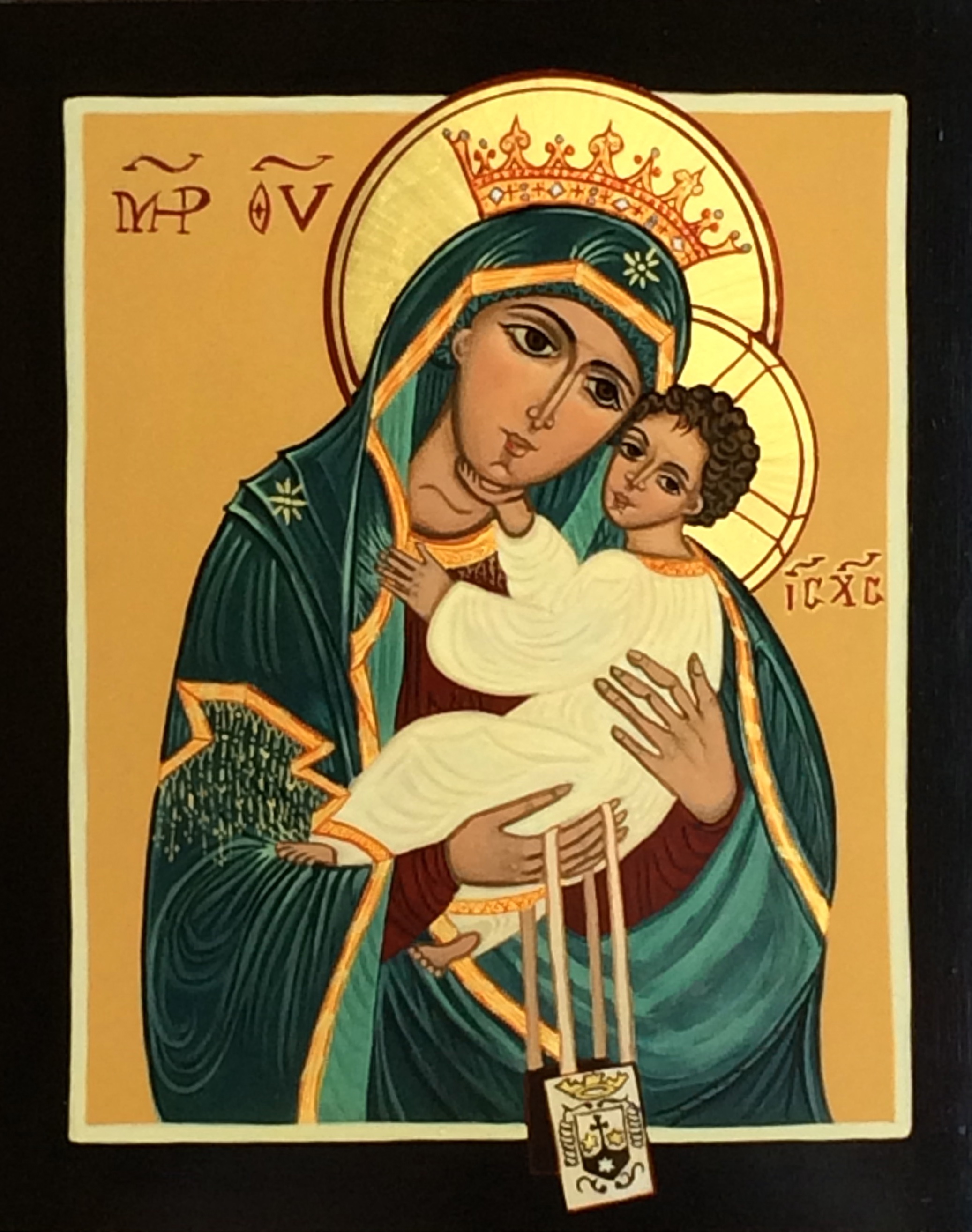
Our Lady of Mount Carmel  icon by Patricia Enk


Seeking the Face of God through Mary

In the icon of “Queen Beauty and Mother of Carmel,” the Infant Jesus tenderly invites us to look at the face of His Mother, “resplendent with grace.” What makes the Virgin Mary’s face “resplendent with grace?”  It is the light of the Face of Christ – just as the moon reflects the light of the sun, the face of Mary reflects the light of the true sun, Jesus Christ.

Mary is “The glory of Jerusalem, the joy of Israel, the highest honor of our race,” (Judith 15:9) because she sought the face of God, His holy will and pleasure, in all things. Just as it is possible for the moon to shine even in the brightness of day, Mary gives more beauty to the heavens, more glory to God than any other creature on earth.  And when the dark night of faith is upon us and the sun is hidden from our view, Mary is there to enlighten our path and show us the way to her Son, until “In the tender compassion of our God the dawn from on high shall break upon us, to shine on those who dwell in darkness and the shadow of death, and to guide our feet into the way of peace.” (Luke 1: 78-79)

At the present moment, although the world is filled with darkness, we can turn to her for help in seeking His Face and leading souls to Him. Even pebbles on a path on the ground can reflect the light of the moon at night; and so the children of Mary by following her example, “to seek the Face of God in all things,” can guide others through the darkness by reflecting the light of the Face of Christ as does Mary.

It is Jesus Himself who desires that we turn to the face of His Mother. He created her with all the perfection and beauty that would be fitting for the Mother of God.  Her soul, holy, immaculate and unstained by sin, is the perfect mirror in which He reflects His Face. He holds her up to us as the model for all His disciples as He did in Luke’s Gospel:  “While He was speaking, a woman from the crowd called out and said to Him, ‘Blessed is the womb that carried you and the breasts at which you nursed.'” This singular praise of Mary from the woman in the crowd was not enough for her Son.  And so Jesus replied, “Rather, blessed are those who hear the word of God and keep it.” (Luke 11:27)  Mary is thus thrice blessed, first, in being chosen to be the Mother of God, second, in that Mary heard the word of God and third, because she kept His word in her heart.

Mary holds out to us her Scapular, a sacramental sign of being clothed in her own garment, to place over our shoulders, so that we may imitate her in faith, hope, charity and all the virtues that adorn her soul.  By contemplating the Face of Jesus always, together with Mary, we can do our part in making His Face shine upon our world as well.

Flos Carmeli

composed by St. Simon Stock

Most Holy Virgin!  Beauty of Carmel!  Virgin flower forever in bloom! Bright ornament of Heaven!  Thou Virgin Mother of the Man-God!  Mother of holy love! Mother of mercy and meekness!  Mother honored above all Mothers!  Star of the Sea!  be thou propitious to thy dear children of Carmel, and to all who have the happiness of wearing your holy Scapular.  Amen.

IMG_1070“Our Lady in whose face – more than in any other creature – we can recognize the features of The Incarnate Word.”  –Pope Benedict XVI


Focus TV Interview on The Holy Face

IMG_0134
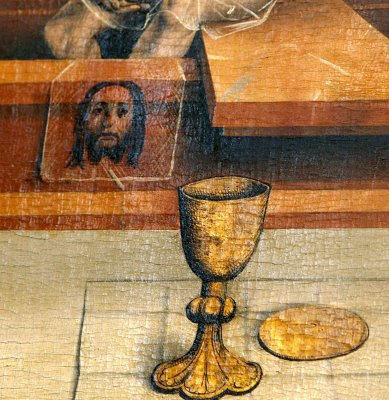
Michael Wolgemut, teacher of Albrecht Durer (ca. 1450)

Focus TV online is currently re-airing an interview about The Holy Face:

http://www.focustvonline.com/

image-10
To make reparation is to wipe the Face of Christ