The liturgical distance between Christmas Day and the glory of the appearance of the Risen Christ on Easter are as short as a flash of lightening! The readings move swiftly from darkest night of the year, into which the light of the Face of the Infant Jesus first appears on Christmas Day, to the readings about the martyrdom of St. Stephen; his forgiveness of his murderers, and the Feast of St. John (Jn 20:1, 2 & 8) where we hear about St. John racing ahead of Peter to the tomb, where they find “the cloth that covered HIs Head;” the sight of which caused St. John “to see and believe.” Through the power of the Resurrection, God moves hearts swiftly from the darkness of sin, death, sorrow, and unbelief — to the radiant light of grace — new life, faith, joy and peace shining on the Face of the Risen Christ.
Pope Leo calls the peace of the risen Christ “the most silent revolution:” “The Good Shepherd, who gives his life for the flock and has other sheep not of this fold (John 10:11,16) is Christ, our peace,” he writes, “who has conquered death and broken down the walls of division that separate humanity (cf. Eph 2:14). His presence, his gift and his victory continue to shine through the perseverance of many witnesses through whom God’s work carries on in the world, becoming even more visible and radiant in the darkness of our time.” Peace is revolutionary, and takes tremendous courage and trust for a Christian to live as they truly believed — as did the martyrs of the past and the present — through trust in the power of the Risen Christ!
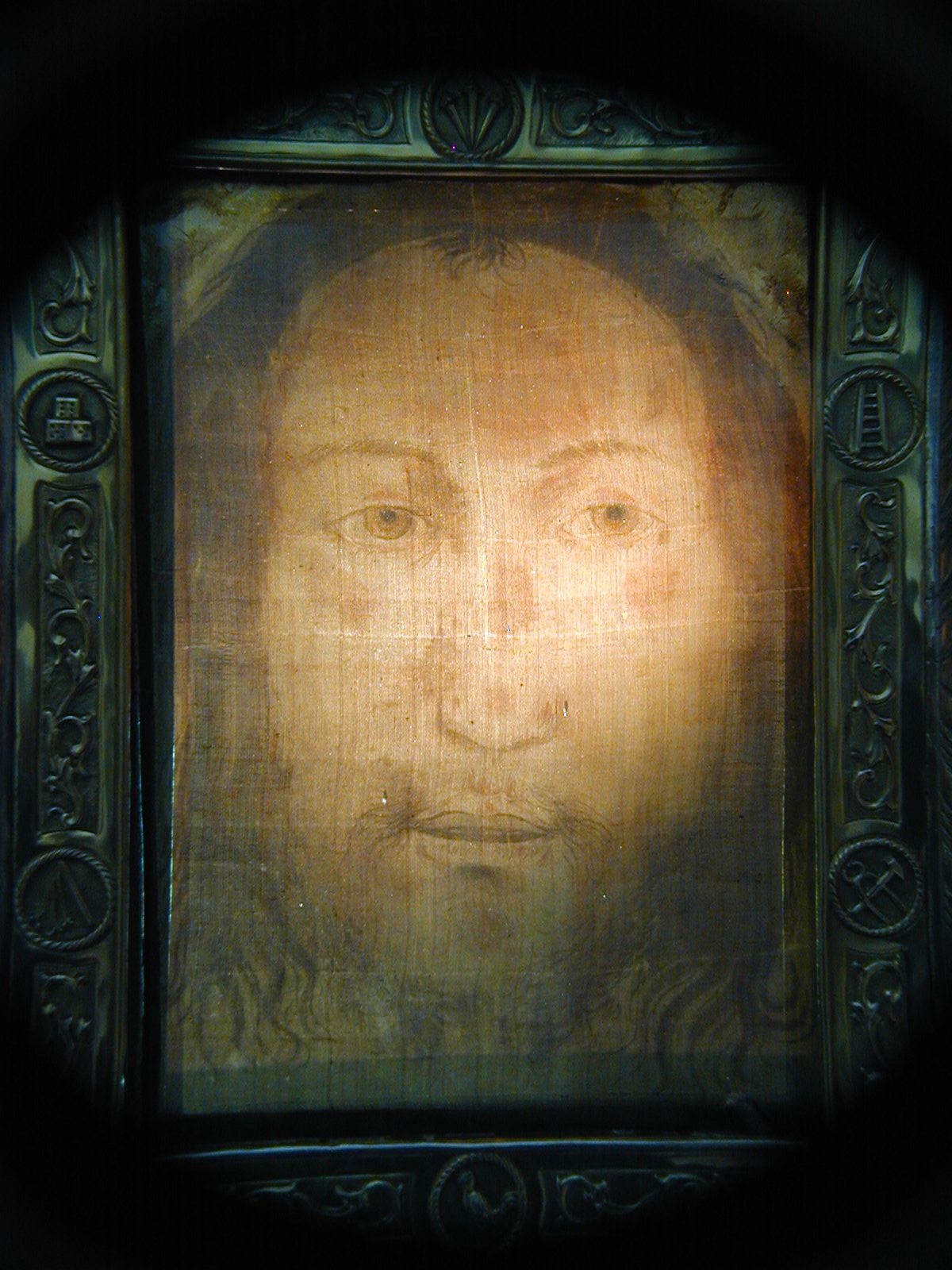
Pope Leo writes that the “contrast between darkness and light” is also “an experience that unsettles us and affects us amid trials we face in our historical circumstances. In order to overcome the darkness, it is necessary to see the light and believe in it.” We need to “see and believe” as St. John did when he saw the face of Risen Christ on the cloth; this is why I believe the Face of the Risen Christ on the Veil of Manoppello is a tangible sign for our time — a great gift to us from God! The world needs to turn to His Face once again if it desire to have peace.
We can begin by following the example of the Blessed Virgin Mary in contemplation of the Face of Jesus:
“The Virgin Mary is she who more than any other contemplated God in the human Face of Jesus. She saw Him as a newborn when, wrapped in swaddling clothes, He was placed in a manger; she saw Him when, just after His death, they took Him down from the Cross, wrapped Him in linen and placed Him in the sepulcher. Inside her was impressed the image of her martyred Son; but this image was then transfigured in the light of the Resurrection. Thus, in Mary’s heart, was carried the mystery of the Face of Christ, a mystery of death and glory. From her we can always learn how to look upon Jesus, with a gaze of love and faith, to recognize in that human countenance, the Face of God.” ~ Pope Benedict XVI
Peace is possible! When “we forget the light,” Pope Leo writes, “we lose our sense of realism and surrender to a partial distorted view of the world, disfigured by darkness and fear. ” Pope Leo recalled how St. Augustine urged Christians “to forge an unbreakable bond with peace, so that by cherishing it deeply in their hearts, they would be able to radiate its luminous warmth around them.” St. Augustine wrote: “If you wish to draw others to peace, first have it yourselves; be steadfast in peace yourselves. To inflame others, you must have the flame burning within.” Pope Leo reminds us that “Peace is more than just a goal; it is a presence and a journey.”
So, as we begin the New Year, I wish to all, and pray for “God’s greatest gift” of Peace. “Peace, wrote Pope Benedict XVI, for the World Day of Peace, 2013, “is God’s most sublime gift in which He turns towards us the splendor of His Face.”
“May the Lord bless and keep you; may He make His Face shine upon you and be merciful to you; may He turn His countenance toward you and grant you His peace.” (Numbers 6:24)
“For God, who said, ‘Let light shine out of darkness,’ made his light shine in our hearts to give us the light of knowledge of God’s glory shining on the face of Christ.” (2 Cor. 4:6)
Adoration of the Magi, Fra. Angelico & Fra. Lippi
“May the Lord, grant, in the New millennium, the Church will grow ever more in holiness, that she may become in history a true epiphany of the merciful and glorious face of Christ the Lord.” ~Pope St. John Paul II
+++
Benedict XVI has characterized devotion to The Holy Face as having three separate components: 1. Discipleship – an encounter with Jesus, to see Jesus in the Face of those in need. 2. The Passion of Jesus, and suffering expressed by images of the wounded Face of Jesus. 3. The Eucharist, “the great school in which we learn to see The Face of God”, which is woven between the other two. The eschatological element then builds on awakening to Christ by contemplating His Face hidden in The Eucharist.
“Our whole life should be directed toward encountering Him,” writes Benedict, “toward loving Him; and in it, a central place must be given to love of one’s neighbor, that love that in the light of The Crucified One, enables us to recognize the Face of Jesus in the poor, the weak, the suffering.” The pope goes on to explain the fruits of this contemplation: “From contemplation of the Face of God are born, joy, security, Peace.”
Mary Magdalene embracing the Face of Jesus in Boticelli’s Deposition
Mary’s Veil of Faith
+ O Jesus, hidden God, my heart perceives You, though veils hide You, You know that I love You. ~Prayer of St. Faustina Kowalska
The strongest hurricane to hit Louisiana since the 1800’s descended on us on August 29th. Hurricane Ida brought 150 mph winds gusts, tornadoes, and where I live, 5 feet of water. We are so grateful to God that we were spared the loss of life, and have a big family who can help with the arduous task of cleaning up the trees, mud and mess that Ida left behind. As in all times of trial, our family turns to the Blessed Mother for help, inspiration, and endless source of grace — she is most importantly, the model of our faith. With that in mind, I am reposting here “Mary’s Veil of Faith,” with grateful thanks to our dear Blessed Mother for keeping us safe beneath her mantle, and for those who have prayed for us:
The word “veil” can have many meanings. A veil can cover the face, the head, or an object; it can cover, conceal, or separate. In ancient Jewish tradition a veil in the Holy of Holies in the Temple separated sinful man from the presence of God dwelling in the midst of His People. The holiness of God was not to be taken lightly. The blinding light of the purity and glory of the Face of God could not be looked upon by sinful eyes.
But when God chose Mary to be the Mother of His Son He created her to be all-pure and sinless from the moment of her conception through the merits of her Son, Jesus. In Matthew 5:8 we read, “Blessed are the pure of heart, for they shall see God.” What was to prevent Mary, the Immaculate Conception, who was free from all sin, from seeing the Face of God in all His glory even while she was still here on earth? The answer is, in a word, a veil.
The Virgin of the Grapes by Pierre Mignard
When the Word of God became flesh in the womb of the Blessed Virgin Mary, at the Incarnation, Mary became His Tabernacle. Jesus’ human flesh was His veil: “by the new and living way he opened for us through the veil, that is His flesh” (Heb. 10:20). The Angel Gabriel told Mary that she would be the mother of the Son of God. But Mary, though “full of grace” and all-pure, would only gaze upon the human face of her child and upon the Face of her God through the veil of faith.
Elizabeth bore witness to Mary’s faith when “filled with the Holy Spirit” she greeted Mary with a loud cry: “Blessed are you among women, and blessed is the fruit of your womb! And why is this granted me, that the mother of my Lord should come to me?…“Blessed is she who believed that there would be a fulfillment of what was spoken to her from the Lord” (Lk. 1:45). As Pope St. John Paul II wrote in Redemptoris Mater, “Mary entrusted herself to God completely, with the full submission of intellect and will…this response of faith included both perfect cooperation with ‘the grace of God that precedes and assists’ and perfect openness to the action of the Holy Spirit, who constantly brings faith to completion by His gifts.”
The Man of Sorrows in the arms of the Virgin Mary, by Hans Memling
In a truly heroic manner, in poverty and suffering, on her whole pilgrimage or journey towards God, Mary believed, in faith, though everything happening around her seemed to contradict God’s words to her: That “the Lord will give to him the throne of his father David.” And that “He will reign over the house of Jacob forever and of His kingdom there will be no end.” Mary believed these invisible truths about her Son, even as Jesus, suffered and died, hanging on the Cross. What was visible on an earthly level did not reflect the heavenly reality. Mary did not necessarily see her Son radiant in glory or angels ministering to Him in His Passion. At the foot of the Cross she saw His bruised and bloodied suffering Face.
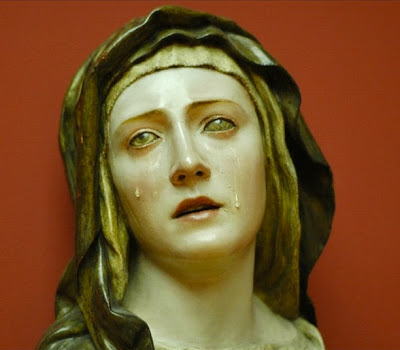
Our Lady of Sorrows
Pope St. John Paul II tells us in Redemptoris Mater that “faith is contact with the mystery of God. Every day Mary is in constant contact with the ineffable mystery of God made-man, a mystery that surpasses everything revealed in the Old Covenant… Mary is in contact with the truth about her Son only in faith and through faith!” Though all-pure, she could not see, except through faith. “Blessed is she who believed” is a key, he says, which unlocks for us the innermost reality of Mary. Mary’s all-pure eyes looked on the glory of her Son through a veil of faith, “a dark night,” to use the words of St. John of the Cross, that feeling of darkness or emptiness when a soul draws near to the brightness and glory of God. Pope St. John Paul II writes in Redemptoris Mater that Mary’s faith is: “a kind of a veil though which one has to draw near to the Invisible One and to live in intimacy with the mystery.”
Joan Mates, Mourning over the body of Christ
The stone rolled in front of tomb is also a sort of veil — seemingly impervious, unmovable, like the hardened hearts of souls closed off from God — yet hiding Our Crucified Lord within. When Mary stood in bitter desolation before the massive stone of the tomb, she knew that Jesus was dead. Still, her heart was full of hope. She heroically believed that her Son would rise again in glory. Mary’s faith was so strong that her heart believed what her eyes could not perceive. We too must believe, although Jesus may be silent and hidden completely from our eyes. If we had a little of Mary’s faith, through her intercession, even the heaviest stone could be rolled away by Our Lord, as though it were the lightest veil. Then, the hardest of hearts could be changed, and her glorious Son would be revealed.
In this earthly pilgrimage of faith a veil lies over our hearts, as St. Paul writes: “To this day, in fact…a veil lies over their hearts, but whenever a person turns to the Lord the veil is removed… All of us, with unveiled face gazing on the glory of the Lord, are being transformed into the same image from glory to glory, as from the Lord who is the Spirit.” (2 Cor. 4:15-16, 18) As members of the Church, we can “look at” Jesus through Mary’s eyes of faith, in the Eucharist, in our neighbor; believing in His Word and following her example in our pilgrimage towards the Father until that time when the “veil” of faith will be finally lifted.
Mary adored Jesus beneath the Eucharistic Veil of the appearance of bread. The Virgin of the Host, by Jean-Auguste-Dominique Ingres
“Blessed is she who believed!”
“Faith is the realization of what is hoped for and evidence of things not seen.” (Heb. 11:1)
+++
The byssus Veil of Manoppello, which is thought to be one of the burial cloths of Jesus, photo: Paul Badde/EWTN
Prayer to the Holy Face for the liberation from the coronavirus
Lord Jesus, Savior of the world, hope that will never disappoint us, have mercy on us and deliver us from all evil! Please overcome the scourge of this virus which is spreading, heal the sick, preserve the healthy, support those who work for the health of all. Show us your face of mercy and save us in your great love. We ask you through the intercession of Mary, Your Mother and ours, who faithfully accompanies us. You who live and reign forever and ever. Amen.
Mary Magdalene embracing the Face of Jesus in Boticelli’s Deposition
Mary’s Veil of Faith
+ O Jesus, hidden God, my heart perceives You, though veils hide You, You know that I love You. ~Prayer of St. Faustina Kowalska
The word “veil” can have many meanings. A veil can cover the face, the head, or an object; it can cover, conceal, or separate. In ancient Jewish tradition a veil in the Holy of Holies in the Temple separated sinful man from the presence of God dwelling in the midst of His People. The holiness of God was not to be taken lightly. The blinding light of the purity and glory of the Face of God could not be looked upon by sinful eyes.
But when God chose Mary to be the Mother of His Son He created her to be all-pure and sinless from the moment of her conception through the merits of her Son, Jesus. In Matthew 5:8 we read, “Blessed are the pure of heart, for they shall see God.” What was to prevent Mary, the Immaculate Conception, who was free from all sin, from seeing the Face of God in all His glory even while she was still here on earth? The answer is, in a word, a veil.
The Virgin of the Grapes by Pierre Mignard
When the Word of God became flesh in the womb of the Blessed Virgin Mary, at the Incarnation, Mary became His Tabernacle. Jesus’ human flesh was His veil: “by the new and living way he opened for us through the veil, that is His flesh” (Heb. 10:20). The Angel Gabriel told Mary that she would be the mother of the Son of God. But Mary, though “full of grace” and all-pure, would only gaze upon the human face of her child and upon the Face of her God through the veil of faith.
Elizabeth bore witness to Mary’s faith when “filled with the Holy Spirit” she greeted Mary with a loud cry: “Blessed are you among women, and blessed is the fruit of your womb! And why is this granted me, that the mother of my Lord should come to me?…“Blessed is she who believed that there would be a fulfillment of what was spoken to her from the Lord” (Lk. 1:45). As Pope St. John Paul II wrote in Redemptoris Mater, “Mary entrusted herself to God completely, with the full submission of intellect and will…this response of faith included both perfect cooperation with ‘the grace of God that precedes and assists’ and perfect openness to the action of the Holy Spirit, who constantly brings faith to completion by His gifts.”
The Man of Sorrows in the arms of the Virgin Mary, by Hans Memling
In a truly heroic manner, in poverty and suffering, on her whole pilgrimage or journey towards God, Mary believed, in faith, though everything happening around her seemed to contradict God’s words to her: That “the Lord will give to him the throne of his father David.” And that “He will reign over the house of Jacob forever and of His kingdom there will be no end.” Mary believed these invisible truths about her Son, even as Jesus, suffered and died, hanging on the Cross. What was visible on an earthly level did not reflect the heavenly reality. Mary did not necessarily see her Son radiant in glory or angels ministering to Him in His Passion. At the foot of the Cross she saw His bruised and bloodied suffering Face.
Our Lady of Sorrows
Pope St. John Paul II tells us in Redemptoris Mater that “faith is contact with the mystery of God. Every day Mary is in constant contact with the ineffable mystery of God made-man, a mystery that surpasses everything revealed in the Old Covenant… Mary is in contact with the truth about her Son only in faith and through faith!” Though all-pure, she could not see, except through faith. “Blessed is she who believed” is a key, he says, which unlocks for us the innermost reality of Mary. Mary’s all-pure eyes looked on the glory of her Son through a veil of faith, “a dark night,” to use the words of St. John of the Cross, that feeling of darkness or emptiness when a soul draws near to the brightness and glory of God. Pope St. John Paul II writes in Redemptoris Mater that Mary’s faith is: “a kind of a veil though which one has to draw near to the Invisible One and to live in intimacy with the mystery.”
Joan Mates, Mourning over the body of Christ
The stone rolled in front of tomb is also a sort of veil — seemingly impervious, unmovable, like the hardened hearts of souls closed off from God — yet hiding Our Crucified Lord within. When Mary stood in bitter desolation before the massive stone of the tomb, she knew that Jesus was dead. Still, her heart was full of hope. She heroically believed that her Son would rise again in glory. Mary’s faith was so strong that her heart believed what her eyes could not perceive. We too must believe, although Jesus may be silent and hidden completely from our eyes. If we had a little of Mary’s faith, through her intercession, even the heaviest stone could be rolled away by Our Lord, as though it were the lightest veil. Then, the hardest of hearts could be changed, and her glorious Son would be revealed.
In this earthly pilgrimage of faith a veil lies over our hearts, as St. Paul writes: “To this day, in fact…a veil lies over their hearts, but whenever a person turns to the Lord the veil is removed… All of us, with unveiled face gazing on the glory of the Lord, are being transformed into the same image from glory to glory, as from the Lord who is the Spirit.” (2 Cor. 4:15-16, 18) As members of the Church, we can “look at” Jesus through Mary’s eyes of faith, in the Eucharist, in our neighbor; believing in His Word and following her example in our pilgrimage towards the Father until that time when the “veil” of faith will be finally lifted.
Mary adored Jesus beneath the Eucharistic Veil of the appearance of bread. The Virgin of the Host, by Jean-Auguste-Dominique Ingres
“Blessed is she who believed!”
“Faith is the realization of what is hoped for and evidence of things not seen.” (Heb. 11:1)
+++
The byssus Veil of Manoppello, which is thought to be one of the burial cloths of Jesus, photo: Paul Badde/EWTN
Prayer to the Holy Face for the liberation from the coronavirus
Lord Jesus, Savior of the world, hope that will never disappoint us, have mercy on us and deliver us from all evil! Please overcome the scourge of this virus which is spreading, heal the sick, preserve the healthy, support those who work for the health of all. Show us your face of mercy and save us in your great love. We ask you through the intercession of Mary, Your Mother and ours, who faithfully accompanies us. You who live and reign forever and ever. Amen.




 Illumina Domine Blog - Devotion to The Holy Face