The Sixth Station — Veronica Wipes the Face of Jesus

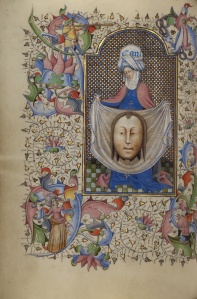
St. Veronica with the Sudarium C. 1480-1500

Was there actually a St. Veronica?  It is an important question, and a very personal one to me and many others. According to tradition, “Veronica,” is the compassionate woman who wiped the Face of Jesus, who is commonly depicted in every Catholic church, at the Sixth Station of the Cross, yet her name does not appear in the Gospels, and the legends did not appear until the Middle Ages.

Pope St. John Paul II pondered this very question many years before dedicating the Millennium to the Holy Face of Jesus. The fruit of his prayerful contemplation unveils a profound truth for every Christian as he answers another question; What does it mean to be “a Veronica?”
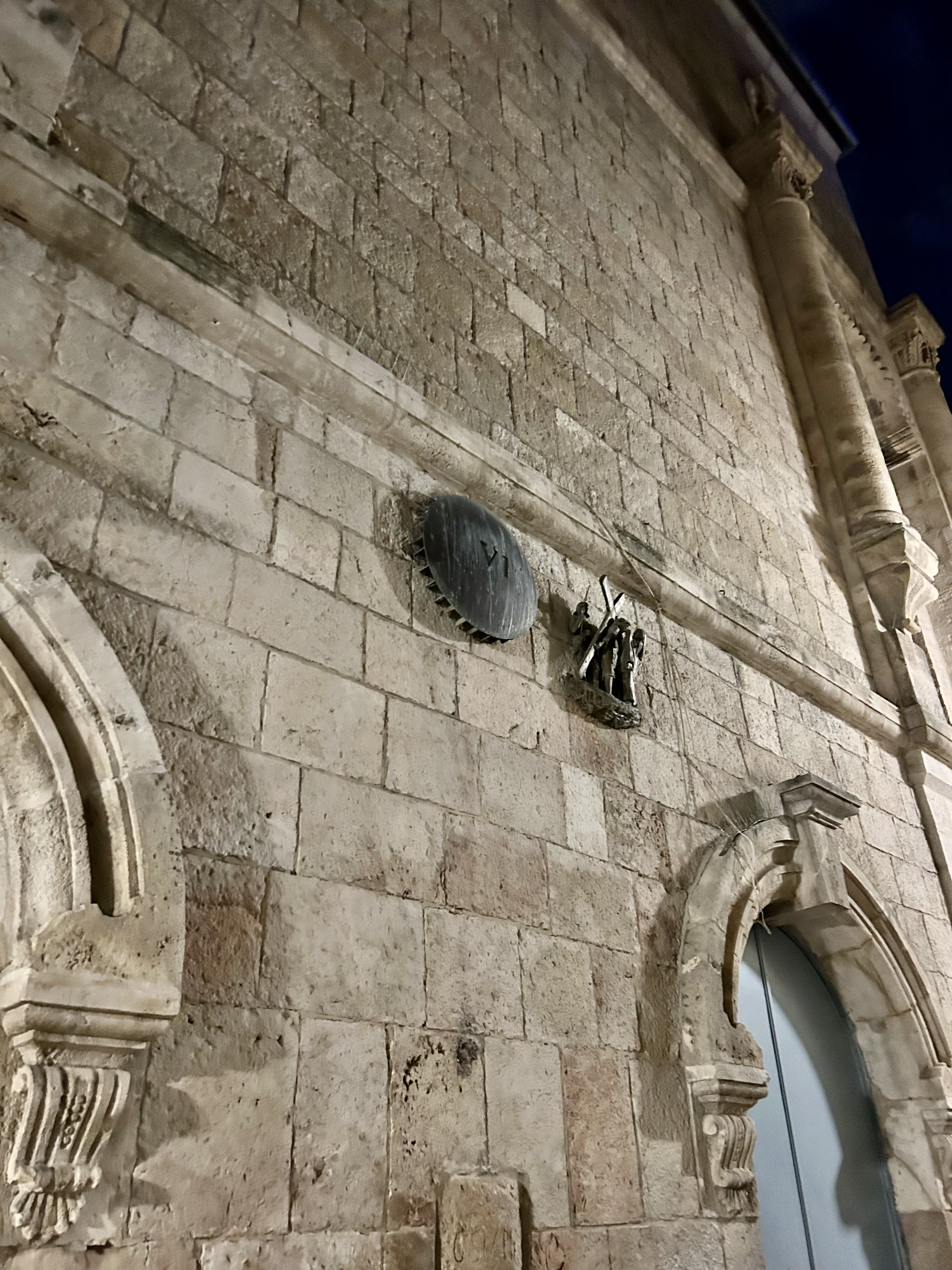
The Sixth Station on the Via Dolorosa in Jerusalem
Veronica’s Veil, Flemish 15th Century

“St. Veronica” 

The Catholic Church tells us that a veil bearing a miraculous image of the Face of Jesus has existed since the earliest centuries, recorded in history and in art, such as the Camulia, or the Mandylion. Explanations for the existence of such a veil were all different (see “Four Stories, One Face“). About the time this miraculous veil first appeared in Rome, the name “Veronica” referred to the veil itself, and not a person–“Veronica” meaning “vera” or true, and “icon” meaning image, or even more precisely, “to be present.” Those who gazed upon the veil bearing the true Face of Jesus stood in God’s presence. They were turned toward His Face. The Veil became the greatest relic that Pilgrims traveled to see in the Vatican.
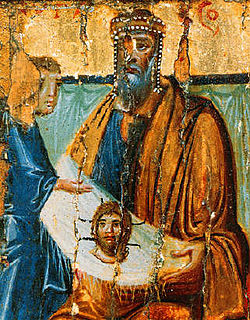
King of Edessa receiving the miraculous veil from St. Jude, and was healed of leprosy.
“Veronica” holding a sheer veil bearing the living Face of Christ on a sheer veil with distinctive folds.

Legends sprang up much later, in the Middle Ages, about a woman named “Veronica,” who was sometimes associated with the woman “Berenice” or “Bernice,” the bleeding woman who touches the hem of Jesus’s garment in the Gospel.  There is a version, written in 1191 by Robert de Boron, that tells of a woman named “Veronica” wiping sweat from the Face of Jesus. The stories are many and varied, but the legend that most people are familiar with today is traced to a version by Roger d’Argenteuil in the 1300s, which tells of a woman “Veronica,” associated with the sixth station of the Cross–the compassionate woman, wiping the Face of Jesus on the way to Calvary with a cloth, upon which He leaves an image of His Face.

“These pious traditions cannot be documented, but there is no reason why the belief that such an act of compassion did occur should not find expression in the veneration paid to one called Veronica.” —The Catholic Encyclopedia

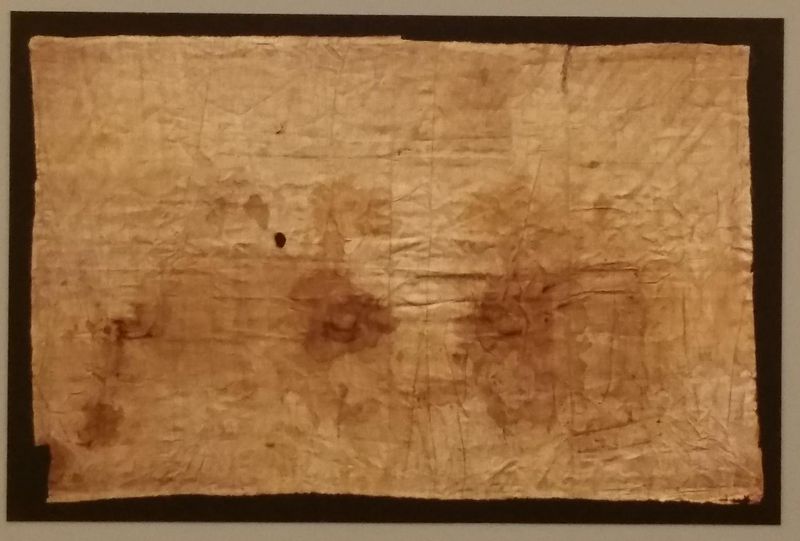
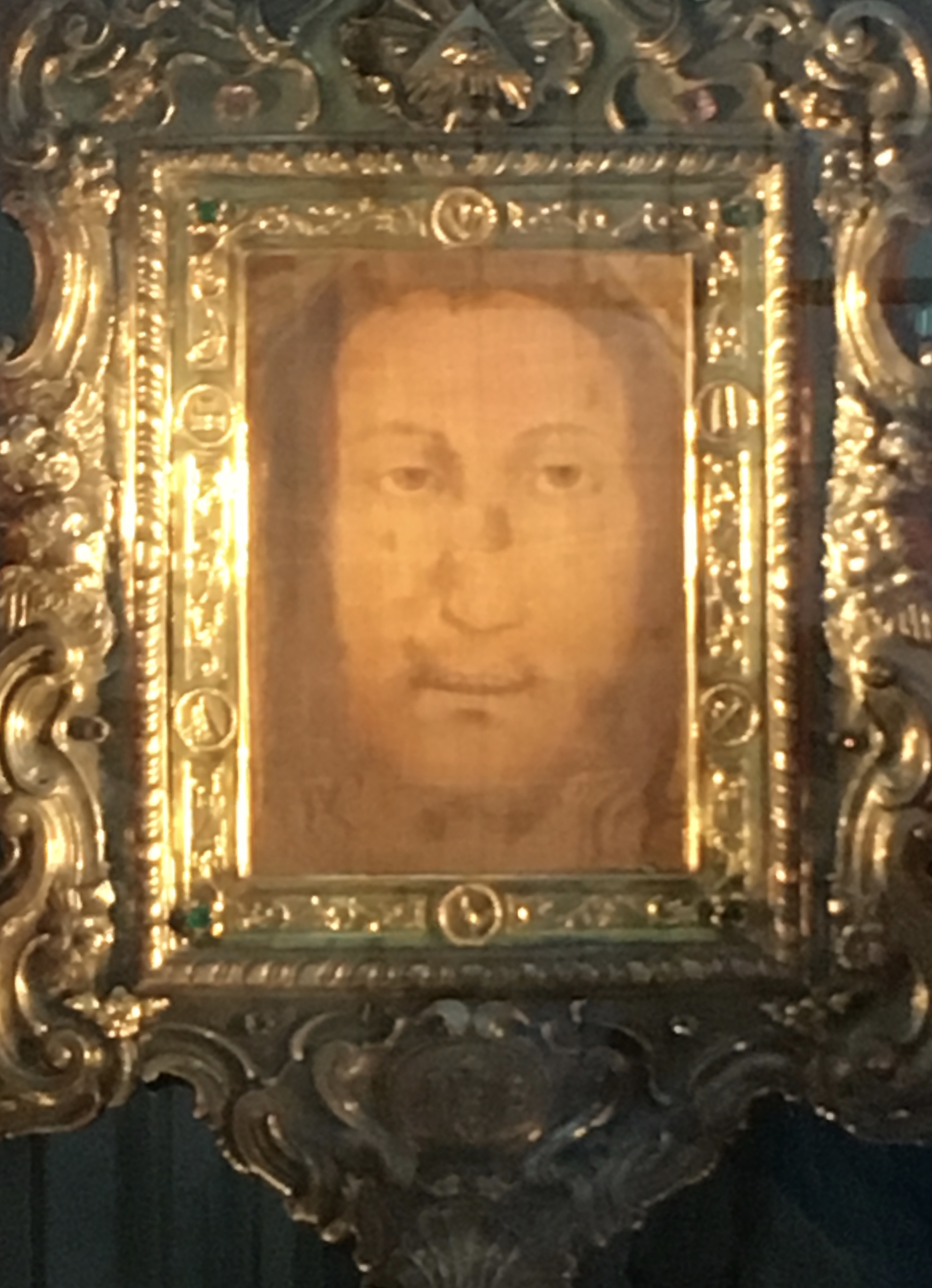
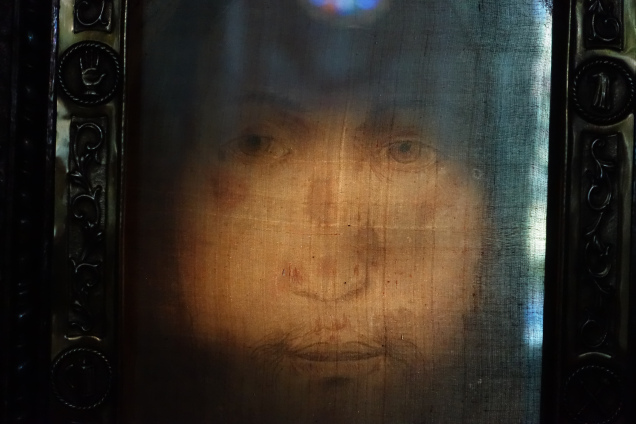
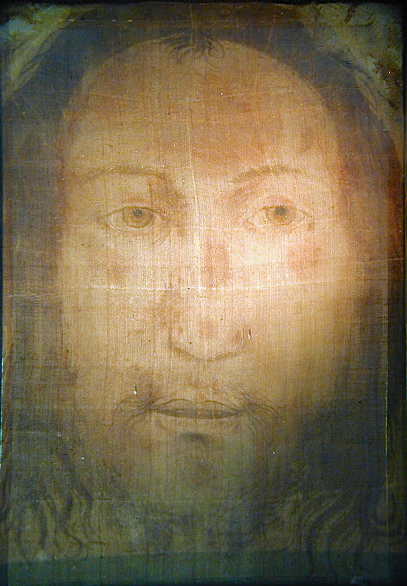
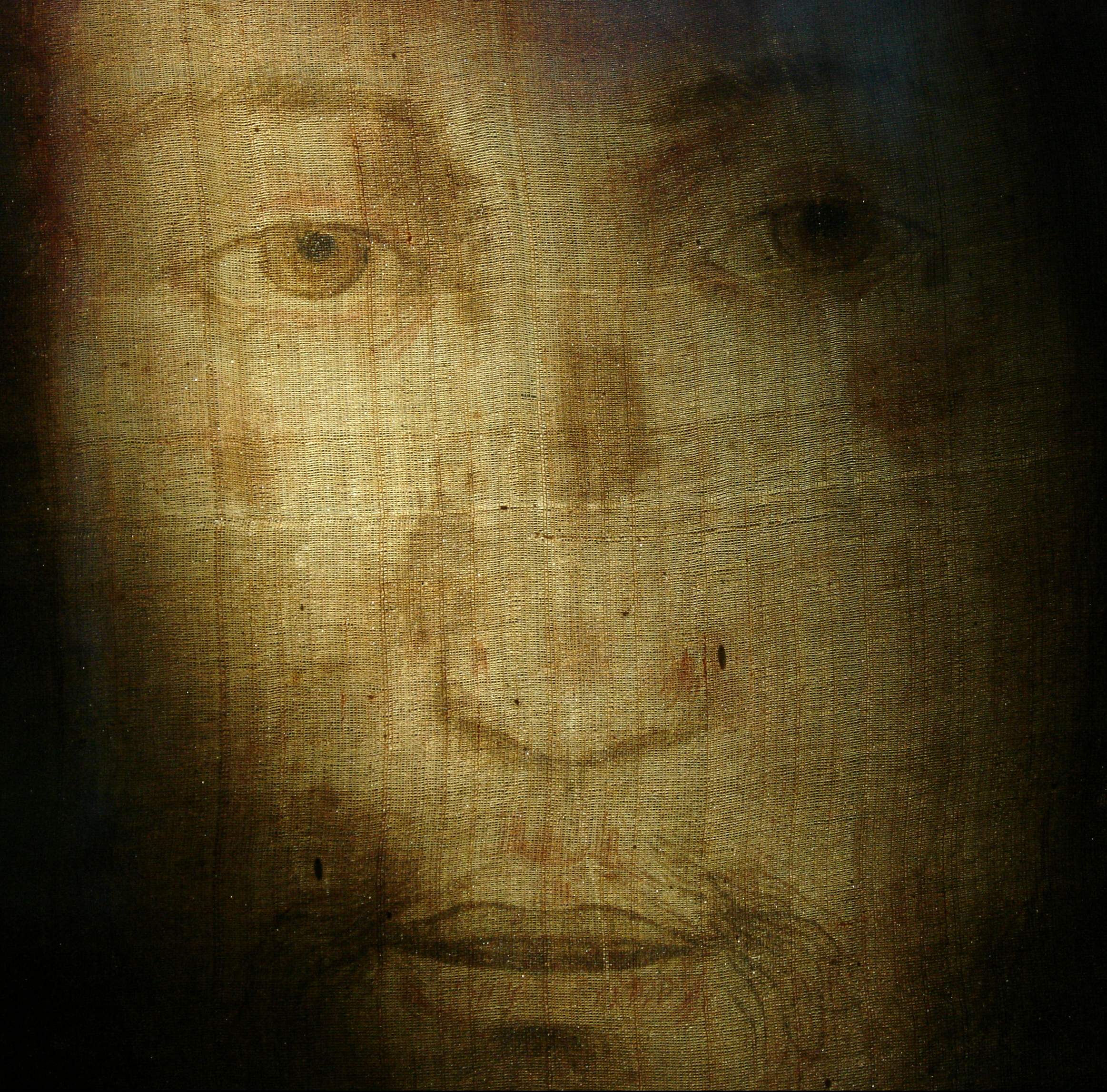
What did the Veil look like? A “living, changing, face” on a sheer veil, with distinctive folds, that could be viewed from either side; the eyes are open and glance to one side or the other; a lock of hair graces the center of the forehead; a sparse beard, wavy hair, as well as signs of bruising and trauma to the face are seen…. which despite the obvious suffering, remains peaceful and serene.
The Holy Veil of Manoppello- photo: Paul Badde/EWTN

Pope St. John Paul II expressed the answer to this profound question addressing the origin of the name of Veronica most beautifully in his poem, “The Name:”

The Name

In the crowd walking towards the place

[of the Agony]–

did you open up a gap at some point or were you

[opening it] from the beginning?

Veronica’s Veil by Hans Memling

And since when? You tell me, Veronica.

Your name was born in the very instant

in which your heart

became an effigy: the effigy of truth.

Your name was born from what you gazed upon.

–Karol Wojtyla

Miraculous Holy Face Veil Photo: Paul Badde (see “Manoppello Image” tab)

Since the detailed historical facts about the veil itself cannot be verified with absolute certainty in this life, the more important and answerable question is, “What does it mean to be a Veronica–a “true image?”

“Your name was born from what you gazed upon.” 

When a soul performs an “act of compassion,” Jesus leaves His image on the “veil” of the soul. In other words, while contemplating the Face of Jesus in an image, in the Word of God in the Scriptures, in a person made in the image and likeness of God, or above all, in the Eucharist, the soul places itself in the Presence of God. When we are turned completely toward the Face of God, through a daily face-to-face encounter in prayer–by the power of the Holy Spirit–God gradually transforms the soul into the “True Image” of His Son, Jesus Christ. As Pope St. John Paul II says, our hearts must become an “effigy of truth,” a “true icon.” Then our name too will be born from what we gaze upon. It will be “Veronica.”

The Deepest Truth About St. Veronica

St. Veronica statue by Francesco Mochi, 1629

Within the center of St. Peter’s Basilica are four massive niches. In each niche there are four titanic statues of saints, standing 10 meters high: St. Andrew, the first disciple called by Christ, St. Longinus, the soldier who pierced Jesus’s side with his lance, St. Helena, who discovered the True Cross. The fourth statue depicts “St. Veronica,” an unknown woman, not mentioned in the Bible, yet immortalized in every Catholic church at the Sixth Station of the Cross, for her act of compassion to Jesus who left the image of His Face on her veil. (The relic that is now in the Veronica Pilar is quite different in description than what was previously recorded–a mystery yet to be solved. More may be read on the subject here: The Church, Testing of Relics, and the Holy Face)

Pope St. John Paul II wrote this beautiful meditation on St. Veronica in 2000, the same year in which he dedicated the millennium to the Face of Christ:

Sixth Station, St. Theresa Church, Ashburn, Virginia

“Veronica does not appear in the Gospels. Her name is not mentioned, even though the names of other women who accompanied Jesus do appear.
It is possible, therefore, that the name refers more to what the woman did. In fact, according to tradition, on the road to Calvary a woman pushed her way through the soldiers escorting Jesus and with a veil wiped the sweat and blood from the Lord’s face. That face remained imprinted on the veil, a faithful reflection, a “true icon”. This would be the reason for the name Veronica.
If this is so, the name which evokes the memory of what this woman did carries with it the deepest truth about her.

One day, Jesus drew the criticism of onlookers when he defended a sinful woman who had poured perfumed oil on his feet and dried them with her hair. To those who objected, he replied: “Why do you trouble this woman? For she has done a beautiful thing to me . . . In pouring this ointment on my body she has done it to prepare me for burial” (Mt 26:10, 12). These words could likewise be applied to Veronica. Thus we see the profound eloquence of this event.

The Redeemer of the world presents Veronica with an authentic image of his face. The veil upon which the face of Christ remains imprinted becomes a message for us.


In a certain sense it says: This is how every act of goodness, every gesture of true love toward’s one’s neighbor, strengthens the likeness of the Redeemer of the world in the one who acts that way. Acts of love do not pass away. Every act of goodness, of understanding, of service leaves on people’s hearts an indelible imprint and makes us ever more like the One who “emptied himself, taking the form of a servant” (Phil 2:7). This is what shapes our identity and gives us our true name.” –Pope St. John Paul II

This is the deep meaning and call to every Christian revealed in the presence of the unknown woman we call “St. Veronica”– each act of charity, every act of compassion will leave the imprint of the Face of Jesus in our souls, transforming us into His own Image.

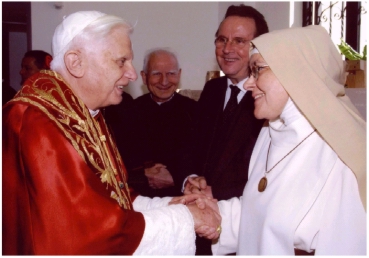
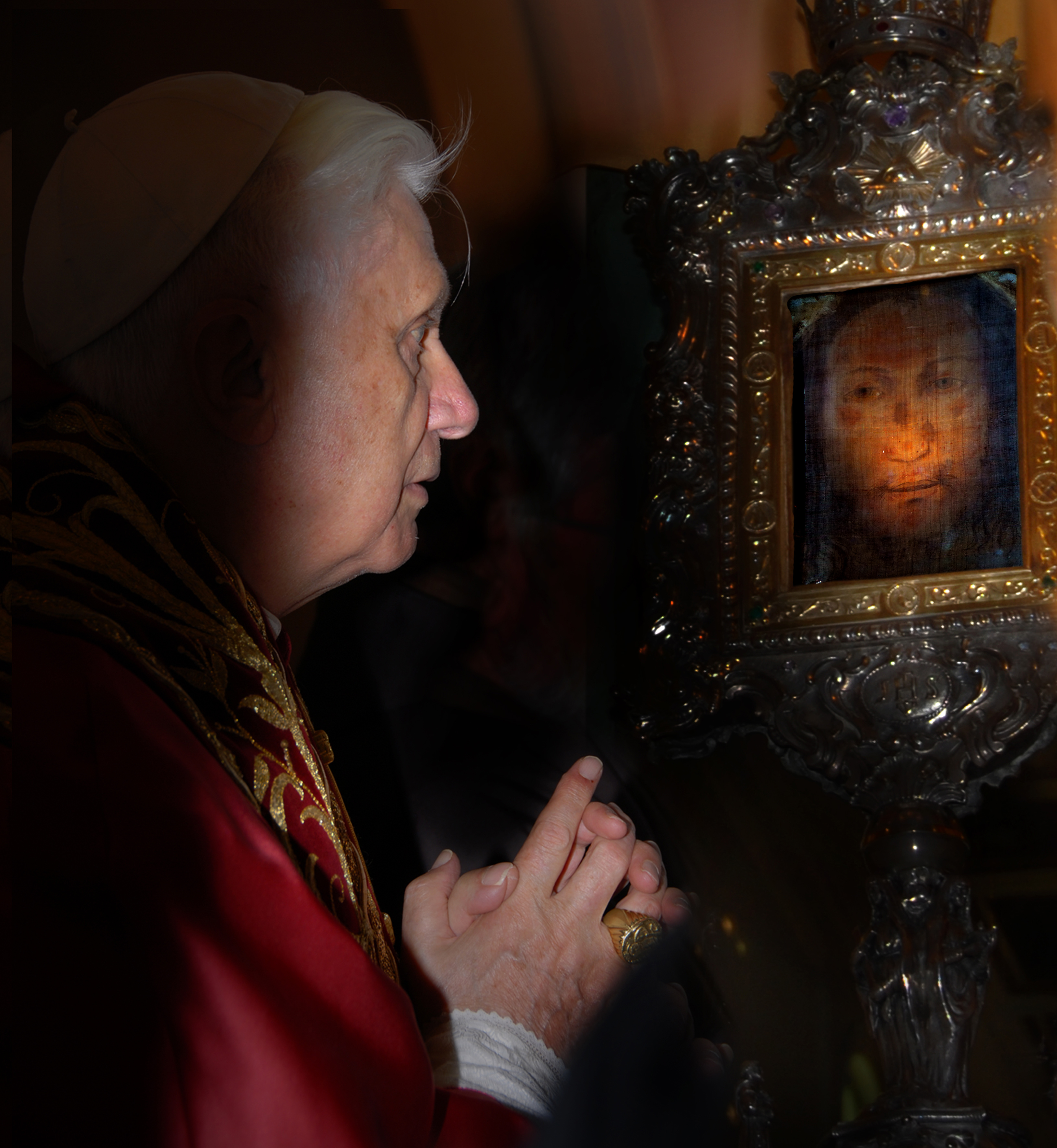
Pope Benedict XVI looks at the ‘Veronica’s Veil’ during a visit to the Holy Veil monastery in Manoppello, central Italy, September 1, 2006.

Pope Benedict wrote, “To rejoice in the splendor of His Face means penetrating the mystery of His Name made known to us in Jesus, understanding something of His interior life and of His will, so that we can live according to His plan for humanity. Jesus lets us know the hidden Face of The Father through His human Face; by the gift of The Holy Spirit poured into our hearts.” This, the Pope says, is the foundation of our Peace, which nothing can take from us.

Benedict XVI has characterized devotion to The Holy Face as having three separate components:
1. Discipleship – an encounter with Jesus, to see Jesus in the Face of those in need.
2. The Passion of Jesus, and suffering expressed by images of the wounded Face of Jesus.
3. The Eucharist, “the great school in which we learn to see The Face of God”, which is woven between the other two. The eschatological element then builds on awakening to Christ by contemplating His Face hidden in The Eucharist.

“Our whole life should be directed toward encountering Him,” writes Benedict, “toward loving Him; and in it, a central place must be given to love of one’s neighbor, that love that in the light of The Crucified One, enables us to recognize the Face of Jesus in the poor, the weak, the suffering.” The pope goes on to explain the fruits of this contemplation: “From contemplation of the Face of God are born, joy, security, PEACE.”

“Acts of Love do not pass away!”

The Veil of Veronica, Hans Memling, 1479
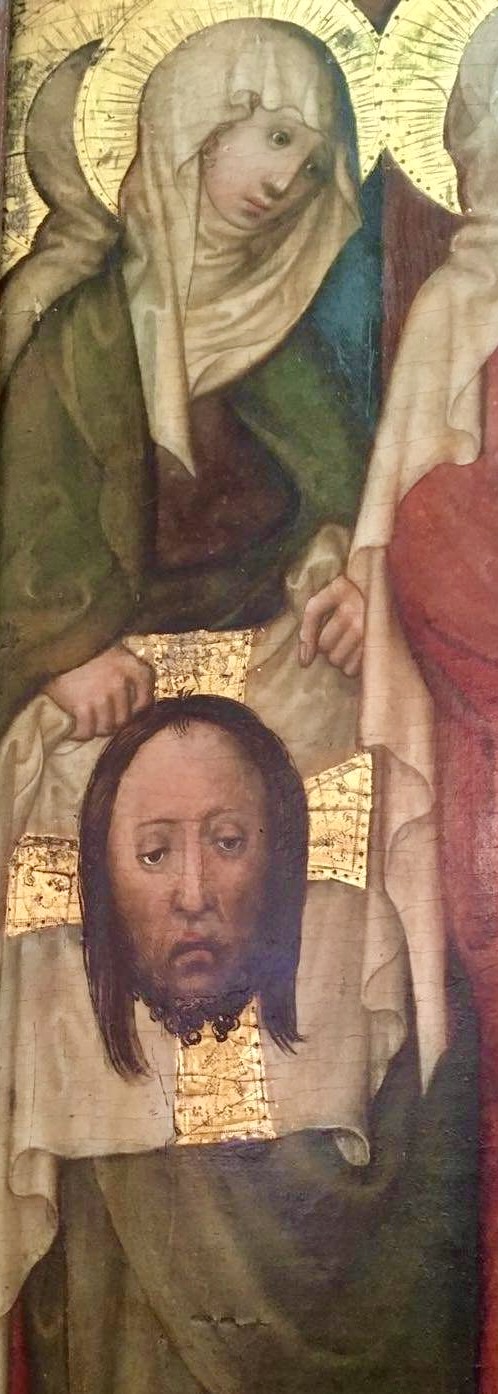
1485, Maestro viennese, Santa Veronica
Baegart
Maestro di Santa Veronica, 1420

God’s Patience, Forgiveness, and Mercy

God’s patience, forgiveness, and infinite mercy toward sinful mankind are incomprehensible, and yet may be seen in a small way in the images of Jesus’s Holy Face in His Passion.

This Holy Week, if possible, make the sacrifice of a little time spent in contemplating His Holy Face, and you will be richly rewarded by God; who desires to bestow many graces upon those who contemplate the suffering Face of Jesus. If we only ask, He will restore the image of His Son in our souls!

“Holy Face of Jesus, Sacred Countenance of God, how great is your patience with humankind, how infinite is your forgiveness. We are sinners, yet you love us. This gives us courage. For the glory of your Holy Face and of the Blessed Trinity, hear and answer our prayers.”

~ Excerpt from the Novena of the Holy Face

“He was despised and rejected by mankind, a man of suffering, and familiar with pain. Like one from whom people hide their faces he was despised, and we held him in low esteem.” (Isaiah 53:3)

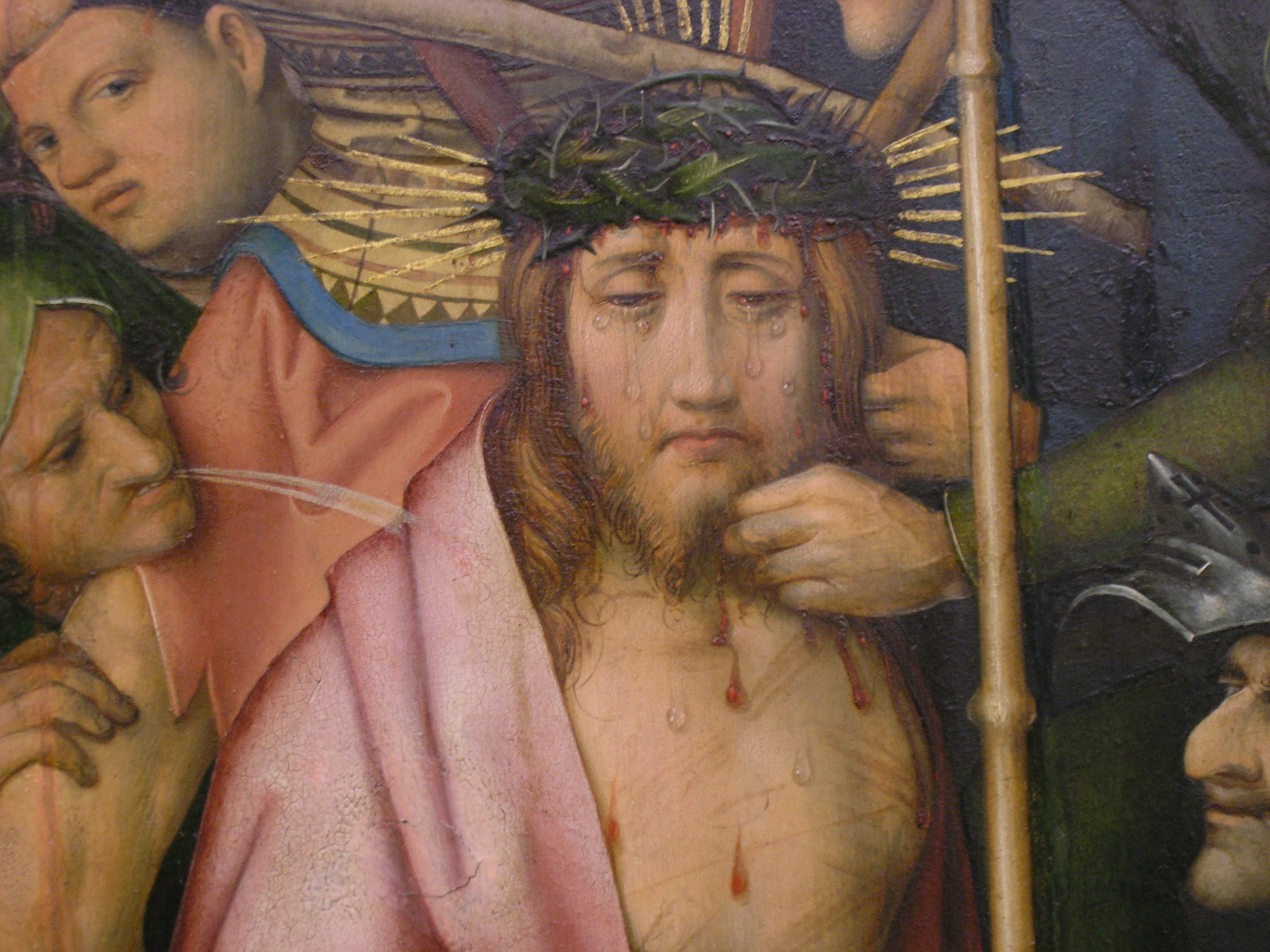
Hans Holbein der Altere. Munich, Germany

“I salute you! I adore you and I love you, Oh adorable face of my beloved Jesus, as the noble stamp of the Divinity! Completely surrendering my soul to you, I most humble beg you to stamp this seal upon us all, so the image of God may once more be reproduced by its imprint in our souls. Amen.”

Prayer of Sr. Marie St. Pierre

The Resurrection – “The Cloth That Covered His Head”

Re-posting this from April 2020: “The Cloth That Covered His Head” About three of several burial cloths of Christ: the Shroud of Turin, the Cloth of Oviedo, and the precious byssus veil that was believed to cover the Face of Christ in the tomb – known as “Il Volto Santo” – The Holy Face of Manoppello. Possibly the very reason that St. John “Saw and believed.”

Holy Veil of Manoppello said to be the image of the Resurrected Christ
Photo: Paul Badde/EWTN

The Disciples Peter and John Running to the Sepulchre on the Morning of the Resurrection, Eugene Burnand, 1898

So Peter and the other disciple went out and came to the tomb.
They both ran, but the other disciple ran faster than Peter
and arrived at the tomb first;
he bent down and saw the burial cloths there, but did not go in.
When Simon Peter arrived after him,
he went into the tomb and saw the burial cloths there,
and the cloth that had covered his head,
not with the burial cloths but rolled up in a separate place.
Then the other disciple also went in,
the one who had arrived at the tomb first,
and he saw and believed.
For they did not yet understand the Scripture
that he had to rise from the dead.  (John 20: 1-9)

At the time of Jesus, the Jewish law required several “cloths” to be used for burial, and as many as six for someone who had died a violent death. Christian tradition has preserved six cloths as relics that are associated with the burial of Jesus – 1.) The Shroud of Turin, 2.) the Sudarium of Oviedo in Spain, 3.) The Sudarium Veil of Manoppello, 4.) The Sudarium of Kornelimunster in Germany, 5.) The SindonMunda of Aachen, Germany, 6.) The Cap of Cahors in France.

Three  of the cloths in particular stand out as extraordinary “witnesses” to the Passion, Death, and Resurrection of Jesus, and together they bear a powerful testimony to the truth of the Gospels. Each one bearing an imprint or image of the Face of Jesus. They are: The Sudarium of Oviedo, The Shroud of Turin, and the Sudarium Veil of Manoppello. The remarkable relationship between these three “cloths” leave little doubt that each came in contact with the face of the same man at the time of burial.

Sudarium of Oviedo

 The Sudarium of Oviedo directly touched Jesus’s head following His Crucifixion. Blood was considered sacred to the Jews, so this cloth was used to soak up the Precious Blood of Jesus, by wrapping it around Jesus’s Head, as He was taken down from the Cross. The largest bloodstains are from the nose, other stains are from the eyes and other parts of the face.  There is also an imprint on the sudarium of the hand of the person who held this cloth to Jesus’s Face to staunch the flow of blood. It takes one’s breath away to see that the bloodstains on the Sudarium of Oviedo, when overlaid with the Face on the Shroud of Turin and the Sudarium Veil of Manoppello, correspond perfectly. The blood type is AB, the same as on the Shroud of Turin.

Face on the Shroud of Turin by photographer Secondo Pia, 1898

“He went into the tomb and saw the burial cloths there”

The Shroud of Turin; the sindone, or linen burial shroud, was believed to have been used to wrap the entire body of Christ. It is the most famous and studied of the three cloths. The faint but visible imprint on the Shroud of Turin gives witness to the violent torture of a man as described in the Passion and Death of Jesus in the Scripture. The world was amazed when Secondo Pia first photographed the Face on the Shroud in 1898; the negative of the photo incredibly became visible as a positive image. The Shroud of Turin caused an entire branch of science to be dedicated to its research called Sindonology. 

The Sudarium Veil of the Face of Christ, Photo: Patricia Enk

 The Sudarium Veil of Manoppello, Italy, is perhaps the least known of the three burial “cloths.” The Veil bears the image of the living Face of Jesus. This “miracle of light,” “not made by human hands,” was protected and hidden in an isolated church in the Abbruzzi Mountains for centuries. It is believed to be the “cloth” that covered the Face of Jesus in death, showing traces of the Passion: Bruises, swelling, wounds from the Crown of Thorns, and plucked beard.  But, it is also believed to have recorded in light the Face of Jesus at the moment of His Resurrection. No, this is not a contradiction. Yes, the image changes. It shows suffering, but it also shows life!

“The cloth that had covered his head”

Funeral of Pope St. John Paul II, Archbishop Dziwisz covers the pope’s face with a veil.

An explanation about the tradition of a face cloth for burial may be helpful in understanding its profound significance:  In the funeral rites for priests in some Eastern churches, the veil which was used to cover the chalice and paten were placed on the face of the deceased priest. (The cloth used to cover the chalice and paten had a particular liturgical symbolism linked to the Face of Christ as well.) It was done as a symbol of both the strength and protection of God, and also of the tomb of Christ–an expression of belief in the Resurrection. In Jewish burial custom, a deceased priest’s face would be anointed with oil and then covered with a white cloth, and would have been done for Jesus.

When Pope St. John Paul II was being laid in his coffin, Archbishops Marini and Stanley Dziwisz had the honor of placing a white silk veil over the face of the pope. Poignantly, the choir sang the words from Psalm 42, “My soul thirsts for God, the living God; when will I come and see the Face of the Lord?” Many wondered about the action of covering the pope’s face with a veil because this was the first time it had been done, but was at the request of Pope John Paul II, who had dedicated the millennium to the Face of Christ.

Byssus “Pinna Nobilis” fit for a King! Photo: Paul Badde/EWTN

The cloth that would cover the Face of Christ would have to be made of a material fit for a King, a High Priest, and a God. Byssus, mentioned in the Bible forty times, also known as “sea-silk,” is more rare and precious than gold and it has an exceedingly fine texture which can be woven. Made from the long tough silky filaments of Pinna Nobilis mollusks that anchor them to the seabed, it is strong enough to resist the extreme hydrodynamic forces of the sea. Byssus has a shimmering, iridescent quality which reflects light. It is extremely delicate, yet strong at the same time. It resists water, weak acids, bases, ethers, and alcohols. Byssus cannot be painted, as it does not retain pigments, it can only be dyed; and then, only purple.  It can also last for more than 2000 years.

Kurt Cardinal Koch contemplates the Veil “not made by human hands” of Manoppello. Sheer and delicate, yet the Face is visible. Photo: Paul Badde/EWTN

The Sudarium Veil of Manoppello is also made of rare, precious, byssus silk.  The skill needed to weave a byssus veil as fine as the Veil of the Holy Face of Manoppello is exceedingly great.  Chiara Vigo, known as “the last woman who weaves byssus,” has said that neither she nor anyone alive today could duplicate the gossamer-thin veil, which is sheer enough to read a newspaper through.  The weave is so delicate, she says, that only the nimble fingers of a very skillful child could weave something so fine.

Miraculous Holy Face Veil Photo: Paul Badde (see “Manoppello Image” tab)

It is only through light that this shimmering image of the Face of Jesus may be seen, and at times appears as a “living image” as though it were reflected in a mirror, at other times the image completely disappears.  Although no camera can adequately capture the image, thanks to the many amazing photos of journalist Paul Badde, the changes that occur when viewing the veil may be better appreciated.  (Click here for more photos, and information about Paul Badde’s books and videos about the Holy Face.)

Servant of God Padre Domenico da Cese (1915-1978) before the Veil of Manoppello

While the Face on the Shroud of Turin clearly shows the Face of Jesus in death with eyes closed, the Sudariam of Manoppello has eyes open–bearing witness to the Resurrection. That was the ardent belief of the former Rector of the Basilica Shrine of the Holy Face, Servant of God Padre Domenico da Cese.  

There are many physiological reasons too for believing that the Face Cloth captures the first breath of the Resurrection. Sr. Blandina Paschalis Schlomer, who shares that belief, has provided meticulous research about the Veil in her book JESUS CHRIST, The Lamb and the Beautiful Shepherd, The Encounter with the Veil of Manoppello.  Sr. Blandina together with Fr. Fr. Heinrich Pfeiffer, S.J., Professor at the Pontifical Gregorian University in Rome, have each demonstrated that the Holy Face on the Veil of Manoppello is the proto-image of the earliest icons, and other works of art depicting the Face of Jesus.

As the first rays of light entered the tomb, John and Peter, upon entering, “saw and believed.”               Sudarium Veil of Manoppello, Photo: Paul Badde/EWTN

“…and he saw and believed. For they did not yet understand the Scripture that he had to rise from the dead.”  

Pope Benedict XVI, who came as a pilgrim to Manoppello on September 1, 2006, Fr. Heinrich Pfeiffer, S.J., Paul Badde, and Sr. Blandina Schlomer

What did St. John see in the tomb that would cause him to believe? A cloth of blood, such as the Oviedo? The Shroud of Turin? It is a miraculous image, but shows the Face of a dead man. A third witness was needed in order for the disciple to believe. It could only have been evidence of something as astounding as the Resurrection; proof that Jesus was alive!

It is human nature to want to see things for ourselves. Many pilgrims, humble and great, have felt called to make the journey to visit the miraculous relic. If it is God’s handiwork, and I believe that is true, then one can only wonder at its existence, and gaze in silent contemplation, giving thanks for this tremendous gift of God… so we too may “see and believe.”

“We cannot stop at the image of the Crucified One; He is the Risen One!” –Pope St. John Paul II
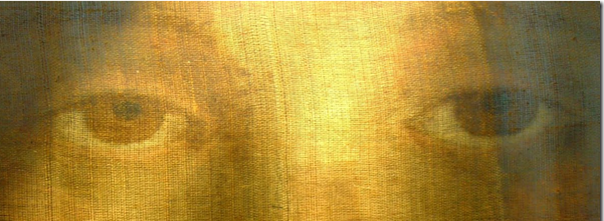
Holy Face of Jesus of Manoppello (photo: Paul Badde/EWTN)

“”While we too seek other signs, other wonders, we do not realize that He is the real sign, God made flesh; He is the greatest miracle of the universe:  all the love of God hidden in a human heart, in a human face.”  ~ Pope Emeritus Benedict XVI

Pope Benedict XVI gazes at the Veil of the Holy Face in Manoppello, Photo:Paul Badde/EWTN

“Show us, O Lord, we pray you, Your Face ever new; that mirror, mystery-laden, of God’s infinite mercy. Grant that we may contemplate it with the eyes of our mind and our hearts: the Son’s Face, radiance of the Father’s glory and the imprint of His Nature (cf. Hb 1:3), the human Face of God that has burst into history to reveal the horizons of eternity. The silent Face of Jesus, suffering and risen, when loved and accepted, changes our hearts and lives. “Your Face, Lord, do I seek, do not hide Your Face from me.” (Ps. 27:8ff) How many times through the centuries and millennia has resounded the ardent invocation of the Psalmist among the faithful! Lord, with faith, we too repeat the same invocation: “Man of suffering, as one from whom other hide their faces.” (Is. 53:3) Do not hide your Face from us!”  (Portion of a prayer in honor of the Holy Face of Manoppello by Pope Benedict XVI)

Happy Easter!

Jesus Christ has truly risen indeed! Alleluia! Alleluia! Alleluia!

The byssus Veil of Manoppello, which is thought to be one of the burial cloths of Jesus, photo: Paul Badde/EWTN

Prayer to the Holy Face for the liberation from the coronavirus

 
Lord Jesus, Savior of the world, hope that will never disappoint us, have mercy on us and deliver us from all evil! Please overcome the scourge of this virus which is spreading, heal the sick, preserve the healthy, support those who work for the health of all. Show us your face of mercy and save us in your great love. We ask you through the intercession of Mary, Your Mother and ours, who faithfully accompanies us. You who live and reign forever and ever. Amen.

+ Bruno Forte
Archbishop of Chieti – Vasto (Italy)
+++
 

To learn more about the history of the Holy Face of Manoppello, click here to read “Four Stories, One Face.”

Or watch this wonderful video below, “The Human Face of God.”

And a recent Vaticano episode:

“The Greatest Relic of the Church”

Update: EWTN Bookmark Interview with Paul Badde by Doug Keck may now be viewed (scroll down for Youtube video)

Holy Veil of Manoppello
Photo: Paul Badde/EWTN

What if you had discovered something that was beyond incredible–something that was, in fact, supernatural–drawing you more deeply in love with Jesus Christ? Would you be willing to suffer skepticism, mockery, and even hostility from others in order to share this treasure of love and mercy with the world?  Well, something like that does exist: It is called the Veil of Manoppello, and Satan is enraged, because this fragile veil is turning souls toward the Face of God.

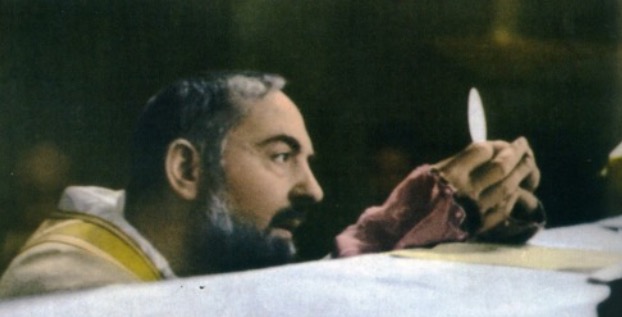
St. Padre Pio

St. Padre Pio called the Veil of Manoppello “the greatest relic of the Church.”  Shrouded in mystery for centuries, the story of what was known as “the Veronica” or the “true icon” has recently come to light, in part due to the unshakeable conviction of the author, Paul Badde, who has had the courage to tell what he knew to be true; for proclaiming that the Veil of Manoppello is one of the burial cloths of Christ — as did the Servant of God, Padre Domenico da Cese, former Rector of the Shrine of the Holy Face. So, why do so few people know about this “greatest” of relics?

The Veil of the Holy Face of Manoppello “the Living Face”
Photo: Paul Badde/EWTN

During Holy Week we will have an opportunity to learn more about the Holy Veil, and are invited to share this precious gift with others — EWTN  will air The Human Face of God in the Holy Veil of Manoppello.  And beginning on Easter Sunday, EWTN Bookmark with Doug Keck will interview Paul Badde about his recent book, The Holy Veil of Manoppello. (Details on days and times are listed below.) Though skeptics abound, those who have actually made the pilgrimage to see it with their own eyes have this to say about the miraculous relic of a veil displayed for all the world to “come and see” in the Sanctuary Basilica of Manoppello:

Archbishop Ganswain holding the replica of the Holy Veil of Manoppello at Spirito Santo Church in Rome. 2016

“The Face of Christ is the first, the noblest, and the most precious treasure of the whole of Christendom — more, of the whole earth.” –Archbishop Ganswein, prefect of the Pontifical Household


“Here in Manoppello we meet the face of God face to face, and when we look at Him, His gaze cleanses and heals us, God be blessed.” –Robert Cardinal Sarah

Robert Cardinal Sarah at the Sanctuary Basilica of the Holy Face(photo: Paul Badde/EWTN)


Joachim Cardinal Meisner with Veil of the Holy Face of Manoppello (Photo: Paul Badde/EWTN)

“The Face is the monstrance of the heart. In the Holy Face the heart of God becomes visible.”

–Joachim Cardinal Meisner, Archbishop of Cologne

L-R: Archbishop Bruno Forte,  Gerhard Cardinal Müller holding the Veil of the Holy Face, and Archbishop Salvatore Cordileone, Photo: Paul Badde/EWTN

My visit to the Volto Santo of Manoppello was moving and profound.  It took a very cherished idea and made it personal and real.  I will always treasure the half-hour I had to pray privately before the holy image.  It is alive; even the expression changes from different angles and with different lighting.  It is like looking at a real human face, looking into the face of Jesus.  The eyes, especially, are very alive and penetrating.  My love for Jesus Christ has become much more personal now.” — Archbishop Salvatore Cordileone

Gerhard Cardinal Müller Photo: Paul Badde/EWTN

Much remains hidden from the wise and prudent, that God however does reveal to lesser minds in the humility of Faith. Gazing into the most holy face of Jesus, as it was traced into the sudarium on his head, should give us new strength that our life may hold true in the eyes of God. For we believe and know that we will one day see God through and in Christ, the image of God, “face to face” (1 Corinthians 13:12) –Gerhard Cardinal Müller

Cardinal Tagle delivers homily at the Basilica Sanctuary of the Holy Face (Photo: Paul Badde/EWTN)

“A Face of Truth and Love.” –Luis Antonio Cardinal Tagle

“I saw the Holy Face under the changing of the light, not only a Face of tenderness, but of welcoming.  I saw a Face smiling at me, almost saying, “Welcome Luis Antonio!”  It is a Face that speaks, it is alive, yes, it is the message, the Word is the Face,  It is also a Face turned towards me, but I did not feel fear, fear in front of a judge, or of a face which condemns.  A Face of Truth, and the Truth is love, love wins out over fear.”  


Archbishop Edmond Y. Farhat giving blessing with Holy Face. Photo: Paul Badde/EWTN

“It is not an object of another time; it is the icon of the eternal Face, the Face of goodness and of friendship, of mercy and of peace. The Face that speaks, that examines, that asks, that awaits a response. It seems to say: ‘Look at me, you who are tired. Come to me and I will give you rest.’…We fix our gaze on the Holy Face and we will be transformed by God’s mercy. The sign is not an end in itself; the sign is a pointer on the way of the return, the return to the Father.”  –Archbishop Edmond Y. Farhat


Pope Benedict XVI with Paul Badde on the occasion of the Pope’s pilgrimage to see The Holy Veil in 2006.

The Holy Face of Manoppello and Paul Badde(CNS photo/Paul Haring)

The Human Face of God in the Holy Veil of Manoppello will air on EWTN:

Monday, April 15 at 8:00 am ET

Good Friday, April 19 at 2:00 am ET

Holy Saturday, April 20 at 10:30 am ET


I only wish this fascinating interview were longer!  “It is much more easy to believe that God is dead than the living God and Resurrected Christ.” Paul’s comment hits the nail on the head about the current crisis of faith, and the deep significance of the meaning of the reappearance of this holy relic of the Face of Christ in Manoppello.

EWTN Bookmark with Doug Keck – Interview with author Paul Badde  on his book The Holy Veil of Manoppello will air:

Easter Sunday, April 21 at 9:30 am ET

re-airing on Easter Monday, April 22 at 5:00 am and 5:00 pm ET, and the following Saturday, April 27 at 1:30 pm.  It will also be broadcast on EWTN Radio (See local times)

Pope Benedict XVI gazes at the Veil of the Holy Face in Manoppello, Photo:Paul Badde/EWTN

Wishing you all a very blessed Holy Week and Easter!


Your Veiled Gaze is Our Heaven

“Look at His adorable Face, His glazed and sunken eyes, His wounds. Look Jesus in the Face. There you will see how He loves us.”

–St. Therese of the Holy Face and the Child Jesus

Holy Face of Manoppello
photo: Paul Badde/EWTN

“There was in him no stately bearing to make us look at him,
nor appearance that would attract us to him.
He was spurned and avoided by people,
a man of suffering, accustomed to infirmity,
one of those from whom people hide their faces,
spurned, and we held him in no esteem.

Yet it was our infirmities that he bore,
our sufferings that he endured,
while we thought of him as stricken,
as one smitten by God and afflicted.
But he was pierced for our offenses,
crushed for our sins;
upon him was the chastisement that makes us whole,
by his stripes we were healed.” – Isaiah 53:2-5

Holy Face Veil of Manoppello, Italy (Photo: Paul Badde/EWTN)

“O Adorable Face of Jesus! Our souls understand Your language of love; we want to dry Your gentle Face and to console You for the forgetfulness of the wicked. In their eyes You are still as one hidden; they look upon You as an object of contempt…

Face more beautiful than the lilies and roses of springtime! You are not hidden from our eyes…The Tears that veil Your divine look seem to us like precious Diamonds which we want to collect to buy the souls of our brothers and sisters with their infinite value.

Veil of Manopello, Photo: Paul Badde/EWTN

From Your Adorable Mouth we have heard Your loving complaint. Since we know that the thirst which consumes You is a thirst for Love, we would wish to have an infinite Love to quench Your thirst…Beloved Bridegroom of our souls, if we had the love of all hearts, all that love would be for You! Then, heedless of our exile on the banks of Babylon, we will sing for your Ears the sweetest melodies. Since You are the true, the only Homeland of our hearts, we will not sing our songs in an alien land.

Eyes of Manoppello, photo: Paul Badde/EWTN

The Veil of the Holy Face of Manoppello
Photo: Paul Badde/EWTN

O Beloved Face of Jesus! As we await the everlasting day when we will contemplate Your infinite Glory, our one desire is to charm Your Divine Eyes by hiding our faces too so that here on earth no one can recognize us…O Jesus! Your Veiled Gaze is our Heaven!” –St. Therese of the Holy Face and the Child Jesus


“Your Veiled Gaze is our Heaven!” (Host & Chalice viewed through miraculous Manoppello Veil, Photo: Paul Badde/ EWTN

Miraculous Veil of the”Holy Face of Manoppello” in Italy Photo:Paul Badde/EWTN

UPDATE: EWTN will be airing THE HUMAN FACE OF GOD IN THE HOLY VEIL OF MANOPPELLO 03/28 at 4:30 pm Central time,

 03/29 at 5:30 am Central Time, Paul Badde goes on-location in Italy to explore the Veil of Manoppello and its relation to other images of the Holy Face of Christ.

Duration: 00:30.  

The Face of Humility


Hans Holbein der Altere

The Lord opens my ear that I may hear; And I have not rebelled, have not turned back.  I gave my back to those who beat me, my cheeks to those who plucked my beard:  My Face I did not shield from buffets and spitting, The Lord God is my help, therefore I am not disgraced; I have set my face like flint, knowing that I shall not be put to shame. (Isaiah 50: 4b-7)


What does it means to be a Christian?

“A Message to Those Who Kill Us” – Father Boules George gives a sermon during the Eve of Monday Pascha following the two bombings on Palm Sunday that took place at Saint George Coptic Orthodox Church in Tanta and Saint Mark Coptic Orthodox Cathedral in Alexandria.