“So may sins of impurity are committed in this city, but true souls of reparation are few, do thou at least console and comfort me.”–words of Our Lord to Bl. Mother Pierina de Micheli, “Missionary of the Holy Face”
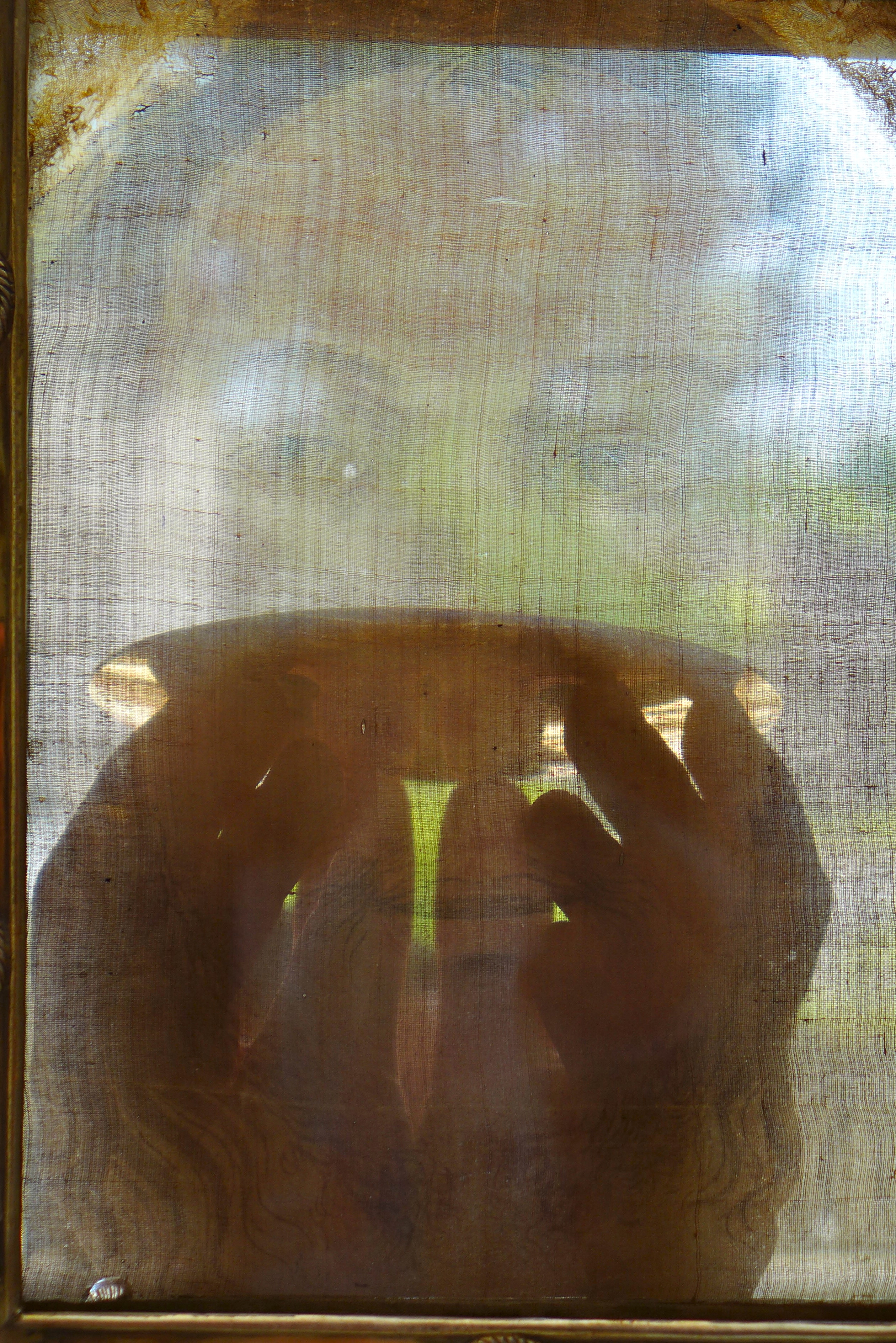
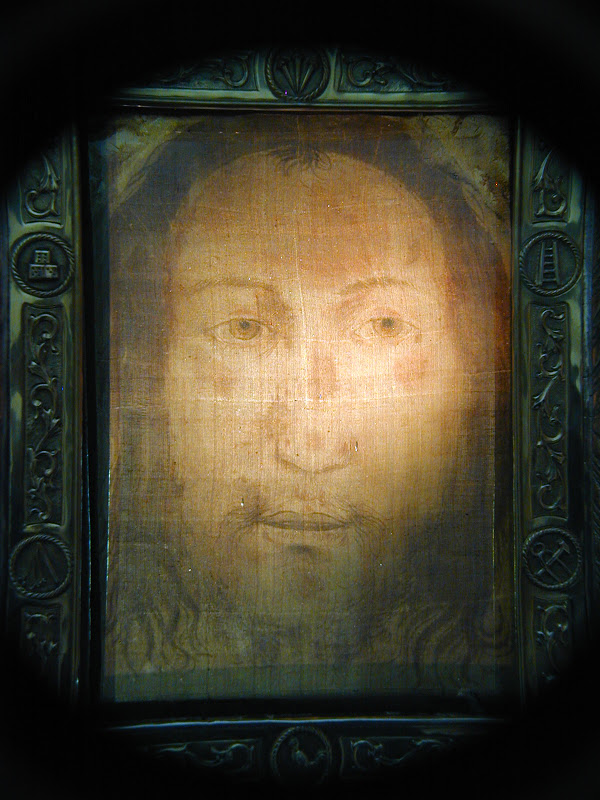
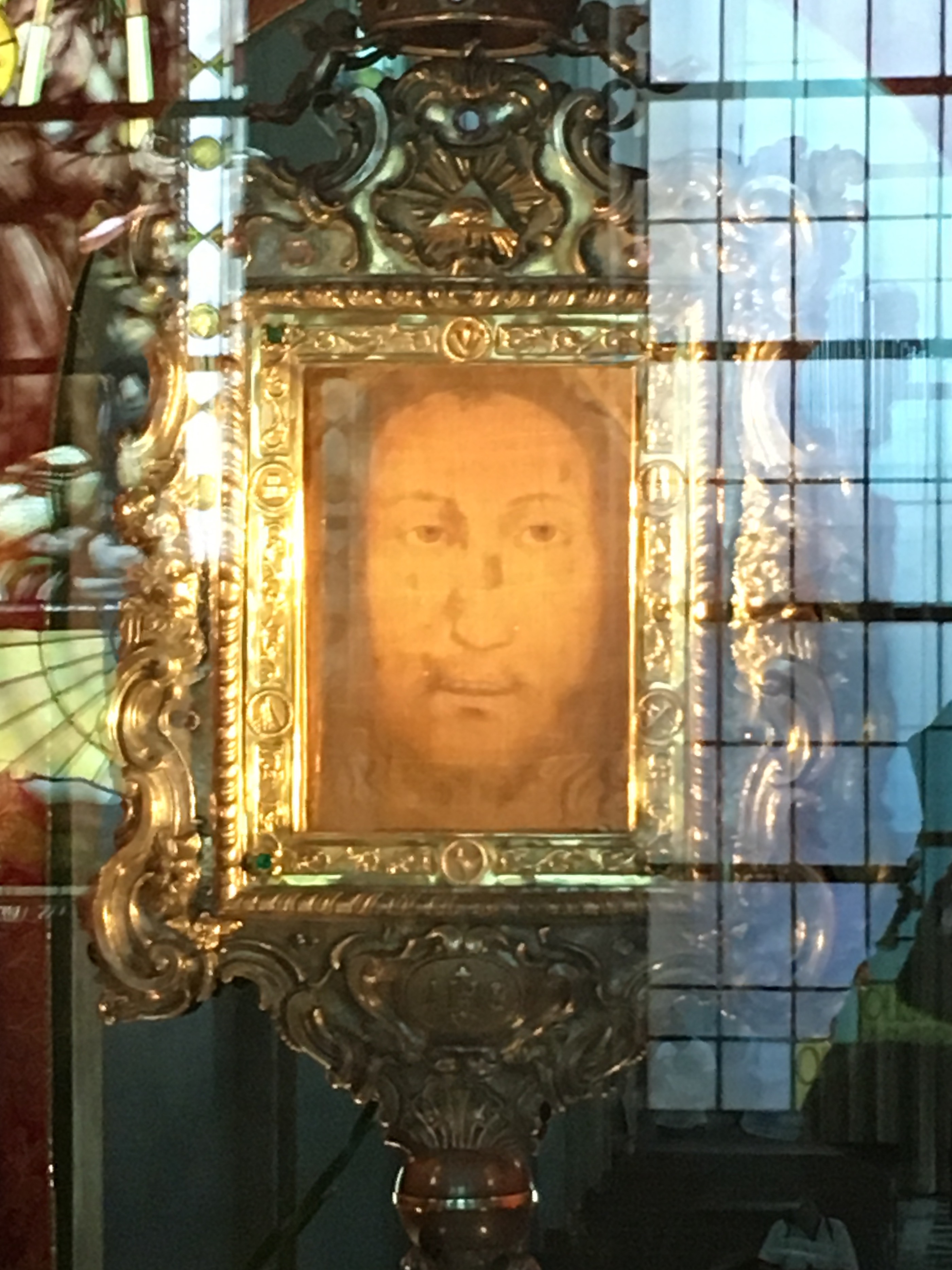
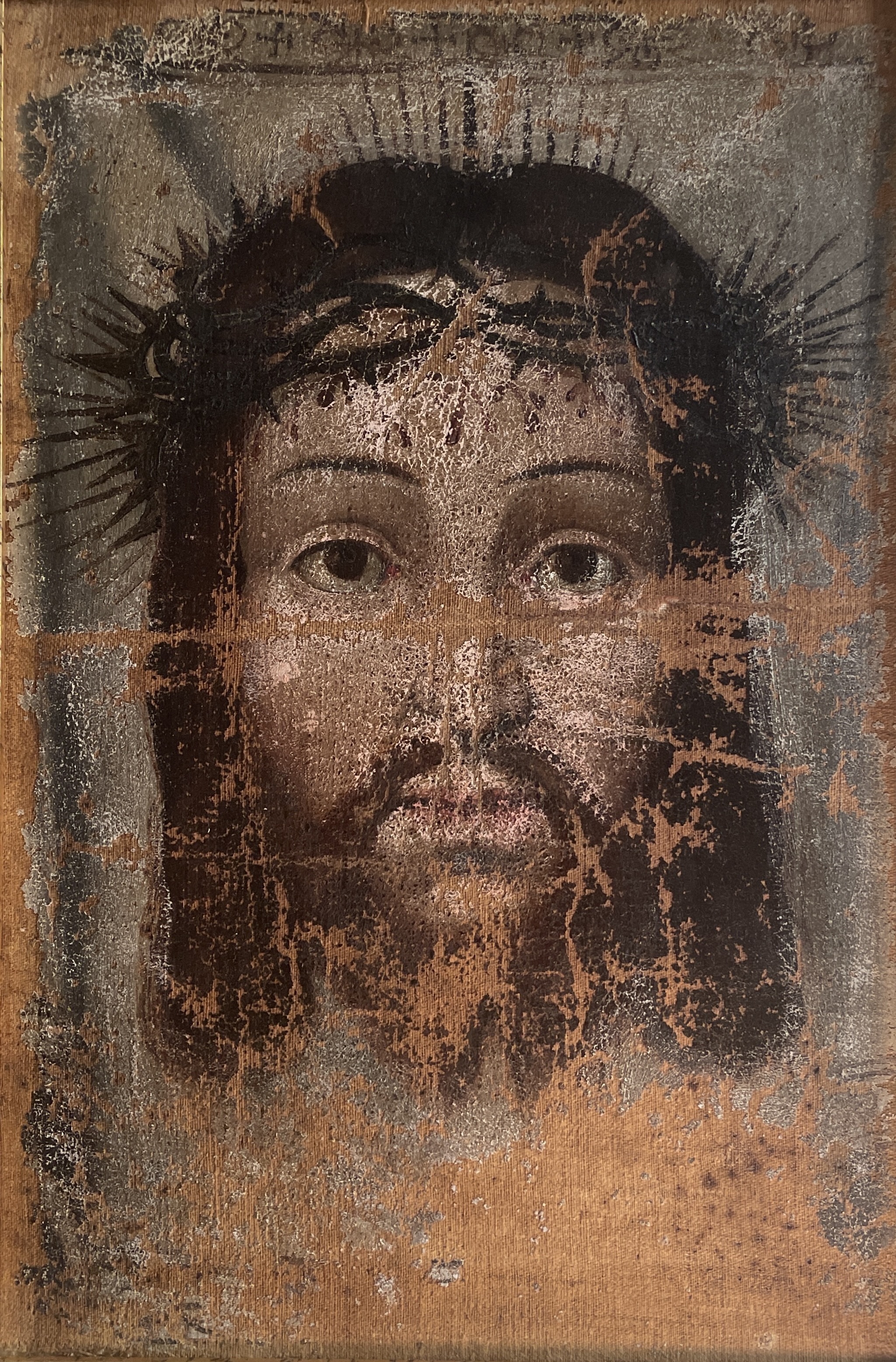
The Divine Prisoner, Holy Face of Manoppello photo: Patricia Enk
“O Holy Face of Christ, light that enlightens the darkness of doubt and sadness, life that has defeated forever the force of evil and death, O inscrutable gaze that never ceases to watch over mankind; Face concealed in the Eucharistic signs and in the faces of those that live with us! Make us pilgrims in his world, longing for the infinite and ready for the final encounter, when we shall see you, Lord, “face to face” (Cor. 13-12) and be able to contemplate you forever in Heavenly Glory.” — Pope Benedict XVI (Excerpt from his prayer in honor of his visit to the Basilica Shrine of the Holy Face of Manoppello.)
Daily Preparatory Prayer
O Most Holy and Blessed Trinity, through the intercession of Holy Mary, whose soul was pierced through by a sword of sorrow at the sight of the passion of her Divine Son, we ask your help in making a perfect Novena of reparation with Jesus, united with His sorrows, love and total abandonment.
We now implore all the Angels and Saints to intercede for us as we pray this Holy Novena to the Most Holy Face of Jesus and for the glory of the most Holy Trinity, Father, Son and Holy Spirit. Amen.
Make me hear rejoicing and gladness, that the bones you have crushed may revive. From my sins turn away your Face, and blot out all my guilt.
Holy Face of Jesus, Sacred Countenance of God, how great is your patience with humankind, how infinite your forgiveness. We are sinners, yet you love us. This gives us courage For the glory of your Holy Face and of the Blessed Trinity, hear and answer us. Mary our Mother, intercede for us, St. Joseph, pray for us.
Through the merits of your precious blood and your Holy Face, O Jesus, grant us our petition, …Pardon and mercy.
Prayer to St. Joseph
“Blessed are the pure of heart; for they shall see God” (Mt. 5:8)
St. Joseph
Dear St. Joseph! Adopt us as thy children, take charge of our salvation; watch over us day and night; preserve us from occasions of sin; obtain for us purity of body and soul, and the spirit of prayer, through thy intercession with Jesus, grant us a spirit of sacrifice, of humility and self-denial; obtain for us a burning love for Jesus in the Blessed Sacrament, and a sweet, tender love for Mary, our Mother. St. Joseph, be with us in life, be with us in death and obtain for us a favorable judgement from Jesus, our merciful Savior. Amen.
Pray one (1) Our Father, three (3) Hail Mary’s, one (1) Glory Be.
O Bleeding Face, O Face Divine, be every adoration Thine. (3 times)
[The prayer to St. Joseph in this novena reminds us of the love of God the Father. He looks upon us with infinite pity, mercy and love through the Face of His Son, Jesus Christ. The Holy Face of Jesus shows us the eternal, tender love that God the Father has for us.]
“Love is tireless, it feeds on silence and humility and is heart to heart with our Beloved, deriving from His Heart the powerful force which makes love tireless to do much, to do well the tiniest everyday things to please Him alone. How many pearls we can collect each day to make Jesus forget the insults He receives each day? How many kisses–it will be a smile–a word held back–an act of charity–docile obedience–temptation promptly resisted–and in moments in which nature, pride, self-love, sensuality, desire to hold sway–a glance at the Holy FACE–that blood, those Divine Eyes veiled with grief and love and we will say nothing?” –Blessed Mother Maria Pierina de Micheli, Missionary of the Holy Face
Day 4:
Alpha-Omega Holy Face of Jesus Novena Prayer
Veil of Veronica C. 1618-22 National Gallery
Daily Preparatory Prayer
O Most Holy and Blessed Trinity, through the intercession of Holy Mary, whose soul was pierced through by a sword of sorrow at the sight of the passion of her Divine Son, we ask your help in making a perfect Novena of reparation with Jesus, united with His sorrows, love and total abandonment.
We now implore all the Angels and Saints to intercede for us as we pray this Holy Novena to the Most Holy Face of Jesus and for the glory of the most Holy Trinity, Father, Son and Holy Spirit. Amen.
Fourth Day
Psalm 51: 8-9
Indeed you love truth in the heart; then in the secret of my heart teach me Wisdom. O purify me, then I shall be clean; O wash me, I shall be whiter than snow.
O Lord Jesus, who has said, learn of me for I am meek and gentle of heart, and who did manifest upon The Holy Face the sentiments of Thy divine heart, grant that we may love to come frequently and meditate upon Thy divine features. We may read there Thy gentleness and Thy humility, and learn how to form our hearts in the practice of these two virtues which Thou desires to see shine in Thy servants. Mary our Mother and St. Joseph, pray for us.
Through the merits of your precious blood and your Holy Face, O Jesus, grant us our petition, …Pardon and mercy.
Sorrowful Mother
“O Holy Face of my sweet Jesus, by the tenderness of the love and most deep sorrow with which Mary most holy contemplated You in Your Passion, grant to our souls to share in her love and grief and fulfill Your Most Holy Will as perfectly as possible. Amen. “
–Bl. Mother Maria Pierina de Micheli, “Missionary of the Holy Face”
Prayer in Honor of the Sorrows of The Blessed Virgin
O Most Holy and afflicted Virgin, Queen of Martyrs! Who stood beneath the Cross, witnessing the agony of your dying Son, look down with a mother’s tenderness and pity on us as we kneel before you to venerate your Sorrows and place our requests, with filial confidence, in the sanctuary of your wounded heart. Present them on our behalf to Jesus, through the merits of His most sacred Passion and Death, together with your sufferings at the foot of the Cross, and through the united efficacy of both, obtain the favor which we humbly ask. To whom shall we go in our wants and miseries if not to you. O Mother of Mercy, who having so deeply drunk of the chalice of your Son, graciously alleviate the sufferings of those who still sigh in this land of exile. Amen.
Prayer to the Souls in Purgatory
My Jesus, by the sorrows you suffered in your agony in the garden, in your scourging and crowning with thorns, in the way to Calvary, in your crucifixion and death, have mercy on the souls in Purgatory, and specially on those that are most forsaken. Deliver them from the dire torments they endure. Call them and admit them to your most sweet embrace in Paradise. Amen.
Pray one (1) Our Father, three (3) Hail Mary’s, one (1) Glory Be.
O Bleeding Face, O Face Divine, be every adoration Thine. (3 times)
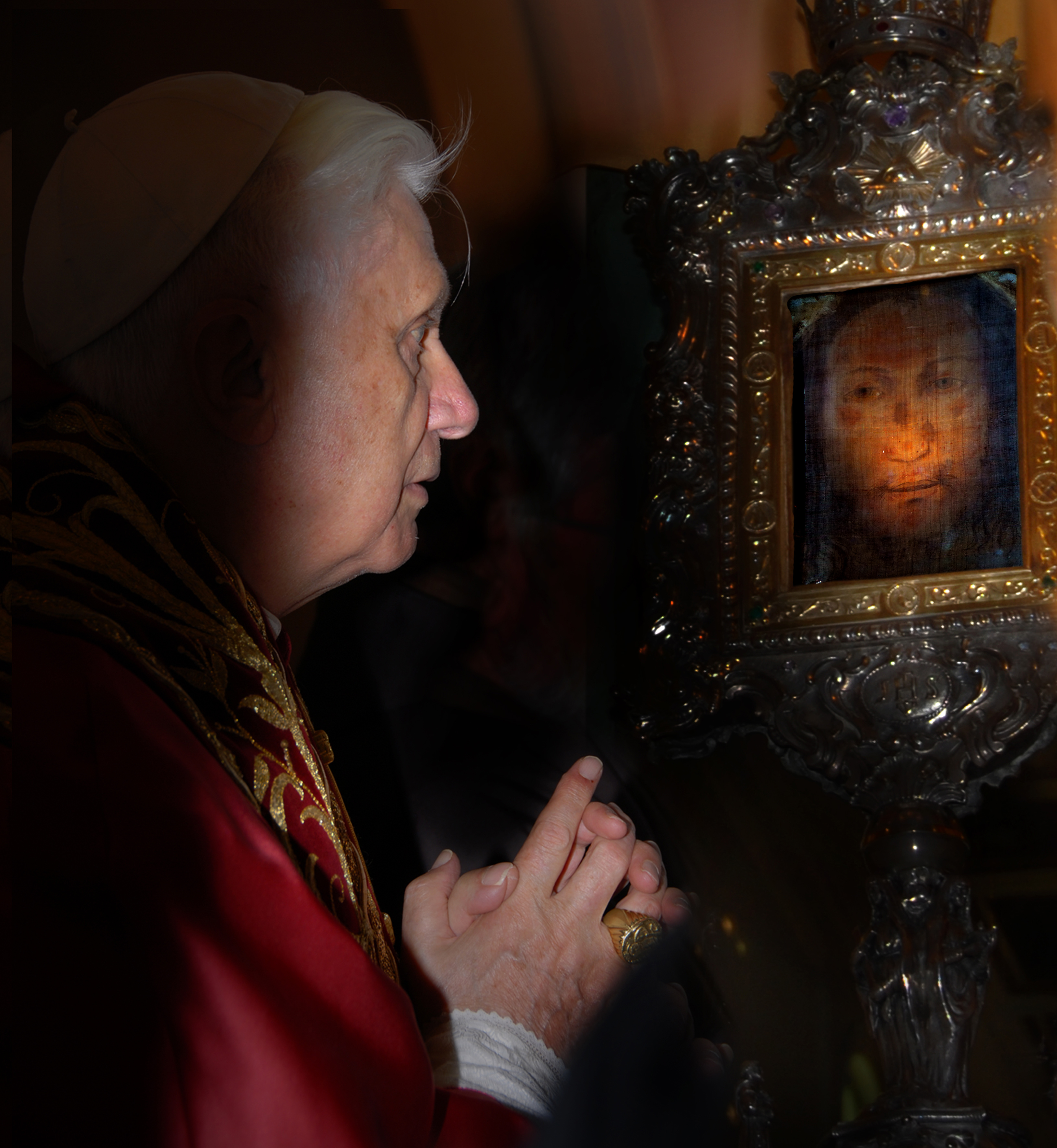
Pope Benedict XVI gazes at the Veil of the Holy Face of Manoppello. Photo: Paul Badde
“While we too seek other signs, other wonders, we do not realize that He is the real sign, God made flesh; He is the greatest miracle of the universe: all the love of God hidden in a human heart, in a human face.” — Pope Benedict XVI
“Oh Jesus, who in Thy Cruel Passion didst become the “Reproach of men and the Man of Sorrows,” I worship Thy Divine Face.” –St. Therese
Daily Preparatory Prayer
“Every time that anyone gazes at my Face, I will pour my love into hearts and by means of the Holy Face, the salvation of many souls will be obtained.” –Our Lord to Bl. Mother Pierina de Micheli, “Missionary of the Holy Face”
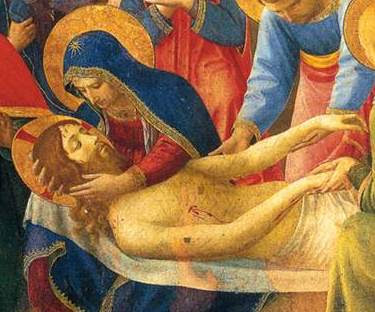
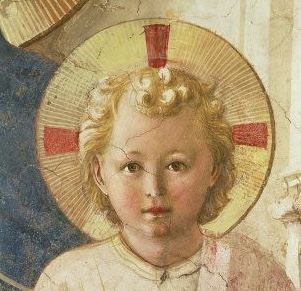
Face of Christ: Fra Angelico, c. 1427
Daily Preparatory Prayer:
O Most Holy and Blessed Trinity, through the intercession of Holy Mary, whose soul was pierced through by a sword of sorrow at the sight of the passion of her Divine Son, we ask your help in making a perfect Novena of reparation with Jesus, united with His sorrows, love and total abandonment.
We now implore all the Angels and Saints to intercede for us as we pray this Holy Novena to the Most Holy Face of Jesus and for the glory of the most Holy Trinity, Father, Son and Holy Spirit. Amen.
Third Day – Holy Face Novena
Psalm 51: 6-7
You are just when you pass sentence on me, blameless when you give judgement. You know I was born guilty, a sinner from the moment of conception.
Bl. Pope Pius IX “Reparation is a work destined to save society”
Prayer of Pope Pius IX
O Jesus! Cast upon us a look of mercy; turn your Face towards each of us as you did to Veronica; not that we may see it with our bodily eyes; for this we do not deserve, but turn it towards our hearts, so that, remembering you, we may ever draw from this fountain of strength the vigor necessary to sustain the combats of life. Amen. our Mother Mary, and St. Joseph, pray for us.
Through the merits of your precious blood and your Holy Face, O Jesus, grant us our petition, …Pardon and mercy.
Prayer of St. Francis
All highest, glorious God, cast your light into the darkness of our hearts, give us true faith, firm hope, perfect charity and profound humility, so that with wisdom, courage and perception, O Lord, we may do what is truly your holy will. Amen.
To the Angels and Saints
We salute you, through the Holy Face and Sacred Heart of Jesus, all you holy Angels and Saints of God. We rejoice in your glory, and we give thanks to our Lord for all the benefits which He has showered upon you; we praise Him, and glorify Him, and offer you for an increase of your joy and honor, the most Holy Face and gentle Heart of Jesus. Pray that we may become formed according to the heart of God. Amen.
Pray one (1) Our Father, three (3) Hail Mary’s, one (1) Glory Be.
O Bleeding Face, O Face Divine, be every adoration Thine. (3 times)
“Their Face is the Face of Christ” –Pope Francis
“The Face of God is like that of a merciful Father that always has patience and is willing to forgive…All of us have felt joy, sadness, and sorrow in our lives. Have we wept during the darkest moment? Have we that gift of tears that prepare the eyes to look, to see the Lord?” — Pope Francis
“All those who attracted by my love, and venerating my countenance, shall receive, by virtue of my humanity, a brilliant and vivid impression of my divinity. This splendor shall enlighten the depths of their souls, so that in eternal glory the celestial court shall marvel at the marked likeness of their features with my divine countenance.” (Our Lord to St. Gertrude)
Daily Preparatory Prayer (to be said each day as you console the Holy Face) O Most Holy and Blessed Trinity, through the intercession of Holy Mary, whose soul was pierced through by a sword of sorrow at the sight of the passion of her Divine Son, we ask your help in making a perfect Novena of reparation with Jesus, united with His sorrows, love and total abandonment. We now implore all the Angels and Saints to intercede for us as we pray this Holy Novena to the Most Holy Face of Jesus and for the glory of the most Holy Trinity, Father, Son and Holy Spirit. Amen.
Second Day Psalm 51: 5-6 My offenses truly I know them; My sin is always before me. Against you, you alone, have I sinned; What is evil in your sight I have done. Most Holy Face of Jesus, we are truly sorry that we have hurt you so much by constantly doing what is wrong; and for all the good works we have failed to do. Immaculate Heart of Mary, Saint Joseph, intercede for us, help us to console the Most Holy Face of Jesus. Pray that we may share in the tremendous love Thou hast for one another, and for the most Holy and Blessed Trinity. Amen. Through the merits of your precious blood and your Holy Face, O Jesus, grant us our petition, …Pardon and mercy.
Prayer to The Holy Spirit
Come Holy Spirit
Come, Holy Spirit, Sanctifier, all powerful God of love, Thou who didst fill the Virgin Mary with grace, Thou who didst wonderfully transform the hearts of the apostles, Thou who didst endow all Thy martyrs with a miraculous heroism, come and sanctify us, illumine our minds, strengthen our wills, purify our consciences, rectify our judgments, set our hearts on fire and preserve us from the misfortune of resisting Thine inspirations. We consecrate to Thee our understanding, our heart and our will, our whole being for time and for eternity. May our understanding be always submissive to Thy heavenly inspirations and to the teachings of Thy Holy Catholic Church, of which Thou art the infallible guide; may our heart be ever inflamed with love of God and neighbor; may our will be ever conformed to the divine will, and may our whole life be a faithful imitation of the life and virtues of our Lord and Savior, Jesus Christ, to whom with the Father and Thee be honor and glory forever. Amen. Pray one (1) Our Father, three (3) Hail Mary’s, one (1) Glory Be.O Bleeding Face, O Face Divine, be every adoration Thine. (3 times)
Holy Face Veil of Manoppello, which shows traces of bruises and wounds of the Passion. (photo: Paul Badde)
“O God, Who did constitute Your only begotten Son the Savior of mankind, and did command that He should be called JESUS; grant in Your kindness that our heart’s joy in Heaven may be the Face of Him Whose Holy Name we venerate on earth.” Amen. — Blessed Mother Pierina De Michelli, “Missionary of the Holy Face”
Servant of God Ildebrando Gregori, OSB “Apostle of the Holy Face” and Spiritual Advisor of Bl. Pierina de Micheli
The great “Missionary of the Holy Face,” Blessed Mother Maria Pierina De Micheli, was asked by Our Lord to have a Feast of the Holy Face, which was to be preceded by a novena. (The Feast was approved in 1958 by Pope Pius XII, who formally declared the Feast of the Holy Face on “Shrove Tuesday” (The Tuesday which precedes Ash Wednesday.)
Bl. Mother Maria Pierina inspired her Daughters of the Immaculate Conception to make a novena with all the fervor of their hearts, uniting themselves to Jesus in grief and suffering, in the Garden of Gethsemane. She exhorted her nuns to honor the Face of Jesus by giving Him “a kiss of love.”
“Honor the Holy Face of our dear Jesus, sorrowful for the sins of men–ours–everyones–but specially for those who should be His intimate friends…Let us gaze profoundly at that Divine Face–speak heart to heart–and we will share His most bitter griefs–and He will say, ‘Console Me, you at least who say you love Me–in order to be all Mine.'” –Bl. Mother Pierina de Micheli, “Missionary of the Holy Face”
Day 1:
Daily Preparatory Prayer
(to be said each day as you console the Holy Face)
O Most Holy and Blessed Trinity, through the intercession of Holy Mary, whose soul was pierced through by a sword of sorrow at the sight of the passion of her Divine Son, we ask your help in making a perfect Novena of reparation with Jesus, united with His sorrows, love and total abandonment.
We now implore all the Angels and Saints to intercede for us as we pray this Holy Novena to the Most Holy Face of Jesus and for the glory of the most Holy Trinity, Father, Son and Holy Spirit. Amen.
First Day
Church of St. Veronica, Lecco, Italy c. 1280
Psalm 51: 3-4
Have mercy on me, O God in your goodness, in your great tenderness wipe away my faults; wash me clean of my guilt, purify me from my sin.
O most Holy Face of Jesus, look with tenderness on us who are sinners. You are a merciful God, full of love and compassion. Keep us pure of heart, so that we may see Thee always. Mary, our mother, intercede for us. Saint Joseph, pray for us.
Through the merits of your precious blood and your Holy Face, O Jesus, grant us our petition, …Pardon and mercy.
Prayer to Our Almighty Father
Almighty Father, come into our hearts, and so fill us with your love that forsaking all evil desires, we may embrace you, our only good. Show us, O Lord our God, what you are to us. Say to our souls, I am your salvation, speak so that we may hear. Our hearts are before you; open our ears; let us hasten after your voice. Hide not your Face from us, we beseech you, O Lord. Open our hearts so that you may enter in. Repair our ruined mansions, that you may dwell therein. Hear us, O Heavenly Father, for the sake of your only Son, Our Lord Jesus Christ, who lives and reigns with you and the Holy Spirit, one God, now and forever. Amen. (St. Augustine)
Pray one (1) Our Father, three (3) Hail Mary’s, one (1) Glory Be.
O Bleeding Face, O Face Divine, be every adoration Thine. (3 times)
“Come apart for a little while and seek the Face of God.”
~St. Anselm
“It is the Church’s task to reflect the light of Christ in every historical period, to make His Face shine also before the generations of the new millennium. Our witness, however, would be hopelessly inadequate if we ourselves had not first contemplated His Face.”
–Pope St. John Paul II
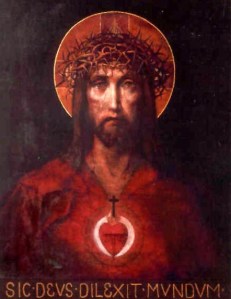
“For God so loved the world”
The first day of the Holy Face Novena will begin on Sunday Sunday, February 23rd–nine days of prayer leading up to the Feast day of the Holy Face on Tuesday, March 4th, 2025–and will be posted here for each day.
The Feast day of the Holy Face always falls on “Shrove Tuesday” which is the Tuesday before Ash Wednesday.
“Do you see how I suffer? Yet, very few understand me. Those who say they love me are very ungrateful! I have given my HEART as the sensible object of my great LOVE to men and I give my FACE as the sensible object of my sorrow for the sins of men. I wish that it be venerated by a special Feast on Tuesday, the day before Ash Wednesday. I wish that the feast be preceded by a novena in which the faithful make reparation with Me, joining together and sharing in my sorrow.” –Words of Our Lord to Bl. Mother Maria Pierina de Micheli (1890-1945)
Another holy nun, Sr. Marie St. Pierre (1816-1848) of Tours, France, was given revelations about devotion to the Face of Jesus. She received communications from Our Lord, who asked for a devotion to His Holy Face and a Work of Reparation: the offering His Holy Face to the Father in reparation for the sins of blasphemy, sacrilege, the crimes of atheistic communism, the profanation of the Holy Name, and the Holy Day of Sunday. The sins against the first three Commandments of the Ten Commandments are the greatest sins against God. The damage done by our sins to our relationship with God are reflected in the Face of of His Beloved Son, Jesus Christ. For this reason, devotion and reparation to the Holy Face is fitting in order to make amends for what we have done to Him.
Our Lord said to her, “I have taken upon my Head all the sins of mankind, so that my members may be spared. Therefore, offer my Face to the Father, this is the means of appeasing Him.”
“My daughter, I give you my Face and my Heart, I give you my Blood, and I open my wounds to you; draw from them and pour it out. Buy without money, my Blood that is the price of souls. Oh! What grief for my Heart to see the remedies which have cost me so dearly, scorned. Ask from my Father as many souls as the number of drops of Blood that I shed during my Passion.”
“All who will undertake this work and who will truly devote themselves to it will not die the eternal death. I will defend their cause before my Father and I will give them the kingdom of Heaven.”
“This work is the essence of charity!” — Our Lord to Sr. Marie St. Pierre
King Abgare recieving a miraculous image of the Holy Face
“To contemplate The Face of Christ, and to contemplate it with Mary, is the “program” which I have set before The Church at the dawn of the third millennium…To contemplate Christ involves being able to recognize Him wherever He manifests Himself, in His many forms of presence, but above all, in the living Sacrament of His Body and Blood.”
Pope St. John Paul II
“The Reparation is a Work destined to save society.” Pope Pius I
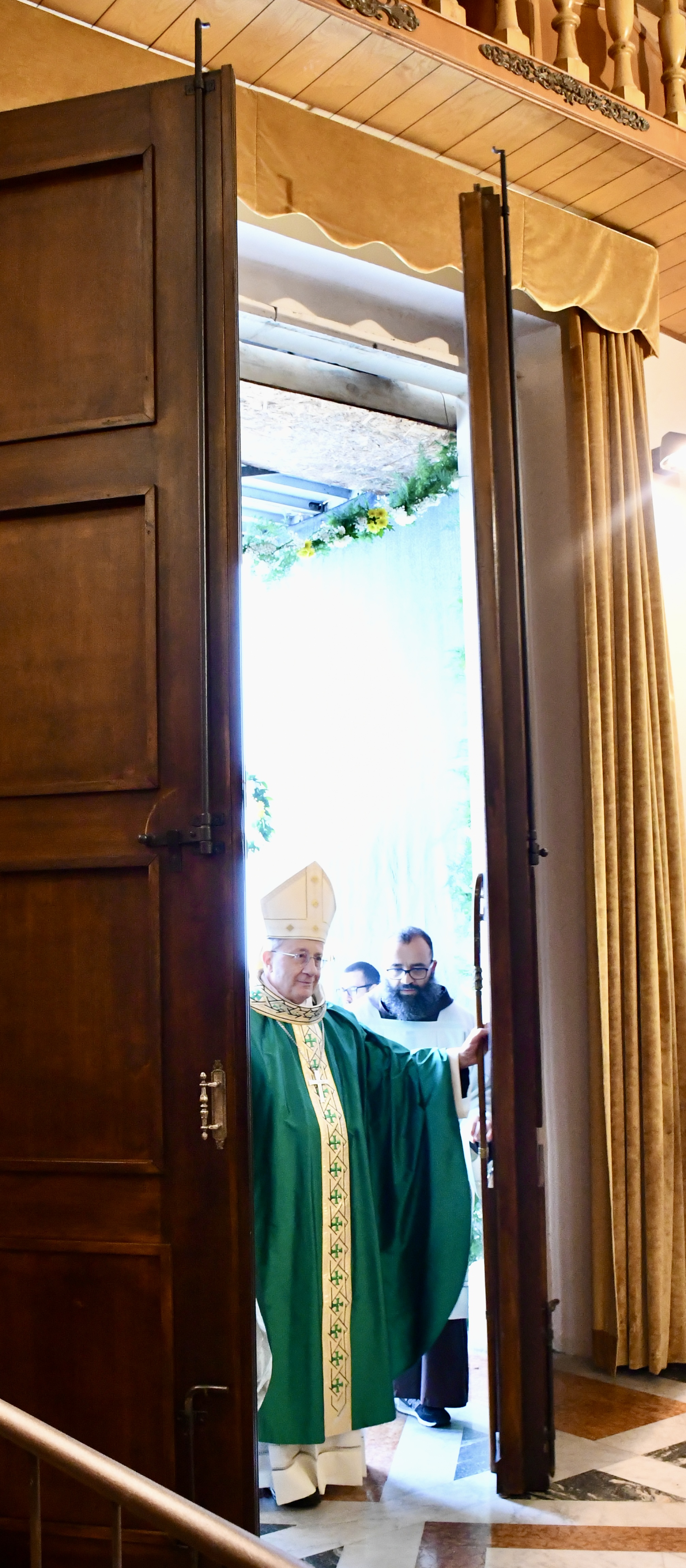
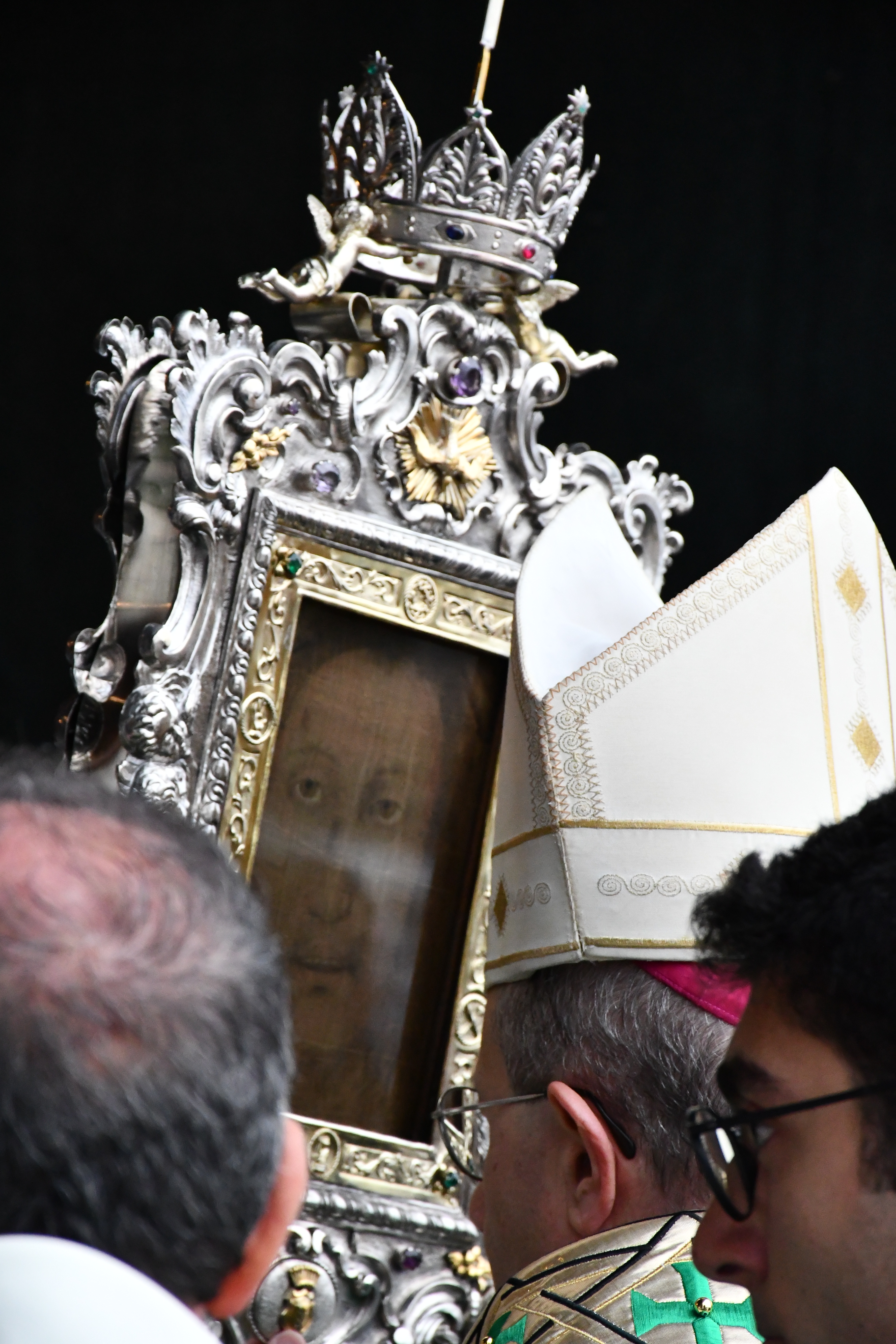
His Excellency Mons. Bruno Forte opens the Holy Door and enters the Holy Face Sanctuary. (Photo: Alexandra Prandell)
“All the Earth” shared in the joy of the Omnis Terra Eucharistic Celebration on Sunday, January 19th, at The Basilica Shrine of the Holy Face in Manoppello, Italy. The event was live-streamed around the world from the Sanctuary. The Eucharistic celebration was presided over by His Excellency Mons. Bruno Forte, Metropolitan Archbishop of Chieti-Vasto. Concelebrants were Fr. Simone Calvarese, Provincial Minister of the Capuchin Friars Minor of Central Italy, and Fr. Antonio Gentili, Rector of the Sanctuary of the Holy Face. The Mass was followed by a procession and blessing with the relic of the Holy Face Veil.
Many thanks to Alexandra Prandell, who has generously sent these beautiful photos for all devotees of the Holy Face to enjoy!
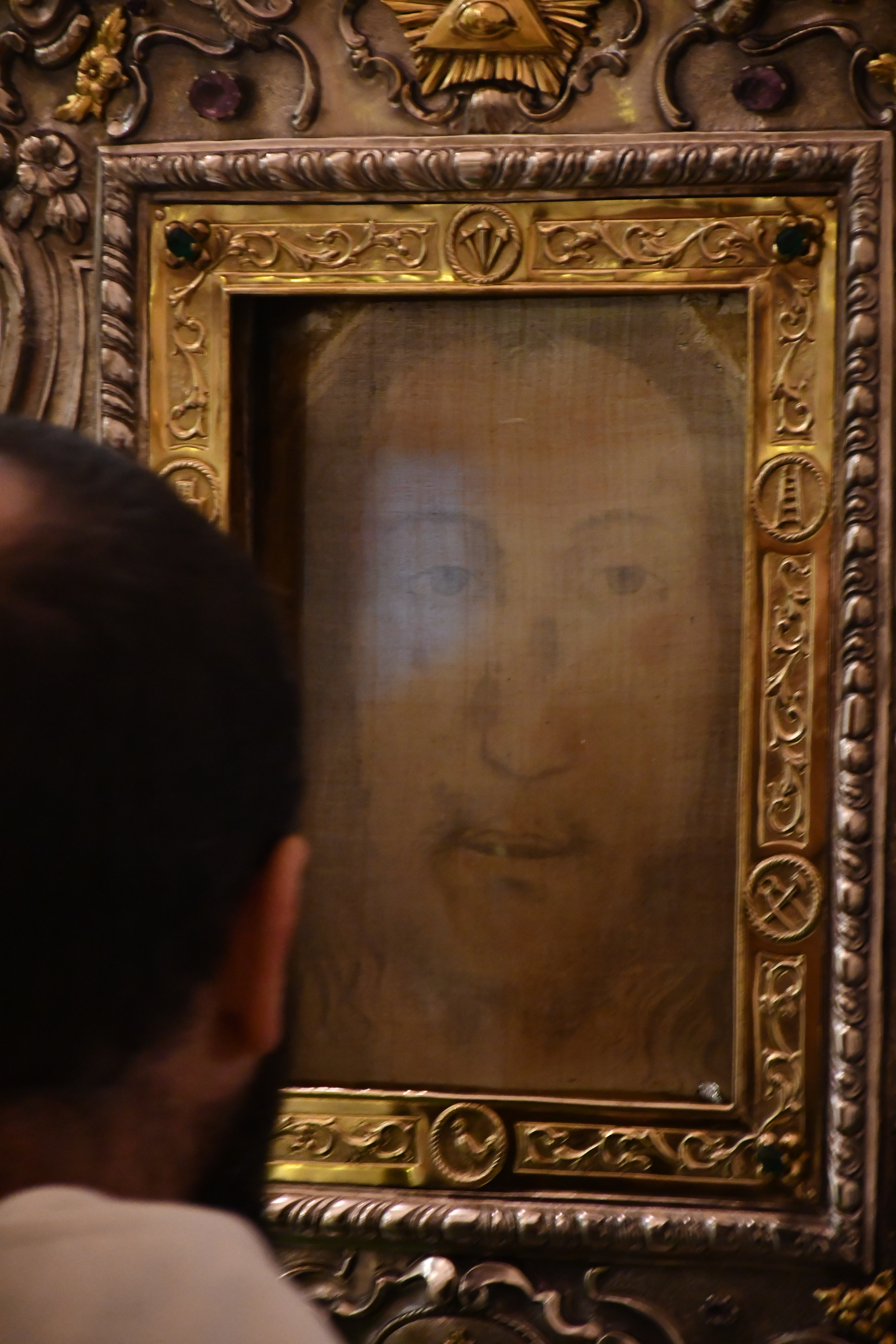
Fr. Antonio Gentili before the Holy Face Veil. (Photo: Alexandra Prandell)
Archbishop Forte carries the Holy Face Relic in procession (Photo: Alexandra Prandell
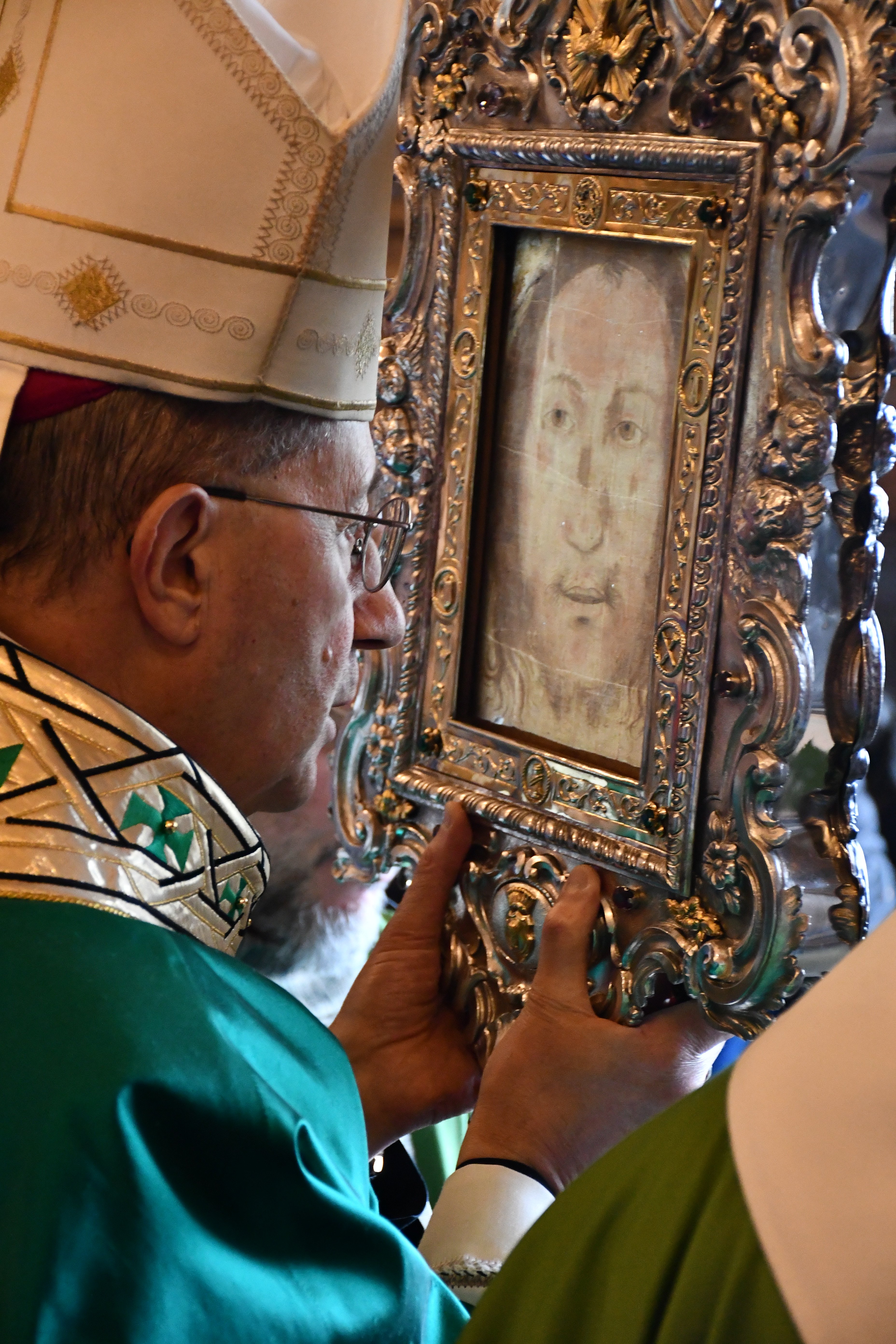
Archbishop Forte Face to Face with Il Volto Santo (Photo: Alexandra Prandell)
The Holy Face begins to disappear in the light as Archbishop Forte brings the relic out of the Basilica into the light of day. (Photo: Alexandra Prandell)
The Countenance of the Holy Face momentarily darkens. (Photo: Alexandra Prandell)
Archbishop Forte in prayer before His Face. (Photo: Alexandra Prandell)
Padre Antonio Gentili, Rector of the Sanctuary Basilica, before the relic of the Holy Veil (Photo: Alexandra Prandell) One never tires of gazing upon His Holy Face!
“Those who gaze on it are never satisfied with contemplating it, and wish to always have it before their eyes. And when they eventually leave it, with heavy sighs full of love, they are forced to leave Him their hearts, bathed in tears.” –Capuchin Donato da Bomba 1646, (Speaking of the Holy Veil of Manoppello)
“Previously, God, Who has not a body or a face, absolutely could not be represented by an image. But now, that He has made Himself visible in the flesh, and has lived with people, I can make an image of what we have seen of God…and contemplate the glory of the Lord, His Face unveiled.”–St. John Damascene
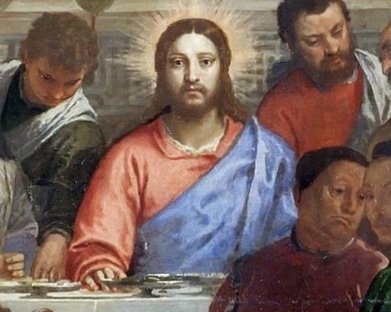
Detail from The Wedding at Cana by Paolo Veronese (1528-1588)
Omnis Terra, Latin for “All the Earth, ” is the name given to the Second Sunday in Ordinary time, when the Gospel of the Wedding at Cana is read. In the midst of the wedding feast, Mary whispers to her son Jesus, “They have no wine.” At Mary’s words, Jesus then performed his first miracle: “the beginning of his signs at Cana in Galilee, and so revealed His glory, and His disciples began to believe in Him.” (John 2: 1-11) The revelation of His glory is the cause for all the earth rejoicing, giving praise to His Name at the wedding feast of the Lamb!
Omnis Terra Celebration 2025
This Holy Jubilee Year of Hope pilgrims from all over the world will be very fortunate to have an opportunity to participate in a Eucharistic celebration, procession, and blessing at the Basilica Shrine of the Holy Face in Manoppello, Italy, on Omnis Terra Sunday, January 19th. The Eucharistic Celebration will be presided over by His Excellency, Mons. Bruno Forte, Metropolitan Archbishop of Chieti-Vasto. Concelebrants will be Fr. Simone Calvarese, Provincial Minister of the Capuchin Friars Minor of Central Italy, and Fr. Antonio Gentili, Rector of the Sanctuary. At the end of the celebration there will be a procession and blessing with the reliquary of the Holy Face.
“To rejoice in the splendor of His Face means penetrating the mystery of His Name made known to us in Jesus, understanding something of His Interior life and of His will, so that we can live according to His plan for humanity. Jesus lets us know the hidden Face of the Father through His human Face; by the gift of the Holy Spirit poured into our hearts.” ~Pope Benedict XVI
This Jubilee Year of Hope, 2024-2025, will mark ten years since the rite of “Omnis Terra,” which had originally begun in 1208, was once again renewed during the Jubilee Year of Mercy, 2015-2016. At that time, a facsimile of the Merciful Face of of Christ on the Holy Veil of Manoppello was carried in a historic procession once again through the streets of Rome. 2016 was the first year that the Holy Face was processed in Rome since the ancient procession of Pope Innocent III from St. Peter’s Basilica to the nearby hospital of Santo Spirito in Sassia in 1208. The Omnis Terra celebration was later continued at the Basilica Shrine of Il Volto Santo in Manoppello. This significant event, celebrating the revelation of His glory is certainly a reason for all the earth to rejoice, as though at a wedding feast!
The first “Omnis Terra” Procession of Pope Innocent III in 1208 carrying “the Veronica” Face of Christ (from “Liber Regulae Sancti Spiritus in Saxia” manuscript 1350)
detail of Face of Jesus on the Holy Veil from the precious manuscript “Liber Regulae Sancti Spiritus in Saxia”
Let all the earth worship and praise You, O God; may it sing in praise of Your Name, O Most High. Shout joyfully to the Lord all the earth; sing a psalm in honor of His Name, praise Him with magnificence!
–Omnis Terra Introit
Salve! Sancta Facies! Hail, Holy Face!
Salve, Sancta Facies! Hail, Holy Face (c. 1450-1455), Willem Vrelant (1481) and associates, Walters Art Gallery, Baltimore, MD.
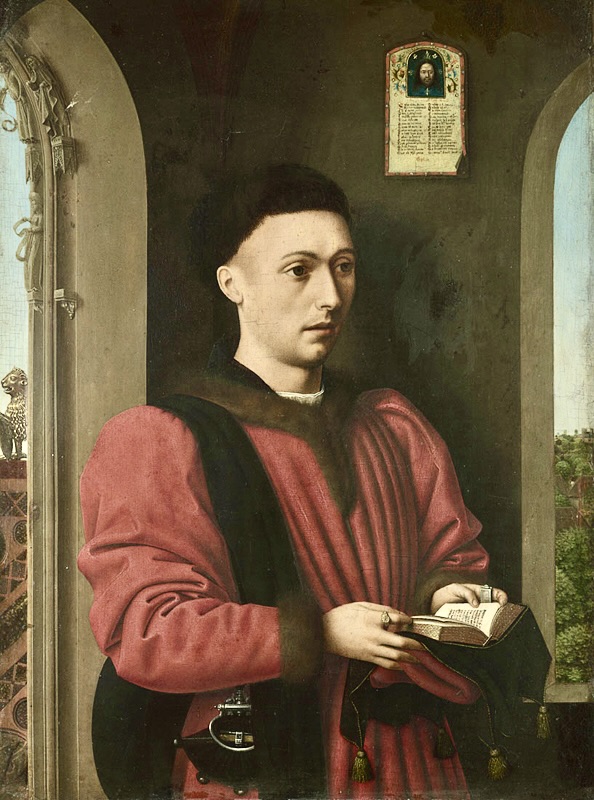
The exquisite illuminated manuscripts of the Middle Ages reflect the great love and devotion shown to the Holy Face, as well as provide evidence of what the Holy Face of Jesus looked like, as it was seen on a miraculous veil, known as “the Veronica.” “The Veronica,” or Veil of the Holy Face of Jesus, was the greatest relic in Rome at that time. To gaze upon the veil was the great desire of pilgrims, who came from far and wide, to see for themselves the sheer veil bearing the Face of Jesus. Beginning with public exhibitions and processions of the Holy Veil by Pope Innocent III in the mid thirteenth century, the miraculous veil could be viewed by all. Then, the artists got to work on paintings, illustrations, poetry, prayers, and hymns in honor of the Holy Face. ( “The Veronica Route” website wonderfully catalogues many of these “Veronica” artworks that may be found throughout the world.)
Portrait of a Young Man, 1450-60, Petrus Christus, London National Gallery. Seen above the prayerful young man, on the wall, the Holy Face and the Salve! Sancta Facies Hymn
Pope John XXII, who was elected Pope in 1316, composed a beautiful hymn in honor of the Holy Face, and he also granted a special indulgence to those who recited it — and for those who could could not read, the Pope granted the same indulgence to the faithful for reciting five Our Fathers, Hail Marys, and Glory Be’s. (For an understanding of indulgences, this EWTN article,Primer on Indulgences by James Akin is very helpful.)
Hymn in Honor of the Holy Face by Pope John XXII (translated from the original Latin)
Hail! Holy Face of our Redeemer, hail!
Which shines in all its majesty divine
Upon the spotless veil, a priceless gift
To Saint Veronica; of love the sign.

Hail! Glory of all time, mirror-glass of the Saints,
Wherein the blessed love for eye to gaze;
Destroy within us every stain of sin,
And with the elect our souls towards Thee raise.

Hail, Face of God! With His own gifts adorned,
Whose splendor through the ages shall not cease;
Oh! make Thy light descend into our hearts,
And from their earthly toils our souls release.

Hail! Mighty bulwark of the Christian faith,
Of heresy and lies the Victor Thou;
King in the Sacred Bread, renew the strength
Of all the faithful who before Thee bow.

Hail! all our joy in this hard life below,
So frail and fugitive, so quickly over;
Sweet Picture, lead us onwards to the skies,
That we may there the Face of Christ adore.

Hail! noblest of all gems, celestial pearl,
In Thee innumerable graces shine;
No hand depicted Thee, no chisel carved,
Thou wert of God alone the work divine.

The tints with which Thy features He has traced
Will never alter and will never fade;
Changeless amidst the ravages of time,
The everlasting King Thy Face may see.

Forever incorrupt and free from stain,
The living Christ we honour still in Thee;
Thou turnest into joy our sighs and tears,
Oh! grant that we, in heaven, thy Face may see.

Be thou, we pray, our buckler and defense,
Our consolation and refreshment sweet,
That nothing hostile may our spirits harm,
Till, after death, we rest at Jesus’ feet.  Amen.
Prayer
Shed, O Lord, joy over the faces of Thy faithful, and turn them away from the depths of hell, that, protected by the contemplation of Thy divine Face, we may have strength to tread underfoot the desires of the flesh, and that we may behold Thee face to face, without fear, Lord Jesus Christ, when Thou will come to judge us. Amen.
The “tints” of the image, written in light, have never altered or faded through the centuries. Holy Face Veil of Manoppello,( photo: Patricia Enk)
“The tints with which Thy features He has traced, Will never alter and will never fade; Changeless amidst the ravages of time, The everlasting King Thy Face may see.”
Below is a new video of a talk by Fr. Chris Alar, of the Divine Mercy Shrine in Stockbridge, Massachusetts that is well worth a watch!
In 1883, inspired by the Litany of the Blessed Virgin Mary, Gerard Manley Hopkins wrote perhaps his most beautiful poem, The Blessed Virgin Compared to the Air We Breathe. In this poem, honoring the Mother of God, Hopkins wonderfully demonstrates that Mary, is as necessary for the life of mankind as the atmosphere that surrounds us. Not only because she gave birth to Our Savior, Jesus Christ, but because the life she continues to bring forth in us is the life of Divine Grace. God Himself, chose her as the means to reveal His glory, as through her, Jesus may be born again in us “morning, noon, and eve.”
“Of her flesh he took flesh:
He does take fresh and fresh,
Though much the mystery how,
Not flesh but spirit now
And makes, O marvellous!
New Nazareths in us,
Where she shall yet conceive
Him, morning, noon, and eve;
New Bethlems, and he born
There, evening, noon, and morn
Bethlem or Nazareth,
Men here may draw like breath
More Christ and baffle death;
Who, born so, comes to be
New self and nobler me
In each one and each one
More makes, when all is done,
Both God’s and Mary Son.”
–The Blessed Virgin Compared to the Air We Breathe
The Feast of Mary, Mother of God
And so, in God’s beautiful design, the Christmas liturgy continues at the beginning of the New Year by drawing us to the Face of Christ with three holy feast days. All three are tied together by a common, yet golden thread–A mother, full of grace, sharing her precious Son with us, so we may see His Face in the eternal life to come.
We begin on January 1, with the Feast of Mary, Mother of God, who teaches us how to contemplate the Face of her Son by seeing the reflection of His beauty and goodness in her face.
On the Solemnity of the Mother of God, Pope Francis said, “Begin the year recalling God’s goodness in the maternal face of Mary.” We see Jesus more clearly through His Mother’s eyes, especially when we pray the Rosary.
“Through her we may see him
Made sweeter, not made dim,
And her hand leaves his light
Sifted to suit our sight.”
–The Blessed Virgin Compared to the Air We Breathe
The first reading for this feast day is the priestly blessing on God’s chosen people from the book of Numbers:
The LORD said to Moses: “Speak to Aaron and his sons and tell them: This is how you shall bless the Israelites. Say to them: The LORD bless you and keep you! The LORD let his face shine upon you, and be gracious to you! The LORD look upon you kindly and give you peace! So shall they invoke my name upon the Israelites, and I will bless them.” (Num 6:22-27)
May Our Lord grant us His blessing in the New Year through intercession the Blessed Virgin Mary, Mother of God. As the Incarnation of the Son of God came into the world by the power of the Holy Spirit, at Mary’s “Fiat,” through her prayers, may we obtain the grace to contemplate His Holy Face, and receive God’s greatest gift of peace.
The next feast, on January 3 is…
The Feast of the Holy Name of Jesus
In sacred scripture the Angel Gabriel revealed the Holy Name of the Savior of mankind to the Blessed Virgin Mary: “You shall call His name Jesus.”
When Jesus was named, Satan was disarmed!
Mary, Mother of the Most Blessed Sacrament
Pope Benedict XVI had written that the expression “name of God” means God as He Who is present among men. His name, is the concrete sign of His Existence. The Hebrew term, “panim”, which means “face” means to see The Face of God, or the presence of God. “Panim” is a term that describes relationships. The Hebrew word “shem” meaning “name” is also a term of relationship. “Panim” is also the Hebrew word for “Face of God” and the same word is used for “Bread of the Presence” or “Bread of the Face.” (Exodus 25:30) The “Bread of Presence” mentioned in Exodus was not the actual Face of God, but the earthly sign of His Face. The Eucharist, instituted by Christ, however, is the actual Body, Blood, Soul and Divinity of Jesus. When we are gazing at the Eucharist, the sign of God’s love for us, in Adoration, we see His Holy Face veiled in the appearance of bread, and in doing so, we give honor to His Holy Name.
Who had a more tender relationship of love with Jesus than his mother Mary? Who spoke His name more lovingly? God has a Face and a Name — It is Jesus Christ, our Redeemer! The Blessed Mother invites us to rejoice in the splendor of His Face, and contemplate the mystery of His Holy Name by entering into a relationship with her Son Jesus, especially in the Most Holy Sacrament of the Eucharist.
“To rejoice in the splendor of His Face means penetrating the mystery of His name made known to us in Jesus, understanding something of His interior life and of His will, so that we can live according to His plan for humanity. Jesus lets us know the hidden Face of The Father through His human Face; by the gift of The Holy Spirit poured into our hearts. This,is the foundation of our peace, which nothing can take from us.” –Pope Benedict XVI
Blessed the Lord, O my soul, and let all that is within thee bless His Holy Name. Bless the Lord, O my soul, and never forget all He hath done for thee. (Ps. ci. i,2)
And the third great holy day drawing us to adore the Holy Face is…
Christ has appeared to us; come, let us adore Him! Adoration of the Magi, Giotto, 1302
The Feast of the Epiphany
“See, darkness covers the earth, and thick clouds cover the peoples; But upon you the Lord shines, and over you appears his glory.”
Isaiah 60
The Epiphany is closely linked to the Holy Face, as the Blessed Virgin Mary, Queen and mother, presents her Son, the King of Kings, to the Magi–because the Epiphany is the feast on which Jesus Christ first shows Himself to the world represented by the Magi–and He shows Himself through a human face, the face of an infant. On the feast of the Epiphany, we ask God to shine His Face upon us, to reveal His Face to us once more as we come before Him in adoration, so that, like the Blessed Virgin Mary, we may also reflect the light of His Face to the world.
“All the ends of the earth will behold the salvation of our God.”
Isaiah 52
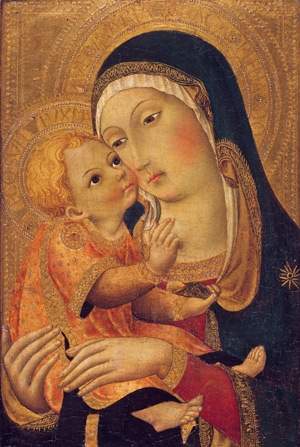
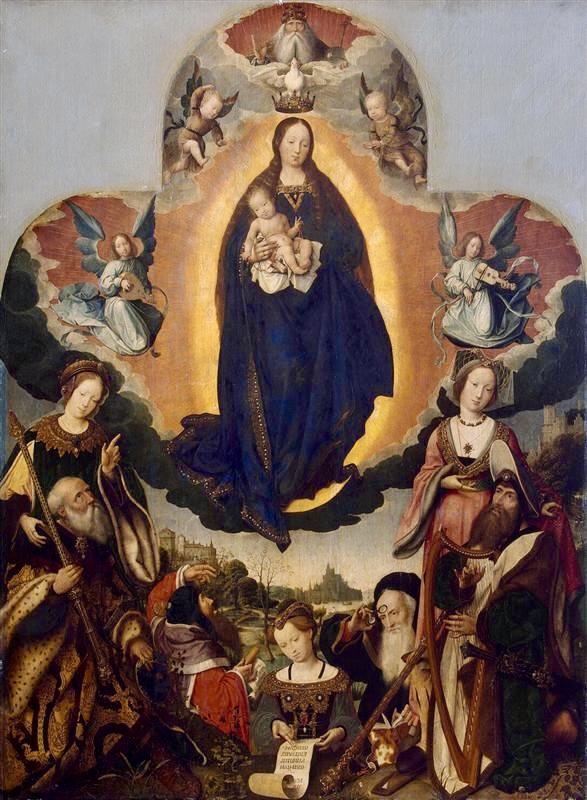
The Virgin Mary in Glory, Jan Provoost, 1524
“Be thou then, thou dear
Mother, my atmosphere;
To wend and meet no sin;
Above me, round me lie
Fronting my froward eye
With sweet and scarless sky;
Stir in my ears, speak there
Of God’s love, O live air,
Of patience, penance, prayer:
World-mothering air, air wild,
Wound with thee, in thee isled,
Fold home, fast fold thy child.”
–The Blessed Virgin Compared to the Air We Breathe
“Visible before to God alone and not to the world, God made the Word visible so that the world could be saved by seeing Him. This mind that entered our world was made known as the Son of God.”
~St. Hippolytus
“In the beginning was the Word, and the Word was with God, and the Word was God.
He was in the beginning with God. All things came to be through him,
and without him nothing came to be. What came to be through him was life,
and this life was the light of the human race; the light shines in the darkness,
and the darkness has not overcome it.
The true light, which enlightens everyone, was coming into the world.
He was in the world, and the world came to be through him, but the world did not know him.
He came to what was his own, but his own people did not accept him.
But to those who did accept him he gave power to become children of God, to those who believe in his name, who were born not by natural generation nor by human choice nor by a man’s decision but of God.
And the Word became flesh and made his dwelling among us, and we saw his glory, the glory as of the Father’s only Son, full of grace and truth.” (John 1:1-5, 9-14)
Kreuz als Krippe (Cross as a Crib), Oil on canvas, Unknown artist, 18th century (Photos: Paul Badde)
“While we too seek other signs, other wonders, we do not realize that He is the real sign, God made flesh; He is the greatest miracle of the universe: all the love of God hidden in a human heart, in a human Face.” ~ Pope Benedict XVI
+++
O that birth forever blessèd,
When the virgin, full of grace,
By the Holy Ghost conceiving,
Bore the Savior of our race;
And the Babe, the world’s Redeemer,
First revealed His sacred face,
evermore and evermore!
Merry Christmas! May His Face shine upon you and your loved ones, today and always!





















 Illumina Domine Blog - Devotion to The Holy Face