“O Lord, wealth of the poor, how admirably You can sustain souls, revealing Your great riches to them gradually and not permitting them to see them all at once. When I see Your great Majesty hidden in so small a thing as the Host, I cannot but marvel at Your great wisdom.” –St. Teresa of Jesus
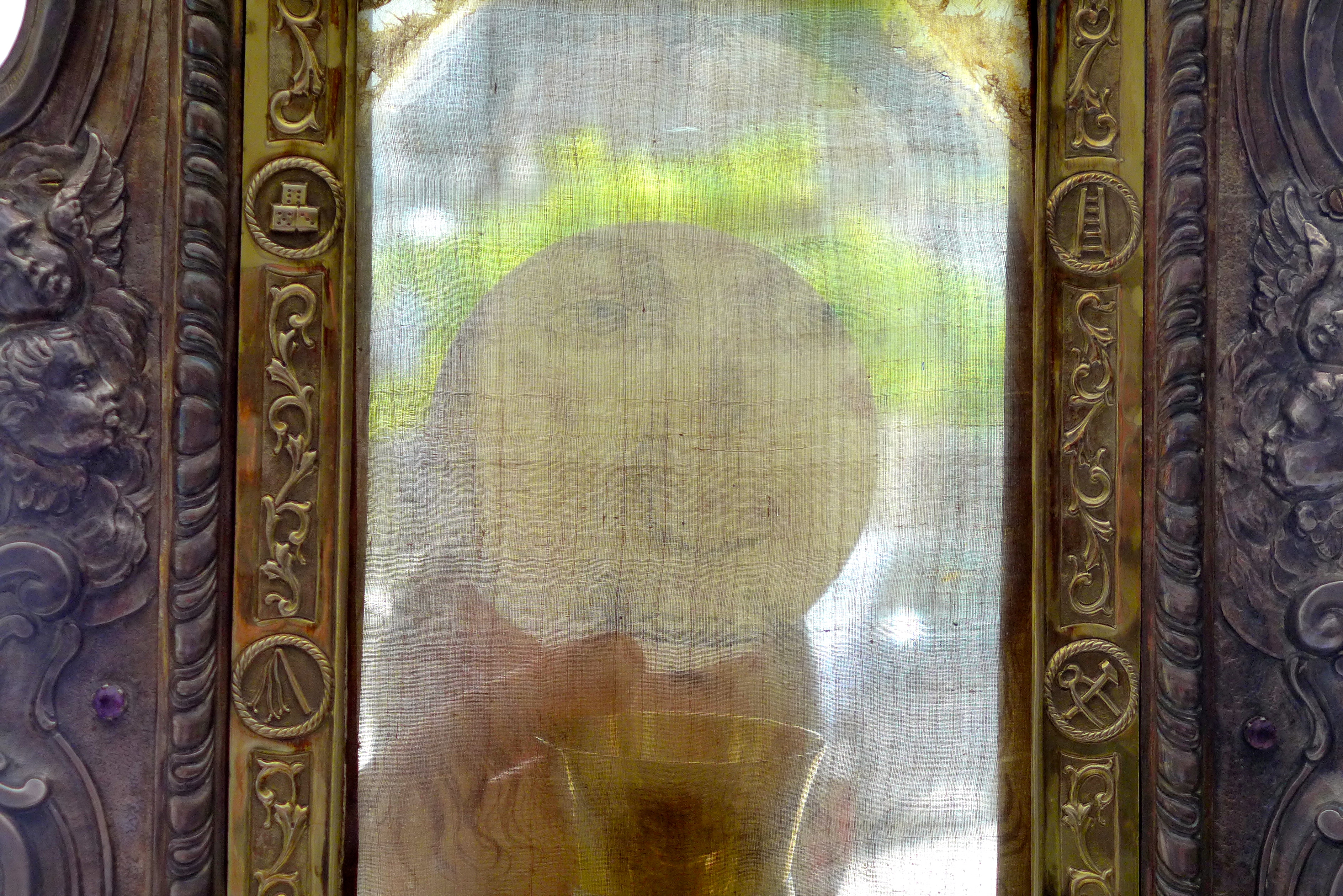
Host viewed through the Veil of Manoppello in Italy. Photo: Paul Badde/EWTN
Adoro Te Devote
Jesu, quem vellum nuns auspício,/Oro, fiat illud, quod tam sitio,/Ut te revelata cernens facie,/Visu sim beatus tuae Gloria. Amen.
Jesus! Whom for the present veiled I see,
What I so thirst for, oh, vouchsafe to me:
That I may see Thy Countenance unfolding,
And may be blest…
Thy Glory in beholding. Amen
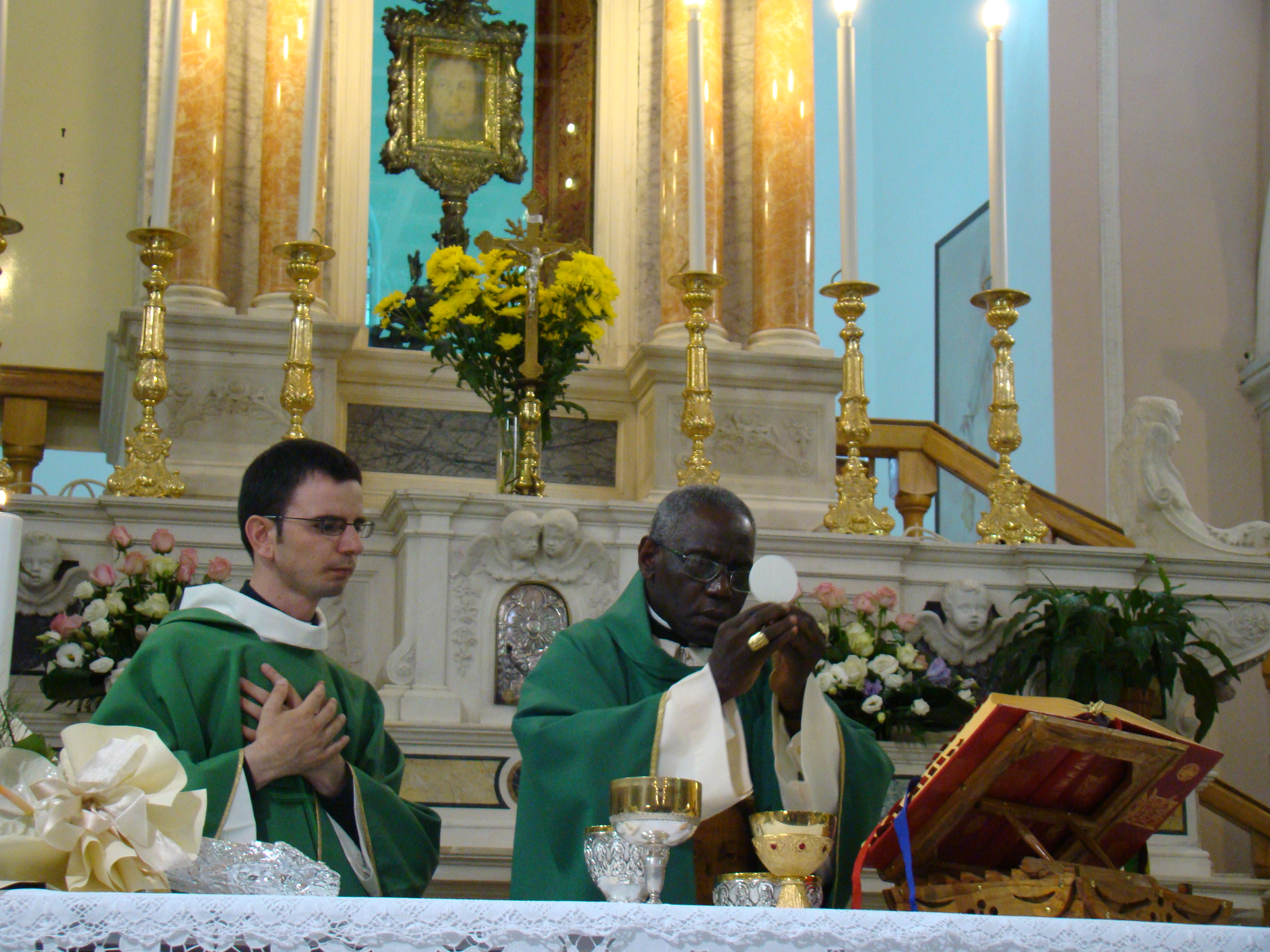
Cardinal Tagle elevates the Eucharist at a Solemn Mass in honor of the Holy Face of Manoppello, Italy (Photo: Paul Badde/EWTN)
There is a wonderful book by Dr. Brant Pitre called “Jesus and the Jewish Roots of the Eucharist – Unlocking the Secrets of the Last Supper” which sheds light on the great Mystery of the Eucharist, and the connection to the Old Testament “Bread of the Presence” otherwise known in the Old Testament as the “Bread of the Face of God”–the earthly sign of God’s Face veiled–because no one could see the unveiled Face of God and live. Three times a year, Dr. Pitre writes, the priests in the Temple would “remove the Golden Table of the Bread of the Presence from within the Holy Place so that the Jewish pilgrims could see it.” (Exodus 34:23; 23:17) Then the priest would elevate the holy bread before the people saying, “Behold God’s love for you!” The Bread of the Face, was a sign of God’s love because it was a sign of His everlasting covenant. “…this holy bread was a living visible sign of God’s love for his people, the way earthly people could catch a glimpse of the ultimate desire of their hearts: to see the Face of God and live, and to know that He loved them.” “And just as the old Bread of the Presence was also the Bread of the Face of God, so now the Eucharist would be the Bread of the Face of God.” It is through His Face that we enter into the relationship of love with God.
Robert Cardinal Sarah gazing at the Eucharistic Face of Jesus at the Basilica Sanctuary of the Holy Face (Photo: Paul Badde/EWTN“The Face of Christ is the supreme revelation of Christ’s Mercy.”–Pope Benedict XVI photo:Paul Badde/EWTN
“Behold, you do see Him, you touch Him, you eat Him…to receive Him into your heart…He upon whom the angels look with fear, and dare not gaze upon steadfastly because of His dazzling splendor, becomes our Food; we are united to Him, and are made one body and one flesh with Christ.” –St. John Chrysostom
What greater sign of His Love than the bread and wine become His Body and Blood?
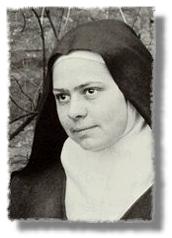
St. Elizabeth of The Trinity, Discalced Carmelite nun
O My God, Trinity whom I adore, help me to forget myself entirely that I may be established in You as still and as peaceful as if my soul were already in eternity. May nothing trouble my peace or make me leave You, O my unchanging One, but may each minute carry me further into the depths of Your Mystery. Give peace to my soul, make it Your heaven, Your beloved dwelling and Your resting place. May I never leave you there alone but be wholly present, my faith wholly vigilant, wholly adoring, and wholly surrendered to Your creative action. O my beloved Christ, crucified by love, I wish to be a bride for Your Heart; I wish to cover You with glory; I wish to love You…even unto death! But I feel my weakness, and I ask You to clothe me with Yourself, to identify my soul with all the movements of Your Soul, to overwhelm me, to posses me, to substitute Yourself for me that my life may be but a radiance of Your life. Come to me as Adorer, as Restorer, as Savior, O Word Eternal, Word of my God. I want to spend my life listening to You, to become wholly teachable that I may learn all from You. Then, through all nights, all voids, all helplessness, I want to gaze on You always and remain in Your great light. O my beloved Star, so fascinate me that that I may not withdraw from your radiance. O consuming Fire, Spirit of Love, come upon me, and create in my soul a kind of Incarnation of the Word; that I may be another humanity for Him, in which He can renew His whole Mystery. And You, O Father, bend lovingly over your poor little creature; cover her with your shadow, seeing in her only the Beloved in whom You are well pleased. O my Three, my All, my Beatitude, infinite Solitude, Immensity in which I love myself, I surrender myself to You as Your prey. Bury Yourself in me that I may bury myself in You until I depart to contemplate in Your light the abyss of Your greatness. November 21, 1904 — St. Elizabeth of the Trinity
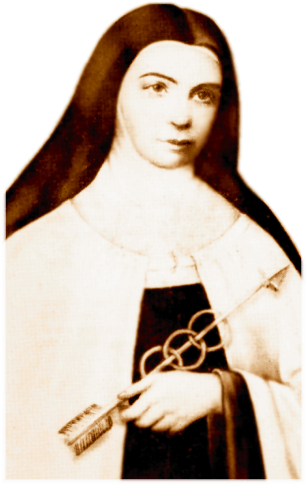
Another Discalced Carmelite nun who lived in the mid-1800’s, Sr. Marie St. Pierre, is best known for Devotion to the Holy Face and “The Golden Arrow” a prayer of reparation for blasphemy–sins against the Face of God. She had many interior visions regarding the Holy Face and the work of reparation, including a sublime conception of the The Holy Trinity and the Holy Face which she tried to express in these words she received from Our Lord:
Discalced Carmelite Nun Sr. Marie St. Pierre, holding “Golden Arrow” with three circles representing the Trinity.
“Remember, O my soul, the instruction which thy celestial Spouse has given thee today on His adorable Face! Remember that this Divine Head represents the Father who is from all eternity, that the mouth of this Holy Face is a figure of the Divine Word, engendered by the Father, and that the eyes of this mysterious Face represent the reciprocal love of the Father and the Son; for these eyes have but one and the same light, the same knowledge, producing the same love, which is the Holy Spirit. In his beautiful silken hair contemplate the infinitude of the adorable perfections of the Most Holy Trinity in this majestic head, the most precious portion of the Sacred Humanity of thy Saviour; contemplate the image of the unity of God. This, then, is the adorable and mysterious Face of the Saviour, which blasphemers have the temerity to cover with opprobrium: thus they renew the sufferings of His Passion, by attacking the Divinity of which it is the image.”
Our Lord told Sr. Marie St. Pierre that she could comfort and console Him by her praises, then He added:
“According to the diligence you will manifest in repairing my image disfigured by blasphemers, so will I have the same care in repairing your soul which has been disfigured by sin. I will imprint thereon my image, and I will render it as beautiful as when it came forth from the baptismal font… Oh! could you but behold the beauty of My Face!–But your eyes are yet too weak.”
THE GOLDEN ARROW PRAYER
MAY the most holy, most sacred, most adorable, most incomprehensible and ineffable Name of God, be forever praised, blessed, adored, loved and glorified, in heaven, on earth, and in the hells, by all the creatures of God, and by the Sacred Heart of Our Lord Jesus Christ in the most Holy Sacrament of the Altar. Amen. (In Reparation for blasphemy)
The Holy Face on the Shroud of Turin
“Jesus, has shown us the face of God, One in substance and Triune in Persons; God is all and only Love, in a subsisting relationship that creates, redeems, and sanctifies all: Father, Son, and Holy Spirit.” ~Pope Francis
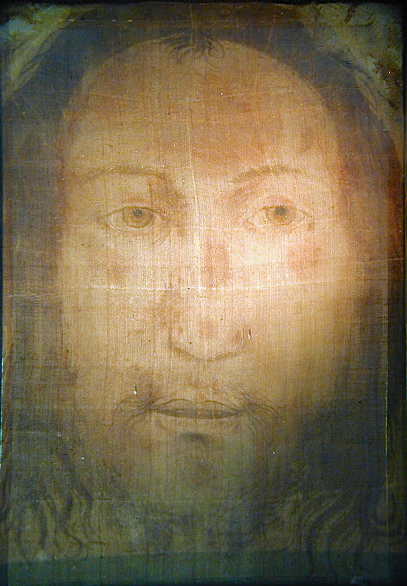
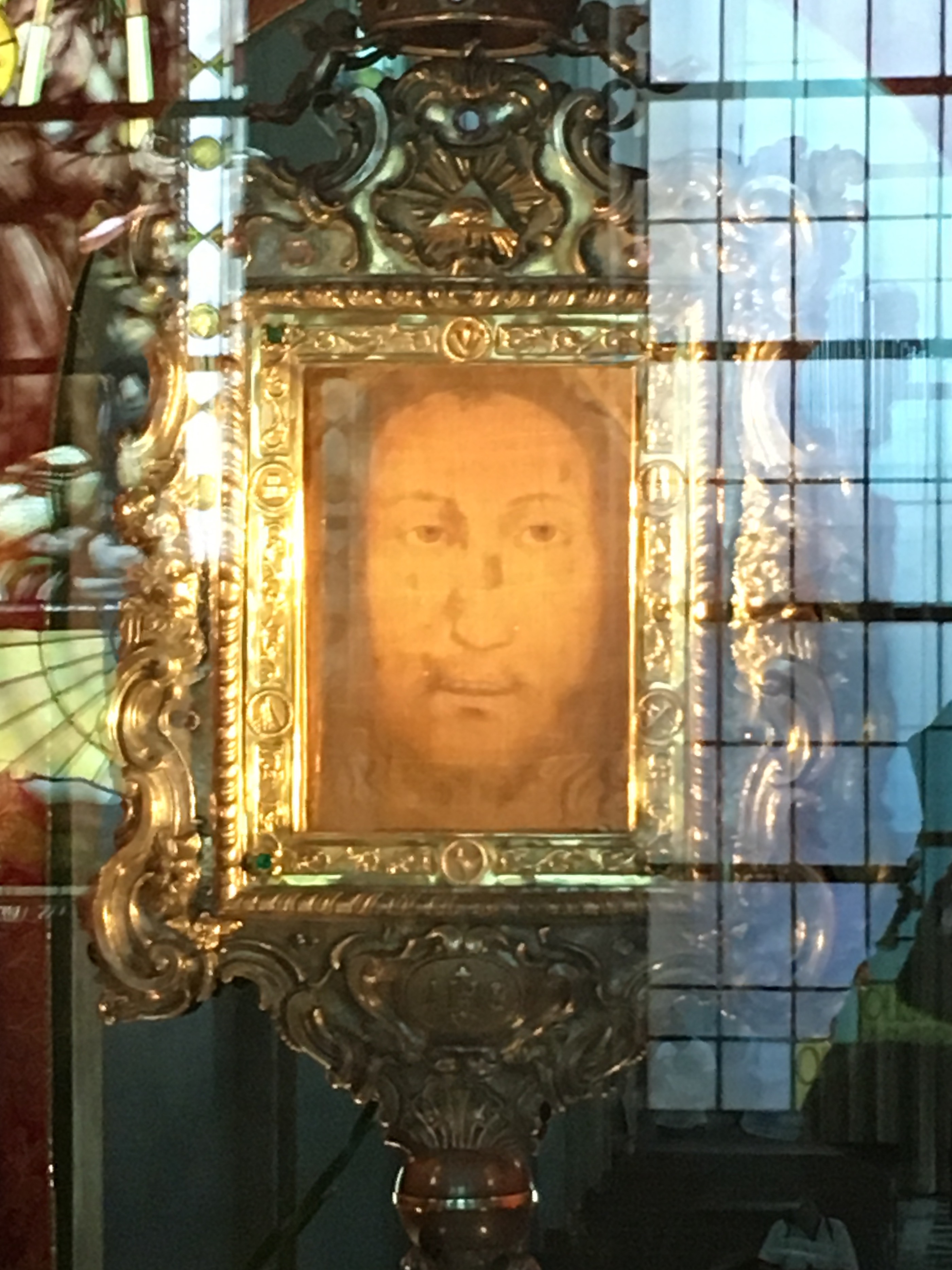
Hand behind the sheer Veil of Manoppello, “not made by human hand” clearly shows the miraculous nature of “Il Volto Santo” Photo: Paul Badde/EWTNThe Veil of the Holy Face of Manoppello Photo: Paul Badde/EWTN
Burn within us, Holy Fire, so that chaste in body and pure of heart, we may desire to see the Face of God.
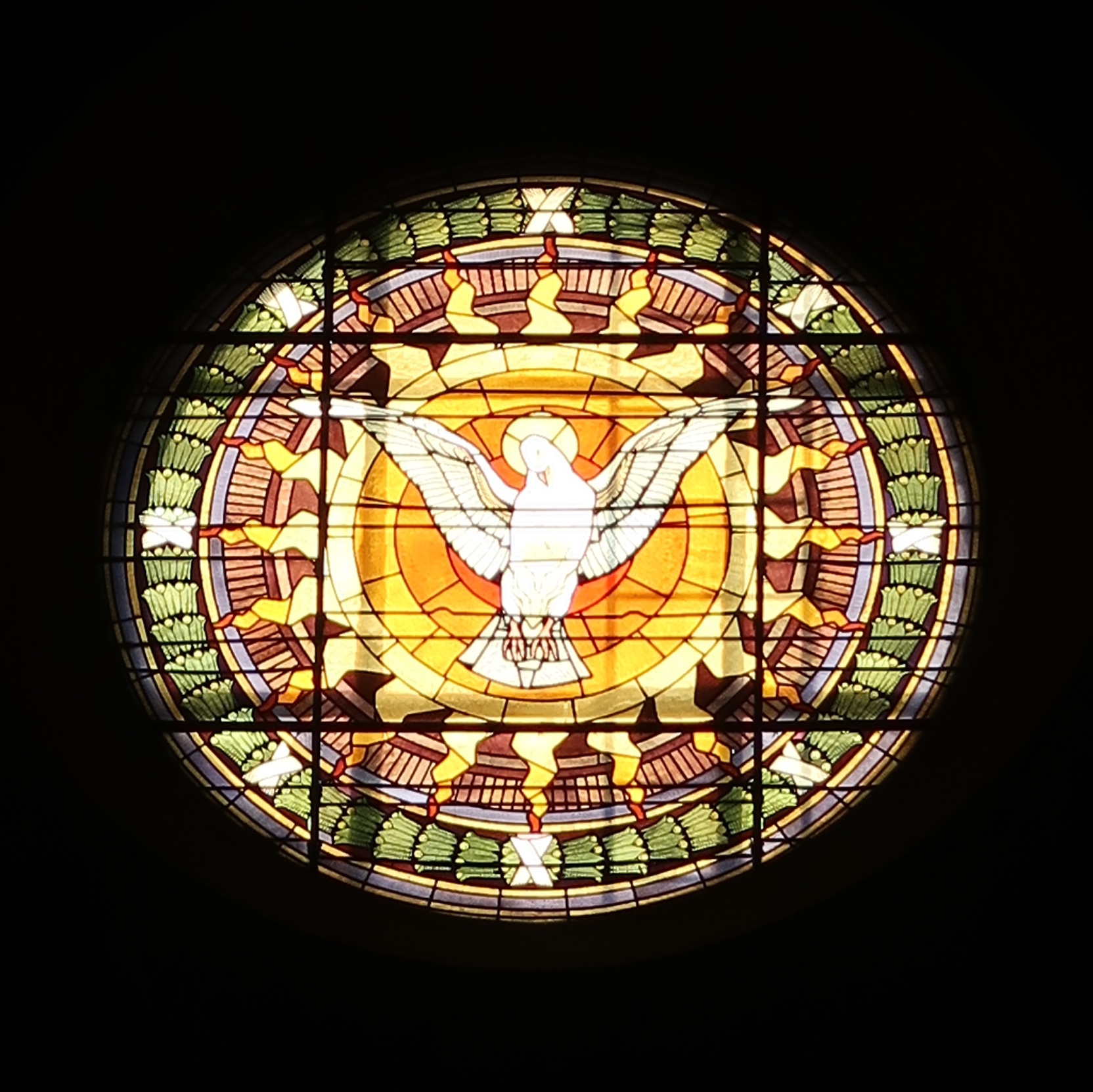
We are temples of the Holy Spirit (photo: Patricia Enk)
“Now the Lord is the Spirit, and where the Spirit of the Lord is, there is freedom. All of us, gazing with unveiled face on the glory of the Lord, are being transformed into the same image from glory to glory, as from the Lord, who is the Spirit.” (2Cor 3:17-18)
Rose petals like “tongues of fire of the Holy Spirit” tossed before the Holy Face of Manoppello. photo: Paul Badde/EWTN
Be sure to see the video from the previous post of Cardinal Tagle. The light and fire of the Holy Spirit shines on his face as Cardinal Tagle speaks of his experience of seeing the Holy Face of Manoppello in person for the first time. (or click here)
This incredibly powerful testimony is in Italian, but English closed captions have now been added. Cardinal Tagle’s conversation with Antonio Bini– The Cardinal said that it seemed that the Holy Face welcomed him and smiled at him! He says, “The Face of Truth and Love!” Cardinal Tagle’s face says it all! (Just click on the arrow to play the video and be sure to click on cc for closed captioning.)
Cardinal Tagle and journalist Antonio Bini
Italian journalist Antonio Bini said the video interview came about spontaneously in the heart of a friendly conversation. Antonio found Cardinal Tagle to be “an extraordinary person of humility, spirituality, wisdom and culture.” In the video Luis Antonio Cardinal Tagle radiates the joy of the Holy Spirit, reflecting the Truth and Love he found in the Holy Face. The Cardinal shares his thoughts directly and sincerely from his heart with Antonio Bini. Antonio is the author of the book shown in the video, “The Holy Face, from Manoppello to the World” which is a treasure trove of information about the Holy Veil of Manoppello. Cardinal Tagle also has an encouraging message in English for “Friends of the Holy Face” who spread this devotion: (click here)
Luis Antonio Cardinal Tagle as he prepares for Solemn Mass at the Basilica Sanctuary of the Holy Face (Photo: Antonio Bini)
Here is the English transcript of the video, that can be read thanks to Raymond Frost:
Cardinal Tagle: “I saw the Holy Face under the changing of the light, not only a Face of tenderness, but of welcoming. I saw a Face smiling at me, almost saying, “Welcome Luis Antonio!” It is a Face that speaks, it is alive, yes, it is the message, the Word is the Face, yes (referring to the book in the foreground) “Holy Face to the World”, Fr. Carmine sent this to me. It is also a Face turned towards me, but I did not feel fear, fear in front of a judge, or of a face which condemns. A Face of Truth, and the Truth is love, love wins out over fear. I thought this afternoon perhaps this is the Last Judgement–it is not a judgement full of fear and dread, but in front of pure love–I do not want to hide myself. There is no reason to hide myself, but, there is only the reason to open my heart in front of a Face open to love, open to welcoming, open to pardoning my mistakes. It is an experience of liberation, and religious experience for me.”
Cardinal Tagle elevates the Eucharist at a Solemn Mass in honor of the Feast of the Holy Face of Manoppello, Italy (Photo: Paul Badde/EWTN)Cardinal Tagle delivers homily at the Basilica Sanctuary of the Holy Face (Photo: Paul Badde/EWTN)
Homily, Solemn Eucharistic Celebration
Basilica of the Holy Face, Manoppello 21 May 2017 Sixth Sunday of Easter [Acts 8:5-8, 14-17; I Peter 3:15-18, John 14:15-21] + Luis Antonio G. Cardinal Tagle
My dear brothers and sisters in Christ,
We thank our God, who, always filled with love and benevolence towards us, has gathered us as one family of faith for the solemn celebration of the Holy Face of Manoppello. I bring you warm greetings and wishes of peace from the Philippines, where the devotion to the Holy Face is alive, vibrant and widespread. Celebrating the Eucharist with you on this sixth Sunday of Easter gives me great joy.
In the Gospel that we just listened to, Jesus told His disciples, “In a little while the world will no longer see Me, but you will see Me, because I live and you will live.” These words are fulfilled now in our assembly, in our hearing. We see Jesus’ Face now. We can see Him because He is alive, He is in our midst now. And seeing His Face, we do not die, contrary to the fear of the people of old that seeing the Face of God would mean death for them. On the contrary, seeing Jesus’ Holy Face we draw the life and energy which comes from Him. This is a profound blessing granted to us, now. This gives us a foretaste of eternal life, where we hope to behold the Face of God in eternal contemplation and adoration. Seeing Jesus, we live!
How could it be possible for us to see Jesus? As sinners, we do not have the merit nor the right to see His Face. But we see Him and we live! How could this happen? The answer comes from Jesus in the Gospel of today, “Whoever loves me will be loved by my Father, and I will love him and reveal Myself to him.” Strictly speaking, we do not see the Face of Jesus. It is more accurate to say that He reveals His Face to us. He shows His Face, and so we see. This is pure grace. This is pure and total love on the part of Jesus. He manifests His Face, His true self, for no other reason than for the love He has for us. Allow me to share with you three points useful for reflection.
First, when Jesus shows His Face to us, He does not look at His own Face. He looks at us. Even our daily experience, when we show our face to other people, we look at them, not at ourselves. This is love: in showing my face I become someone who sees others, who hears others, who understands others, who feels for others. Showing one’s face means that I spend less time looking at my own face, my activities, my needs, my comfort or wellbeing, my interests, and instead that I devote more time to looking at the face of others, of those who suffer. This is the love that the Holy Face of Jesus shows us. He is interested in us, He is for us, He looks at us more than He looks at Himself. The devotees of the Holy Face must be like Him. Is our gaze directed only at ourselves, our immediate group, those closest us us or are we learning from Jesus who penetrates the hearts of others with His loving gaze?
Second, the Face of Jesus, a loving and other-centered face is also a face that speaks. Even when our lips do not utter “audible” words, our face can speak “visible” words. He said in the Gospel, “If you love Me, you will keep My Commandments.” His Face is not only seen but heard. Jesus’ Face is the human face of the Word of God, now heard and seen especially in His Commandments. In our time, people look at rules as something negative. But the Commandments of the Lord are not burdens to make our life more difficult, not tools to destroy our freedom, not mechanisms of condemnation of our weak and fragile persona. His Commandments are paths to peace, liberty and forgiveness. In Jesus’ Face we see the person who fulfilled the commandment to love God above all and one’s neighbor as oneself. His Commandments are visible in Him who told us, “Come to Me…Take My yoke upon your shoulders and learn from Me for I am gentle and humble in heart, and you will find rest for your souls. My yoke, in Face, is easy and My burden light” (Matthew 11:28-30). The devotees of the Holy Face are called to listen attentively to Jesus who is the visible Word of peace, of freedom, of forgiveness and of love.
Finally, what we have seen and heard, we must share with others. In the first reading, Philip proclaimed in Samaria the Jesus that he had seen and heard. His preaching was accompanied by visible signs of healing and liberation. The Face of Jesus was seen and heard in Philip’s testimony. In the second reading, Peter tells those who are undergoing trials and persecution to be ready to give an explanation to anyone who asks for a reason for the hope that is in them. The answer is simple: Jesus! He is our sure hope. His love for us and triumph over death is the reason why we have hope. But Peter reminds us to proclaim our hope with gentleness and respect, with a clear conscience and integrity of life, with readiness to suffer for doing good rather than for doing evil. In other words, we best proclaim Jesus if others see and hear Jesus in us.
We see the Face of Jesus because He reveals His Face to us, the Face of the loving God. His is the Face of God turned towards us and not centered on Himself. His is the Face of the One who fulfilled the commandment of love. As we see and hear His Face may our faces be transformed into His Holy Face. Through the testimony of our faces, may the suffering people of the world know that Jesus sees them, listens to them, cares for them and loves them. Amen.
Holy Face “Il Volto Santo” of Manoppello, photo: Paul Badde
My grateful thanks to Paul Badde/EWTN for sharing his beautiful photos and to Raymond Frost for the English translation of Cardinal Tagle’s inspiring homily.
“what we have seen and heard we must share with others”–Cardinal Tagle
More on Cardinal Tagle’s visit to Manoppello “The Face of Truth” by Antonio Bini may be read (here).
Rector of the Basilica Shrine of the Holy Face, Padre Carmine Cucinelli and Cardinal Tagle of the Philippines, together with the faithful, in solemn procession of the Holy Face (Photo by Antonio Bini)Holy Face of Manoppello, photo: Patricia Enk
Sunday, May 21st, was a day of great celebration and joy, commemorating the arrival of the Holy Veil, bearing a miraculous image of the Face of Jesus, to Manoppello, Italy, centuries ago. The town of Manoppello welcomed Cardinal Tagle of the Philippines, who presided at the Solemn Mass and Procession of the Veil of the Holy Face from the Basilica Shrine to San Nicholas Church in the city center. The Veil is to be brought back to the Sanctuary Basilica the next day.
The recorded history tells of the arrival, in May, of the Veil in Mannoppello, “in around 1506,” in the hands of a mysterious stranger who was thought to have been a holy angel, who gave the precious relic to a local doctor, who later gave it to the local Capuchins for safe-keeping. (The history of the arrival of the Veil may be read here).
Solemn Procession celebrating the Feast of the Holy Face in Manoppello (photo by Antonio Bini)
Thank you to Raymond Frost at Holy Face of Manoppello blogspot (here) for the news and beautiful photos of Antonio Bini, who will have more to report on the celebrations. (More here)
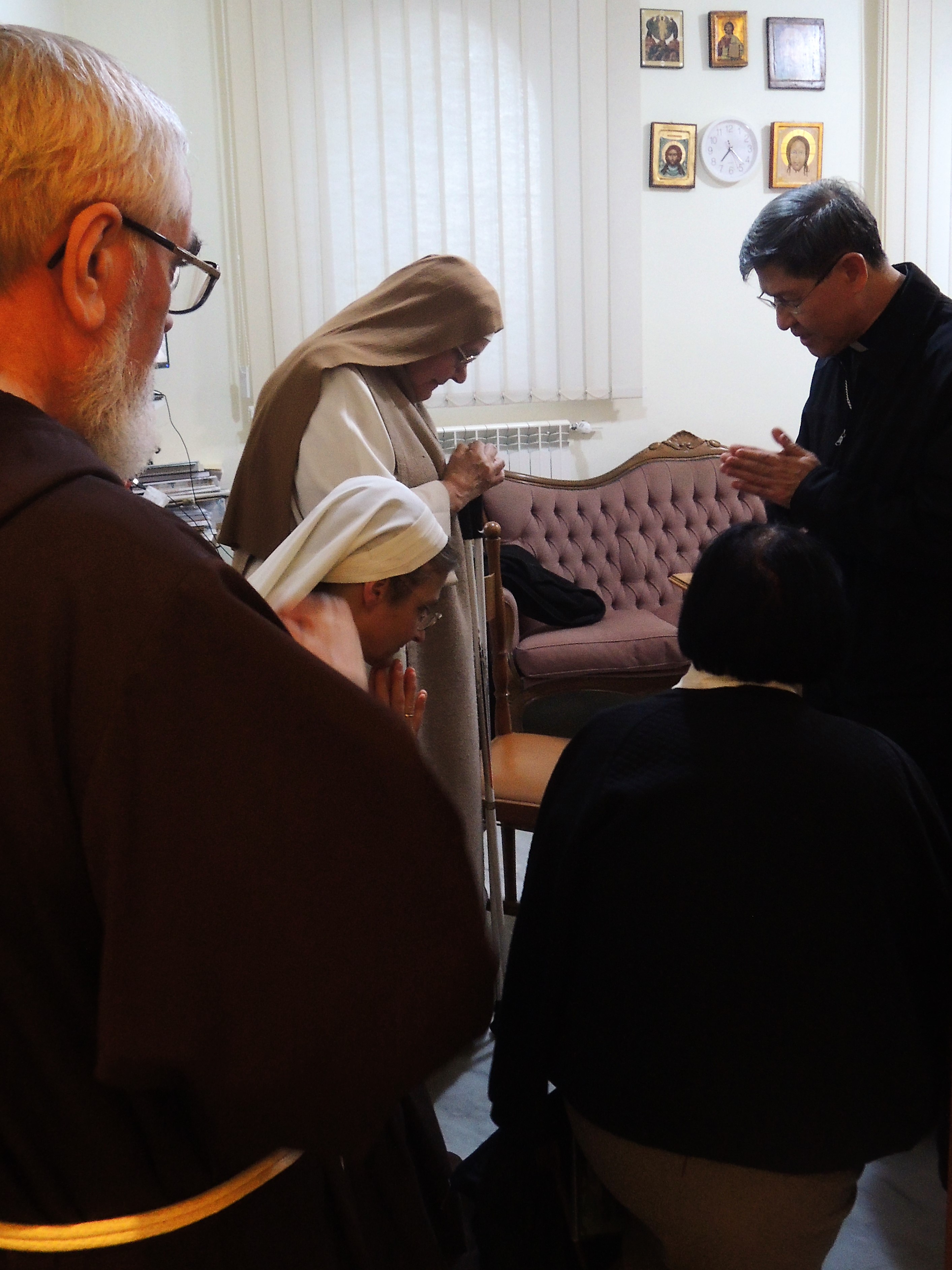
Padre Cucinelli, Sr. Blandina and Cardinal Tagle in prayer
“With Mary’s protection, may we be for our world sentinels of the dawn, contemplating the true Face of Jesus the Saviour, resplendent at Easter. Thus may we rediscover the young and beautiful face of the Church, which shines forth when she is missionary, welcoming, free, faithful, poor in means and rich in love.”–Pope Francis, canonization Mass of Jacinta & Francisco -homily
Pope Francis gave this address to the pilgrims at Fatima at the Rosary Procession and Vigil, teaching us to seek the Face of God with Mary, who, as “no other creature…basked in the light of the Face of God”:
Pope Francis at Fatima Vigil
Dear Pilgrims to Mary and with Mary!
Thank you for your welcome and for joining me on this pilgrimage of hope and peace. Even now, I want to assure all of you who are united with me, here or elsewhere, that you have a special place in my heart. I feel that Jesus has entrusted you to me (cf. Jn 21:15-17), and I embrace all of you and commend you to Jesus, “especially those most in need” – as Our Lady taught us to pray (Apparition of July, 1917). May she, the loving and solicitous Mother of the needy, obtain for them the Lord’s blessing! On each of the destitute and outcast robbed of the present, on each of the excluded and abandoned denied a future, on each of the orphans and victims of injustice refused a past, may there descend the blessing of God, incarnate in Jesus Christ.
“The Lord bless you and keep you. The Lord make his face to shine upon you, and be gracious to you. The Lord lift up his countenance upon you, and give you peace” (Num 6:24-26).
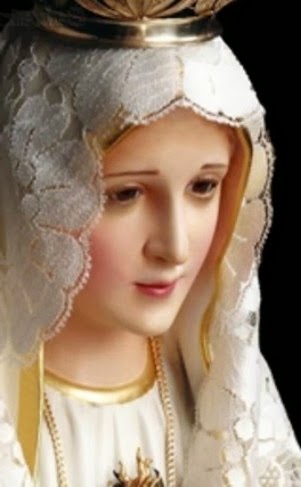
This blessing was fulfilled in the Virgin Mary. No other creature ever basked in the light of God’s face as did Mary; she in turn gave a human face to the Son of the eternal Father. Now we can contemplate her in the succession of joyful, luminous, sorrowful and glorious moments of her life, which we revisit in our recitation of the rosary.
With Christ and Mary, we abide in God. Indeed, “if we want to be Christian, we must be Marian; in a word, we have to acknowledge the essential, vital and providential relationship uniting Our Lady to Jesus, a relationship that opens before us the way leading to him” (PAUL VI, Address at the Shine of Our Lady of Bonaria, Cagliari, 24 April 1970). Each time we recite the rosary, in this holy place or anywhere else, the Gospel enters anew into the life of individuals, families, peoples and the entire world.
Pilgrims with Mary… But which Mary? A teacher of the spiritual life, the first to follow Jesus on the “narrow way” of the cross by giving us an example, or a Lady “unapproachable” and impossible to imitate? A woman “blessed because she believed” always and everywhere in God’s words (cf. Lk 1:42.45), or a “plaster statue” from whom we beg favours at little cost? The Virgin Mary of the Gospel, venerated by the Church at prayer, or a Mary of our own making: one who restrains the arm of a vengeful God; one sweeter than Jesus the ruthless judge; one more merciful than the Lamb slain for us?
Was there actually a St. Veronica? It is an important question, and a very personal one to me, as Veronica was my chosen patron Saint for Confirmation as a child; the name is part of my own identity and life’s devotion to the Face of Jesus Christ. “Bernice Veronica” is a family name–both names referring to the Woman who wiped the Face of Jesus, commonly depicted in every Catholic church, at the Sixth Station of the Cross. Veronica is now also the name of one of my granddaughters. So, whether there is an actual person, a saint named “Veronica” who wiped the Face of Jesus, is a question that I have sought to know the truth about for most of my life. Did she exist? And what does it mean to be “a Veronica?”
Veronica’s Veil, Flemish 15th Century
“St. Veronica”
The Catholic Church tells us that a veil bearing a miraculous image of the Face of Jesus has existed since the earliest centuries, recorded in history and in art. Explanations for the existence of such a veil were all different (see “Four Stories, One Face“). About the time this miraculous veil first appeared in Rome, in the Middle Ages, the name “Veronica” referred to the veil itself–“Veronica” meaning “vera” or true, and “icon” meaning image, or even more precisely, “to be present.” Those who gazed upon the veil bearing the true Face of Jesus stood in God’s presence. They were turned toward His Face.
Legends sprang up sometime later about a woman named “Veronica,” who was sometimes associated with the woman “Berenice” or “Bernice,” the bleeding woman who touches the hem of Jesus’s garment in the Gospel. There is a version, written in 1191 by Robert de Boron, that tells of a woman named “Veronica” wiping sweat from the Face of Jesus. The stories are many and varied, but the legend that most people are familiar with today is traced to a version by Roger d’Argenteuil in the 1300s, which tells of a woman “Veronica,” associated with the sixth station of the Cross–the compassionate woman, wiping the Face of Jesus on the way to Calvary with a cloth, upon which He leaves an image of His Face.
“These pious traditions cannot be documented, but there is no reason why the belief that such an act of compassion did occur should not find expression in the veneration paid to one called Veronica.” —The Catholic Encyclopedia
Pope St. John Paul II expressed the answer to the question of Veronica most beautifully in his poem, “The Name:”
In the crowd walking towards the place
[of the Agony]–
did you open up a gap at some point or were you
[opening it] from the beginning?
And since when? You tell me, Veronica.
Your name was born in the very instant
in which your heart
became an effigy: the effigy of truth.
Your name was born from what you gazed upon.
–Karol Wojtyla
Miraculous Holy Face Veil Photo: Paul Badde (see “Manoppello Image” tab)
Since the detailed historical facts about the veil itself cannot be verified with absolute certainty in this life, the more important and answerable question is, “What does it mean to be a Veronica?”
“Your name was born from what you gazed upon.”
When a soul performs an “act of compassion,” Jesus leaves His image on the “veil” of the soul. In other words, while contemplating the Face of Jesus in an image, in the Word of God in the Scriptures, in a person made in the image and likeness of God, or above all, in the Eucharist, the soul places itself in the Presence of God. When we are turned completely toward the Face of God, through a daily face-to-face encounter in prayer–by the power of the Holy Spirit–God gradually transforms the soul into the “True Image” of His Son, Jesus Christ. As Pope St. John Paul II says, our hearts must become an “effigy of truth,” a “true icon.” Then our name too will be born from what we gaze upon. It will be “Veronica.”
Way of the Cross, Sixth Station, Our Lady of Grace Capuchin Friary, San Giovanni Rotondo, “Veronica Wipes the Face of Jesus”
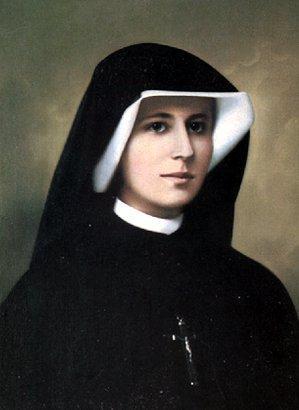
St. Faustina Kowalska, “The Apostle of Mercy,” was known as a mystic and visionary. Her diary, Divine Mercy in My Soul, records the journey of her soul. Our Lord granted St. Faustina a deep understanding of the love and mercy of God which she was to share with the world.
The greatest sign of God’s continuing mercy for the people of the world is His hidden Presence in the Eucharist. By turning to His Eucharistic Face, gazing at Jesus’s Face in silent contemplation, “a change takes place” in our souls, because He is also gazing at us.
“The Face of Christ is the supreme revelation of Christ’s Mercy.”–Pope Benedict XVI photo:Paul Badde
“O Living Host, O hidden Jesus. You see the condition of my soul. Of myself, I am unable to utter Your Holy Name. I cannot bring forth from my heart the fire of love, but, kneeling at Your feet, I cast upon the Tabernacle the gaze of my soul, a gaze of faithfulness. As for You, You are ever the same, while within my soul a change takes place. I trust that the time will come when You will unveil Your Countenance, and Your child will again see Your sweet Face. I am astonished, Jesus, that You can hide Yourself from me for so long and that You can restrain the enormous love You have for me. In the dwelling of my heart, I am listening and waiting for Your coming, O only Treasure of my heart! (1239 “Divine Mercy in My Soul”)
Divine Mercy in the waters of Baptism
It is through the Divine Mercy of God that souls, by turning continually toward His Holy Face, learn to live in His Presence. Thus, we may reach the true treasure of all hearts, fulfilling the soul’s greatest desire, which is to see God face to Face.
“During meditation, the Lord gave me knowledge of the joy of Heaven and of the Saints on our arrival there; they love God as the sole object of their love, but they also have a tender and heartfelt love for us. It is from the Face of God that this joy flows out upon all, because we see Him face to Face. His Face is so sweet that the soul falls anew into ecstasy” (1592, “Divine Mercy in My Soul”).
St. Faustina, pray for us!
Important Update:Raymond Frost at the Holy Face of Manoppello Blogspot reports that the most recent episode of Vaticano, EWTN’s weekly television program originating in Rome there is a most beautiful segment (“Traces of the Resurrection” starting at 23:40) on the Holy Face of Manoppello as one of the “clues” which demonstrates the reality of the Resurrection of Jesus.
“So Simon Peter and the other disciple went out and came to the tomb. They both ran, but the other disciple ran faster than Peter and arrived at the tomb first; he bent down and saw the burial cloths there, but did not go in. When Simon Peter arrived after him he went into the tomb first, and he saw and believed. For they did not yet understand the Scripture that he had to rise from the dead.” John 20














 Illumina Domine Blog - Devotion to The Holy Face