“How fair you are, O Virgin Mary! Your face is resplendent with grace.” — Carmelite Proper
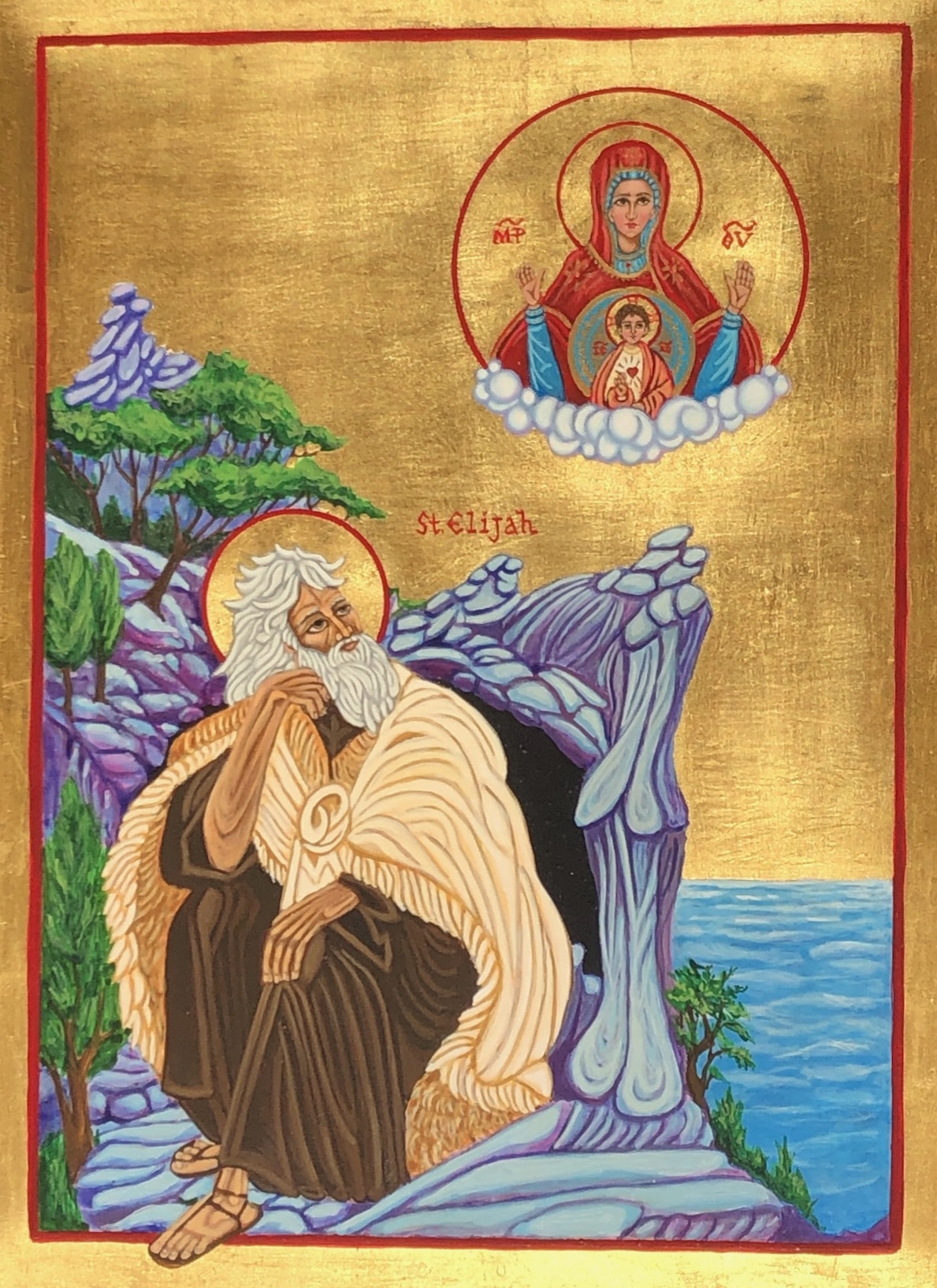
Mary has many titles, each having a special significance and meaning. “Queen Beauty of Carmel” recalls the ancient beauty of Mount Carmel in the Holy Land, the place where the prophet Elijah, zealous for the worship of the one, true, and living God, steadfastly sought the Face of God in silence and in prayer.
The Cave of Elijah on Mount Carmel
Mary, Queen Beauty of Mount Carmel personifies the”enclosed garden” created solely for God and watered by Him, containing all beauty, grace, and virtues. All mankind has been entrusted to her maternal heart; she gathers her children into the garden of Carmel to learn from her the way of perfection. The children of Our Lady of Mount Carmel are drawn by her — to “contemplate God in the human Face of Jesus” and follow in her footsteps which lead to fullness of prayer and communion with her Son. With docility to the Holy Spirit, Mary’s children seek to imitate their incomparable Mother in her pilgrimage of faith, hope in trials, and faithfulness in love, with trust in His mercy and purity of heart which will enable them to see the Father’s Face.
“The Beauty of Carmel has been given to them, they will see the glory of the Lord and the splendor of our God.”– Carmelite Proper
Devotion to the Holy Face, as characterized by Pope St. John Paul II, Pope Benedict, and Pope Francis, is not solely a devotion of reparation, but so much more. It is a means of living out the two greatest commandments given to us by Christ Jesus in the Gospel: to love the Lord, Our God, with all our mind, and all our heart and all our strength, and to love our neighbor as ourself (Mt. 22:40). It is the path of transformation of love into the image of Christ.
Here are a few sainted Discalced Carmelite children of Mary and what they have learned about seeking God’s Face in prayer …
St. Teresa of Jesus:“He is always looking at you; can you not turn the eyes of your soul to look at Him?”
“He will gaze on you with beautiful, compassionate eyes, and will forget His own grief to solace yours, only because you went to comfort Him, and turned to look at Him.”
“Never set aside the Sacred Humanity of Christ…If we can, we should occupy ourselves in looking at Him who is looking at us; keep Him company; talk with Him; humble ourselves before Him; have our delight in Him…the Lord is within us and we should be there with Him.”
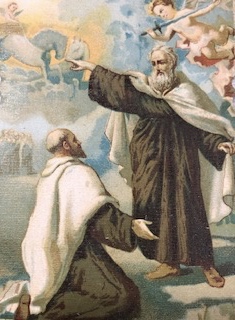
St. John of the Cross
St. John of the Cross:“The soul can only be satisfied with God’s Face.” To seek God’s Face is to seek Him in prayer, to look at Him is to take the time to contemplate Him, even in the darkness of pure faith. When we do this, St. John of the Cross tells us, God is doing great things! He shines His Face upon us, to restore by a “gentle touch” His image in our souls.
“O my God, the more gently You touch, the more You are hidden in the purified souls of those who have made themselves aliens on earth, and whom You hide in the secret of Your Face.”
“Courage then, O soul most beautiful! You now know that your Beloved dwells hidden within your own breast. Endeavor therefore to be truly hidden with Him.”
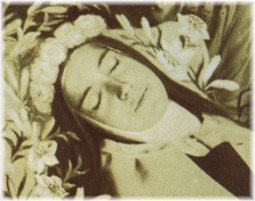
St. Therese of the Child Jesus and the Holy Face: “Your Face is my only wealth./ I ask for nothing more./ Hiding myself in it unceasingly,/ I will resemble You, Jesus/ Leave in me, the Divine Impress/ of Your features filled with sweetness.”
“O Jesus, whose adorable Face ravishes my heart, I implore Thee to fix deep within me Thy Divine Image and to set me on fire with Thy Love, that I may be found worthy to come to the contemplation of Thy glorious Face in Heaven. Amen.”
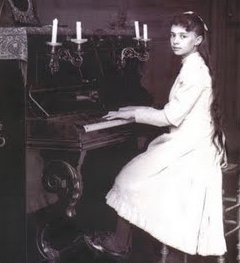
St. Elizabeth the Trinity: “Nothing shows forth the love which the Heart of God bears for us as does the Eucharist. It means union, consummation, He in us and we in Him. Is not that heaven on earth, heaven in faith, while we await the face to face vision for which we so yearn? Then, when His glory appears, we shall be satisfied when we see Him in His light. Do you not find that it rests the soul to think about that meeting with Him whom we love supremely? Then all else vanishes and we feel that already we are penetrating into the Mystery of God!
“It is Your continual desire to associate yourself with your creatures…How can I better satisfy Your desire than by keeping myself lovingly turned towards You, so that You can reflect Your own image in me, as the sun is reflected through pure crystal?…We will be glorified in the measure in which we will have been conformed to the image of His Divine Son. So, let us contemplate this adored Image, let us remain unceasingly under it’s radiance so that it may imprint itself on us.”
St.Teresa Benedicta of the Cross:“Prayer is looking up into the face of the Eternal. We can do this only when the spirit is awake in it’s innermost depths, freed from all earthly occupations and pleasures that benumb it. being awake in body does not guarantee this consciousness, nor does rest required by nature interfere.”
“Contemplate the Lord who hangs before you on the wood, because he was obedient even to death of the cross. He came into the world not to do his own will but that of the Father. And if you wish to be the spouse of the Crucified, you must renounce completely your own will and have no other aspiration than to do the will of God…The eyes of the Crucified will gaze upon you. They question you and appeal to you…What will your response be? ‘Lord, where shall I go? You alone have the words of life.’ “Ave Crux, spes unica! Hail to the Cross our only hope!
St. Teresa of the Andes: “Are you perhaps afraid to draw near him? Look at him, surrounded by little children. He caresses them, he presses them to his heart. Look at him in the midst of his faithful flock, bearing the faithless lamb on his shoulders. Look at him in the tomb of Lazarus, And listen to what he says of the Magdalene: ‘Much has been forgiven her, because she has loved much.’ What do you discover in these flashes from the Gospel except a heart that is good, gentle, tender, compassionate; in other words, the heart of a God?”
+++
Mary, Queen Beauty of Carmel, Pray for us!
Flos Carmeli
Flower of Carmel, Tall vine blossom laden, Splendor of heaven, Child-bearing yet maiden. None equals thee.
Mother so tender, Whom no man didst know, On Carmel’s children Thy favors bestow. Star of the Sea.
Hail Gate of Heaven, With glory now crowned, Bring us to safety Where thy Son is found, true joy to see.
There he came to a cave, where he took shelter. Then the Lord said: “Go outside and stand on the mountain before the Lord; the Lord willl be passing by.” A strong and heavy wind was rending the mountains and crushing rocks before the Lord–but the Lord was not in the wind. After the wind there was an earthquake–but the Lord was not in the earthquake. After the earthquake there was fire–but the Lord was not in the fire. After the fire there was a tiny whispering sound. When he heard this, Elijah hid his face in his cloak and went and stood at the entrance of the cave. A voice said to him, “Elijah, why are you here?” He replied, “I have been most jealous for the Lord, the God of Hosts.” (1 Kings 19)
Fixing our eyes on God
Pope St. Gregory explains why Elijah is described as standing at the mouth of the cave (“where we direct our mental gaze, there we may be said to stand.”) and veiling his face when he heard the voice of the Lord speaking to him: “…as soon as the voice of heavenly understanding enters the mind through the grace of contemplation, the whole man is no longer within the cave, for his soul is no longer taken up with matters of the flesh: intent on leaving the bounds of mortality, he stands at the cave’s mouth.”
Humility and Detachment – the keys to contemplation
“But if a man stands at the mouth of the cave and hears the word of God with his heart’s ear, he must veil his face. For when heavenly grace leads us to the understanding of higher things, the rarer the heights to which we are raised, the more we should abase ourselves in our own estimation by humility: we must not try to know ‘more than is fitting; we must know as it befits us to know.’ Otherwise, through over-familiarity with the invisible, we wish going astray; and we might perhaps look for material light in what is immaterial. For to cover the face while listening with the ear means hearing with our mind the voice of Him who is within us, yet averting the eyes of the heart from every bodily appearance. If we do this, there will be no risk of our spirit interpreting as something corporeal that which is everywhere in its entirety and everywhere uncircumscribed…while our feet stand within the walls of His holy Church, let us keep our eyes turned toward the door; let us mentally turn our backs on the corruption of this temporal life; let us keep our hearts facing toward the freedom of our heavenly fatherland.”
Almighty, ever-living God, your prophet Elijah, our Father, lived always in your presence and was jealous for the honor due to your name. May we, your servants, always seek your Face and bear witness to your love. We ask this through our Lord, Jesus Christ. Amen.
There he came to a cave, where he took shelter. Then the Lord said: “Go outside and stand on the mountain before the Lord; the Lord willl be passing by.” A strong and heavy wind was rending the mountains and crushing rocks before the Lord–but the Lord was not in the wind. After the wind there was an earthquake–but the Lord was not in the earthquake. After the earthquake there was fire–but the Lord was not in the fire. After the fire there was a tiny whispering sound. When he heard this, Elijah hid his face in his cloak and went and stood at the entrance of the cave. A voice said to him, “Elijah, why are you here?” He replied, “I have been most jealous for the Lord, the God of Hosts.” (1 Kings 19)
Fixing our eyes on God
Pope St. Gregory explains why Elijah is described as standing at the mouth of the cave (“where we direct our mental gaze, there we may be said to stand.”) and veiling his face when he heard the voice of the Lord speaking to him: “…as soon as the voice of heavenly understanding enters the mind through the grace of contemplation, the whole man is no longer within the cave, for his soul is no longer taken up with matters of the flesh: intent on leaving the bounds of mortality, he stands at the cave’s mouth.”
Humility and Detachment – the keys to contemplation
“But if a man stands at the mouth of the cave and hears the word of God with his heart’s ear, he must veil his face. For when heavenly grace leads us to the understanding of higher things, the rarer the heights to which we are raised, the more we should abase ourselves in our own estimation by humility: we must not try to know ‘more than is fitting; we must know as it befits us to know.’ Otherwise, through over-familiarity with the invisible, we wish going astray; and we might perhaps look for material light in what is immaterial. For to cover the face while listening with the ear means hearing with our mind the voice of Him who is within us, yet averting the eyes of the heart from every bodily appearance. If we do this, there will be no risk of our spirit interpreting as something corporeal that which is everywhere in its entirety and everywhere uncircumscribed…while our feet stand within the walls of His holy Church, let us keep our eyes turned toward the door; let us mentally turn our backs on the corruption of this temporal life; let us keep our hearts facing toward the freedom of our heavenly fatherland.”
Almighty, ever-living God, your prophet Elijah, our Father, lived always in your presence and was jealous for the honor due to your name. May we, your servants, always seek your Face and bear witness to your love. We ask this through our Lord, Jesus Christ. Amen.





 Illumina Domine Blog - Devotion to The Holy Face