AI, Humanity and the Face of God

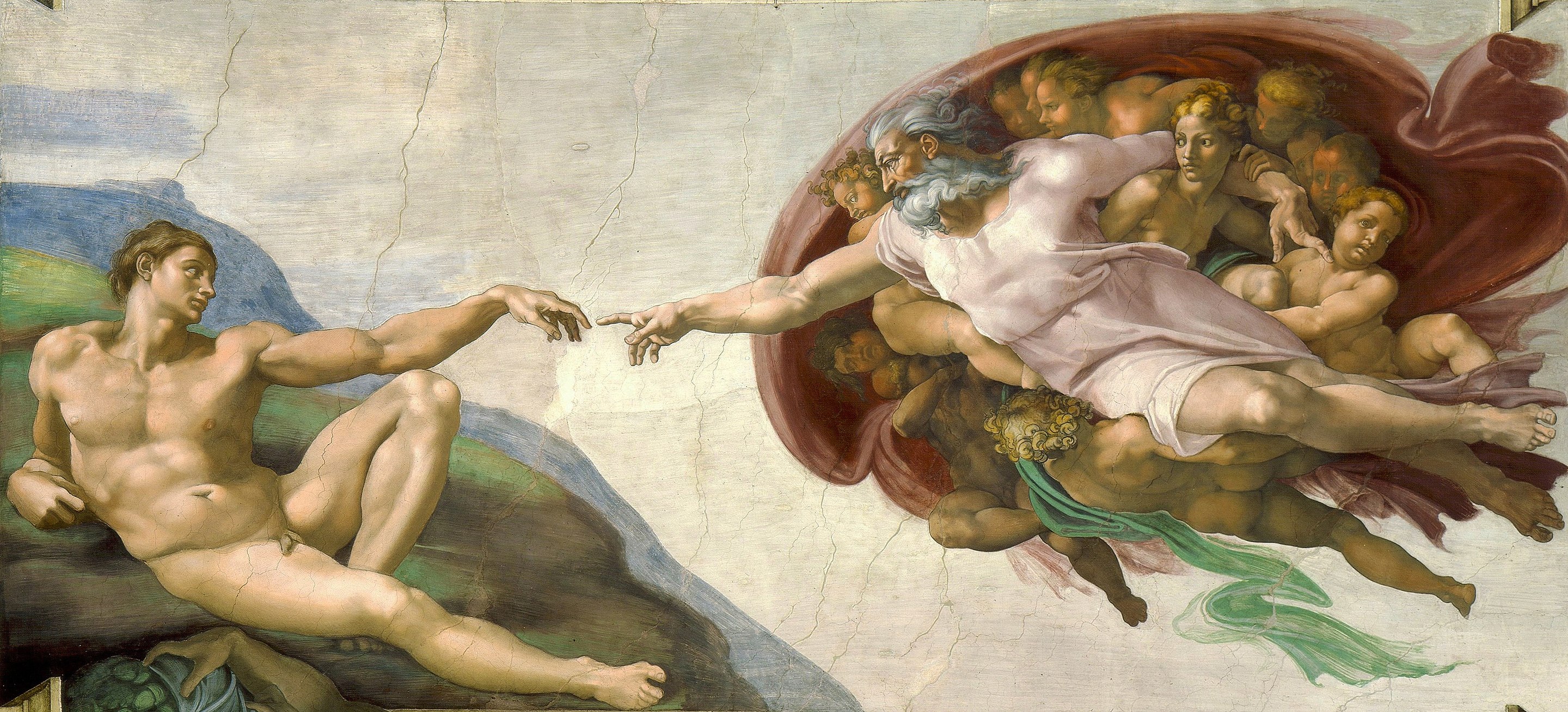
The Creation of Adam by Michelangelo, in the Sistine Chapel

What does it mean to be human, and why does it matter? The understanding of the human person has tremendous consequences for the world, which can lead humanity to–or away from–the Face of God, because “it is only in God that man has meaning.” (Gaudium et Spes)

The newly elected Pope Leo XIV, when first meeting with the college of cardinals, mentioned serious challenges to human dignity, in particular, regarding “developments in the field of artificial intelligence:”(Read also: Pope Leo XIV to Cardinals: Church must respond to digital revolution ) This poses many questions: What are the “serious challenges” mentioned? What should our response be to this rapidly developing technology and its misuse? What exactly is “artificial intelligence,” and what does it mean to be a “human person?” And what does all this have to do with the Face of God?
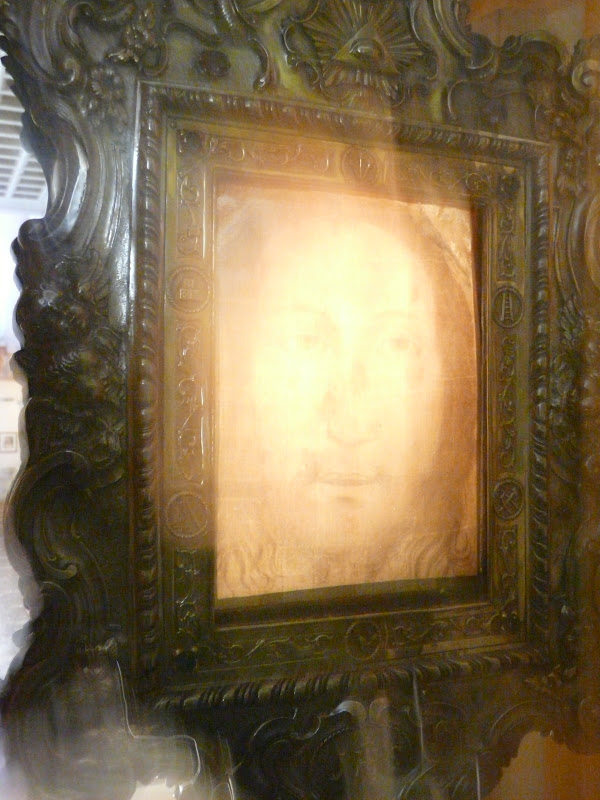
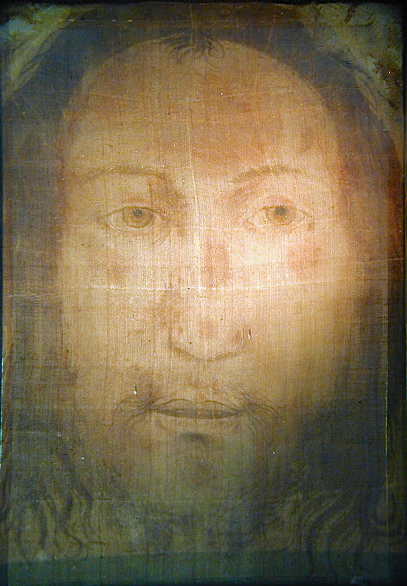
Holy Face of Manoppello, an “achieropoieta” — made by the Hand of God. (Photo: Paul Badde)

Pope St. John Paul II dedicated the millennium to the Face of God. And it is my own belief that devotion to the Face of Christ, *as studied and characterized by Card. Ratzinger (Pope Benedict XVI) at the request of Pope St. John Paul II, is the answer to a rapidly approaching crisis that will soon face all humanity. God bless Pope Leo XIV, who has now brought the Church’s concerns about AI and human dignity to the forefront at the beginning of his pontificate.

Several news items that are related to artificial intelligence have caught my attention this past year: One was regarding an Apple advertisement for their new iPad which depicted crushing various instruments of human creativity, such as art objects and musical instruments, implying that the new iPad would take the place of human creativity, and unceremoniously dump it all in the ash heap of human history. The others were related to the “deep fakes” emerging from AI technology that are greatly alarming a great many people, notably in the entertainment industry, and the increasingly horrifying news related to the nefarious use of images of innocent persons to generate pornography.

Calling attention to the emerging, hyper-realistic, and increasingly disturbing AI capabilities, many writers, and artists, and people in all walks of life, have called on their governments to act to protect the creative works, images, and voices of persons living and dead, from being manipulated or stolen by unsavory persons lurking in the dark doorways of the internet.

One popular singer, Sheryl Crow, hit the nail on the head when said she was “terrified” by the AI fakes of her work; that AI “crushes the spirit of music.” “It feels like an assault on my spirit.” “It [AI technology] has consumed me with questions about who we will forever be in our humanity…” The music artist has touched on the deepest question of mankind–what does it mean to be human?

The great theologian John Zizioulas wrote in his book The Meaning of Being Human that “the key to understanding being human is understanding personhood as a relationship between the ‘giver,’ who is God, and the one who receives ‘the gift’ given them through the language of love.”

Mankind’s relationship with God seems to be gravely threatened in recent years by an iniquitous use of AI that begins in simple laziness. When AI makes it possible to take the easy path to get something done, very few may first look toward God for inspiration and help. A person need only ask AI for what he desires, and it appears within seconds on a screen effortlessly, and seemingly perfect. Or is it? AI seems to offer freedom, but it can lead to enslavement.

In our fast-paced world of technology we are losing the patience to think and create, and feel we lack the time to think, or learn the the skills to: create a job resume, a love letter, a song, a painting, or find a medical diagnosis. But we are meant to use our God-given gifts of intellect and free will — “to seek His Face” in all things –God, Our Father, Jesus, Our Savior, and the Holy Spirit, Our Advocate — the Holy Trinity with Whom mankind is made for relationship. However, in mankind’s inability to satisfy his desires quickly enough, many no longer look to God, who has given us the gifts we need to do the work, but instead reach for the easy, wide path of AI — an algorithm — thereby, gradually exchanging God’s gifts of freedom for slavery. The human ability to create is one of the ways we are imago Dei, the image of God; to shortcut our creativity is to violate, deny, or deprive that essential part of our identity as sons and daughters of God.

This is the truth which is amplified in Gaudium et Spes: “The truth is that only in the mystery of the Incarnate Word does the mystery of man take on light. For Adam, the first man, was a figure of Him Who was to come, namely Christ the Lord. Christ, the final Adam, by the revelation of the mystery of the Father and His love, fully reveals man to man himself and makes his supreme calling clear. It is not surprising, then, that in Him all the aforementioned truths find their root and attain their crown.”

“Veronica” is the example of the soul’s transformation in love into the Image of Christ through love of God and neighbor.

Human persons are made for relationship–in communion, freedom, and love with God. We are made in His Image and likeness in this way. God Himself is a personal being, eternally three persons in relationship–Trinity–and love. Therefore, as John Zizioulas writes, “the notion of a person is to be found only in God,” and human personhood is never satisfied with itself until it becomes an image of God.” Becoming an image of God requires a transformation in love that is needed to enable us to see God face to face in Heaven. And that requires a relationship with Him.

You cannot have a relationship with an algorithm.

As Pope Francis wrote in Evangelii Gaudium, “[Many people] want their interpersonal relationships provided by sophisticated equipment, by screens and systems which can be turned on and off on command. Meanwhile, the Gospel tells us constantly to run the risk of a face-to-face encounter with others. . . . True faith in the incarnate Son of God is inseparable from self-giving, from membership in the community, from service, from reconciliation with others.”

Pope Benedict XVI has written that in the Psalms we learn the attitude for seeing the face of God: “Let the hearts of those who seek the LORD rejoice! Seek the LORD and his strength, seek his presence continually” (Ps 105:3-4). In Psalm 24, we learn the prerequisites of “clean hands and a pure heart” “Such is the generation of those who seek him, who seek the face of the God of Jacob.”

John Zizioulas points out the tragedy of human personhood is manifested in his “capacity” and “incapacity;” these are the means, Zizioulas says, through which we relate to God and the rest of creation. Human capacity includes the intellect and the will. Intellectual human capacities are knowledge, creativity, and skills. Capacities of the will would be commitment, trust, perseverance, or the choice to sacrifice for a greater good. Our incapacities as human persons are as numerous as the sands on the seashore. But that is exactly the place where God meets us in the mystery of the Incarnate Word. It is the place where God reveals man to himself — where we recognize our need for His Love and salvation.

Being a person made in the image of God is the highest form of human “capacity.” We are capable of communion with God Himself! We are capable of creating, enabling our presence to be revealed even in our absence, as John Zizioulas demonstrates in his book The Meaning of Being Human by his analogy of the “absent artist.” By creating something himself, an artist’s presence is revealed in what he has created. We know from looking at the Pietà, for instance, there is such a person as Michelangelo who existed.

“In so far, therefore, as the human person is an entity whose being or particularity is realized by way of transcendence of its boundaries in an event of communion, its personhood reveals itself as presence.” ~ John Zizioulas
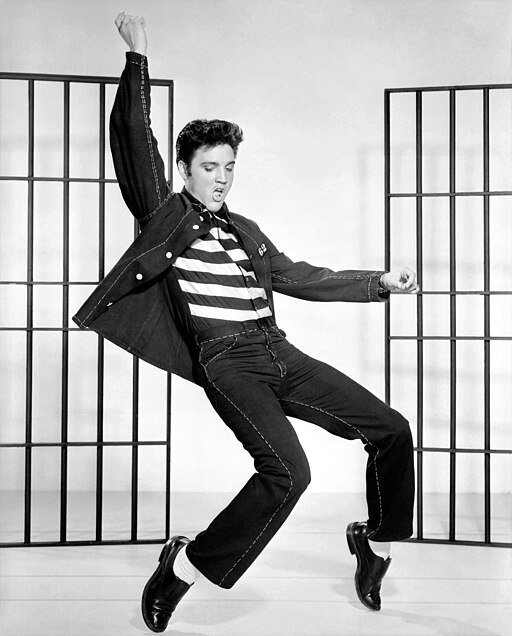
The one and only Elvis Presley

When AI produces something–for example an AI-generated Elvis Presley, singing new AI songs, generated by algorithm–it is not the true “presence in absence” of the human person known as Elvis; it is a perversion of truth and an assault on the dignity of his personhood, even in death.

In other words, human persons are capable of creating which enables the person’s presence to be revealed in absence. From the drawings of unknown artists on cave walls to Michelangelo’s Sistine Chapel, great symphonies, or even the songs of Elvis Presley, art testifies to a unique human person’s presence–their presence is revealed in what they have created. When someone manipulates the creation of another through AI, it is a misrepresentation of the person–a false face; a distortion of their unique personhood, a degradation of their humanity.
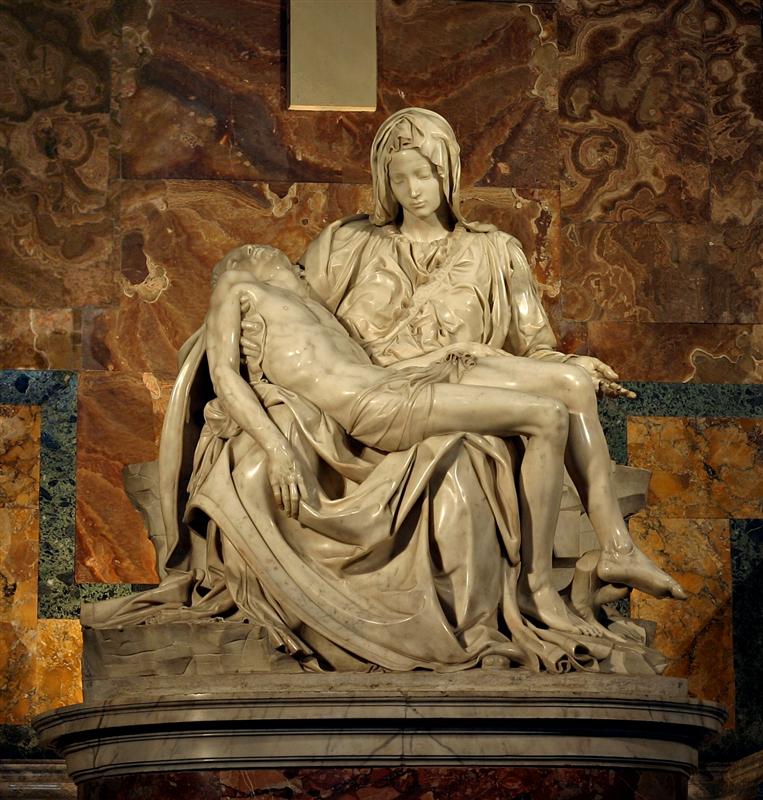
The Pietà by Michelangelo, 1499

The great paradox is that death through and in Jesus Christ becomes life! Or as St. Paul has written: “When I am weak, I am strong.” ( 2 Cor 12:10)

Our relationship with God is also one of “presence in absence,” writes Zizioulas. When sin entered the world as idolatry, freedom led to slavery, and communion with God was ruptured. Before that rupture caused by sin can be healed, we must first in His absence seek God’s Face, that is, His Divine Presence. It is only through Jesus Christ, and in communion with Him, that our lives have meaning, and that the image of God may be restored in our souls.

As a result of sin, mankind’s greatest incapacity came through death. But because Christ became man at the Incarnation, he became both the source and meaning of the human person, and his very death– which “signifies human incapacity par excellence,” per Zizioulas–paradoxically reverses that incapacity.

God has a face and a name: by His Incarnation, Jesus Christ gave us a human face that revealed the face of God. In our Baptism, we are united to Christ and find our identity by living in Christ, in love, which cannot be isolated from presence. Christianity is a loving relationship with Christ, who transforms us in himself. Through the incapacity of death Jesus restores “the communion of natures in and through his personhood, turns the created realm into a presence of God,” writes John Zizioulas, thus lifting all creation up to communion with God through man.

In communion with an immortal God — when we come before the face of Christ (in His Presence) — we are then capable of everything. “I can do all things in Christ.” (Phil. 4:13); the capacity of the human person is found only in the incapacity of our creature-hood in communion with Christ. This is especially true even in striving for holiness, as St. Bernard has written, “In our incapacity we can only appropriate holiness from Jesus himself, since only God is holy.”

The human person’s greatest freedom is in Christ, which destroys the slavery to sin; and it is surprisingly the freedom to choose to suffer with him. Zizioulas writes: “It is the capacity of man to fully embrace his incapacity, that is, to turn weakness into strength or rather to realize his power in weakness. This paradox is nothing other than what St. Paul means when he writes in 2 Cor 12:10– after mentioning his full acceptance of suffering: ‘for when I am weak, I am strong.'”

Zizioulas explains further that “human freedom in its true meaning, abolishes the scheme ‘capacity versus incapacity’ and replaces it with the paradox of ‘capacity in incapacity.'” In man’s fallen state, even the greatest sinner is still a person created in the image and likeness of God and thus deserving of the greatest respect, during their life and after their death. In communion with Christ, man has the freedom to suffer, and therefore, in Christ, it is possible to be transformed in love in Him. Embracing our weakness in the suffering of the Cross is the way to the Resurrection.

“The weak can manifest the Power of God. So when you yell and scream over all your faults and weaknesses and imperfections, you’re fighting against the very tool that God wants to make us holy.” ~ Mother Angelica

This understanding of the human person has tremendous consequences for the world, in relation to the use of AI, which can lead to God or away from God. Because “it is only in relationship with God that man has meaning.” Man has a capacity for faith, which is experienced as a painful absence which makes us long for God’s presence — the deep longing within our souls to see God’s Face. “Seeking the face of God,” writes Pope Benedict XVI, “is an attitude that embraces all of life; in order for man to see God’s face at last, he must himself be illuminated entirely by God.”

“Artificial intelligence” is actually a misnomer–even the name falls short of the truth. AI can only simulate intelligence. AI cannot create, therefore, it cannot communicate God’s love; it is a tool that can only generate data by imitation, manipulating or altering the creations of man. AI is incapable of relationship, even though some misguided lonely souls are deceived into believing it can. AI can never enter into communion with a human being, with God, or act as images of God, as a human person can.

Through the misuse of AI we run the risk of losing sight of what makes us distinctly unique as human persons. Only a person made in the image and likeness of God can have the intelligence to understand, contemplate, and grasp reality or be capable of insights, moral judgments, or an understanding of beauty, truth and goodness, or the freedom “to lay down one’s life for one’s friends (John 15:13).

In his own suffering, St. Dismas, the Good Thief, turns to the Face of Jesus on the Cross.

The act of human creation is only done in imitation of our Creator. The freedom of choosing to suffer for love in union with Jesus Christ, in imitation of Christ, is the greatest mystery of what Zizioulas calls “capacity in incapacity.” Through that union with Christ, God, in His infinite mercy, will grant grace to the smallest, most humble, weakest, the very least capable human person; even the worst sinner who turns toward His Face, in a relationship of love, as did the Good Thief on Calvary; so they may enter into the joy of eternal life with Him forever.

“Let Your Face shine, that we may be saved!” (Ps 80:3, 7, 19)

*Benedict XVI has characterized devotion to the Holy Face as having three separate components:
1. Discipleship – an encounter with Jesus, to see Jesus in the Face of those in need.
2. The Passion of Jesus, and suffering expressed by images of the wounded Face of Jesus.
3. The Eucharist, “the great school in which we learn to see the Face of God”, which is woven between the other two. The eschatological element then builds on awakening to Christ by contemplating His Face hidden in the Eucharist.

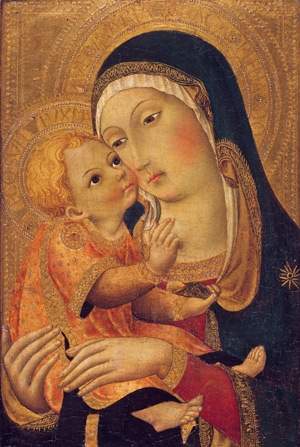
Our Lady of Good Counsel
Our Lady of Good Counsel, pray for us!

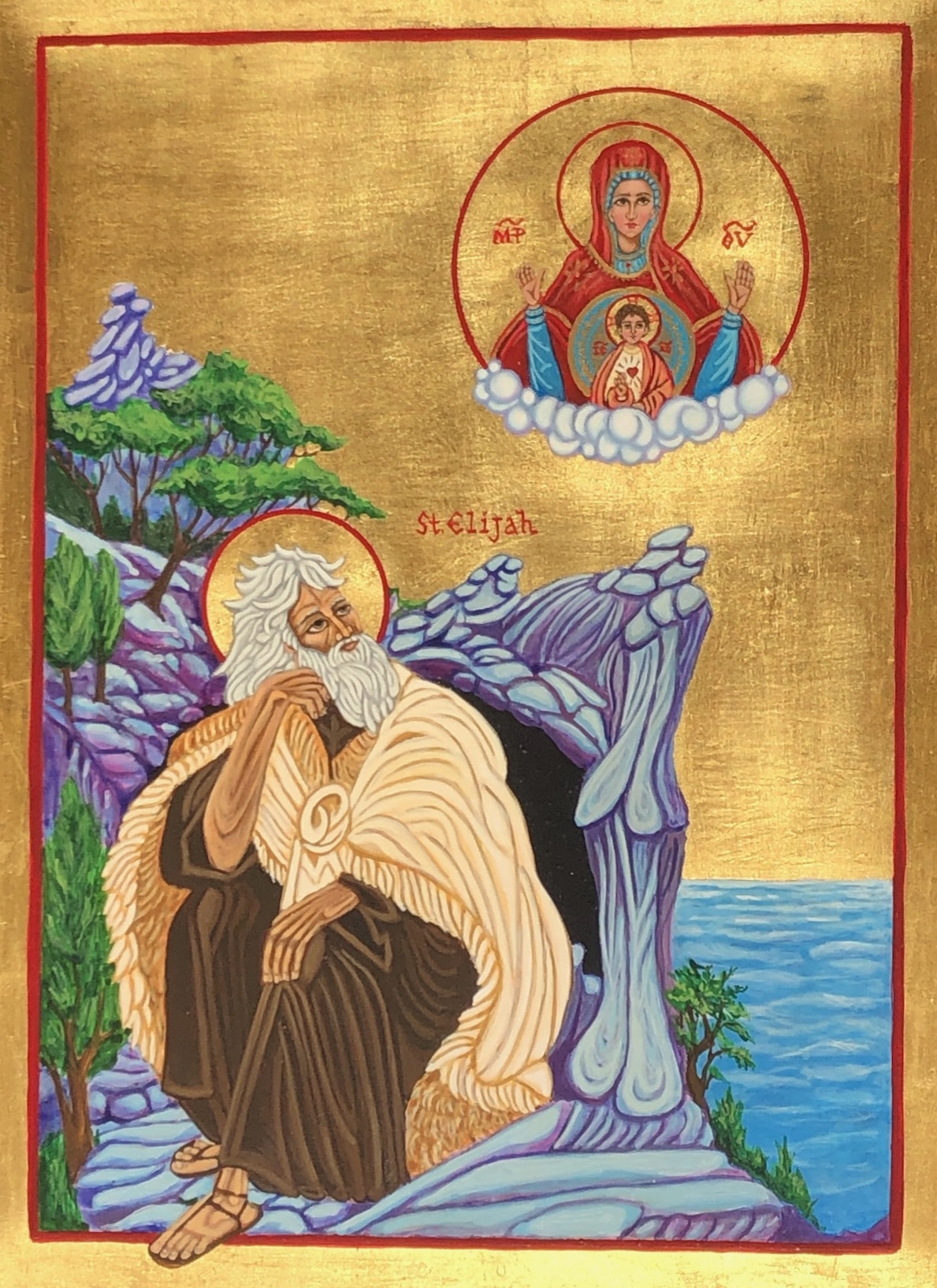
St. Elijah and Contemplation

Seeking the Face of God in Prayer

Icon of St. Elijah written by Patricia Enk

There he came to a cave, where he took shelter. Then the Lord said: “Go outside and stand on the mountain before the Lord; the Lord willl be passing by.” A strong and heavy wind was rending the mountains and crushing rocks before the Lord–but the Lord was not in the wind. After the wind there was an earthquake–but the Lord was not in the earthquake. After the earthquake there was fire–but the Lord was not in the fire. After the fire there was a tiny whispering sound. When he heard this, Elijah hid his face in his cloak and went and stood at the entrance of the cave. A voice said to him, “Elijah, why are you here?” He replied, “I have been most jealous for the Lord, the God of Hosts.” (1 Kings 19)

Fixing our eyes on God

Pope St. Gregory explains why Elijah is described as standing at the mouth of the cave (“where we direct our mental gaze, there we may be said to stand.”) and veiling his face when he heard the voice of the Lord speaking to him: “…as soon as the voice of heavenly understanding enters the mind through the grace of contemplation, the whole man is no longer within the cave, for his soul is no longer taken up with matters of the flesh: intent on leaving the bounds of mortality, he stands at the cave’s mouth.”

Humility and Detachment – the keys to contemplation

“But if a man stands at the mouth of the cave and hears the word of God with his heart’s ear, he must veil his face. For when heavenly grace leads us to the understanding of higher things, the rarer the heights to which we are raised, the more we should abase ourselves in our own estimation by humility: we must not try to know ‘more than is fitting; we must know as it befits us to know.’ Otherwise, through over-familiarity with the invisible, we wish going astray; and we might perhaps look for material light in what is immaterial. For to cover the face while listening with the ear means hearing with our mind the voice of Him who is within us, yet averting the eyes of the heart from every bodily appearance. If we do this, there will be no risk of our spirit interpreting as something corporeal that which is everywhere in its entirety and everywhere  uncircumscribed…while our feet stand within the walls of His holy Church, let us keep our eyes turned toward the door; let us mentally turn our backs on the corruption of this temporal life; let us keep our hearts facing toward the freedom of our heavenly fatherland.”

Almighty, ever-living God, your prophet Elijah, our Father, lived always in your presence and was jealous for the honor due to your name. May we, your servants, always seek your Face and bear witness to your love. We ask this through our Lord, Jesus Christ. Amen. 

— Pope St. Gregory

Desire for the Vision of God

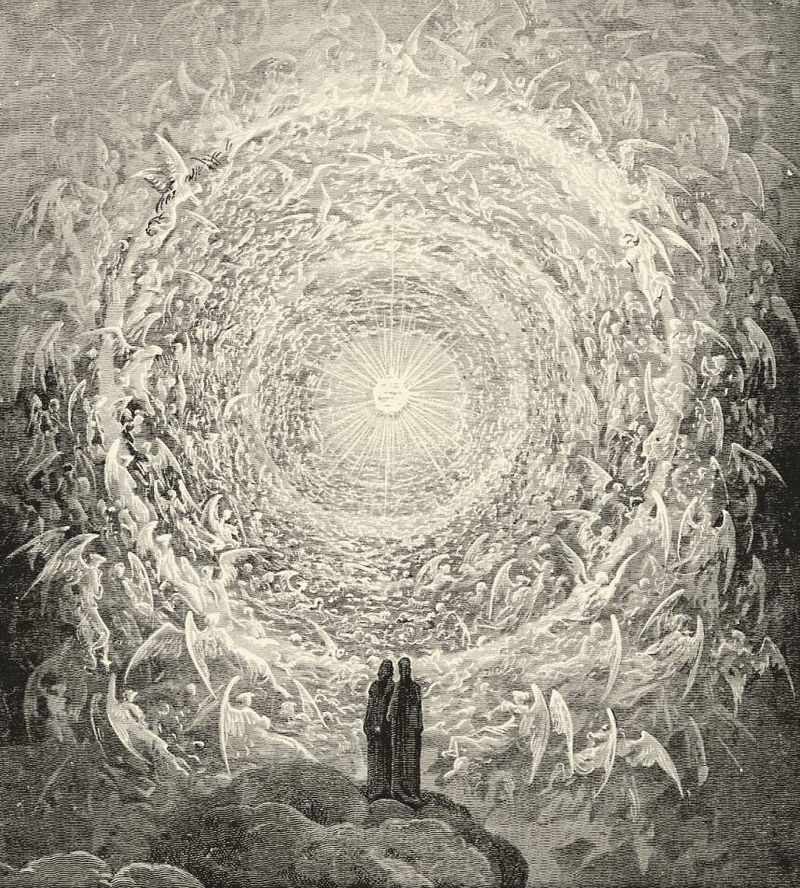
Paradiso, Gustave Doré

From the Proslogion by St. Anselm, Bishop

Insignificant man, escape from your everyday business for a short while, hide for a moment from your restless thoughts. Break off from your cares and troubles and be less concerned about your tasks and labors. Make a little time for God and rest a while in him.

Enter into your mind’s inner chamber. Shut out everything but God and whatever helps you to seek him. Speak now to God and say with your whole heart: I seek your face; your face, Lord, I desire.

Lord, my God, teach my heart where and how to seek you. Lord, if you are not here where shall I look for you in your absence? Yet if you are everywhere, why do I not see you when you are present? But surely you dwell in “light inaccessible.” And where is light inaccessible? How shall I approach light inaccessible? Or who will lead me and bring me into it that I may see you there? And then, by what signs and under what forms shall I seek you? I have never seen you, Lord my God; I do not know your face.

Lord, most high, what shall this exile do, so far from you? What shall your servant do, tormented by love of you and cast so far from your face? He yearns to see you, and your face is is too far from him. He desire to approach you, and your dwelling is inapproachable. He longs to find you, and does not know your dwelling place. He strives to look for you, and does not know your face.

Lord, you are my God and you are my Lord, and I have never seen you. You have made me and remade me, and you have given me all the good things I possess, and still I do not know you. I was made in order to see you, and I have not yet done that for which I was made.

Lord, how long will it be? How long, Lord, will you forget us? How long will you turn your face away from us? When will you look upon us and hear us? When will you enlighten our eyes and show us your face? When will you give your self back to us?

Look upon us, Lord, hear us and enlighten us, show us your very self. Restore yourself to us that it may go well with us whose life is so evil without you. Take pity on our efforts and our striving toward you, for we have no strength apart from you.

Teach me to seek you, and when I seek you show yourself to me. for I cannot seek you unless you teach me, nor can I find you unless you show yourself to me. Let me seek you in desiring you and desire you in seeking you, find you in loving you and love you in finding you.

Christ Carrying His Cross, Hieronymus Bosch
Listen to my voice, Lord, when I call
... Your Face, Lord, do I seek!
Hide not Your Face from me!
-- Psalm 27

God’s Greatest Gift – His Peace

Photo: Patricia Enk

“Peace I leave with you; My peace I give to you; not as the world gives do I give to you. Do not let your heart be troubled, nor let it be fearful.” (John 14:27)

In His discourse at the Last Supper Jesus gives to his disciples, and to us, the gift of His peace. He leaves it “with” us. Most people would think of peace as a state of being undisturbed, tranquil or quiet. But Jesus tells us at the same time not to “let our hearts be troubled or fearful.” We must must somehow preserve this peace while living, as did the first disciples, in a disturbing, troubling, and frightening anti-Christian world. It is a paradox. What is this “gift” of His peace — a peace that can remain with us while the world around has gone mad? 

The world offers its own sort of “peace” but it is at the price of rejecting Jesus Christ and His Cross. It is the false peace of tolerance and acquiescence — getting along, or going along with the prevailing culture — in the hope that by submission to its unceasing demands we will somehow be left alone to live our lives, losing none of our comforts or security. Anyone accepting this false type of peace however will ultimately lose everything, including eternal salvation. There is no real peace apart from Jesus Christ.

Holy Face of Jesus of Manoppello (photo: Paul Badde/EWTN)

Pope Benedict XVI wrote that the revelation of the Face of God took on a new and beautiful manifestation when God became man in the person of Jesus Christ. As fully God and fully man, Jesus Christ gave us a human face that revealed the Face of God. “While we too seek other signs, other wonders, we do not realize that He is the real sign, God made flesh; He is the greatest miracle of the universe: all the love of God hidden in a human heart, in a human face!” Something new happens at the Incarnation, because now God’s Face can be seen: The Son of God was made man and He is given a Name, Jesus.

God, our loving Father, offers us a gift of true peace that is so much greater than anything the world has to offer, if only we turn back to His Face. God has a Face and a Name,  “the concrete sign of His existence” which He has shown us through His Incarnate Son, Jesus Christ. “To express ourselves in accordance with the paradox of the Incarnation we can certainly say that God gave Himself a human face, the Face of Jesus, and consequently, from now on, if we truly want to know the Face of God, all we have to do is to contemplate the Face of Jesus! In His Face we truly see who God is and what He looks like!” – Pope Benedict XVI 

It was on the World Day of Peace 2013 that Pope Benedict spoke about the blessing of the priests of the people of Israel. The blessing repeats the three-times Holy Name of God, a Name not to be spoken, and each time linked to two words indicating an action in favor of man:

“May the Lord bless and keep you, may He make His Face shine upon you and be gracious to you: May the Lord turn His Face toward you and give you His PEACE.” (Num. 6: 22-27)

Peace is the summit of these six actions of God in our favor, His most sublime gift, in which He turns toward us the splendor of His Face.” -Pope Benedict XVI

Moreover, Pope Benedict wrote, “To rejoice in the splendor of His Face means penetrating the mystery of His Name made known to us in Jesus, understanding something of His interior life and of His will, so that we can live according to His plan for humanity. Jesus lets us know the hidden Face of the Father through His human Face; by the gift of the Holy Spirit poured into our hearts.” This, the pope says, is the foundation of our peace, which nothing can take from us.

Limpias Crucifix

Benedict XVI has characterized devotion to the Holy Face as having three separate components: 1. Discipleship – an encounter with Jesus, to see Jesus in the Face of those in need. 2. The Passion of Jesus, and suffering expressed by images of the wounded Face of Jesus. 3. The Eucharist, “the great school in which we learn to see the Face of God,”  which is woven between the other two. The eschatological element then builds on awakening to Christ by contemplating His Face hidden in the Eucharist. “In the Eucharist, the Face of Christ is turned toward us.” – Pope St. John Paul II
“Our whole life should be directed toward encountering Him,” writes Benedict, “toward loving Him; and in it, a central place must be given to love of one’s neighbor, that love that in the light of the Crucified One, enables us to recognize the Face of Jesus in the poor, the weak, the suffering.” In short, to enter into a relationship with Jesus and to follow Him. The pope goes on to explain the fruits of this contemplation: “From contemplation of the Face of God are born, joy, security, PEACE.” Peace, not as the world gives, but the peace which can only come from Jesus Christ. “And the peace of God, which passes all understanding, shall keep your hearts and minds through Christ Jesus.” (Phil. 4:7)

Listen to my voice, Lord, when I call
. . . Your Face, Lord, do I seek!
Hide not Your Face from me!
-Psalm 27

+

“Abide in peace, banish care, take no account of all that happens. And you will serve God according to His good pleasure.” — St. John of the Cross 

“…and if my people, upon whom my name has been pronounced, humble themselves and pray, and seek My Face and turn from their evil ways, I will hear them from Heaven and pardon their sins and revive their land.” (2 Chr. 7:4)

Prayer to the Holy Face for the liberation from the coronavirus
 
Lord Jesus, Savior of the world, hope that will never disappoint us, have mercy on us and deliver us from all evil! Please overcome the scourge of this virus which is spreading, heal the sick, preserve the healthy, support those who work for the health of all. Show us your face of mercy and save us in your great love. We ask you through the intercession of Mary, Your Mother and ours, who faithfully accompanies us. You who live and reign forever and ever. Amen.
+ Bruno Forte
Archbishop of Chieti – Vasto (Italy)
 
+++

The Pure of Heart – Seeking the Face of the Beloved


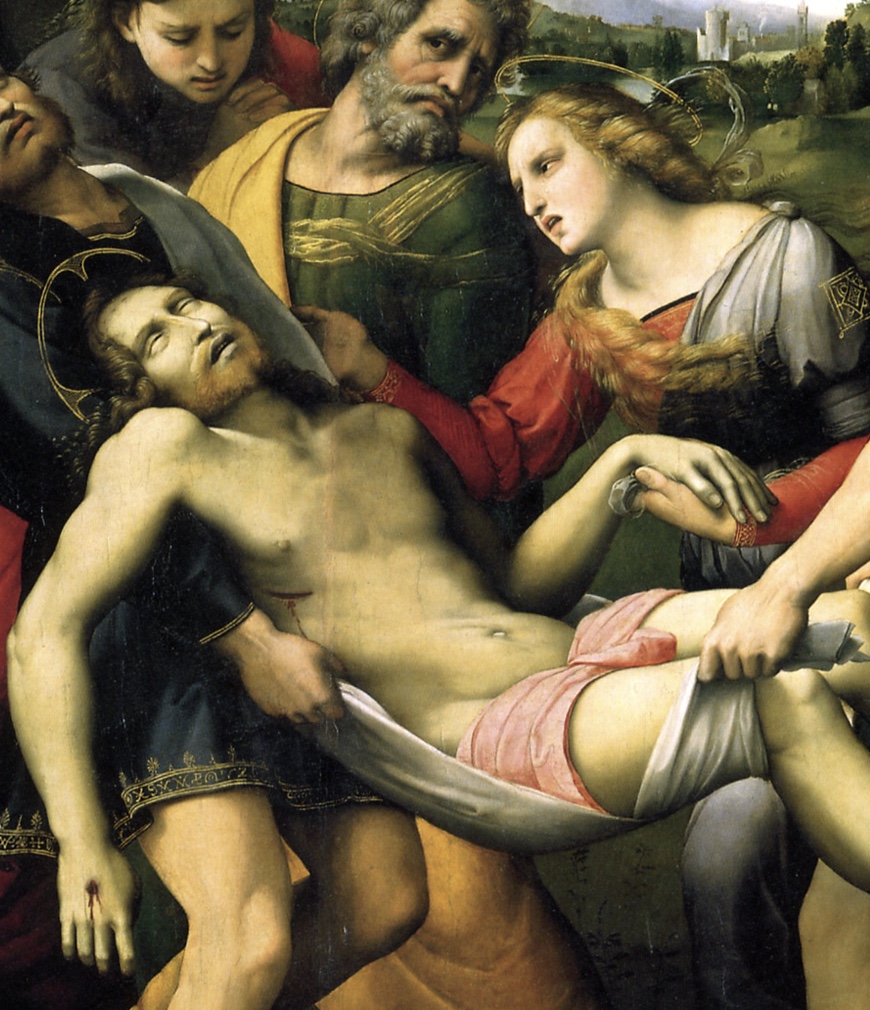
The Deposition, 1507, Raphael (detail)

Is there anyone who associates St. Mary Magdalene with purity? St. Mary Magdalene, from whom Jesus drove out seven devils, is more often recalled as the sinful woman, who in penitence, not ceasing to kiss Jesus’s feet, also bathed them “with her tears and wiped them with her hair,” then anointing them with expensive nard. Her many sins were forgiven and so she shows great love. When Our Lord visited the home of Mary and Martha, Mary was seated at the Master’s feet. Martha worked, while Mary “chose the better part” which “would not be taken from her,” thus becoming the model of contemplation for the faithful, seeking the Face of God in prayer.

From the foot of the Cross, with Mary, the Mother of Jesus, to the tomb, Mary Magdalene never ceased to seek the Face of Jesus. Before dawn, on Easter morning Mary Magdalene sought for her Beloved Jesus; heart broken and burning with love, she persevered in faith and hope. She was at the tomb, while the apostles were nowhere to be found. Although her eyes were blinded with tears, they were also purified to see the Face of her Lord, though she did not at first recognize him until he spoke her name. Pope St. Gregory the Great wrote in a homily, “Jesus says to her: Mary. Jesus is not recognized when he calls her ‘woman’; so he calls her by name, as though he were saying: Recognize me as I recognize you; for I do not know you as I know others; I know you as yourself. And so Mary, once addressed by name, recognizes who is speaking. She immediately calls him rabboni, that is to say, teacher, because the one whom she sought outwardly was the one who inwardly taught her to keep on searching.”

The byssus Veil of Manoppello, which is thought to be one of the burial cloths of Jesus which covered his head. and which captured the first breath of the Resurrection. photo: Paul Badde/EWTN

“Blessed are the pure of heart, for they shall see God.” 

Upon returning from the Lord’s tomb, Mary Magdalene told the disciples: “I have seen the Lord.” Her perseverance in seeking the Face of Jesus was rewarded; she was made worthy to be the first to proclaim that Jesus Christ had risen.

The Bride says, “On my bed at night I sought him whom my heart loves–I sought him but I did not find him.

I will rise then and go about the city; in the streets and crossings I will seek Him whom my heart loves. 

I sought him but I did not find him. The watchmen came upon me, as they made their rounds of the city: Have you seen him whom my heart loves? I had hardly left them when I found him whom my heart loves.”  (Song of Songs 3:1-4B)

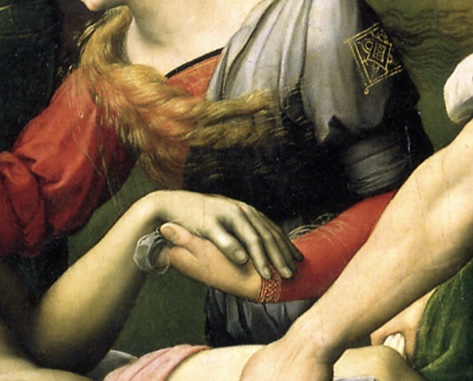
Detail from The Deposition by Raphael shows the hand of St. Mary Magdalene clasping Jesus’s hand together with a byssus veil.

Mary Magdalene “recovered purity…in anticipation of the Eucharist, the night she bathed the feet of Our Lord with her tears. That day she came in contact with purity, and she so lived out its implications that within a short time we find her at the foot of the Cross. ”

–Ven. Archbishop Fulton J. Sheen


What Do You Seek…or Whom?

“Your Face, LORD, do I seek!” Photo: Patricia Enk

What is the soul’s deepest longing? The answer to that question is another question: what do you seek? Do you seek truth, love, or joy? Peace? Endless fulfillment? Beauty? The desire for all these things are good, but our weak human nature usually seeks them in all the wrong places, when there is only one place where all may be found, that is, in God. The real search begins when we begin to seek God’s Face.

In his Confessions, St. Augustine told of his search in his youth for love, joy, beauty, et cetera…  but “looking in all the wrong places” he turned to sexual immorality, living with a woman for thirteen years — which only left his restless heart deeply unsatisfied. He then sought to quench his desires intellectually, which led to strange religions and philosophies. But when he heard St. Ambrose speak in Milan, and thanks also to the persevering prayers of his mother, St. Monica, God’s grace moved his heart to recognize what was true and beautiful.  But he still found it difficult to give up his sinful life.

One day in a garden, still struggling with his passions, St. Augustine heard the voice of a child repeating, “take and read, take and read.” He looked around but no one was there, but there was a Bible laying open beside him. Picking it up, he read the words from Romans 13:13-14  “…not in carousing and drunkenness, not in sexual promiscuity and sensuality, not in strife and jealousy. But put on the Lord Jesus Christ, and make no provision for the flesh in regard to its lusts.”  

St. Augustine was at a turning point. “What” he sought became “Whom” — Jesus Christ. By seeking the Face of God in His Word, he began his transformation in Christ, eventually becoming a Bishop and Doctor of the Church. His life of prayer, praise, and contemplation of the Blessed Trinity led to the fulfillment of the longing of his heart, which is the longing of every heart — to see the Face of God and find there all truth, beauty, goodness, love, joy, peace, and endless fulfillment in HIM.

Prayer of St. Augustine

“My Lord and my God, my only hope, hear my prayer so that I may not give in to discouragement and cease to seek you. May I desire always to see your face.  Give me strength for the search. You who caused me to find you and gave the hope of a more perfect knowledge of you. I place before you my steadfastness, that you may preserve it, and my weakness, that you may heal it. I place before you my knowledge, and my ignorance. If you open the door to me, welcome the one who enters. If you have closed the gate, open it to the one who calls. Make me always remember you, understand you, and love you. Increase those gifts in me until I am completely changed.

When we come up into your presence, these many things we talk about now without understanding them will cease, and you alone will remain everything in everyone, and then we will sing as one an eternal hymn of praise and we too will become one with you.” 


I Only Have Eyes for You

“Those in love try to see each other. People in love have eyes only for their love. That’s logical isn’t it? The human heart feels this need. I would be lying if I denied my eagerness to contemplate the Face of Jesus Christ. ‘ Vultum tuum, Domine, requiram.’ I will seek your Countenance, O Lord”–St. Jose Maria Escriva


The desire to seek the face of a loved one is written in the human heart by God, who loves each soul as though it were the only one on earth.  God in turn, longs for us to return His love, like the father in the parable of the prodigal son, searching the horizon each day for the sight of his lost son.  Visit any airport terminal and you will find someone standing with eyes riveted on the arrival gates with anxious anticipation for the familiar face of a loved one to appear, followed by great joy when their hope is fulfilled.

Jesus waits for us, with great longing, but do we have the same longing to see Him? It would be the greatest tragedy if we simply walk past Him because we didn’t recognize Him. Why is it so difficult to keep our focus on seeking the Face of the One who loves us most?  The reason may be that we see His Face “only dimly.” Every day a million distractions prevent us from recognizing Jesus, and divert us from seeking the Face of the One who should be our “All in All.”

 “At present we see indistinctly, as in a mirror, but then face to face. At present I know partially; then I shall know fully as I am known. So Faith, Hope, and Love remain, these three; but the greatest of these is Love.” (1 Cor: 12-13)

Jesus tells us, “Seek and you will find.”  To seek the Face of God requires an exercise of the virtue of Hope united with Faith and Love to come to know Him.  We can seek Him not only by  spending more time in prayer which is the source of our love, but also in recognizing His loving presence in Scripture, in the Eucharist and in our neighbor. One way to exercise the virtue of Hope, in Faith and Love is to repeat often the words of King David: “Come,” says my heart, “seek God’s Face”; your Face, LORD, do I seek! Do not hide Your Face from me!” (Psalm 27:8-9) …and to remember that He “Only has eyes for you!”  Though we may forget to seek God, He never ceases to seek us so we may find life and happiness in Him. His love is blind, though sins have marred our souls, He seeks only to beautify and fill with virtue each individual soul, created in His image and likeness, so that by His gaze, He may find there the original truth and beauty – a reflection of His Face.

Holy Face of Jesus of Manoppello (photo: Paul Badde/EWTN)

I Only Have Eyes for You

My love must be a kind of blind love,
I can’t see anyone but you.
Are the stars out tonight?
I don’t know if it’s cloudy or bright.
I only have eyes for you, dear.
The moon may be high
but I can’t see a thing in the sky.
I only have eyes for you.
I don’t know if we’re in a garden
or on a crowded avenue.
You are here and so am I,
Maybe millions of people go by,
but they all disappear from view
and I only have eyes for you.

(By songwriters Al Dubin and Harry Warren)

Come Holy Spirit

“Truly, truly, I tell you the truth. Whoever will invoke the Holy Spirit, he will seek me and he will find me, and it is through the Spirit that he will find me.” ~Our Lord to Sr. Miriam of Jesus Crucified.


News Updates:

The Annual Feast of the Holy Face of Manoppello and Procession was celebrated on May 20, 2018. A beautiful account of the day, written by Antonio Bini, together with many wonderful photo’s may be found here on the HolyFace of Manoppello Blogspot.

A new documentary about the Holy Face of Manoppello will be released soon. To read more about it click here for the article on Holy Face of Manoppello blog.  

(A preview – in Italian)