Vera Icon, painted from the Holy Veil in the Vatican, which served as a model, by Meister von Sankt Lorenz, around 1415, nearly 100 years before the “Veronica” or “True Image/or Vera Icon” was said to have been stolen during the Sack of Rome. in 1527. (Photo: Paul Badde)
St. Veronica with the Sudarium C. 1480-1500
Was there actually a St. Veronica? It is an important question, and a very personal one to me and many others. According to tradition, “Veronica,” is the compassionate woman who wiped the Face of Jesus, who is commonly depicted in every Catholic church, at the Sixth Station of the Cross, yet her name does not appear in the Gospels, and the legends did not appear until the Middle Ages.
Pope St. John Paul II pondered this very question many years before dedicating the Millennium to the Holy Face of Jesus. The fruit of his prayerful contemplation unveils a profound truth for every Christian as he answers another question; What does it mean to be “a Veronica?”
The Sixth Station on the Via Dolorosa in Jerusalem
Veronica’s Veil, Flemish 15th Century–painted with the characteristic folds that are also found only on the Holy Veil of Manoppello.
“St. Veronica”
The Catholic Church tells us that a veil bearing a miraculous image of the Face of Jesus has existed since the earliest centuries, recorded in history and in art, such as the Camulia, or the Mandylion. Explanations for the existence of such a veil were all different (see “Four Stories, One Face“). About the time this miraculous veil first appeared in Rome, the name “Veronica” referred to the veil itself, and not a person–“Veronica” meaning “vera” or true, and “icon” meaning image, or even more precisely, “to be present.” Those who gazed upon the veil bearing the true Face of Jesus stood in God’s presence. They were turned toward His Face. The Veil became the greatest relic that Pilgrims traveled to see in the Vatican.
King of Edessa receiving the miraculous veil from St. Jude, and was healed of leprosy.
“Veronica” holding a sheer veil bearing the living Face of Christ on a sheer veil with distinctive folds.
Legends sprang up much later, in the Middle Ages, about a woman named “Veronica,” who was sometimes associated with the woman “Berenice” or “Bernice,” the bleeding woman who touches the hem of Jesus’s garment in the Gospel. There is a version, written in 1191 by Robert de Boron, that tells of a woman named “Veronica” wiping sweat from the Face of Jesus. The stories are many and varied, but the legend that most people are familiar with today is traced to a version by Roger d’Argenteuil in the 1300s, which tells of a woman “Veronica,” associated with the sixth station of the Cross–the compassionate woman, wiping the Face of Jesus on the way to Calvary with a cloth, upon which He leaves an image of His Face.
“These pious traditions cannot be documented, but there is no reason why the belief that such an act of compassion did occur should not find expression in the veneration paid to one called Veronica.” —The Catholic Encyclopedia
What did the Veil look like? A “living, changing, face” on a sheer veil, with distinctive folds, that could be viewed from either side; the eyes are open and glance to one side or the other; a lock of hair graces the center of the forehead; a sparse beard, wavy hair, as well as signs of bruising and trauma to the face are seen…. which despite the obvious suffering, remains peaceful and serene.
The Holy Veil of Manoppello- photo: Paul Badde/EWTN
Pope St. John Paul II expressed the answer to this profound question addressing the origin of the name of Veronica most beautifully in his poem, “The Name:”
The Name
In the crowd walking towards the place
[of the Agony]–
did you open up a gap at some point or were you
[opening it] from the beginning?
Veronica’s Veil by Hans Memling
And since when? You tell me, Veronica.
Your name was born in the very instant
in which your heart
became an effigy: the effigy of truth.
Your name was born from what you gazed upon.
–Karol Wojtyla
Miraculous Holy Face Veil Photo: Paul Badde (see “Manoppello Image” tab)
Since the detailed historical facts about the veil itself cannot be verified with absolute certainty in this life, the more important and answerable question is, “What does it mean to be a Veronica–a “true image?”
“Your name was born from what you gazed upon.”
When a soul performs an “act of compassion,” Jesus leaves His image on the “veil” of the soul. In other words, while contemplating the Face of Jesus in an image, in the Word of God in the Scriptures, in a person made in the image and likeness of God, or above all, in the Eucharist, the soul places itself in the Presence of God. When we are turned completely toward the Face of God, through a daily face-to-face encounter in prayer–by the power of the Holy Spirit–God gradually transforms the soul into the “True Image” of His Son, Jesus Christ. As Pope St. John Paul II says, our hearts must become an “effigy of truth,” a “true icon.” Then our name too will be born from what we gaze upon. It will be “Veronica.”
The Deepest Truth About St. Veronica
St. Veronica statue by Francesco Mochi, 1629
Within the center of St. Peter’s Basilica are four massive niches. In each niche there are four titanic statues of saints, standing 10 meters high: St. Andrew, the first disciple called by Christ, St. Longinus, the soldier who pierced Jesus’s side with his lance, St. Helena, who discovered the True Cross. The fourth statue depicts “St. Veronica,” an unknown woman, not mentioned in the Bible, yet immortalized in every Catholic church at the Sixth Station of the Cross, for her act of compassion to Jesus who left the image of His Face on her veil. (The relic that is now in the Veronica Pilar is quite different in description than what was previously recorded–a mystery yet to be solved. More may be read on the subject here: The Church, Testing of Relics, and the Holy Face)
Pope St. John Paul II wrote this beautiful meditation on St. Veronica in 2000, the same year in which he dedicated the millennium to the Face of Christ:
Sixth Station, St. Theresa Church, Ashburn, Virginia
“Veronica does not appear in the Gospels. Her name is not mentioned, even though the names of other women who accompanied Jesus do appear. It is possible, therefore, that the name refers more to what the woman did. In fact, according to tradition, on the road to Calvary a woman pushed her way through the soldiers escorting Jesus and with a veil wiped the sweat and blood from the Lord’s face. That face remained imprinted on the veil, a faithful reflection, a “true icon”. This would be the reason for the name Veronica. If this is so, the name which evokes the memory of what this woman did carries with it the deepest truth about her.
One day, Jesus drew the criticism of onlookers when he defended a sinful woman who had poured perfumed oil on his feet and dried them with her hair. To those who objected, he replied: “Why do you trouble this woman? For she has done a beautiful thing to me . . . In pouring this ointment on my body she has done it to prepare me for burial” (Mt 26:10, 12). These words could likewise be applied to Veronica. Thus we see the profound eloquence of this event.
The Redeemer of the world presents Veronica with an authentic image of his face. The veil upon which the face of Christ remains imprinted becomes a message for us.
In a certain sense it says: This is how every act of goodness, every gesture of true love toward’s one’s neighbor, strengthens the likeness of the Redeemer of the world in the one who acts that way. Acts of love do not pass away. Every act of goodness, of understanding, of service leaves on people’s hearts an indelible imprint and makes us ever more like the One who “emptied himself, taking the form of a servant” (Phil 2:7). This is what shapes our identity and gives us our true name.” –Pope St. John Paul II
This is the deep meaning and call to every Christian revealed in the presence of the unknown woman we call “St. Veronica”– each act of charity, every act of compassion will leave the imprint of the Face of Jesus in our souls, transforming us into His own Image.
Pope Benedict XVI looks at the ‘Veronica’s Veil’ during a visit to the Holy Veil monastery in Manoppello, central Italy, September 1, 2006.
Pope Benedict wrote, “To rejoice in the splendor of His Face means penetrating the mystery of His Name made known to us in Jesus, understanding something of His interior life and of His will, so that we can live according to His plan for humanity. Jesus lets us know the hidden Face of The Father through His human Face; by the gift of The Holy Spirit poured into our hearts.” This, the Pope says, is the foundation of our Peace, which nothing can take from us.
Benedict XVI has characterized devotion to The Holy Face as having three separate components: 1. Discipleship – an encounter with Jesus, to see Jesus in the Face of those in need. 2. The Passion of Jesus, and suffering expressed by images of the wounded Face of Jesus. 3. The Eucharist, “the great school in which we learn to see The Face of God”, which is woven between the other two. The eschatological element then builds on awakening to Christ by contemplating His Face hidden in The Eucharist.
“Our whole life should be directed toward encountering Him,” writes Benedict, “toward loving Him; and in it, a central place must be given to love of one’s neighbor, that love that in the light of The Crucified One, enables us to recognize the Face of Jesus in the poor, the weak, the suffering.” The pope goes on to explain the fruits of this contemplation: “From contemplation of the Face of God are born, joy, security, PEACE.”
The liturgical distance between Christmas Day and the glory of the appearance of the Risen Christ on Easter are as short as a flash of lightening! The readings move swiftly from darkest night of the year, into which the light of the Face of the Infant Jesus first appears on Christmas Day, to the readings about the martyrdom of St. Stephen; his forgiveness of his murderers, and the Feast of St. John (Jn 20:1, 2 & 8) where we hear about St. John racing ahead of Peter to the tomb, where they find “the cloth that covered HIs Head;” the sight of which caused St. John “to see and believe.” Through the power of the Resurrection, God moves hearts swiftly from the darkness of sin, death, sorrow, and unbelief — to the radiant light of grace — new life, faith, joy and peace shining on the Face of the Risen Christ.
Pope Leo calls the peace of the risen Christ “the most silent revolution:” “The Good Shepherd, who gives his life for the flock and has other sheep not of this fold (John 10:11,16) is Christ, our peace,” he writes, “who has conquered death and broken down the walls of division that separate humanity (cf. Eph 2:14). His presence, his gift and his victory continue to shine through the perseverance of many witnesses through whom God’s work carries on in the world, becoming even more visible and radiant in the darkness of our time.” Peace is revolutionary, and takes tremendous courage and trust for a Christian to live as they truly believed — as did the martyrs of the past and the present — through trust in the power of the Risen Christ!
Pope Leo writes that the “contrast between darkness and light” is also “an experience that unsettles us and affects us amid trials we face in our historical circumstances. In order to overcome the darkness, it is necessary to see the light and believe in it.” We need to “see and believe” as St. John did when he saw the face of Risen Christ on the cloth; this is why I believe the Face of the Risen Christ on the Veil of Manoppello is a tangible sign for our time — a great gift to us from God! The world needs to turn to His Face once again if it desire to have peace.
We can begin by following the example of the Blessed Virgin Mary in contemplation of the Face of Jesus:
“The Virgin Mary is she who more than any other contemplated God in the human Face of Jesus. She saw Him as a newborn when, wrapped in swaddling clothes, He was placed in a manger; she saw Him when, just after His death, they took Him down from the Cross, wrapped Him in linen and placed Him in the sepulcher. Inside her was impressed the image of her martyred Son; but this image was then transfigured in the light of the Resurrection. Thus, in Mary’s heart, was carried the mystery of the Face of Christ, a mystery of death and glory. From her we can always learn how to look upon Jesus, with a gaze of love and faith, to recognize in that human countenance, the Face of God.” ~ Pope Benedict XVI
Peace is possible! When “we forget the light,” Pope Leo writes, “we lose our sense of realism and surrender to a partial distorted view of the world, disfigured by darkness and fear. ” Pope Leo recalled how St. Augustine urged Christians “to forge an unbreakable bond with peace, so that by cherishing it deeply in their hearts, they would be able to radiate its luminous warmth around them.” St. Augustine wrote: “If you wish to draw others to peace, first have it yourselves; be steadfast in peace yourselves. To inflame others, you must have the flame burning within.” Pope Leo reminds us that “Peace is more than just a goal; it is a presence and a journey.”
So, as we begin the New Year, I wish to all, and pray for “God’s greatest gift” of Peace. “Peace, wrote Pope Benedict XVI, for the World Day of Peace, 2013, “is God’s most sublime gift in which He turns towards us the splendor of His Face.”
“May the Lord bless and keep you; may He make His Face shine upon you and be merciful to you; may He turn His countenance toward you and grant you His peace.” (Numbers 6:24)
“For God, who said, ‘Let light shine out of darkness,’ made his light shine in our hearts to give us the light of knowledge of God’s glory shining on the face of Christ.” (2 Cor. 4:6)
Adoration of the Magi, Fra. Angelico & Fra. Lippi
“May the Lord, grant, in the New millennium, the Church will grow ever more in holiness, that she may become in history a true epiphany of the merciful and glorious face of Christ the Lord.” ~Pope St. John Paul II
+++
Benedict XVI has characterized devotion to The Holy Face as having three separate components: 1. Discipleship – an encounter with Jesus, to see Jesus in the Face of those in need. 2. The Passion of Jesus, and suffering expressed by images of the wounded Face of Jesus. 3. The Eucharist, “the great school in which we learn to see The Face of God”, which is woven between the other two. The eschatological element then builds on awakening to Christ by contemplating His Face hidden in The Eucharist.
“Our whole life should be directed toward encountering Him,” writes Benedict, “toward loving Him; and in it, a central place must be given to love of one’s neighbor, that love that in the light of The Crucified One, enables us to recognize the Face of Jesus in the poor, the weak, the suffering.” The pope goes on to explain the fruits of this contemplation: “From contemplation of the Face of God are born, joy, security, Peace.”
To try to condense the history and theology of the devotion to the Holy Face or attempt to describe the place in our prayer life for the “Veronica” or “True Image” of the Face of Jesus, and its relationship to our transformation in Christ, is far beyond the scope of a few paragraphs. Yet, a Christian can’t keep silent either when it comes to bearing witness to God’s glory, power and might. One is compelled to say something about it. Pope St. John Paul II gave the Church page after page on the subject, and then, nearing the end of his life, dedicated the entire millennium to the Face of Christ. We should all have a few questions about that grand gesture, and try to search out some answers–not only for the benefit of our own soul, but for the benefit of other’s souls as well…
“Your Face, O Lord, do I seek; do not hide Your Face from me.” (Ps. 27)
The many challenges of this millennium, wars, violence, and other threats to human dignity, such as the rapid advancement of AI, have made the significance of dedication to the Face of Christ very clear–that we need to keep our eyes on Jesus Christ! When one begins to look into the devotion to the Face of Christ; the deeper and more beautiful the mystery of the Human Face of Jesus grows. Just recently, the Vatican had approved a Eucharistic miracle in which the Face of Jesus appeared on a Consecrated Host. Volumes of books cannot contain the meaning of that treasure! I do know, however, that the devotion to the Holy Face, in each of its aspects, all converge on this single truth:
The mystery of the human face began “in the fullness of time” (Gal 4:4), when the Word of God, the second person of the Blessed Trinity–Jesus Christ, True God and True Man–became Incarnate in the womb of the Blessed Virgin Mary.
To reject, or God forbid, destroy an icon or image of the Face of Jesus would be to reject the great humility of God and the Incarnation. Centuries ago, when iconoclasm raged, the Emperor Leo III had wanted to destroy icons of the Face of Jesus. The Patriarch of Constantinople, Germanus, then begged him, “May this calamity, my lord, not come to pass under your reign. For he who would bring this about is a precursor to the Antichrist, and an enemy of the salvific Incarnation of God.” Those are strong and frightening words.
“Vera Icon,” The Veil of the Holy Face held in the Vatican served as a model, painted by Meister von Sankt Lorenz around 1415, nearly 100 years before the “Veronica” or True Image was said to have been stolen during the Sack of Rome. in 1527. (Photo: Paul Badde)
” A picture is worth a thousand words.”
Holy Face – of the Shroud of Turin – visible in the photographic negative.
It is clear that icons and images of the Face of Christ have a very important place in the Church, especially in those gifts of God that are known as “achieropoieta.” These refer to relics of such as the Face of Jesus or the Blessed Mother (ie. on The Tilma of Our Lady of Guadalupe), on which the image is inexplicably present; they exist without the aid of paint or brush. They are said to be “made by the Hand of God:” Relics such as the Shroud of Turin and the Holy Veil of Manoppello, are both are miraculous images; which far surpass all man-made icons, however beautiful they may be.
The very fact of the existence of both the Shroud of Turin and the Veil of Manoppello are the reason why man-made images are permitted by God, and why the Old Testament admonition against creating images ended when Jesus gave us the New Covenant. The Incarnation meant that the Word of God could now be seen, heard and depicted. God has revealed Himself in Jesus Christ–and “by God’s own Hand” had created the images bearing the Face of Jesus–thus breaking the Old Covenant law–thus, freeing us from idolatry. When venerating the icon or image we are venerating His Person.
Under the New Covenant, in His Divine Providence, He gave to mankind these supernatural images [achieropoieta] to communicate truths about His Only Begotten Son. These miraculous images are evidence of His Incarnation, Passion, Death and Resurrection. They show us “the Word of God” made flesh; that God exists and He became Man in Jesus Christ; that He suffered for our sakes, died and rose from the dead! And that we, His unworthy creatures, are made in His image and likeness, and so we are meant to reflect His image and likeness to others.
Our Faith may be weak when it comes to accepting certain truths or miracles; but Jesus, who understands our weakness, does not stop at giving us His Holy Face and His Holy Name; He has also given to us precious relics that may be seen and touched: “For we do not have a high priest who is unable to sympathize with our weaknesses, but one who has similarly been tested in every way, yet without sin…” so that we may “confidently approach the throne of grace to receive mercy and to find grace for timely help.” (Heb 4:15)
This stunning photo of the Veil of the Holy Face of Manoppello (and my favorite!) was taken by Paul Badde, author of “The Face of God: The Rediscovery of the True Face of Jesus” and many other books about the Holy Veil. The Veil presents quite a challenge for the photographer, because it is very sheer and the image changes according to the light and angle from which it is viewed.The Face may even disappear, or appear as I first saw it–as a living image, seen as though it were reflected in a mirror.
Jesus has given us His own Face in such relics because He wills to meet us in our weakness–to show us His Human Face and restore us–to help us to encounter, contemplate, honor and reverence Him. This is a tremendous gift that represents “the Gift” Himself–Jesus Christ–given to mankind at the Incarnation; it is a reminder the the Eternal Word became man!
We may not be able to make a pilgrimage to see the holy relic of the Shroud or see the Veil of the Holy Face of Manoppello; but we may keep copies of those images in our Churches and homes, or wear a Holy Face medal as a daily reminder of His love and mercy for us; they are a blessed source of “grace for timely help.” (Heb 4:15)
+++
Many parishes around the world have “enthroned” an image of the Holy Face, which is a particularly beautiful way for the faithful to correspond in some way to God’s Gift of His Son; by bringing His Image before the faithful for veneration and prayer. Very recently, another enthronement of “the Most Holy Face of Jesus” was made with a copy of the Holy Veil of Manoppello in San Jose de Mindanao Seminary Complex that occurred on August 19, 2025 in the Philippines. Poster of Enthronement:
“For God who said, ‘Let light shine out of darkness,’ has shone in our hearts to bring to light the knowledge of the glory of God on the Face of [Jesus] Christ.” (2 Cor 4:6)
“In olden days, God who was without body or physical form, was not depicted at all. But now, since God has appeared in the flesh and has interacted with man, I am able to depict the visible aspect of God. I do not worship matter, I only worship the Creator of matter, Him who for my sake became matter Himself, and took it upon Himself to dwell in matter, and who by means of matter brought about my salvation.” ~St. John Damascene
“Restore us, LORD God Almighty; make your face shine on us, that we may be saved.” (Psalm 80:19)
“Abruzzo is a great producer of silence, wrote Georgio Manganelli.” Manoppello, Italy–hidden deep in the Abruzzo Mountains–had kept a secret: a holy relic veil of the Face of Jesus, treasuring and protecting it through five tumultuous centuries; effectively preventing it from being destroyed many times over. But now, in God’s Providence, the secret has come to light with the dawn of the millennium, which was dedicated to the Face of Christ by Pope St. John Paul II.
An eminent scholar, Fr. Heinrich Pfeiffer, uncovered the secret of Abruzzo and, at a great personal cost, presented his theses to the world. The news was embraced by some; and of course, rejected by others–there is nothing new in that. Opinions are like noses–everyone has one. We all make our own choices, for good or bad; but to make a choice, to believe or disbelieve, we first need an informed conscience, and the desire to know the truth in the first place.
For this reason Antonio Bini has published a free e-book (which is embedded below) which presents the background of the re-discovery of the relic of the Holy Veil of Manoppello bearing an image of the Face of Christ: “Heinrich Pfeiffer, The Scholar Who Recognized the Veronica in the Holy Face”. This essay commemorates Father Heinrich Pfeiffer (1939-2021), professor of Christian art history at the Pontifical Gregorian University in Rome and one of the leading contemporary scholars of the Church’s cultural heritage, who passed away in Berlin on November 26, 2021. With his studies on the Holy Face of Manoppello, which he identified as “the Veronica” (True Image).
Pope Benedict XVI contemplates the Face on the Veil of Manoppello. September 1, 2006. (Photo: Paul Badde/EWTN)
Pfeiffer was met with distrust and hostility from scholars and Church hierarchies for questioning centuries-old silences and beliefs regarding Christ’s burial cloths. The book reconstructs the author’s encounter with Fr. Pfeiffer, the background to the international press conference held in Rome on May 31, 1999, in which the scholar supported his theses. These attracted the interest of the media and many pilgrims to the sanctuary of Manoppello, which until then had been relatively unknown. Among these Pope Benedict XVI, This visit effectively confirmed the validity of Fr. Pfeiffer’s theses. The German Pope was impressed by his encounter with the Holy Face, immediately elevating the church to a basilica and dedicating an intense prayer a year after his visit.
References to the Sack of Rome are also included, when the Veronica disappeared from Rome, as the Vatican press office later admitted in 2011. The photographic and documentary material, much of it previously unpublished, is noteworthy. By the author’s wish, the book, a testimony to the events, is being distributed free of charge in English to promote broader knowledge of the Holy Face among the many interested in the recent history of the mysterious image.
Rector of the Sanctuary Basilica of “Il Volto Santo,” Padre Antonio Gentili (R), greets Prof. Lukas Murzyn (L), and participants of the unique conference on the “Metaphysics of the Image.” Promoted by the UKEN University of Krakow, held at the Sanctuary of the Holy Face in Manoppello, Italy, on May 2-3, 2025.
The Holy Veil of Manoppello –so sheer, and yet, without paint, an image my be seen of the Face of Jesus. (Photo: Paul Badde/EWTN)
For those who may be unfamiliar with “Il Volto Santo,” it is a precious relic veil considered to be an “Acheiropoieta” — meaning that its existence is supernatural — made by the Hand of God. The sheer veil, in a miraculous way, bears an image that is seemingly “written in light” of the Holy Face of Jesus Christ. This extraordinary relic has been the subject of intense study and renewed devotion at the dawn of this new millennium dedicated by Pope St. John Paul II to the Holy Face of Jesus Christ.
Padre Antonio Gentili, Rector of the Sanctuary Basilica, “face to face” with the Holy Veil of Manoppello. (Photo:Alexandra Prandell)
Antonio Bini, who was also invited to make a presentation on the important research on the Holy Veil by Fr. Heinrich Pfeiffer (1939-2021), has graciously provided a summary of a conference:
The Face of Christ on the Holy Veil becomes visible, according to the light, and at times appears to be a reflection of a living face. (Photo: Paul Badde/EWTN)
Antonio Bini writes: The relic veil of the Holy Face of Manoppello was the main focus of the conference, as it [The Holy Face of Manoppello] is considered “the source and root of the representations contained in tradition and an element of intellectual and supernatural conquests of Christian art,” as Prof. Lukas Murzyn, dean of the Faculty of Art and head of the Art and Metaphysics Study Group, explained in his introduction.
The Group, which operates at the Institute of Painting and Artistic Education of the Faculty of Fine Arts of the University of the National Commission for Education in Krakow (UKEN), promoted the conference held on May 2nd and 3rd, 2025, in Manoppello, Italy, having conducted research for several years on the changes in contemporary iconography, operating in the field of visual anthropology, the history of the philosophy of art, both in the field of experimental artistic activities and in that of the language of visual arts.
The professors of UKEN University during a break (Photo: Antonio Bini)
The speakers were welcomed in the conference room of the Casa del Pellegrino by the Rector of the Sanctuary, Padre Antonio Gentili and by the Mayor of Manoppello, Giorgio De Luca.
The conference was intended to respond to the question of what remains today of those roots [of representations of the Holy Face], how they are understood and what the metaphysics of the image can open up today.
The Holy Face of Manoppello (Photo: Alexandra Prandell)
From the “Relatione Historic, 1640, a description of the Face by Padre Donato da Bomba: “He has a rather long, well-proportioned face, with a venerable and majestic look. His hair, or locks are long with thin twisted curls–in particular at the top of the forehead about fifty hairs wind into a little corkscrew, distinct from each other and well arranged. His left cheek is swollen and bigger than the other because of a strong blow across the cheek. The lips are very swollen. His teeth show. It seems the Holy Face is made of living flesh, but flesh that is afflicted, emaciated, sad, sorrowful, pale and covered in bruises around the eyes and on the forehead. The eyes of Christ are similar to those of a dove…He is serene and tranquil.”
Historical-religious themes were also developed, with the intervention of Padre Ceslao Gedacz OfmCap, who recalled some important figures in the history of the Holy Face belonging to the Capuchin order, such as Padre Donato da Bomba, who was responsible for drafting the Relatione Historic (1640), following the donation of the veil to the Capuchins. Padre Fillipo da Tussio, author of the first essay on the Holy Face published in 1875, and then Padre Domenico da Cese, the first to convincingly spread the divine nature of the sacred image. There were also references to some scientific tests and the findings of two commissions of doctors; the first composed of Germans and Austrians, the second of Italian doctors, who worked at the Sanctuary in 2011 and 2012, which Padre Ceslao himself followed, being part of the community of religious men of Manoppello at that time.
Servant of God Padre Domenico da Cese (1915-1978, former Rector of the Shrine) prays before the Veil of Manoppello.
Metaphysics of the Image conference hall. (Photo: Antonio Bini)
These researches were recently published in the essay by Sr. Blandina Paschalis Schloemer, with the title “Sali al tramonto”(2025), her first book published in Italian after various essays published in Austria, Germany, Poland, and France. The German iconographer was present at the proceedings.
Sr. Monika Gutowska of the Ancelle dei Santissimo Sangue in Manoppello, summarized her experience of welcoming and contact with many pilgrims, presenting several cases, including non-believers, of people who have seen their lives transformed, but also the desire of many devotees to return to the Sanctuary several times a year, from Italy and abroad, for a deep need to periodically encounter again that Holy Face, whose reproductions are present in many Polish homes. [And many others, as well, around the world!]
Among those present was also Padre Carmine Cucinelli, former rector of the Sanctuary, involved in recent years in enthronements of the Holy Face in Poland, and also in the Sanctuary of Krakow dedicated to Pope St. John Paul II.
In addition to the aforementioned Prof. Lukas Murzyn, the following speakers then gave presentations: Sebastian Stankiewicz, Rafal Slewski, Kazimierz Piotrowski, Bernadeta Stano, Anna Grabczewska, Agnieszka Daca, Jacek Pasieczny and Stanisław Wójcicki from the Study Group of the Uken University of Krakow.
2006 – Pope Benedict XVI meets Sr. Blandina Paschalis Schlomer on his visit to the Sanctuary of the Holy Face in Manoppello, as Fr. Heinrich Pfeiffer, and Paul Badde look on.
We summarize the papers presented, whose simultaneous translation was edited by Agnieszka Kiedzik, from the University of Warsaw. The same papers may be the subject of further study in the publication of the proceedings, which will be edited by Sebastian Stankiewicz, with the title “Beautiful God: The Veil of Manoppello and the Iconography of the Incarnation,” with reference to a theological reflection on the “Beautiful God” present in the Middle Ages, expressed by Cardinal Joseph Ratzinger during a conference held at the Pontifical Urbaniana University in Rome, later taken up by Pope Benedict XVI.
“Being struck and overcome by the beauty of Christ is more real, more profound knowledge than mere rational deduction…We must rediscover this form of knowledge; it is a pressing need of our time.” ~ Excerpt from “The Feeling of Things, the Contemplation of Beauty” by Card. Joseph Ratzinger
The Group’s commitment also led to the creation of a portal — https://diafanitas.uken.cracow.pl — which collects experiences and initiatives on the study of the transparency of bodies crossed by light in a Christian dimension.
Dirk Bouts, 1400? – 1475
Christ Crowned with Thorns,about 1470
Various interpretative readings of the Holy Face have been developed, with the assumption that “whoever has come into contact with the Veil of Manoppello attests to its uniqueness and mystery.”
For representatives of the art sciences, many questions remain open: the origin of the image and history, the relationship between the relic and image, the role of the Veil of Manoppello in the creation of iconographic models in Christian art and in the evolution of ways of representation in Western Culture, the role of the veil among other representations considered acheiropoieta or formal similarities with the images of Christ depicted in the art of old masters; for example Dirk Bouts, Leonardo Da Vinci and Albrecht Durer, among others, and in the Eastern tradition. For contemporary art scholars, philosophers, theologians and anthropologists, the encounter with the Holy Face raises questions such as the relationship between sensual beauty and transcendent beauty, the idea of transparency and lights, the Christian sources of the idea and concept of a person, the meaning of the gaze and the encounter, the presence and contemporary reception of religious themes in art and sacred art and the importance of metaphysical references in contemporary art.
Veronica’s Veil Flemish 15th Century This is a fine example of the “Veronica” as portrayed by artists who saw the original for themselves, before it disappeared from view from the Vatican in 1527.
In my [Antonio Bini’s] presentation, I recalled the studies of Fr. Heinrich Pfeiffer (1939-2021), former professor of Christian history at the Gregorian University in Rome, who identified the Holy Face [of Manoppello] with the Veronica (vera icon), on the the occasion of the International Conference of the Institute for Research on the Face of Christ, chaired by Cardinal Fiorenzo Angelini, and then during a press conference held in Rome on May 31, 1999, on the eve of the Great Jubilee of 2000, which spread knowledge of the Abruzzo Sanctuary [of the Holy Face in Manoppello] throughout the world. Some sequences of that press conference with the interview of the German scholar, on Italian and foreign television, were repurposed in a video that the organizers wanted to show at the opening of the proceedings.
Fr. Pfeiffer’s position was then an isolated one, long contested, more or less openly. But his theses were later shared by Pope Benedict XVI, who visited the Shrine on September 1, 2006, composing a prayer that he dedicated to the “human face of God who entered history to reveal the horizons of eternity.”
Pope Benedict XVI contemplates the Face on the Veil of Manoppello. September 1, 2006. (Photo: Paul Badde/EWTN)
Also under the pontificate of Pope Benedict XVI, a statement from the Holy See on July 11, 2011 reported that the “Veronica disappeared from St. Peter’s following the Sack of Rome in 1527.” This circumstance was confirmed by the (then) director of the Vatican Museums, Prof. Antonio Paolucci (Former Minister of Culture of the Italian Government), in an interview with the Bologna newspaper Il Resto del Carlino on August 11, 2011.
The admission [of the Director of the Vatican Museums] put an end to almost five centuries of silence that had fueled doubts and uncertainties for a long time, also through works of disinformation carried out also through modifications of the same original image, through reproductions that presented a “Veronica” with eyes closed. In this regard, the Veronica Route Project was started in recent years by a group of Milanese scholars, which led to a collective search, still ongoing, of 6200 ancient depictions of the true icon of Christ (Veronicas) with the eyes open, collected in a multimedia catalogue.
And yet, on April 6, an article published on the Vatican News website reported the presence of the “Veronica” in St. Peter’s (or, a copy of it, a black background. No image is seen.), while the Holy Face [of Manoppello] is indicated as a “shroud,” [A burial face-cloth] reiterating its acheiropoieta nature [As supernatural–made by the Hand of God]. Evidently, the writer was unaware of the painful path that led to the admissions [of the Director of the Vatican Museums] of 2011. Fr. Pfeiffer would still be busy arguing his reasons.
This is an example of a reproduction, made by Pietro Strozzi after 1527, when the original could no longer be viewed. The dark image of a dead man’s face bore no resemblance to previous descriptions and paintings of the Veil.
The dark cloth in a face-shaped frame that is currently presented, from a great distance, at the Vatican. (Photo: Daniel Ibanez)
Finally, during the conference, the exhibition of artist-teachers and students entitled “Face to Face” was presented, delicately entering the space of the Sanctuary, to offer a unique forum for interdisciplinary dialogue.
“At the basis of the concept of the exhibition,” declared the curator, Prof. Stanisla Wojcicki, “is the face-to-face encounter with the image of the Veil [Of the Holy Face of Manoppello], treated by scholars as a prototype of other representations of Christ. We would like our works to be considered a votive offering, something that we leave here to express gratitude, for the fact that we were able to meet in this place–particularly important to us.”
“Not matter but image,” a work by Jacek Pasieczny
“Not matter but image,” a work by Jacek Pasieczny, was exhibited in the Basilica as part of the “Face to Face” exhibition. The author described the work as “reflections of light, with the author” through the “use of glass of a particular color recalling golden byssus.” [of which the Holy Veil is believed to be woven.] The artist specified that it is not a copy of the original, but an attempt to paint a picture with light.
At the end of the conference we asked for an overall assessment from Don Arturo Alcántara Arcos, professor of spiritual theology and collaborator of the Soumaya Museum in Mexico City, also in Manoppello for the occasion, who stated: “It is particularly interesting to consider multidisciplinary points of view from a secular university. Here one can appreciate the different areas in which theology can be present, both directly and indirectly. The Uken of Krakow, inspired by the National Commission for Education established in the eighteenth century by the Polish King Poniatowski, open doors to a new dialogue between theology and the different artistic and aesthetic disciplines of our days in the contemplation of the Face of the Lord.” From what emerged during the conference and on the basis of the same conclusions of Prof. Lukas Murzyn, the belief that the Holy Face can also represent today the reference to the contemporaneity of Christ for art appears to be shared. An analytical perspective that the professors of the University of Krakow — the first to organize a similar event in Manoppello — intended to offer the art world.
Grazie Mille! Antonio Bini for this beautiful summary of the Conference on the Metaphysics of the Image!
One last thought from the beloved Cardinal Ratzinger — and later — Pope Benedict XVI:
Holy Face of Manoppello, (Photo: Paul Badde/EWTN)
“The encounter with the beautiful can become the wound of the arrow that strikes the heart and in this way opens our eyes…” “Inner perception must free itself from the impression of the merely sensible, and in prayer and ascetical effort acquire a new and deeper capacity to see, to perform the passage from what is merely external to the profundity of reality, in such a way the artist can see what the senses as such do not see, and what actually appears in what can be perceived: the splendor of the glory of God, the “glory of God shining on the face of Christ.” (11 For 4,6). –“The Feeling of Things, the Contemplation of Beauty” by Card. Joseph Ratzinger
Photos of the Papal funeral ceremonies by Vatican Media. Bottom right photo — the Holy Veil of Manoppello. Thank you to Alexandra Prandell for putting these beautiful images together!
Although Pope Francis made many changes to the funeral traditions of the Popes, One deeply meaningful tradition was preserved — that of placing a sudarium veil over the face of the Holy Father — and it is connected to the Sudarium Cloth that would have been put on the Face of Christ in the Tomb. An unmistakable message! As we die with Him, we will rise with Him! Alleluia!
Padre Antonio Gentile before the Sudarium Veil of the Holy Face on Easter, at the Basilica Sanctuary of the Holy Face in Manoppello, Italy. Photo: Alexandra Prandell
Was there actually a St. Veronica? It is an important question, and a very personal one to me and many others. According to tradition, “Veronica,” is the compassionate woman who wiped the Face of Jesus, who is commonly depicted in every Catholic church, at the Sixth Station of the Cross, yet her name does not appear in the Gospels, and the legends did not appear until the Middle Ages.
Pope St. John Paul II pondered this very question many years before dedicating the Millennium to the Holy Face of Jesus. The fruit of his prayerful contemplation unveils a profound truth for every Christian as he answers another question; What does it mean to be “a Veronica?”
The Sixth Station on the Via Dolorosa in Jerusalem
Veronica’s Veil, Flemish 15th Century
“St. Veronica”
The Catholic Church tells us that a veil bearing a miraculous image of the Face of Jesus has existed since the earliest centuries, recorded in history and in art, such as the Camulia, or the Mandylion. Explanations for the existence of such a veil were all different (see “Four Stories, One Face“). About the time this miraculous veil first appeared in Rome, the name “Veronica” referred to the veil itself, and not a person–“Veronica” meaning “vera” or true, and “icon” meaning image, or even more precisely, “to be present.” Those who gazed upon the veil bearing the true Face of Jesus stood in God’s presence. They were turned toward His Face. The Veil became the greatest relic that Pilgrims traveled to see in the Vatican.
King of Edessa receiving the miraculous veil from St. Jude, and was healed of leprosy.
“Veronica” holding a sheer veil bearing the living Face of Christ on a sheer veil with distinctive folds.
Legends sprang up much later, in the Middle Ages, about a woman named “Veronica,” who was sometimes associated with the woman “Berenice” or “Bernice,” the bleeding woman who touches the hem of Jesus’s garment in the Gospel. There is a version, written in 1191 by Robert de Boron, that tells of a woman named “Veronica” wiping sweat from the Face of Jesus. The stories are many and varied, but the legend that most people are familiar with today is traced to a version by Roger d’Argenteuil in the 1300s, which tells of a woman “Veronica,” associated with the sixth station of the Cross–the compassionate woman, wiping the Face of Jesus on the way to Calvary with a cloth, upon which He leaves an image of His Face.
“These pious traditions cannot be documented, but there is no reason why the belief that such an act of compassion did occur should not find expression in the veneration paid to one called Veronica.” —The Catholic Encyclopedia
What did the Veil look like? A “living, changing, face” on a sheer veil, with distinctive folds, that could be viewed from either side; the eyes are open and glance to one side or the other; a lock of hair graces the center of the forehead; a sparse beard, wavy hair, as well as signs of bruising and trauma to the face are seen…. which despite the obvious suffering, remains peaceful and serene.
The Holy Veil of Manoppello- photo: Paul Badde/EWTN
Pope St. John Paul II expressed the answer to this profound question addressing the origin of the name of Veronica most beautifully in his poem, “The Name:”
The Name
In the crowd walking towards the place
[of the Agony]–
did you open up a gap at some point or were you
[opening it] from the beginning?
Veronica’s Veil by Hans Memling
And since when? You tell me, Veronica.
Your name was born in the very instant
in which your heart
became an effigy: the effigy of truth.
Your name was born from what you gazed upon.
–Karol Wojtyla
Miraculous Holy Face Veil Photo: Paul Badde (see “Manoppello Image” tab)
Since the detailed historical facts about the veil itself cannot be verified with absolute certainty in this life, the more important and answerable question is, “What does it mean to be a Veronica–a “true image?”
“Your name was born from what you gazed upon.”
When a soul performs an “act of compassion,” Jesus leaves His image on the “veil” of the soul. In other words, while contemplating the Face of Jesus in an image, in the Word of God in the Scriptures, in a person made in the image and likeness of God, or above all, in the Eucharist, the soul places itself in the Presence of God. When we are turned completely toward the Face of God, through a daily face-to-face encounter in prayer–by the power of the Holy Spirit–God gradually transforms the soul into the “True Image” of His Son, Jesus Christ. As Pope St. John Paul II says, our hearts must become an “effigy of truth,” a “true icon.” Then our name too will be born from what we gaze upon. It will be “Veronica.”
The Deepest Truth About St. Veronica
St. Veronica statue by Francesco Mochi, 1629
Within the center of St. Peter’s Basilica are four massive niches. In each niche there are four titanic statues of saints, standing 10 meters high: St. Andrew, the first disciple called by Christ, St. Longinus, the soldier who pierced Jesus’s side with his lance, St. Helena, who discovered the True Cross. The fourth statue depicts “St. Veronica,” an unknown woman, not mentioned in the Bible, yet immortalized in every Catholic church at the Sixth Station of the Cross, for her act of compassion to Jesus who left the image of His Face on her veil. (The relic that is now in the Veronica Pilar is quite different in description than what was previously recorded–a mystery yet to be solved. More may be read on the subject here: The Church, Testing of Relics, and the Holy Face)
Pope St. John Paul II wrote this beautiful meditation on St. Veronica in 2000, the same year in which he dedicated the millennium to the Face of Christ:
Sixth Station, St. Theresa Church, Ashburn, Virginia
“Veronica does not appear in the Gospels. Her name is not mentioned, even though the names of other women who accompanied Jesus do appear. It is possible, therefore, that the name refers more to what the woman did. In fact, according to tradition, on the road to Calvary a woman pushed her way through the soldiers escorting Jesus and with a veil wiped the sweat and blood from the Lord’s face. That face remained imprinted on the veil, a faithful reflection, a “true icon”. This would be the reason for the name Veronica. If this is so, the name which evokes the memory of what this woman did carries with it the deepest truth about her.
One day, Jesus drew the criticism of onlookers when he defended a sinful woman who had poured perfumed oil on his feet and dried them with her hair. To those who objected, he replied: “Why do you trouble this woman? For she has done a beautiful thing to me . . . In pouring this ointment on my body she has done it to prepare me for burial” (Mt 26:10, 12). These words could likewise be applied to Veronica. Thus we see the profound eloquence of this event.
The Redeemer of the world presents Veronica with an authentic image of his face. The veil upon which the face of Christ remains imprinted becomes a message for us.
In a certain sense it says: This is how every act of goodness, every gesture of true love toward’s one’s neighbor, strengthens the likeness of the Redeemer of the world in the one who acts that way. Acts of love do not pass away. Every act of goodness, of understanding, of service leaves on people’s hearts an indelible imprint and makes us ever more like the One who “emptied himself, taking the form of a servant” (Phil 2:7). This is what shapes our identity and gives us our true name.” –Pope St. John Paul II
This is the deep meaning and call to every Christian revealed in the presence of the unknown woman we call “St. Veronica”– each act of charity, every act of compassion will leave the imprint of the Face of Jesus in our souls, transforming us into His own Image.
Pope Benedict XVI looks at the ‘Veronica’s Veil’ during a visit to the Holy Veil monastery in Manoppello, central Italy, September 1, 2006.
Pope Benedict wrote, “To rejoice in the splendor of His Face means penetrating the mystery of His Name made known to us in Jesus, understanding something of His interior life and of His will, so that we can live according to His plan for humanity. Jesus lets us know the hidden Face of The Father through His human Face; by the gift of The Holy Spirit poured into our hearts.” This, the Pope says, is the foundation of our Peace, which nothing can take from us.
Benedict XVI has characterized devotion to The Holy Face as having three separate components: 1. Discipleship – an encounter with Jesus, to see Jesus in the Face of those in need. 2. The Passion of Jesus, and suffering expressed by images of the wounded Face of Jesus. 3. The Eucharist, “the great school in which we learn to see The Face of God”, which is woven between the other two. The eschatological element then builds on awakening to Christ by contemplating His Face hidden in The Eucharist.
“Our whole life should be directed toward encountering Him,” writes Benedict, “toward loving Him; and in it, a central place must be given to love of one’s neighbor, that love that in the light of The Crucified One, enables us to recognize the Face of Jesus in the poor, the weak, the suffering.” The pope goes on to explain the fruits of this contemplation: “From contemplation of the Face of God are born, joy, security, PEACE.”
The Holy Face of Manoppello, (Photo: Paul Badde/EWTN) Unique among other images of the Holy Face, in that it is an “achieropoeta” (as is the Shroud of Turin), not made by human hands. This “living image” which bears traces of the Passion, is believed to have been created at the Resurrection. It could be said that it is an “Icon of Easter,” which we look forward to in Hope at the beginning of Lent.
I wish that all the world could celebrate the Face of my Beloved. If I could at least honor Him for all those who honor Him not.” –Bl. Mother Maria Pierina De Micheli
Consecration to the Holy Face
O Lord Jesus, we believe most firmly in You. You are the Son Incarnate of the Blessed Virgin Mary. You are the Lord and Absolute Ruler of all creation. We acknowledge you, therefore, as the Universal Sovereign of all creatures. You are the Lord and Supreme Ruler of all mankind, and we, in acknowledging this Your dominion, consecrate ourselves to You now and forever. Loving Jesus, we place our family under the protection of Your Holy Face, and of Your Virgin Mother Mary most sorrowful. We promise to be faithful to You for the rest of our lives and to observe with fidelity Your Holy Commandments. We will never deny before men, You and Your Divine rights over us and all mankind. Grant us the grace to never sin again; nevertheless, should we fail, O Divine Saviour, have mercy on us and restore us to Your grace. Radiate Your Divine Countenance upon us and bless us now and forever. Embrace us at the hour of our death in Your Kingdom for all eternity, through the intercession of Your Blessed Mother, of all Your Saints who behold You in Heaven, and the just who glorify You on earth. O Jesus, be mindful of us forever and never forsake us; protect our family. O Mother of Sorrows, by the eternal glory which you enjoy in Heaven, through the merits of your bitter anguish in the Sacred Passion of your Beloved Son, Our Lord Jesus Christ, obtain for us the grace that the Precious Blood shed by Jesus for the redemption of our souls, be not shed in vain. We love you, O Mary. Embrace us and bless us, O Mother. Protect us in life and in death. Amen.
Glory to the Father, and to the Son, and to the Holy Spirit. As it was in the beginning, is now, and will be forever. Amen.
1510, Piero de Cosimo, The Veronica Veil
“Christ’s response, ‘Whoever has seen me, has seen the Father, lead us into the heart of Christological faith.'” — Pope Benedict XVI
“Once while some Israelites were burying a man, suddenly they saw a band of raiders; so they threw the man’s body into Elisha’s tomb. When the body touched Elisha’s bones, the man came to life and stood up on his feet.” (2 Kings 13:21)
4th century fresco of the King of Edessa, who was healed of leprosy after being brought a miraculous face cloth of Jesus by St. Jude, according to one legend.
“So extraordinary were the mighty deeds God accomplished through the hands of Paul that when face cloths or aprons that touched his skin were applied to the sick, their diseases left them and the evil spirits came out of them.” (Acts 19: 1-12)
“A woman suffering hemorrhages for twelve years came up behind him [Jesus] and touched the tassel on his cloak. ‘She said to herself, ‘If only I can touch his cloak, I shall be cured.’ Jesus turned around and saw her, and said, ‘Courage, daughter! Your faith has saved you.'” (Mat 9:20-22)
The Catholic Church is often criticized for its veneration of relics, but who would not like to touch the “face cloth” mentioned in the Bible that St. Paul may have once used to wipe his brow, or touch the hem of Jesus’s garment? A letter written by Pope Pelagius II in the sixth century declared that any common object placed in contact with the grave of a saint would acquire its sanctifying power. St. Helena discovered the True Cross when God used that relic to bring a dead man from death to life the moment his body came in contact with it.
“How do we know if a relic is true?”
That is a question often heard regarding purported relics. Skeptics often cite the many dubious relics that were forged; such as the “heads” or “teeth” of St. John the Baptist that abounded in the Middle Ages. While the Church wants to treasure and preserve what is genuine, it also seeks answers to the question, “How do we know…?” How does the Church determine the authenticity of a relic? Outside of a miracle, today there are many forms of scientific research, such as carbon dating, that are now available. Naturally, this is a very controversial subject, as testing done the wrong way could degrade or destroy the relic itself. It may also be a very risky business spiritually, with a potential to do something far worse: Disputes over a relic’s authenticity or errors in testing have caused scandal, resulting in the loss of faith of many individuals.
Then, there are also many classes of relics to be considered: Relics are divided into three classifications. A first class relic is a body part of a saint, such as a bone, blood, or flesh. Second class relics are possessions that a saint owned, and third class relics are objects that have been touched to a first or second class relic or to the saints himself or herself. In verifying relics, there is also the great risk to be considered in exposing what may be a very precious ancient relic to invasive tests that could further degrade the relic. Great care must be taken, not only to preserve and protect the Church’s treasures, but also the souls of the faithful. This is why the Church sometimes moves so slowly in these matters.
Digital scan of the Face of Christ on the Shroud of Turin
Despite the many scientific advances in carbon dating, and other testing, errors have been made in the past which have led to false results causing a great deal of harm; as was the case in the false carbon dating of the Shroud of Turin to medieval times, which made front page news at the time, labeling the Shroud of Turin a medieval fraud. It was later proven that the sample for the carbon dating of the Shroud was actually taken from a repair patch, and not the original shroud, which, when re-tested, was then dated to the first century–making the back page news, of course.
Face of Jesus known as the “Uronica” in the “Holy of Holies Chapel of Sancta Sanctorum in Rome.
Recently, the testing of relics is once more in the news. Most people who have traveled to Rome are familiar with the “Scala Sancta” or the “Holy Stairs,” near St. John Lateran. They are twenty-eight marble steps that were brought from Jerusalem that lead up to a chapel known as “Sancta Santorum or Holy of Holies.” Named for the original place in Jerusalem that contained the ark of the covenant, the chapel is said to contain the some of the holiest relics in Christendom, including relics of the earliest martyrs, and the “Uronica,” an “acheiropoieta,” not made by human hands, of Jesus, Ruler of the Universe, attributed to St. Luke–which, “according to legend,” was finished by the angels. In 816, Pope Leo III placed the reliquary box under the altar of the chapel. The relics remained hidden there, until 1903, when Pope Leo XIII permitted experts to examine them. It turned out to be an arduous task, and, unfortunately, later important data was lost due to a rivalry between French and German scholars. To protect the relics from falling into the wrong hands, they were eventually moved to the Vatican Library, and then, to the Vatican Museum.
Barbara Jatta, head of the Vatican museums, recently gave a press conference, on May 23, 2024, on the Catholic Church’s attempt to bring some “clarity and provenance” to two of the ancient relics that had been kept for centuries in the “Holy of Holies” chapel: the relic tunics of St. Peter and St. John the Evangelist. Jatta announced a new permanent exhibition that will display these two purported relics and the tests they have undergone that have shed light on which of the two may be authentic: EWTN Vatican has a good article by Matthew Santucci summarizing the conference: “The Tunics of St. Peter and St. John, Two Extraordinary Relics of the Sancta Sanctorum.” The Vatican Museum should be applauded for this admirable work that has been carefully carried out in pursuit of the truth.
Note the distinctive folds of the veil in this painting detail.
“The Veronica Veils” and the question of which relic is true?
One hopes that the Vatican Museum will continue to seek the truth in the case of other controversial relics, by whatever reasonable means are available, to discover their origins. The issue of testing relics has increasingly been brought up in the case of two “Veronica Veils:” one, held at the Vatican, and another, known as the “Veil of Manoppello.” Acrimonious debates that have erupted in recent decades regarding the two veils have caused division among many Catholic devotees of the Holy Face. Some claim as well that the authority of the Church on the subject the devotion to the Holy Face ended with Pope Leo XIII; thus, passing over what has been been uncovered or written about regarding the devotion since that time, including: the discoveries and research on the Shroud of Turin, or writings by Pope St. John Paul II, Pope Benedict XVI, or Pope Francis; thus, making it very difficult to enter into dialog on the subject. It will ultimately be for the Church to decide whether or not to investigate the relics to help provide the “clarity and provenance” needed to confirm their authenticity.
Fresco of ciborium that existed in 708 containing sudarium of the “Veronic” True Icon
The authenticity of the Vatican relic of the “Veronica Veil” has come into question due to the abundant historic research that points to the relic “Veil of Manoppello” as being the original “proto-image” for icons, frescos, and paintings of the face of Jesus, as seen in so many of the earliest works of art depicting the “Veronica”; such as the “Liber Regulae Sancta Spiritus in Saxia,” or in other more ancient works, such as the “Godescic Manuscript” of 781, both pictured below:
Godescic Manuscript, 781
This illustration of the first public procession of the “Veronica” on the feast of “Omnis Terra” (All the Earth), depicts Pope Innocent III, in 1207, carrying the crystal reliquary displaying the “Veronica Veil” (from “Liber Regulae Sancti Spiritus in Saxia” manuscript ,1350).
The Vatican “Veronica veil” is displayed at a great distance during Holy Week. No face can be discerned on the darkened cloth that is displayed in a face-shaped frame.
A closer look at the Veronica Veil being presented for veneration at the Vatican, April 7, 2019. Photo: Daniel Ibanez
First, in order to explain anything about the images known as “Veronicas,” it must be understood that the Church has a very rich 2,000 year history, and that there are hundreds, if not thousands, so-called “Veronicas” representing the true image of the Face of Christ in museums, churches and basilicas. Secondly, the term “Veronica” refers to the image itself, and not a Saint called Veronica. The various legends of a St. Veronica did not appear until the Middle Ages. There a many, many earlier legends that name other persons such as woman named Hypatia, who drew the miraculous image from a well; or a woman named Bernice, whose name is associated with the woman with the hemorrhage in the Gospels; or St. Jude; who was said to bring the Holy Face Veil to the King of Edessa to cure him.
The Veronica, Hans Memling, 1479
“These pious traditions cannot be documented, but there is no reason why the belief that such an act of compassion did occur should not find expression in the veneration paid to one called Veronica.” —The Catholic Encyclopedia
Pope St. John Paul II explored the deep meaning behind these legends before he dedicated the millennium to the Face of Christ (Found here) and has written beautifully on the compassionate woman who is known as “Veronica” and what the significance the Image of the Face of Christ on the veil has for Christians. Most “Veronica” images are copies of an original or “proto-image,” others are imaginative, and a few are believed to be of Divine origin, that is, “made by God’s Hand.” Only one, however, can be the original and true image.
For centuries following the first time the Veil was publicly displayed and processed by Pope Innocent III in 1207 any pilgrim could see for themselves the Holy Face of Jesus on a Veil from either side of the sometimes transparent veil. Artistic works also called “Veronicas” were produced at that time for the many pilgrims who flocked to Rome to gain an indulgence by seeing the relic Veil for themselves…and take home a souvenir, of course, of a copy for themselves, or for their local Church. That was up until the Sack of Rome in 1527, when it was feared that the Veronica Veil had been stolen:
The broken crystal frame that displayed the Veronica, from the Vatican Museum
“A letter written to the Duchess of Urbino by her representative, Urban, dated May 21, 1527, reads, ‘Holy relics have been thrown out onto the streets. The Veronica has been stolen and passed around in taverns from person to person without a word of protest‘”
The large reliquary framed that was created to display the miraculous image from both sides, between two large crystal panes, was found broken. (It is now on display in the Vatican Museum.) When the dust settled, following the Sack of Rome, the image was no longer displayed publicly. Pope Paul V, in 1616, prohibited any copies to be made of the Veronica without permission, and later Pope Urban VII ordered that all copies of the Veronica be handed in to a local priest or bishop under pain of excommunication. In 1629, a noticeably different image with a death-like face was placed in the newly completed Veronica Altar in St. Peter’s basilica–covered with another outer veil–and a notice was placed nearby stating that anyone who removed the veil covering the Holy Face without papal approval would be excommunicated. Some have speculated that the “outer veil” mentioned may have been what remained after the Sack of Rome, and put in the place of the original, or possibly another of the many copies was put in its place–but that is only speculation. The facts were that from then forward, the darkened image was then only shown rarely, once a year from a distance of 20 meters, and its appearance was quite different than what was seen and copied by artists previously. In fact, the difference between early and later depictions of the “Veronica” was shocking. Not surprisingly, the interest in the Veronica and therefore devotion to the Holy Face soon dwindled.( More detail found in “Four Stories–One Face”)
Veronica’s Veil 1420 as it was depicted in paintings prior to the Sack of Rome.
BERTRAM, Holy Face c. 1390-1400
Painting made after the Sack of Rome, in 1617, by Pietro Strozzi
Painting of Veronica Veil which bears strong resemblance to the Holy Veil “Il Volto Santo” of Manoppello, Italy.
Which is the original “true image?” The two relic veils now in question are the Vatican “Veronica Veil” and the “Il Volto Santo” Holy Face Veil of Manoppello, both claiming to be the original Veil of the Face of Christ:
The Vatican “Veronica Veil” which is housed in St. Peter’s Basilica’s “Veronica Pillar” is a darkened brown cloth, in a frame shaped like a face. Pilgrims are now only permitted to see this relic from a great distance. The cloth does not appear to be transparent, and is only shown from one side. It’s measurements are larger than the original, broken frame.
The Vatican Veil Being displayed for veneration
During the exile of the Pope Pius IX at Gaeta in 1849, he ordered that the Veronica Veil be exposed, at a time of crisis, for public prayer and veneration, from Christmas to Epiphany. On the third day of exposition, the Veil, which had darkened to the point that a face could no longer be discerned, became visible, as if it were illuminated by a soft light. The Pope invited artists to make copies of the miraculous image, which were later touched to the relic of the veil, as well as the relics of the Passion, held in the Veronica Pillar at the Vatican.
This image is often associated with the revelations of of Sr. Marie St. Pierre, who died in 1848, and so had never seen the drawings. The “Epiphany Miracle,” as it was called, was regarded by some as a confirmation of her revelations regarding her devotion to the Holy Face. Although many of the prayers related to her revelations were approved, her writings as a whole were not. Sometime later, a layman, Leon Du Pont, who was a friend of Sr. Marie St. Pierre, placed an oil lamp before a reproduction of the image in his home. “The Holy Man of Tours,” as he was known, prayed for the sick there, and anointed them with oil from the lamp. It was said that hundreds of cures were obtained through his intercession before the image. St. Therese of the Child Jesus and the Holy Face had a copy of the image pinned to her bed curtains as she lay dying. She and her family had a great devotion to the Face of Jesus, and belonged to the Archconfraternity of the Holy Face that was in existence at that time, and into the 20th century, but no longer exists today.
“Vera Effigies” drawing of the wounded Holy Face, depicting closed, weeping eyes, and slightly parted lips. The upper forehead and other artistic elements were an imaginative addition to what was originally viewed by witnesses.
The Holy Face on the Veil of Manoppello (Photo: Paul Badde)The distinctive lock of hair, and folds on the veil may be seen in this photo.
Transparent Veil of Manoppello
The other “Veronica” relic is the Holy Veil of Manoppello. It is not a painting; the image is truly present in a mysterious way on a sheer veil, made of a precious sea-silk called byssus. The Veil and Image itself are a “miracle of light:” the delicate veil, held between two panes of glass, can appear transparent. The image of the Face appears and changes according to light and the direction from which it can be viewed from either side. The veil closely matches centuries-old artwork and written accounts of those witnesses who made pilgrimages to Rome when the “Veronica” was publicly displayed–including written accounts and works of art dating to the early Church–before the veil was known as “the Veronica,” but was known by other names such as the Camulia, or the Edessa, or the Mandylion. The veil was once much larger, but was trimmed down over the centuries. The wounded, yet peaceful countenance of Jesus is visible with open eyes and parted lips, sparse beard, wavy hair, and a distinctive lock of hair at the center of the forehead, which is often depicted in many eastern icons, and paintings of the face of Jesus through the centuries. The Manoppello Veil is not a painting, but an “achieropoieta”–an image not made by human hands.
Hand seen from the other side of the Veil of the Holy Face of Manoppello–which is so sheer a newspaper can be read through it. Photo: Paul Badde
Copy of the “Veronica” from 1373 painted on an altarpiece with the distinctive lock of hair at the center of Jesus’ forehead…
…Also seen in this beautiful depiction of the Veronica that is in the Getty Museum…
…as well as this manuscript and many others.
In this remarkable “Meister of St. Laurenz” painting of the Holy Trinity, the faces of both God the Father and the Son are portrayed similarly, each bearing a strong resemblance to the face on the Holy Veil of Manoppello. Photo taken in Cologne, Germany by Paul Badde.
The late, highly respected Heinrich Pfeiffer S.J. was an eminently qualified teacher of art history and Christian iconography at the Pontifical Gregorian University in Rome. He was also an expert “sindonologist.” Sindonology is the study of the Shroud of Turin, which is its own branch of science. In the course of his many years of research he traveled to the Shrine of the Holy Face in Manoppello. Upon seeing the Veil for himself, he immediately recognized it as the “proto-image” or original from which most icons, paintings, and other representations of “the Veronica” had been derived. The incredible “Veronica” of Manoppello was believed to be the veil that covered the Face of Jesus in the tomb. (Author Paul Badde has written much about this search for the “rediscovered face” in his books: The Face of God – the Rediscovery of the True Face of Jesus, The True Icon: From the Shroud of Turin to the Veil of Manoppello, and The Holy Veil of Manoppello: The Human Face of God.)
Christ’s Face being covered with a sheer veil or sudarium in the tomb.
When, as a scholar, Fr. Pfeiffer joyfully and dutifully reported the fruits of his research, “all hell broke loose.” Instead of being met with rejoicing over the historic discovery of the “proto-image” of the Veronica–a miraculous image that corresponds to historic accounts and countless works of art in museums and churches around the world–Fr. Pfeiffer was roundly vilified by persons who, while accusing him of perpetrating fraud, also refused to look at his evidence. Any requests that Fr. Pfieffer or other scholars and researchers made to look into the authenticity of the relic veil held in the Vatican were declined by bureaucrats.
The indisputable abundance of centuries of art history, that even a child can see, points to the Veil of Manoppello as the original proto-image. But piles of comparisons are not enough to satisfy the outraged critics. Fr. Pfeiffer’s vast research that led him to Manoppello continues to be rejected out of hand, and ignored by those who refuse to look at the data. Unless the relic at the Vatican is examined, the controversy between the two relics of the Face of Jesus will remain at a stalemate, and continue to be a unhappy source of division in the Body of Christ. It was the cause of much suffering for Fr. Pfeiffer in his lifetime, but he was committed to speaking and writing about what he had discovered until he died in 2021.
Pope Benedict XVI greets Sr. Blandina Paschalis Schlomer, an expert in iconography, renown for her expertise and forensic comparisons of ancient images of the Face of Christ. Looking on are Fr. Heinrich Pfeiffer S.J., and Paul Badde, author of many books about the Holy Veil of Manoppello (September 1, 2006).
Pope Benedict XVI gazes at the ‘Veronica’s Veil’ during a visit to the Holy Veil in Manoppello, Italy (September 1, 2006).
Streams of pilgrims, from the greatest to the least, have travelled the world to visit the Basilica Shrine of the Holy Face Veil in Manoppello, to see for themselves and experience the grace and peace flowing through their encounter with the Face of Christ. Hopefully, one day the Church will see the way clear to safely examine the relics, as it has done in the case of the relics of Sancta Santorum, to bring light, peace and truth once again to the faithful through their devotion to the Face of Jesus.
“To contemplate The Face of Christ, and to contemplate it with Mary, is the ‘program’ which I have set before The Church at the dawn of the third millennium.” — Pope St. John Paul II
“From contemplation of the Face of God are born, joy, security, PEACE”–Pope Benedict XVI
PAX ET BONUM!
UPDATE: Stunning results of testing on the Veil of Manoppello in November, 2024 conclude that the Holy Veil radiates light energy — May be read here.
(Photo: Randall Enk) Sculpture commemorating JPII visit to St. Peter’s Catholic Church in Stevens Point, Wisconsin, 1976. Inscription reads: “The joy which accompanies the birth of the Messiah is seen to be the foundation and fulfillment of the joy at every child born into the world.” —The Gospel of Life — Pope John Paul II
“We are now standing in the face of the greatest historical confrontation humanity has gone through…”
— Cardinal Karol Wojtyla
Pope St. John Paul II spoke these stunning and prophetic words while he was yet a Cardinal, during his visit to the United States in 1976. He went on to say:
“I do not think that wide circles of the Christian community realize it fully. We are now facing the final confrontation between the Church and the anti-Church, of the Gospel versus the anti-Gospel. This confrontation lies within the plans of divine Providence; it is a trial which the whole Church, and the Polish Church in particular, must take up. It is a trial of not only our nation and the Church, but, in a sense, a test of 2,000 years of culture and Christian civilization with all its consequences for human dignity, individual rights, human rights and the rights of nations.”
— Cardinal Karol Wojtyla, 1976
His prophecy has proven to be true. Most of the Christian community did not see it coming in 1976. But Cardinal Wojtyla, who had lived under a Communist government in Poland, was able to recognize the signs that the historic confrontation was at our doorstep. The Polish Church has certainly taken up the fight for Christianity, as they have for a thousand years. But, elsewhere in the world two thousand years of culture and Christian civilization has been rapidly disappearing before our eyes. Who could deny it? The trial that he spoke of is already upon us, the clash between “the Church and the anti-Church, of the Gospel versus the anti-Gospel.”
It should be no small consolation that although we are in in the midst of this historic confrontation between light and darkness, we are assured that it “lies within the plans of divine Providence.” Therefore, even little souls need not fear, because, as David said to Goliath, “I come against you in the name of the LORD of hosts… the battle is the Lord’s, and He shall deliver you into our hands.” (1 Sam 17: 45-47)
“The issue is now quite clear. It is between light and darkness and everyone must choose his side.”
— G. K. Chesterton, as he lay dying, 1936.
In order to fight and persevere, we must first choose our side. The spiritual battle is being fought on so many fronts that the battle lines have been obscured. The foremost battle being fought is over life itself. It is the grave evil of abortion, with over sixty-six million babies sacrificed in the name of “choice” since abortion was made legal in the United States. Yet, sadly, even Catholics will quarrel over that bloody fact, pointing to lesser evils occurring, that they deem equally important, as though that could ever justify perpetuating such an atrocity. The devil is busy doing what the devil does – sowing confusion and division, especially among Christians, and particularly within the Catholic Church where the worst harm can be done. Perhaps this is due to a rejection of authority, a lack of faith, trust, and humility, or the lack of willingness to suffer as Christ did. The remedy to the confusion and division is devotion to the Face of Christ – the contemplation of the splendor of the truth shining on the Face of Christ to bring light to our darkened world, and to reconcile us with the Father.
Mourning over the dead body of Christ, Joan Mates, 1492 (Photo: Paul Badde/EWTN)
“In contemplating Christ’s face, we confront the most paradoxical aspect of His mystery, as it emerges in His last hour, on the Cross. The mystery within the mystery, before which we cannot but prostate ourselves in adoration….In order to bring man back to the Father’s face, Jesus not only had to take on the face of man, but He also had to burden Himself with the ‘face’ of sin. ‘For our sake He made Him to be sin who knew no sin, so that in Him we might become the righteousness of God.'” (2 Cor 5:21)
— Pope St. John Paul II, Novo Millenio Ineunte
Like David, we may not have the power, armor, or strength to take down the enemies of God, whether they are within ourselves or the world. David put His trust in the Name of the Lord, as he picked up his sling and “five smooth stones from the wadi” (1 Sam 17:40). It only took one stone to bring Goliath down. We take up the “trial” as we take up our rosary beads, contemplating the Face of Christ with Mary as we pray the mysteries, giving honor and glory to His Holy Name. When we contemplate the Face of Christ by praying, and studying Scripture, we are being transformed by the Holy Spirit who restores God’s image in our souls, so we are prepared to evangelize by spreading the light on the Face of Christ to others. As we contemplate the Face of Jesus in the sick, suffering, and in those in need, we draw closer to His suffering Heart, and are able to extend compassion to our neighbor. As we contemplate and adore the Face (the Real Presence) of Jesus in the Eucharist, we cast away the false faces of idols, and are humbled before the Eucharistic Face of an all-powerful God who humbles Himself by remaining in the form of a small piece of bread out of love for us.
These are the simple means God has given us for the “test of 2,000 years of Christian culture and civilization with all its consequences for human dignity, individual rights, human rights, and the rights of nations” as prophesied by Pope St. John Paul II: God gives us His Name, His Face, and His own Mother. We can’t lose.
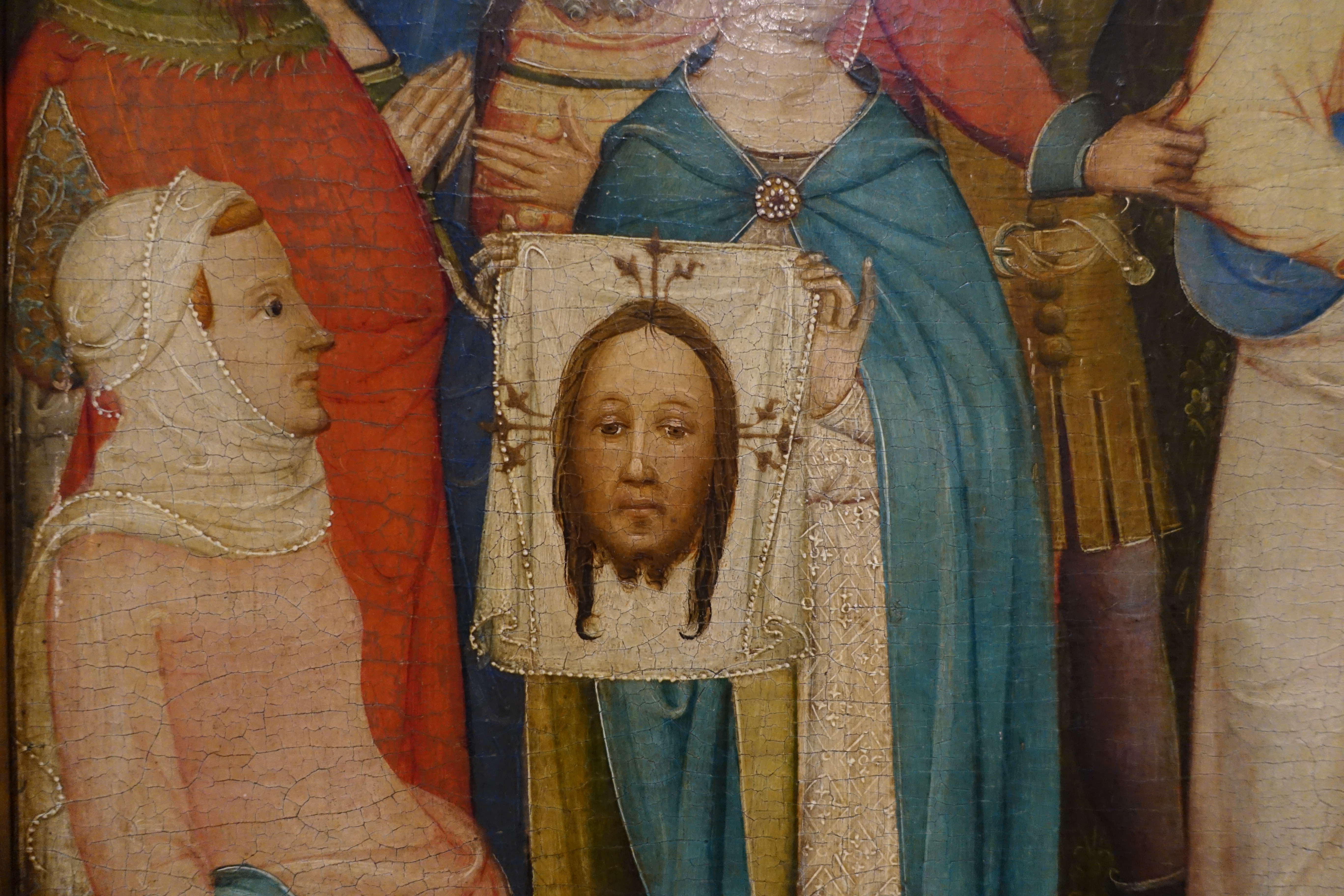


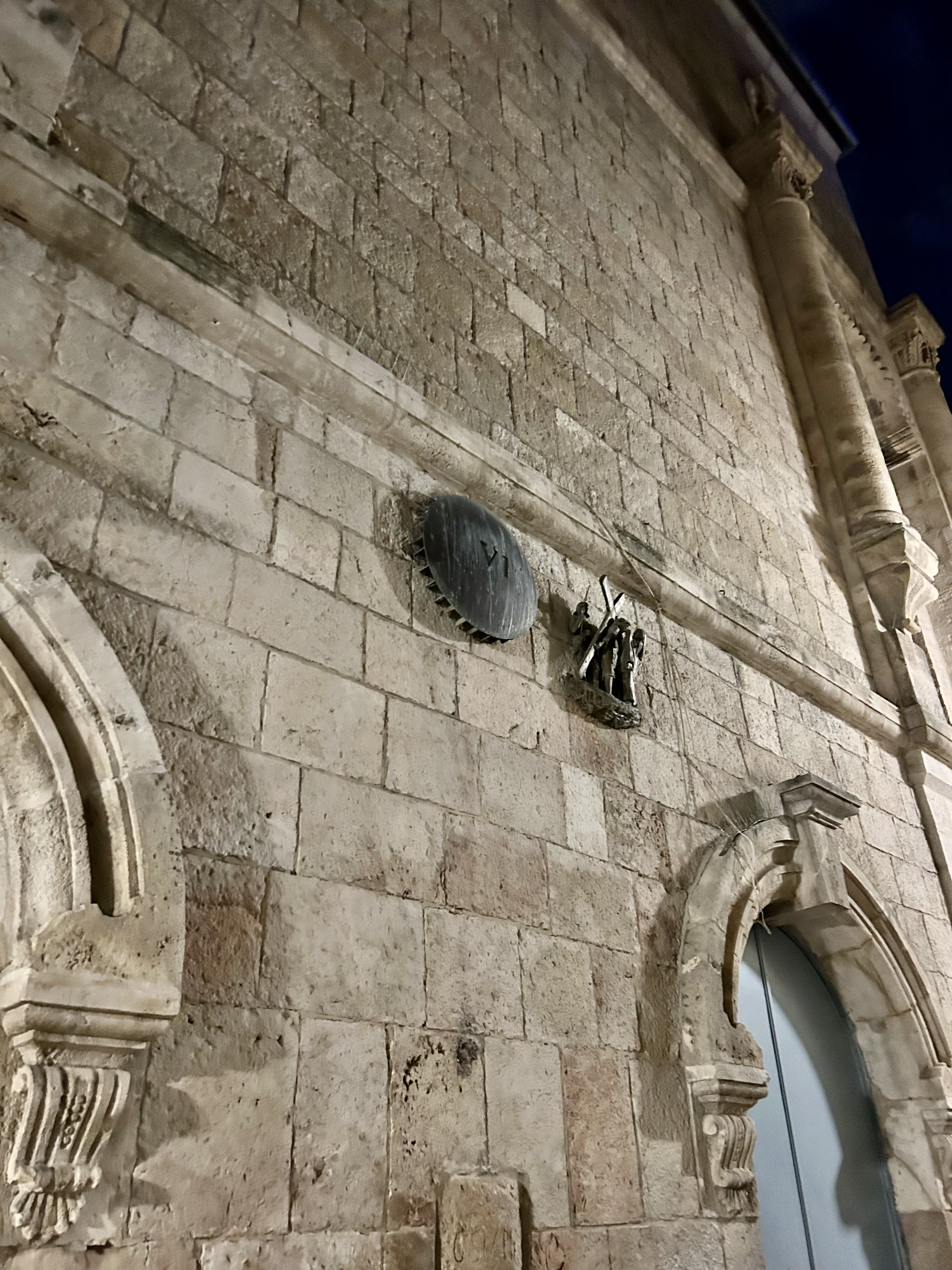





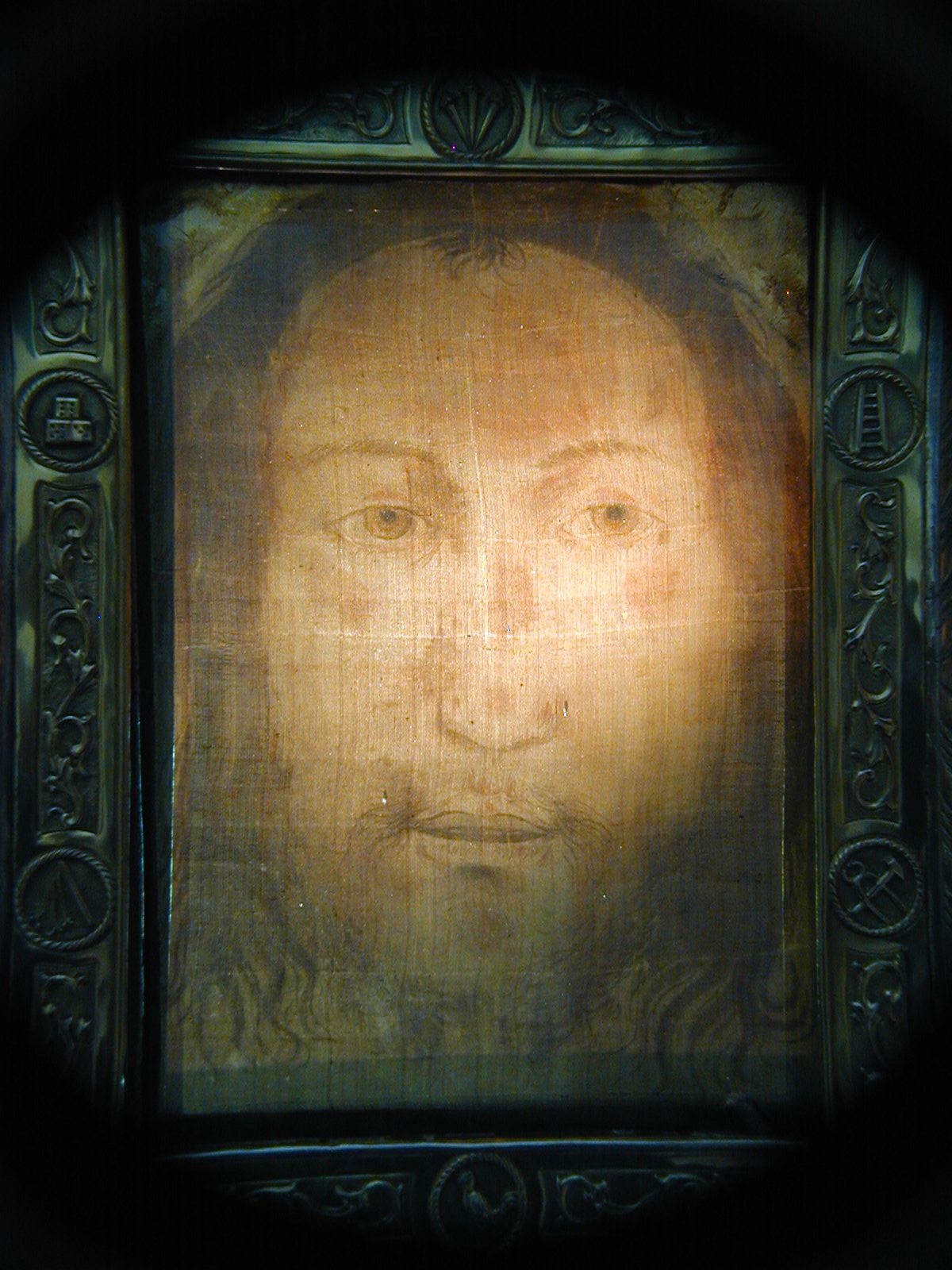


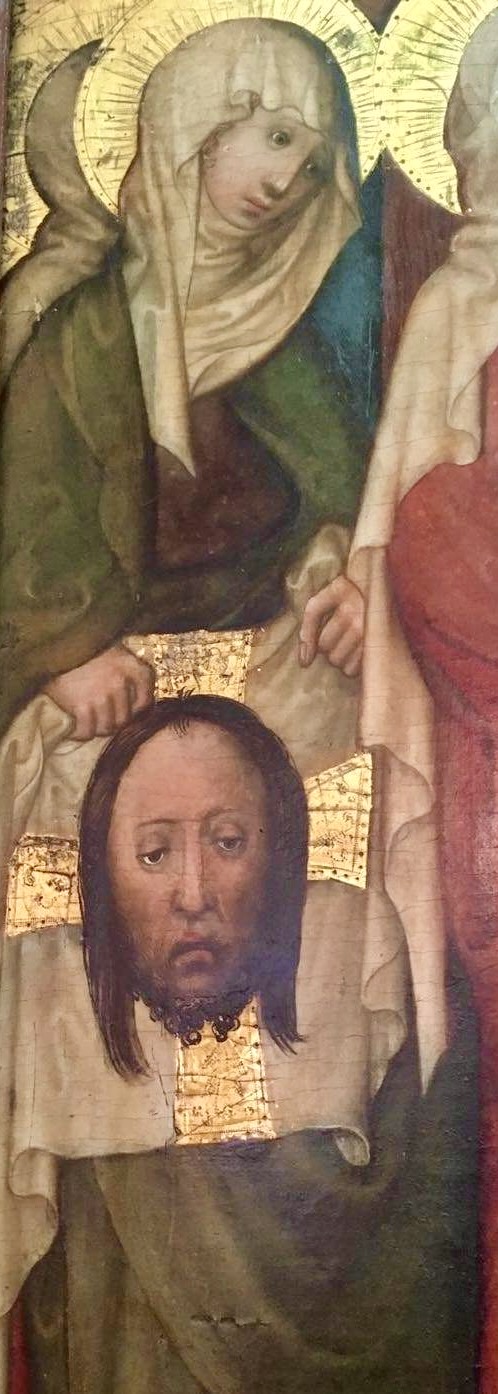
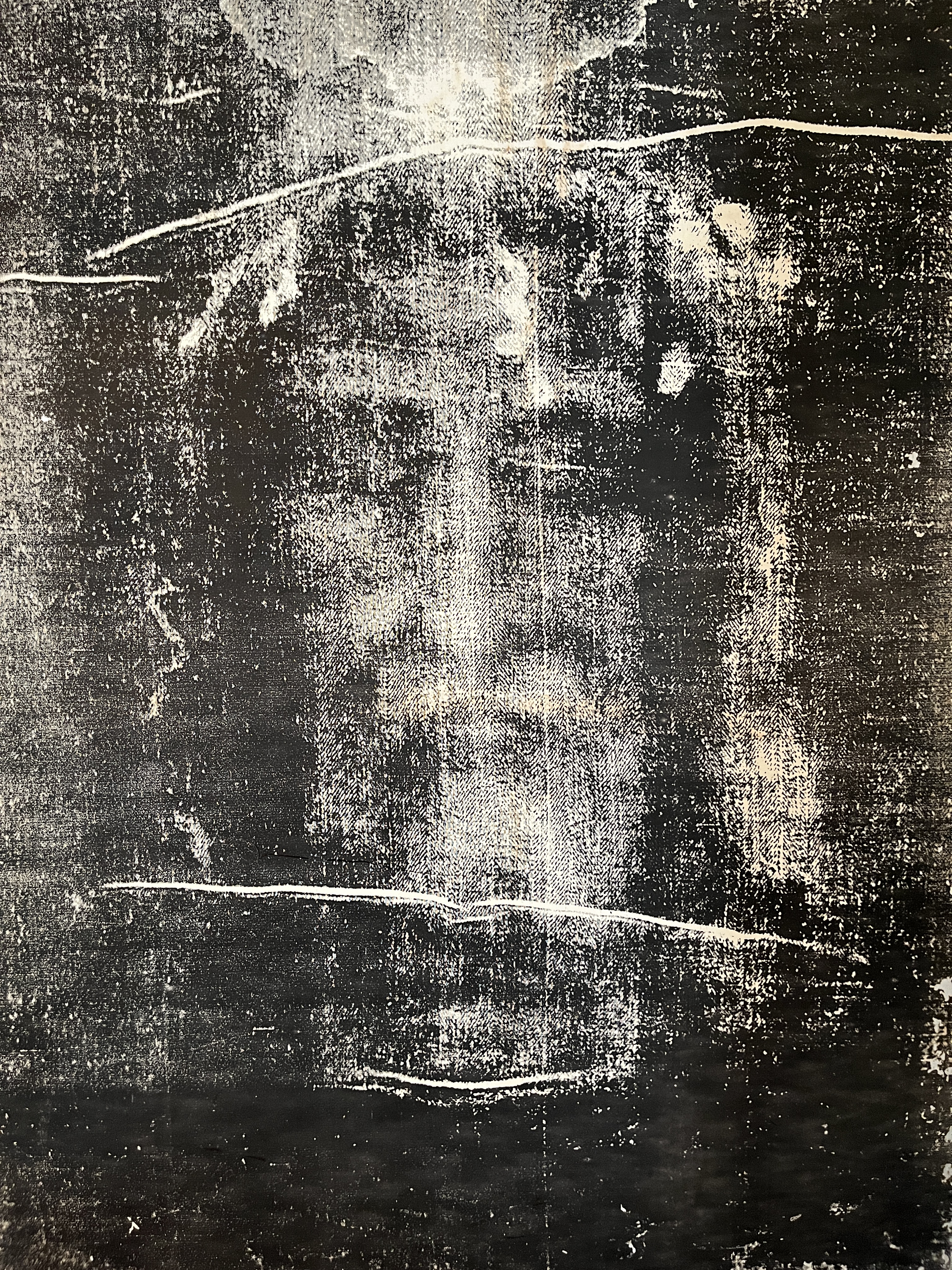


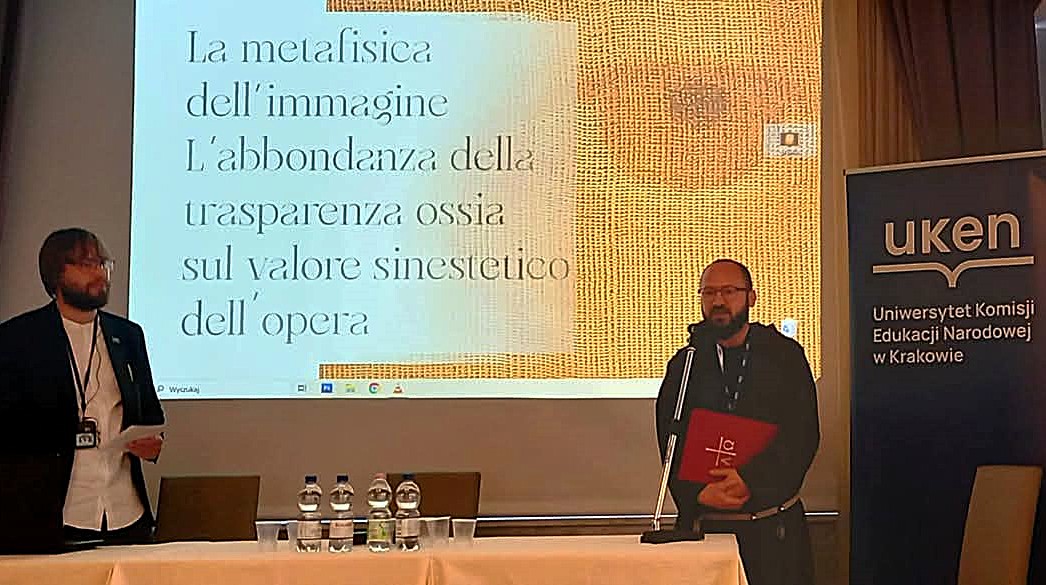
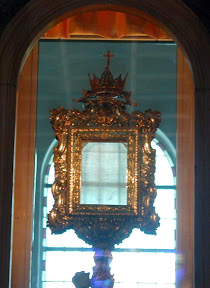


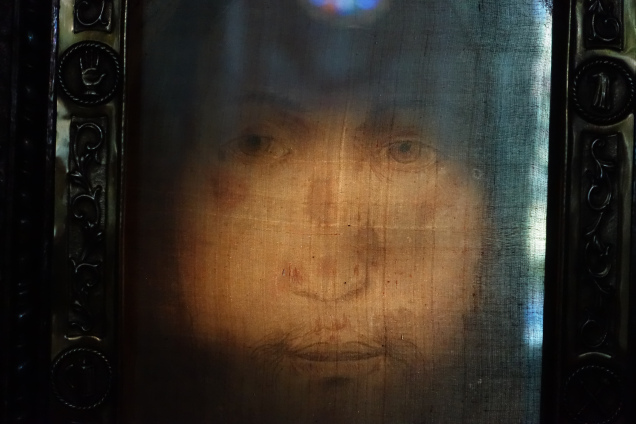


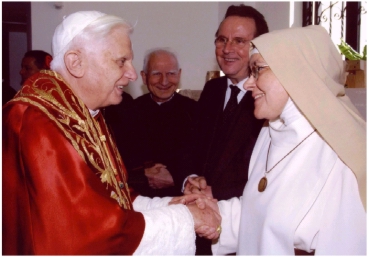


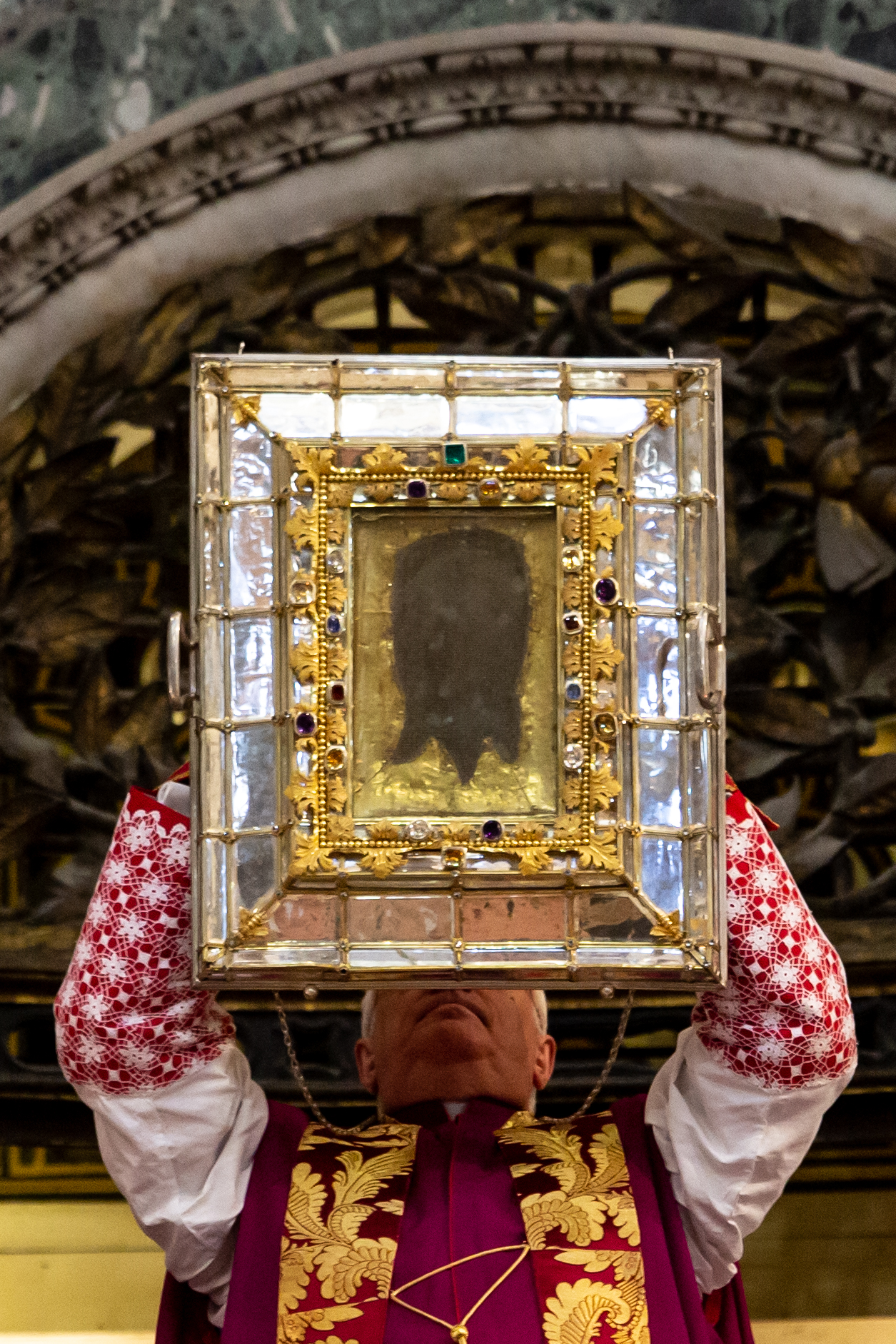
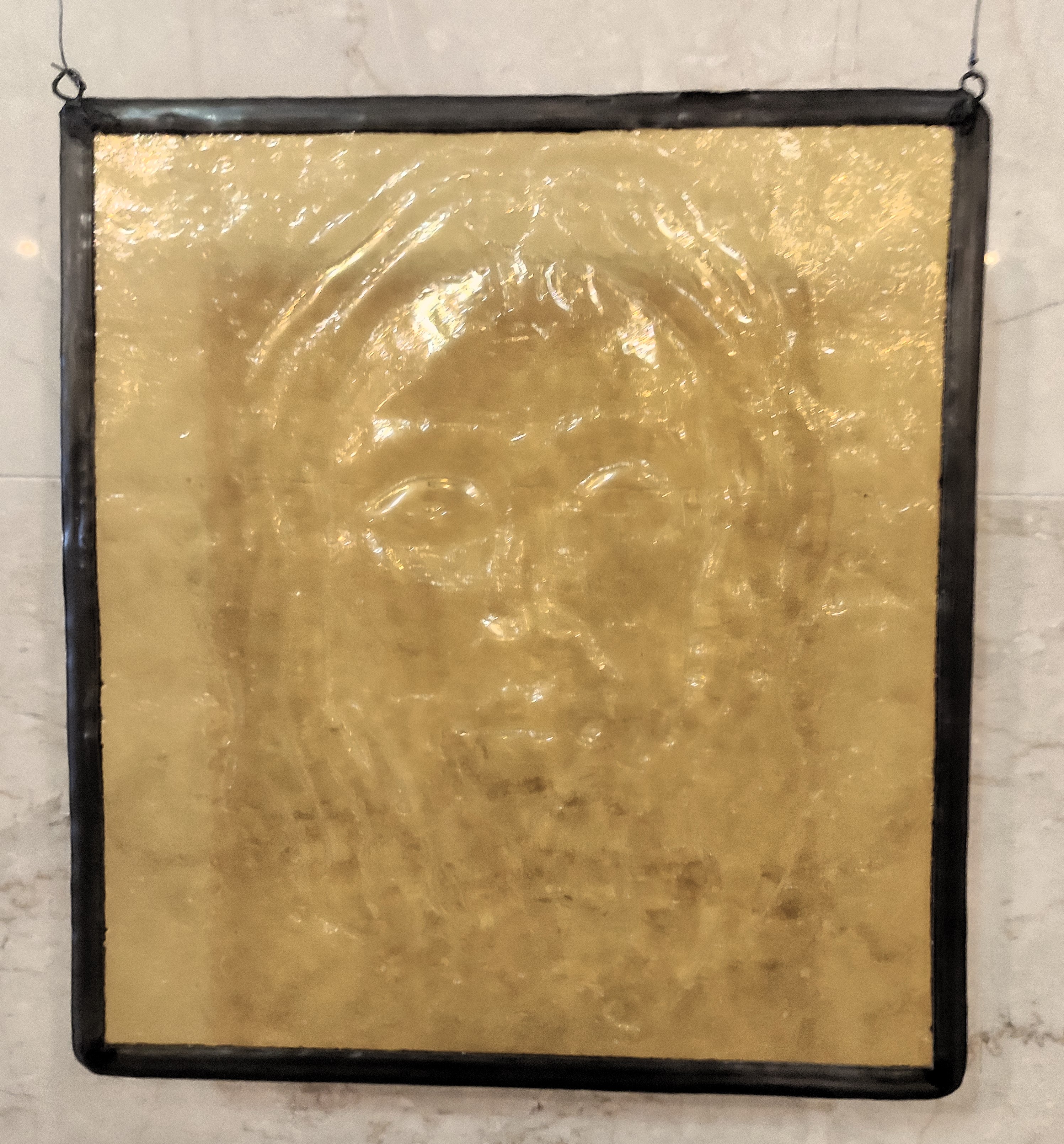

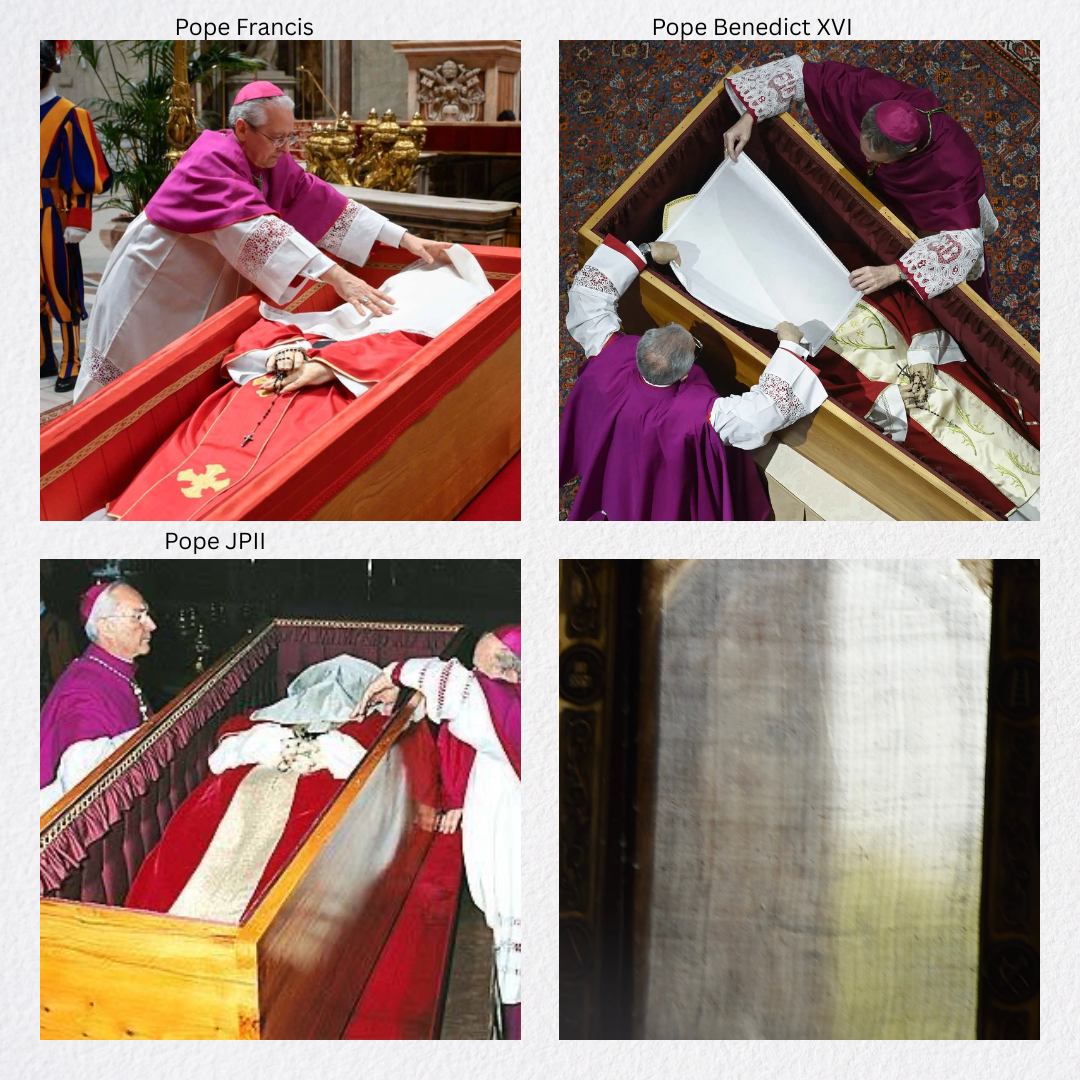


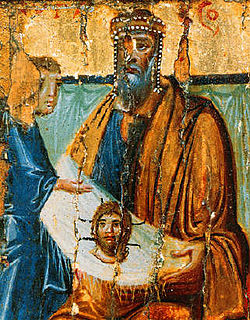

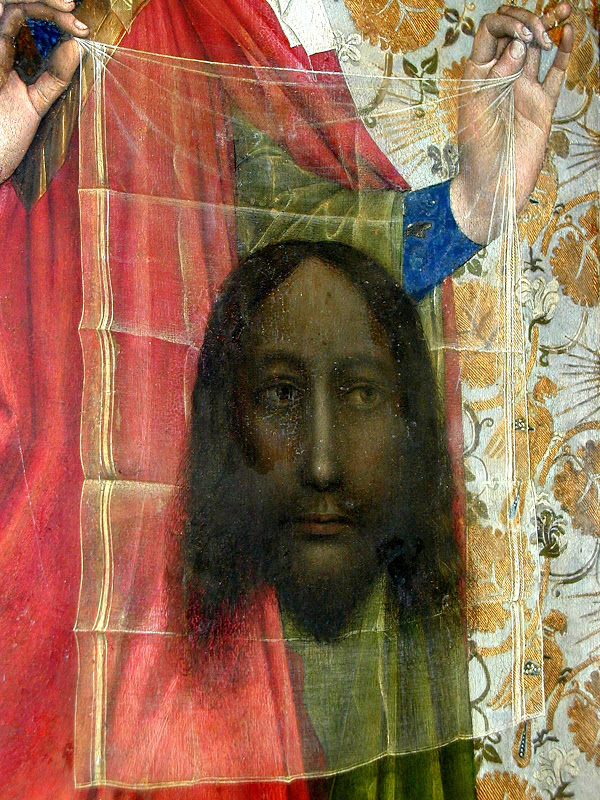

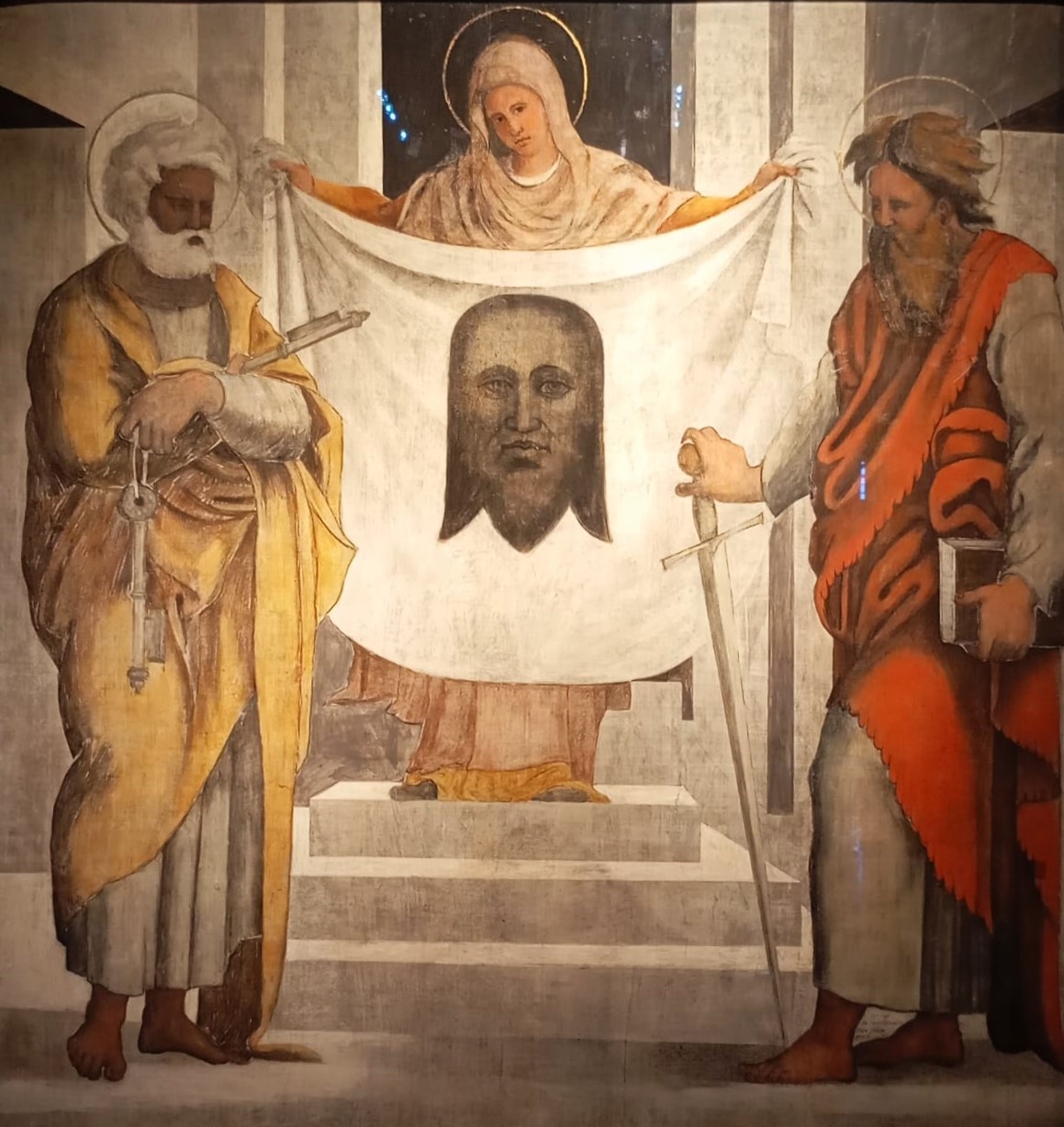
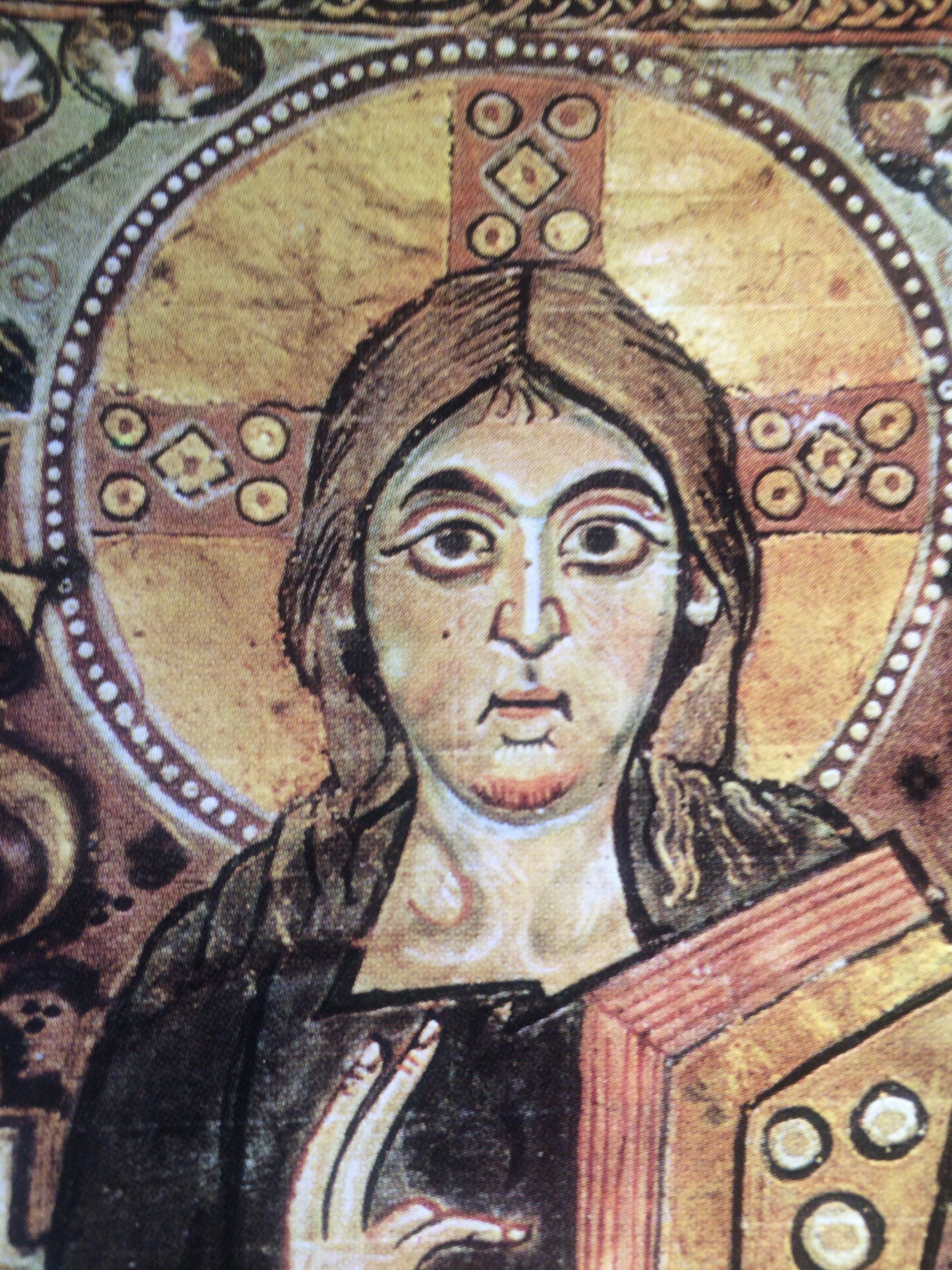

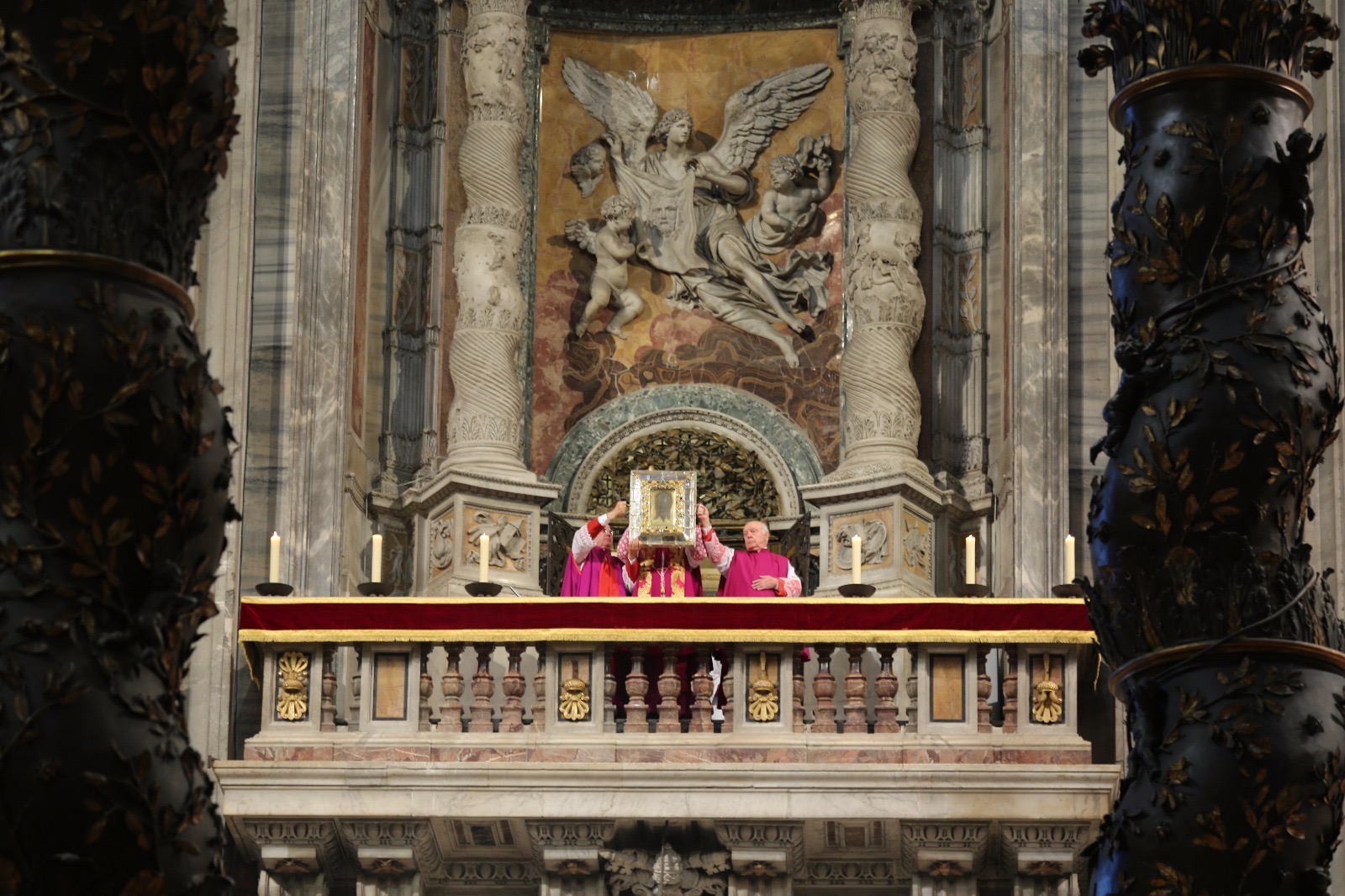



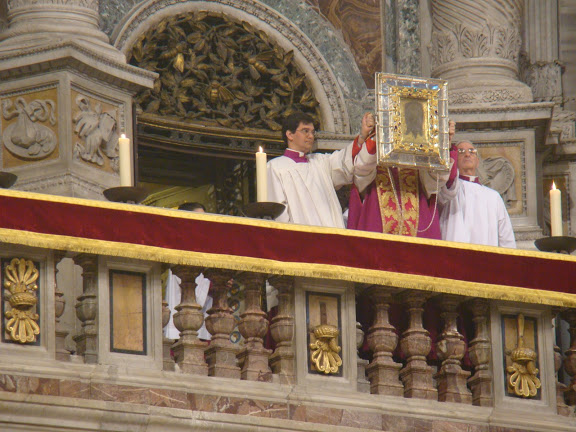

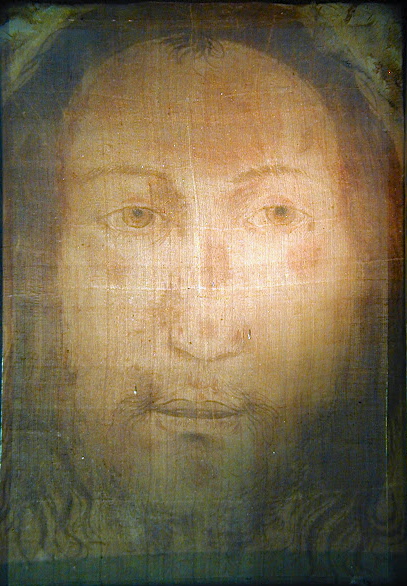

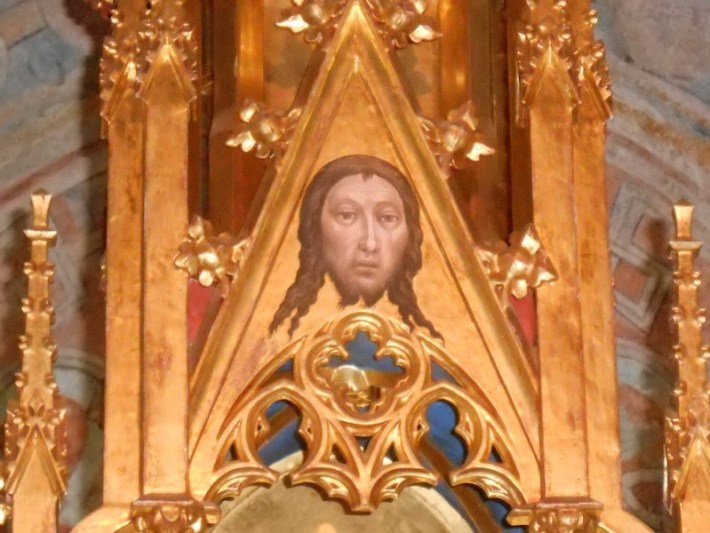

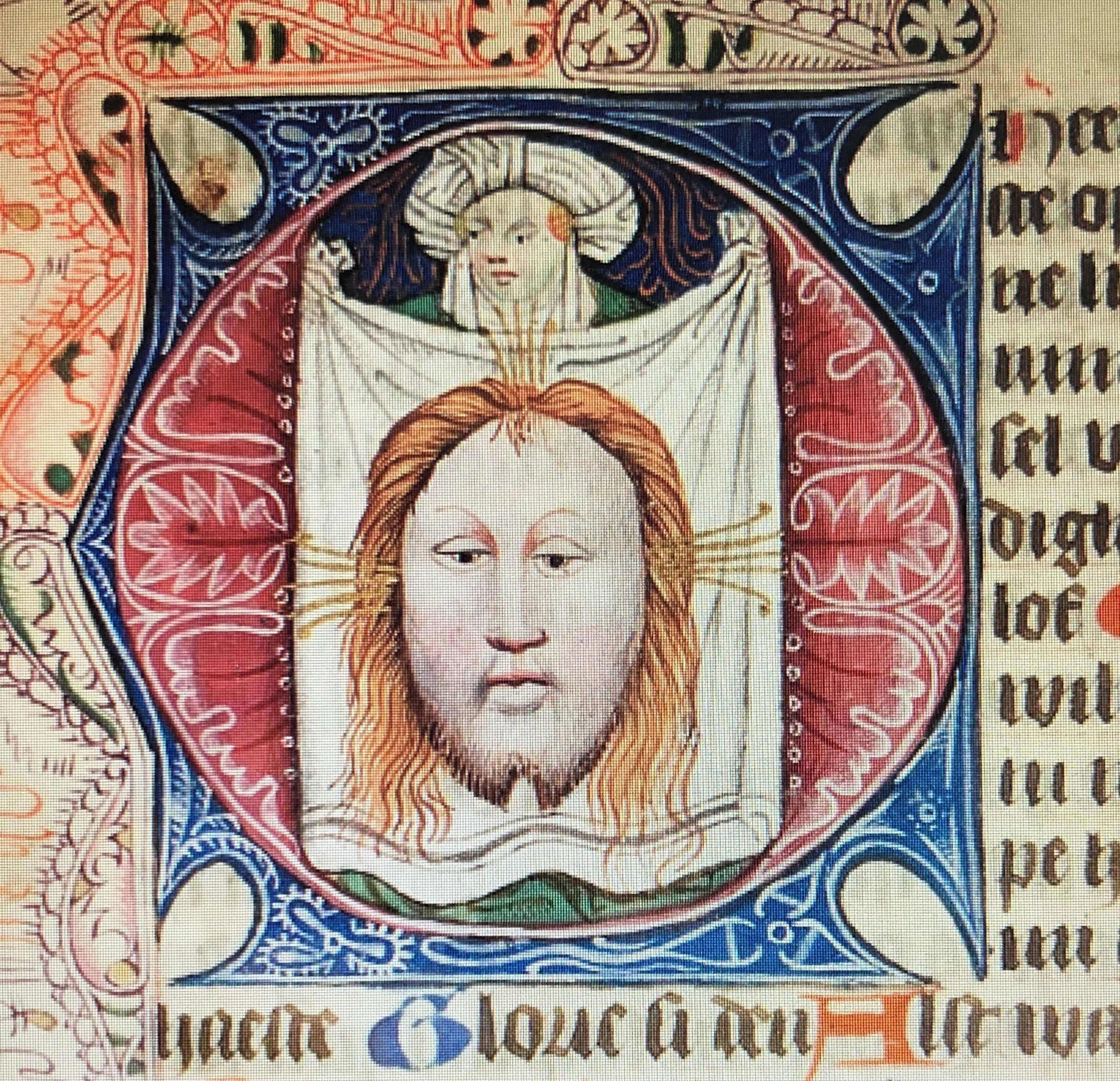
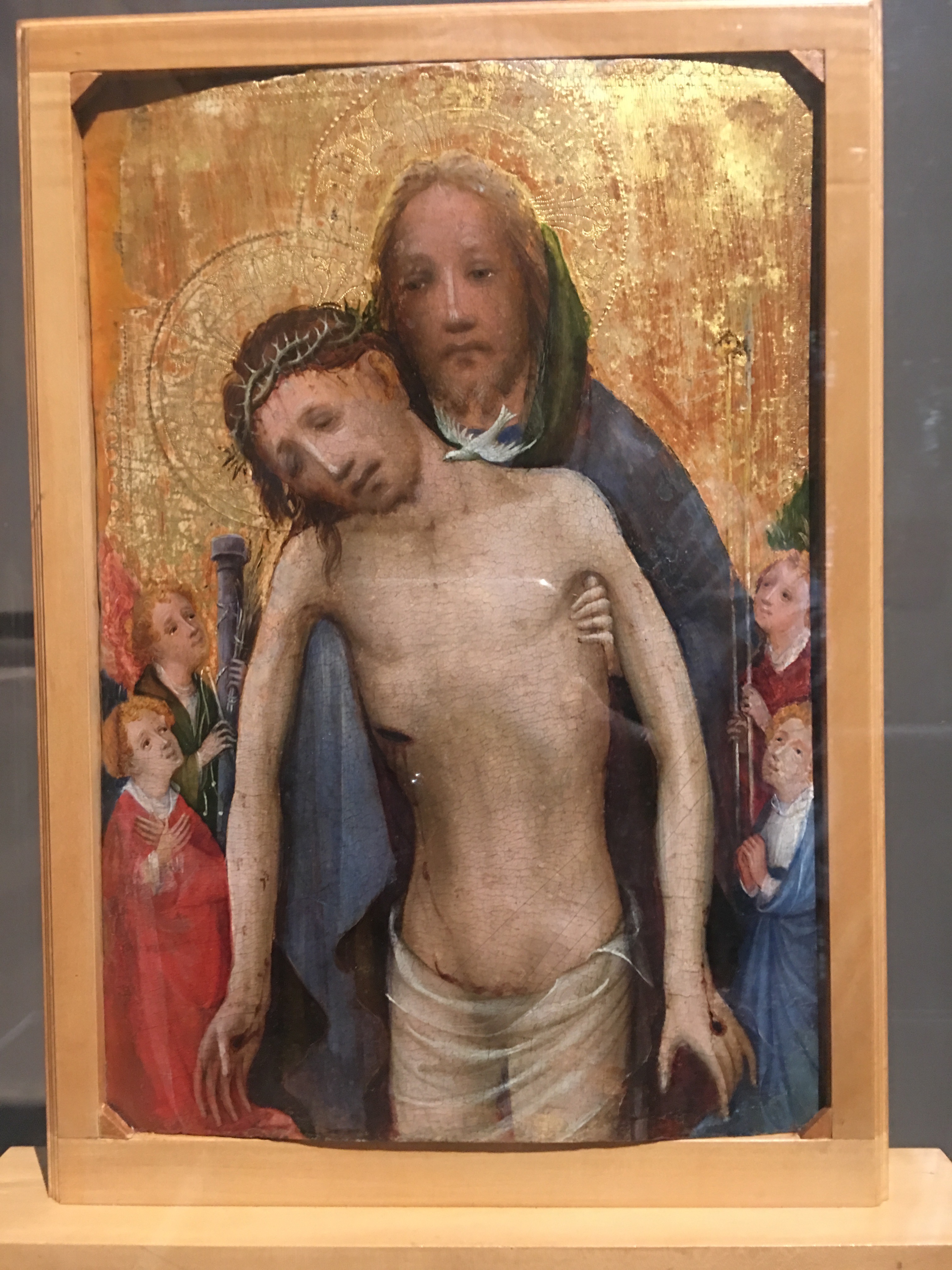


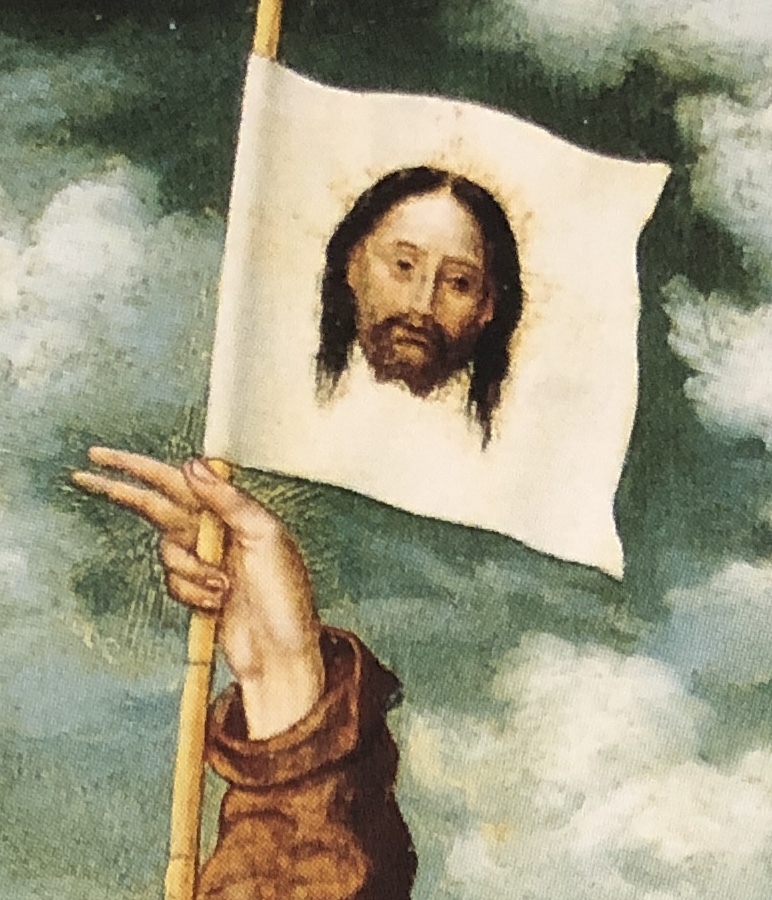


 Illumina Domine Blog - Devotion to The Holy Face