
There are many beautiful versions of artworks portraying the story of the “Mass of St. Gregory.” The earliest version was found in an 8th-century biography of St. Gregory from the 8th century. One version, by John the Deacon, tells the story of Pope St. Gregory saying Mass when suddenly, from within the Church, a woman began to laugh. It was just at the moment of the Consecration. It turns out, that the laughing woman was the one who had baked, the bread to be consecrated, herself, and so told her companion that she didn’t believe that the host could be Jesus Christ. St. Gregory, when he heard the mocking laughter, prayed for a sign and the host began to bleed, thus confirming the True Presence of the Body and Blood of Jesus in the Eucharist.

Other versions of the story also tell of St. Gregory’s vision of Jesus appearing on the altar in His Passion. Many works often included the instruments of the Passion, and prominent among them, one sees the Veil of the Holy Face of Jesus. Pilgrims to Rome, as well as many great artists, were able to see for themselves the “Greatest relic of the Church,” when the Holy Face Veil was publicly displayed from the reign of Pope Innocent III up until the Sack of Rome in 1527. Thankfully, therefore, we have many historic representations of what the Holy Veil actually looked like:
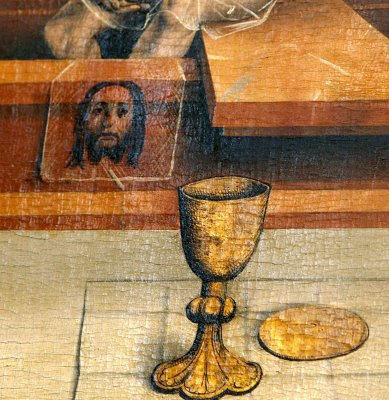


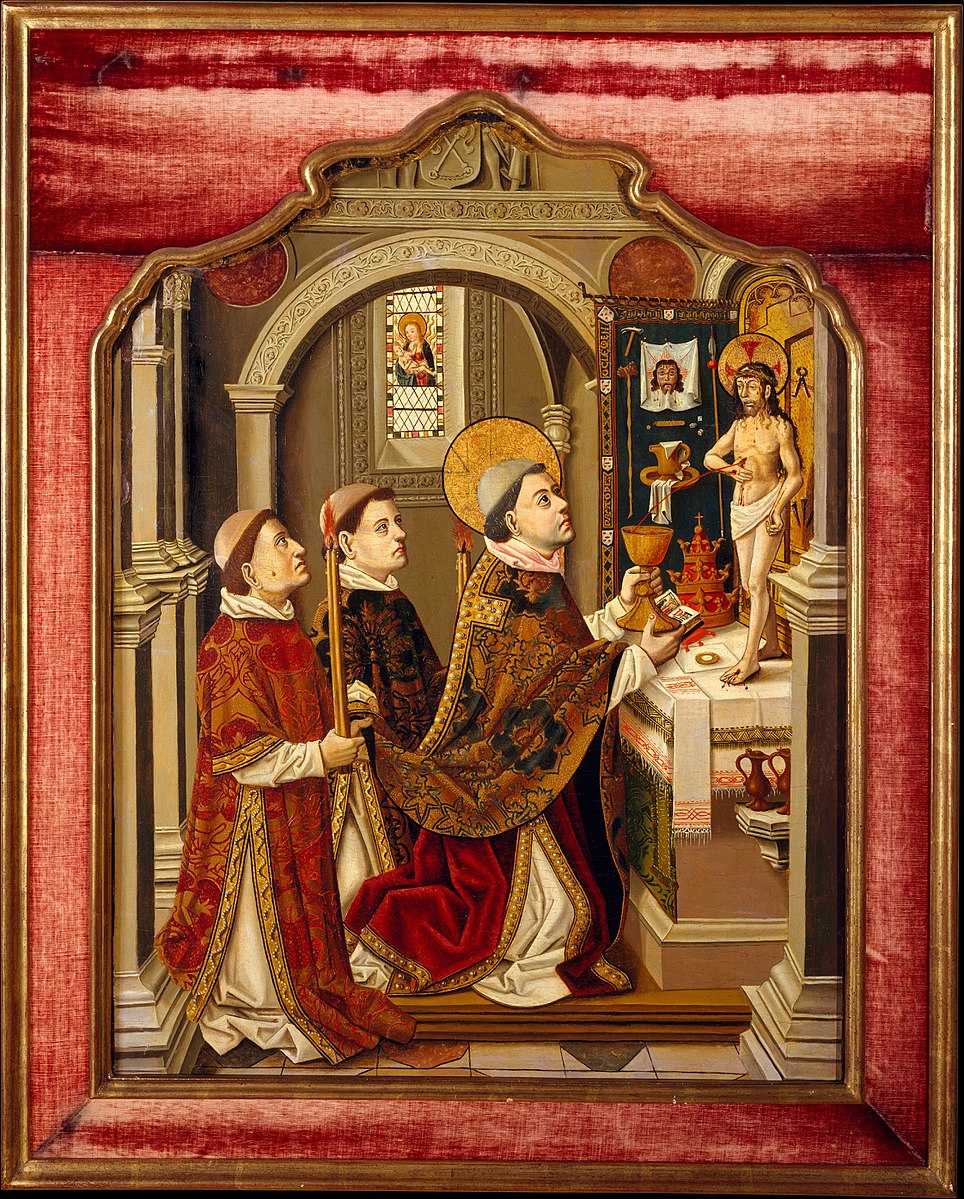
The Holy Face of Jesus on the Veil is a visible, tangible sign of the reality of Jesus’s presence in the world: He is “The Word made flesh” who dwells among us; Jesus Christ, who lived, suffered, died and rose again from the tomb, and who is truly present to us in the Eucharist at each Mass until the end of time.
 Illumina Domine Blog - Devotion to The Holy Face