Msgr. Walter Amaducci presents a copy of his book on the Holy Face of Manoppello to Pope Leo XIV
English edition of Msgr. Amaducci’s book “The Holy Face.”
First, some good news: This October, Msgr. Walter Amaducci, Episcopal Vicar for Pastoral Care in the Diocese of Cesena in Emilia-Romagne, was received in a private audience by Pope Leo XIV. During their cordial meeting, Msgr. Amaducci presented the Pope with a copy of his book on the Holy Face of Manoppello. Msgr. Amaducci, who was once a skeptic of the relic veil known as “Il Volto Santo,” has now become its ardent defender, recognizing in the remarkable history, its importance for this millennium–dedicated to the Face of Christ by Pope St. John Paul II.
During his meeting with Pope Leo XIV, the gracious Msgr. Amaducci also advised the Holy Father to seek further information about the relic from Cardinal Louis Antonio Tagle, who has been personally involved in spreading the good news of the Holy Veil of Manoppello for many years.
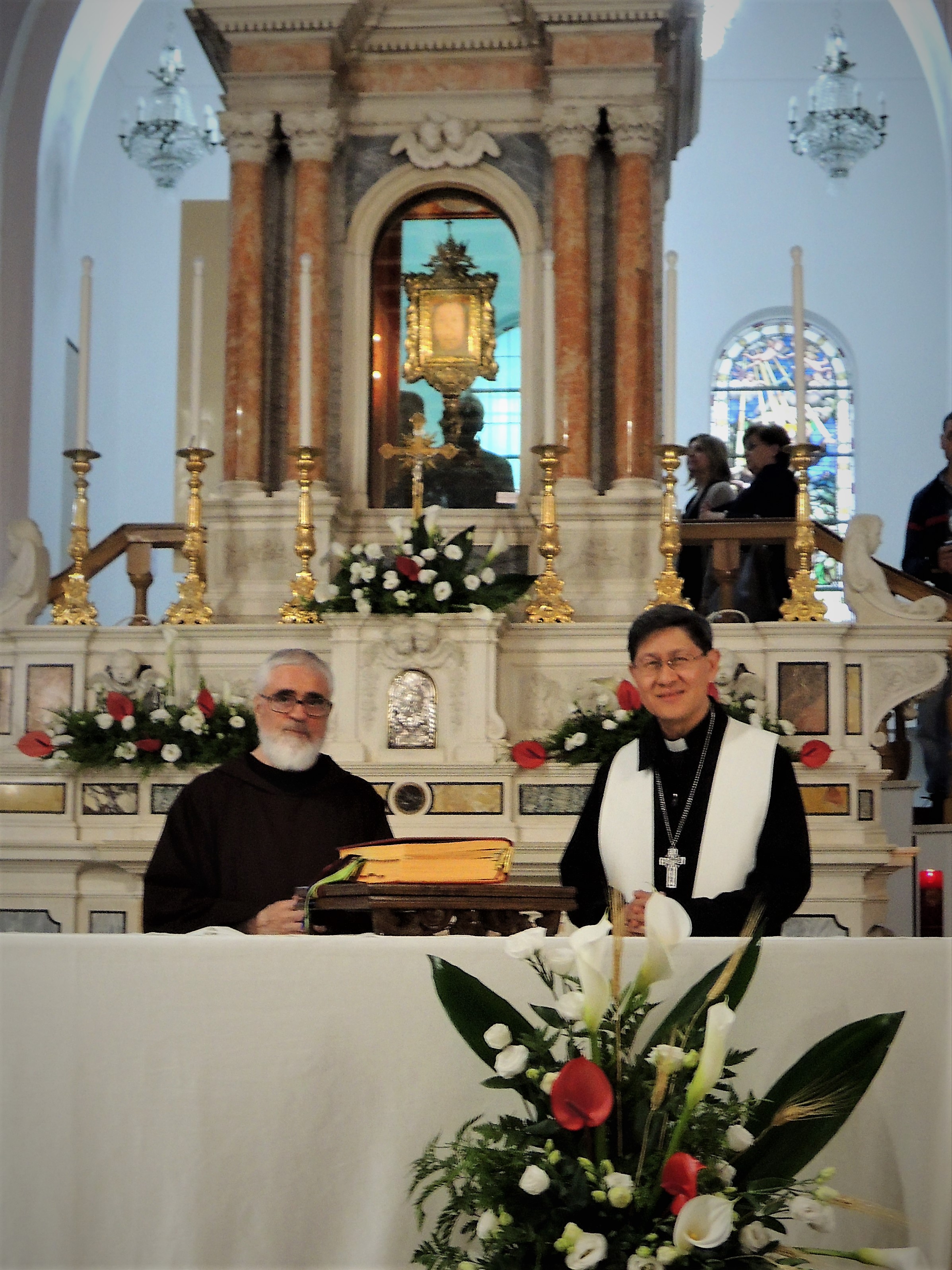
Padre Carmine Cucinelli, the former Rector of Basilica Sanctuary of the Holy Face and Cardinal Tagle (2017)
On his first visit to see the Holy Face of Manoppello, on May 20, 2017, Cardinal Tagle, shared his experience: (Translation from the original Italian interview, which may be seen here.) — “I saw the Holy Face under the changing of the light, not only a Face of tenderness, but of welcoming. I saw a Face smiling at me, almost saying, “Welcome Luis Antonio!” It is a Face that speaks, it is alive, yes, it is the message, the Word is the Face. It is also a Face turned towards me, but I did not feel fear; fear in front of a judge, or of a face which condemns. A Face of Truth, and the Truth is love; love wins out over fear. I thought this afternoon perhaps this is the Last Judgement–it is not a judgement full of fear and dread, but in front of pure love–I do not want to hide myself. There is no reason to hide myself, but, there is only the reason to open my heart in front of a Face open to love, open to welcoming, open to pardoning my mistakes. It is an experience of liberation, and religious experience for me.”
Cardinal Tagle elevating the Body of Christ at the Basilica Shrine of the Holy Face of Manoppello, Italy (Photo: Paul Badde/EWTN)
At the closing of Cardinal Tagle’s homily the next day, May 21, 2017, he said: “We see the Face of Jesus because He reveals His Face to us, the Face of the loving God. His is the Face of God turned towards us and not centered on Himself. His is the Face of the One who fulfilled the commandment of love. As we see and hear His Face may our faces be transformed into His Holy Face. Through the testimony of our faces, may the suffering people of the world know that Jesus sees them, listens to them, cares for them and loves them.”
A Blessed Encounter with the Holy Face of Jesus
(Photo: Patricia Enk)
Cardinal Tagle has also said, “What we have seen and heard we must share with others.”
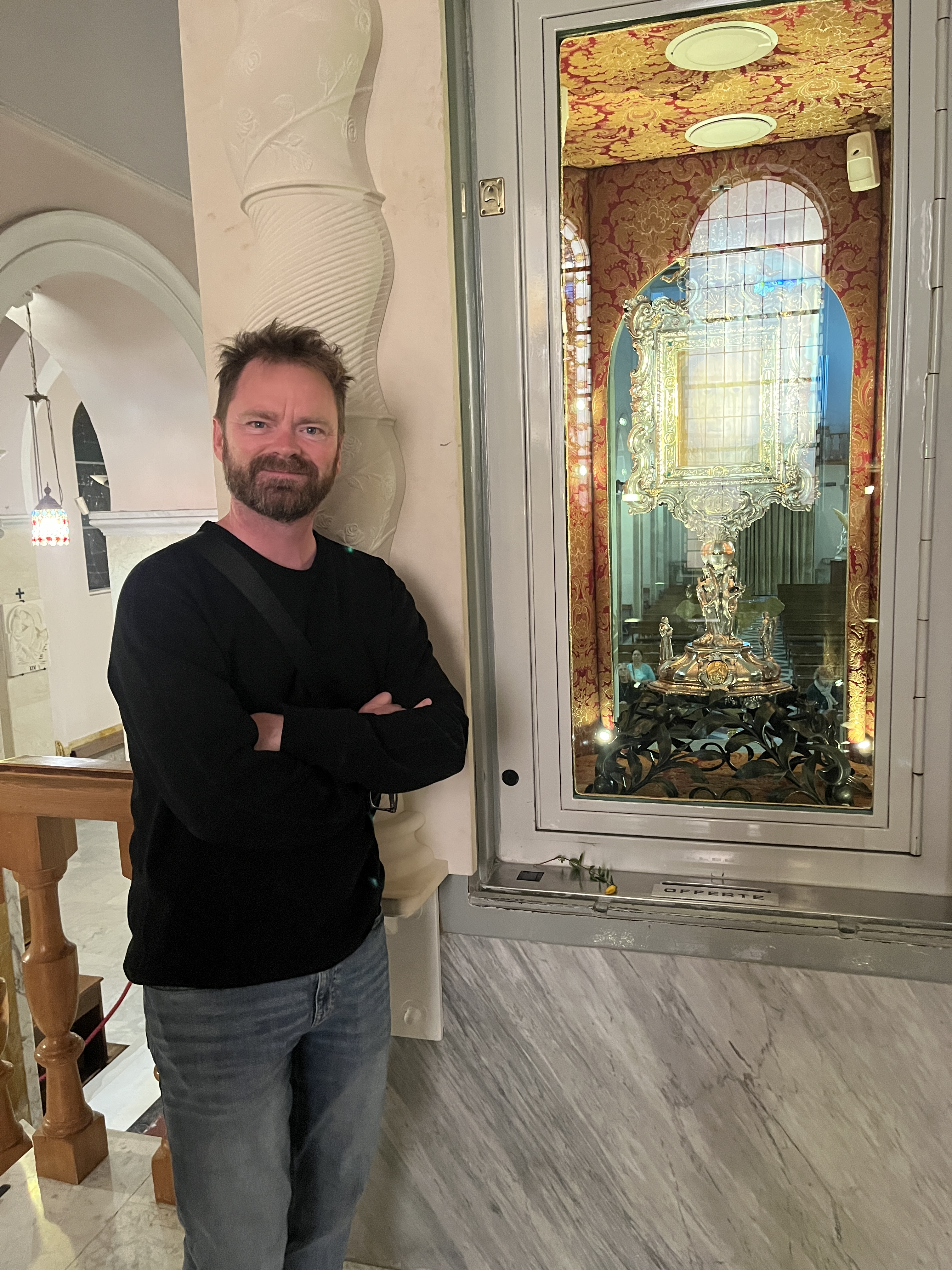
Mountain “The Catholic Traveler” Butorac stands next to the Relic Veil of the Holy Face in the Basilica Shrine of Il Volto Santo in Manoppello, Italy. (Photo: Patricia Enk)
And so, I would like to share with tremendous gratitude in my heart, that I have just returned from a Jubilee Year of Hope pilgrimage, which brought me back to Rome, Assisi, Loreto and especially to Manoppello after far too many years–thanks to Mountain Butorac, a.k.a. “The Catholic Traveler.”
Earlier this year Mountain had led my husband and I on an exceptional pilgrimage to the Holy Land, and so now we have a great deal of confidence in the gifts and talents that God has given him to make even the most daunting pilgrimage journey happen–with as few bumps along the way as possible–and many joyful and holy surprises as well.
And speaking of joy and holy surprises… we saw the Pope!
Pope Leo XIV recognizing some very happy & shouting pilgrims from the “Windy City.” (Photo: Patricia Enk)
My last visit to the Basilica Shrine of “Il Volto Santo” was in the Jubilee Year of Mercy, in 2016–which we had traveled to on our own over nine years ago: (Pilgrimage — A Journey Toward the Face of God, Part 1 – Manoppello.) Much had happened in the following nine years which prevented our return; some good and some bad; including the loss of my eyesight for over a year, and after several surgeries–a gradual recovery–thanks be to God!
Sr. Petra-Maria, Cynthia Krystyna Simla reverencing the Holy Face relic. (Photo: Patricia Enk, 2016)
For this pilgrimage journey, our small group of fellow pilgrims were a continual source of unexpected blessing, help, and inspirations at each step along the way. Mountain shouldered the stress whenever “the best laid plans of mice and men” went a little astray, but with the end result always turning out even better than originally planned: such as the day that the Sistine Chapel was going to be closed to the public when we had been scheduled to visit. The reason was the historic meeting of King Charles with Pope Leo XIV. The King the the Pope would be praying together for the first time in 500 hundred years, under the backdrop of Michelangelo’s “Last Judgement.” Only a few hours before that grand event, after strolling peacefully alone through the Vatican Museum, we were surprised when our group had been allowed to enter the Sistine Chapel with no one else present–except some very diligent cleaning ladies preparing for the Pope and King, and a handful of very Vatican official-looking men in suits. (No photos in the Sistine Chapel, of course.)
Biographer of Carlo Acutis, and custodian of his relics, Mons. Anthony Figueiredo, gave the group a wonderful talk on St. Francis connecting to the spirituality of St. Carlo Acutis.
Miracles do happen! And there were many more to come… a surprise blessing with the relics of St. Carlo Acutis in Assisi, Mass in the dark silence of the Holy House of Loreto, the sight of the oldest Eucharistic Miracle of Lanciano…and for myself; the tremendous grace to see, through grateful tears once again, the great gift the human Face of my Risen Lord on the Holy Veil of Manoppello, and with renewed Hope in the power of the Resurrection of Christ.
Pope St. John Paul has said: “Contemplation of Christ’s Face cannot stop at the image of the Crucified One. He is the Risen One!” The Holy Face of Manoppello is the Face of the Risen Christ; it is believed to be the “Cloth that Covered His Head” in the tomb.
“Those who gaze on it [the relic Veil of the Holy Face] are never satisfied with contemplating it, and wish to always have it before their eyes. And when they eventually leave it, with heavy sighs full of love, they are forced to leave Him their hearts, bathed in tears.” –Capuchin Donato da Bomba 1646. (Paul Badde’s beautiful photo of Il Volto Santo of Manoppello)
Continuing his catechesis on the Jubilee theme of Jesus Christ, Our Hope, Pope Leo XIV asks us “to consider how the Resurrection of Jesus fulfills the desires of every human heart. Our lives are marked by conflicting situations that reveal limitations and our desire to overcome them. We seek worldly recognition and whether we receive it or not, we still feel empty. This reveals that we are not truly satisfied with achievements and passing certainties of the world. This is because we are created in the image and likeness of God, and through the power of the Holy Spirit, we recognize an inexhaustible longing in our hearts for something more. It is only the Resurrected Jesus who can give the only true and lasting peace that sustains and fills us. In a world struggling with fatigue and despair, let us be signs of hope, peace, and joy in the Risen Lord!” (Pope Leo XIV, October 15, 2025 Audience)
(Photo: Jerry Christopher) Entering the Holy Door Deo Gratias!
“Now faith is the assurance that what we hope for will come about and the certainty that what we cannot see exists.” (Heb. 11:1)
The Holy Face of Jesus Christ–the Beatific Vision–is at the center of the Angelic Worship.
Devotion to the Holy Face of Christ is a sign of hope for the world.
Although the world seems a hopeless mess, the Jubilee Year of Hope reminds us that there is indeed many reasons to hope. We can hope for eternal life with God in Heaven–to one day see Him face to face. “Hope is the confident expectations of divine blessing and the beatific vision of God; it is also the fear of offending God and incurring His punishment.” (CCC 2090) Hebrews 11:1 states: “…what we hope for can come about,” and we can also be certain that what we cannot see exists.”
Humanity is in the midst of a battle for souls, but those who follow Christ–God’s “little ones”–can be certain in the hope that they are also being defended and fought for by the Angels and Saints. But the greatest aid that falls within their own power is the devotion to the Face of Jesus Christ as characterized by Pope Benedict XVI:
1. Discipleship – an encounter with Jesus, to see Jesus in the Face of those in need. 2. The Passion of Jesus, and suffering expressed by images of the wounded Face of Jesus. 3. The Eucharist, “the great school in which we learn to see The Face of God”, which is woven between the other two. The eschatological element then builds on awakening to Christ by contemplating His Face hidden in The Eucharist.
Pope Benedict XVI contemplates the Face on the Veil of Manoppello. September 1, 2006. (Photo: Paul Badde/EWTN)
“Our whole life should be directed toward encountering Him,” writes Benedict, “toward loving Him; and in it, a central place must be given to love of one’s neighbor, that love that in the light of The Crucified One, enables us to recognize the Face of Jesus in the poor, the weak, the suffering.” The pope goes on to explain the fruits of this contemplation: “From contemplation of the Face of God are born, joy, security, Peace.”
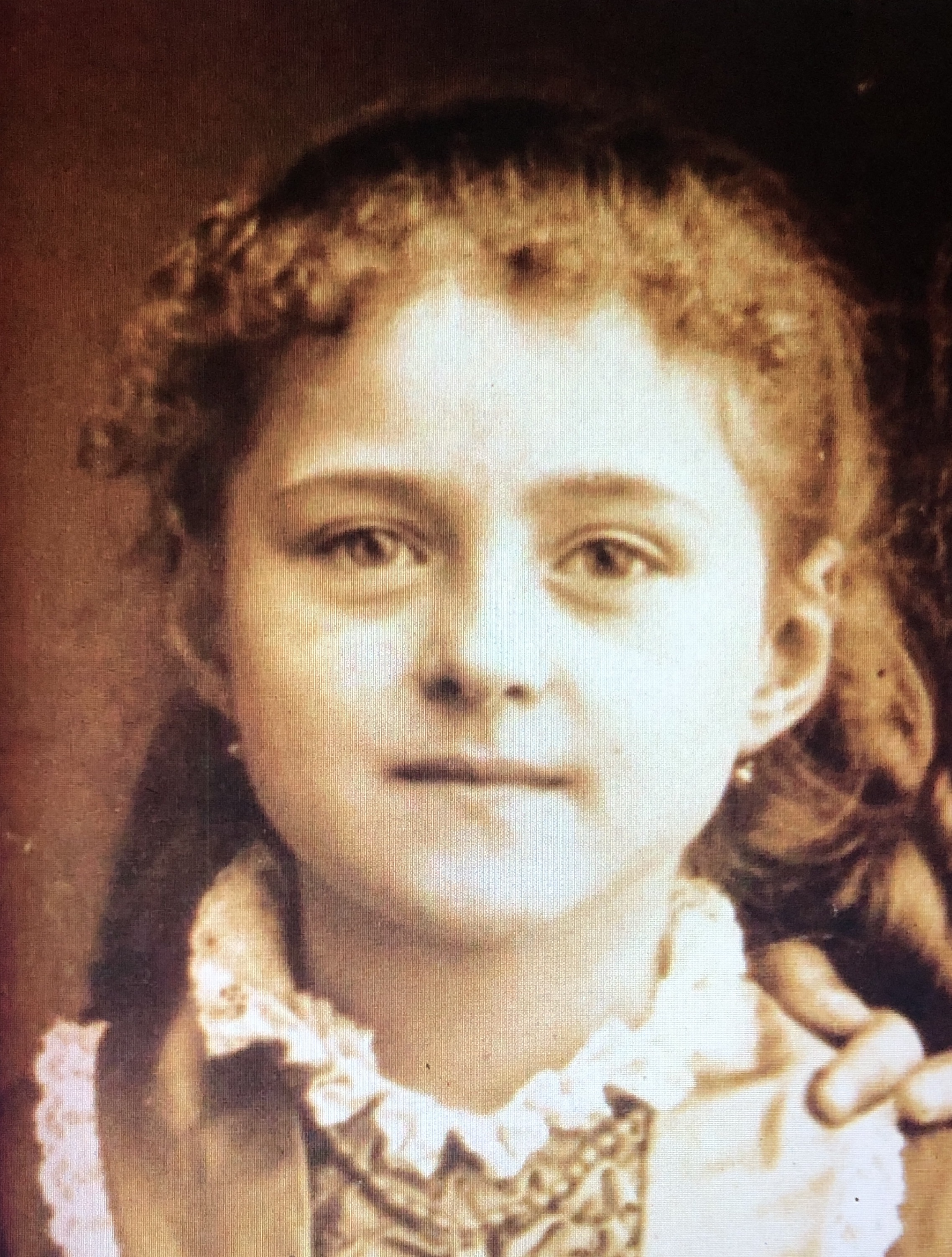
St. Therese of the Child Jesus and the Holy Face, Doctor of the Church, teaches us the “Little Way” of child-like confidence in God.
To be one of God’s “little ones” is to be the greatest in His Kingdom; requiring child-like confidence, humility and trust in God’s all-mighty power, mercy, and love. In the Gospel of Matthew we read: “Who is the greatest in the kingdom of heaven?” He called a child over, placed it in their midst, and said, “Amen I say to you, unless you turn and become like children, you will not enter the kingdom of heaven. Whoever humbles himself like this child is the greatest in the kingdom of heaven. and whoever receives one child such as this in my name receives me. Whoever causes one of these little ones who believe in me to sin, it would be better for him to have a great millstone hung around his neck and to be drowned in the depths of the sea… See that you do not despise one of the little ones, for I say to you that their angels in heaven always look upon the face of my heavenly Father.” (Mt. 18:2-7, 10)
The Holy Angels have worshipped and served Christ from the Incarnation to the Resurrection, and when He comes again, they will announce the Last Judgement. “With their whole beings the angels are servants and messengers of God. They ‘always behold the Face of my Father who is in heaven (Mt. 18:10) ‘they are the mighty ones who do his word, ‘hearkening to the voice of His word.(Ps 103:20)'” (CCC 329)
“When the dragon saw that it had been thrown down to each, it pursued the woman who had given birth to a male child.” (Rev. 12:13)
“Then war broke out in heaven; Michael and his angels battled against the dragon. Although the dragon and his angels fought back, they were overpowered and lost their place in heaven. The huge dragon, the ancient serpent known as the devil or Satan, the seducer of the whole world, was driven out; he was hurled down to earth and his minions with him” (Rev. 12)
“Who is like God!” St. Michael, holds before us the Holy Face of Jesus. (Sculpture by Cody Swanson, Old St. Patrick’s New Orleans. photo: Patricia Enk)
The center of this battle raging between Angels and demons –in heaven and on earth — is the Incarnate Word of God made flesh, Jesus Christ. It is Jesus–in His “little ones”–who is rejected, reviled and persecuted. The devil, who knows his time is short, wants to obliterate the Face of God, not only in churches that have vandalized and desecrated, but in the souls of human beings. The battle lines have been drawn between the culture of life and the culture of death–especially of the littlest and weakest among us. The devil’s particular object of hatred is the woman and the unborn. Some can no longer recognize that a child in the womb is a human being. Many persons reject their God-given identity as male and female. Racial hatred is causing deeper and deeper division, and human trafficking increases as humanity is blinded to the Face of God in their neighbor made in His image and likeness. Now Ai presents new threats to humanity, reducing a human person to a number; an algorithm.
The Holy Angels and the Saints point us to contemplation of the Face of Christ as a sign of hope for the world. Like the Holy Angels we should keep our eyes fixed on the Face of God in worship; Like St. Therese, and all the Saints, we need to become like a little child, who despite the darkness, surrenders to the crosses of life, and seeks the Face of God in humility and trust. We must also be like a “Veronica,” that is “a true image” of the Face of Jesus in our charity and compassion for others. Of course, the best example is set by Our Blessed Mother, who always looked at the Holy Face of her Son through the veil of faith; “Blessed is she who believed” in hope “that what was spoken to her by the Lord would be fulfilled!” (Luke 1:45) “To recite the Rosary is nothing other than to contemplate with Mary the Face of Christ.” (Rosarium Virginis Mariae)
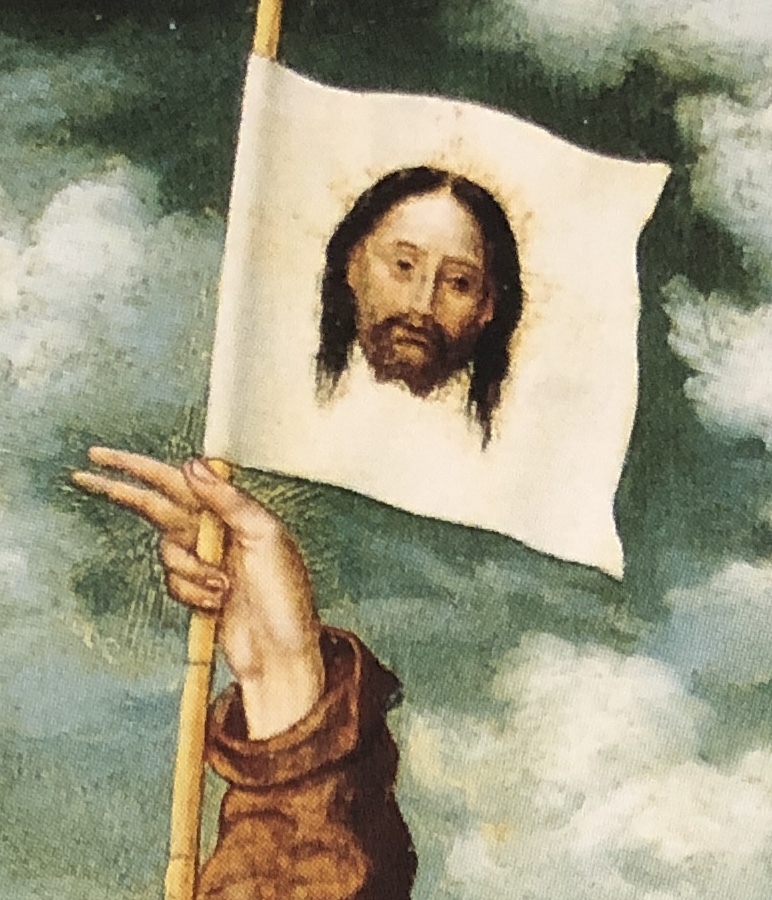
The Face of the Risen Christ is the banner of victory over sin and death!
“Then I heard a loud voice in heaven say: ‘Now have salvation and power come, the reign of our God and the authority of his Anointed One. For the accuser of our brothers is cast out, who night and day accused then before our God. They defeated him by the blood of the Lamb and by the word of their testimony; love for life did not deter them from death. So rejoice, you heavens, and you the dwell therein! But woe to you, earth and sea, for the devil has come down upon you! His fury knows no limits, for he knows his time is short’ (Rev 12).”
St. Michael Prayer — St. Michael, the Archangel, defend us in battle. Be our protection against the wickedness and snares of the Devil. May God rebuke him, we humbly pray, and do thou, O Prince of the heavenly hosts, by the power of God, thrust into hell Satan, and all the evil spirits, who prowl about the world seeking the ruin of souls. Amen.
Prayer to Our Lady of the Angels, who, by her great humility, crushed the head of Satan:
Sublime Queen of Heaven, exalted Lady of the Angels, you have the power and commission given by God to crush the head of Satan. Therefore, we humbly beseech you to send to our aid your heavenly legions, so that, under your command and by your power, they may pursue the hellish spirits, fight them everywhere, ward off their impudent attacks, and fling them back into the abyss. Who is like God? You holy angels and archangels, defend and protect us. Good, kind mother, you remain always our love and our hope! Mother of God, send us the holy angels to defend us and keep the evil one far from us. Amen.
To try to condense the history and theology of the devotion to the Holy Face or attempt to describe the place in our prayer life for the “Veronica” or “True Image” of the Face of Jesus, and its relationship to our transformation in Christ, is far beyond the scope of a few paragraphs. Yet, a Christian can’t keep silent either when it comes to bearing witness to God’s glory, power and might. One is compelled to say something about it. Pope St. John Paul II gave the Church page after page on the subject, and then, nearing the end of his life, dedicated the entire millennium to the Face of Christ. We should all have a few questions about that grand gesture, and try to search out some answers–not only for the benefit of our own soul, but for the benefit of other’s souls as well…
“Your Face, O Lord, do I seek; do not hide Your Face from me.” (Ps. 27)
The many challenges of this millennium, wars, violence, and other threats to human dignity, such as the rapid advancement of AI, have made the significance of dedication to the Face of Christ very clear–that we need to keep our eyes on Jesus Christ! When one begins to look into the devotion to the Face of Christ; the deeper and more beautiful the mystery of the Human Face of Jesus grows. Just recently, the Vatican had approved a Eucharistic miracle in which the Face of Jesus appeared on a Consecrated Host. Volumes of books cannot contain the meaning of that treasure! I do know, however, that the devotion to the Holy Face, in each of its aspects, all converge on this single truth:
The mystery of the human face began “in the fullness of time” (Gal 4:4), when the Word of God, the second person of the Blessed Trinity–Jesus Christ, True God and True Man–became Incarnate in the womb of the Blessed Virgin Mary.
To reject, or God forbid, destroy an icon or image of the Face of Jesus would be to reject the great humility of God and the Incarnation. Centuries ago, when iconoclasm raged, the Emperor Leo III had wanted to destroy icons of the Face of Jesus. The Patriarch of Constantinople, Germanus, then begged him, “May this calamity, my lord, not come to pass under your reign. For he who would bring this about is a precursor to the Antichrist, and an enemy of the salvific Incarnation of God.” Those are strong and frightening words.
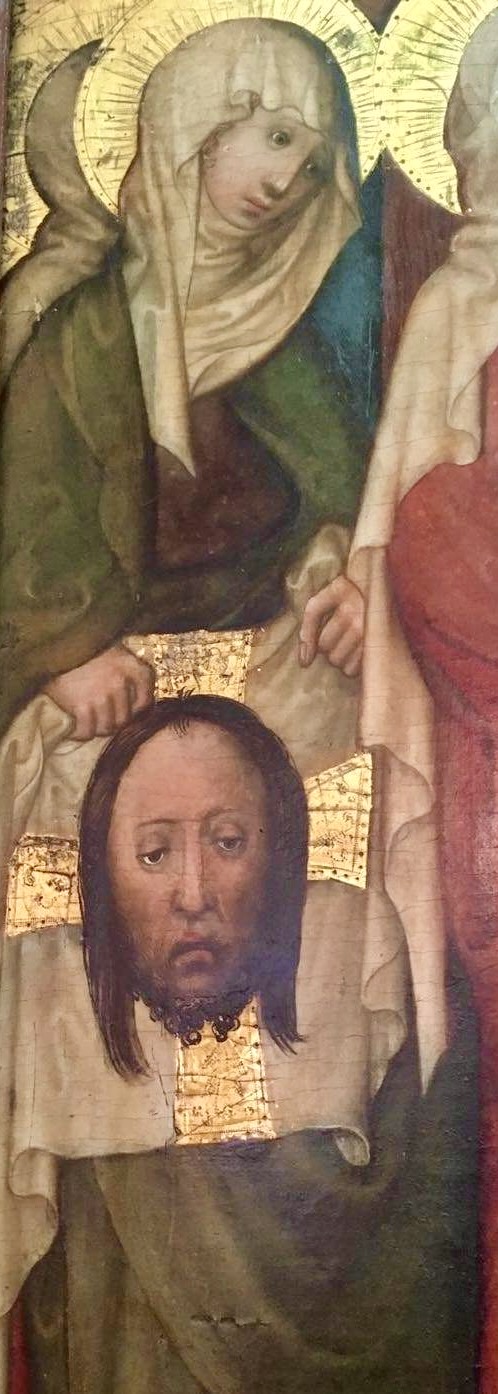
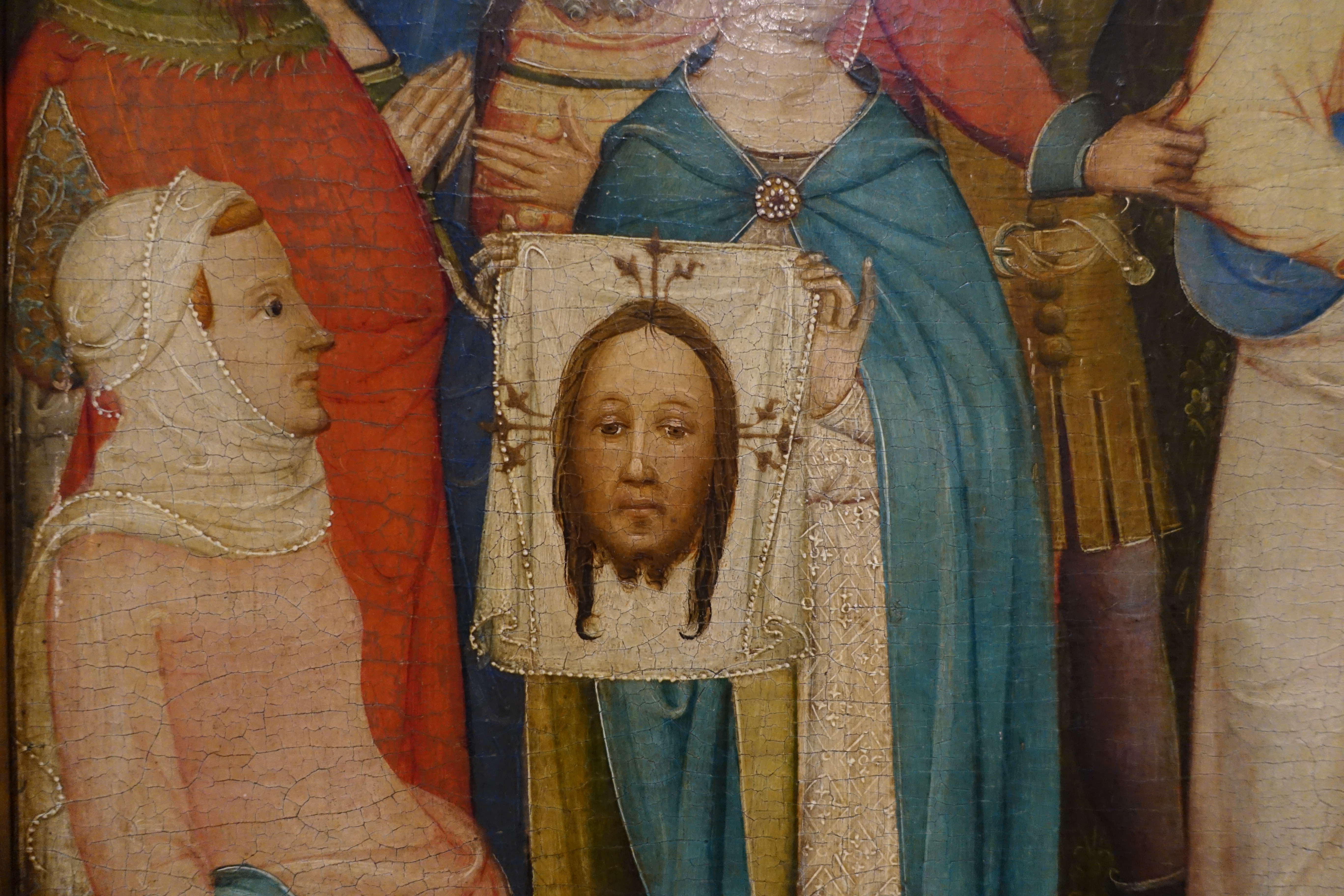
“Vera Icon,” The Veil of the Holy Face held in the Vatican served as a model, painted by Meister von Sankt Lorenz around 1415, nearly 100 years before the “Veronica” or True Image was said to have been stolen during the Sack of Rome. in 1527. (Photo: Paul Badde)
” A picture is worth a thousand words.”
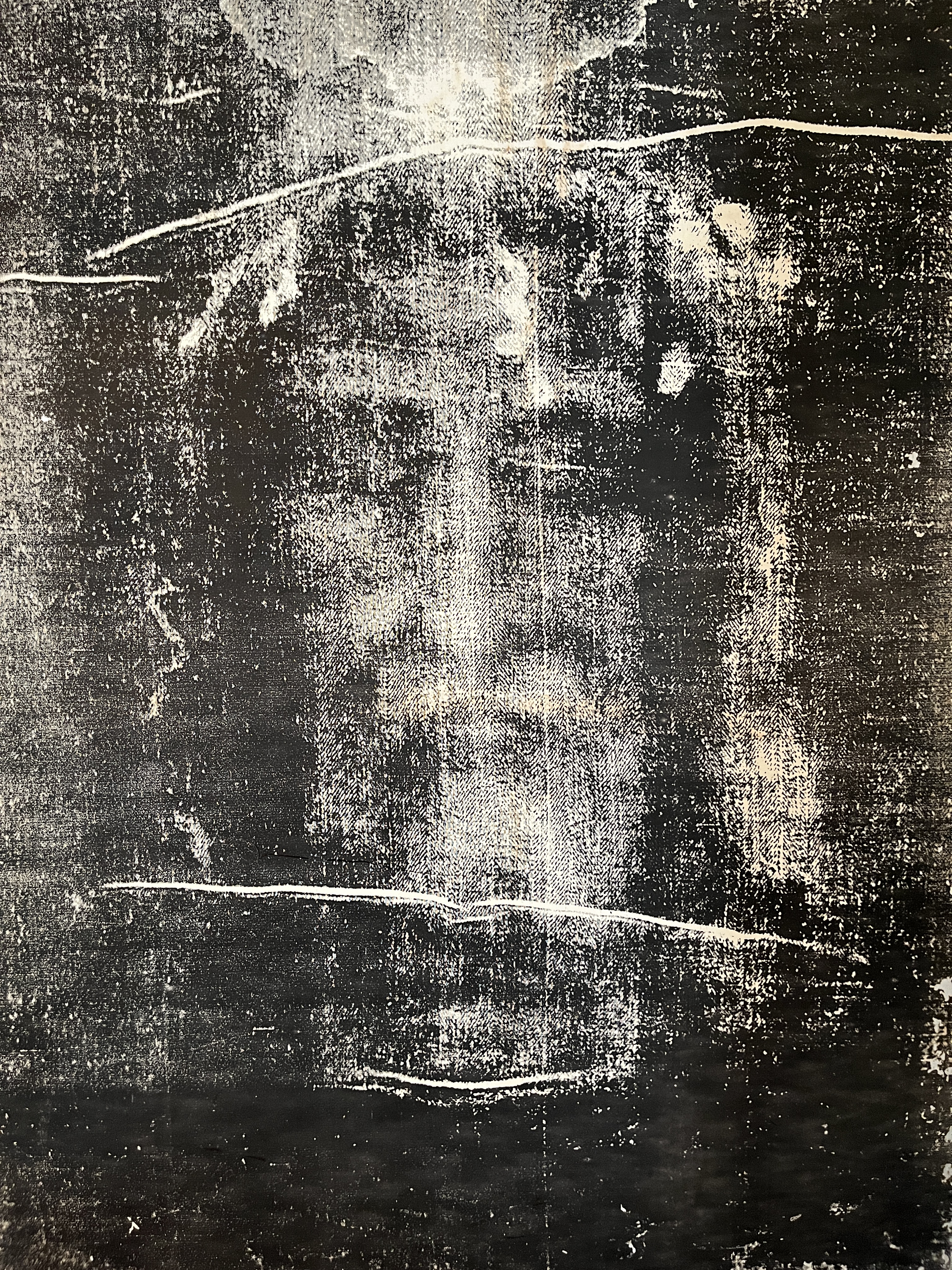
Holy Face – of the Shroud of Turin – visible in the photographic negative.
It is clear that icons and images of the Face of Christ have a very important place in the Church, especially in those gifts of God that are known as “achieropoieta.” These refer to relics of such as the Face of Jesus or the Blessed Mother (ie. on The Tilma of Our Lady of Guadalupe), on which the image is inexplicably present; they exist without the aid of paint or brush. They are said to be “made by the Hand of God:” Relics such as the Shroud of Turin and the Holy Veil of Manoppello, are both are miraculous images; which far surpass all man-made icons, however beautiful they may be.
The very fact of the existence of both the Shroud of Turin and the Veil of Manoppello are the reason why man-made images are permitted by God, and why the Old Testament admonition against creating images ended when Jesus gave us the New Covenant. The Incarnation meant that the Word of God could now be seen, heard and depicted. God has revealed Himself in Jesus Christ–and “by God’s own Hand” had created the images bearing the Face of Jesus–thus breaking the Old Covenant law–thus, freeing us from idolatry. When venerating the icon or image we are venerating His Person.
Under the New Covenant, in His Divine Providence, He gave to mankind these supernatural images [achieropoieta] to communicate truths about His Only Begotten Son. These miraculous images are evidence of His Incarnation, Passion, Death and Resurrection. They show us “the Word of God” made flesh; that God exists and He became Man in Jesus Christ; that He suffered for our sakes, died and rose from the dead! And that we, His unworthy creatures, are made in His image and likeness, and so we are meant to reflect His image and likeness to others.
Our Faith may be weak when it comes to accepting certain truths or miracles; but Jesus, who understands our weakness, does not stop at giving us His Holy Face and His Holy Name; He has also given to us precious relics that may be seen and touched: “For we do not have a high priest who is unable to sympathize with our weaknesses, but one who has similarly been tested in every way, yet without sin…” so that we may “confidently approach the throne of grace to receive mercy and to find grace for timely help.” (Heb 4:15)
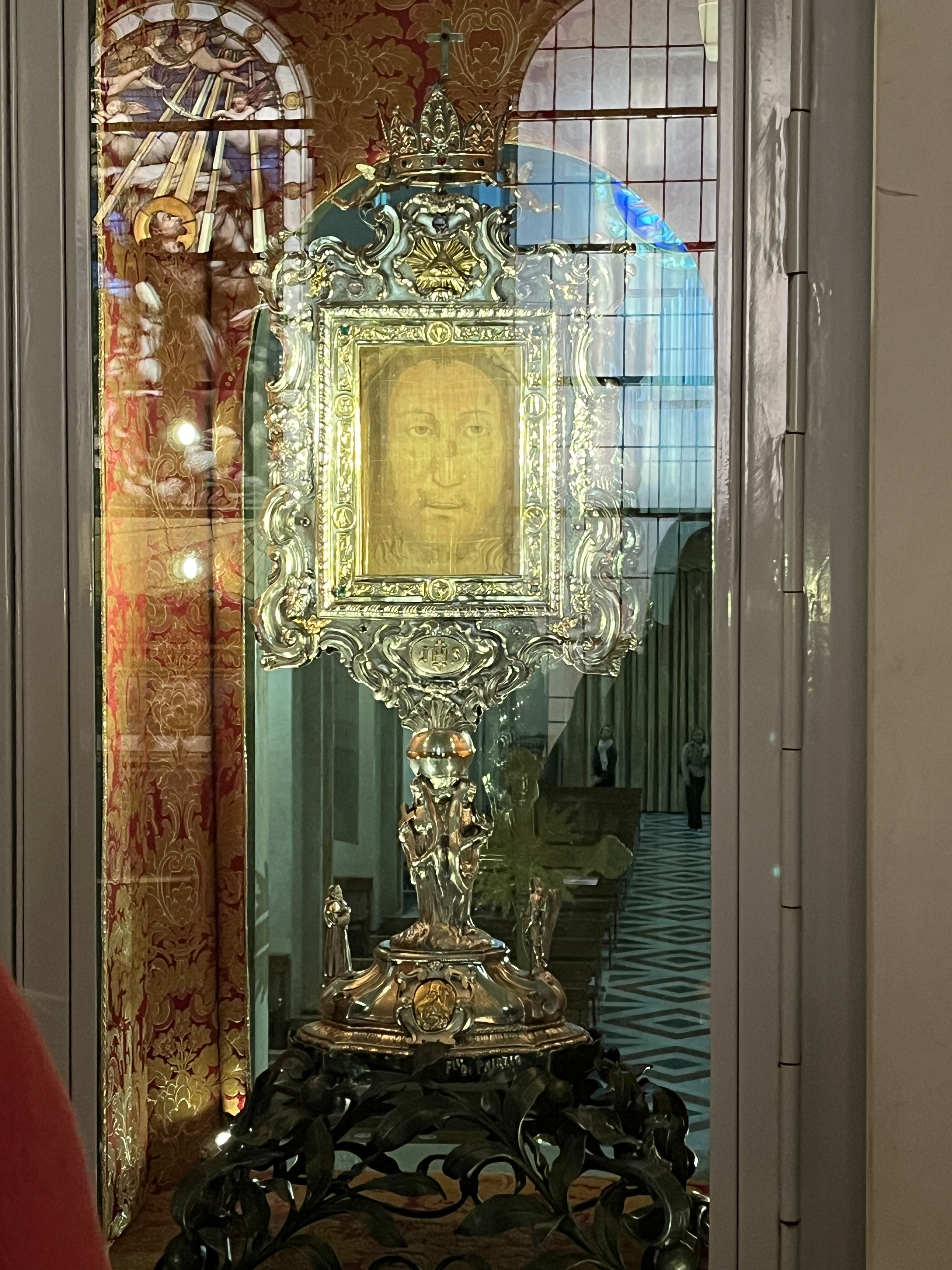
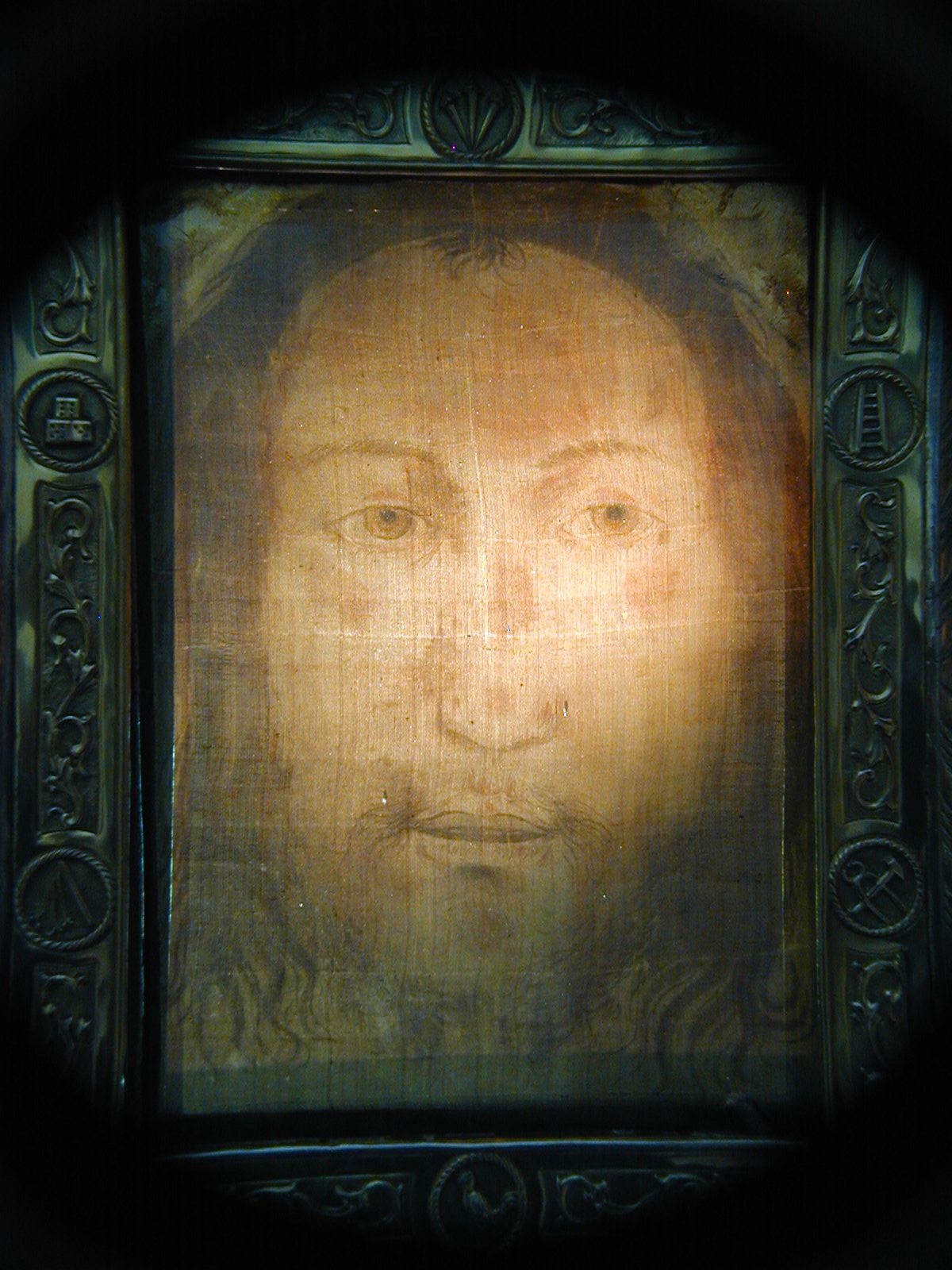
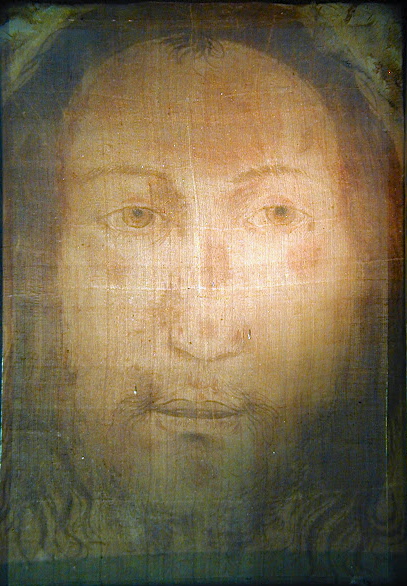
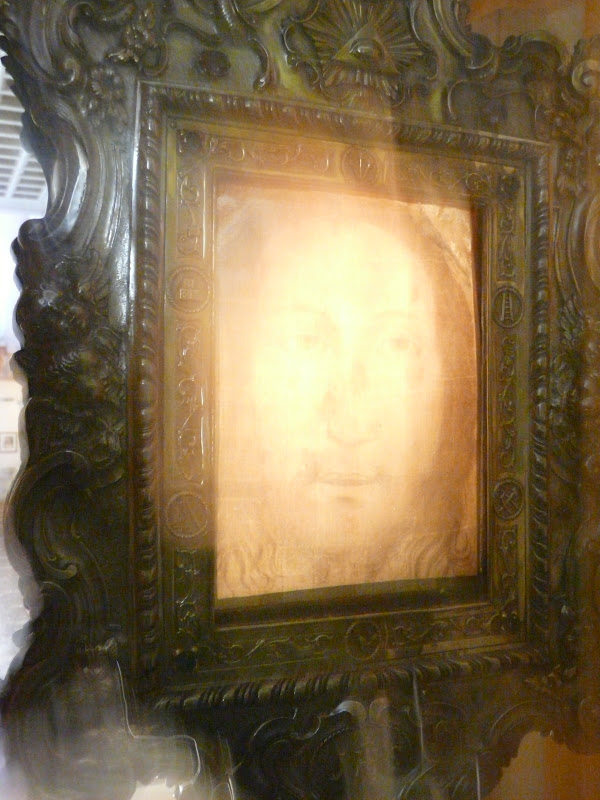
This stunning photo of the Veil of the Holy Face of Manoppello (and my favorite!) was taken by Paul Badde, author of “The Face of God: The Rediscovery of the True Face of Jesus” and many other books about the Holy Veil. The Veil presents quite a challenge for the photographer, because it is very sheer and the image changes according to the light and angle from which it is viewed.The Face may even disappear, or appear as I first saw it–as a living image, seen as though it were reflected in a mirror.
Jesus has given us His own Face in such relics because He wills to meet us in our weakness–to show us His Human Face and restore us–to help us to encounter, contemplate, honor and reverence Him. This is a tremendous gift that represents “the Gift” Himself–Jesus Christ–given to mankind at the Incarnation; it is a reminder the the Eternal Word became man!
We may not be able to make a pilgrimage to see the holy relic of the Shroud or see the Veil of the Holy Face of Manoppello; but we may keep copies of those images in our Churches and homes, or wear a Holy Face medal as a daily reminder of His love and mercy for us; they are a blessed source of “grace for timely help.” (Heb 4:15)
+++
Many parishes around the world have “enthroned” an image of the Holy Face, which is a particularly beautiful way for the faithful to correspond in some way to God’s Gift of His Son; by bringing His Image before the faithful for veneration and prayer. Very recently, another enthronement of “the Most Holy Face of Jesus” was made with a copy of the Holy Veil of Manoppello in San Jose de Mindanao Seminary Complex that occurred on August 19, 2025 in the Philippines. Poster of Enthronement:
“For God who said, ‘Let light shine out of darkness,’ has shone in our hearts to bring to light the knowledge of the glory of God on the Face of [Jesus] Christ.” (2 Cor 4:6)
“In olden days, God who was without body or physical form, was not depicted at all. But now, since God has appeared in the flesh and has interacted with man, I am able to depict the visible aspect of God. I do not worship matter, I only worship the Creator of matter, Him who for my sake became matter Himself, and took it upon Himself to dwell in matter, and who by means of matter brought about my salvation.” ~St. John Damascene
“Restore us, LORD God Almighty; make your face shine on us, that we may be saved.” (Psalm 80:19)
“Abruzzo is a great producer of silence, wrote Georgio Manganelli.” Manoppello, Italy–hidden deep in the Abruzzo Mountains–had kept a secret: a holy relic veil of the Face of Jesus, treasuring and protecting it through five tumultuous centuries; effectively preventing it from being destroyed many times over. But now, in God’s Providence, the secret has come to light with the dawn of the millennium, which was dedicated to the Face of Christ by Pope St. John Paul II.
An eminent scholar, Fr. Heinrich Pfeiffer, uncovered the secret of Abruzzo and, at a great personal cost, presented his theses to the world. The news was embraced by some; and of course, rejected by others–there is nothing new in that. Opinions are like noses–everyone has one. We all make our own choices, for good or bad; but to make a choice, to believe or disbelieve, we first need an informed conscience, and the desire to know the truth in the first place.
For this reason Antonio Bini has published a free e-book (which is embedded below) which presents the background of the re-discovery of the relic of the Holy Veil of Manoppello bearing an image of the Face of Christ: “Heinrich Pfeiffer, The Scholar Who Recognized the Veronica in the Holy Face”. This essay commemorates Father Heinrich Pfeiffer (1939-2021), professor of Christian art history at the Pontifical Gregorian University in Rome and one of the leading contemporary scholars of the Church’s cultural heritage, who passed away in Berlin on November 26, 2021. With his studies on the Holy Face of Manoppello, which he identified as “the Veronica” (True Image).
Pope Benedict XVI contemplates the Face on the Veil of Manoppello. September 1, 2006. (Photo: Paul Badde/EWTN)
Pfeiffer was met with distrust and hostility from scholars and Church hierarchies for questioning centuries-old silences and beliefs regarding Christ’s burial cloths. The book reconstructs the author’s encounter with Fr. Pfeiffer, the background to the international press conference held in Rome on May 31, 1999, in which the scholar supported his theses. These attracted the interest of the media and many pilgrims to the sanctuary of Manoppello, which until then had been relatively unknown. Among these Pope Benedict XVI, This visit effectively confirmed the validity of Fr. Pfeiffer’s theses. The German Pope was impressed by his encounter with the Holy Face, immediately elevating the church to a basilica and dedicating an intense prayer a year after his visit.
References to the Sack of Rome are also included, when the Veronica disappeared from Rome, as the Vatican press office later admitted in 2011. The photographic and documentary material, much of it previously unpublished, is noteworthy. By the author’s wish, the book, a testimony to the events, is being distributed free of charge in English to promote broader knowledge of the Holy Face among the many interested in the recent history of the mysterious image.
Each year, the Feast of the Transfiguration, is marked by prayer, vigils and processions in honor of the Holy Face of Jesus. On this feast day St. Therese would toss roses and sprinkle perfume on the drawing of the Holy Face of Jesus that was so dear to her heart. At the Basilica Shrine of the Holy Face in Manoppello, Italy, local residents and pilgrims from all over the world take part in the joyous festivities in honor of the Holy Face. This year includes World Youth Day pilgrims! (Thank you to Alexandra Prandell for the video and photos!) (Enjoy as well, a few pictures from past celebrations below!) Wherever you may be on this holy feast day; come before His Holy Face–by entering into His Holy Presence in prayer–so together with the whole body of Christ, in Heaven and on earth, we may say, “Lord, it is good to be here.”
World Youth Day Pilgrims gather at the Basilica Shrine of “Il Volto Santo” The relic Veil of the Holy Face in Manoppello, Italy. (Photo: Alexandra Prandell)
Basilica Shrine of the Holy Face in the Abruzzo Mountains, Manoppello, Italy (Photo: Alexandra Prandell)
“It is good, Lord, to be here” before your Holy Face! (Photo: Alexandra Prandell)
“Jesus took with him Peter, James and John, and led them up a high mountain where they were alone. There, before their eyes, he was transfigured. His face shone like the sun, and his clothes became as white as light. Then the disciples saw Moses and Elijah appear, and they were talking to Jesus.”
~Matthew 17:2
Rays of light burst through the clouds above the Abruzzo Mountains. (2022 Photo: Paul Badde)
The following is a very beautiful sermon, by Bishop Anastasias of Sinai, on the Transfiguration of the Lord:
“Upon Mount Tabor, Jesus revealed to his disciples a heavenly mystery. While living among them he had spoken of the kingdom and of his second coming in glory, but to banish from their hearts any possible doubt concerning the kingdom and to confirm their faith in what lay in the future by its prefiguration in the present, he gave them on Mount Tabor a wonderful vision of his glory, a foreshadowing of the kingdom of heaven. It was as if he said to them: ‘As time goes by you may be in danger of losing your faith. To save you from this I tell you now that some standing here listening to me will not taste death until they have seen the Son of Man coming in the glory of his Father…'”
Along the Transfiguration Vigil Procession (Photo: Paul Badde)
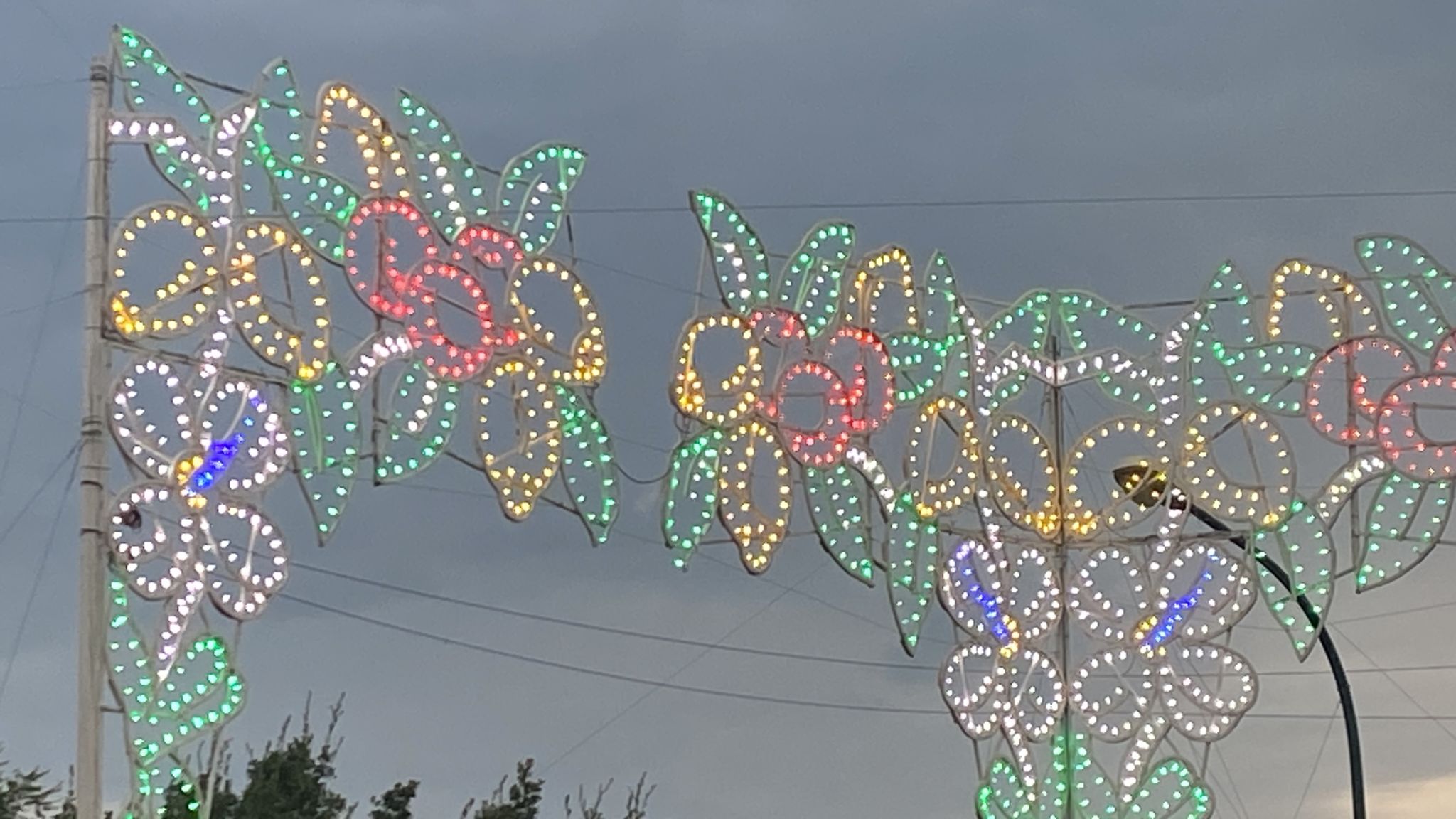
Colorful lights line the streets of Manoppello, Italy in preparation for the Vigil and Procession for the Feast of the Transfiguration. (Photo: 2023 Paul Badde)
The Manoppello Veil “as white as light,” yet the face on the sheer veil can still be faintly seen. (Photo: Paul Badde)
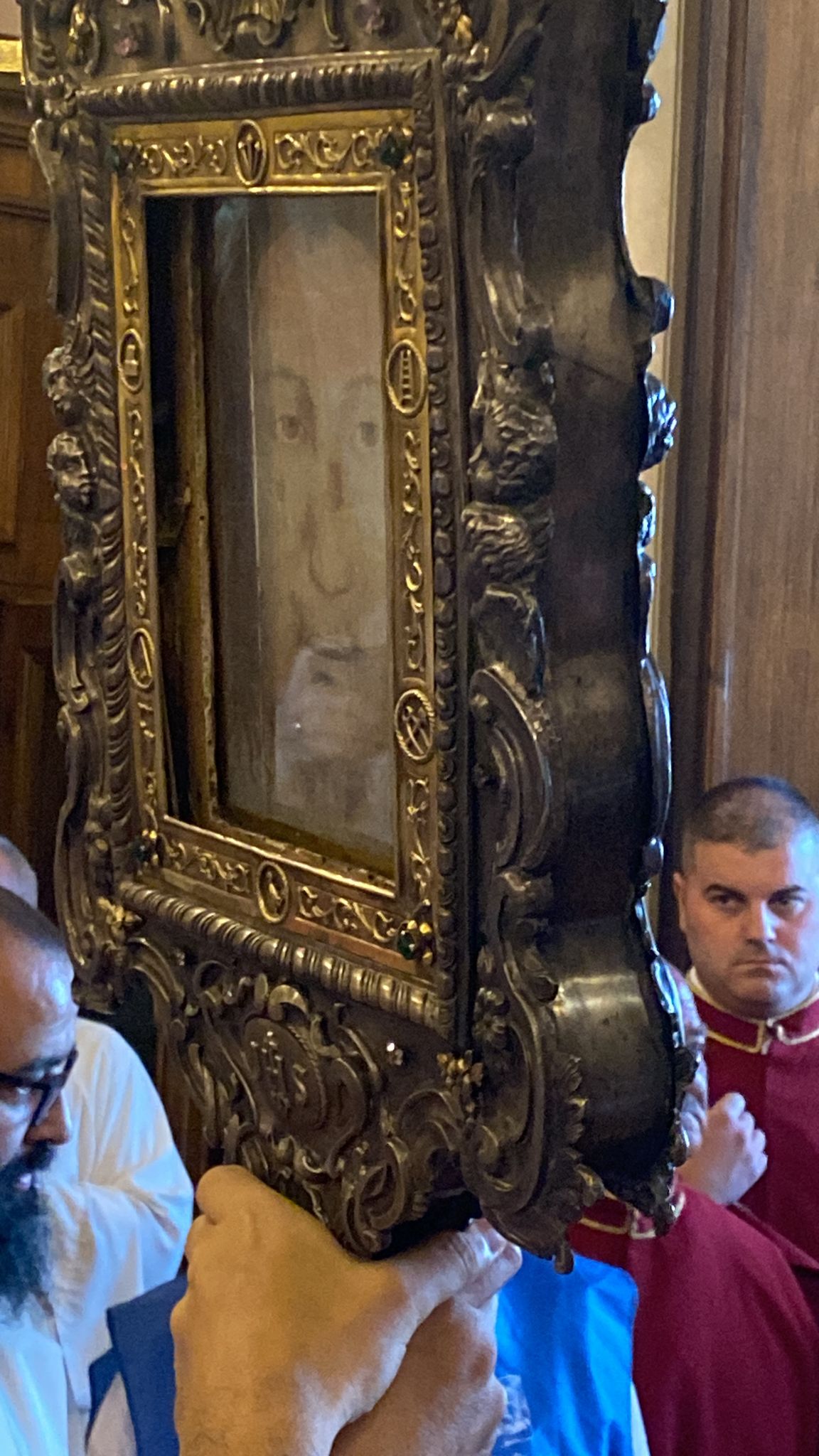
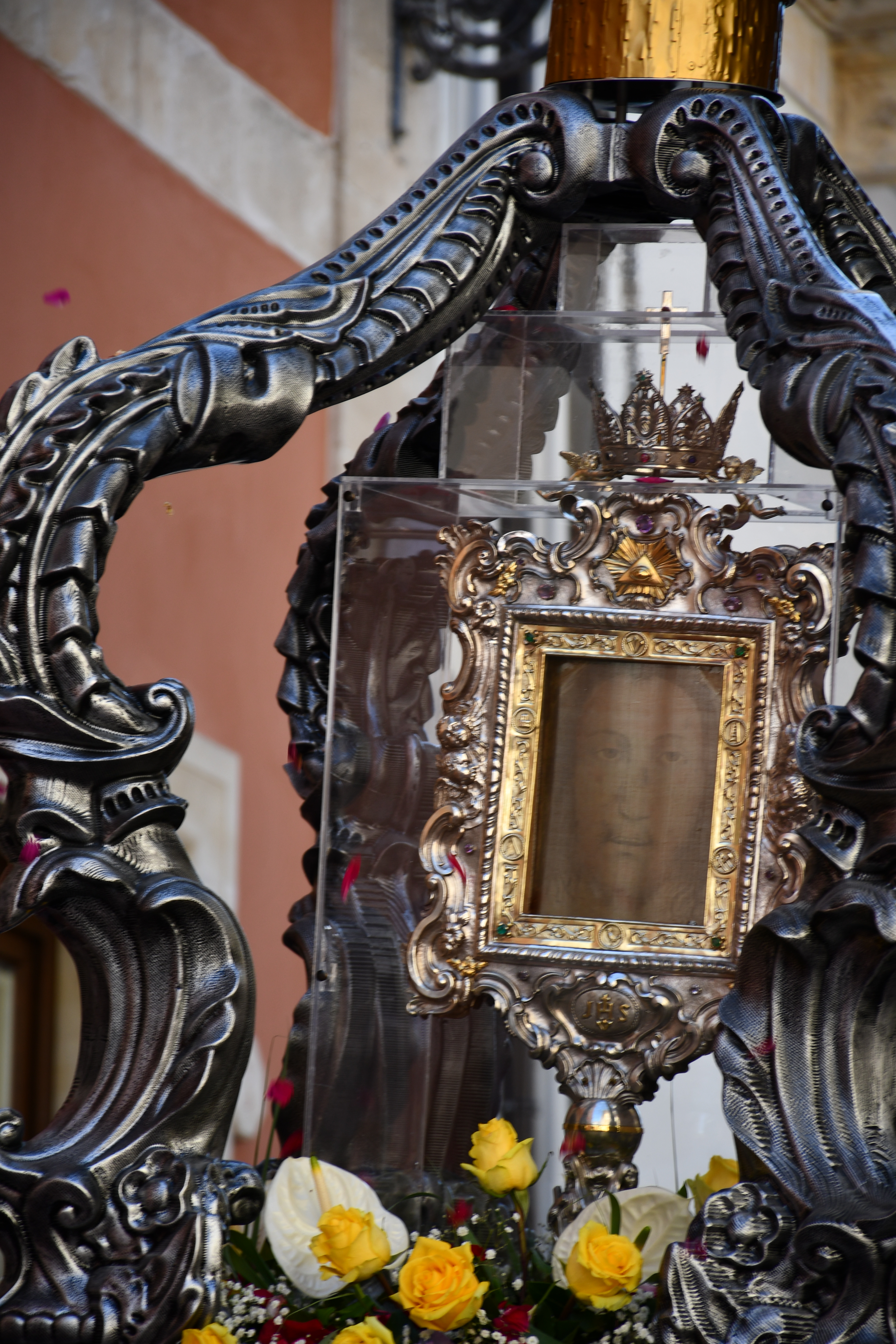
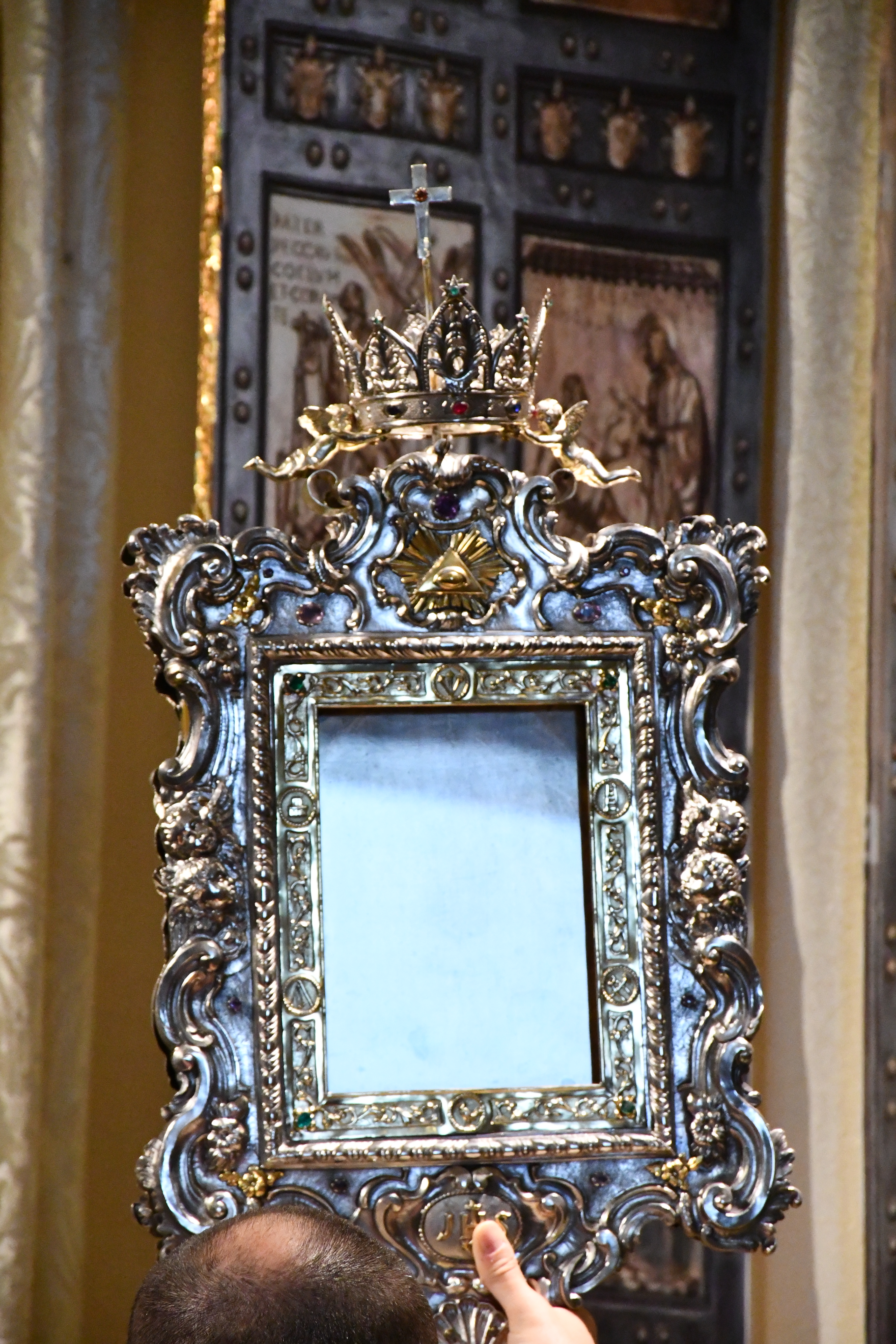
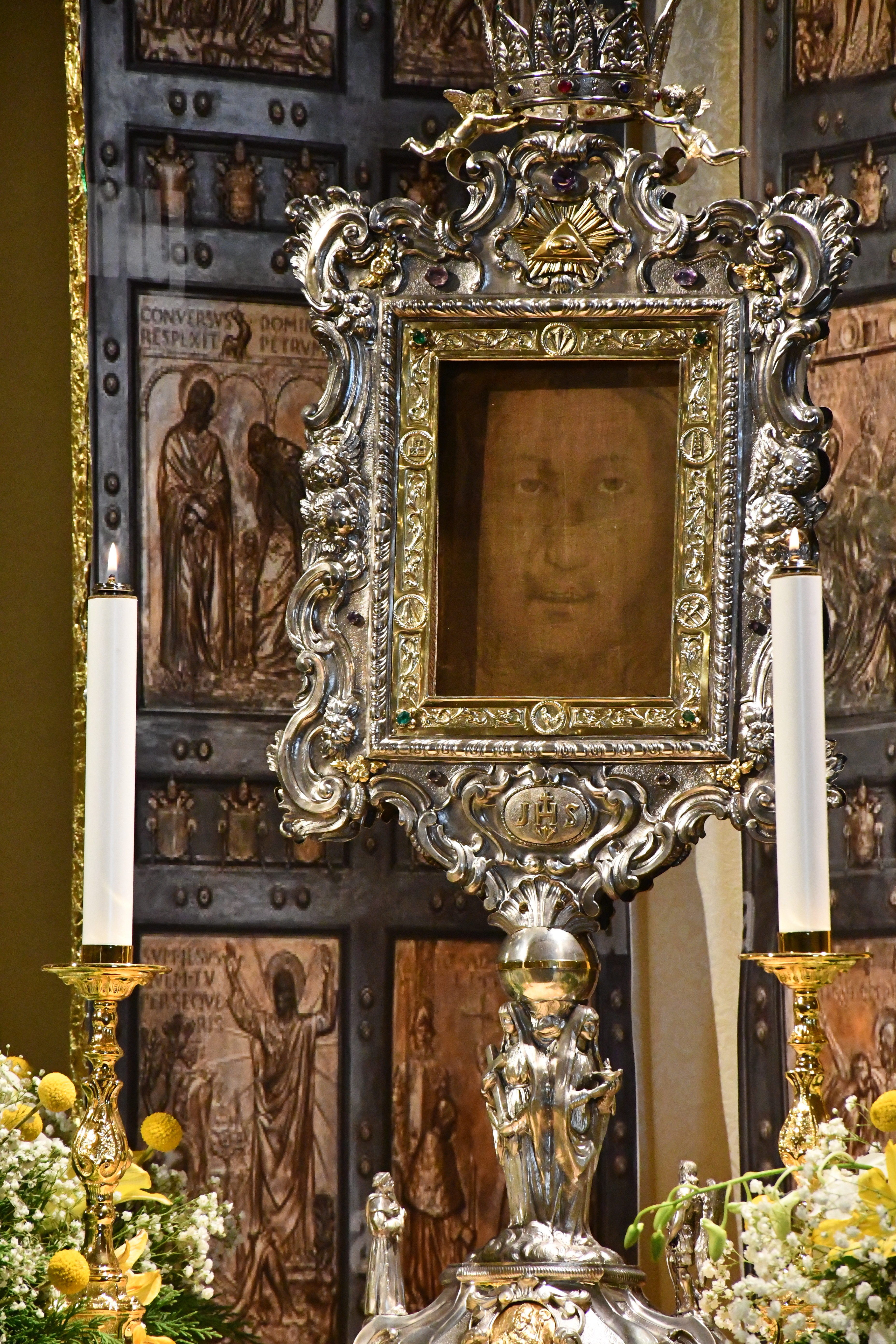
(The Holy Veil of Manoppello is an Achieropoeta–a supernatural image made by the Hand of God–that is present on a sheer veil, without the aid of paint, and may be viewed from both sides. The Face of Jesus becomes visible to the viewer according to the light. The relic Veil of the Holy Face has recently been proven to radiate light energy.)
Holy Face–eyes always looking toward the viewer–on the Veil of Manoppello. (Photo: Paul Badde)
Holy Face seen in candlelight (2023 Photo: Paul Badde)
Transfiguration by Carl Bloch
Continuing from the sermon on the Transfiguration of the Lord by Anastasius of Sinai, Bishop:
“These are the divine wonders we celebrate today; this is the saving revelation given us upon the mountain; this is the festival of Christ that has drawn us here. Let us listen, then, to the sacred voice of God so compellingly calling us from on high, from the summit of the mountain, so that with the Lord’s chosen disciples we may penetrate the deep meaning of these holy mysteries, so far beyond our capacity to express. Jesus goes before us to show us the way, both up the mountain and into heaven, and–I speak boldly–it is for us now to follow him with all speed, yearning for the heavenly vision that will give us a share in his radiance, renew our spiritual nature and transform us into his own likeness making us for ever sharers in his Godhead and raising us to heights as yet undreamed of.
Let us run with confidence and joy to enter into the cloud like Moses and Elijah, or like James and John. Let us be caught up like Peter to behold the divine vision and to be transfigured by that glorious transfiguration. Let us retire from the world, stand aloof from the earth, rise above the body, detach ourselves from creatures and run to the creator, to who Peter in ecstasy exclaimed: Lord, it is good for us to be here–here where all things shine with divine radiance, where there is joy and gladness and exultation; where there is nothing in our hearts but peace, serenity, stillness; where God is seen.”
Rector Padre Antonio Gentili (Photo: Alexandra Prandell)
“For here, in our hearts, Christ takes up his abode together with the Father, saying as he enters: Today salvation has come to this house. With Christ, our hearts receive all the wealth of his eternal blessings, and there where they are stored up for us in him, we see reflected as in a mirror both the first fruits and the whole of the world to come.”
“Il Volto Santo” of Manoppello, Italy (2023 Photo: Paul Badde)
All the mysteries of Jesus Christ, true God and true Man, are hidden and yet revealed in the transfigured Face of Jesus on the mountaintop. Jesus Christ unveils for us in this mystery the Paschal journey that He would suffer, and the glory that is already within Him. He invites us to follow Him, in taking up our own crosses in faith, hope and love. In order to see God the Father in His Glory–we must first pass through the door of the Holy Face of Jesus Christ, in imitation of Him–It is the only way to be transformed by the Holy Spirit of Love into His Image–to purify our eyes to see the glory of the Father in Heaven.
As we read in Scripture: “… He [Jesus] took along Peter John, and James, and went up on the mountain to pray. And while He was praying, the appearance of His face became different, and His clothes became white and gleaming. And behold, two men were talking with Him; and they were Moses and Elijah, who, appearing in glory, were speaking of His departure, which He was about to accomplish [through His Passion and Death] at Jerusalem.” (Luke 9:28-31) The light that shone from His Holy Face at the Transfiguration gives us hope in the glory of the Resurrection.
“For God who said, ‘Let light shine out of darkness,’ has shone into our hearts to bring the knowledge of the glory of God on the face of Christ.” (2 Cor. 4:6) As we follow Christ in carrying our crosses we will be transformed by the Holy Spirit into His Image, from glory unto even greater glory. “All of us, gazing with unveiled face on the glory of the Lord, are being transformed into the same image from glory to glory, as from the Lord who is the Spirit.” (2 Cor. 3:18)
Holy Face Relic of Manoppello, believed to the Face Cloth of the Resurrection. “At present we see indistinctly, as in a mirror, but then face to face. At present I know partially; then I shall know fully as I am known. So faith, hope, love remain, these three; but the greatest of these is love.” (1 Cor. 13: 12-13)
“O Beloved Face of Jesus! As we await the everlasting day when we contemplate Your infinite Glory our one desire is to charm Your Divine Eyes by hiding our faces too, so that here on earth no one can recognize us. O Jesus! Your veiled gaze is our heaven!”–St. Therese
Holy Veil of Manoppello (May 2025 Photo: Alexandra Prandell)
Procession of August 6th begins…(Photo: Alexandra Prandell)
(Photo: Alexandra Prandell)
Rector of and Basilica Shrine Padre Antonio Gentili carries the precious reliquary. (Photo: Alexandra Prandell)
Remarkable photo by Alexandra Prandell–the Face on the Holy Veil may be seen, but at the same time what it behind it may be seen as well.
In this photo by Alexandra Prandell, the image on the Veil has disappeared according to the angle of the viewer and the light.
(Photo: Alexandra Prandell)
(Photo: Alexandra Prandell)
The Veil of the Holy Face, “Il Volto Santo” of Manoppello, Italy. (Photo: Alexandra Prandell)
“How fair you are, O Virgin Mary! Your face is resplendent with grace.” –Carmelite Proper
“The Virgin Mary is she who more than any other contemplated God in the human Face of Jesus. She saw Him as a newborn when, wrapped in swaddling clothes, He was placed in a manger; she saw Him when, just after His death, they took Him down from the Cross, wrapped Him in linen and placed Him in the sepulcher. Inside her was impressed the image of her martyred Son; but this image was then transfigured in the light of the Resurrection. Thus, in Mary’s heart, was carried the mystery of the Face of Christ, a mystery of death and glory. From her we can always learn how to look upon Jesus, with a gaze of love and faith, to recognize in that human countenance, the Face of God.” –Pope Benedict XVI
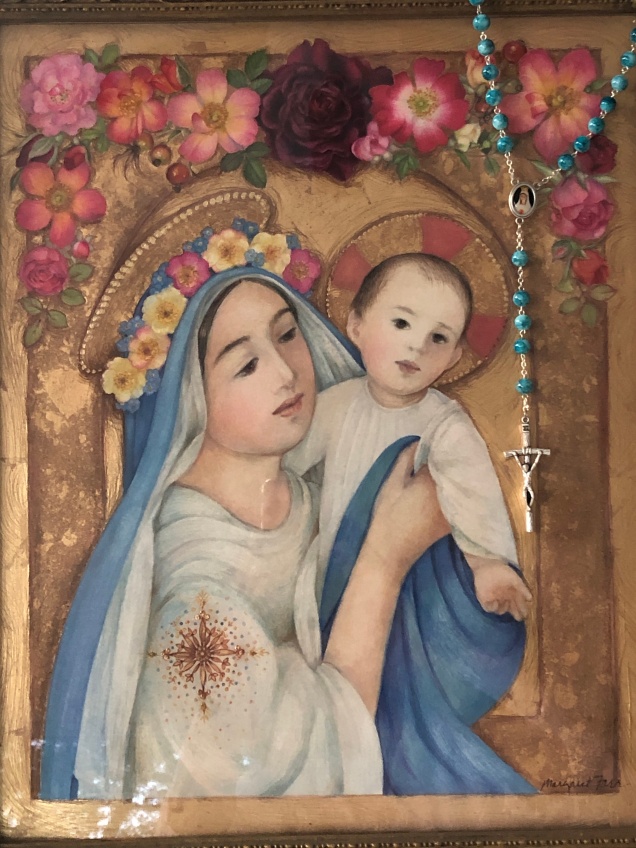
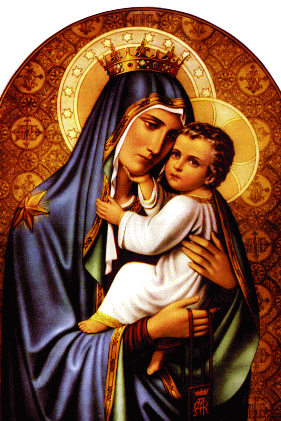
Our Lady of Mount Carmel
Seeking the Face of Christ through Mary
In the icon of “Queen Beauty and Mother of Carmel,” the Infant Jesus tenderly invites us to look at the face of His Mother, “resplendent with grace.” What makes the Virgin Mary’s face “resplendent with grace?” It is the light of the Face of Christ – just as the moon reflects the light of the sun, the face of Mary reflects the light of the true sun, Jesus Christ.
Mary is “The glory of Jerusalem, the joy of Israel, the highest honor of our race,” (Judith 15:9) because she sought the face of God every moment of life; that is, she sought His holy will and pleasure, in all things. Just as it is possible for the moon to shine even in the brightness of day, Mary gives more beauty to the heavens, more glory to God than any other creature on earth. And when the dark night of faith is upon us and the sun is hidden from our view, Mary is there to enlighten our path and show us the way to her Son, until “In the tender compassion of our God the dawn from on high shall break upon us, to shine on those who dwell in darkness and the shadow of death, and to guide our feet into the way of peace.” (Luke 1: 78-79)
At the present moment, although the world is filled with darkness, we can turn to her for help in seeking His Face and leading souls to Him. Even pebbles on a path on the ground can reflect the light of the moon at night; and so the children of Mary by following her example, “to seek the Face of God in all things,” can guide others through the darkness by reflecting the light of the Face of Christ as does Mary.
It is Jesus Himself who desires that we turn to the face of His Mother. He created her with all the perfection and beauty that would be fitting for the Mother of God. Her soul, holy, immaculate and unstained by sin, is the perfect mirror in which He reflects His Face. He holds her up to us as the model for all His disciples as He did in Luke’s Gospel: “While He was speaking, a woman from the crowd called out and said to Him, ‘Blessed is the womb that carried you and the breasts at which you nursed.’” This singular praise of Mary from the woman in the crowd was not enough for her Son. And so Jesus replied, “Rather, blessed are those who hear the word of God and keep it.” (Luke 11:27) Mary is thus thrice blessed, first, in being chosen to be the Mother of God, second, in that Mary heard the word of God and third, because she kept His word in her heart.
Mary holds out to us her Scapular, a sacramental sign of being clothed in her own garment, to place over our shoulders, so that we may imitate her in faith, hope, charity and all the virtues that adorn her soul. By contemplating the Face of Jesus always, together with Mary, we can do our part in making His Face shine upon our world as well.
Queen Beauty of Carmel Feast day: July 16th
Our Lady of Mount Carmel Novena Prayer:
O most beautiful flower of Mount Carmel, fruitful vine, splendor of heaven, blessed Mother of Christ, Immaculate Virgin, we praise and honor you as our Queen and Mother. Help us to persevere in constant prayer for the needs of our world and share with you in the work of redemption. Be with us, Holy Virgin, and guide us on our way, as we journey together in faith, hope and love to your Son, Jesus Christ Our Lord. Amen.
Holy Face Veil of Manoppello, Photo: Paul Badde/EWTN
“…and if my people, upon whom my name has been pronounced, humble themselves and pray, and seek My Face and turn from their evil ways, I will hear them from Heaven and pardon their sins and revive their land.” (2 Chr. 7:4)
Psalm 27
27 The Lord is my light and my salvation; whom shall I fear? the Lord is the strength of my life; of whom shall I be afraid?
2 When the wicked, even mine enemies and my foes, came upon me to eat up my flesh, they stumbled and fell.
3 Though an host should encamp against me, my heart shall not fear: though war should rise against me, in this will I be confident.
4 One thing have I desired of the Lord, that will I seek after; that I may dwell in the house of the Lord all the days of my life, to behold the beauty of the Lord, and to enquire in his temple.
5 For in the time of trouble he shall hide me in his pavilion: in the secret of his tabernacle shall he hide me; he shall set me up upon a rock.
6 And now shall mine head be lifted up above mine enemies round about me: therefore will I offer in his tabernacle sacrifices of joy; I will sing, yea, I will sing praises unto the Lord.
7 Hear, O Lord, when I cry with my voice: have mercy also upon me, and answer me.
8 When thou saidst, Seek ye my face; my heart said unto thee, Thy face, Lord, will I seek.
9 Hide not thy face far from me; put not thy servant away in anger: thou hast been my help; leave me not, neither forsake me, O God of my salvation.
10 When my father and my mother forsake me, then the Lord will take me up.
11 Teach me thy way, O Lord, and lead me in a plain path, because of mine enemies.
12 Deliver me not over unto the will of mine enemies: for false witnesses are risen up against me, and such as breathe out cruelty.
13 I had fainted, unless I had believed to see the goodness of the Lord in the land of the living.
14 Wait on the Lord: be of good courage, and he shall strengthen thine heart: wait, I say, on the Lord.
” I am giving you a new commandment, that you love one another’ just as I have loved you, that you also love one another.” (John !#:34) The Holy Face from the Shroud of Turin
“O Lord, wealth of the poor, how admirably You can sustain souls, revealing Your great riches to them gradually and not permitting them to see them all at once. When I see Your great Majesty hidden in so small a thing as the Host, I cannot but marvel at Your great wisdom.” –St. Teresa of Jesus
The video above was posted on YouTube over eleven years ago of a Eucharistic Miracle that occurred on Friday, November 15, of 2013, at Christ the King Church in Vilakannur, Kerala, India. After twelve years of investigation, the Vatican has recently announced the approval of this “Relic of Divinity.” This is a powerful sign for our times at the beginning of this millennium dedicated by Pope St. John Paul II to the Holy Face of Jesus Christ. It seems as though Our Lord invites us to come to the banquet of His Love.
“The Face of Christ is the supreme revelation of Christ’s Mercy.”–Pope Benedict XVI gazing at the Eucharistic Face of Christ. (photo:Paul Badde/EWTN)
The Eucharist is the visible sign of the of the veiled presence of the invisible Face of God. In God’s great humility, mercy, and love, the grandeur of His Divine Presence is veiled in the Eucharist so that we may not fear to draw near and come into His Presence in the Bread of Life.
“Being Christian,” Pope Benedict XVI wrote, “is not the result of an ethical choice or a lofty idea, but an encounter… a Person, which gives life a new horizon and a decisive direction.” As often as we encounter the person of Christ, present Body, Blood, Soul and Divinity, in the Eucharist, we are being transformed into His Image. While He is the “Divine Prisoner” He is longing and waiting for us to come to Him.
Jesus is “the Divine Prisoner.” God points us to His Holy Face on the miraculous Veil of Manoppello. (photo: Patricia Enk)
Come and see that “Truth is a Person…a Presence, a Face: Jesus Christ.” — Pope St. John Paul II
Are you sorrowful, lonely, sick or fearful? Come to Him. Do you feel alienated, rejected, remorseful and in need of forgiveness? Come to Him. Are you angry and frustrated? Come. If your faith is little, come; if you long for Love Himself, come; if you are losing Hope, come.
Come, come, come! Your presence is requested.
Jesus waits for you. Come.
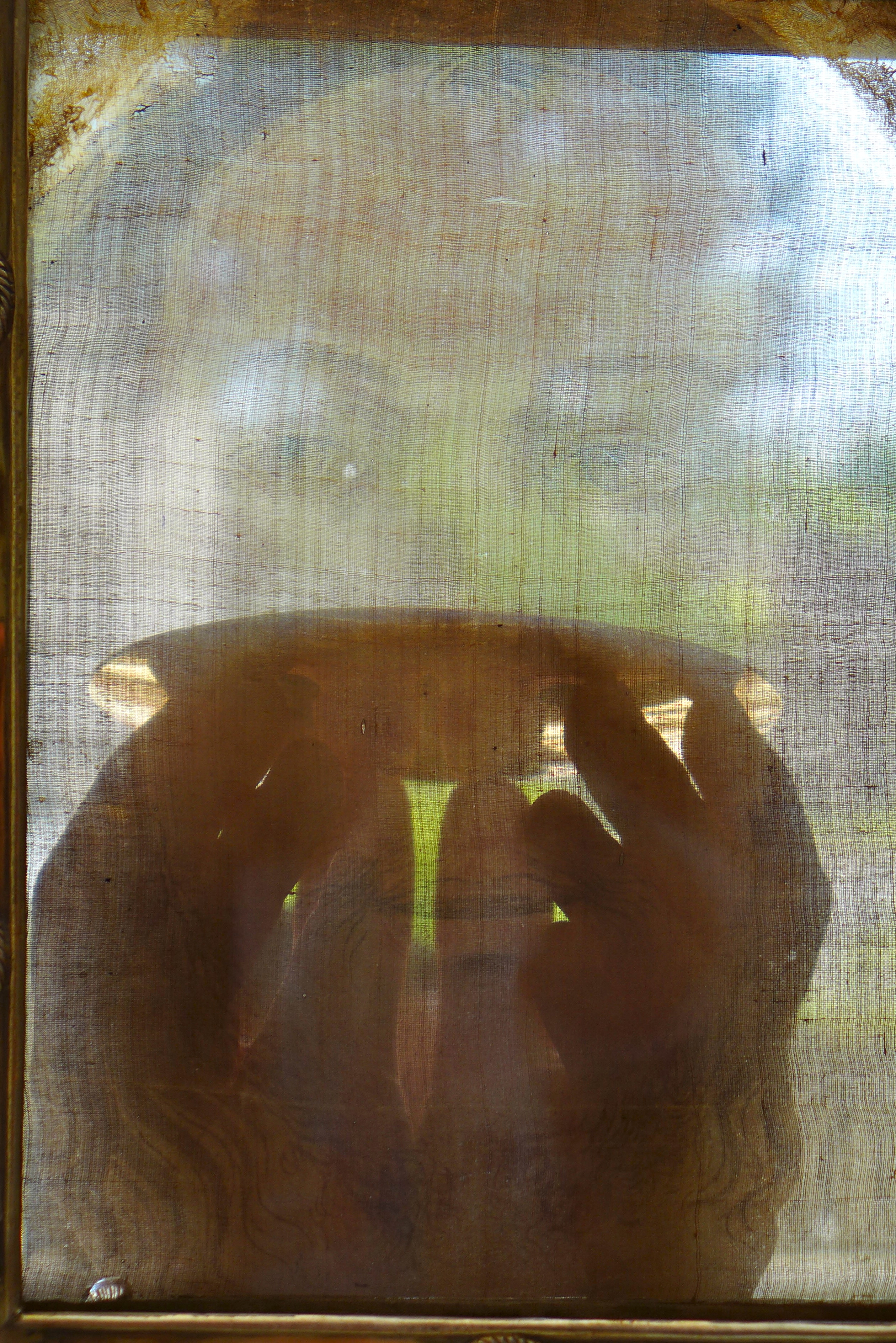
Paten viewed through the Veil of the Holy Face of Manoppello. (Photo: Paul Badde/EWTN)
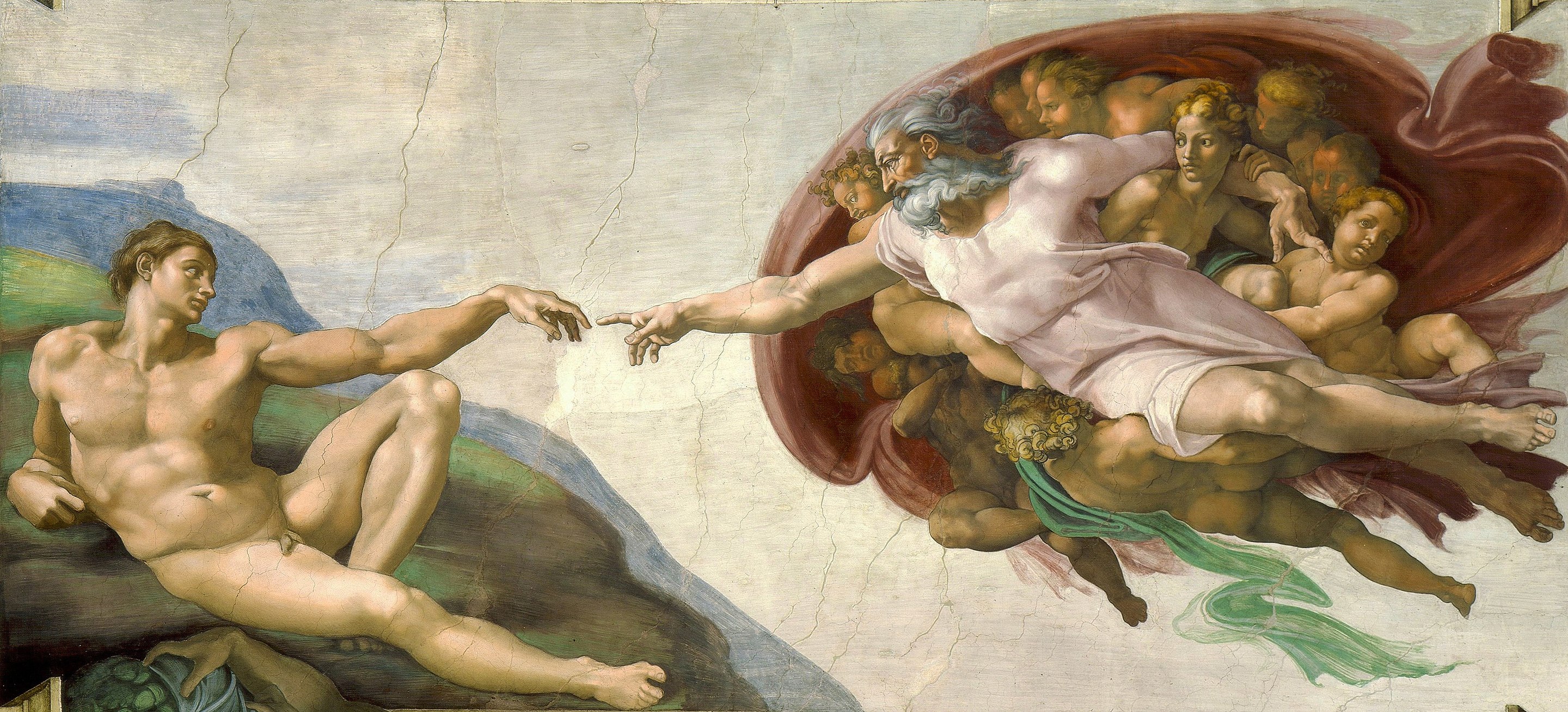
The Creation of Adam by Michelangelo, in the Sistine Chapel
What does it mean to be human, and why does it matter? The understanding of the human person has tremendous consequences for the world, which can lead humanity to–or away from–the Face of God, because “it is only in God that man has meaning.” (Gaudium et Spes)
The newly elected Pope Leo XIV, when first meeting with the college of cardinals, mentioned serious challenges to human dignity, in particular, regarding “developments in the field of artificial intelligence:”(Read also: Pope Leo XIV to Cardinals: Church must respond to digital revolution ) This poses many questions: What are the “serious challenges” mentioned? What should our response be to this rapidly developing technology and its misuse? What exactly is “artificial intelligence,” and what does it mean to be a “human person?” And what does all this have to do with the Face of God?
Holy Face of Manoppello, an “achieropoieta” — made by the Hand of God. (Photo: Paul Badde)
Pope St. John Paul II dedicated the millennium to the Face of God. And it is my own belief that devotion to the Face of Christ, *as studied and characterized by Card. Ratzinger (Pope Benedict XVI) at the request of Pope St. John Paul II, is the answer to a rapidly approaching crisis that will soon face all humanity. God bless Pope Leo XIV, who has now brought the Church’s concerns about AI and human dignity to the forefront at the beginning of his pontificate.
Several news items that are related to artificial intelligence have caught my attention this past year: One was regarding an Apple advertisement for their new iPad which depicted crushing various instruments of human creativity, such as art objects and musical instruments, implying that the new iPad would take the place of human creativity, and unceremoniously dump it all in the ash heap of human history. The others were related to the “deep fakes” emerging from AI technology that are greatly alarming a great many people, notably in the entertainment industry, and the increasingly horrifying news related to the nefarious use of images of innocent persons to generate pornography.
Calling attention to the emerging, hyper-realistic, and increasingly disturbing AI capabilities, many writers, and artists, and people in all walks of life, have called on their governments to act to protect the creative works, images, and voices of persons living and dead, from being manipulated or stolen by unsavory persons lurking in the dark doorways of the internet.
One popular singer, Sheryl Crow, hit the nail on the head when said she was “terrified” by the AI fakes of her work; that AI “crushes the spirit of music.” “It feels like an assault on my spirit.” “It [AI technology] has consumed me with questions about who we will forever be in our humanity…” The music artist has touched on the deepest question of mankind–what does it mean to be human?
The great theologian John Zizioulas wrote in his book The Meaning of Being Human that “the key to understanding being human is understanding personhood as a relationship between the ‘giver,’ who is God, and the one who receives ‘the gift’ given them through the language of love.”
Mankind’s relationship with God seems to be gravely threatened in recent years by an iniquitous use of AI that begins in simple laziness. When AI makes it possible to take the easy path to get something done, very few may first look toward God for inspiration and help. A person need only ask AI for what he desires, and it appears within seconds on a screen effortlessly, and seemingly perfect. Or is it? AI seems to offer freedom, but it can lead to enslavement.
In our fast-paced world of technology we are losing the patience to think and create, and feel we lack the time to think, or learn the the skills to: create a job resume, a love letter, a song, a painting, or find a medical diagnosis. But we are meant to use our God-given gifts of intellect and free will — “to seek His Face” in all things –God, Our Father, Jesus, Our Savior, and the Holy Spirit, Our Advocate — the Holy Trinity with Whom mankind is made for relationship. However, in mankind’s inability to satisfy his desires quickly enough, many no longer look to God, who has given us the gifts we need to do the work, but instead reach for the easy, wide path of AI — an algorithm — thereby, gradually exchanging God’s gifts of freedom for slavery. The human ability to create is one of the ways we are imago Dei, the image of God; to shortcut our creativity is to violate, deny, or deprive that essential part of our identity as sons and daughters of God.
This is the truth which is amplified in Gaudium et Spes: “The truth is that only in the mystery of the Incarnate Word does the mystery of man take on light. For Adam, the first man, was a figure of Him Who was to come, namely Christ the Lord. Christ, the final Adam, by the revelation of the mystery of the Father and His love, fully reveals man to man himself and makes his supreme calling clear. It is not surprising, then, that in Him all the aforementioned truths find their root and attain their crown.”
“Veronica” is the example of the soul’s transformation in love into the Image of Christ through love of God and neighbor.
Human persons are made for relationship–in communion, freedom, and love with God. We are made in His Image and likeness in this way. God Himself is a personal being, eternally three persons in relationship–Trinity–and love. Therefore, as John Zizioulas writes, “the notion of a person is to be found only in God,” and human personhood is never satisfied with itself until it becomes an image of God.” Becoming an image of God requires a transformation in love that is needed to enable us to see God face to face in Heaven. And that requires a relationship with Him.
You cannot have a relationship with an algorithm.
As Pope Francis wrote in Evangelii Gaudium, “[Many people] want their interpersonal relationships provided by sophisticated equipment, by screens and systems which can be turned on and off on command. Meanwhile, the Gospel tells us constantly to run the risk of a face-to-face encounter with others. . . . True faith in the incarnate Son of God is inseparable from self-giving, from membership in the community, from service, from reconciliation with others.”
Pope Benedict XVI has written that in the Psalms we learn the attitude for seeing the face of God: “Let the hearts of those who seek the LORD rejoice! Seek the LORD and his strength, seek his presence continually” (Ps 105:3-4). In Psalm 24, we learn the prerequisites of “clean hands and a pure heart” “Such is the generation of those who seek him, who seek the face of the God of Jacob.”
John Zizioulas points out the tragedy of human personhood is manifested in his “capacity” and “incapacity;” these are the means, Zizioulas says, through which we relate to God and the rest of creation. Human capacity includes the intellect and the will. Intellectual human capacities are knowledge, creativity, and skills. Capacities of the will would be commitment, trust, perseverance, or the choice to sacrifice for a greater good. Our incapacities as human persons are as numerous as the sands on the seashore. But that is exactly the place where God meets us in the mystery of the Incarnate Word. It is the place where God reveals man to himself — where we recognize our need for His Love and salvation.
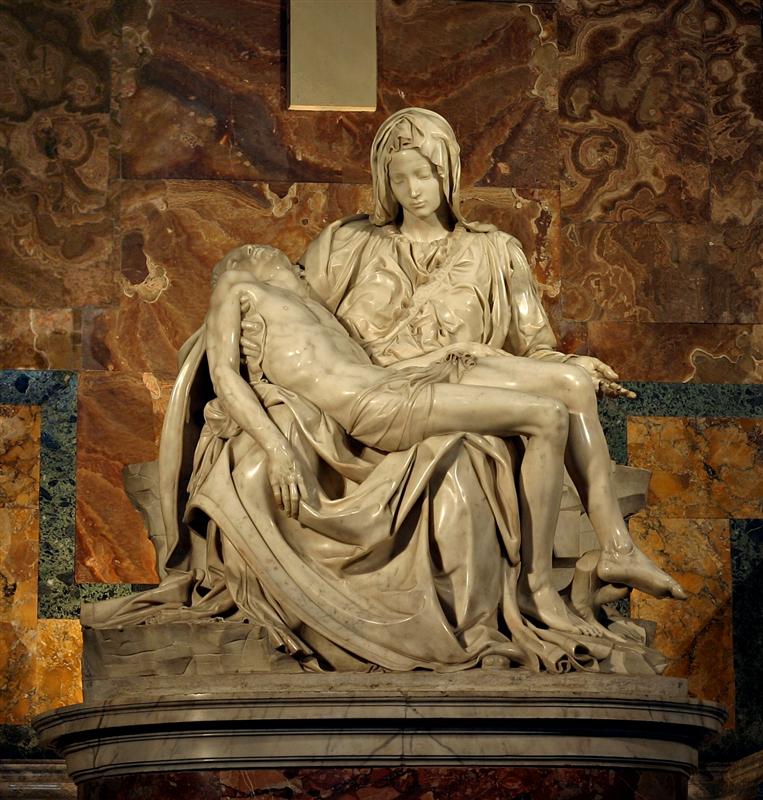
Being a person made in the image of God is the highest form of human “capacity.” We are capable of communion with God Himself! We are capable of creating, enabling our presence to be revealed even in our absence, as John Zizioulas demonstrates in his book The Meaning of Being Human by his analogy of the “absent artist.” By creating something himself, an artist’s presence is revealed in what he has created. We know from looking at the Pietà, for instance, there is such a person as Michelangelo who existed.
“In so far, therefore, as the human person is an entity whose being or particularity is realized by way of transcendence of its boundaries in an event of communion, its personhood reveals itself as presence.” ~ John Zizioulas
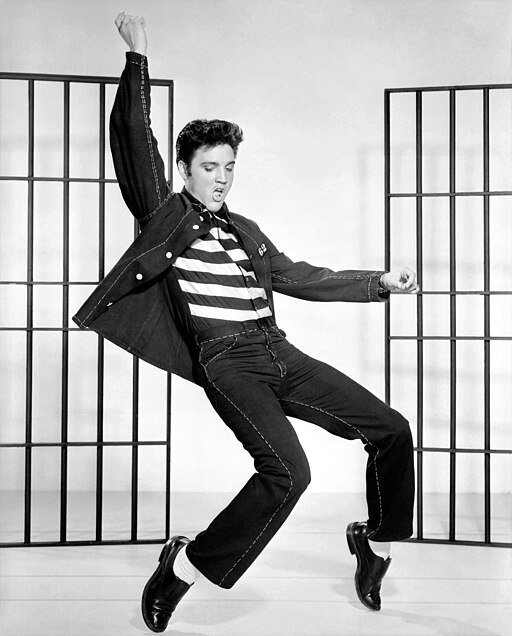
The one and only Elvis Presley
When AI produces something–for example an AI-generated Elvis Presley, singing new AI songs, generated by algorithm–it is not the true “presence in absence” of the human person known as Elvis; it is a perversion of truth and an assault on the dignity of his personhood, even in death.
In other words, human persons are capable of creating which enables the person’s presence to be revealed in absence. From the drawings of unknown artists on cave walls to Michelangelo’s Sistine Chapel, great symphonies, or even the songs of Elvis Presley, art testifies to a unique human person’s presence–their presence is revealed in what they have created. When someone manipulates the creation of another through AI, it is a misrepresentation of the person–a false face; a distortion of their unique personhood, a degradation of their humanity.
The Pietà by Michelangelo, 1499
The great paradox is that death through and in Jesus Christ becomes life! Or as St. Paul has written: “When I am weak, I am strong.” ( 2 Cor 12:10)
Our relationship with God is also one of “presence in absence,” writes Zizioulas. When sin entered the world as idolatry, freedom led to slavery, and communion with God was ruptured. Before that rupture caused by sin can be healed, we must first in His absence seek God’s Face, that is, His Divine Presence. It is only through Jesus Christ, and in communion with Him, that our lives have meaning, and that the image of God may be restored in our souls.
As a result of sin, mankind’s greatest incapacity came through death. But because Christ became man at the Incarnation, he became both the source and meaning of the human person, and his very death– which “signifies human incapacity par excellence,” per Zizioulas–paradoxically reverses that incapacity.
God has a face and a name: by His Incarnation, Jesus Christ gave us a human face that revealed the face of God. In our Baptism, we are united to Christ and find our identity by living in Christ, in love, which cannot be isolated from presence. Christianity is a loving relationship with Christ, who transforms us in himself. Through the incapacity of death Jesus restores “the communion of natures in and through his personhood, turns the created realm into a presence of God,” writes John Zizioulas, thus lifting all creation up to communion with God through man.
In communion with an immortal God — when we come before the face of Christ (in His Presence) — we are then capable of everything. “I can do all things in Christ.” (Phil. 4:13); the capacity of the human person is found only in the incapacity of our creature-hood in communion with Christ. This is especially true even in striving for holiness, as St. Bernard has written, “In our incapacity we can only appropriate holiness from Jesus himself, since only God is holy.”
The human person’s greatest freedom is in Christ, which destroys the slavery to sin; and it is surprisingly the freedom to choose to suffer with him. Zizioulas writes: “It is the capacity of man to fully embrace his incapacity, that is, to turn weakness into strength or rather to realize his power in weakness. This paradox is nothing other than what St. Paul means when he writes in 2 Cor 12:10– after mentioning his full acceptance of suffering: ‘for when I am weak, I am strong.'”
Zizioulas explains further that “human freedom in its true meaning, abolishes the scheme ‘capacity versus incapacity’ and replaces it with the paradox of ‘capacity in incapacity.'” In man’s fallen state, even the greatest sinner is still a person created in the image and likeness of God and thus deserving of the greatest respect, during their life and after their death. In communion with Christ, man has the freedom to suffer, and therefore, in Christ, it is possible to be transformed in love in Him. Embracing our weakness in the suffering of the Cross is the way to the Resurrection.
“The weak can manifest the Power of God. So when you yell and scream over all your faults and weaknesses and imperfections, you’re fighting against the very tool that God wants to make us holy.” ~ Mother Angelica
This understanding of the human person has tremendous consequences for the world, in relation to the use of AI, which can lead to God or away from God. Because “it is only in relationship with God that man has meaning.” Man has a capacity for faith, which is experienced as a painful absence which makes us long for God’s presence — the deep longing within our souls to see God’s Face. “Seeking the face of God,” writes Pope Benedict XVI, “is an attitude that embraces all of life; in order for man to see God’s face at last, he must himself be illuminated entirely by God.”
“Artificial intelligence” is actually a misnomer–even the name falls short of the truth. AI can only simulate intelligence. AI cannot create, therefore, it cannot communicate God’s love; it is a tool that can only generate data by imitation, manipulating or altering the creations of man. AI is incapable of relationship, even though some misguided lonely souls are deceived into believing it can. AI can never enter into communion with a human being, with God, or act as images of God, as a human person can.
Through the misuse of AI we run the risk of losing sight of what makes us distinctly unique as human persons. Only a person made in the image and likeness of God can have the intelligence to understand, contemplate, and grasp reality or be capable of insights, moral judgments, or an understanding of beauty, truth and goodness, or the freedom “to lay down one’s life for one’s friends (John 15:13).
In his own suffering, St. Dismas, the Good Thief, turns to the Face of Jesus on the Cross.
The act of human creation is only done in imitation of our Creator. The freedom of choosing to suffer for love in union with Jesus Christ, in imitation of Christ, is the greatest mystery of what Zizioulas calls “capacity in incapacity.” Through that union with Christ, God, in His infinite mercy, will grant grace to the smallest, most humble, weakest, the very least capable human person; even the worst sinner who turns toward His Face, in a relationship of love, as did the Good Thief on Calvary; so they may enter into the joy of eternal life with Him forever.
“Let Your Face shine, that we may be saved!” (Ps 80:3, 7, 19)
*Benedict XVI has characterized devotion to the Holy Face as having three separate components: 1. Discipleship – an encounter with Jesus, to see Jesus in the Face of those in need. 2. The Passion of Jesus, and suffering expressed by images of the wounded Face of Jesus. 3. The Eucharist, “the great school in which we learn to see the Face of God”, which is woven between the other two. The eschatological element then builds on awakening to Christ by contemplating His Face hidden in the Eucharist.
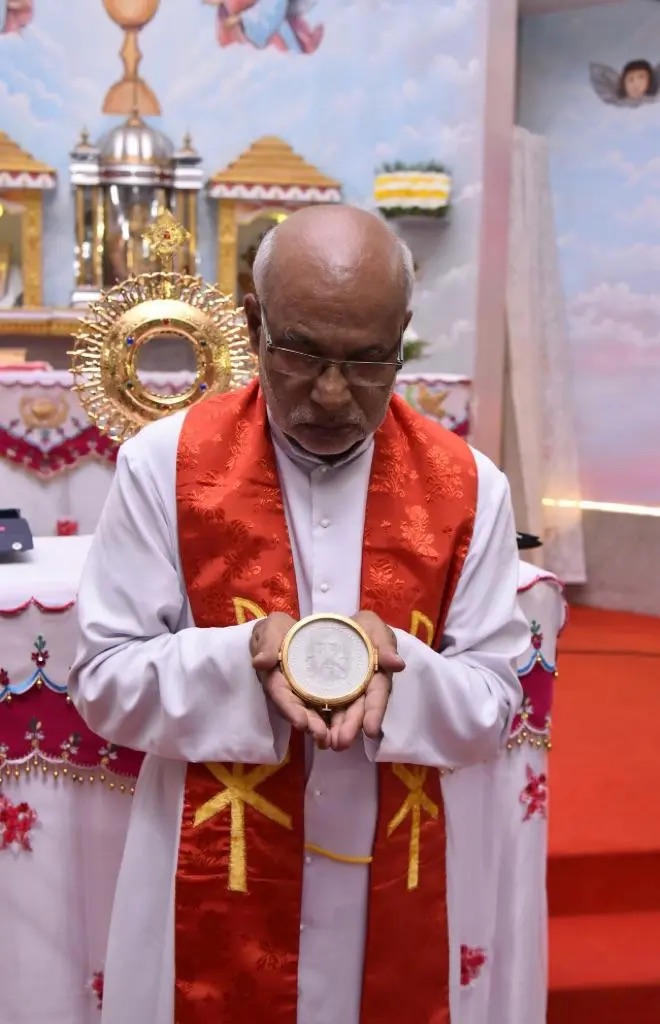
Vilakannur Miracle. The Priest carefully holds in his hands the Holy Eucharist on which the Face of Christ miraculously appeared during Mass.
“On November 15, 2013, a face resembling that of Jesus appeared on the host during Mass at the Christ the King Church, Vilakkannur, a parish under the Syro-Malabar Archdiocese of Tellicherry in the southern Indian state of Kerala.
The “Miracle” Host was sent to Rome for scientific study on January 10, 2020, through Apostolic Nuncio Archbishop Giambattista Diquattro who had come to the Syro-Malabar headquarters in Kochi, some 330 km south of Vilakkannur.
Devotion to the Holy Face of Jesus can be a helpful means to lead us to an encounter with Jesus in our life-long journey–enabling us to recognize Him–and He, to recognize us. This devotion is comprised of three elements–as characterized by Pope Benedict XVI: Discipleship, Images of the wounded Face of Christ , and the Eucharist.
Pope Benedict XVI writes, “The first element [of devotion to the Holy Face] is discipleship and the orientation of one’s life toward an encounter with Jesus in the face of those in need. In order to do this, believers first need to become better acquainted with Jesus through the Eucharist.
The second element is relating to the Passion of Jesus, and the suffering expressed by the images of the wounded Face of Jesus, relating this to the Eucharistic experience.
The third element, the Eucharist is woven between the other two. The eschatological element then builds on awakening to Christ by contemplating his face in the Eucharist.“
The Eucharistic Face of Jesus is central to the devotion of the Face of Christ! Clearly, the grace and strength flowing from worthy reception of the Sacrament of the Eucharist is vital to encountering Jesus in the faces of our brothers and sisters in need, as well as for the prayerful contemplation of Christ’s Face in images of His Passion. In Novo Millenio Ineunte, Pope St. John Paul II wrote, “And it is the Church’s task to reflect the light of Christ in every historical period, to make His face shine also before the generations of the new millennium. Our witness, however would be hopelessly inadequate if we ourselves have not first contemplated his face.”
Contemplation of the Face of Jesus is the veil of devotion, with which we may ‘wipe His bruised and wounded Face, ‘woven’ together with “discipleship, and the Eucharist,” which can lead Christians to “the love of God and love of neighbor” that will enable us to see Christ’s Face when He comes again in glory on the final day.
“The invisible Face of Christ,the son of God, is manifest in His Body an Blood in the simplest and, at the same time, the most exalted way possible in this world.
The ecclesial community responds to people in every age who ask perplexed: “We wish to see Jesus” (Jn 12,21), by repeating what the Lord did for the disciples of Emmaus: He broke the bread. In the breaking of the bread, the eyes of those who seek Him with a sincere heart are opened. In the Eucharist, the intuition of the heart recognizes Jesus and His unmistakable love lived “to the end” (Jn 13,1). And in Him, in that gesture, it recognizes the Face of God!“— Pope St. John Paul II

























 Illumina Domine Blog - Devotion to The Holy Face