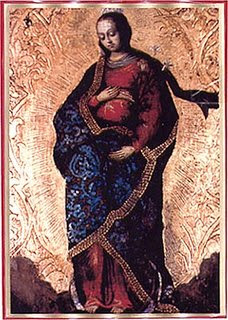
During Advent the Church celebrates the longing to see God’s Face, together with the Blessed Virgin Mary, with a Triduum (three days of prayer beginning on December 15) and a Feast (on December 18th)–It is calledThe Feast of the Expectation of the Blessed Virgin Mary, Longing to See His Face.(a bit of the history may be found here.) The prayer may also be continued until Christmas.
The Expectation of the Blessed Virgin Mary
Prayer for the Triduum and Feast of the Expectation of the Blessed Virgin Mary, Longing to See His Face
“Mary, your life with Jesus was one of the purest, most fervent, most perfect emotions of longing and most eager expectation of the Birth of the Divine Child! How great must have been that longing! You were longing to see the Face of God and to be happy in the vision. You were soon really to see the Face of God, the created image of divine perfection, the sight of which rejoices heaven and earth, from which all being derive life and joy; the Face whose features enraptured God from all eternity, the Face for which all ages expectantly yearned. You were to see this Face unveiled, in all the beauty and grace as the face of your own child.
Most just indeed it is, O Holy Mother of God, that we should unite in that ardent desire which you had to see Him, who had been concealed for nine months in your chaste womb; to know the features of this Son of the heavenly Father, who is also your own; to come to that blissful hour of His birth, which will give glory to God in the highest, and on earth, peace to men of good will. Yes, dear Mother, the time is fast approaching, though not fast enough to satisfy your desires and ours. Make us re-double our attention to the great mystery; complete our preparation by your powerful prayers for us, so that when the solemn hour has come, our Jesus may find no obstacle to His entrance into our hearts. Amen.” (Prayer by Rev. Lawrence Lovasik, S.V.D.)
Fr. Willie Doyle S.J. Military Chaplain for the 8th Royal Irish Fusiliers WWI
In the midst of the latest gut-wrenching scandal in the Church it is good to remember that there have been holy priests, who loved Christ and His Church, and were willing to lay down their lives for their flock. Such rare men did not spring out of nowhere, they were formed by holy families, schools, and good seminaries. They continued to be forged, as gold in a furnace, into the image of Christ through their perseverance in prayer, penance, and suffering.
EWTN recently aired an inspiring documentary “Bravery Under Fire”about the life of Fr. Willie Doyle, S.J., a self-sacrificial, holy priest who inspired many Saints who came after him. Men who aspire to the priesthood would do well to learn something about his life because “Holiness Begets Holiness” …
If it is true that the goal of a Christian is not only to behold God’s Face one day in Heaven, but also to bring with us as many souls as possible in our lifetime, then Fr. Willie Doyle, S.J., was a true Christian. Holiness begets holiness in others. Both St. Teresa of Calcutta and St. Josemaria Esciriva were each inspired by Fr. Doyle, a little-known Irish Jesuit priest, who in a powerful yet humble way guided each saint on the path to holiness. Fr. Willie was an Irish Military Chaplain, who was killed in action during one of the worst battles of World War I on August 16th, 1917, on the muddy, bloody battlefield of Ypres, after having run “all day hither and thither over the battlefield like an angel of mercy,” one hundred years ago. But his story is just beginning to come to come to light and inspire many, many other souls who are also seeking God’s Face.
Fr. Willie was beloved by all the men he served, ministering to exhausted soldiers of all faiths or none, with little or no sleep himself and at great personal sacrifice. There was little food, and no relief, sometimes stretching many weeks. He suffered along with the other soldiers from the cold, waist-deep mud that filled stagnant trenches, suffered gas-attacks and all the horrors of war. Fr. Willie risked his own life at every moment, administering absolution, anointing with oil faces which were so smashed by shells that they were barely recognizable as men, and then burying the dead. Once, though sick himself, he laid face down in the mud of a trench, in order that a sick doctor could get a little sleep by lying on Fr. Doyle’s back. On the last day of his life he was seen running back and forth across the battlefields giving absolution to dying men, until finally being hit by a shell himself.
St. Teresa of Calcutta
But, surprisingly it wasn’t Fr. Doyle’s battlefield heroism that inspired Mother Teresa of Calcutta, who learned of this holy priest when she was a young nun, as recounted in the book about her life, Come Be My Light. Nor were his great mortifications and ultimate self-sacrifice noted in the writings of St. Josemaria Escriva. They were both inspired by something most people would consider inconsequential: the smallest sacrifice of giving up butter on his bread and sugar in his tea; sacrifices Fr. Doyle considered intolerable.
St. Josemaria Escriva
St. Josemaria wrote to a friend of an example that set him on the road to sainthood; known as “The Butter Battle.” “We were reading–you and I–the heroically ordinary life of that man of God. [Fr. Willie Doyle, S.J.] And we saw him fight whole months and years at breakfast time: today he won, tomorrow he was beaten…He [Fr. Doyle] noted: ‘Didn’t take butter…; did take butter!’ I have read quickly the life of Fr. Doyle: how well I understand the butter tragedy.” [For St. Josemaria, his own battle was the small sacrifice of not reading the newspapers.]
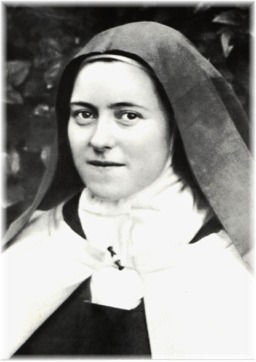
Fr. Doyle, who was born the same year as St. Therese of the Holy Face and the Child Jesus, was himself inspired by her “Little Way.” And he was determined to follow it, by “doing little things for God with great love”:
“Kneeling at the grave of the Little Flower, I gave myself into her hands to guide and to make me a saint. I promised her to make it a rule of my whole life, every day without exception, to seek in all things my greater mortification, to give all and refuse nothing. I have made this resolution with great confidence, because I realize how utterly it is beyond my strength; but I feel the Little Flower will get me the grace to keep it perfectly.”
St. Therese
He did not ask God for the courage to perform great acts of heroism, but instead begged earnestly for the grace to give up butter, sugar in his tea, salt and other little things. “How many deceive themselves,” Fr. Doyle wrote, “in thinking sanctity consists in the ‘holy follies’ of the saints! How many look upon holiness as something beyond their reach or capability, and think that it is to be found only in the performance of extraordinary actions. Satisfied that they have not the strength for great austerities, the time for much prayer, or the courage for painful humiliations, they silence their conscience with the thought that great sanctity is not for them, that they have not been called to be saints. With their eyes fixed on the heroic deeds of the few, they miss the daily little sacrifices God asks them to make; and while waiting for something great to prove their love, they lose the countless little opportunities of sanctification each day bears within its bosom.”
“Self-love,” wrote Fr. Doyle, “is our own greatest enemy.” Little things are of great importance to God. It was through being “faithful to God in little things,” those small sacrifices, that he was prepared to make the ultimate sacrifice, which is “to lay down one’s life for one’s friends.” Fr. Doyle knew better than anyone the value of making those small sacrifices of love that become mighty weapons in the hand of the Living God — and He will win the war!
With her great reverence for the thirst of Jesus on the Cross, and the desire to seek His Face everywhere, it is possible that Mother Teresa may have found inspiration when she read the following passage in Fr. Doyle’s diary:
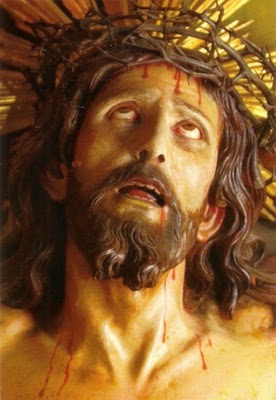
“The greatest thirst of Jesus on the Cross was His thirst for souls. He saw then the graces and inspirations He would give me to save souls for Him… In what way shall I correspond and console my Savior? I went on to ________ and once more had an opportunity of a quiet prayer before the life-sized crucifix in the church which I love so much. I could not remain at His feet but I climbed up until both my arms were around his neck. The figure seemed almost to live, and I think I loved Him then, for it was borne upon me how abandoned and suffering and broken-hearted He was. It seemed to console Him when I kissed His eyes and pallid cheeks and swollen lips, and as I clung to Him I knew He has won the victory, and I gave Him all He asked.” –Fr. William Doyle, S.J.
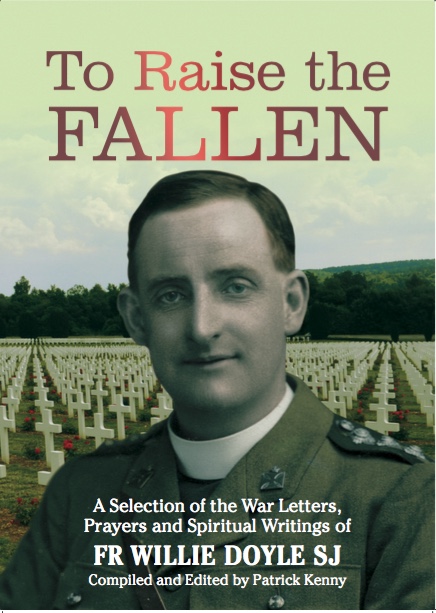
“To Raise the Fallen” compiled and edited by Patrick Kenny
Last year was the one-hundredth anniversary of Fr. Willie’s death. There is a new book available, on the inspiring life of Fr. Doyle, his writing and war letters compiled by Patrick Kenny, To Raise the Fallen, which may be found by clicking (here). If you are interested in reading more about the life of Fr. Doyle be sure to visit this wonderful blog dedicated to to Fr. Doyle: Remembering Fr. Willie Doyle, S.J.
Remember “Holiness begets Holiness”…and please pray for Priests!
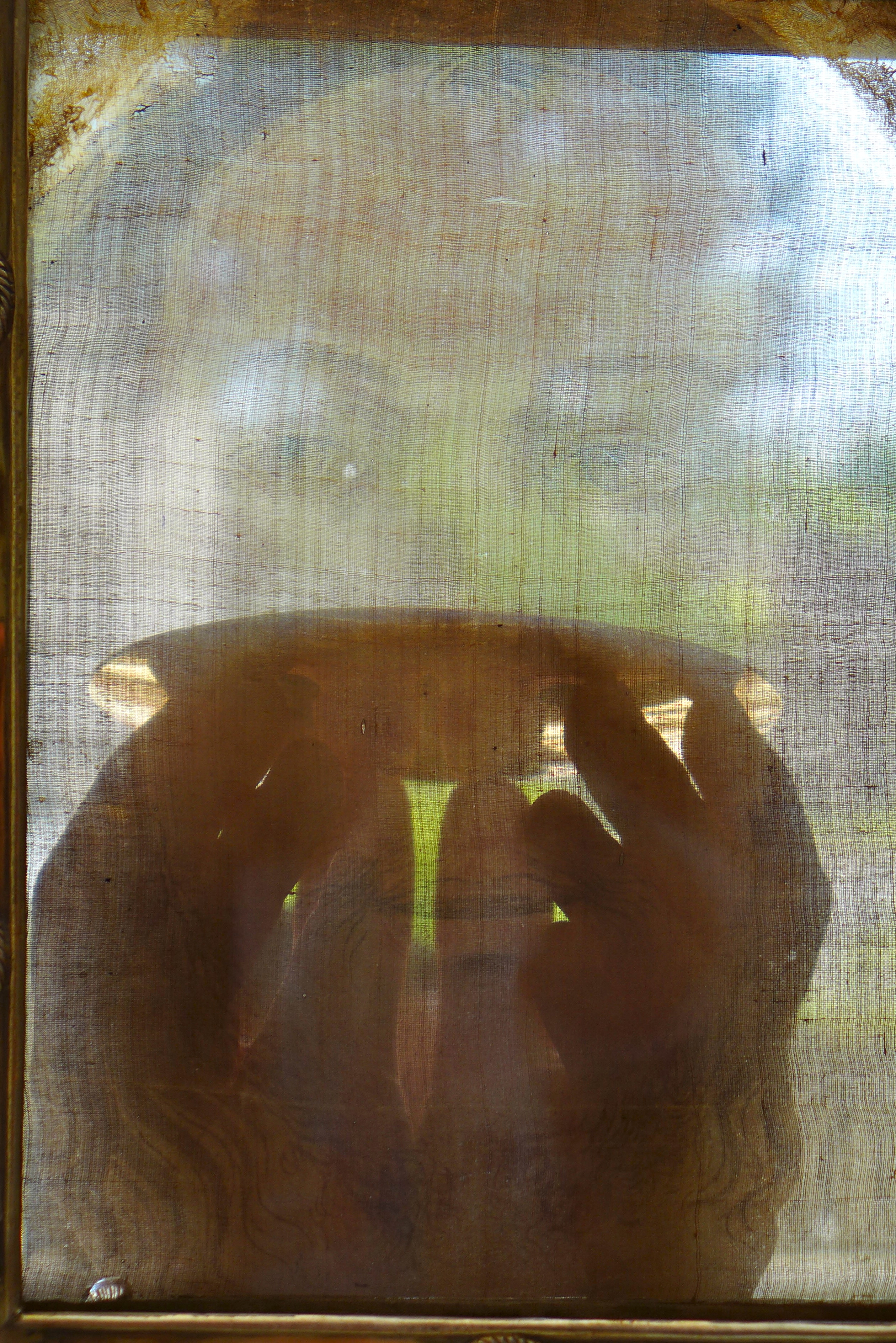
Paten viewed through the Veil of the Holy Face of Manoppello. Photo: Paul Badde/EWTN
O Jesus, hidden God,
My heart perceives You
Though veils hide You;
You know that I love you.
–St. Faustina of the Blessed Sacrament, Apostle of Divine Mercy
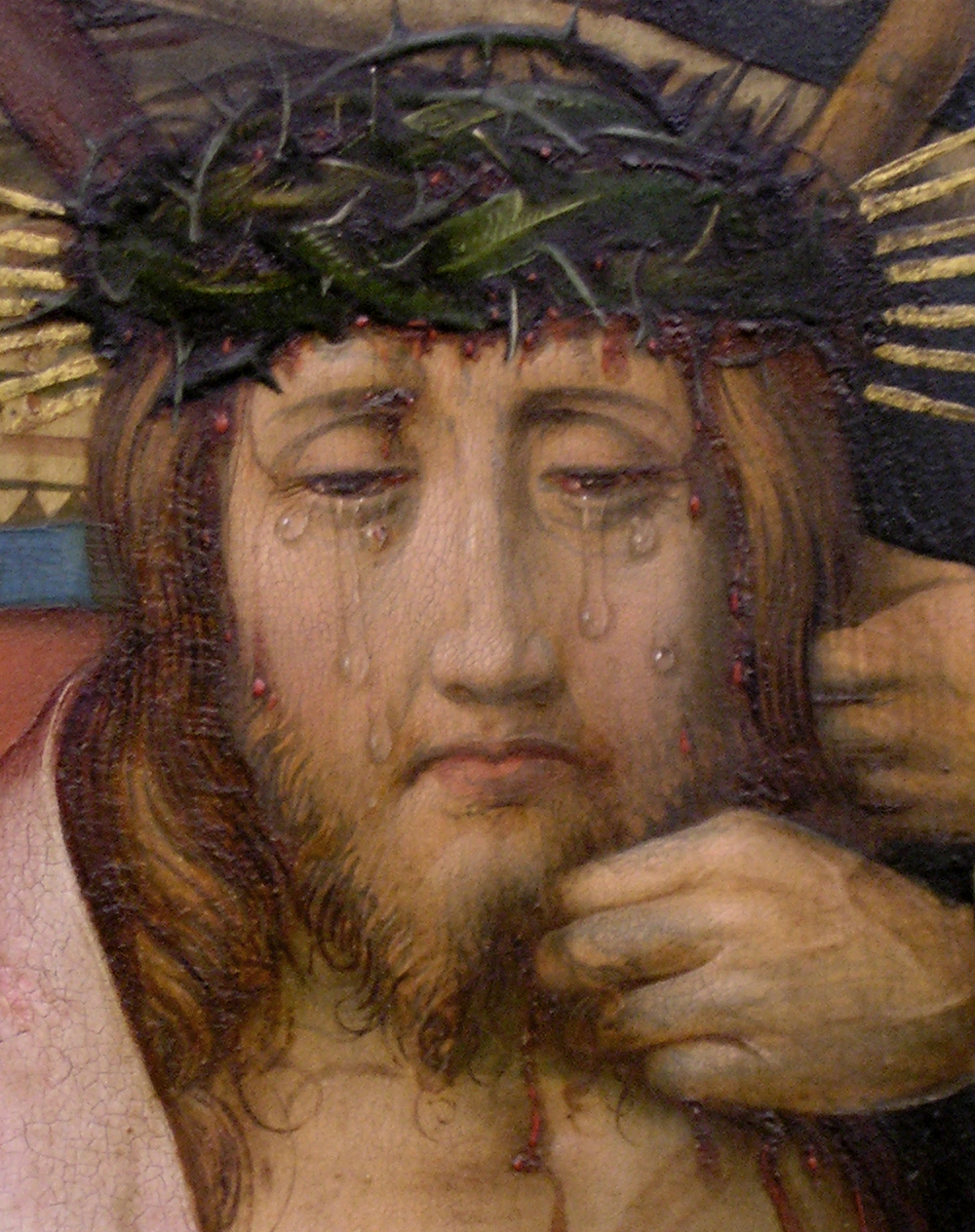
(Detail) painting by Hans Holbein the elder. (Photo: Paul Badde)
On October 11, 1933, Saint Marie Faustina Kowalska was struggling “with great difficulty” to remain at prayer during a Holy Hour; she felt nothing, her mind seemed dimmed, she couldn’t understand the simplest form of prayer, and unlike most of us, this made her determined to stay another hour. During the second hour her sufferings increased, together with great dryness and discouragement. Rather than call it quits, she heroically resolved to remain for a third hour, by sheer will. Kneeling with her arms outstretched, she took off her ring and asked Jesus to look at it as the sign of their eternal union and her perpetual vows. After a while, her heart was inundated with a wave of love. Jesus suddenly stood before her stripped of His clothing as in His Passion. “His body completely covered with wounds, His eyes flooded with tears and blood, His Face disfigured and covered with spittle.” The Lord then said to St. Faustina, “The Bride must resemble her Betrothed.”She says she understood these words to their very depth. Her likeness to Jesus must be through suffering and humility. Jesus said to her, “See what love of human souls has done to Me. My daughter, in your heart I find everything that so great a number of souls refuses Me, Your heart is My repose. I often wait with great graces until towards the end of prayer.” Her faithfulness to prayer was rewarded with a powerful reminder that she must resemble Jesus, her spouse.
This mystery of likeness to God is tied to contemplative prayer, “a communion, in which the Holy Trinity conforms man, the image and likeness of God, to His likeness.” (CCC 2713) In contemplative prayer we seek Him whom our soul loves, with our attention fixed on Jesus, surrendering to the love of the Father. The interior life of prayer can be difficult, dry and empty; it requires pure abandonment to God when nothing is felt, resisting our natural inclination to self-love by desiring to enjoy consolation. St. Faustina writes, “Amid the greatest torments, I fix the gaze of my soul upon Jesus Crucified.” St. Faustina’s strength was in contemplation of the Face of Jesus reflecting all the pain and suffering of His Sacred Heart: “I have ever before my eyes His sorrowful Face, abused and disfigured, His divine Heart pierced for our sins and especially by the ingratitude of chosen souls.”
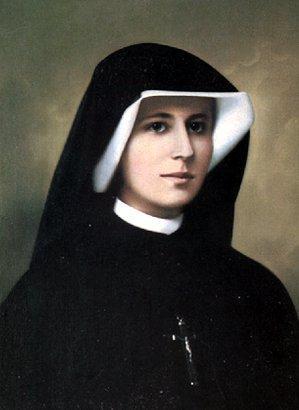
St. Faustina “Apostle of Mercy”
St. Faustina, the Apostle of Divine Mercy, had the mission of spreading His Mercy so that souls will come to know His unfathomable love, “to remove the veil of heaven so that earth will not doubt Your goodness.” She wrote, “Make of me, Jesus, a pure and agreeable offering before the Face of Your Father. Jesus, transform me, miserable and sinful as I am, into Your own self (for You can do all things), and give me to Your Eternal Father.” St. Faustina’s desire to see the Face of God increased although darkness filled her soul as though she were in exile. In spite of that suffering, she abandoned herself to the Will of God, remaining faithful in prayer. “When will the veil be lifted for me as well? Although I see and feel to a certain extent how very thin is the veil separating me from the Lord, I long to see Him face to face; but let everything be done according to Your will.”
“The Face of Christ is the supreme revelation of Christ’s Mercy.”–Pope Benedict XVI (photo:Paul Badde/EWTN)
St. Faustina sought solace by remaining patiently in prayer before Jesus in the Blessed Sacrament. “I cast upon the Tabernacle the gaze of my soul, a gaze of faithfulness. As for You, You are ever the same, while within my soul a change takes place. I trust the time will come when You unveil Your Countenance, and Your child will again see Your sweet Face…I am listening and waiting for Your coming, O only Treasure of my heart!”
God who made us in His image and likeness dwells in us. His divine indwelling enables us to become who we truly are when we turn to Him with humility and perseverance in prayer. “With God, to gaze at is to love,” says St. John of the Cross, and we are transformed by what we gaze upon. The trouble for our human nature is that in difficulties we often forget to turn to His Face, as St. Teresa of Jesus has said, “O Lord, how true that all harm comes to us from not keeping our eyes fixed on You.” The divine goal of the grace of contemplative prayer, which flows from His mercy, is to resemble Jesus. St. Faustina wrote, “The Heavenly Father will recognize and glorify our soul to the extent that He sees in us a resemblance to His Son.”
Venice, Illustration for the Divine Comedy of Dante, 13th Century”
“Be blessed, merciful God, Eternal Love, / You are above the heavens, the sapphires, the firmaments, / The hosts of pure spirits sings You praises, / With its eternal hymn: Thrice Holy.
And, gazing upon You, face to face, O God, / I see that You could have called other creatures before them, / Therefore they humble themselves before You in great humility, / For well they see that this grace comes solely from Your mercy.” –St. Faustina, Divine Mercy in My Soul
“This Mercy of God which has a concrete face, the Face of Jesus, the risen Christ.” –Pope Francis
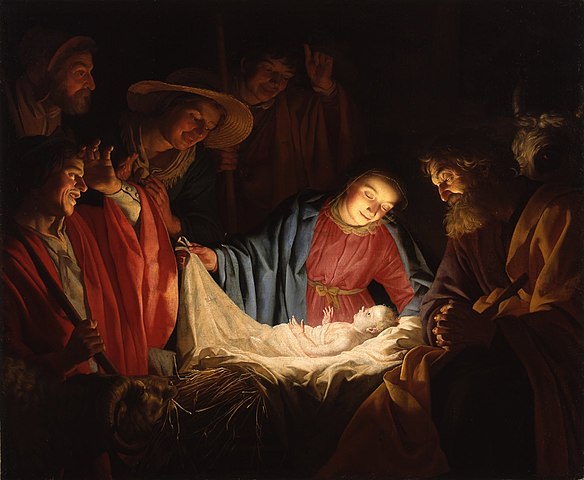
Adoration of the Shepherds by Gerard van Honthorst, 1622
“And the Word became flesh and made His dwelling among us, and we saw His glory, the glory as of the Father’s only Son, full of grace and truth.” (John 1:14)
God is pure light, and Jesus is the light of God, “the light of the human race; the light shines in the darkness,” which “the darkness has not overcome” (John 1). Jesus reveals God’s glory, the radiance of His truth and love in a human Face.
The hidden face of an unborn baby in the womb.
Why does humanity not see His glory or recognize His Face? We need light to see. If we are not turned toward the Face of Jesus, who is the Light, we will see only shadows and darkness in this life. If we do not recognize God’s Face, in His Word and in our neighbor, perhaps we need more light. If God’s glory is hidden from us, like the face of a baby in the womb, it does not mean He is not there. He exists. He is present. He loves us, and is waiting for us to return His love–to shine the light of His Face upon us.
After the angels proclaimed that the glory of God had appeared on earth in the Christ Child, the shepherds hastened to see Him. They were enlightened by grace to recognize “the glory of God’s only Son” shining on the Face of the poor, humble babe that lay before them.
Let us pray this Christmas that all those who live in darkness may hasten to Him–so that, by the grace of God, they may seek and find the Face of Jesus. And in turning to Him, they may see a great light: His grace and truth!
“While we too seek other signs, other wonders, we do not realize that He is the real sign, God made flesh; He is the greatest miracle of the universe: all the love of God hidden in a human heart, in a human Face.” ~ Pope Benedict XVI
Fr. Willie Doyle S.J. Military Chaplain for the 8th Royal Irish Fusiliers WWI
If it is true that the goal of a Christian is not only to behold God’s Face one day in Heaven, but also to bring with us as many souls as possible in our lifetime, then Fr. Willie Doyle, S.J., was a true Christian. Holiness begets holiness in others. Both St. Teresa of Calcutta and St. Josemaria Esciriva were each inspired by Fr. Doyle, a little-known Irish Jesuit priest, who in a powerful yet humble way guided each saint on the path to holiness. Fr. Willie was an Irish Military Chaplain, who was killed in action during one of the worst battles of World War I on August 16th, 1917, on the muddy, bloody battlefield of Ypres, after having run “all day hither and thither over the battlefield like an angel of mercy,” one hundred years ago. But his story is just beginning to come to come to light and inspire many, many other souls who are also seeking God’s Face.
Fr. Willie was beloved by all the men he served, ministering to exhausted soldiers of all faiths or none, with little or no sleep himself and at great personal sacrifice. There was little food, and no relief, sometimes stretching many weeks. He suffered along with the other soldiers from the cold, waist-deep mud that filled stagnant trenches, suffered gas-attacks and all the horrors of war. Fr. Willie risked his own life at every moment, administering absolution, anointing with oil faces which were so smashed by shells that they were barely recognizable as men, and then burying the dead. Once, though sick himself, he laid face down in the mud of a trench, in order that a sick doctor could get a little sleep by lying on Fr. Doyle’s back. On the last day of his life he was seen running back and forth across the battlefields giving absolution to dying men, until finally being hit by a shell himself.
St. Teresa of Calcutta
But, surprisingly it wasn’t Fr. Doyle’s battlefield heroism that inspired Mother Teresa of Calcutta, who learned of this holy priest when she was a young nun, as recounted in the book about her life, Come Be My Light. Nor were his great mortifications and ultimate self-sacrifice noted in the writings of St. Josemaria Escriva. They were both inspired by something most people would consider inconsequential: the smallest sacrifice of giving up butter on his bread and sugar in his tea; sacrifices Fr. Doyle considered intolerable.
St. Josemaria Escriva
St. Josemaria wrote to a friend of an example that set him on the road to sainthood; known as “The Butter Battle.” “We were reading–you and I–the heroically ordinary life of that man of God. [Fr. Willie Doyle, S.J.] And we saw him fight whole months and years at breakfast time: today he won, tomorrow he was beaten…He [Fr. Doyle] noted: ‘Didn’t take butter…; did take butter!’ I have read quickly the life of Fr. Doyle: how well I understand the butter tragedy.” [For St. Josemaria, his own battle was the small sacrifice of not reading the newspapers.]
Fr. Doyle, who was born the same year as St. Therese of the Holy Face and the Child Jesus, was himself inspired by her “Little Way.” And he was determined to follow it, by “doing little things for God with great love”:
“Kneeling at the grave of the Little Flower, I gave myself into her hands to guide and to make me a saint. I promised her to make it a rule of my whole life, every day without exception, to seek in all things my greater mortification, to give all and refuse nothing. I have made this resolution with great confidence, because I realize how utterly it is beyond my strength; but I feel the Little Flower will get me the grace to keep it perfectly.”
St. Therese
He did not ask God for the courage to perform great acts of heroism, but instead begged earnestly for the grace to give up butter, sugar in his tea, salt and other little things. “How many deceive themselves,” Fr. Doyle wrote, “in thinking sanctity consists in the ‘holy follies’ of the saints! How many look upon holiness as something beyond their reach or capability, and think that it is to be found only in the performance of extraordinary actions. Satisfied that they have not the strength for great austerities, the time for much prayer, or the courage for painful humiliations, they silence their conscience with the thought that great sanctity is not for them, that they have not been called to be saints. With their eyes fixed on the heroic deeds of the few, they miss the daily little sacrifices God asks them to make; and while waiting for something great to prove their love, they lose the countless little opportunities of sanctification each day bears within its bosom.”
“Self-love,” wrote Fr. Doyle, “is our own greatest enemy.” Little things are of great importance to God. It was through being “faithful to God in little things,” those small sacrifices, that he was prepared to make the ultimate sacrifice, which is “to lay down one’s life for one’s friends.” Fr. Doyle knew better than anyone the value of making those small sacrifices of love that become mighty weapons in the hand of the Living God — and He will win the war!
With her great reverence for the thirst of Jesus on the Cross, and the desire to seek His Face everywhere, it is possible that Mother Teresa may have found inspiration when she read the following passage in Fr. Doyle’s diary:
“The greatest thirst of Jesus on the Cross was His thirst for souls. He saw then the graces and inspirations He would give me to save souls for Him… In what way shall I correspond and console my Savior? I went on to ________ and once more had an opportunity of a quiet prayer before the life-sized crucifix in the church which I love so much. I could not remain at His feet but I climbed up until both my arms were around his neck. The figure seemed almost to live, and I think I loved Him then, for it was borne upon me how abandoned and suffering and broken-hearted He was. It seemed to console Him when I kissed His eyes and pallid cheeks and swollen lips, and as I clung to Him I knew He has won the victory, and I gave Him all He asked.” –Fr. William Doyle, S.J.
“To Raise the Fallen” compiled and edited by Patrick Kenny
Just in time to celebrate the one-hundredth anniversary of Fr. Willie’s death, there is a new book available, on the inspiring life of Fr. Doyle, his writing and war letters compiled by Patrick Kenny, To Raise the Fallen, which may be found by clicking (here). If you are interested in reading more about the life of Fr. Doyle be sure to visit this wonderful blog dedicated to to Fr. Doyle: Remembering Fr. Willie Doyle, S.J.
St. Faustina Kowalska, “The Apostle of Mercy,” was known as a mystic and visionary. Her diary, Divine Mercy in My Soul, records the journey of her soul. Our Lord granted St. Faustina a deep understanding of the love and mercy of God which she was to share with the world.
The greatest sign of God’s continuing mercy for the people of the world is His hidden Presence in the Eucharist. By turning to His Eucharistic Face, gazing at Jesus’s Face in silent contemplation, “a change takes place” in our souls, because He is also gazing at us.
“The Face of Christ is the supreme revelation of Christ’s Mercy.”–Pope Benedict XVI photo:Paul Badde
“O Living Host, O hidden Jesus. You see the condition of my soul. Of myself, I am unable to utter Your Holy Name. I cannot bring forth from my heart the fire of love, but, kneeling at Your feet, I cast upon the Tabernacle the gaze of my soul, a gaze of faithfulness. As for You, You are ever the same, while within my soul a change takes place. I trust that the time will come when You will unveil Your Countenance, and Your child will again see Your sweet Face. I am astonished, Jesus, that You can hide Yourself from me for so long and that You can restrain the enormous love You have for me. In the dwelling of my heart, I am listening and waiting for Your coming, O only Treasure of my heart! (1239 “Divine Mercy in My Soul”)
Divine Mercy in the waters of Baptism
It is through the Divine Mercy of God that souls, by turning continually toward His Holy Face, learn to live in His Presence. Thus, we may reach the true treasure of all hearts, fulfilling the soul’s greatest desire, which is to see God face to Face.
“During meditation, the Lord gave me knowledge of the joy of Heaven and of the Saints on our arrival there; they love God as the sole object of their love, but they also have a tender and heartfelt love for us. It is from the Face of God that this joy flows out upon all, because we see Him face to Face. His Face is so sweet that the soul falls anew into ecstasy” (1592, “Divine Mercy in My Soul”).
St. Faustina, pray for us!
Important Update:Raymond Frost at the Holy Face of Manoppello Blogspot reports that the most recent episode of Vaticano, EWTN’s weekly television program originating in Rome there is a most beautiful segment (“Traces of the Resurrection” starting at 23:40) on the Holy Face of Manoppello as one of the “clues” which demonstrates the reality of the Resurrection of Jesus.
Like a lamb led to the slaughter, or a sheep before the shearers, He was silent and uttered no cry. (Is. 52)
The sufferings of this world are as numerous as its sins. Each day brings more and more it seems; the weight of it crushing our souls. The greatest evil, and the most difficult suffering to bear, is the suffering of the innocent.
On April 5th, U.S. Ambassador Nikki Haley addressed the UN Security Council about the Assad regime’s chemical attacks against its own people in Syria. She said, “Yesterday we awoke to pictures of children; foaming at the mouth, suffering convulsions, being carried in the arms of desperate parents. We saw rows and rows of lifeless bodies, some still in diapers, some with visible scars of a chemical weapons attack. Look at those pictures! We cannot close our eyes to those pictures.” A cry of helplessness rises in one’s heart, “How long, O Lord!”
“How long, O Lord, must I cry for help and you do not listen? Or cry out to you ‘Violence!” and you do not intervene? Why do you simply gaze at evil? Destruction and violence are before me; there is strife and discord.” (Hab. 1: 1-3)
The suffering endured by the innocent is utterly incomprehensible. We could harden our hearts and turn away our face from what is happening–numb our minds, and anesthetize our unpleasant thoughts with distractions. Or we may fall to our knees and ask God the same question that atheists mockingly ask of Christians; the same question the prophet Habbakkuk asked of God in faith:
“Are you not from of old, O LORD, the holy God, immortal? LORD, you have appointed them for judgment, O Rock, you have set them in place to punish! Your eyes are too pure to look upon wickedness, and the sight of evil you cannot endure. Why, then, do you gaze on the faithless in silence while the wicked devour those more just than themselves?” (Hab. 1:12-13)
“How long O Lord!” we will cry. And no answer is heard. The response will be, as it was from the Lamb of God on the Cross–silence. There are no other questions.
“I know now, Lord, why you utter no answer. You are yourself the answer. Before Your Face questions die away. What other answer would suffice?” –C.S. Lewis (Till We Have Faces)
“Hide yourself, my love; turn your face toward the mountains, and do not speak; but look at those companions going with her through strange islands.”–Stanza 19, Spiritual Canticle, St. John of the Cross
The great mystical Doctor of the Church, St. John of the Cross, wrote a beautiful commentary on Stanza 19 of his Spiritual Canticle, on prayer–the desire of the soul to communicate with God, the need of silence on the part of the soul, and the darkness or obscurity of faith in the soul who is seeking God’s Face.
St. John says that the bride-soul asks four things of the Bridegroom (Christ): First, that He “communicate very inwardly” in the hidden place of the soul. Second, that He inform and “shine on her faculties” with His glory. Third, “that this communication be so sublime and profound that she may neither desire nor know how to give a description of it…” Fourth, that He be enamored of the graces and virtues He has placed in her.”
“Hide yourself, my love;”
St. John says this means to ask God “to communicate Yourself in secret, manifest Your hidden wonders, alien to every mortal eye.”
“turn your face toward the mountains”
“The ‘Face’of God is the divinity and the ‘mountains’ are the soul’s faculties (memory, intellect, and will).” The verse is saying: “Let your divinity shine on my intellect by giving divine knowledge, and on my will by imparting to it divine love, and on my memory with the divine possession of glory.” The soul, St. John writes, “can only be satisfied with God’s Face.”
“and do not speak”
The communication God grants to the soul are too high and deep to be apprehended by the senses. “Let the depth of the hiding place, which is spiritual union, be of such a kind that the senses will be unable to feel or speak of it…,” says St. John of the Cross.
“but look at those companions”
“When God looks, He loves and grants favors. And the companions whom the soul tells God to look at are the many virtues, gifts, perfections, and other spiritual riches He has placed in her as the pledges, tokens, and jewels of betrothal.” This verse, says St. John is like saying, “But, Beloved, first turn to the interior of my soul, and be enamored of the company–the riches–You have placed there, so that loving the soul and through them You may dwell and hide in her. For, indeed, even though they are Yours, since You gave them to her, they also belong to her.
“going with her through strange islands.”
Here the soul is saying, “Since I go to you through a spiritual knowledge strange and foreign to the senses, let Your communication be so interior and sublime as to be foreign to all of them.”
To “seek God’s Face” is to seek Him in prayer; to “look at Him” is to take the time to contemplate Him. When we do this, St. John of the Cross tells us, God is doing great things in our soul…He shines His Face upon us!
Drawing of vision of the Crucifixion by St. John of the Cross, Feast: December 14
The Lord is the Spirit, and where the spirit of the Lord is, there is freedom. And we all, with unveiled face, beholding the glory of the Lord, are being changed into His likeness from one degree of glory to another; for this comes from the Lord who is the Spirit. (2 Cor 3:17-18)
“I will wait for the Lord who hath hid His Face from the house of Jacob, and I will look for Him.” (Isaiah 8)
Virgin in Prayer Artist: Sassoferrato 1640-50
Is there anyone who enjoys waiting? Our human nature rebels against all forms of it: there is the mundane waiting we must endure in lines, in traffic, at ball games, practices, and in doctor’s offices; the anxious waiting for phone calls, for results, or for the end of sufferings; the joyful waiting for birthdays, anniversaries, graduations and other celebrations. Then there is the heavy combination of all three types of waiting–which is of a mother waiting for the birth of her child.
Our weak human nature does not like to wait. We want to “get there” right away, to “know” right away, for something to be “done” right away. Waiting requires patience and most of humanity has very little. But wait we must, and since everything in life is permitted by God solely for our good, waiting must be very good for us since we spend so much of our lives doing it.
If waiting is indeed good for us, then it is certain that the evil one will do everything possible to trip us up as he did with the children of Israel while they were waiting, waiting, waiting for Moses to come down from the mountain with the Ten Commandments. When God was telling Moses, “I am the Lord, thy God: thou shall not have strange Gods before me,” the devil was tempting them to pride; the Israelite’s did not want to endure waiting to see the Face of God so they fashioned an idol, the “work of their own hands.” Here lies the temptation for us all in what should be a grace-filled period of time: distraction in turning the eyes of our soul away from the Face of God and toward the false faces or idols of the world–bright, sparkly, enticing and all around us. How can we resist falling into the traps of idolatry?
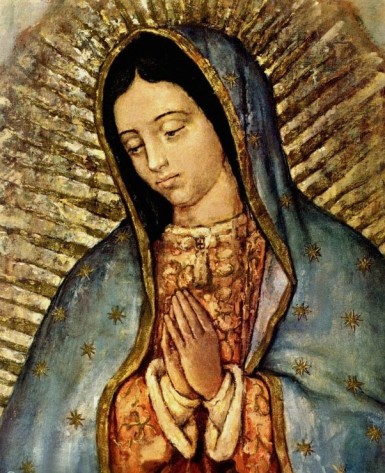
Our Lady of Guadalupe
The ultimate good is to see the Face of God and therefore Mary must have waited like no one has ever waited before! Mary, for the love of God, waited in patience, humility, faith, charity, in hope, and in supreme fortitude. She did this by fixing the eyes of her soul on Jesus, her Redeemer and God–Whose Face she could not yet see within her womb. Mary’s uncomplaining acceptance of God’s Will–to seek His Face and only His Face–bore the most sublime fruit in Mary’s soul of divine PEACE, which the world can never take away. So, this Advent and in all times of waiting, wait with Mary, and her reward will also be ours…to see the Face of her Son!
“Mary and Eve” by Sr. Grace Remington, OCSD ( for print- link here)
In the Rule of his Order St. Benedict gives the key to discerning a true vocation in those seeking admittance to the Benedictine Order: “Let us examine whether the novice is truly seeking God.” (Ch. 58, Rule) Since the Order’s inception, up to this day, the sons and daughters of St. Benedict have taken for their motto “Ora et Labora.” This “Prayer and Work” for many Benedictines is truly seeking the Face of God in the “prayer” of contemplation and the “work” of reparation to the Face of God covered with the blood, wounds, dust and spittle of blasphemy–to stand, together with the Blessed Mother, before the endless crosses on which the Son of God continues to be crucified. If there is a common thread among the holy men and women of the Order, it is woven through the veil of the Face of Christ.
But, they will tell you in their own words…
St. Gertrude by Miguel Cabrera 1763
St. Gertrude (1256-1302), while making reparation to the Adorable Face of Jesus, wounded and disfigured, said to Him, “Tell me, O Lord, the remedy that can soothe the suffering of Thy Divine Face!” Jesus replied: “If anyone meditates upon my sufferings with tenderness and compassion, his heart will be to Me as a soothing balm for these wounds.” Jesus gave St. Gertrude this promise: “All those who meditate frequently on my Divine Face, attracted by the desires of love, shall receive within them, through My Humanity, a bright ray of My Divinity, which shall enlighten their inmost souls so that they shall reflect the light of My Countenance in a special manner throughout eternity.”
St. Mechtilde (1240-1299) once exclaimed to her sisters, “Let us all, full of holy desire, hasten to venerate the sweetest Countenance of Our Lord, which will in Heaven be our all–all that a glorified soul can desire!”
Bl. Columba Marmion
Blessed Columba MarmionO.S.B.(1858-1923) writes that our relationship with God hinge upon two things; our walking in the truth of our nature as creatures, who remain always in humble adoration before our Creator and our dignity as children of God. “Our adoption as children supposes that we act always as loving children towards Our Heavenly Father, constantly seeking His good pleasure: Seek His Face evermore! This Facies Dei, Face of God, is the smile of His loving approbation. If you always keep the truth of this twofold relation, you will be more and more fixed in truth and in peace.” “Look your Heavenly Father in the Face, and show him your soul in truth,” Bl. Marmion counsels, “…do not forget that He is God the Infinite! The love of the creature, in order to be true, must be the love of adoration; the spirit of fear of the Lord. If you keep the eye of your soul fixed on God alone, you will receive many graces.” “It is good sometimes, when alone with God, to stretch out our hands and look at Him in faith showing Him the depths of our soul that His eye may penetrate into those abysses that are hidden in the recesses of the heart. Then our prayer is pure and very powerful, for the child gazes into the Father’s Face, seeking His Face, that is to say His good pleasure: “Seek ye the Lord, seek His Face EVERMORE!”
Mother Marie des Douluers, Foundress of the Benedictines of Jesus Crucified
Mother Marie des Douleurs (1902-1983) Foundress of the Congregation of the Benedictines of Jesus Crucified emphasizes the relationship between the Sacred Heart of Jesus and His Holy Face: “We must discover on this Face the revelation of the secrets of His Heart.” She also points to the Holy Spirit, whose work it is to restore the image of God in our souls: “Devotion to the Holy Face is the particular aspect by which the Holy Spirit makes us learn all we need to know to become the saints that Jesus desires. This devotion is of such central importance and so vital for us that we cannot live without it!”
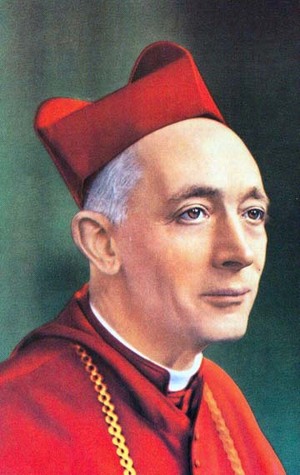
Bl. Ildephonsus Cardinal Shuster, O.S.B.
Blessed Ildephonsus Cardinal Shuster, O.S.B. (1880-1954) wrote, “The Face of Jesus in Heaven is the cause of joy to the angels, but on earth it is a token of pity for sinners. We say to the Father Respice in faciem Christi tui, (Ps 83:10) (Look upon the Face of Thy Christ) but let us fix our own gaze on that Face of Jesus, lest we lose sight of it. As the Eternal Father, when He beholds the Face of Jesus, is touched with compassion for the wretched children of Adam, so let us show a holy reverence for that Sacred Face and for those pure eyes that look on us so tenderly; let us take care that all our actions are worthy of the ineffable sanctity of that Divine regard.”
Last but not least, is the Servant of God, Ildebrando Gregori O.S.B. (1894-1985) founder of the women’s religious congregation the Benedictine Sisters of Reparation of the Holy Face. The devotion to the Holy Face was rooted and imprinted on his Congregation: “The title that sets you apart is Reparation of the Sacred Face of Our Lord Jesus Christ. It is the story of Jesus’ Passion that manifests itself, in a particular way, in the love which St. Benedict had for that Face. The Face of Jesus which was seen dripping blood, crowned with thorns, spat upon; His eyes were bruised, the broken eyebrows, broken lips. His Face, more beautiful than Paradise, appeared like the face of a leper. So Adorers of the Holy Face, Reparation of his wounds in the contemplation of prayer (Ora), in the service of the needy (Labora)… (adoration of the Face of Christ) is essential to make reparation, to create harmony with Christ Jesus who makes us love what the beloved loves, to want what He wants and rejecting what brings Him pain, injury, suffering.”
This apostle of devotion to the Face of Christ applied the Rule of St. Benedict to a work of human and spiritual formation for the poorest and most abandoned children, victims of World War II, in whom he saw the suffering face of Jesus. He later extended that work to include the elderly. At the time he was Abbot General he met Blessed Mother Maria Pierina de Micheli, of the Daughters of the Immaculate Conception, to whom Our Lord gave the mission of the propagation of the Holy Face Medal. He became her Spiritual father and director until the time of her death in 1945. Padre Gregori shared with Bl. Mother de Micheli the love, devotion and deep desire to make reparation to the Face of Jesus and to propagate the Holy Face Medal throughout the world.
Servant of God Idlebrando Gregori, OSB
“I wish that the Lord bless you as He blessed the holy pious women, that He will fill you with His holy Love. His Blessed Face is your ideal, and will piously torment you with the desire to give Him love and praise, this is the perfect reparation. “–Servant of God Ildebrando Gregori OSB














 Illumina Domine Blog - Devotion to The Holy Face