“The most illustrious thing the Church has is that which she hides most.” ~Bossuet
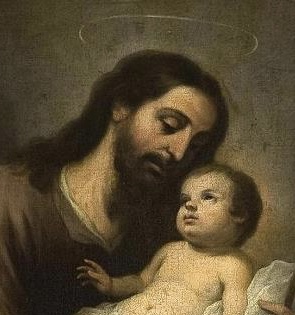
Detail, St. Joseph with the Child, by Alonso Miguel de Tovar
His countless virtues made him worthy to be the foster father of the Son of God. He was the first man to see the human Face of God; the first man to hear the cry of the Word of God. Yet for centuries the most just and humble St. Joseph was fairly hidden in the Church. Not a word is spoken by St. Joseph in the Gospels. But as Pope Benedict XVI wrote, “His is a silence permeated by contemplation of the mystery of God, in an attitude of total availability to His divine wishes.”
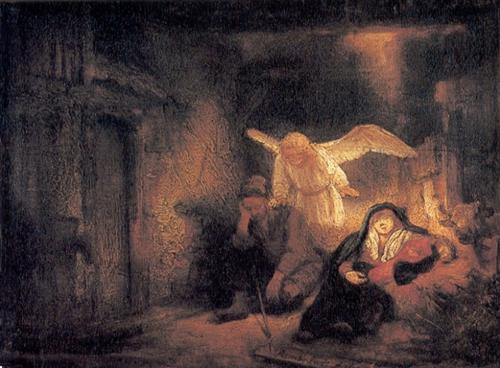
Josephs’s Dream by Rembrandt c.1645
It was St. Teresa of Avila who recognized St. Joseph as the model of contemplative prayer. She wrote: “Would that I could persuade all men to have devotion to this glorious Saint; for I know by long experience what blessings he can obtain for us from God.”Because St. Joseph was silent, he was attuned to hear the voice of God, although it was in darkness and obscurity. “Those who practice prayer,” says St. Teresa, “should have a tremendous devotion to him always.”
“Joseph, the honest man, seeks God. Joseph, the selfless man, finds God. Joseph, the hidden man, delights in God’s presence.” –Second Panegyric on St. Joseph by Bossuet
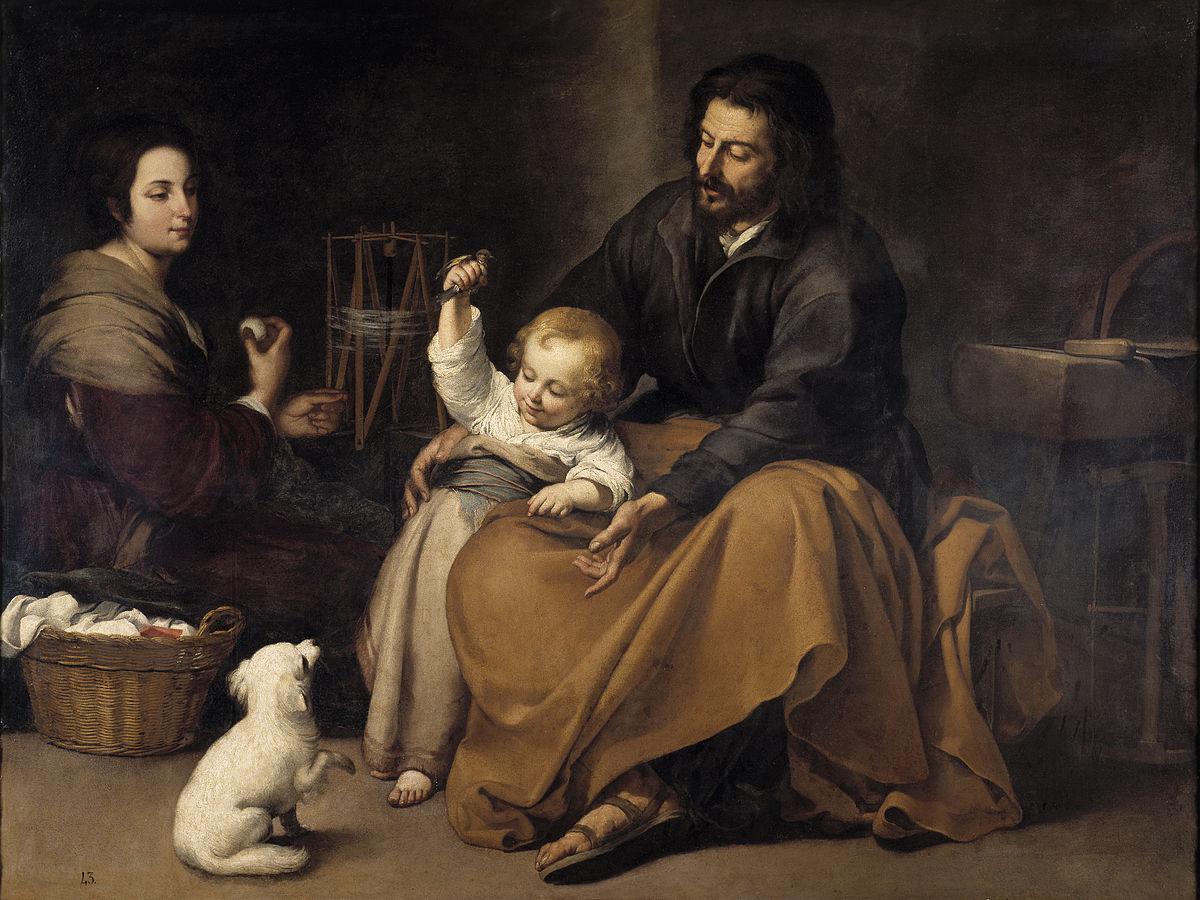
Holy Family with bird, c. 1650, by Murillo
St. Joseph, through continuous prayer, sought God’s Will in each present moment. St. Teresa writes that he is the master of the interior life. “In human life Joseph was Jesus’ master in their daily contact, full of refined affection, glad to deny himself in order to take better care of Jesus. Isn’t that reason enough for us to consider this just man, this holy patriarch, in whom the faith of the old covenant bears fruit, as master of interior life? Interior life is nothing but continual and direct conversation with Christ, so as to become one with Him. And Joseph can tell us many things about Jesus.” St. Joseph reveals those hidden graces in our daily lives; gifts from God that are available in each ordinary moment, as well as in trials and times of suffering. St. Joseph teaches us to live by faith as he did, before the presence of such a great mystery, by contemplating the human Face of God with the eyes of faith.
“In the wonder of the Incarnation your Eternal Word has brought to the eyes of faith a new and radiant vision of your glory. In him we see our God made visible, and so are caught up in the love of the God we cannot see.” (from the Christmas liturgy of the Mass).
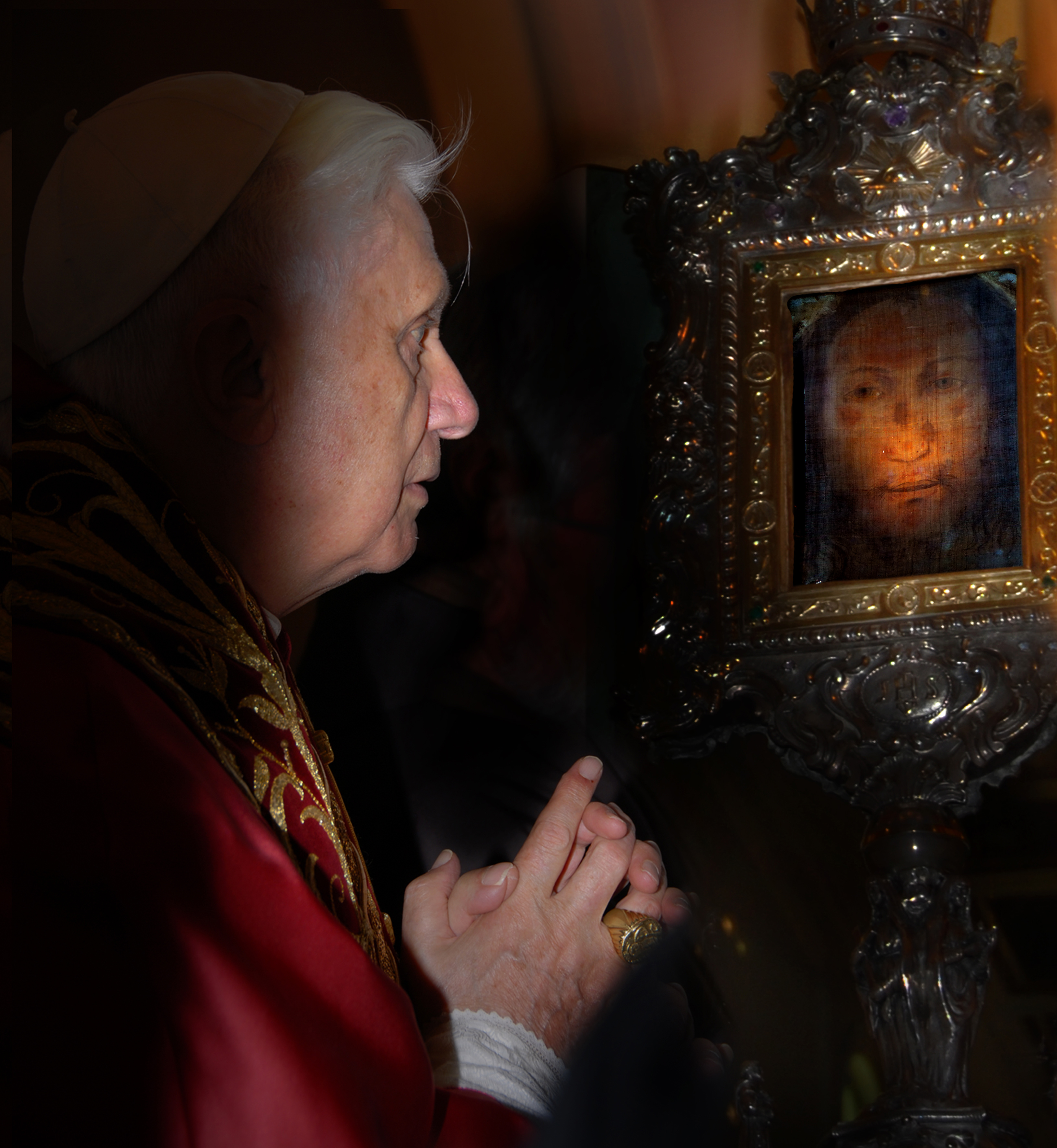
Offered for your contemplation — the Face of Jesus (Photo: Paul Badde)
We contemplate many things in the course of our day, and can make choices about what we give our attention to. Opening up a computer, or turning on a television or radio is an invitation for something, good or bad, to fill our eyes, ears, and souls.
Recently I learned about the creation of something called the “Metaverse,” a technology that people can use to experience with others a virtual reality. It is proposed as something beyond games and entertainment, but as an alternative to the universe we actually live in. The thought of such a thing fills me with an instinctive revulsion. The universe, created to be good, beautiful and true by God is worth contemplating as a hint of the good, truth, and beauty of the Face of the Creator. But the metaverse, rejecting that reality, offers instead a mask of non-reality, behind which is not a face, but an empty void. It is a rejection of God and His Creation.
What we are looking at matters. What we listen to matters. It’s not an understatement to say that the world is increasingly losing its grip on reality because it is no longer seeking the Face of God. It is running headlong off a cliff in pursuit of things to take the place of God; soul-destroying idols. Evil proposes, in a very seductive way naturally, that humanity contemplate the soul-less idols because they will separate us from God. God, on the other hand, proposes that we gaze upon the Face of His Son, Jesus Christ, who will unite us to Himself.
St. Therese
“We become what we contemplate. One who contemplates disfigured things becomes inwardly disfigured. One who contemplates transfigured things becomes inwardly transfigured. One who contemplates the all-beautiful Face of the Incarnate Word will be supernaturally beautified.”
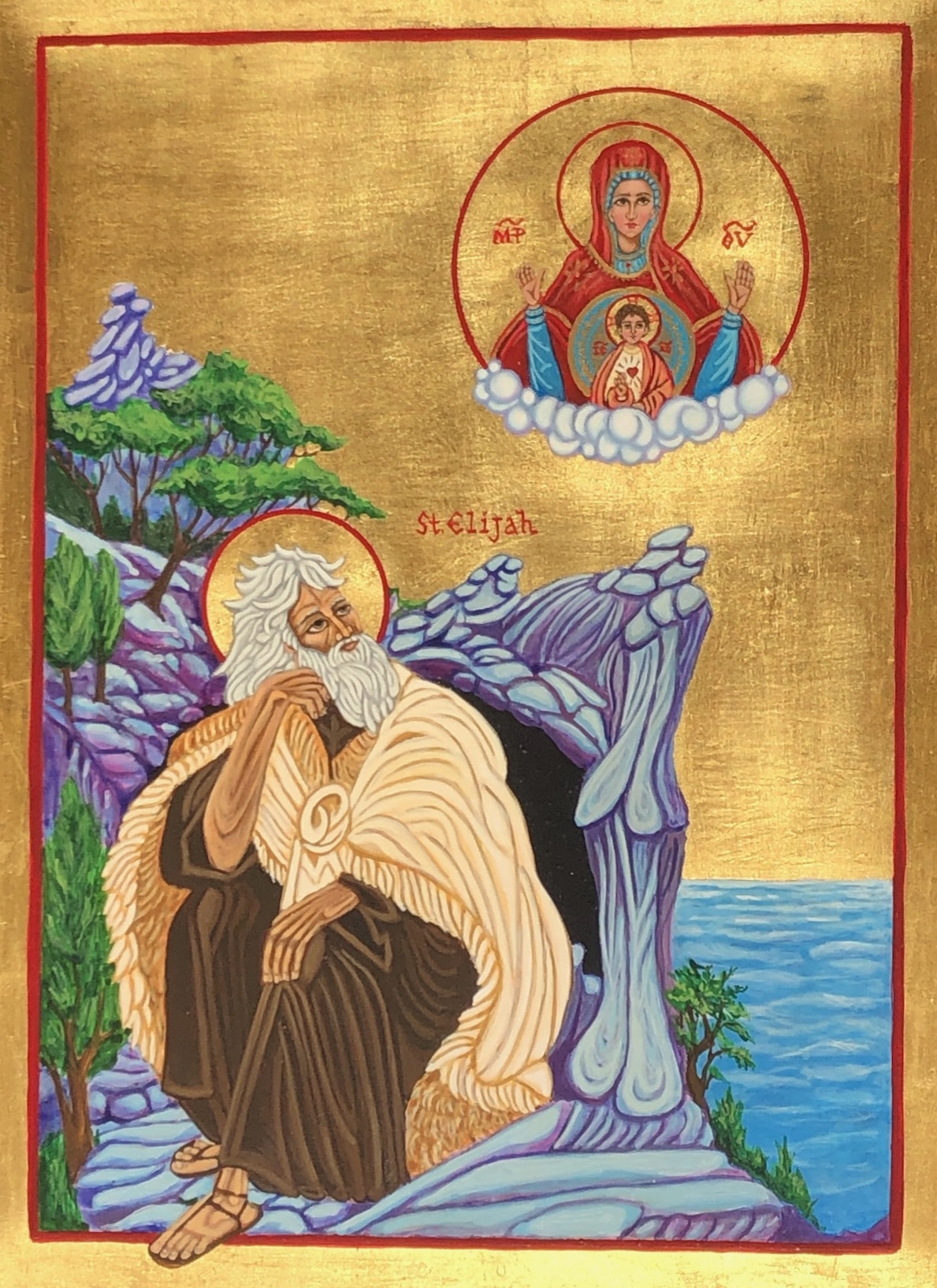
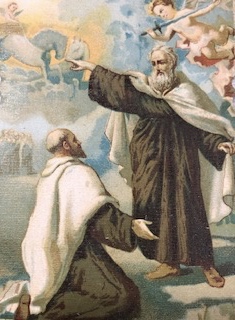
There he came to a cave, where he took shelter. Then the Lord said: “Go outside and stand on the mountain before the Lord; the Lord willl be passing by.” A strong and heavy wind was rending the mountains and crushing rocks before the Lord–but the Lord was not in the wind. After the wind there was an earthquake–but the Lord was not in the earthquake. After the earthquake there was fire–but the Lord was not in the fire. After the fire there was a tiny whispering sound. When he heard this, Elijah hid his face in his cloak and went and stood at the entrance of the cave. A voice said to him, “Elijah, why are you here?” He replied, “I have been most jealous for the Lord, the God of Hosts.” (1 Kings 19)
Fixing our eyes on God
Pope St. Gregory explains why Elijah is described as standing at the mouth of the cave (“where we direct our mental gaze, there we may be said to stand.”) and veiling his face when he heard the voice of the Lord speaking to him: “…as soon as the voice of heavenly understanding enters the mind through the grace of contemplation, the whole man is no longer within the cave, for his soul is no longer taken up with matters of the flesh: intent on leaving the bounds of mortality, he stands at the cave’s mouth.”
Humility and Detachment – the keys to contemplation
“But if a man stands at the mouth of the cave and hears the word of God with his heart’s ear, he must veil his face. For when heavenly grace leads us to the understanding of higher things, the rarer the heights to which we are raised, the more we should abase ourselves in our own estimation by humility: we must not try to know ‘more than is fitting; we must know as it befits us to know.’ Otherwise, through over-familiarity with the invisible, we wish going astray; and we might perhaps look for material light in what is immaterial. For to cover the face while listening with the ear means hearing with our mind the voice of Him who is within us, yet averting the eyes of the heart from every bodily appearance. If we do this, there will be no risk of our spirit interpreting as something corporeal that which is everywhere in its entirety and everywhere uncircumscribed…while our feet stand within the walls of His holy Church, let us keep our eyes turned toward the door; let us mentally turn our backs on the corruption of this temporal life; let us keep our hearts facing toward the freedom of our heavenly fatherland.”
Almighty, ever-living God, your prophet Elijah, our Father, lived always in your presence and was jealous for the honor due to your name. May we, your servants, always seek your Face and bear witness to your love. We ask this through our Lord, Jesus Christ. Amen.
There he came to a cave, where he took shelter. Then the Lord said: “Go outside and stand on the mountain before the Lord; the Lord willl be passing by.” A strong and heavy wind was rending the mountains and crushing rocks before the Lord–but the Lord was not in the wind. After the wind there was an earthquake–but the Lord was not in the earthquake. After the earthquake there was fire–but the Lord was not in the fire. After the fire there was a tiny whispering sound. When he heard this, Elijah hid his face in his cloak and went and stood at the entrance of the cave. A voice said to him, “Elijah, why are you here?” He replied, “I have been most jealous for the Lord, the God of Hosts.” (1 Kings 19)
Fixing our eyes on God
Pope St. Gregory explains why Elijah is described as standing at the mouth of the cave (“where we direct our mental gaze, there we may be said to stand.”) and veiling his face when he heard the voice of the Lord speaking to him: “…as soon as the voice of heavenly understanding enters the mind through the grace of contemplation, the whole man is no longer within the cave, for his soul is no longer taken up with matters of the flesh: intent on leaving the bounds of mortality, he stands at the cave’s mouth.”
Humility and Detachment – the keys to contemplation
“But if a man stands at the mouth of the cave and hears the word of God with his heart’s ear, he must veil his face. For when heavenly grace leads us to the understanding of higher things, the rarer the heights to which we are raised, the more we should abase ourselves in our own estimation by humility: we must not try to know ‘more than is fitting; we must know as it befits us to know.’ Otherwise, through over-familiarity with the invisible, we wish going astray; and we might perhaps look for material light in what is immaterial. For to cover the face while listening with the ear means hearing with our mind the voice of Him who is within us, yet averting the eyes of the heart from every bodily appearance. If we do this, there will be no risk of our spirit interpreting as something corporeal that which is everywhere in its entirety and everywhere uncircumscribed…while our feet stand within the walls of His holy Church, let us keep our eyes turned toward the door; let us mentally turn our backs on the corruption of this temporal life; let us keep our hearts facing toward the freedom of our heavenly fatherland.”
Almighty, ever-living God, your prophet Elijah, our Father, lived always in your presence and was jealous for the honor due to your name. May we, your servants, always seek your Face and bear witness to your love. We ask this through our Lord, Jesus Christ. Amen.
The mystery of the Trinity is the beginning and end of all revealed truth. We are baptized in
Sr. Lucia’s vision of The Trinity at Tuy
the name of the Father, the Son and the Holy Spirit and our souls enter into relationship with each of the Three Divine Persons. We are daughters and sons of the Father, brothers, sisters and co-heirs with the Son and sanctified by the Holy Spirit continually to make us resemble Jesus Christ.
But, how can we contemplate something so great as the Holy Trinity when we are such lowly creatures? St. Teresa wrote that she was “amazed at seeing so much majesty in a thing as lowly as my soul;” then Our Lord said to her: “It is not lowly, my daughter, because it is made in my own image.” This should give us the courage to come in prayer before The Most Holy Trinity through Jesus Christ, through whose human face God chose to reveal Himself to us.
“Show us…Your Face, that mirror mystery-laden, of God’s infinite mercy.”–Pope Benedict XVI Photo: Paul Badde
Words are not needed, we need only rejoice in the splendor of His Face. Pope Benedict XVI tells us, “To rejoice in the splendor of His Face means penetrating the mystery of His Name made known to us in Jesus, understanding something of His interior life and of His Will, so that we can live according to His plan for humanity. Jesus lets us know the hidden Face of the Father through His human Face; by the gift of the Holy Spirit poured into our hearts.”
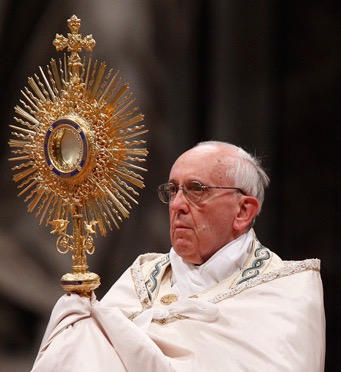
We rejoice in the splendor of His Face as we gaze at Him, and while we gaze at Him, He gazes at us: “How beautiful is this gaze of Jesus – How much tenderness is there!” says Pope Francis. Pope Francis urges us to reflect on Jesus gaze upon us: “How is Jesus looking at me?
Pope Francis adoring The Eucharistic Face of Christ
With a call? With a pardon? With a mission? But on the path He created, all of us are being looked at by Jesus. He always looks at us with love. He asks us something, he forgives us for something and he gives us a mission… May each one of us think: ‘Lord, You are here, among us. Fix your gaze on me and tell me what I must do: how I must repent for my mistakes, my sins; what courage do I need to go forward on the path that You first created.” St. John of the Cross says the gaze of God is active, “for God’s gaze is to love and to work favors. His Gaze is love and love does things. God’s gaze works four blessings in the soul: it cleanses her, makes her beautiful, enriches her and enlightens… making her like Himself.”
By this mutual gaze of love between the Face of God and the soul man, God restores His Image in our souls where, incredibly, He chooses to dwell. In The Spiritual Canticle, St. John of the Cross exclaims “O, then, most beautiful soul who dost so much desire to know the place where your Beloved is in order to seek him and to be united with him, He tells you now that you yourself are the abode wherein He dwells, and the closet and hiding place where He is hidden. It is a matter of great contentment and joy for you to see that all your good and all your hope are so near that you cannot be without them. ‘Behold’ says the Spouse, ‘the kingdom of God is within you’ (Luke 17:21), and his servant the Apostle Paul says: ‘We are the temple of the living God’ (2 Cor 6:16).”
Divine Mercy in the waters of Baptism when the Holy Trinity comes to dwell in the soul.
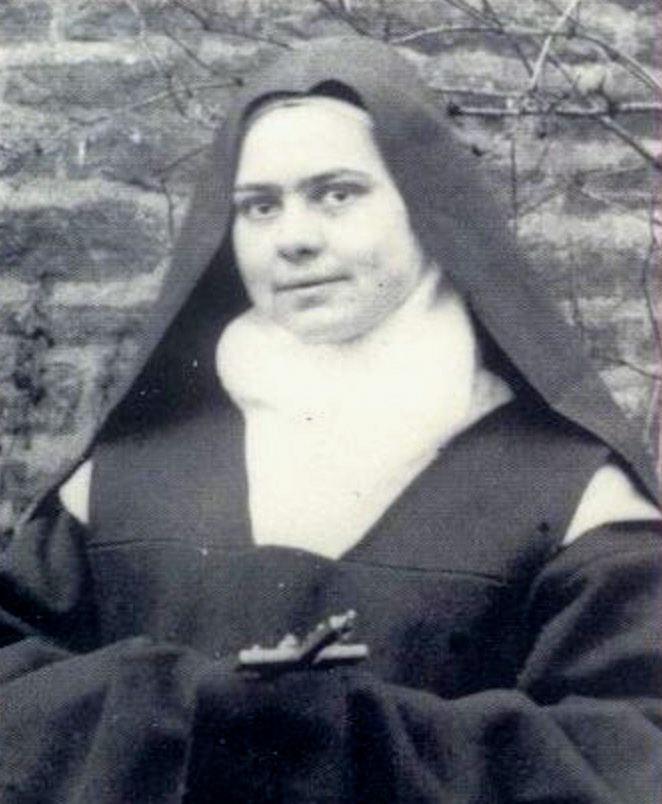
St. Elizabeth of the Trinity on receiving news of the baptism of her niece, wrote to her sister, “Ifeel full respect, for this little temple of the Blessed Trinity…If I were near her I would kneel down to adore him who dwells within her.”
Prayer to The Holy Trinity by St. Elizabeth of the Trinity
“My God, Blessed Trinity! Draw from my poor being what most contributes to your glory, and do with me what you wish both now and in eternity. May I no longer place between us any voluntary hindrance to your transforming action… Second, by second, with a forever ‘actual’ intention, I desire to offer you all that I am and all that I have. Make my poor life, in intimate union with the Word Incarnate, an unceasing sacrifice of glory to the Blessed Trinity…
Discalced Camelite Nun – St. Elizabeth of The Trinity
My God, how I wish to glorify you! O, if only in exchange for my complete immolation, or for any other condition, it were in my power to enkindle the hearts of all your creatures and the whole of creation in the flames of your love, how I would desire to do so! May at least my poor heart belong to you completely, may I keep nothing for myself not for creatures, not even a single heartbeat. May I have a burning love for all mankind, but only with you, through you and for you… I desire above all to love you with the heart of Saint Joseph, with the Immaculate Heart of Mary, and with the adorable Heart of Jesus; and, finally, to submerge myself in that infinite ocean, that abyss of fire that consumes the Father and the Son and the Holy Spirit for ever and ever.
O Jesus, who said: ‘No one knows the Son except the Father, and no one knows the Father except the Son and any one whom the Son chooses to reveal him’ (Matt 11:27) ‘Show us the Father, and we will be satisfied!” (John 14:8)
And you, O Spirit of Love! ‘Teach us all things’ (John 14:26) and ‘form Jesus with Mary in us’ (Gal 4:19) until we ‘become perfectly one; (John 17:23) in ‘the bosom of the Father’ (John 1:18). Amen.




 Illumina Domine Blog - Devotion to The Holy Face