Within the center of St. Peter’s Basilica are four massive niches. In each niche there are four titanic statues of saints, standing 10 meters high: St. Andrew, the first disciple called by Christ, St. Longinus, the soldier who pierced Jesus’s side with his lance, St. Helena, who discovered the True Cross. The fourth statue depicts “St. Veronica,” an unknown woman, not mentioned in the Bible, yet immortalized in every Catholic church at the Sixth Station of the Cross, for her act of compassion to Jesus who left the image of His Face on her veil.
Pope St. John Paul II wrote this beautiful meditation on St. Veronica in 2000, the same year in which he dedicated the millennium to the Face of Christ:
Sixth Station, St. Theresa Church, Ashburn, Virginia
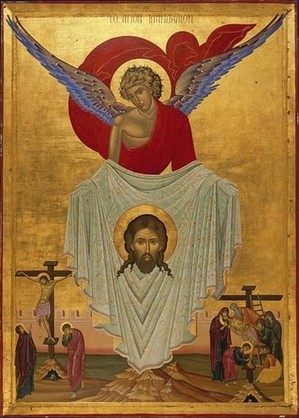
Veronica does not appear in the Gospels. Her name is not mentioned, even though the names of other women who accompanied Jesus do appear. It is possible, therefore, that the name refers more to what the woman did. In fact, according to tradition, on the road to Calvary a woman pushed her way through the soldiers escorting Jesus and with a veil wiped the sweat and blood from the Lord’s face. That face remained imprinted on the veil, a faithful reflection, a “true icon”. This would be the reason for the name Veronica. If this is so, the name which evokes the memory of what this woman did carries with it the deepest truth about her.
One day, Jesus drew the criticism of onlookers when he defended a sinful woman who had poured perfumed oil on his feet and dried them with her hair. To those who objected, he replied: “Why do you trouble this woman? For she has done a beautiful thing to me . . . In pouring this ointment on my body she has done it to prepare me for burial” (Mt 26:10, 12). These words could likewise be applied to Veronica. Thus we see the profound eloquence of this event.
The Redeemer of the world presents Veronica with an authentic image of his face. The veil upon which the face of Christ remains imprinted becomes a message for us. In a certain sense it says: This is how every act of goodness, every gesture of true love toward’s one’s neighbor, strengthens the likeness of the Redeemer of the world in the one who acts that way. Acts of love do not pass away. Every act of goodness, of understanding, of service leaves on people’s hearts an indelible imprint and makes us ever more like the One who “emptied himself, taking the form of a servant” (Phil 2:7). This is what shapes our identity and gives us our true name.
This is the deep meaning and call to every Christian revealed in the presence of the unknown woman we call “St. Veronica”– each act of charity, every act of compassion will leave the imprint of the Face of Jesus in our souls, transforming us into His own Image.
“May the Lord grant that in the new millennium, the Church will grow ever more in holiness, that she may become in history a true epiphany of the merciful and glorious Face of Christ the Lord.” –Pope St. John Paul II
Act of Consecration to the Holy Face
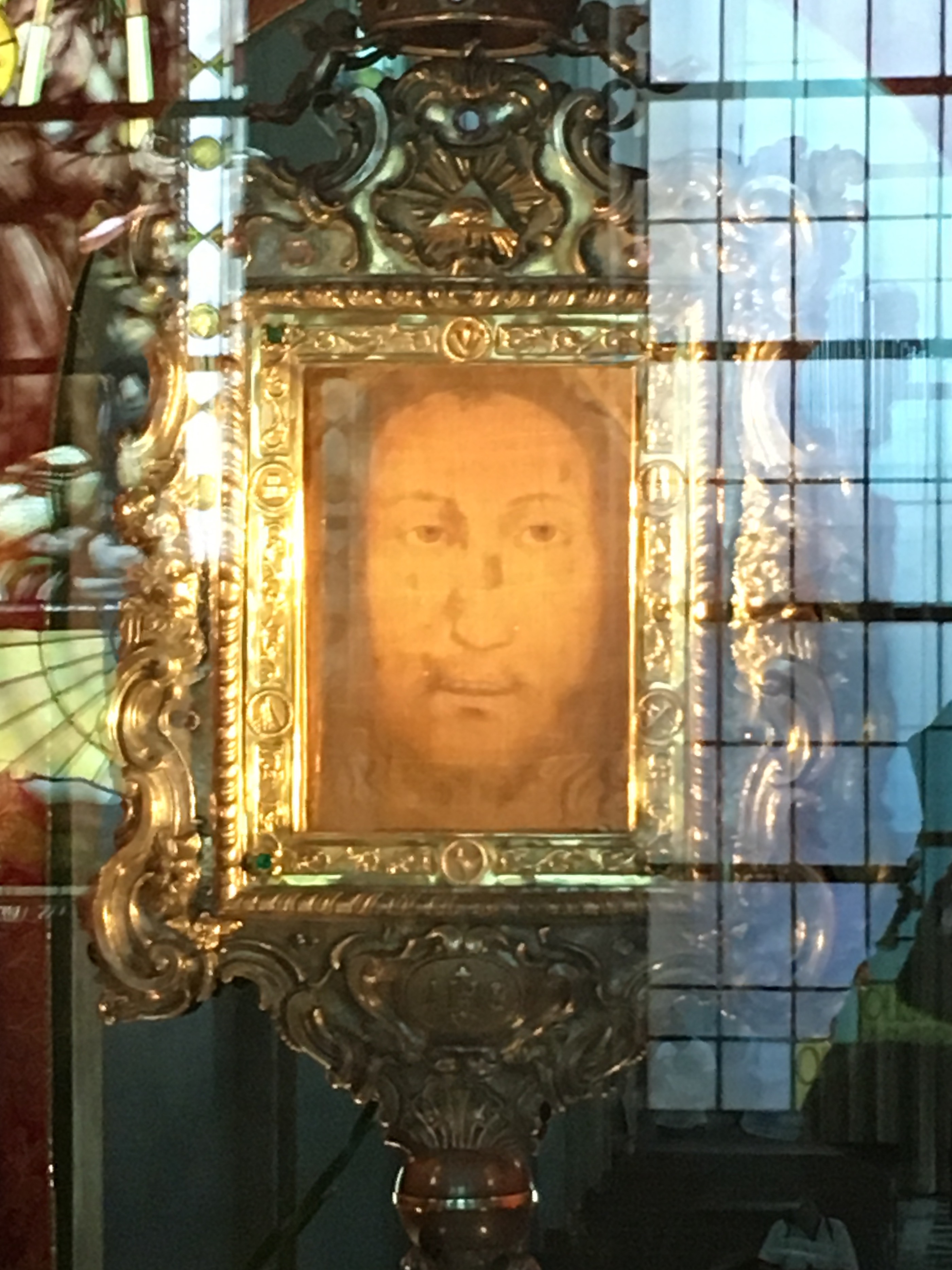
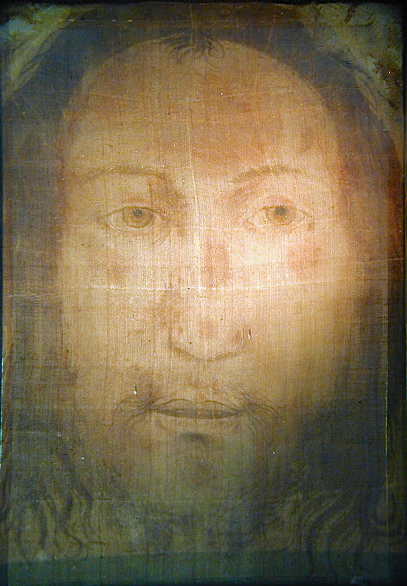
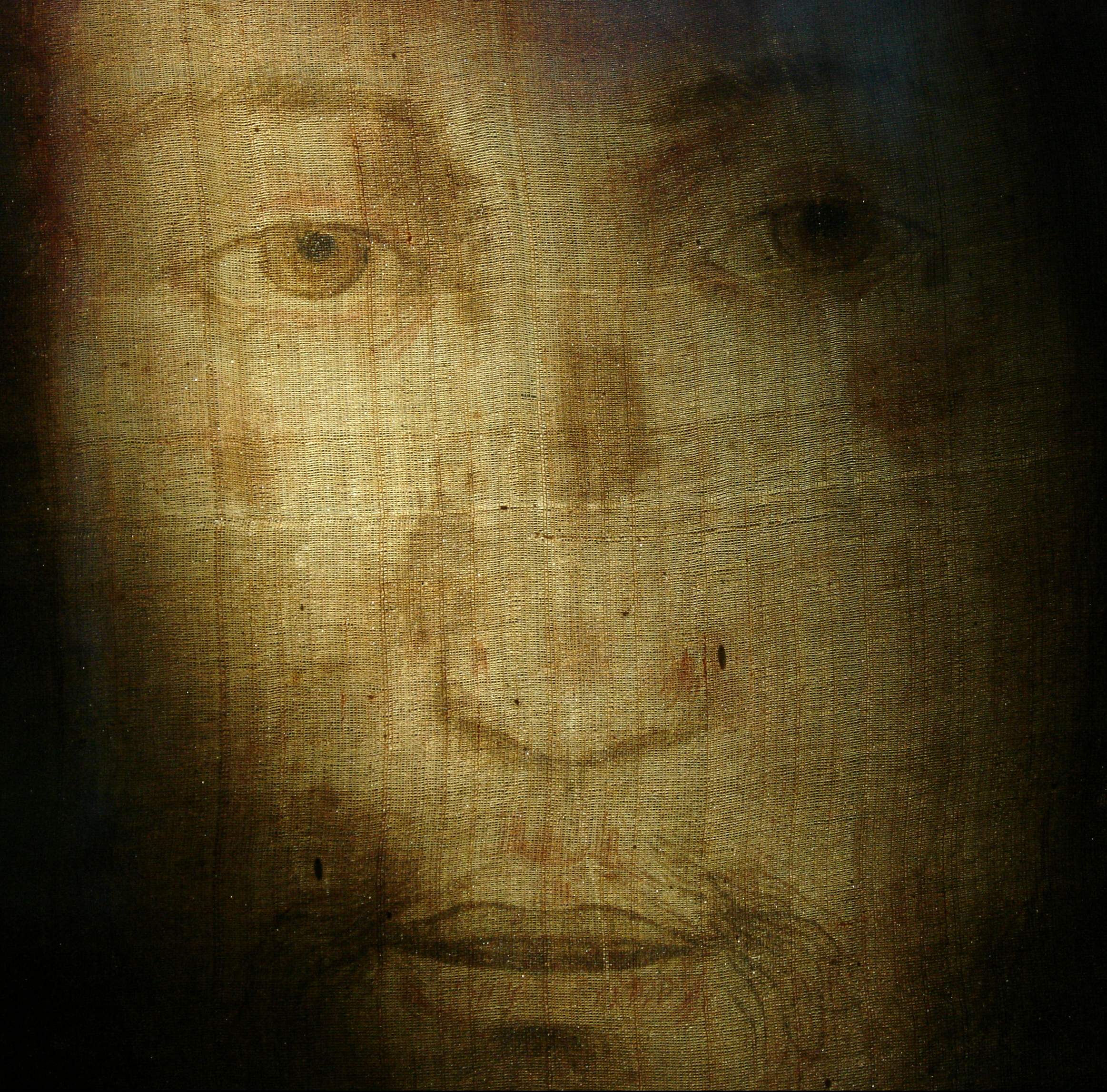
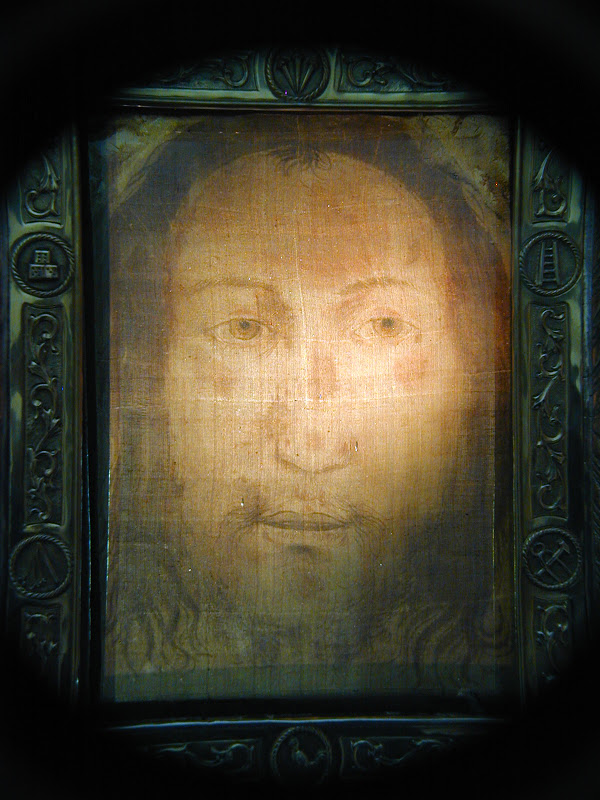
Holy Face of Manoppello, photo: Patricia Enk
O Lord Jesus, we believe most firmly in You, we love You. You are the Eternal Son of God and the Son Incarnate of the Blessed Virgin Mary. You are the Lord and Absolute Ruler of all creation. We acknowledge You, therefore, as the Universal Sovereign of all creatures. You are the Lord and Supreme Ruler of all mankind, and we, in acknowledging this Your dominion, consecrate ourselves to You now and forever. Loving Jesus, we place our family under the protection of Your Holy Face, and of Your Virgin Mother Mary most sorrowful. We promise to be faithful to You for the rest of our lives and to observe with fidelity Your Holy Commandments. We will never deny before men, You and Your Divine rights over us and all mankind. Grant us the grace to never sin again; nevertheless, should we fail, O Divine Saviour, have mercy on us and restore us to Your grace. Radiate Your Divine Countenance upon us and bless us now and forever. Embrace us at the hour of our death in Your Kingdom for all eternity, through the intercession of Your Blessed Mother, of all Your Saints who behold You in Heaven, and the just who glorify You on earth. O Jesus, be mindful of us forever and never forsake us; protect our family. O Mother of Sorrows, by the eternal glory which you enjoy in Heaven, through the merits of your bitter anguish in the Sacred Passion of your Beloved Son, our Lord Jesus Christ, obtain for us the grace that the Precious Blood shed by Jesus for the redemption of our souls, be not shed for us in vain. We love you, O Mary. Embrace us and bless us, O Mother. Protect us in life and in death. Amen.
Glory to the Father, and to the Son, and to the Holy Spirit. As it was in the beginning, is now, and will be forever. Amen.
Wishing you all a holy Lent under the gaze of the Holy Face of Jesus.
Holy Face “Il Volto Santo” of Manoppello, photo: Paul Badde
“All of us, with unveiled faces, seeing the glory of the Lord as though reflected in a mirror, are being transformed into the same image.” (2 Cor 3:18)
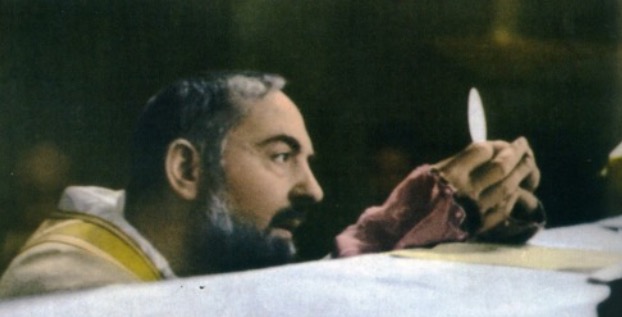
St. Padre Pio gazing at the Eucharistic Face of Christ
“Eternal Father, we offer Thee, with the hands of Mary, the Holy Face of Jesus, Thy Son, and the entire generous holocaust of all that we are, in reparation for so many sins that are committed, and, especially, for offenses against the Most Holy Sacrament of the Altar. We make this offering, in a particular way, so that Priests, by the holiness of their lives, may show the world the adorable features of the Divine Countenance shining with the light of truth and love, for the triumph of the Church, and for the spread of the Kingdom.” Bl. Mother Maria Pierina De Micheli, “Missionary of the Holy Face”
Prayer to the Holy Face by Pope St. John Paul II
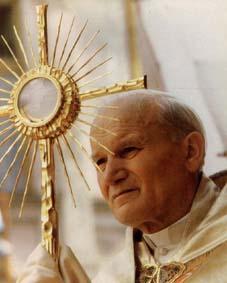
St. Pope John Paul II “In the Eucharist, the Face of Christ is turned towards us.”
Lord Jesus, Crucified and Risen; the image of the glory of the Father, Holy Face, which looks at us and searches for us, kind and merciful, You who call us to conversion and invite us for the fullness of love, we adore and bless You. In Your Luminous Face, we learn to love and to be loved, to find freedom and reconciliation, to promote peace, which radiates from You and leads to You.
In Your glorified Face we learn to overcome every form of egoism, to hope against hope, to choose works of life against the actions of death. Give us grace to place you at the centre of our life, to remain faithful amidst dangers and the changes of the world, to our Christian vocation; to announce to all people the power of the Cross and the Word which saves; to be watchful and active, to attend the needs of the little ones; to understand the need of true liberation, which had its beginning in You and will have its end in You.
Lord, grant to Your Church to stand like Your Virgin Mother, at the glorious Cross, and at the crosses of all people to bring about consolation, hope and comfort.
May the Holy Spirit which You have granted, bring to maturation Your work of salvation, through Your Holy Face, which shines forever and ever. Amen.
“The Face is the monstrance of the heart. In the Holy Face the heart of God becomes visible.” –Joachim Cardinal Meisner (Photo: Padde Badde/EWTN)
The Holy Face of Jesus Novena, Day 9, Monday, 12th of February, 2018
“Who was humiliated more than He was, and what did He do? Do you lack something that might be useful and comfortable? Jesus had nowhere to lay His Head! Sufferings, physical or spiritual? Jesus was so filled with sufferings that He sweated blood. Look at that Face! Does it say nothing to you? Or rather, does it not say all?…Seek to console His Heart with all the delicacy of your love! Make reparation for yourself, for so many souls. Kiss His Face with love. Do you not feel that He is thirsty for your soul?” –Bl. Mother Maria Pierina de Micheli, “Missionary of the Holy Face”
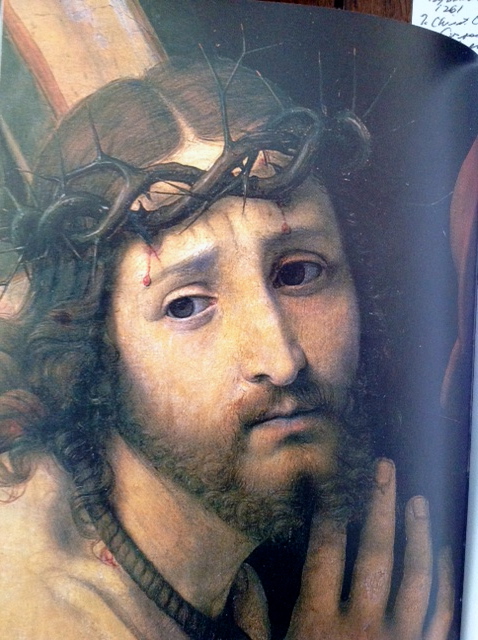
Head of Christ, Corregio, 1521
Daily Preparatory Prayer
O Most Holy and Blessed Trinity, through the intercession of Holy Mary, whose soul was pierced through by a sword of sorrow at the sight of the passion of her Divine Son, we ask your help in making a perfect Novena of reparation with Jesus, united with His sorrows, love and total abandonment.
We now implore all the Angels and Saints to intercede for us as we pray this Holy Novena to the Most Holy Face of Jesus and for the glory of the most Holy Trinity, Father, Son and Holy Spirit. Amen.
For in sacrifice you take no delight, burnt offering from me you would refuse, my sacrifice acontrite spirit. A humbled, contrite heart you will not spurn. In your goodness, show favor to Zion; rebuild the walls of Jerusalem. Then you will be pleased with lawful sacrifice, holocausts offered on your altar.
Sacred Face of our Lord and our God, what words can we say to express our gratitude? How can we speak of our joy? That you have deigned to hear us, that you have chosen to answer us in our hour of need. We say this because we know that our prayers will be granted. We know that you, in your loving kindness, listened to our pleading hearts, and will give, out of your fullness, the answer to our problems.
Mary our Mother, intercede for us, St. Joseph, pray for us.
Through the merits of your precious blood and your Holy Face, O Jesus, grant us our petition, …Pardon and mercy.
Prayer to the Holy Trinity
Sr. Lucia’s of Fatima’s last vision of The Trinity
Most Holy Trinity, Godhead indivisible, Father, Son and Holy Spirit, our first beginning and our last end. Since you have made us after your own image and likeness, grant that all the thoughts of our minds, all the words of our tongues, all the affections of our hearts and all our actions may be always conformed to your most Holy Will, so that that after having seen you here on earth in appearances and in a dark manner by the means of faith, we may come at last to contemplate you face to face, in the perfect possession of you forever in paradise. Amen.
Pray one (1) Our Father, three (3) Hail Mary’s, one (1) Glory Be.
O Bleeding Face, O Face Divine, be every adoration Thine. (3 times)
Tomorrow, Tuesday, the 13th of February, will be the Feast Day and Consecration to the Holy Face.
“Oh Savior Jesus, who did will that reparation should be as public and universal as had been the offense, penetrate us with the true spirit of reparation. Give us the grace to love Your Divine Face, to make it known and loved by the whole world, in order that it may be to us a source of light and means of salvation. Amen.” –Bl. Maria Pierina de Micheli, “Missionary of the Holy Face”
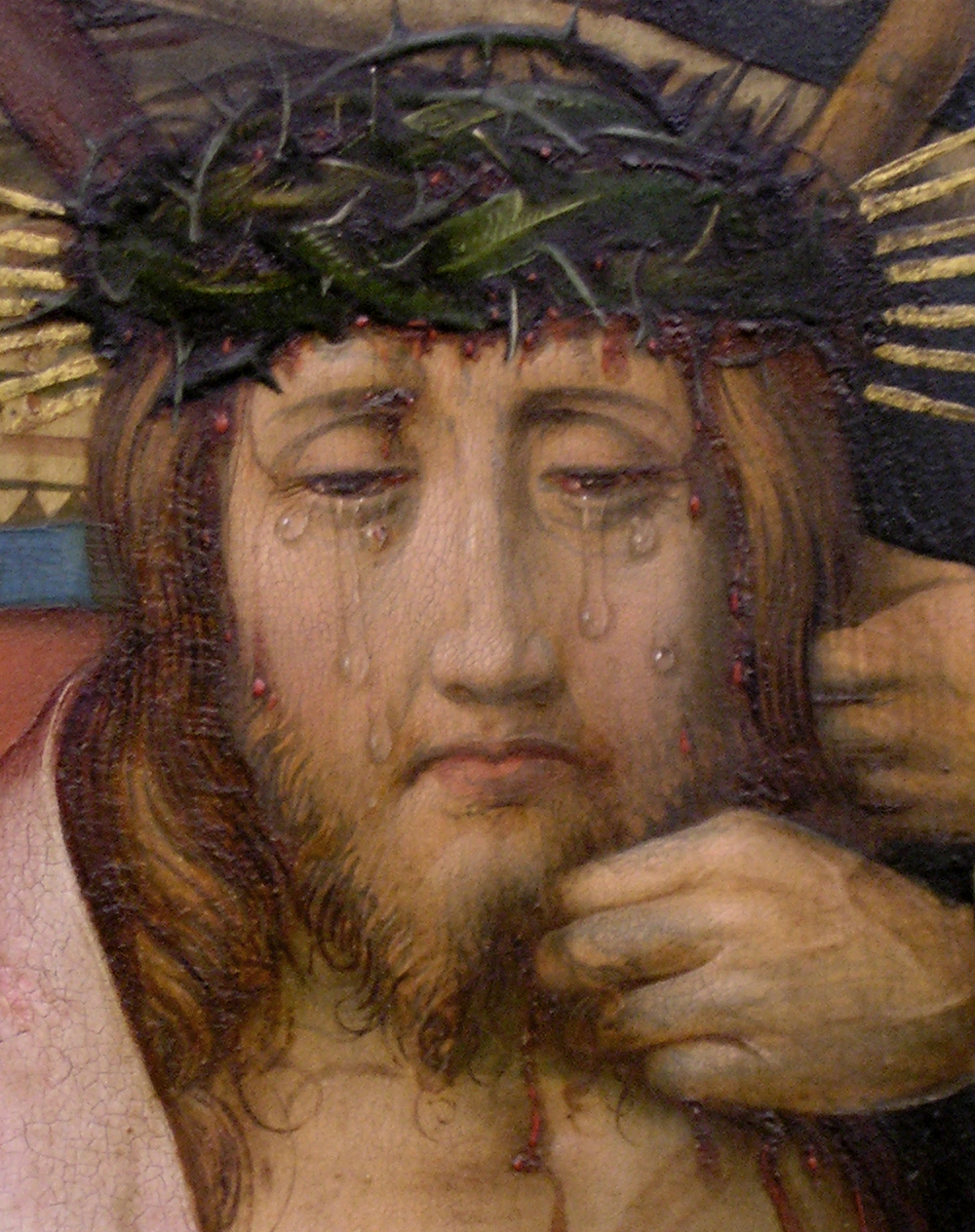
Detail of painting by Hans Holbein the elder. Photo: Paul Badde
__________________________________
For our Louisiana readers — Three Northshore Churches will each be honoring the Holy Face of Jesus in a special way this month:
St. Jane de Chantal Church, 72040 Maple St. in Abita Springs will hold a Triduum of prayer in honor of the Holy Face of Jesus. Beginning Sunday, February 11, from 7:15 pm to 8:30 pm, Monday, Feb. 12, from 6:30pm to 8:30 pm, and Feb. 13 (Mardi Gras Day) From 6:30 pm to 8:30 pm. Featured preacher and homilist will be Fr. Kenneth Allen, Pastor of St. Jane de Chantal. Guest speaker: Ronald Wimprine, Jr.
St. Anselm Catholic Church, 306 St. Mary St. in Madisonville. On Mardi Gras evening,Tuesday, February 13th, from 6:00 pm to 8:00 pm, all are invited to an evening of Adoration, Prayers, and Benediction in honor of the Holy Face of Jesus. +Exposition of the Blessed Sacrament+ Confession will be available.
St. John the Baptist Catholic Church, 11345 St. John Church Road, in Folsom, will present a “Shroud Encounter” An unforgettable big screen experience exploring the “Mystery of the Shroud of Turin.” Saturday, February 17th at 7:00pm, and Sunday,February 18th at 2:00 PM in Jonathan Hall.
The Shroud of TurinHoly Veil of Manoppello, Photo: Paul Badde/EWTN
The Holy Face of Jesus Novena, Day 8, Sunday, 11th of February 2018
14th Century Crucifix, St. Peter’s Basilica
Adorable Face of my Jesus, my only love, my light and my life, grant that I may see no one, except Thee, that I may love Thee alone, that I may live with Thee, of Thee, by Thee and for Thee. Amen
“Gaze at Jesus, our model. Let us copy Him; He is our example in all. Let us study Him in all the moments of His Life,, and let us not be content with an intellectual study, but with love that penetrates the divine teachings, and let us transform them into our very being.” –Bl. Mother Pierina de Micheli, “Missionary of the Holy Face”
Church of St. Veronica, Lecco, Italy c. 1280
Daily Preparatory Prayer
O Most Holy and Blessed Trinity, through the intercession of Holy Mary, whose soul was pierced through by a sword of sorrow at the sight of the passion of her Divine Son, we ask your help in making a perfect Novena of reparation with Jesus, united with His sorrows, love and total abandonment.
We now implore all the Angels and Saints to intercede for us as we pray this Holy Novena to the Most Holy Face of Jesus and for the glory of the most Holy Trinity, Father, Son and Holy Spirit. Amen.
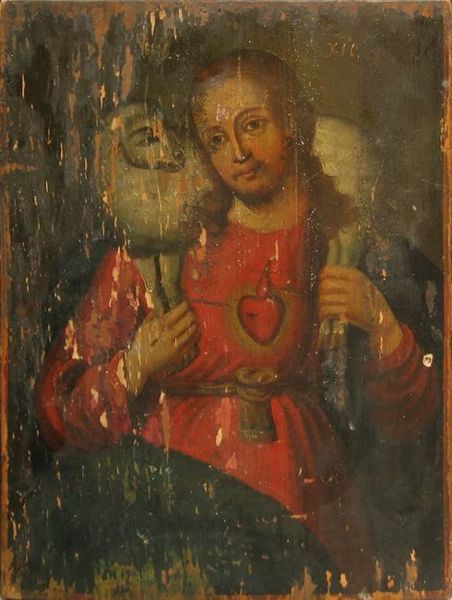
The Good Shepherd
Eighth Day
Psalm 51: 16-17 O rescue me, God my helper, and my tongue shall ring out your goodness. O Lord, open my lips, and my mouth shall declare your praise.
Most merciful Face of Jesus, who in this vale of tears was so moved by our misfortunes to call yourself the healer of the sick, and the Good Shepherd of the souls gone astray, allow not satan to draw us away from you, but keep us always under your loving protection, together with all souls who endeavor to console you.
Mary our Mother, intercede for us, St. Joseph, pray for us.
Through the merits of your precious blood and your Holy Face, O Jesus, grant us our petition, …Pardon and mercy.
Denial of St. Peter by Carl Bloch
Prayer to St. Peter
O Jesus, the divine look of whose adorable Face wounded the heart of Peter with repentant sorrow and love, have mercy on us.
O glorious St. Peter, who in return for thy lively and generous faith, thy profound and sincere humility and thy burning love, was honored by Jesus Christ with singular privileges, and in particular, with the leadership of the other apostles and the primacy of the whole church, of which thou was made the foundation stone, do thou obtain for us the grace of a lively faith, that shall not fear to profess itself openly in its entirety and in all of its manifestations, even to the shedding of blood, if occasion should demand it, and to the sacrifice of life itself in preference to surrender. Obtain for us likewise a sincere loyalty to our Holy Mother the Church. Grant that we may ever remain most closely and sincerely united to The Holy Father, who is the heir of Thy faith and of Thy authority, the one true visible head of the Catholic Church. Grant moreover, that we may follow, in all humility and meekness, the Church’s teaching and counsels and may be obedient to all her precepts, in order to be able here on earth to enjoy a peace that is sure and undisturbed, and to attain one day in heaven to everlasting happiness. Amen.
Pray one (1) Our Father, three (3) Hail Mary’s, one (1) Glory Be.
O Bleeding Face, O Face Divine, be every adoration Thine. (3 times)
Bleeding Face on the Veil of Manoppello photo: Paul Badde/EWTN
“O Jesus, whose venerable Face is worthy of all reverence, veneration, and worship – Have Mercy on us!
_______________________
For our Louisiana readers — Three Northshore Churches will each be honoring the Holy Face of Jesus in a special way this month:
St. Jane de Chantal Church, 72040 Maple St. in Abita Springs will hold a Triduum of prayer in honor of the Holy Face of Jesus. Beginning Sunday, February 11, from 7:15 pm to 8:30 pm, Monday, Feb. 12, from 6:30pm to 8:30 pm, and Feb. 13 (Mardi Gras Day) From 6:30 pm to 8:30 pm. Featured preacher and homilist will be Fr. Kenneth Allen, Pastor of St. Jane de Chantal. Guest speaker: Ronald Wimprine, Jr.
St. Anselm Catholic Church, 306 St. Mary St. in Madisonville. On Mardi Gras evening,Tuesday, February 13th, all are invited to an evening of Adoration, Prayers, and Benediction in honor of the Holy Face of Jesus. +Exposition of the Blessed Sacrament+ Confession will be available.
St. John the Baptist Catholic Church, 11345 St. John Church Road, in Folsom, will present a “Shroud Encounter” An unforgettable big screen experience exploring the “Mystery of the Shroud of Turin.” Saturday, February 17th at 7:00pm, and Sunday, February 18th at 2:00 PM in Jonathan Hall.
“Whoever gazes upon me already consoles me.” – Our Lord to Bl. Mother Pierina De Michelli
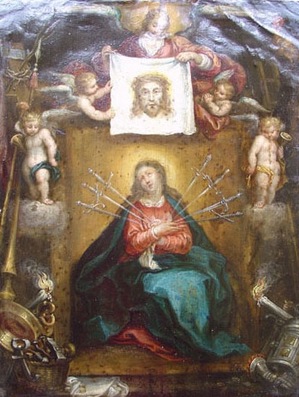
Sorrowful Mother of The Holy Face, Shirburn Chapel England
The Holy Face of Jesus Novena, Day 7, Saturday, 10th of February, 2018
“This novena which Jesus desires transforms us to correspond with His love, and thus unites us to the Divine Victim, offering ourselves on all the altars of the world to be with Him–true souls of reparation, in union with the Immaculate Virgin–the first Reparatrix.” –Bl. Mother Maria Pierina de Micheli, “Missionary of the Holy Face”
Daily Preparatory Prayer
O Most Holy and Blessed Trinity, through the intercession of Holy Mary, whose soul was pierced through by a sword of sorrow at the sight of the passion of her Divine Son, we ask your help in making a perfect Novena of reparation with Jesus, united with His sorrows, love and total abandonment.
We now implore all the Angels and Saints to intercede for us as we pray this Holy Novena to the Most Holy Face of Jesus and for the glory of the most Holy Trinity, Father, Son and Holy Spirit. Amen.
Seventh Day
Psalm 51: 14-15 Give me again the joy of your help, with a spirit of fervor sustain me, that I may teachtransgressors your ways and sinners may return to you.
Lord Jesus! After contemplating Thy features, disfigured by grief, after meditating upon Thy passion with compunction and love, how can our hearts fail to be inflamed with a holy hatred of sin, which even now outrages Thy Adorable Face! Lord suffer us not to be content with mere compassion, but give us grace so closely to follow Thee in this Calvary, so that the opprobrium destined for Thee may fall on us. O Jesus, that thus we may have a share, small though it may be, in expiation of sin. Amen.
Mary our Mother, intercede for us, St. Joseph, pray for us.
Through the merits of your precious blood and your Holy Face, O Jesus, grant us our petition, …Pardon and mercy.
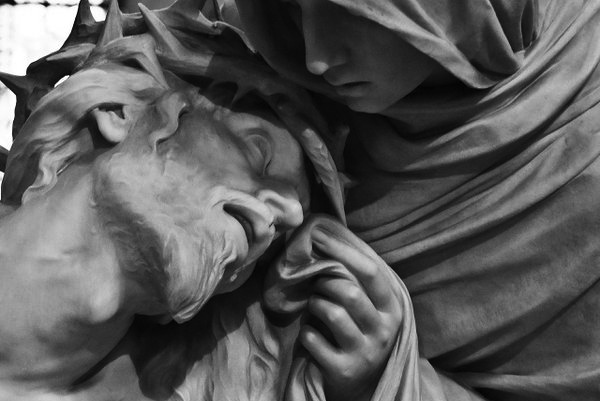
Mater Dolorosa by Dieric Bouts, 1470-75
Prayer in Honor of Mary
Hail Mary, Daughter of God the Father! Hail Mary, Mother of God the Son! Hail Mary, Spouse of the Holy Spirit! Hail Mary, Temple of The Most Holy Trinity! Hail Mary, our mistress, our wealth, our mystic rose, Queen of our hearts, our Mother, our life, our sweetness and our dearest hope! We are all thine, and all we have is thine. O Virgin blessed above all things, may Thy soul be in us to magnify the Lord; may Thy spirit be in us to rejoice in God. Place Thyself, O faithful Virgin, as a seal upon our hearts, that in Thee and through Thee we may be found faithful to God. Grant, most gracious Virgin, that we may be numbered among those who Thou are pleased to love, to teach and to guide, to favor and to protect as Thy children. Grant that with the help of Thy love, we may despise all earthly consolation and cling to heavenly things, until through the Holy Spirit; Thy faithful spouse and through Thee, His faithful spouse, Jesus Christ, Thy Son, be formed within us for the glory of the Father. Amen. (St. Louis De Montfort)
Pray one (1) Our Father, three (3) Hail Mary’s, one (1) Glory Be.
O Bleeding Face, O Face Divine, be every adoration Thine. (3 times)
“Lord, grant to your Church to stand like Your Virgin Mother, at the glorious Cross and all the crosses of all people to bring about consolation, hope and comfort.” — St. Pope John Paul II
The Holy Face of Jesus Novena, Day 6, Friday, 9th of February, 2018
“What are our sufferings when we think of those of Jesus? Have we perhaps sweated blood? Have we received blows and spittle, been scourged and crowned with thorns?…And what can we possibly give Jesus save a heart desirous of loving Him…to desire nothing save His Will? –Bl. Mother Maria Pierina de Micheli
Daily Preparatory Prayer – O Most Holy and Blessed Trinity, through the intercession of Holy Mary, whose soul was pierced through by a sword of sorrow at the sight of the passion of her Divine Son, we ask your help in making a perfect Novena of reparation with Jesus, united with His sorrows, love and total abandonment.
We now implore all the Angels and Saints to intercede for us as we pray this Holy Novena to the Most Holy Face of Jesus and for the glory of the most Holy Trinity, Father, Son and Holy Spirit. Amen.
Mural by Dom Gregory DeWitt, St. Joseph Abbey, Louisiana
Sixth Day
Psalm 51: 12-13 A pure heart, create for me, O God, put a steadfast spirit within me. Do not cast me away from your presence not deprive me of your Holy Spirit.
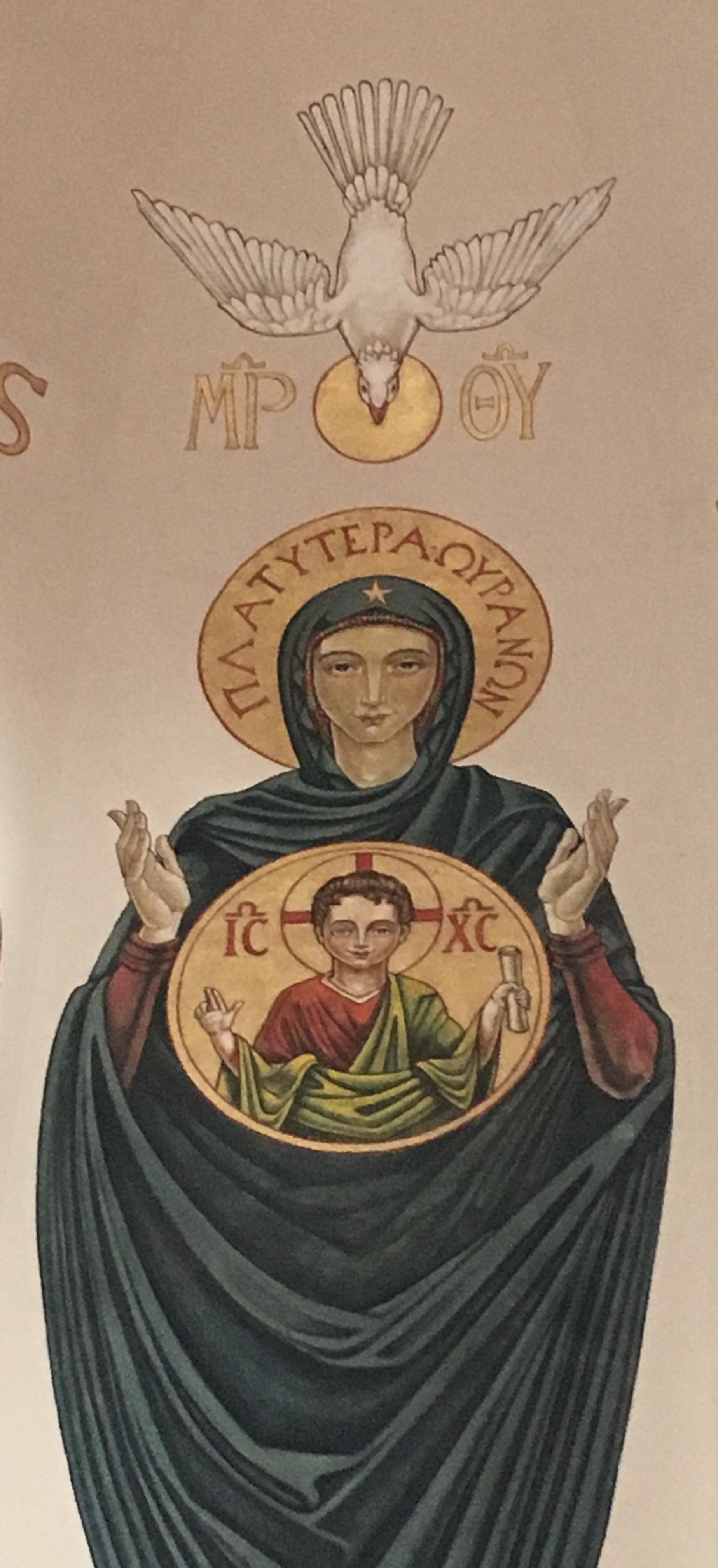
Mary, Spouse of the Holy Spirit
May our hearts be cleansed, O Lord, by the in-pouring of the Holy Spirit, and may He render them fruitful by watering them with His heavenly dew. Mary, the most chaste spouse of the Holy Spirit, intercede for us, St. Joseph, pray for us.
Through the merits of your precious blood and your Holy Face, O Jesus, grant us our petition, …Pardon and mercy.
“Who is like God!” Statue of St. Michael by Sculptor Cody Swanson photo: Patricia Enk
Prayer to Saint Michael the Archangel *
O Victorious Prince, most humble guardian of the Church of God and of faithful souls, who with such charity and zeal took part in so many conflicts and gained such great victories over the enemy, for the conservation and protection of the honor and glory we all owe to God, as well as for the promotion of our salvation; come, we pray Thee, to our assistance, for we are continually besieged with such great perils by our enemies, the flesh, the world and the devil; and as Thou wast a leader for the people of God through the desert, so also be our faithful leader, and companion through the desert of this world, until Thou conduct us safely into the happy land of the living, in that blessed fatherland from which we are all exiles. Amen. (St. Aloysius)
Pray one (1) Our Father, three (3) Hail Mary’s, one (1) Glory Be.
O Bleeding Face, O Face Divine, be every adoration Thine. (3 times)
Detail of St. Michael holding the Holy Face by Sculptor Cody Swanson Photo: Patricia Enk
*[St. Michael, whose battle-cry is “Who is like God?” is the Patron of the Arch-Confraternity of The Holy Face, which was canonically erected in the Chapel of the Discalced Carmelite nuns of New Orleans by Archbishop Perche in 1883, the first in The United States. From that humble oratory, devotion to The Holy Face spread throughout the Americas. The stunning sculpture shown above is at St. Patrick’s Church in New Orleans.
“Who is like God?!” A host viewed through the Holy Face Veil of Manoppello Photo Paul Badde
The Holy Face of Jesus Novena, Day 5, Thursday, 8th of February, 2018
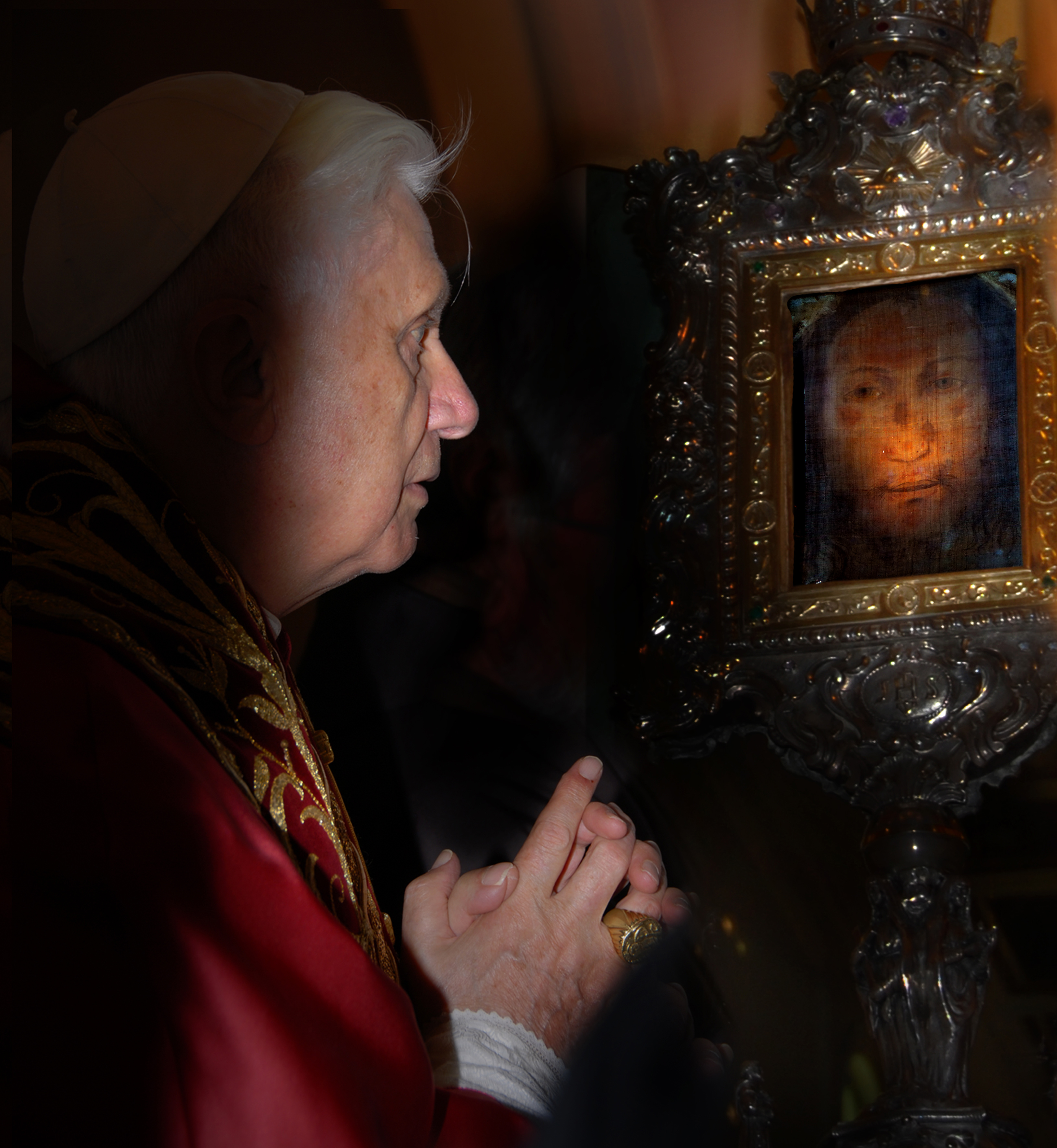
Pope Benedict XVI gazing intensely at the Eucharistic Face of Christ. Photo:Paul Badde
“O Holy Face of Christ, light that enlightens the darkness of doubt and sadness, life that has defeated forever the force of evil and death, O inscrutable gaze that never ceases to watch over mankind; Face concealed in the Eucharistic signs and in the faces of those that live with us! Make us pilgrims in his world, longing for the infinite and ready for the final encounter, when we shall see you, Lord, “face to face” (Cor. 13-12) and be able to contemplate you forever in Heavenly Glory.” — Pope Benedict XVI
“Blessed are the pure of heart; for they shall see God” (Mt. 5:8)
“So may sins of impurity are committed in this city, but true souls of reparation are few, do thou at least console and comfort me.”–words of Our Lord to Bl. Mother Pierina de Micheli, “Missionary of the Holy Face”
Daily Preparatory Prayer
O Most Holy and Blessed Trinity, through the intercession of Holy Mary, whose soul was pierced through by a sword of sorrow at the sight of the passion of her Divine Son, we ask your help in making a perfect Novena of reparation with Jesus, united with His sorrows, love and total abandonment.
We now implore all the Angels and Saints to intercede for us as we pray this Holy Novena to the Most Holy Face of Jesus and for the glory of the most Holy Trinity, Father, Son and Holy Spirit. Amen.
Fifth Day – Holy Face of Jesus, Sacred Countenance of God, how great is your patience with humankind, how infinite your forgiveness. We are sinners, yet you love us. This gives us courage. For the glory of your Holy Face and of the Blessed Trinity, hear and answer us. Mary our Mother, intercede for us, St. Joseph, pray for us.
Through the merits of your precious blood and your Holy Face, O Jesus, grant us our petition, …Pardon and mercy.
Prayer to St. Joseph*
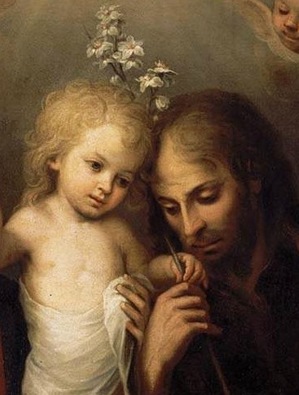
St. Joseph
Dear St. Joseph! Adopt us as thy children, take charge of our salvation; watch over us day and night; preserve us from occasions of sin; obtain for us purity of body and soul, and the spirit of prayer, through thy intercession with Jesus, grant us a spirit of sacrifice, of humility and self-denial; obtain for us a burning love for Jesus in the Blessed Sacrament, and a sweet, tender love for Mary, our Mother. St. Joseph, be with us in life, be with us in death and obtain for us a favorable judgement from Jesus, our merciful Savior. Amen.
Pray one (1) Our Father, three (3) Hail Mary’s, one (1) Glory Be.
O Bleeding Face, O Face Divine, be every adoration Thine. (3 times)
St. Joseph
* [The prayer to St. Joseph in this novena reminds us of the love of God the Father. He looks upon us with infinite mercy and love through the Face of His Son, Jesus Christ. The Holy Face of Jesus shows us the eternal, tender love that God the Father has for us.]
The Holy Face of Jesus Novena, Day 4, Wednesday, 7th of February, 2018
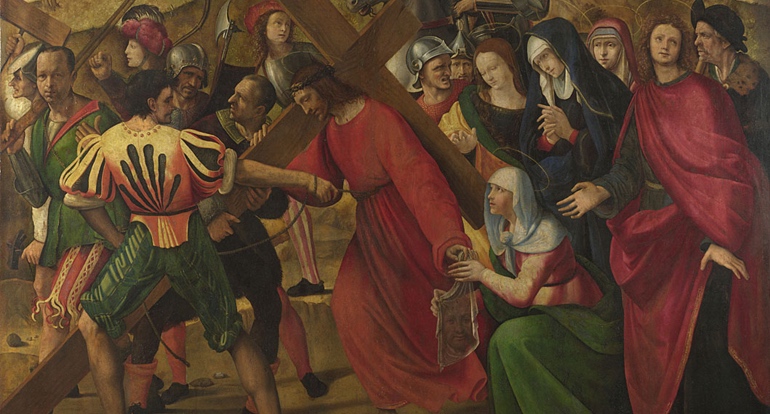
Ridolfo Ghirlandaio, 1483 – 1561 The Procession to Calvary ca. 1505, detail
“Love is tireless, it feeds on silence and humility and is heart to heart with our Beloved, deriving from His Heart the powerful force which makes love tireless to do much, to do well the tiniest everyday things to please Him alone. How many pearls we can collect each day to make Jesus forget the insults He receives each day? How many kisses–it will be a smile–a word held back–an act of charity–docile obedience–temptation promptly resisted–and in moments in which nature, pride, self-love, sensuality, desire to hold sway–a glance at the Holy FACE–that blood, those Divine Eyes veiled with grief and love and we will say nothing?” –Blessed Mother Maria Pierina de Micheli, Missionary of the Holy Face
Daily Preparatory Prayer
O Most Holy and Blessed Trinity, through the intercession of Holy Mary, whose soul was pierced through by a sword of sorrow at the sight of the passion of her Divine Son, we ask your help in making a perfect Novena of reparation with Jesus, united with His sorrows, love and total abandonment.
We now implore all the Angels and Saints to intercede for us as we pray this Holy Novena to the Most Holy Face of Jesus and for the glory of the most Holy Trinity, Father, Son and Holy Spirit. Amen.
“For God so loved the world”
Fourth Day
Psalm 51: 8-9 Indeed, you love truth in the heart; then in the secret of my heart teach me Wisdom. O purify me, then I shall be clean; O wash me, I shall be whiter than snow.
O Lord Jesus, who has said, learn of me for I am meek and gentle of heart, and who did manifest upon The Holy Face the sentiments of Thy divine heart, grant that we may love to come frequently and meditate upon Thy divine features. We may read there Thy gentleness and Thy humility, and learn how to form our hearts in the practice of these two virtues which Thou desires to see shine in Thy servants. Mary our Mother and St. Joseph, pray for us.
Through the merits of your precious blood and your Holy Face, O Jesus, grant us our petition, …Pardon and mercy.
Prayer in Honor of the Sorrows of The Blessed Virgin
O Most Holy and afflicted Virgin, Queen of Martyrs! Who stood beneath the Cross, witnessing the agony of your dying Son, look down with a mother’s tenderness and pity on us as we kneel before you to venerate your Sorrows and place our requests, with filial confidence, in the sanctuary of your wounded heart. Present them on our behalf to Jesus, through the merits of His most sacred Passion and Death, together with your sufferings at the foot of the Cross, and through the united efficacy of both, obtain the favor which we humbly ask. To whom shall we go in our wants and miseries if not to you. O Mother of Mercy, who having so deeply drunk of the chalice of your Son, graciously alleviate the sufferings of those who still sigh in this land of exile. Amen.
Prayer to the Souls in Purgatory
My Jesus, by the sorrows you suffered in your agony in the garden, in your scourging and crowning with thorns, in the way to Calvary, in your crucifixion and death, have mercy on the souls in Purgatory, and specially on those that are most forsaken. Deliver them from the dire torments they endure. Call them and admit them to your most sweet embrace in Paradise. Amen.
Pray one (1) Our Father, three (3) Hail Mary’s, one (1) Glory Be. O Bleeding Face, O Face Divine, be every adoration Thine. (3 times)
Pope Benedict XVI gazes at the Veil of the Holy Face of Manoppello. Photo: Paul Badde
“While we too seek other signs, other wonders, we do not realize that He is the real sign, God made flesh; He is the greatest miracle of the universe: all the love of God hidden in a human heart, in a human face.” — Pope Benedict XVI
“Oh Jesus, who in Thy Cruel Passion didst become the “Reproach of men and the Man of Sorrows,” I worship Thy Divine Face.” –St. Therese
Holy Face of Jesus Novena, Day 3, Tuesday, 6th of February, 2018
“Every time that anyone gazes at my Face, I will pour my love into hearts and by means of the Holy Face, the salvation of many souls will be obtained.” –Our Lord to Bl. Mother Pierina de Micheli, “Missionary of the Holy Face”
Daily Preparatory Prayer
O Most Holy and Blessed Trinity, through the intercession of Holy Mary, whose soul was pierced through by a sword of sorrow at the sight of the passion of her Divine Son, we ask your help in making a perfect Novena of reparation with Jesus, united with His sorrows, love and total abandonment.
We now implore all the Angels and Saints to intercede for us as we pray this Holy Novena to the Most Holy Face of Jesus and for the glory of the most Holy Trinity, Father, Son and Holy Spirit. Amen.
Third Day – Holy Face Novena
Psalm 51: 6-7 You are just when you pass sentence on me, blameless when you give judgement. You know I was born guilty, a sinner from the moment of conception.
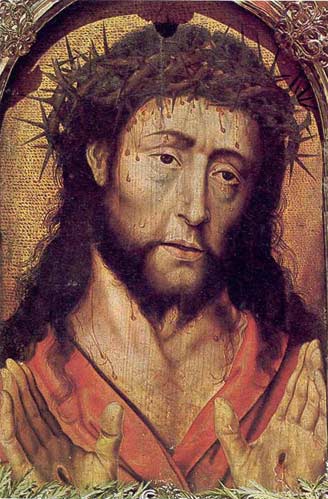
Veronica’s Veil Flemish 15th Century
Prayer of Pope Pius IX
O Jesus! Cast upon us a look of mercy; turn your Face towards each of us as you did to Veronica; not that we may see it with our bodily eyes; for this we do not deserve, but turn it towards our hearts, so that, remembering you, we may ever draw from this fountain of strength the vigor necessary to sustain the combats of life. Amen. our Mother Mary, and St. Joseph, pray for us.
Through the merits of your precious blood and your Holy Face, O Jesus, grant us our petition, …Pardon and mercy.
All highest, glorious God, cast your light into the darkness of our hearts, give us true faith, firm hope, perfect charity and profound humility, so that with wisdom, courage and perception, O Lord, we may do what is truly your holy will. Amen.
To the Angels and Saints
We salute you, through the Holy Face and Sacred Heart of Jesus, all you holy Angels and Saints of God. We rejoice in your glory, and we give thanks to our Lord for all the benefits which He has showered upon you; we praise Him, and glorify Him, and offer you for an increase of your joy and honor, the most Holy Face and gentle Heart of Jesus. Pray that we may become formed according to the heart of God. Amen.
Pray one (1) Our Father, three (3) Hail Mary’s, one (1) Glory Be.
O Bleeding Face, O Face Divine, be every adoration Thine. (3 times)
Holy Face of Manoppello, Italy Photo: Paul Badde
“The Face of God is like that of a merciful Father that always has patience and is willing to forgive…All of us have felt joy, sadness, and sorrow in our lives. Have we wept during the darkest moment? Have we that gift of tears that prepare the eyes to look, to see the Lord?” — Pope Francis
The Holy Face of The Miraculous “Limpias Crucifix”
Alpha-Omega Holy Face of Jesus Novena Prayers and Consecration – Day 2, Monday, 5th of February, 2018
“All those who attracted by my love, and venerating my countenance, shall receive, by virtue of my humanity, a brilliant and vivid impression of my divinity. This splendor shall enlighten the depths of their souls, so that in eternal glory the celestial court shall marvel at the marked likeness of their features with my divine countenance.” –(Our Lord to St. Gertrude)
Daily Preparatory Prayer
(to be said each day as you console the Holy Face)
O Most Holy and Blessed Trinity, through the intercession of Holy Mary, whose soul was pierced through by a sword of sorrow at the sight of the passion of her Divine Son, we ask your help in making a perfect Novena of reparation with Jesus, united with His sorrows, love and total abandonment.
We now implore all the Angels and Saints to intercede for us as we pray this Holy Novena to the Most Holy Face of Jesus and for the glory of the most Holy Trinity, Father, Son and Holy Spirit. Amen.
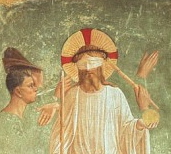
Jesus Blindfolded and Mocked, by Fra Angelico
Second Day
Psalm 51: 5-6 My offenses truly I know them; My sin is always before me. Against you, you alone, have I sinned; What is evil in your sight I have done.
Most Holy Face of Jesus, we are truly sorry that we have hurt you so much by constantly doing what is wrong; and for all the good works we have failed to do. Immaculate Heart of Mary, Saint Joseph, intercede for us, help us to console the Most Holy Face of Jesus. Pray that we may share in the tremendous love Thou hast for one another, and for the most Holy and Blessed Trinity. Amen.
Through the merits of your precious blood and your Holy Face, O Jesus, grant us our petition, …Pardon and mercy.
Prayer to The Holy Spirit
Come Holy Spirit
Come, Holy Spirit, Sanctifier, all powerful God of love, Thou who didst fill the Virgin Mary with grace, Thou who didst wonderfully transform the hearts of the apostles, Thou who didst endow all Thy martyrs with a miraculous heroism, come and sanctify us, illumine our minds, strengthen our wills, purify our consciences, rectify our judgments, set our hearts on fire and preserve us from the misfortune of resisting Thine inspirations. We consecrate to Thee our understanding, our heart and our will, our whole being for time and for eternity. May our understanding be always submissive to Thy heavenly inspirations and to the teachings of Thy Holy Catholic Church, of which Thou art the infallible guide; may our heart be ever inflamed with love of God and neighbor; may our will be ever conformed to the divine will, and may our whole life be a faithful imitation of the life and virtues of our Lord and Savior, Jesus Christ, to whom with the Father and Thee be honor and glory forever. Amen.
Pray one (1) Our Father, three (3) Hail Mary’s, one (1) Glory Be.
O Bleeding Face, O Face Divine, be every adoration Thine. (3 times)
Holy Face Veil of Manoppello photo: Paul Badde
“O God, Who did constitute Your only begotten Son the Savior of mankind, and did command that He should be called JESUS; grant in Your kindness that our heart’s joy in Heaven may be the Face of Him Whose Holy Name we venerate on earth.” Amen. — Blessed Mother Pierina De Michelli, “Missionary of the Holy Face”

In a certain sense it says: This is how every act of goodness, every gesture of true love toward’s one’s neighbor, strengthens the likeness of the Redeemer of the world in the one who acts that way. Acts of love do not pass away. Every act of goodness, of understanding, of service leaves on people’s hearts an indelible imprint and makes us ever more like the One who “emptied himself, taking the form of a servant” (Phil 2:7). This is what shapes our identity and gives us our true name.


















 Illumina Domine Blog - Devotion to The Holy Face