“I will wait for the Lord who hath hid His Face from the house of Jacob, and I will look for Him.” (Isaiah 8)
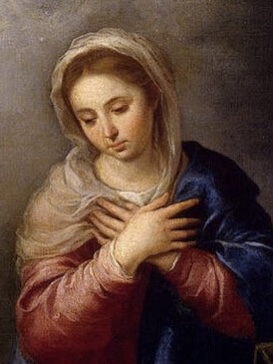
Virgin in Prayer, Artist: Sassoferrato, 1640-50
Is there anyone who enjoys waiting? Our human nature rebels against all forms of it: there is the mundane waiting we must endure in lines, in traffic, at ball games, practices, and in doctor’s offices; the anxious waiting for phone calls, for results, or for the end of sufferings; the joyful waiting for birthdays, anniversaries, graduations and other celebrations. Then there is the heavy combination of all three types of waiting–which is of a mother waiting for the birth of her child. And of course, as every child knows, the long waiting for Christmas to finally come.
Our weak human nature does not like to wait. We want to “get there” right away, to “know” right away, for something to be “done” right away. Waiting requires patience and most of humanity has very little. But wait we must, and since everything in life is permitted by God solely for our good, waiting must be very good for us since we spend so much of our lives doing it.
If waiting is indeed good for us, then it is certain that the evil one will do everything possible to trip us up as he did with the children of Israel while they were waiting, waiting, waiting for Moses to come down from the mountain with the Ten Commandments. When God was telling Moses, “I am the Lord, thy God: thou shall not have strange Gods before me,” the devil was tempting them to pride; the Israelite’s did not want to endure waiting to see the Face of God so they fashioned an idol, the “work of their own hands.” Here lies the temptation for us all in what should be a grace-filled period of time: distraction in turning the eyes of our soul away from the Face of God and toward the false faces or idols of the world–bright, sparkly, enticing and all around us. How can we resist falling into the traps of idolatry?
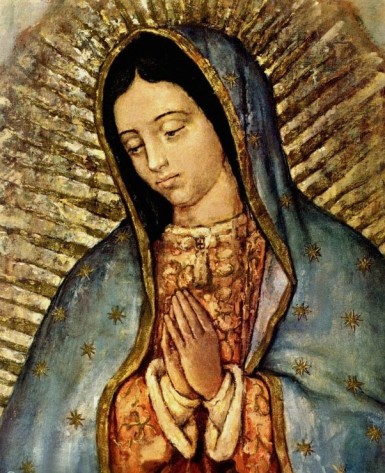
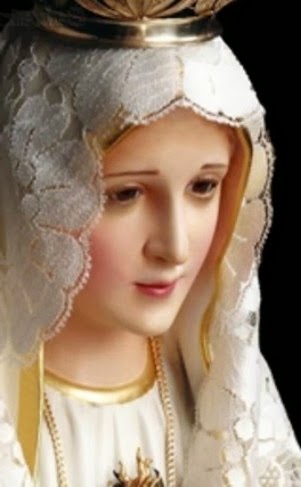
Our Lady of Guadalupe
The ultimate good is to see the Face of God and therefore Mary must have waited like no one has ever waited before! Mary, for the love of God, waited in patience, humility, faith, charity, in hope, and in supreme fortitude. She did this by fixing the eyes of her soul on Jesus, her Redeemer and God–Whose Face she could not yet see within her womb. Mary’s uncomplaining acceptance of God’s Will–to seek His Face and only His Face–bore the most sublime fruit in Mary’s soul of divine PEACE, which the world can never take away. So, this Advent and in all times of waiting, wait with Mary, and her reward will also be ours…to see the Face of her Son!
During Advent the Church celebrates the longing to see God’s Face, together with the Blessed Virgin Mary, with a Triduum (three days of prayer beginning on December 15) and a Feast (on December 18th)–It is called The Feast of the Expectation of the Blessed Virgin Mary, Longing to See His Face. (a bit of the history may be found here.) The prayer may also be continued until Christmas.
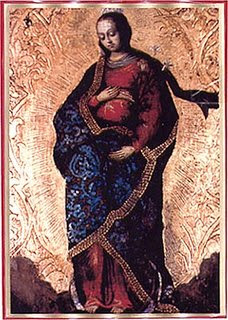
The Expectation of the Blessed Virgin Mary
On the days leading up to Christmas we are invited to contemplate, together with Mary, the Divine Child within her womb, who is Our Savior. We too, through sanctifying grace, bear the supernatural image of God within us. Like Mary, we desire to become a peaceful sanctuary for the living God. We are called to be attentive, in prayer, to the faint stirrings of His presence in our hearts, which will fill us with a deep longing to see His Face as we pray:
Prayer for the Triduum and Feast of the Expectation of the Blessed Virgin Mary, Longing to See His Face
“Mary, your life with Jesus was one of the purest, most fervent, most perfect emotions of longing and most eager expectation of the Birth of the Divine Child! How great must have been that longing! You were longing to see the Face of God and to be happy in the vision. You were soon really to see the Face of God, the created image of divine perfection, the sight of which rejoices heaven and earth, from which all being derive life and joy; the Face whose features enraptured God from all eternity, the Face for which all ages expectantly yearned. You were to see this Face unveiled, in all the beauty and grace as the face of your own child.
Most just indeed it is, O Holy Mother of God, that we should unite in that ardent desire which you had to see Him, who had been concealed for nine months in your chaste womb; to know the features of this Son of the heavenly Father, who is also your own; to come to that blissful hour of His birth, which will give glory to God in the highest, and on earth, peace to men of good will. Yes, dear Mother, the time is fast approaching, though not fast enough to satisfy your desires and ours. Make us re-double our attention to the great mystery; complete our preparation by your powerful prayers for us, so that when the solemn hour has come, our Jesus may find no obstacle to His entrance into our hearts. Amen.” (Prayer by Rev. Lawrence Lovasik, S.V.D.)
St. Anselm wrote about the desire of every human soul created in the image and likeness of God; the desire to see God’s Face. It is a beautiful reflection for Advent! From the “Prosologian” — the words of St. Anselm, Bishop:
“Insignificant man, escape from your everyday business for a short while, hide for a moment from your restless thoughts. Break off from your cares and troubles and be less concerned about your tasks and labors. Make a little time for God and rest a while in him.
Enter into your mind’s inner chamber. Shut out everything but God and whatever helps you to seek him; and when you have shut the door, look for him. Speak now to God and say with your whole heart: I seek your face; your face, Lord, I desire.
Lord, my God, teach my heart where and how to seek you, where and how to find you. Lord, if you are not here where shall I look for you in your absence? Yet if you are everywhere, why do I not see you when you are present? But surely you dwell in ‘light inaccessible.’ And where is ‘light inaccessible? How shall I approach light inaccessible? Or who will lead me and bring me into it that I may see you there? And then, by what forms shall I seek you? I have never seen you, Lord my God; I do not know your face.
(Photo: Patricia Enk)
Lord most high, what shall this exile do, so far from you? What shall your servant do, tormented by love of you and cast so far from your face? He yearns to see you, and your face is too far from him. He desires to approach you, and your dwelling is unapproachable. He longs to find you, and does not know your dwelling place. He strives to look for you, and does not know your face.
Lord, you are my God and you are my Lord, and I have never seen you. You have made me, and remade me, and you have given me all the good things I possess and still I do not know you. I was made in order to see you, and I have not yet done that for which I was made.
Lord, how long will it be? How long, Lord, will you forget us? How long will you turn your face away from us? When will you look upon us and hear us? When will you enlighten our eyes and show us your face? When will you give yourself back to us?
Look upon us, Lord, hear us and enlighten us, show us your very self. Restore yourself to us that it may go well with us whose life is so evil without you. Take pity on our efforts and our striving toward you, for we have no strength apart from you.
Teach me to seek you, and when I seek you show yourself to me, for I cannot seek you unless you teach me, nor can I find you unless you show yourself to me. Let me seek you in desiring you and desire you in seeking you, find you in loving you and love you in finding you.”
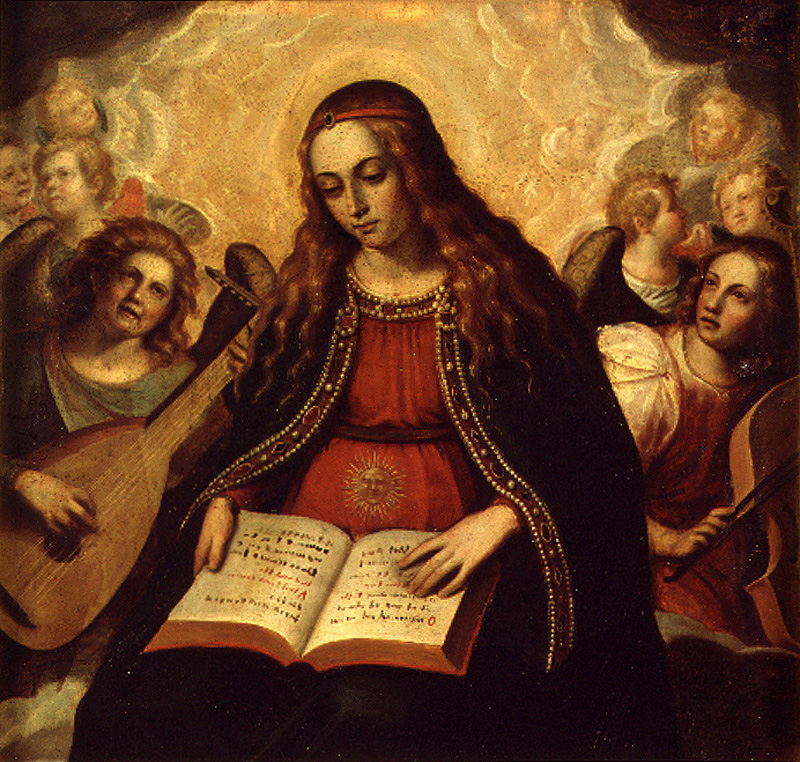
O Mary, conceived with0ut sin, pray for us who have recourse to thee!
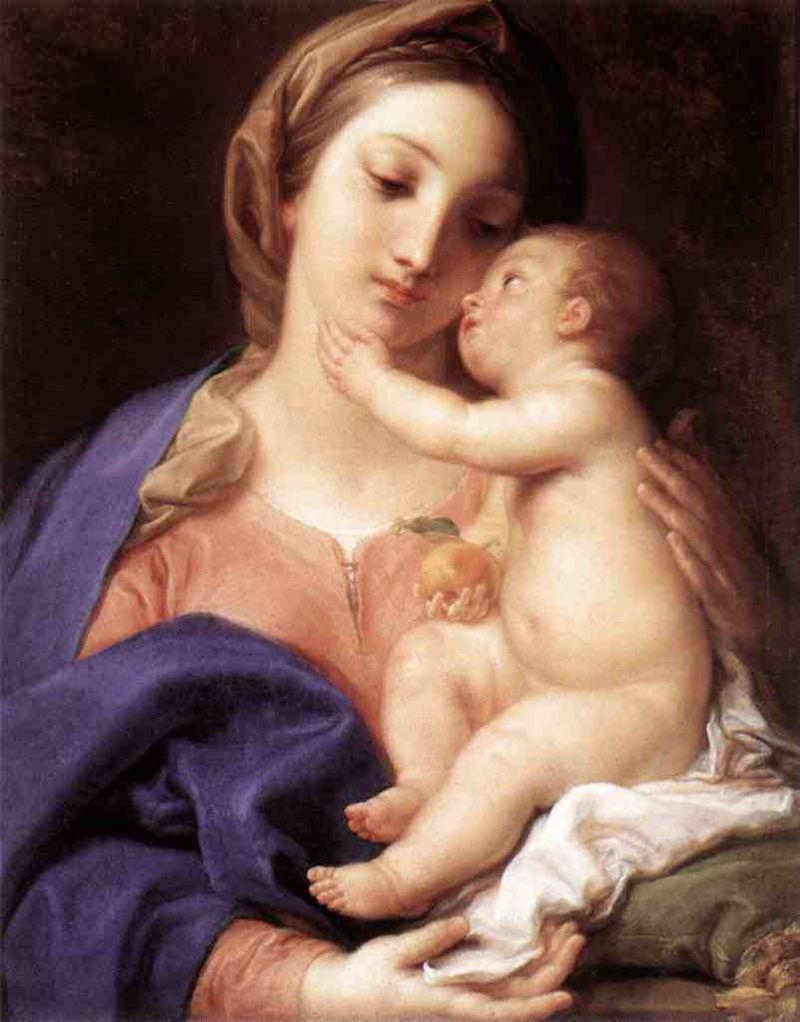
Madonna, Pompeo Battono, 1742
Shutterstock photo
“It is first of all necessary to let the Blessed Virgin Mary take one by the hand to contemplate the face of Jesus. Mary gives us eyes and a heart that can contemplate her Son in the Eucharist.”
~ Pope Benedict XVI
Mary was “Blessed in Christ with every spiritual blessing,” (cf. Eph 1:3) chosen by God from all eternity to be the Mother of the Redeemer. So, ask her to take you by the hand because it is she who leads us to Jesus. Then we may contemplate, together with her, His Holy Face–in His Word, in the Eucharist, and in our neighbor. As the Immaculate Conception, Mary bears in herself the most perfect reflection of the Face of God. Pope St. John Paul II wrote, “The Blessed Virgin saw shining upon her, as no other creature, the face of the Father, rich in grace and mercy.”
This Advent, let us fix our gaze on Jesus and Mary rather than on the profane things of the world. We keep Mary before our eyes in order to contemplate in her everything that is good and true and beautiful — She is “God’s Mirror.” “She is the proclamation of a merciful God who does not surrender to the sin of his children,” Pope St. John Paul II tells us “in Mary shines forth God’s sublime and surprising tenderness for the entire human race. In her, humanity regains its former beauty and the divine plan is revealed to be stronger than evil…” In Mary “the Creator has kept the original beauty of creation uncontaminated” so that in the Immaculate Conception, “the Father’s original, wondrous plan of love was reestablished in an even more wondrous way.”
Virgin and Child,1510
And in Her Morning
The Virgin Mary cannot enter
my soul for an indwelling. God alone
has sealed this land as secretly His own;
but being mother and implored, she comes
to stand along my eastern sky and be
a drift of sunrise over God and me.
God is a light and genitor of light.
Yet for our weakness and our punishment
He hides Himself in midnights that prevent
all save the least awarenesses of Him.
We strain with dimmed eyes inward and
perceive
no stir of what we clamored to believe.
Yet I say: God (if one may jest with God),
Your hiding has not reckoned with Our Lady
who holds my east horizon and whose glow
lights up my inner landscape, high and low.
All my soul’s acres shine and shine with her!
You are discovered, God; awake, rise
out of the dark of Your Divine surprise!
Your own reflection has revealed Your place,
for she is utter light by Your own grace.
And in her light I find You hid within me,
And in her morning I can see Your Face.
~Sr. Miriam of the Holy Spirit, OCD (Jessica Powers)
During Lent of 2016, Paul Badde lay in an induced coma for many weeks following a stroke and heart surgery. Although he was completely still in the state of a coma, he was also somehow aware of the holocausts of prayer lifted up to heaven on his behalf. God was not done with Paul; his mission had barely begun…
Paul Badde pondering the Holy Veil of Manoppello Photo: Alan Holdren
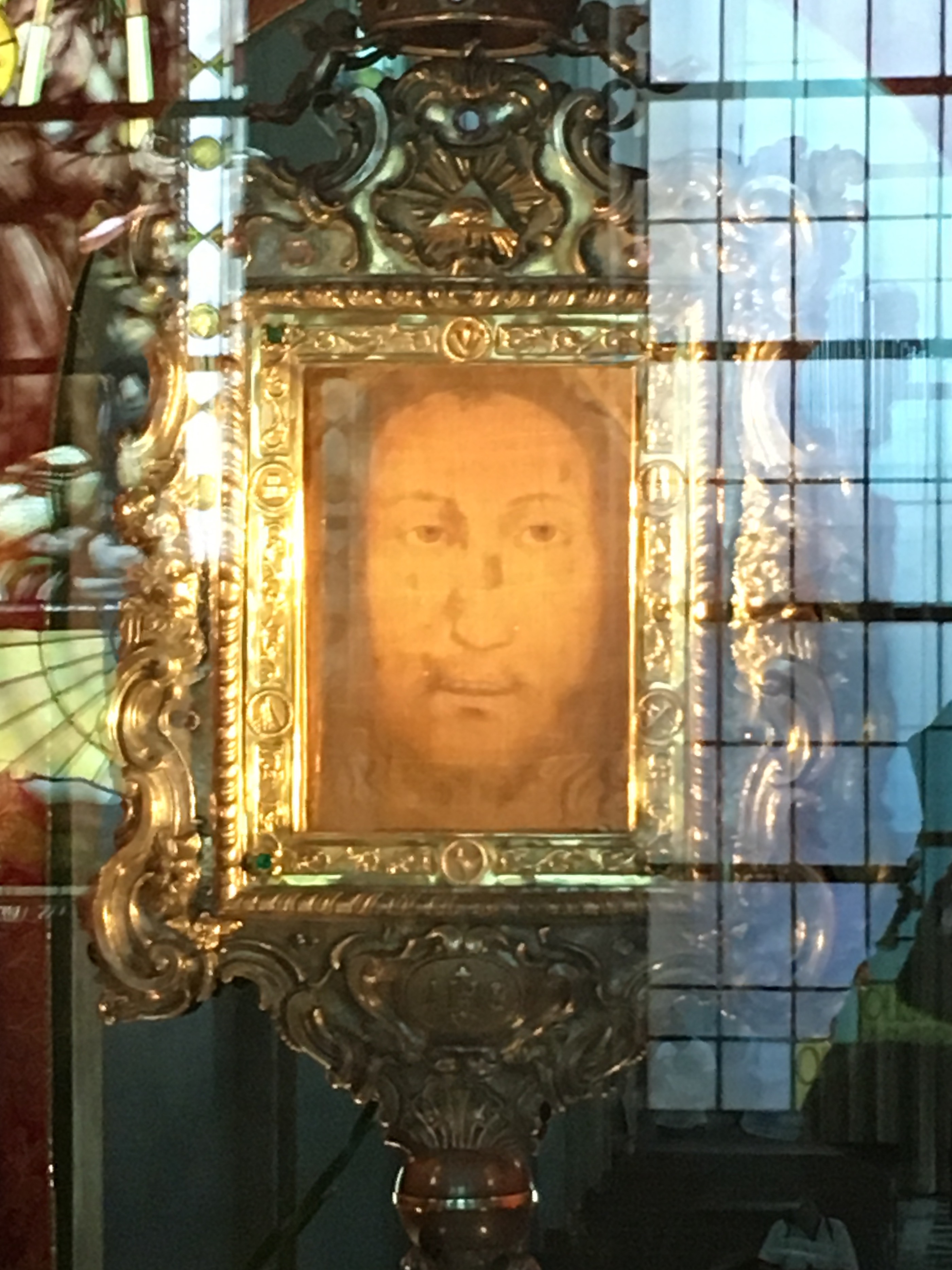
The Holy Veil of Manoppello. Photo: Paul Badde/EWTN
God lays the groundwork for our missions in life in such mysterious ways. Paul’s expertise as an art historian, and journalist led he and his wife to spend many years in the Holy Land, praying, researching, and soaking up those places where Jesus lived, walked, preached, suffered, died and rose from the dead. His path led to Rome, and took a life-changing turn in the little mountain village of Manoppello, Italy, where he came face-to face with the mysterious veil bearing the Holy Face off Jesus known as “Il Volto Santo.”
Pope Benedict XVI with Paul Badde on the occasion of the Pope’s pilgrimage to see The Holy Veil in 2006.
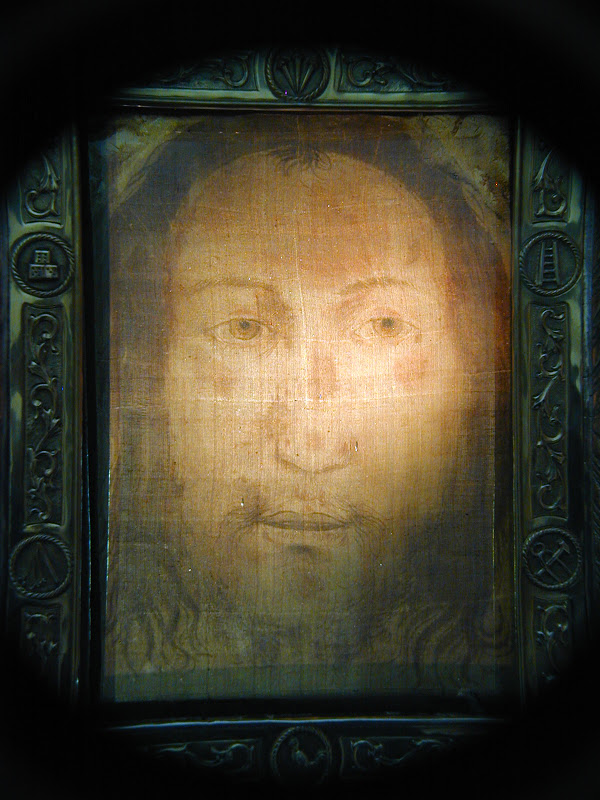
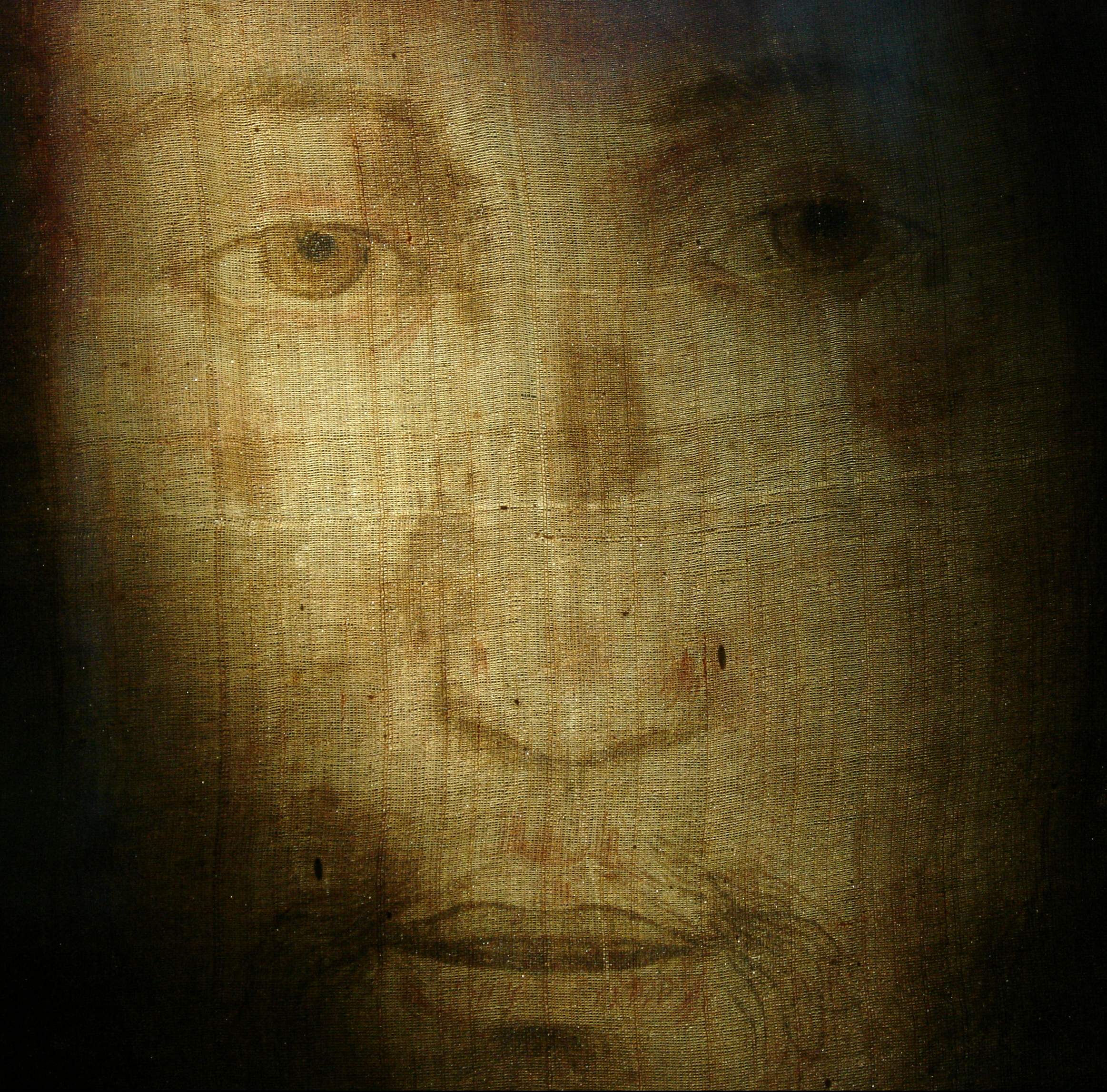
Years later, after much research, and many books about this remarkable veil, pilgrims from around the world have been drawn to see for themselves the mystery of light that is the living image of the Face of Jesus, “Il Volto Santo,” that exists on a whisper-thin veil that is sheer enough to read a newspaper through.
The sheer Veil of Manoppello Photo: Paul Badde/EWTN
When one seeks the Face of Jesus, the greatest help in the journey is to be accompanied by His Mother, Mary, who sought the Face of her Son every moment of her life. Paul had taken to heart the words of his hero, Pope St. John Paul II, when he placed the New Millennium under “the Radiant sign of the Face of Christ:”
“To contemplate the Face of Christ, and to contemplate it with Mary, is the ‘program’ which I have set before the Church at the dawn of the third millennium…It is the Church’s task to reflect the light of Christ in every historical period, to make His Face shine also before new generations of the new millennium. Our witness, however, would be hopelessly inadequate if we ourselves had not first contemplated His Face.”
Pope St. John Paul II
And here is Paul’s labor of love, and gift to be shared — an aid to the contemplation of the Face of Jesus with Mary in praying the Rosary: “Stones and Pearls” a video series that is now available free on EWTN. Each mystery is presented biblically, beautifully, and individually, at each place of the mysteries in the life of Jesus, from the Incarnation to the Coronation. Filmed in the Holy Land and related Holy sites from around the world, the viewer is invited to join Paul on Pilgrimage to these Holy places in Jesus’s life. Paul’s insightful commentary has been translated from German to English, and the mysteries are enhanced visually by stunning works of art as well. This series has taken my own contemplation of the mysteries of Rosary to a greater understanding and depth, for which I am very grateful.
All the gifts of God are for the benefit of the whole Church and the world, so have a look at “Stones and Pearls” and enjoy!… As we contemplate, and pray the Rosary, for peace, and every intention of our hearts, we can be confident that God will “seek out the lost,” and fulfill every promise contained in each Mystery, and with each “Hail Mary.”
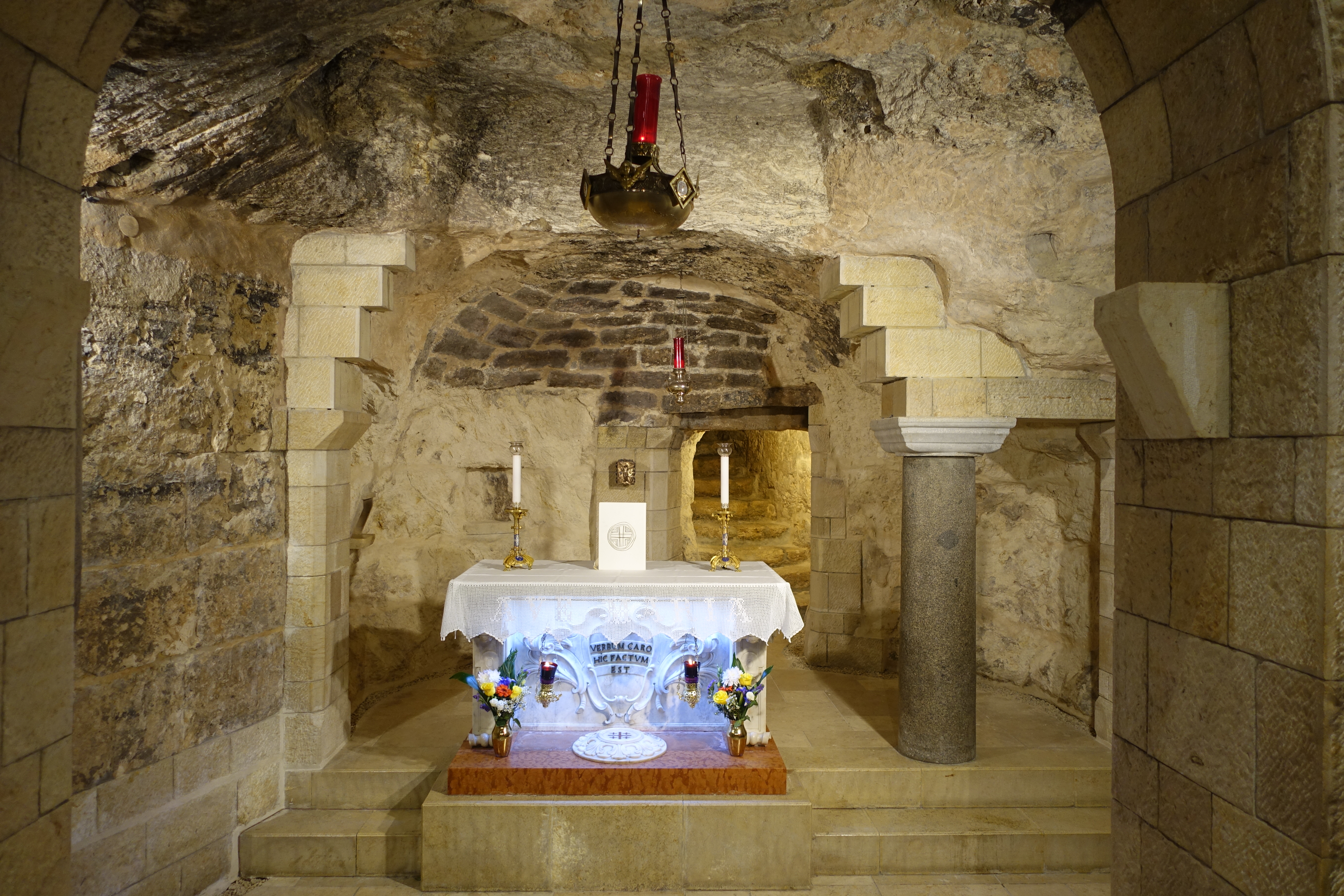
“Where the Word of God became flesh” The Grotto in Nazareth–the heart of Christianity. Photo by Paul Badde
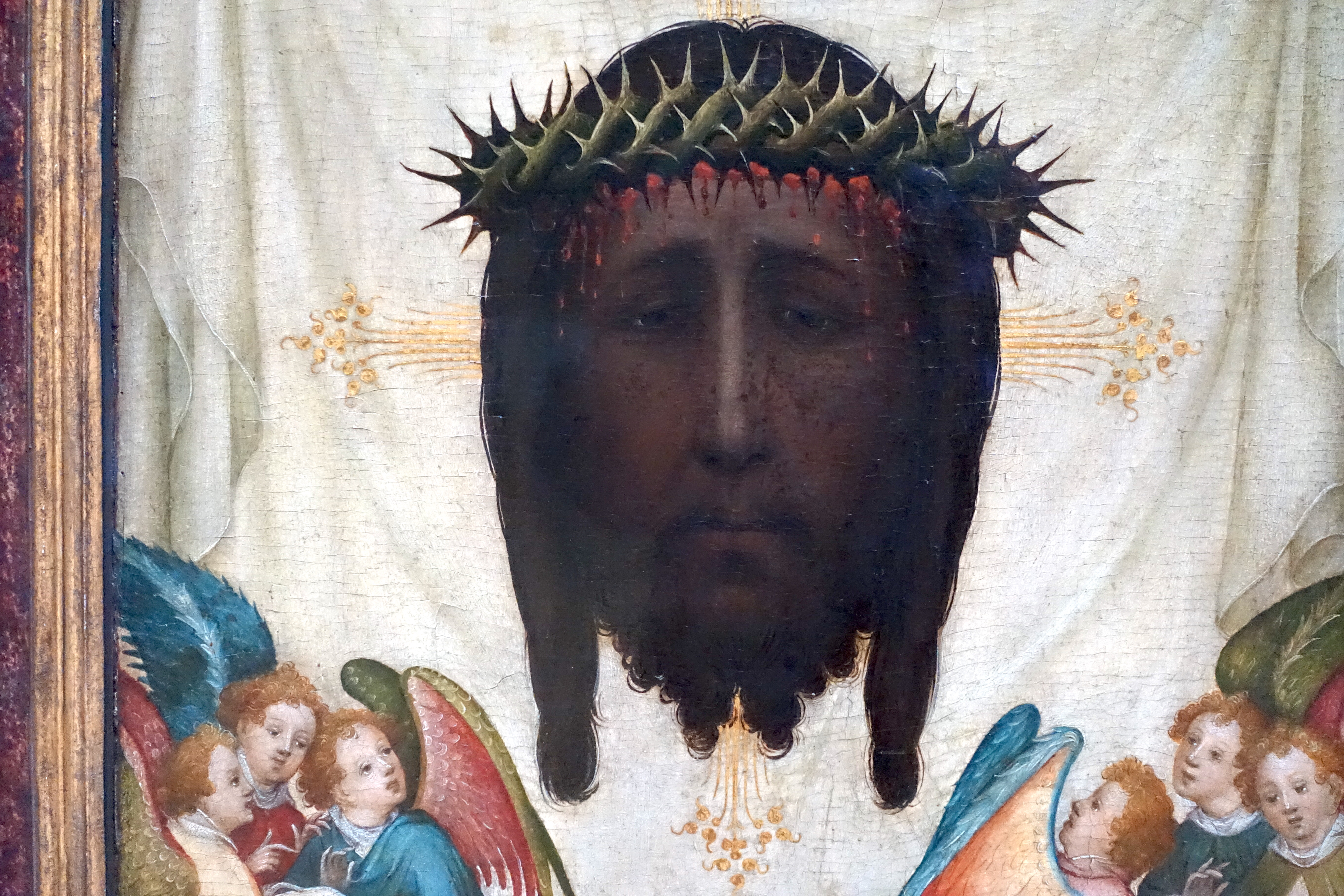
St. Jude presents King Abgar with a cloth bearing the living Face of Jesus, Monastery of St. Catherine Sinai, Egypt 8th Century
TheMandylion of Edessa
“It is said that King Abgarus of Edessa had sent a painter to make a portrait of Christ. But he was not able to do it because of the light that shone out of the Lord’s Face. So, taking a veil and placing it before his holy and life-giving face, Jesus impressed his image on it and sent it to King Abgarus, thus satisfying his desire.” –St. John Damascene (source)
St. John Damascene wrote this regarding The Mandylion of Edessa, which means “towel” or “handkerchief” in Arabic. Many versions of this legend may be found in historical sources dating back to 590 AD. According to one tradition the cloth bearing a living image of the Face of Jesus is associated with the Apostle St. Jude Thaddeus:
St. Jude Thaddeus, often seen depicted holding the Face of Jesus
The poor King Abgar suffered from leprosy and gout and hearing of the miracles of Jesus, sent a letter to Jesus with his secretary Ananias, (who also happened to be the wonderful painter mentioned above). It was St. Jude Thaddeus who brought the Holy Veil to the King. After hearing St. Jude Thaddeus preach, and receiving the holy image the King was healed. King Abgarus, who brought Christianity to his kingdom, is venerated as a saint in the Eastern Church.
“Arab sources also mention the cloth on which Jesus imprinted the image of His Face.” (source) Although there was disagreement over the centuries as to the question of how the image of the living face of Jesus was formed on the cloth, everyone agreed that it was indeed miraculous.
Many reproductions were made of the image, some appearing miraculously on tile that had covered the sacred cloth. The Mandylion was brought eventually to Constantinople, “the queen of all cities,” on August 16, 944, which is still celebrated as a feast day in the Eastern calendar. It was recorded as being kept in a golden vessel, and only taken out once a year from the Sacred Chapel, where other precious relics of the Passion were also kept until the sack of Constantinople in 1204.
The Invocation of the Holy Face of Jesus continues to be associated with miraculous healing:
Is there anyone who doubts that a spiritual battle between light and darkness is raging in the Church and in the world? The last words of G.K. Chesterton as he lay dying come to mind:
“The issue is now quite clear. It is between light and darkness and everyone must choose his side.” ~ GKC
The weapon of choice for the saints of the Church is, of course, the Rosary of the Blessed Virgin Mary.
“There is no problem that cannot be solved by the Rosary.” ~Sr. Lucia of Fatima
Contemplating the Face of Christ with Mary
When he placed the New Millennium under “the Radiant sign of the Face of Christ” Pope St. John Paul II wrote:
“To contemplate the Face of Christ, and to contemplate it with Mary, is the ‘program’ which I have set before the Church at the dawn of the third millennium…It is the Church’s task to reflect the light of Christ in every historical period, to make His Face shine also before new generations of the new millennium. Our witness, however, would be hopelessly inadequate if we ourselves had not first contemplated His Face.”
by Raffaella Sanzio
The Rosary is a traditional Christian prayer directed to the contemplation of Christ’s Face. “Without contemplation, the Rosary is a body without a soul,” says Pope St. John Paul II, “and runs the risk of becoming a mechanical repetition of formulas, in violation of the admonition of Christ.” Contemplation is a gift, a grace, from God. It is a communion in which God transforms a soul into His likeness. To put it more simply, as St. Teresa of Jesus says, contemplation is “a close sharing between friends…taking time frequently to be alone with Him who we know loves us.” Contemplation is not something beyond our reach however–we have an incomparable model in Mary; the eyes of her heart were always turned toward His Face. To dispose our souls to receive this great gift of God we need only reach for a Rosary and pray it with humility, listening attentively in the Spirit together with Mary, in silent love–that veil of mystery–to the Father’s voice. When we contemplate the scenes or mysteries of the Rosary in union with Mary, the Rosary becomes an unceasing praise of God; a way to learn from her about her son, Jesus, to discover His secrets and understand His message for us.
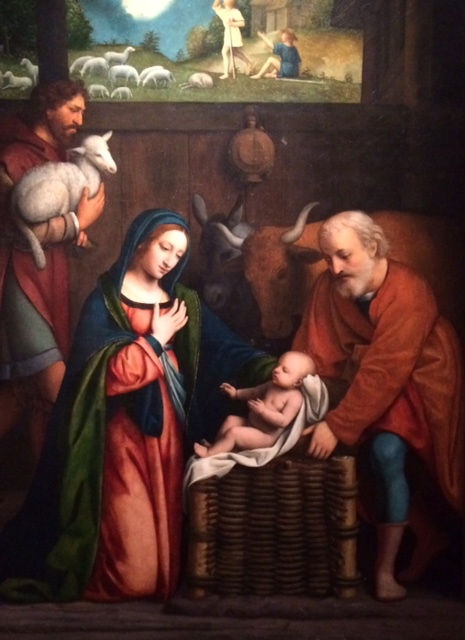
Adoration of the Christ Child and Annunciation to the Shepherds by Bernardino Luini
To recite the Rosary, which can be called a compendium of the Gospel, Pope St. John Paul II says, “is to contemplate the Face of Christ in union with, and at the school of, His Most Holy Mother…Against the background of the words of the Ave Maria the principal events of the life of Jesus Christ pass before the eyes of the soul. They take shape in the complete series of the joyful, [luminous,] sorrowful and glorious mysteries, and they put us in living communion with Jesus through–we might say through the heart of his Mother…The Rosary belongs among the finest and most praiseworthy traditions of Christian contemplation…To look upon the Face of Christ, to recognize its mystery amid the daily events and sufferings of His human life, and then to grasp the divine splendor definitively revealed in the Risen Lord, seated in glory at the right hand of the Father; this is the task of every follower of Christ and therefore the task of each one of us. In contemplating Christ’s Face we become open to receiving the mystery of Trinitarian life, experiencing ever anew the love of the Father and delighting in the joy of the Holy Spirit. St. Paul’s words can then be applied to us ‘Beholding the glory of the Lord, we are being changed into His likeness, from one degree of glory to another; for this comes from the Lord who is the Spirit.’” (Rosarium Virginus Mariae)
“The contemplation of Christ’s Face cannot stop at the image of the Crucified One. He is the Risen One!”~ Pope St. John Paul II (Holy Face of Manoppello (Photo: Patricia Enk)
The entire month of October is dedicated to the Holy Rosary and October 7th is celebrated as the feast of Our Lady of the Rosary. The feast, originally named for Our Lady of Victory, commemorated the stunning victory, against all odds, obtained by Our Lady in the Battle of Lepanto through the prayer of the Rosary–which saved Christendom on October 7th, in 1571. By keeping our eyes fixed on the Face of Jesus as we pray the Rosary, together with Mary, through her maternal intercession, we too may obtain great victories through the heart of her Son Jesus, who obtained for all mankind the greatest victory over sin and death by His Resurrection.
+++
“I dare to summon the whole Church bravely to cross this new threshold, to put into the deep…so that now as in the past the great engagement of the Gospel and culture may show to the world ‘the glory of God on the Face of Christ’ (2 Cor 4:6). May the Lord bless all those who work for this aim.”
~ Pope St. John Paul II
Mary contemplates Jesus beneath the Eucharistic Veil of the appearance of bread. The Virgin of the Host, by Jean-Auguste-Dominique Ingres
Venice, Illustration for the Divine Comedy of Dante, 13th Century”
“During meditation, the Lord gave me knowledge of the joy of Heaven and of the Saints on our arrival there; they love God as the sole object of their love, but they also have a tender and heartfelt love for us. It is from the Face of God that this joy flows out upon all, because we see Him face to Face. His Face is so sweet that the soul falls anew into ecstasy” (1592, “Divine Mercy in My Soul”).
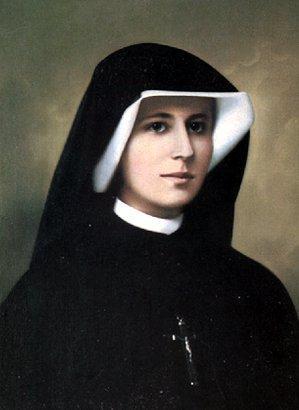
St. Faustina “Apostle of Mercy” Feast Day: October 5th
St. Faustina Kowalska, “The Apostle of Mercy,” was known as a mystic and visionary. Our Lord granted her a deep understanding of the love and mercy of God which she was to share with the world through her diary, “Divine Mercy in My Soul.” The Face of Christ had a prominent place in her spiritual journey:
“I have ever before my eyes His sorrowful Face, abused and disfigured. His Divine Heart pierced by our sins and especially by the ingratitude of chosen souls.” (Divine Mercy in my Soul, #487)
St.Faustina’s message of mercy was also intensely Eucharistic, recognizing the True Presence of Jesus in the Blessed Sacrament. She offered Him continually to the Father to implore His Mercy for the salvation of the world:
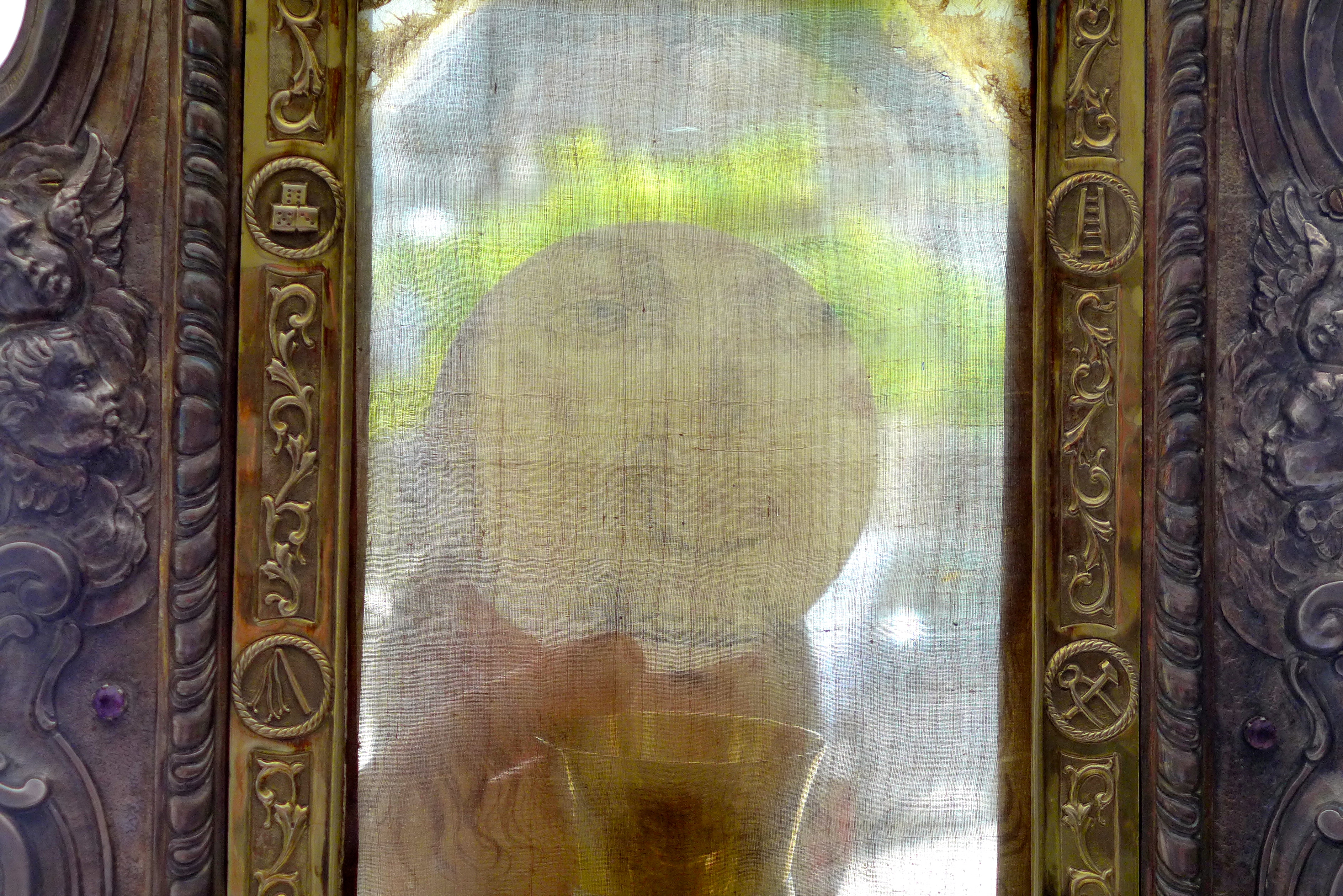
Host viewed through the Face of Jesus on the Veil of Manoppello in Italy. (Photo: Paul Badde/EWTN)
“Eternal Father, I offer You the Body, Blood, Soul and Divinity of Your dearly beloved Son, Our Lord Jesus Christ, in atonement for our sins, and those of the whole world. For the sake of His sorrowful Passion have mercy on us and on the whole world.”
The greatest sign of God’s continuing mercy for the people of the world is His hidden Presence in the Eucharist. By turning to His Eucharistic Face in prayer, St. Faustina says, “a change takes place” in our souls, because Jesus is also gazing at us.
“The Face of Christ is the supreme revelation of Christ’s Mercy.”–Pope Benedict XVI (photo:Paul Badde/EWTN)
“O Living Host, O hidden Jesus. You see the condition of my soul. Of myself, I am unable to utter Your Holy Name. I cannot bring forth from my heart the fire of love, but kneeling at Your feet, I cast upon the Tabernacle the gaze of my soul, a gaze of faithfulness. As for You, You are ever the same, while within my soul a change takes place. I trust that the time will come when You will unveil Your Countenance, and Your child will again see Your sweet Face. I am astonished, Jesus, that You can hide Your self from me for so long and that You can restrain the enormous love You have for me. In the dwelling of my heart, I am listening and waiting for Your coming, O only Treasure of my heart! (Divine Mercy in My Soul, #1146)
By contemplating His Holy Face, and making Him the “Treasure” of our hearts, we are transformed by the Holy Spirit, who restores God’s image and likeness in our souls. As St. Paul has written:
“but whenever a person turns to the Lord the veil is removed…All of us, gazing with unveiled face on the glory of the Lord, are being transformed into the same image from glory to glory, as from the Lord who is the Spirit. (2 Cor. 3:16, 18)
St. Faustina’s message of God’s Mercy is needed more with each passing day. Let us continue to pray for God’s Mercy, and pray as well for all the people of the world to turn back to the Merciful Face of God, so all may share in the joy of Heaven one day–to see Him face to Face.
“Write this: before I come as the Just Judge, I am coming first as the King of Mercy.” –Our Lord to St. Faustina
St. Faustina’s Prayer for Divine Mercy
O Greatly Merciful God, Infinite Goodness, today all mankind calls out from the abyss of its misery to Your mercy — to Your compassion, O God, and it is with its mighty voice of misery that it cries out: Gracious God, do not reject the prayer of this earth’s exiles! O Lord, Goodness beyond our understanding, Who are acquainted with our misery through and through and know that by our own power we cannot ascend to You, we implore You, anticipate us with Your grace and keep on increasing Your mercy in us, that we may faithfully do Your holy will all through our life and at death’s hour. Let the omnipotence of Your mercy shield us from the darts of our salvation’s enemies, that we may with confidence, as Your children, await Your final coming — that day known to You alone. And we expect to obtain everything promised us by Jesus in spite of all our wretchedness. For Jesus is our Hope: Through His merciful Heart as through an open gate we pass through to heaven.” (Divine Mercy in My Soul, #1570)
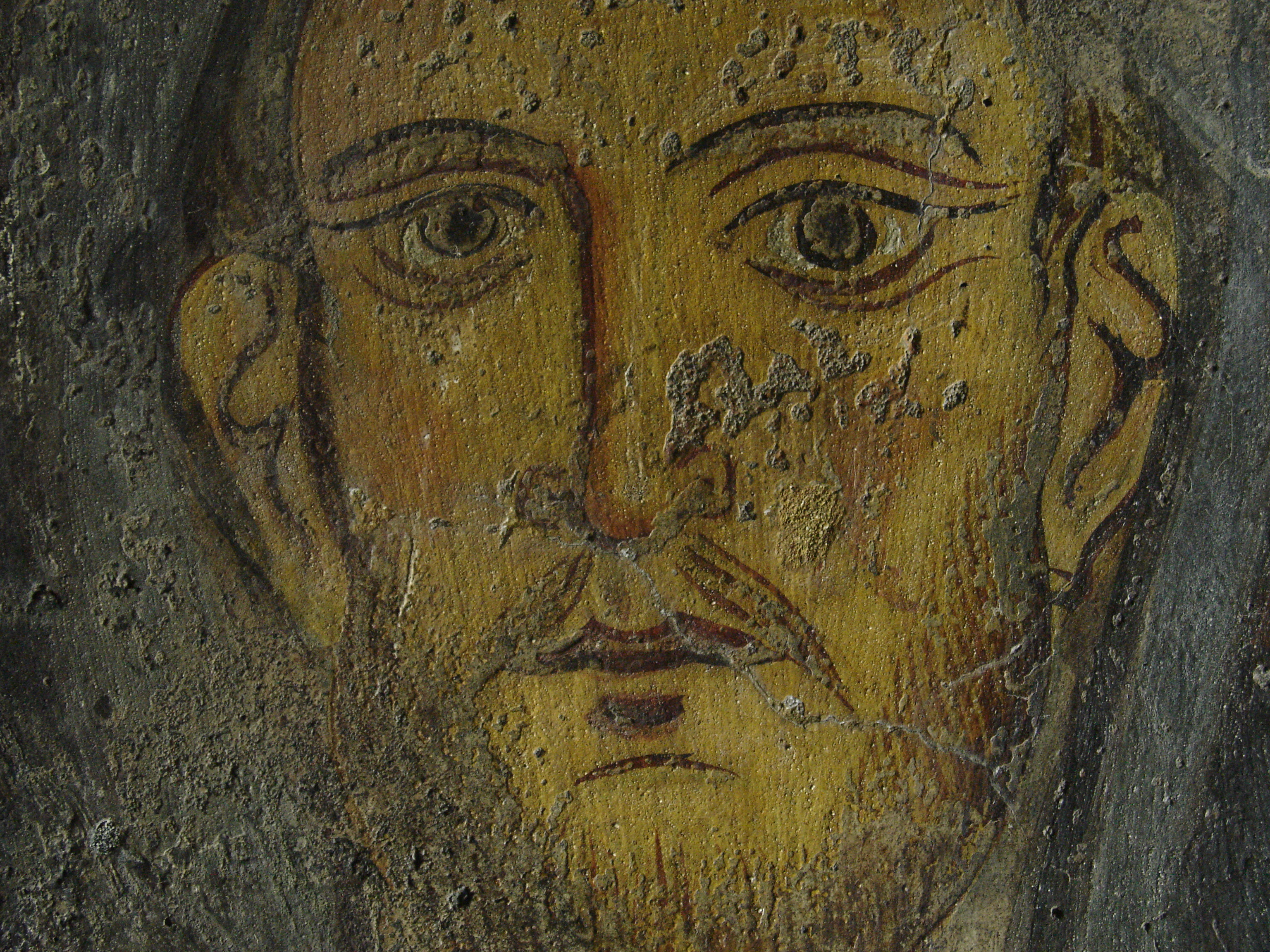
Earliest image of St. Francis 1228 Photo: Paul Badde/EWTN
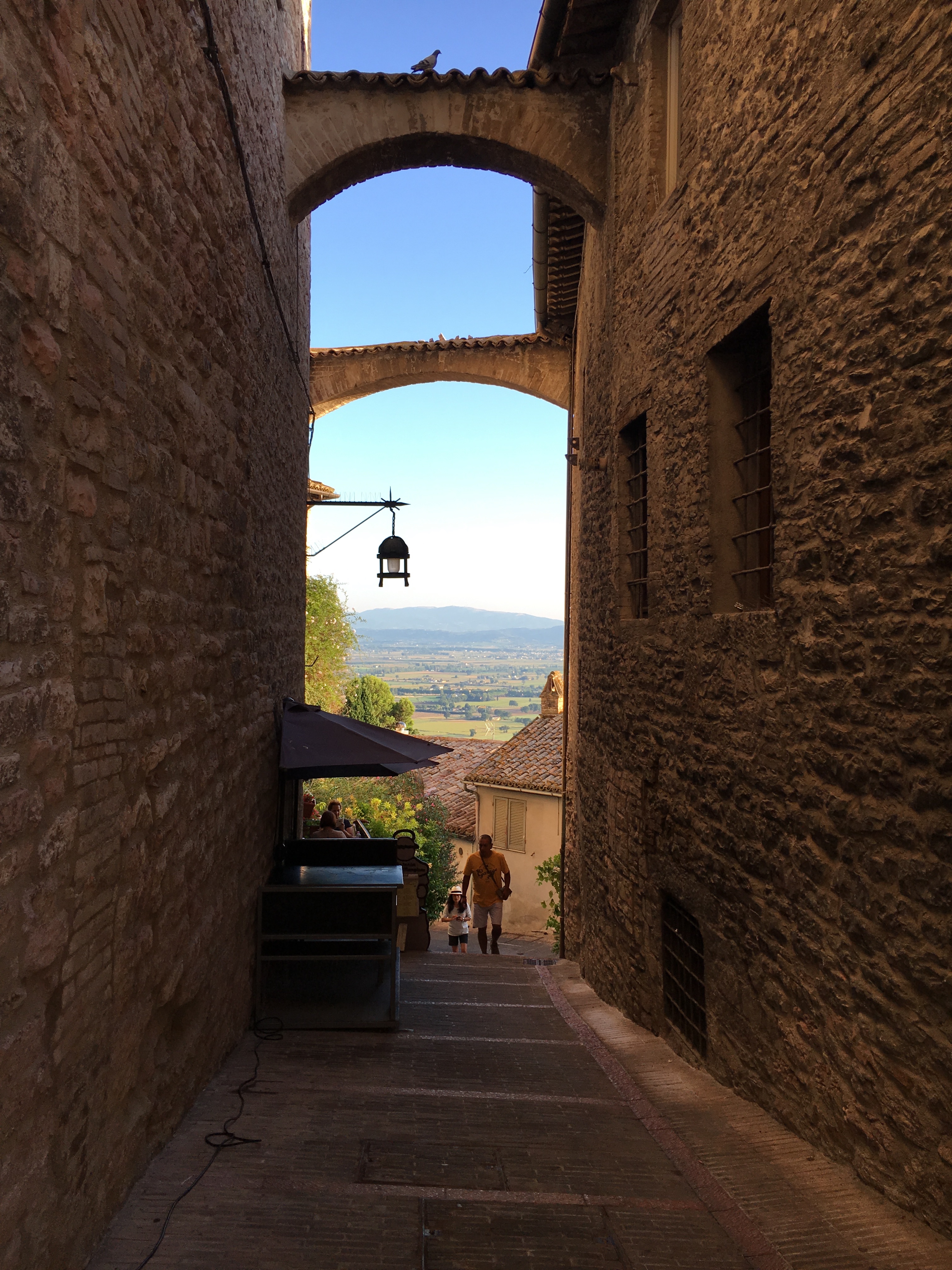
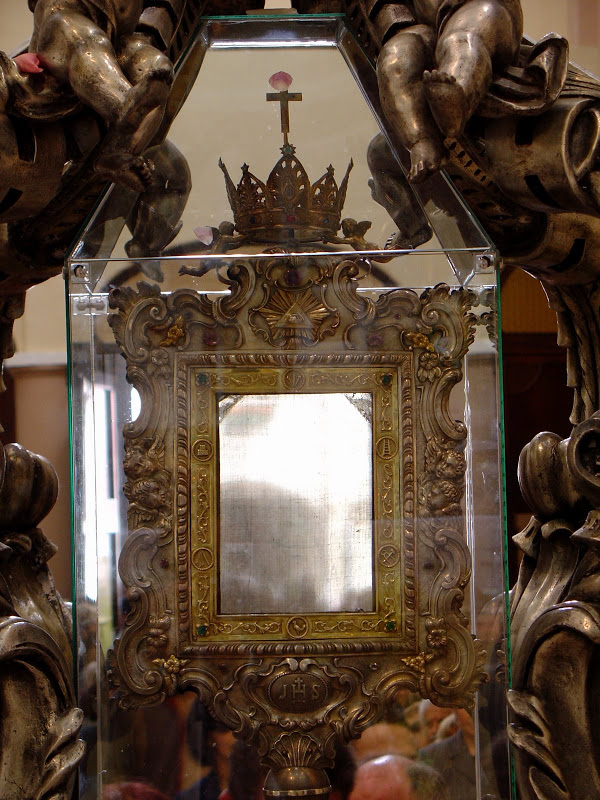
Within the Basilica of St. Francis in Assisi is a precious relic: a small, crumpled piece of yellowed parchment with the writing of St. Francis, now displayed in a silver reliquary. It was written on Mount La Verna after St. Francis had received the stigmata. The first biographer of St. Francis, Bl. Thomas of Celano wrote that for a long time St. Francis’s friend, Brother Leo, had greatly desired to have some memorial from the words of Our Lord written by St. Francis:
“One day Blessed Francis called him, saying, ‘Bring me paper and ink, for I wish to write the words of God and His praises which I have been meditating in my heart.’ What he asked for being straightway brought, he writes with his own hand the praises of God and the words which he [his companion] wished, and lastly a blessing of the brother, saying: ‘Take this sheet for thyself and until the day of thy death guard it carefully.’ All temptation was at once driven away; the letter is kept and worked wonders for the time to come.” Brother Leo kept it faithfully; folding it in four, he carried it in his pocket and guarded it jealously for a good forty-six years. The text in the middle, written in black, and marked with a large “Tau” cross is in Francis’s own handwriting, he writes the praises of God* and grants to Brother Leo the blessing from the Book of Numbers 6: 22-27 which later became known as “the Blessing of St. Francis.”
St. Francis of Assisi
Pope Emeritus Benedict XVI, in his homily for the World Day of Peace, 2013, spoke of this blessing from the Book of Numbers:
“The blessing repeats the three times Holy Name of God, a Name not to be spoken, and each time linked to two words indicating an action in favor of man. Peace is the summit of these six actions of God in our favor, His most sublime gift, in which He turns toward us the splendor of His Face.”
This is the same, great blessing that St. Francis desired to impart to his friend, Brother Leo:
“May the Lord bless and keep you; may He make His Face shine upon you and be merciful to you; may He turn His Countenance toward you and give you His Peace!” (Num. 6:22-27)
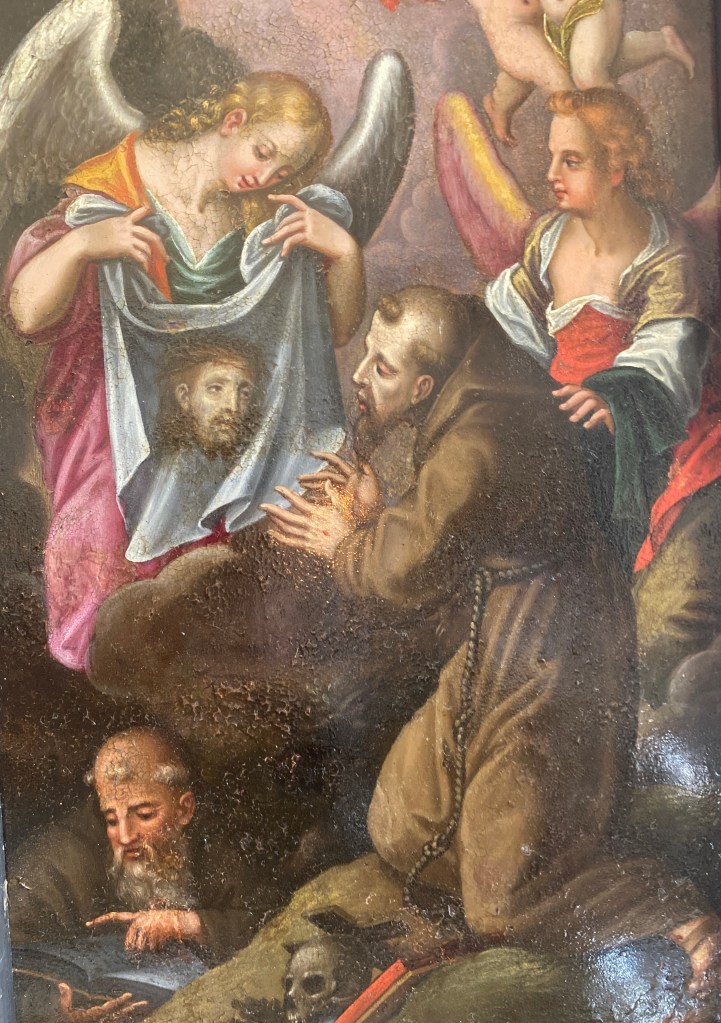
St. Francis contemplates the Face of Jesus on the Veil turned toward him. Photo: Paul Badde/EWTN
The Blessing of St. Francis in reliquary
*(St. Francis’s “Praises of God” are now now quite faded, but, this much can be still read: “Thou art holy, Lord God, who alone workest wonders. Thou art strong. Thou art great. Thou art most high. Thou art the Almighty King, Thou, holy Father, King of heaven and earth. Thou art the Lord God Triune and One; all good. Thou art good, all good, highest good, Lord God living and true. Thou art charity, love. Thou art wisdom. Thou art humility. Thou art patience. Thou art security. Thou art quietude. Thou art joy and gladness. Thou…” That is all that has been preserved.)
A Veronica to St. Francis — Lady Jacoba
In the Relic Chapel of the Basilica of St. Francis, in addition to St. Francis’s patched and tattered tunic and other precious relics, there is a display case which contains a beautifully embroidered silken veil and a small plaque with the name: “Jacoba Settesoli.” The plaque reads: “Like Jesus on his way to Calvary, Francis also had a Veronica.” (Veronica is the woman, tradition tells us, who wiped the Face of Jesus. She is the model of those who make reparation to the Face of Christ.)
Bl. “Frate” Jacopa de Settesoli
Lady Jacoba was a noblewoman and widow, with two children from Rome, who became a follower of St. Francis. After having heard him preach she sought his guidance on how to be charitable. When Francis traveled to Rome, he would stay with Lady Jacoba as her guest and she cared for him when he was sick. She gave some of her property in Trastevere to the brothers, which they used to care for lepers. She gave up her life of comfort in order to help the poor. Woman were not normally permitted to be in company of the brothers, however, St. Francis made an exception in her case, jokingly referring to her as “Brother Jacoba.”
As Francis lay dying he sent an urgent letter by messenger to Lady Jacoba: “Brother Jacoba, the servant of the Most High, health in the Lord and communion in the Holy Ghost. Dearest, I want you to know that the blessed Lord has done the grace of revealing that the end of my life is nigh. So, if you want to find me still alive, hurry to Santa Maria degli Angeli as soon as you receive this letter.” He went on to request that she bring a gray cloth to wrap his body in, candles for burial, and almond cookies that she had made for him in Rome when he was sick. Before the messenger arrived in Rome, Lady Jacoba had already anticipated St. Francis’s needs by the light of the Holy Spirit and was on her way to Francis’s deathbed.
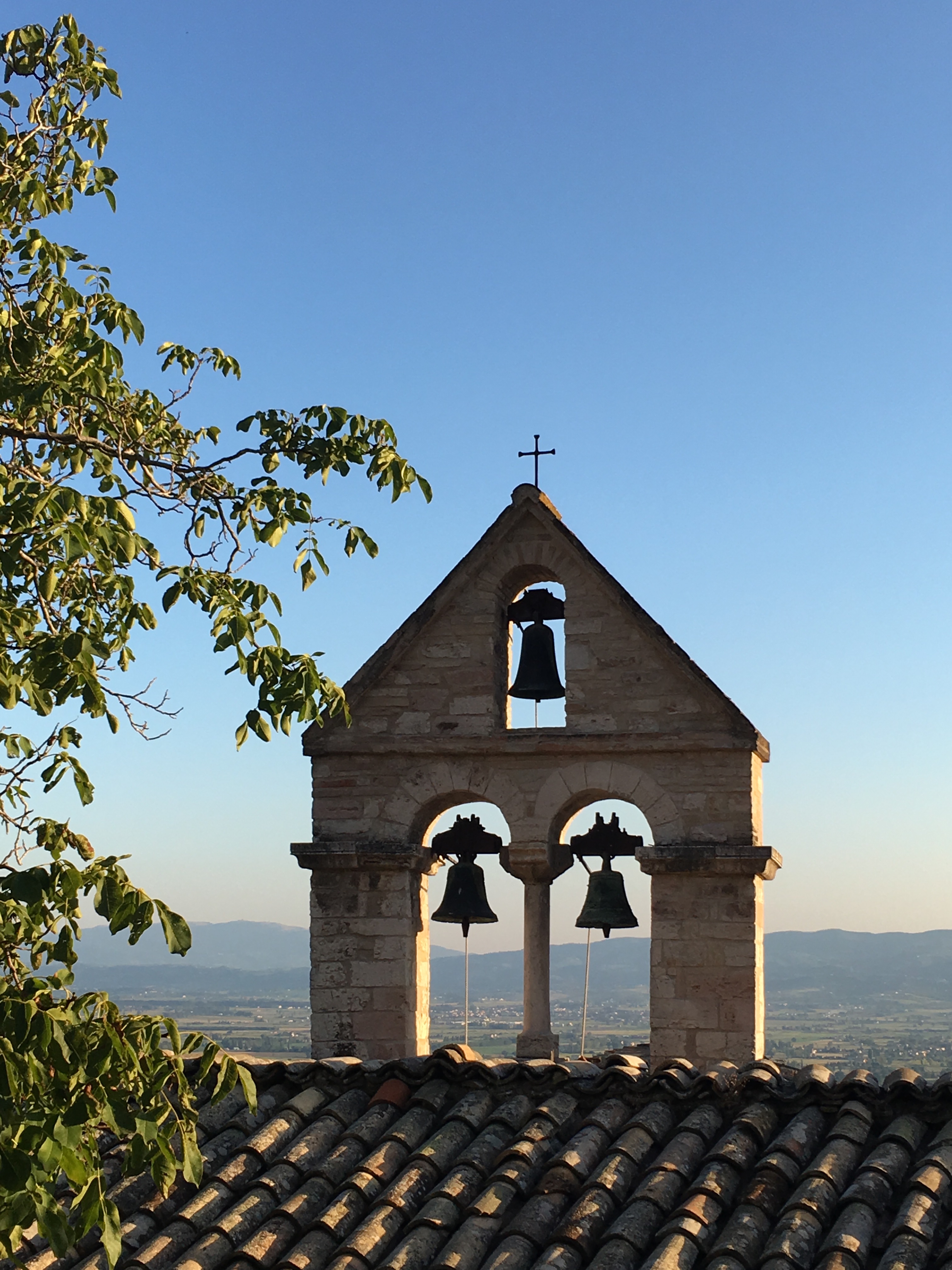
The bells of the church of Santo Stefano the Martyr which rang by themselves when St. Francis died. Photo: Patricia Enk
St. Francis’s biographer, Bl. Thomas Celano, wrote that Lady Jacoba brought not only the gray cloth, the candles, and the almond cookies, but also a pillow for his head, and a“sindomen pro facie” (a veil to cover his face in death, which was displayed in the Relic Chapel). So, St. Francis, an alter Christus who bore the stigmata, also had his “Veronica” in Lady Jacoba, who brought him consolation in his passion.
“Let the little children come to me.” Photo: Patricia Enk
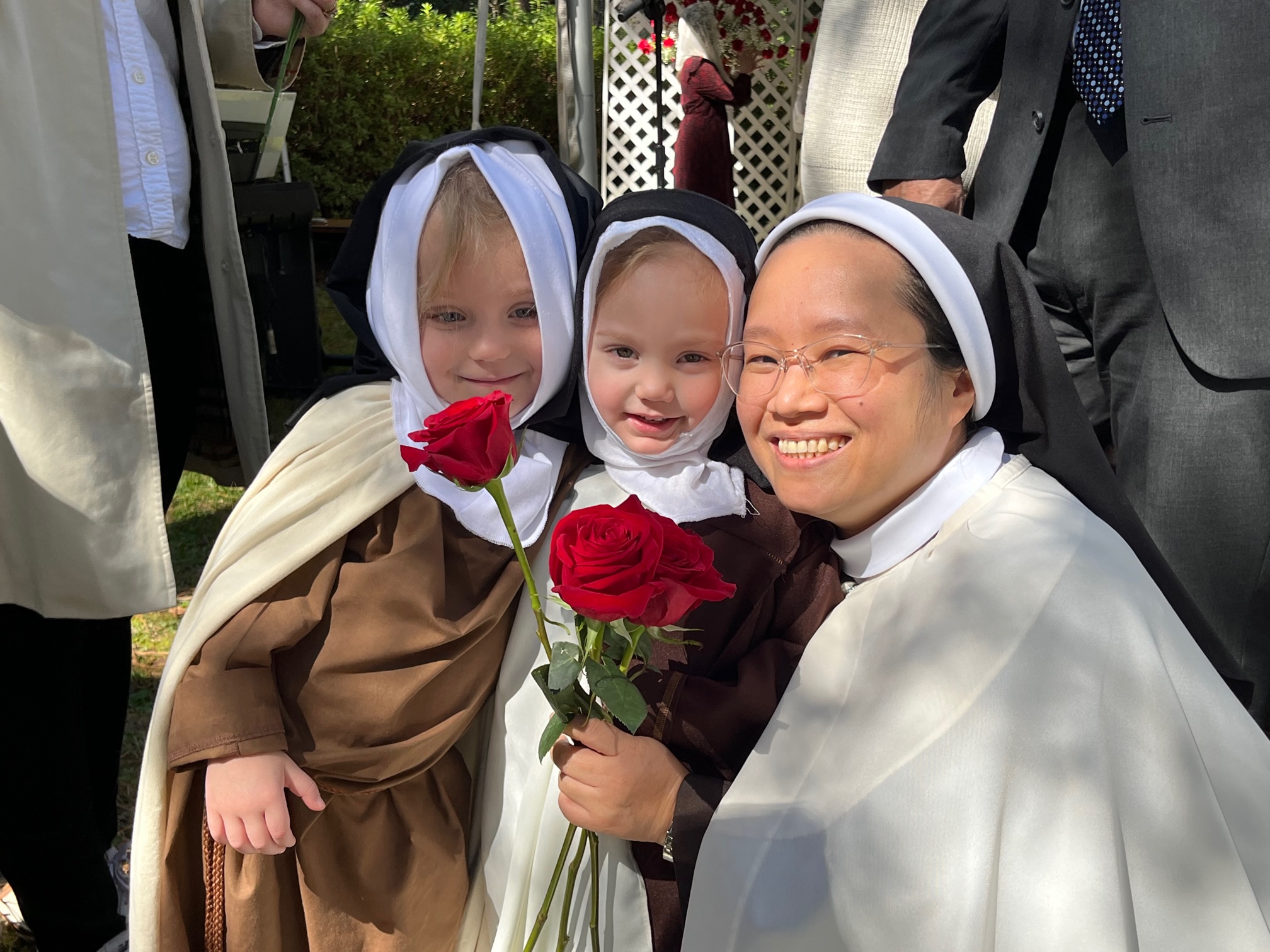
After two long years, the Discalced Carmelite Nuns of Covington, Louisiana will celebrate again on Sunday, October 2nd, for the first time since Covid hit, the annual “Mass of the Roses” in honor of St. Therese. This beautiful event begins with a musical prelude, followed by the celebration of the Eucharist, and the blessing and distribution of roses by children. After the Mass, homemade goods, and treats are sold which help pay for the nuns needs for the year. https://www.covingtoncarmel.org/mass-of-the-roses
St. Therese of Lisieux
St. Therese of the Child Jesus and the Holy Face is more commonly known for her way of “Spiritual Childhood” and devotion to The Child Jesus, however, her sister, Mother Agnes gave this testimony for St. Therese’ beatification:
“Devotion to the Holy Face was the Servant of God’s special attraction. As tender as was her devotion to the Child Jesus, it cannot be compared to her devotion to the Holy Face.”
St. Therese’ sister Celine (Sr. Genevieve of the Holy Face), also wrote: “Devotion to the Holy Face was, for Therese, the crown and complement of her love for the Sacred Humanity of Our Lord. The Blessed Face was the mirror wherein she beheld the Heart and Soul of her Well-Beloved. Just as the picture of a loved one serves to bring the whole person before us, so in the Holy Face of Christ Therese beheld the entire Humanity of Jesus. We can say unequivocally that this devotion was the burning inspiration of the Saint’s life… Her devotion to the Holy Face transcended, or more accurately, embraced, all the other attractions of her spiritual life.”
St. Therese
Canticle to the Holy Face
Jesus, Your ineffable image Is the star which guides my steps. Ah, You know, Your sweet Face Is for me Heaven on earth. My love discovers the charms Of Your Face adorned with tears. I smile through my own tears When I contemplate Your sorrows.
Oh! To console You I want To live unknown on earth! Your beauty, which You know how to veil, Discloses for me all its mystery. I would like to fly away to You!
Your Face is my only homeland. It’s my Kingdom of love. It’s my cheerful meadow. Each day, my sweet sun. It’s the Lily of the Valley Whose mysterious perfume Consoles my exiled soul, Making it taste the peace of Heaven.
It’s my Rest, my Sweetness And my melodious Lyre Your Face, O my Sweet Savior, Is the Divine Bouquet of Myrrh I want to keep on my heart!
Your Face is my only wealth. I ask for nothing more. Hiding myself in it unceasingly, I will resemble You, Jesus Leave in me, the Divine Impress Of Your features filled with sweetness, And soon I’ll become holy. I shall draw hearts to You.
So that I may gather A beautiful golden harvest, Deign to set me aflame with Your Fire. With Your adorned mouth, Give me soon the Eternal Kiss!
~ St. Therese
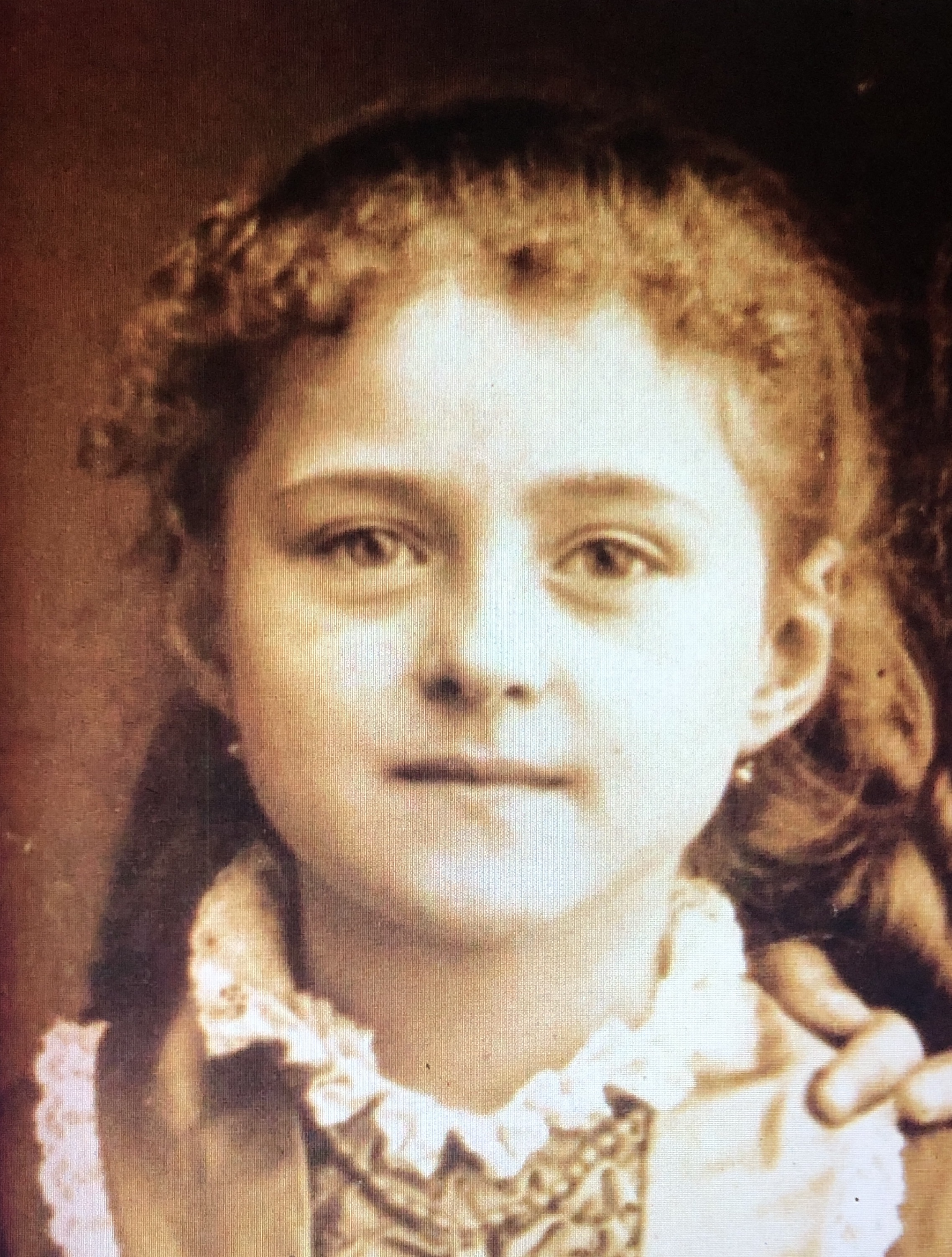
St. Therese shortly after her death
“Look at His adorable Face, His glazed and sunken eyes, His wounds. Look Jesus in the Face. There you will see how He loves us.”
“Your Veiled Gaze is Our Heaven…”
By St. Therese:
Holy Face Veil of Manoppello, Italy (Photo: Paul Badde/EWTN)
“O Adorable Face of Jesus! Our souls understand Your language of love; we want to dry Your gentle Face and to console You for the forgetfulness of the wicked. In their eyes You are still as one hidden; they look upon You as an object of contempt…
O Face more beautiful than the lilies and roses of springtime! You are not hidden from our eyes…The Tears that veil Your divine look seem to us like precious Diamonds which we want to collect to buy the souls of our brothers and sisters with their infinite value.
Veil of Manopello, Photo: Paul Badde/EWTN
From Your Adorable Mouth we have heard Your loving complaint. Since we know that the thirst which consumes You is a thirst for Love, we would wish to have an infinite Love to quench Your thirst…Beloved Bridegroom of our souls, if we had the love of all hearts, all that love would be for You! Then, heedless of our exile on the banks of Babylon, we will sing for your Ears the sweetest melodies. Since You are the true, the only Homeland of our hearts, we will not sing our songs in an alien land.
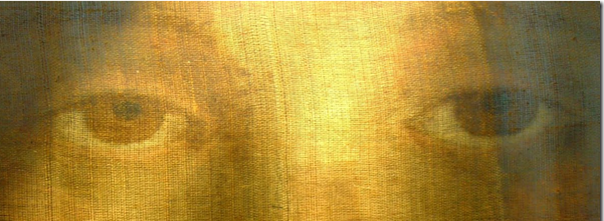
Eyes of Manoppello, photo: Paul Badde/EWTN
“The Living Face” of The Veil of Manoppello Photo: Paul Badde/EWTN
O Beloved Face of Jesus! As we await the everlasting day when we will contemplate Your infinite Glory, our one desire is to charm Your Divine Eyes by hiding our faces too so that here on earth no one can recognize us…O Jesus! Your Veiled Gaze is our Heaven!” –St. Therese of the Holy Face and the Child Jesus
St. Therese reliquary covered with rose petals. Shrine of the Holy Face of Manoppello. Nov. 4, 2006 (Photo: Paul Badde)
+++
Please pray for these dear Nuns who pray for us all. If you would like to contribute, donations may be mailed to:
The Discalced Carmelite Nuns, 73530 River Rd, Covington, LA 70435
Some of the Discalced Carmelite Nuns, and friends at a past Mass of the Roses in honor of St. Therese
May God reward you for your generosity!
Two “St. Therese” and one Sr. Teresita
Children distributing blessed roses photo: Patricia Enk
“O Jesus, whose adorable Face ravishes my heart, I implore Thee to fix deep within me Thy divine image and to set me on fire with Thy Love, that I may be found worthy to come to the contemplation of Thy glorious Face in Heaven.”


























 Illumina Domine Blog - Devotion to The Holy Face