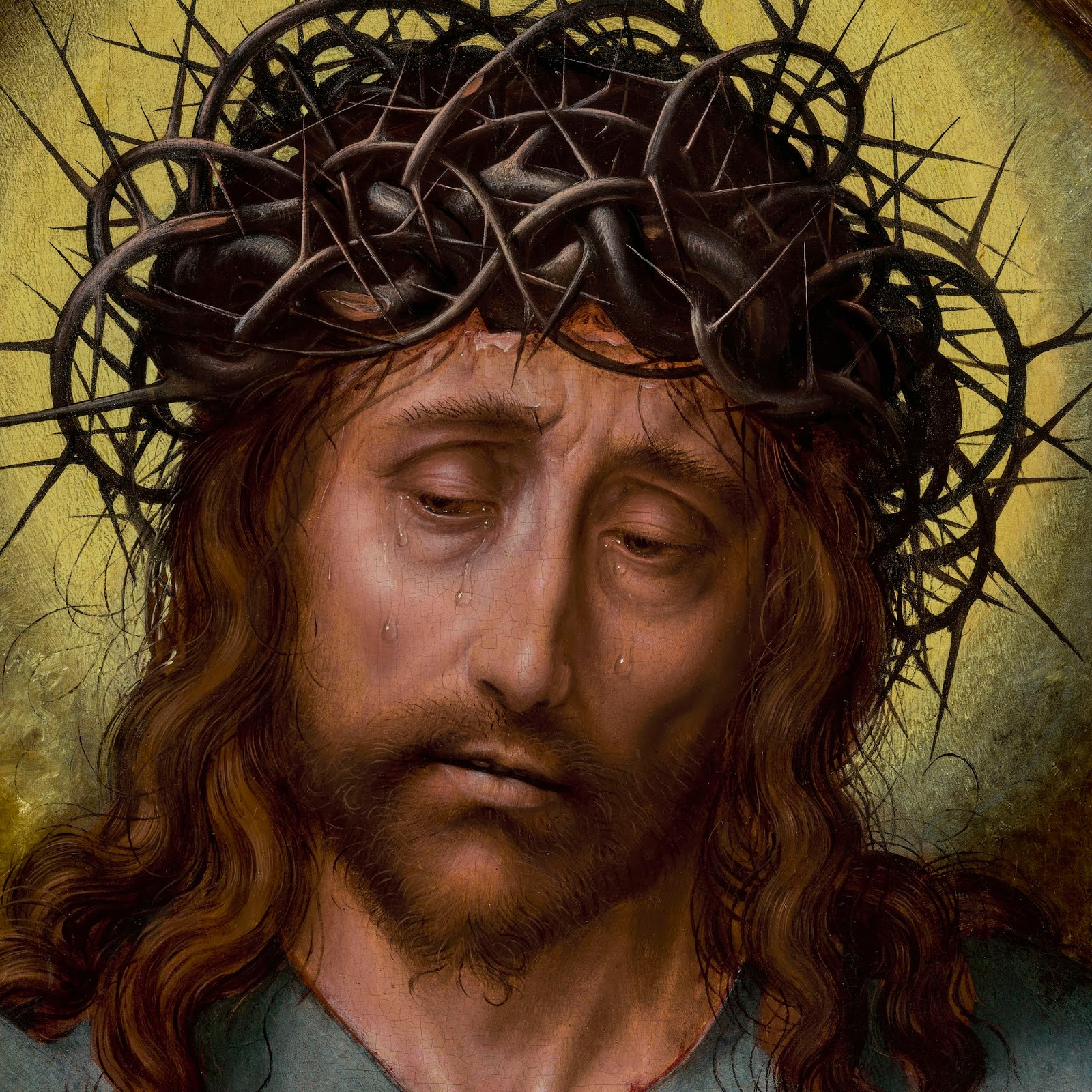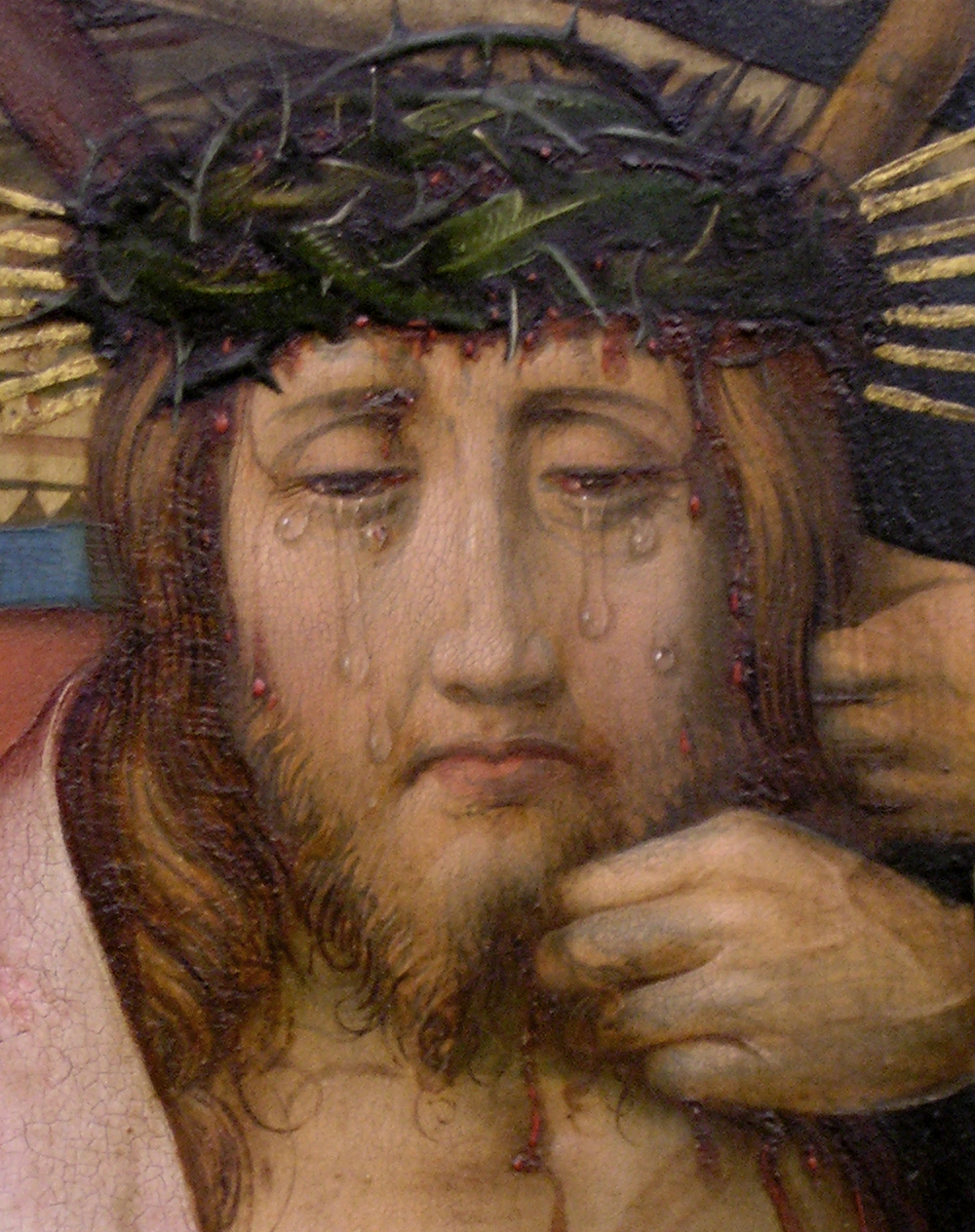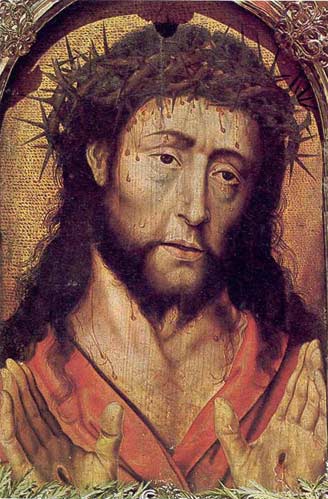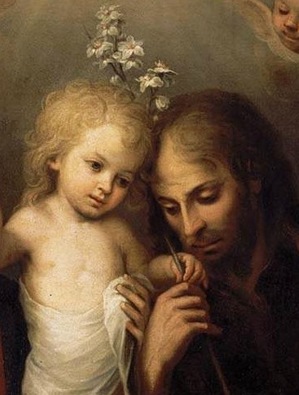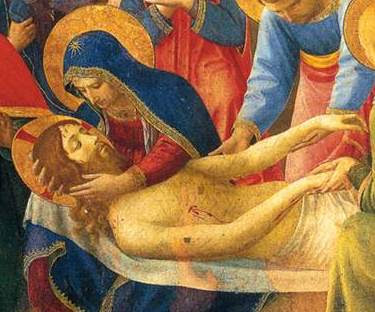
During Advent the Church celebrates the longing to see God’s Face, together with the Blessed Virgin Mary, with a Triduum (three days of prayer beginning on December 15) and a Feast (on December 18th)–It is called The Feast of the Expectation of the Blessed Virgin Mary, Longing to See His Face. The prayer may also be continued until Christmas.
Virgin in Prayer Artist: Sassoferrato 1640-50
Every expectant mother shares something with the Blessed Virgin Mary — the longing to see the face of her child. The mother cannot yet kiss or caress her baby, she cannot hear the sound of a cry, or smell that baby-sweetness, so she waits in loving attentiveness for the stirring of the babe beneath her heart, that fills her with joy and knowledge of the baby’s presence within.
During the 3rd week of Advent, on December 18th, in some places in the world the Church celebrates a beautifully contemplative feast which is called the Expectation of the Blessed Virgin Mary. The feast has it’s origin in the year 656 in Spain and spread throughout the Middle Ages. Because the ancient law of the Church prohibited the celebration of feasts during Lent, the Church transferred the Feast of the Annunciation from March 25th to the season of Advent. The Tenth Council of Toledo assigned the feast to the 18th of December. It was kept as a solemn octave, eight days leading to Christmas. When the ancient laws regarding fasts were changed, the Annunciation was celebrated twice, on March 25th and December 18th.
The Expectation of the Blessed Virgin Mary
On the days leading up to Christmas we are invited to contemplate, together with Mary, the Divine Child within her womb, who is Our Savior. We too, through sanctifying grace, bear the supernatural image of God within us. Like Mary, we desire to become a peaceful sanctuary for the living God. We are called to be attentive, in prayer, to the faint stirrings of His presence in our hearts, which will fill us with a deep longing to see His Face as we pray:
Prayer for the Triduum and Feast of the Expectation of the Blessed Virgin Mary, Longing to See His Face
“Mary, your life with Jesus was one of the purest, most fervent, most perfect emotions of longing and most eager expectation of the Birth of the Divine Child! How great must have been that longing! You were longing to see the Face of God and to be happy in the vision. You were soon really to see the Face of God, the created image of divine perfection, the sight of which rejoices heaven and earth, from which all being derive life and joy; the Face whose features enraptured God from all eternity, the Face for which all ages expectantly yearned. You were to see this Face unveiled, in all the beauty and grace as the face of your own child.
Most just indeed it is, O Holy Mother of God, that we should unite in that ardent desire which you had to see Him, who had been concealed for nine months in your chaste womb; to know the features of this Son of the heavenly Father, who is also your own; to come to that blissful hour of His birth, which will give glory to God in the highest, and on earth, peace to men of good will. Yes, dear Mother, the time is fast approaching, though not fast enough to satisfy your desires and ours. Make us re-double our attention to the great mystery; complete our preparation by your powerful prayers for us, so that when the solemn hour has come, our Jesus may find no obstacle to His entrance into our hearts. Amen.” (Prayer by Rev. Lawrence Lovasik, S.V.D.)
“Blessed are you, daughter, by the Most High God, above all the women on earth; and blessed be the LORD God, the creator of heaven and earth.” (Judith 13:18)
Miraculous image of Our Lady of Guadalupe
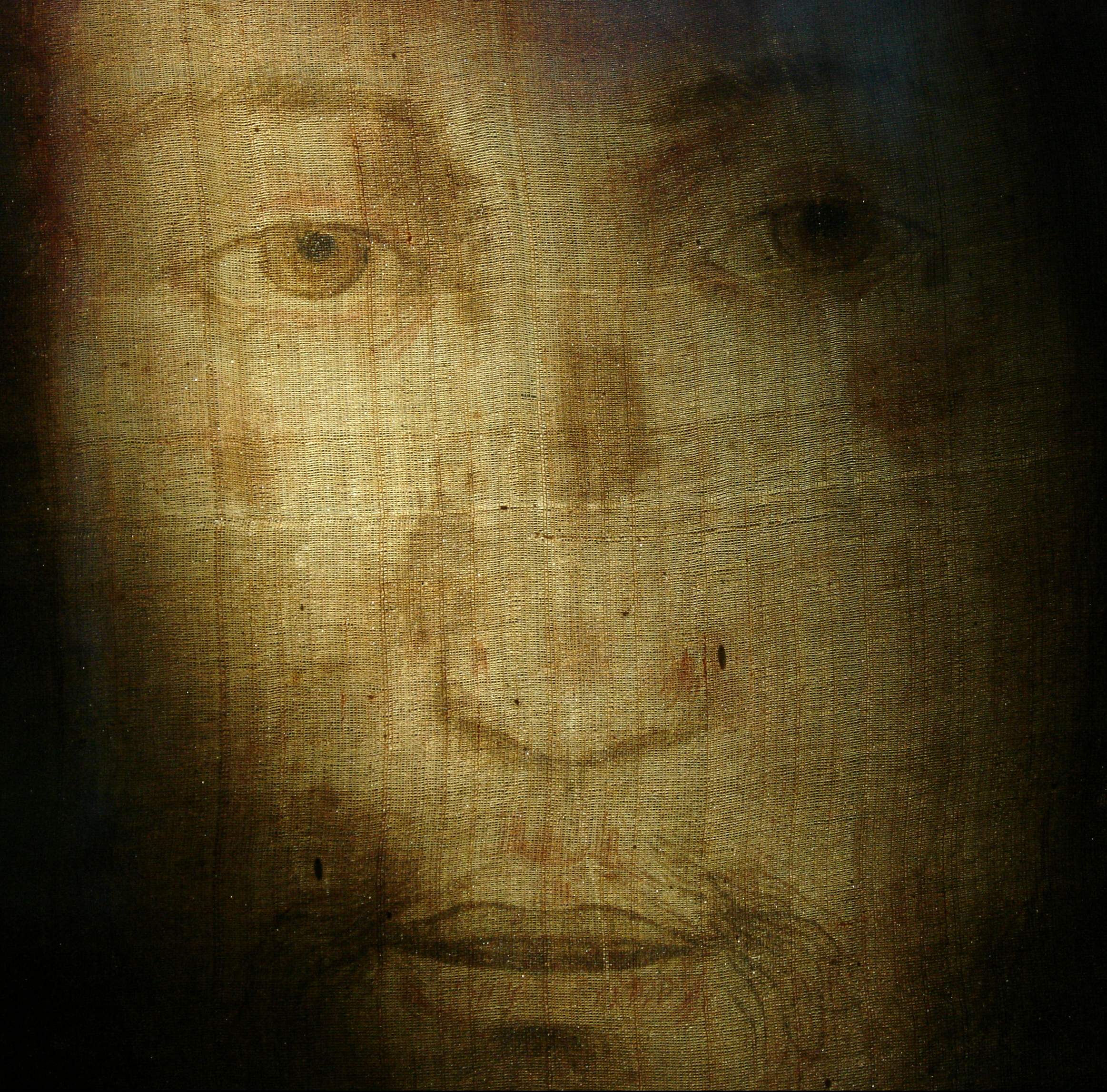
The miraculous image of Our Lady of Guadalupe, the Shroud of Turin, and “Il Volto Santo,” the veil of Manoppello all have something in common. They are all Acheiropoieta, a Greek word meaning: “made without hand.” They are said to have come into existence miraculously, not created by a human painter.
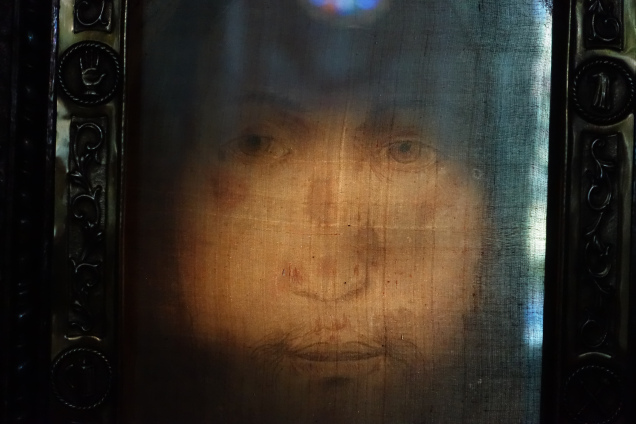
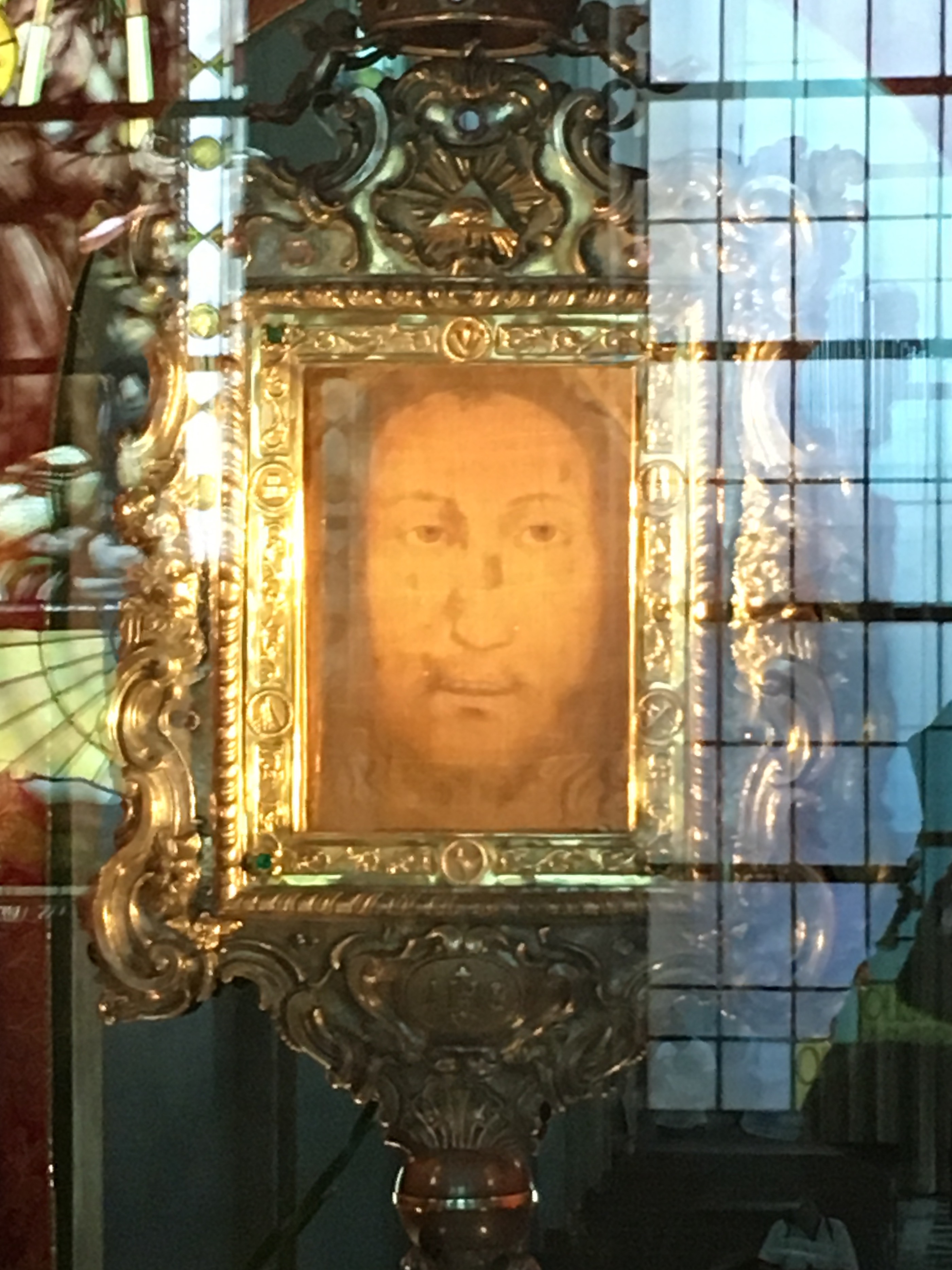
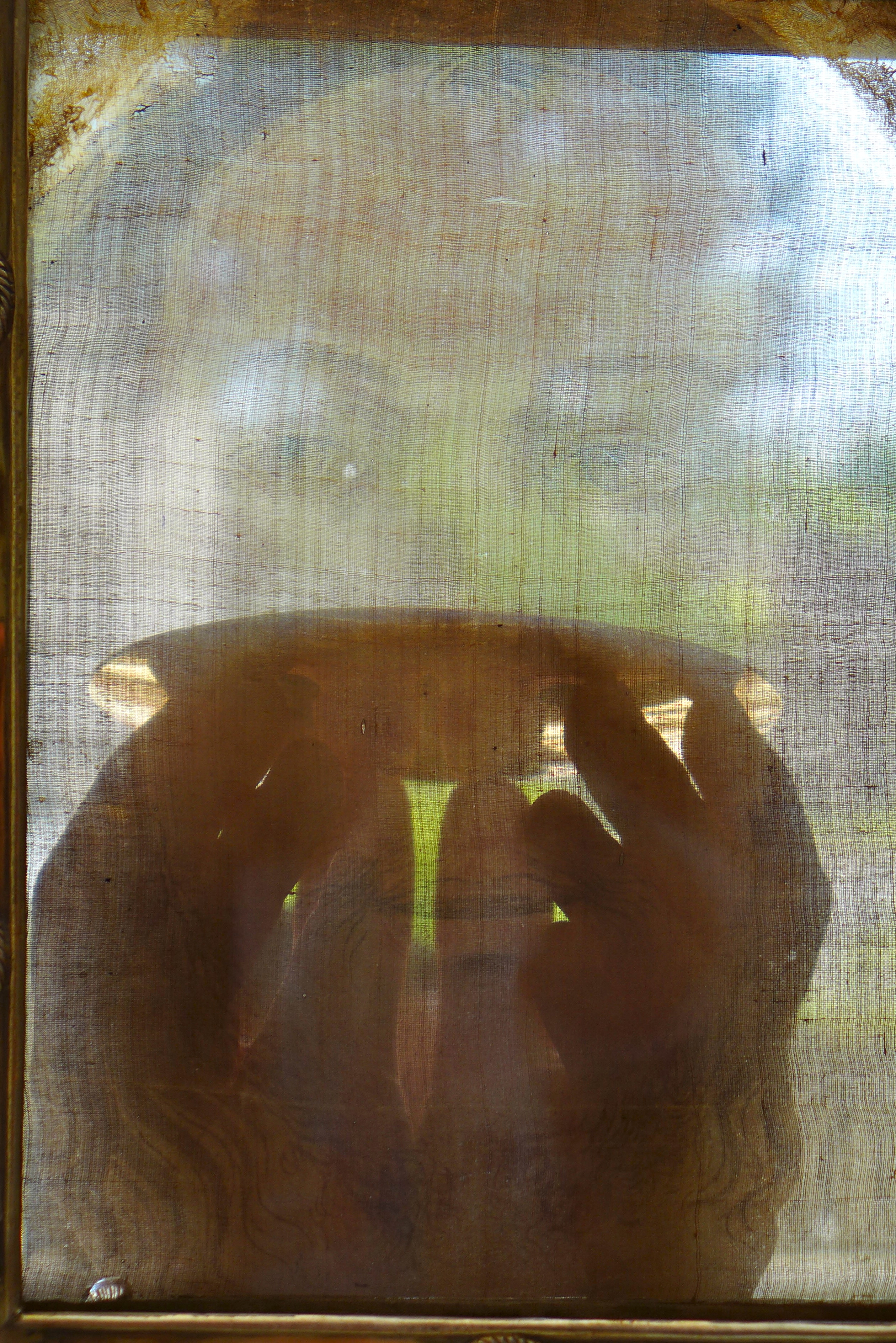
The relic Veil of the Holy Face of Manoppello, faintly seen in the light, through both sides.
Extensive research that has been done on these three images, and the results are astounding. Although I have not been to Mexico to view the miraculous tilma of Our Lady, I have seen both the Holy Shroud of Turin and the Veil of Manoppello in person, and have been deeply affected by them both. Studying them has been my own personal passion over the years.
Holy Face Veil of Manoppello, Italy (Photo: Paul Badde/EWTN)
Being an artist, (and near-sighted) I tend to look at things more closely. I love this photo above sent to me many years ago by the late author Paul Badde–The detail is incredible! Zoom in and you will see each fiber of the Veil of Manoppello; examine closely His eyes, nose, lips, teeth, and hair. One never tires of looking! To paint a human face an artist studies each little detail, shape, line, form, color, and value, and may spend hundreds of hours studying as they work. One can’t help but know every little nuance by the time one has finished painting. Sr. Blandina Paschalis Schloemer, a Trappist nun from Germany, is also an artist, a painter of icons. Icon painting is very exact when it is done in the traditional manner. Sr. Schloemer began to notice striking similarities between ancient icons and images of the Face of Christ, and the images on the Shroud of Turin and the Veil of Manoppello. With the permission of her order the research has become her life’s work as well as part of her vocation.
Pope Benedict meets Sr. Blandina at the Sanctuary Basilica for the Holy Face of Manoppello
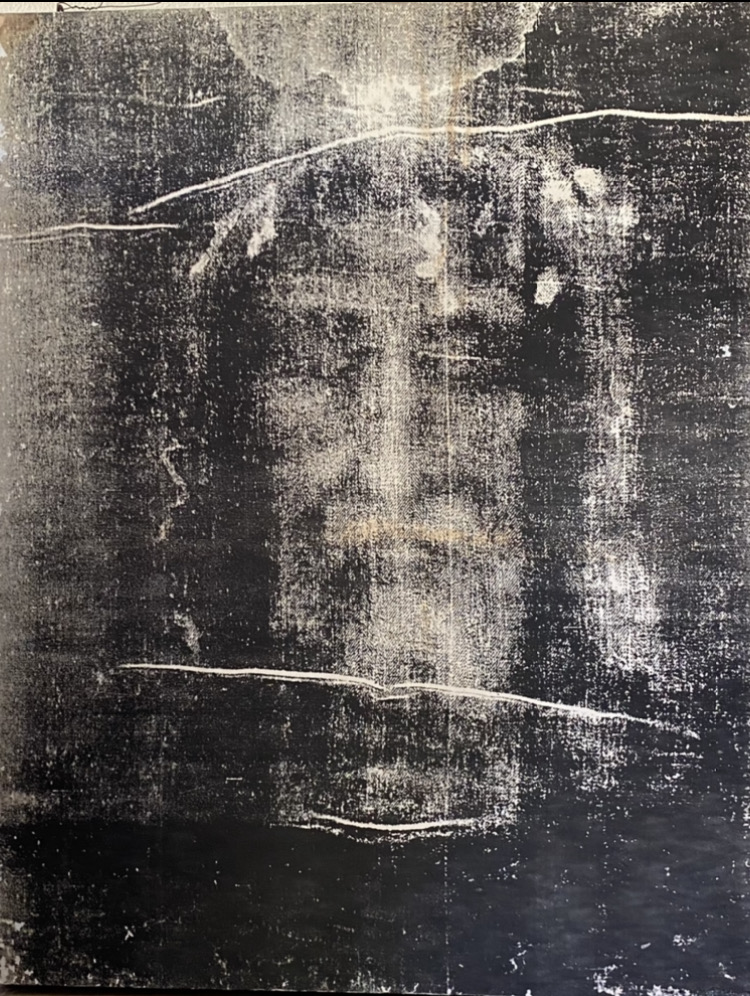
The Holy Face on the Shroud of Turin
Sr, Blandina’s research indicates that both images on the Shroud of Turin and the Manoppello Image are of the same man. I agree with her, wholeheartedly, although it is not at first glance apparent. There are also many similarities between these two images of Jesus’ Face and the image of Our Lady of Guadalupe. First, all are on a cloth. The image of Our Lady of Guadalupe is on cactus fiber, which should have disintegrated hundreds of years ago according to scientists. The Shroud of Turin is on linen and the Manoppello Image is on woven sea-silk, called byssus.
Our Lady of Guadalupe, pilgrim image beside the Veronica Altar, at St. Peter’s Basilica in Rome. Photo: Paul Badde, author of The Face of God: The Rediscovery of the True Face of Jesus, Ignatius Press.
Byssus is more rare and more precious than gold. Mentioned in the Bible, byssus, has a shimmering, iridescent quality which reflects light. Byssus is extremely delicate, yet strong at the same time. It resists water, weak acids, bases, ethers or alcohols. It can’t be painted, as it does not retain pigments, it can only be dyed; and then, only purple. Did I mention that it can last for more than 2000 years?
The veil of Manoppello, woven with byssus, is so sheer that you can read through it. Photo: Paul Badde
Another similarity between the Guadalupe image and the Manoppello image is the changeability of the images. Pilgrims have related how the image of Our Lady on the tilma appears to change in color, brightness and depth. Scientists can’t explain how the Guadalupe image appears on the tilma, it is not painted… it is “just there.” The Shroud of Turin has been described similarly. The veil of Manoppello, or “Il Volto Santo” as it is also known, is even more incredible, if that can be possible, because in addition to the image being on a veil so sheer that it can be read through; it also changes in detail, color, and shape. It even disappears… entirely. It is called a “living image” and so it is. No two people will see it in the same way. No single person will see it in the same way twice.
“Il Volto Santo of Manoppello”
Julian of Norwich, the English mystic of the 14th century, mentions changeability as a characteristic of the Veil of Veronica in Rome, “the diverse changing of color and countenance, sometime more comfortably life-like, sometime more rueful and death-like.” The Veil of Veronica, it is now believed, was most likely stolen a hundred years later, during the sack of Rome. But, Julian of Norwichs’ description of the Veil of Veronica certainly fits “Il Volto Santo” of Manoppello.
But, there is more. There is something about the faces… if you study the faces in particular, especially the eyes, as one opthamalogist did. On the eyes of Our Lady of Guadalupe, you will notice that something. Similar research has been done on the eyes of “Il Volto Santo.” There are delicate, natural, details in all three images that cannot be accomplished without the aid of paint or brush, on a rough, cactus cloth, or on a linen burial shroud or on gossamer-thin sea-silk. If you have an opportunity, look closely. Yes, there is something about the faces, and it is something supernatural. They are not made by human hands, but by the Hand of God.
“O Blessed Virgin Mary, Our Lady of Guadalupe,
By your presence you made the desert bloom with flowers
may your love transform us into the image of Your Son, Jesus Christ. Amen.”
+++
Roses in Winter
“A great sign appeared in the sky, a woman clothed with the sun, with the moon under her feet,and on her head a crown of twelve stars. She was with child…” (Rev. 12)
This story of Your Lady of Guadalupe begins in a very dark place. It was time of sin, suffering, and death, when the Aztecs sacrificed human beings to an idol that required human blood. In other words, a time not so different from our own, when millions of unborn children are sacrificed on the altar of “choice” to the idol of death. It was in this dark period of history, in the sixteenth century, that the Blessed Virgin Mary intervened for humanity. She was sent by God to defeat the culture of death at that time in Mexico. Like the “Woman” in Revelation, “clothed in the sun, with moon at her feet,” on December 9, 1531, she appeared to a poor man of no importance or influence, one of Mary’s “little ones,” Juan Diego. The beautiful young woman, whose clothing indicated that she was pregnant, called him by name as a mother would, “Juanito” – “little Juan.” She spoke to Juan:
Virgin Mother Our Lady of Guadalupe “God’s temple in heaven was opened, and the ark of his covenant could be seen in the temple.” (Rev. 11:19)
“I want you to know for certain, my dear son, that I am the perfect and always Virgin Mary, Mother of the True God from Whom all life comes, the Lord of all things, Creator of heaven and earth.”
The Blessed Mother then requested that Juan Diego go to his bishop and ask that a church be built in her honor, in which she would show —
“…all my love, compassion and protection. I am your Mother full of mercy and love for you and all those who love me, trust in me, and have recourse to me. I will hear their complaints, and I will comfort their affliction, and their sufferings.”
However, when Juan repeated her words to Bishop Zumarraga, the bishop, fearing an illusion, was skeptical, and sent Juan away. But in his heart Bishop Zumarraga prayed, asking God for a sign of Castillian Roses, which only grew in the bishop’s native country of Spain.
She appeared again to Juan Diego and finally, early in the morning of December 12th, the Blessed Mother asked him to return to the bishop. She instructing him first to go to the top of Tepeyac Hill “and pick the flowers that you find there and bring them to me.” Although, it was too cold and dry for flowers to grow, Juan obediently climbed the hill and discovered beautiful, sweet-smelling roses growing there, which he gathered up into his tilma – a sort of working cloak made of cactus fiber. Our Lady then, with her own hands, carefully arranged the roses in his tilma. She told Juan to give them to the bishop as a sign that he should build the church.
After running all the way to the bishop’s residence, Juan was made to wait for hours by some servants, who, curious about what he held so closely in his tilma, tried to force Juan to show them. Finally, they informed the bishop that Juan was waiting, and Juan rushed to the bishop, who was meeting with other people in the room, and he unfolded his cloak. The roses, still covered with dew, tumbled to the floor, revealing on the tilma the beautiful image of the Blessed Mother. The bishop and the others fell to their knees.
The Indians, upon seeing the miraculous image, recognized the rich symbolism contained within it as coming from heaven. Thus, they converted by the millions, and their religion of human sacrifice was ended.
The tilma miraculously exists to this day, though the cactus fiber should have disintegrated after forty years. In the past century, even when a load of dynamite was exploded just below it the blast severely damaged everything around it, but did not touch the image. There is no paint or pigment on the image of Our Lady of Guadalupe. It is an “Acheiropoieta,” a Greek word meaning: “made without human hands.” Like other acheiropoieta, such as the Shroud of Turin, and the Veil of Manoppello, there is no scientific explanation for the image’s existence, except, that it was made by the hand of God, “the true God, from Whom all life comes, the Lord of all things, Creator of Heaven and earth.” Images such as these are ongoing miracles – tangible signs of God’s mercy and love. Let us ask Him then, through the intercession of Our Lady of Guadalupe, to redeem this generation, mired in the deep darkness of sin, death, and idolatry, to bring Light and roses of life into the cold darkness — to save the lives of the unborn, and convert souls by turning them, once again, away from idols and back to the Face of her Son and her God; who suffered, died and rose from the dead.
Relic veil of the Holy Face of Manoppelllo (Photo: Patricia Enk)
These three miraculous images created by God have something else in common–They draw us by love, and not by fear to God. He condescends towards mankind to draw us to himself, inviting us to look more closely at the pure and lovely face of His own mother, and his own Holy Face; to contemplate his great humility, goodness, mercy and love.
From a sermon by Saint Peter Chrysologus — Love desires to see God:
“When God saw the world falling to ruin because of fear, he immediately acted to call it to himself by his love. He invited it by his grace, preserved it by his love, and embraced it with compassion. When the earth had become hardened in evil, God sent the flood both to punish and to release it. He called Noah to be the father of a new era, urged him with kind words, and showed that he trusted him; he gave him fatherly instruction about the present calamity, and through his grace, consoled him with hope for the future.
But God did not merely issue commands; rather with Noah sharing the work, he filled the art with the future seed of the whole world. The sense of loving fellowship thus engendered removed servile fear, and a mutual love could continue to preserve what shared labor had effected.
God called Abraham out of the heathen world, symbolically lengthened his name, and made him the father of all believers. God walked with him on his journeys, and protected him in foreign lands, enriched him with earthly possessions, and honored him with victories. He made a covenant with him, saved him from harm, accepted his hospitality, and astonished him by giving him the offspring he had despaired of. Favored with so many graces and drawn by such great sweetness of divine love, Abraham was to learn to loved God rather than fear him, and love rather than fear was to inspire his worship.
God comforted Jacob by a dream during his flight, roused him to combat upon his return, and encircled him with a wrestler’s embrace to teach him not to be afraid of the author of the conflict, but to love him. God called Moses as a father would, and with fatherly affection invited him to become the liberator of his people. In all these events we have recalled, the flame of divine love enkindled human hearts and its intoxication overflowed into men’s senses.
Wounded by love, they longed to look upon God with their bodily eyes. Yet how could our narrow human vision apprehend God, whom the whole world cannot contain? But the law of love is not concerned with what will be, what ought to be, what can be. Love does not reflect; it is unreasonable and knows no moderation. Love refuses to consoled when its goal proves impossible, despises al hindrances to the attainment of its object.
Love destroys the lover if he cannot obtain what he loves; love follows its own prompting, and does not think of right or wrong. Love inflames desire which impels it toward things that are forbidden. But why continue?
It’s intolerable for love not to see the object of its longing. That is why whatever reward they merited was nothing to the saints if they could not see the Lord. A love that desires to see God may not have reasonableness on its side, but it is the evidence of filial love. It gave Moses the temerity to say: If I have found favor in your eyes, show me your face. It inspired the psalmist to make the same prayer:
Show me your face.
Even the pagans made their images for this purpose: they wanted actually to see what they mistakingly revered.”
“Thou art all fair, my love, there is no spot in thee.” (Song of Solomon 4:7)
“From the greatness and beauty of created things comes a corresponding perception of their Creator,” “for the author of beauty created them.” (Wisdom 13: 3, 5)
The spiritual beauty of God is reflected most perfectly in the woman He created to be His Mother. No stain of sin would mar the beauty of His reflection in her soul. Never for one instant would she be under the power of the devil. “The Blessed Virgin Mary, in the first instance of her conception, by a singular grace and privilege granted by Almighty God, in view of the merits of Jesus Christ, the Savior of the human race, was preserved free from all stain of original sin.” (Dogma of the Immaculate Conception) Mary herself proclaims, “My spirit has rejoiced in God my Savior.” (Luke 1:47)
As the Immaculate Conception, Mary bears in herself the most perfect reflection of the face of God. Pope St. John Paul II wrote, “The Blessed Virgin saw shining upon her, as no other creature, the face of the Father, rich in grace and mercy.” What in Heaven and on earth could be more beautiful than the Mother of God? It is God who has willed that Mary be beautiful, not only fair in face, but in the fullness of grace. Yet, beauty has a purpose, and that is to draw us by the beauty of the graces God has given her towards the Beatific Vision–the Face of God. Mary has no greater desire than that we turn towards the Face of her Son, as she does, with eyes of love.
Strangely, there are some who see the Blessed Mother not as a gift from God who leads us to her Son, but as an obstacle. We increasingly see acts of vandalism to statues and images of the Blessed Virgin Mary–the demons fear her beauty! They want to separate the Mother from the Son, even resorting to violence of smashing statues and slashing paintings of her, mistakenly thinking that somehow this could be pleasing to God, but it is only pleasing to the devil. It is blasphemy. When we separate ourselves from Mary, we separate ourselves from Christ. In The Everlasting Man G.K. Chesterton tells a story from his childhood, many years before he became a Catholic, which left a deep impression on his soul:
“When I was a boy a more Puritan generation objected to a statue upon my parish church representing the Virgin and Child. After much controversy, they compromised by taking away the Child. One would think that this was even more corrupted with Mariolatry, unless the mother was counted less dangerous when deprived of a sort of weapon. But the practical difficulty is also a parable. You cannot chip away the statue of a mother from all round that of a newborn child. You cannot suspend the new-born child in mid-air; indeed you cannot really have a statue of a newborn child at all. Similarly, you cannot suspend the idea of a newborn child in the void or think of him without thinking of his mother. You cannot visit the child without visiting the mother, you cannot in common human life approach the child except through the mother. If we are to think of Christ in this aspect at all, the other idea follows I as it is followed in history. We must either leave Christ out of Christmas, or Christmas out of Christ, or we must admit, if only as we admit it in an old picture, that those holy heads are too near together for the haloes not to mingle and cross.”
Jesus alone is “the Way” that leads to the Father, but Mary is the most beautiful image and likeness of Christ, which will lead us to Him. Dostoevsky once said that “Beauty will save the world!” Mary has a spiritual beauty to share with the world that attracts and expresses what is beyond words, in the depths of her heart, the love of a mother for her Savior and Son.
“Our Lady, in whose face – more than any other creature – we can recognize the features of the Incarnate Word.” –Pope Benedict XVI Madonna and Child from the Robert Lehman Collection, Metropolitan Museum of Art
A Little Litany by G.K.Chesterton
When God turned back eternity and was young, Ancient of Days, grown little for your mirth (As under the low arch the land is bright) Peered through you, gate of heaven – and saw the earth.
Or shutting out his shining skies awhile Built you about him for a house of gold To see in pictured walls his storied world Return upon him as a tale is told.
Or found his mirror there; the only glass That would not break with that unbearable light Till in a corner of the high dark house God looked on God, as ghosts meet in the night.
Star of his morning; that unfallen star In the strange starry overturn of space When earth and sky changed places for an hour And heaven looked upwards in a human face.
Or young on your strong knees and lifted up Wisdom cried out, whose voice is in the street, And more than twilight of twiformed cherubim Made of his throne indeed a mercy-seat.
Or risen from play at your pale raiment’s hem God, grown adventurous from all time’s repose, Of your tall body climbed the ivory tower And kissed upon your mouth the mystic rose.
Miraculous Image of Our Lady of Guadalupe “I am your merciful Mother.”
“Look Closely – Our Lady of Guadalupe – Not Made by Human Hands” click here.
Basilica of Il Volto Santo in Manoppello, Italy. (Photo:Paul Badde/EWTN)
St. Anselm wrote about the desire of every human soul created in the image and likeness of God; the desire to see God’s Face, especially in the midst of hectic days leading up to Christmas. It is a beautiful reflection for Advent, reminding us to pause often to seek God’s Face.
From the “Prosologian” — the words of St. Anselm, Bishop:
“Insignificant man, escape from your everyday business for a short while, hide for a moment from your restless thoughts. Break off from your cares and troubles and be less concerned about your tasks and labors. Make a little time for God and rest a while in him.
Enter into your mind’s inner chamber. Shut out everything but God and whatever helps you to seek him; and when you have shut the door, look for him. Speak now to God and say with your whole heart: I seek your face; your face, Lord, I desire.
Lord, my God, teach my heart where and how to seek you, where and how to find you. Lord, if you are not here where shall I look for you in your absence? Yet if you are everywhere, why do I not see you when you are present? But surely you dwell in ‘light inaccessible.’ And where is ‘light inaccessible? How shall I approach light inaccessible? Or who will lead me and bring me into it that I may see you there? And then, by what forms shall I seek you? I have never seen you, Lord my God; I do not know your face.
Lord most high, what shall this exile do, so far from you? What shall your servant do, tormented by love of you and cast so far from your face? He yearns to see you, and your face is too far from him. He desires to approach you, and your dwelling is unapproachable. He longs to find you, and does not know your dwelling place. He strives to look for you, and does not know your face.
Lord, you are my God and you are my Lord, and I have never seen you. You have made me, and remade me, and you have given me all the good things I possess and still I do not know you. I was made in order to see you, and I have not yet done that for which I was made.
Lord, how long will it be? How long, Lord, will you forget us? How long will you turn your face away from us? When will you look upon us and hear us? When will you enlighten our eyes and show us your face? When will you give yourself back to us?
Look upon us, Lord, hear us and enlighten us, show us your very self. Restore yourself to us that it may go well with us whose life is so evil without you. Take pity on our efforts and our striving toward you, for we have no strength apart from you.
Teach me to seek you, and when I seek you show yourself to me, for I cannot seek you unless you teach me, nor can I find you unless you show yourself to me. Let me seek you in desiring you and desire you in seeking you, find you in loving you and love you in finding you.”
“Make a little time for God.” Blessed Sacrament Chapel in the Loreto Shrine. (Photo: Patricia Enk)
Fr. Daren Zehnle, a 47-year old Roman Catholic priest from the Diocese of Springfield, Illinois, passed away on November 27th after suffering a stroke. He was born on March 26, 1978, in Quincy, Illinois. His short life was marked by profound loss–he was a twin, but had lost his brother Matthew shortly after birth. By the age of ten he had already lost both his parents; his father, Bill, at eight, and his mother, Pat, at the age of ten to brain cancer. Fr. Zehnle found solace in his faith, “It might seem strange to say that my parents’ death led me to God, but they did, I realized somehow that I needed to draw close to — and stay close –to God. I felt safe, at peace, and comforted when I prayed.” Fr. Daren was ordained a priest on May 28, 2005, by Bishop George J. Lucas.
Relic Veil of the Holy Face in Manoppello, Italy (Photo: Patricia Enk)
Fr. Daren Zehnle at the altar. (sent by Antonio Bini)
Fr. Zehnle had a deep love and devotion to the Holy Face of Manoppello in Italy, which he wrote about often on his “Servant and Steward” blog. (link is to a conference talk, in which he gave a beautiful reflection, on the Face of Mercy–the Holy Face of Manoppello.) It was through a shared devotion of the Holy Face that I was fortunate enough to get to know him while he was pursuing a Licentiate in Canon Law from the Pontifical Gregorian University in Rome. He went on to hold various positions, including Parochial Vicar at St. Anthony of Padua Parish. Pastor of Sacred Heart Parish, and director of campus ministry at Quincy University. Fr. Daren also had a very special devotion to Venerable Augustus Tolton, and St. Damien of Molokai. He was known as an extraordinary priest, and a faithful and good shepherd, and will be very missed by all who knew him. In an interview with “Catholic Times” last year, when asked what he would say to his loved ones when he meets them in heaven, he replied with moving simplicity: “I expect they will say to me what I will probably say to them, “I’ve missed you.”
Eternal rest grant unto him, O Lord, and let perpetual light shine upon him. Through the mercy of God, may he Rest In Peace. Amen.
Fr. Zehnle sent Antonio Bini this photo as well. Antonio had met Fr. Zehnle many times when he visited The Basilica Shrine of the Holy Face in Manoppello–he remembers him as “Always smiling, positive, and deeply devoted to the Holy Face, which he enthroned on April 9, 2023, Easter Sunday, in St. Augustine Church in Ashland, Illinois, where he was a parish priest.
Jesus Christ is our God and King, and yet… He is also very much hidden and unknown, except through the eyes of Faith. He is a King who chooses to come to us in the most humble form of bread and wine in the Holy Sacrifice of the Mass.
We are surrounded on every side by invisible, supernatural realities which require the gift of Faith. But God comes to our aid in our weakness, even in our own time, there have been Eucharistic Miracles; the extraordinary manifestations of the invisible reality of Christ’s Body, Blood, Soul and Divinity being truly present in the Eucharist.
Vilakannur Miracle. Priest holds carefully in his hands the Holy Eucharist on which the Face of Christ Miraculously appeared during Mass.
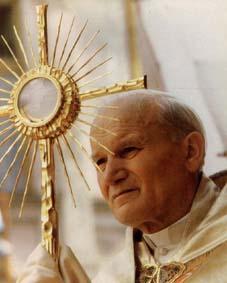
It was Pope St. John Paul II who first coined the phrase “Eucharistic Face of Christ.” These words from the fourth Psalm were the inspiration for him to place the millennium under “the radiant sign of the Face of Christ:”
“Many are saying ‘Who will show us anything good?’ Lift up the light of Your Face upon us, LORD!” (Ps. 4:6)
St. Pope John Paul II “In the Eucharist, the Face of Christ is turned towards us.”
Dr. Brant Pitre, writes in his book “Jesus and the Jewish Roots of the Eucharist, that the Eucharist was prefigured by the manna that God gave to Moses: “When the Israelites saw it, they said to each other, “What is it? For they did not know what it was. Moses said to them, “it is the bread the LORD has given you to eat.” (Exodus 16:15) The Eucharist was also prefigured by the mysterious “Bread of the Presence” also known as the “Bread of the Face of God” mentioned in Exodus. On special feasts, the Bread of the Presence would be brought out for pilgrims to see, and the priests would declare, “Behold God’s love for you!”
St. Pio at the moment of Consecration, when the bread and wine become the Body and Blood of Jesus Christ.
Paten viewed through the Veil of the Holy Face of Manoppello. (Photo: Paul Badde)
Jesus said to them, Amen, Amen, I say to you, it was not Moses who gave the bread from Heaven; my Father gives you the true bread from heaven. For the bread of God is that which comes down from heaven and gives life to the world… I am the bread of life; whoever comes to me will never hunger and whoever believes in me will never thirst.” (John 6: 32-35) “I am the living bread that came down from heaven; whoever eats this bread will live forever; and the bread that I will give is My flesh for the life of the world.” (John 6:51)
We should use whatever means at our disposal to share this good news to draw souls to Christ Our King.
Therefore, I would like to share a beautiful and powerful short film, “The Real Presence: The Mass” to awaken hearts to the truth of the Eucharist and reveal what is really happening at every Catholic Mass. This 28-minute video reveals the unseen spiritual reality behind the Catholic Mass– through scenes from an actual Mass, and the use of artistically augmented reality–the “unseen spiritual reality” such as the participation of the angels and saints, and the mystical beauty of the liturgy is portrayed in the film — including the Real Presence of Jesus Christ, Our King, Who heals, forgives and transforms us into His own Image — Our King, Who is truly present in the Eucharist.
The film also features commentary from Nationally recognized Catholic theologians and speakers such as: Deacon Harold Burke-Sivers, Dr. Scott Hahn, Sr. Bethany Madonna of the Sisters of Life, Curtis A. Martin, Sr. Briege McKenna, His Eminence Christophe Cardinal Pierre, Bishop Erik T. Pohlmeier, Fr. Mike Schmitz, Fr. Robert Spitzer, and Bishop David L. Toups.
Please share this excellent film with others!
(To read more about Eucharistic miracles: “Behold God’s Love for You” (St. Carlo Acutis’s passion to share miracles of the Eucharist through a website.) And “A Relic of Divinity”. (The recently approved Eucharistic Miracle in Kerala, India; the Face of Jesus Christ appearing on a Host during the Consecration of the Mass.)
Photo: by Paul Badde, of the Basilica Shrine of the Holy Face in Manoppello, Italy.
Paul Badde, beloved friend of so many around the world, passed away last night in his home. He died just a short distance from his beloved Holy Face held in the Basilica Shrine of Il Volto Santo, in Manoppello, Italy. Paul passionately believed in, studied, and sacrificed to spread the word of the “re-discovery” of the miraculous Veil of the Holy Face. May he rest in peace, and may God reward Paul for all he has done for love of Christ Jesus and His Blessed Mother.
The Holy Face of Manoppello and Paul Badde(CNS photo/Paul Haring)
Please pray for the repose of his soul and for the consolation of his wife, Ellen and their family.
May Paul, our brother in Christ, gaze on God’s Face for all eternity! Holy Face of Manoppello, (Photo: Paul Badde/EWTN)
Pope Benedict XVI meets Sr. Blandina Paschalis Schlomer on his visit to the Sanctuary of the Holy Face in Manoppello, as Fr. Heinrich Pfeiffer, and a very happy Paul Badde look on.
A statement from the Basilica Volto Santo di Manoppello:
” Paul Badde has returned to the Father’s House.
Born in Germany, near Aachen, in 1948, a former teacher of political history, Badde worked as a journalist at the prestigious German newspaper “Frankfurter Allgemeine Zeitung” and from 2000 to 2013 was the Jerusalem and Rome correspondent for “Die Welt,”
Since discovering the existence of the Holy Face, Paul has never had any doubts that it was the authentic image of the human and divine Face of Christ, and as a scholar, he has authored numerous pioneering volumes of historic and theological studies on the important relic preserved in the Abruzzo town. Among others, we recall “The Second Shroud”[his first book about the Sudarium] in 2006, which, translated into several languages, was a veritable springboard for knowledge of the Holy Face throughout the world and consequently for the spread of devotion to it; as well as the Manoppello treasure of 2017 and the important booklet, “Jesus in His Burial Cloths.”
Paul Badde, along with his wife Ellen, his great supporter and ever-present companion in his travels and research, had spent many years in Manoppello, right near the Basilica of the Holy Face, thus becoming not only part of the community but a true point of reference for all.
The Capuchin Friars of the Sanctuary and all the faithful, grateful for his kind and discreet presence, will always remember Paul with great affection and gratitude and extend their deepest sympathies to his wife Ellen and his entire family.
Dear Paul, after having venerated Him so much on this earth, you are now finally contemplating the Face of God in Heaven. Lord, we pray with all our hearts that the light of Your endless glory may shine upon Paul eternally and console the family in this moment of grief following the earthly separation from their beloved relative.”
–Seraphic Province of the Immaculate Conception OFM Cap., Municipality of Manoppello.
Pope Benedict XVI with Paul Badde on the occasion of the Pope’s pilgrimage to see The Holy Veil in 2006.
Paul Badde contemplating the Holy Veil of Manoppello Photo: Alan Holdren
What an honor it has been to know Paul Badde; God bless his memory!
Msgr. Walter Amaducci presents a copy of his book on the Holy Face of Manoppello to Pope Leo XIV
English edition of Msgr. Amaducci’s book “The Holy Face.”
First, some good news: This October, Msgr. Walter Amaducci, Episcopal Vicar for Pastoral Care in the Diocese of Cesena in Emilia-Romagne, was received in a private audience by Pope Leo XIV. During their cordial meeting, Msgr. Amaducci presented the Pope with a copy of his book on the Holy Face of Manoppello. Msgr. Amaducci, who was once a skeptic of the relic veil known as “Il Volto Santo,” has now become its ardent defender, recognizing in the remarkable history, its importance for this millennium–dedicated to the Face of Christ by Pope St. John Paul II.
During his meeting with Pope Leo XIV, the gracious Msgr. Amaducci also advised the Holy Father to seek further information about the relic from Cardinal Louis Antonio Tagle, who has been personally involved in spreading the good news of the Holy Veil of Manoppello for many years.
Padre Carmine Cucinelli, the former Rector of Basilica Sanctuary of the Holy Face and Cardinal Tagle (2017)
On his first visit to see the Holy Face of Manoppello, on May 20, 2017, Cardinal Tagle, shared his experience: (Translation from the original Italian interview, which may be seen here.) — “I saw the Holy Face under the changing of the light, not only a Face of tenderness, but of welcoming. I saw a Face smiling at me, almost saying, “Welcome Luis Antonio!” It is a Face that speaks, it is alive, yes, it is the message, the Word is the Face. It is also a Face turned towards me, but I did not feel fear; fear in front of a judge, or of a face which condemns. A Face of Truth, and the Truth is love; love wins out over fear. I thought this afternoon perhaps this is the Last Judgement–it is not a judgement full of fear and dread, but in front of pure love–I do not want to hide myself. There is no reason to hide myself, but, there is only the reason to open my heart in front of a Face open to love, open to welcoming, open to pardoning my mistakes. It is an experience of liberation, and religious experience for me.”
Cardinal Tagle elevating the Body of Christ at the Basilica Shrine of the Holy Face of Manoppello, Italy (Photo: Paul Badde/EWTN)
At the closing of Cardinal Tagle’s homily the next day, May 21, 2017, he said: “We see the Face of Jesus because He reveals His Face to us, the Face of the loving God. His is the Face of God turned towards us and not centered on Himself. His is the Face of the One who fulfilled the commandment of love. As we see and hear His Face may our faces be transformed into His Holy Face. Through the testimony of our faces, may the suffering people of the world know that Jesus sees them, listens to them, cares for them and loves them.”
A Blessed Encounter with the Holy Face of Jesus
(Photo: Patricia Enk)
Cardinal Tagle has also said, “What we have seen and heard we must share with others.”
Mountain “The Catholic Traveler” Butorac stands next to the Relic Veil of the Holy Face in the Basilica Shrine of Il Volto Santo in Manoppello, Italy. (Photo: Patricia Enk)
And so, I would like to share with tremendous gratitude in my heart, that I have just returned from a Jubilee Year of Hope pilgrimage, which brought me back to Rome, Assisi, Loreto and especially to Manoppello after far too many years–thanks to Mountain Butorac, a.k.a. “The Catholic Traveler.”
Earlier this year Mountain had led my husband and I on an exceptional pilgrimage to the Holy Land, and so now we have a great deal of confidence in the gifts and talents that God has given him to make even the most daunting pilgrimage journey happen–with as few bumps along the way as possible–and many joyful and holy surprises as well.
And speaking of joy and holy surprises… we saw the Pope!
Pope Leo XIV recognizing some very happy & shouting pilgrims from the “Windy City.” (Photo: Patricia Enk)
My last visit to the Basilica Shrine of “Il Volto Santo” was in the Jubilee Year of Mercy, in 2016–which we had traveled to on our own over nine years ago: (Pilgrimage — A Journey Toward the Face of God, Part 1 – Manoppello.) Much had happened in the following nine years which prevented our return; some good and some bad; including the loss of my eyesight for over a year, and after several surgeries–a gradual recovery–thanks be to God!
Sr. Petra-Maria, Cynthia Krystyna Simla reverencing the Holy Face relic. (Photo: Patricia Enk, 2016)
For this pilgrimage journey, our small group of fellow pilgrims were a continual source of unexpected blessing, help, and inspirations at each step along the way. Mountain shouldered the stress whenever “the best laid plans of mice and men” went a little astray, but with the end result always turning out even better than originally planned: such as the day that the Sistine Chapel was going to be closed to the public when we had been scheduled to visit. The reason was the historic meeting of King Charles with Pope Leo XIV. The King the the Pope would be praying together for the first time in 500 hundred years, under the backdrop of Michelangelo’s “Last Judgement.” Only a few hours before that grand event, after strolling peacefully alone through the Vatican Museum, we were surprised when our group had been allowed to enter the Sistine Chapel with no one else present–except some very diligent cleaning ladies preparing for the Pope and King, and a handful of very Vatican official-looking men in suits. (No photos in the Sistine Chapel, of course.)
Biographer of Carlo Acutis, and custodian of his relics, Mons. Anthony Figueiredo, gave the group a wonderful talk on St. Francis connecting to the spirituality of St. Carlo Acutis.
Miracles do happen! And there were many more to come… a surprise blessing with the relics of St. Carlo Acutis in Assisi, Mass in the dark silence of the Holy House of Loreto, the sight of the oldest Eucharistic Miracle of Lanciano…and for myself; the tremendous grace to see, through grateful tears once again, the great gift the human Face of my Risen Lord on the Holy Veil of Manoppello, and with renewed Hope in the power of the Resurrection of Christ.
Pope St. John Paul has said: “Contemplation of Christ’s Face cannot stop at the image of the Crucified One. He is the Risen One!” The Holy Face of Manoppello is the Face of the Risen Christ; it is believed to be the “Cloth that Covered His Head” in the tomb.
“Those who gaze on it [the relic Veil of the Holy Face] are never satisfied with contemplating it, and wish to always have it before their eyes. And when they eventually leave it, with heavy sighs full of love, they are forced to leave Him their hearts, bathed in tears.” –Capuchin Donato da Bomba 1646. (Paul Badde’s beautiful photo of Il Volto Santo of Manoppello)
Continuing his catechesis on the Jubilee theme of Jesus Christ, Our Hope, Pope Leo XIV asks us “to consider how the Resurrection of Jesus fulfills the desires of every human heart. Our lives are marked by conflicting situations that reveal limitations and our desire to overcome them. We seek worldly recognition and whether we receive it or not, we still feel empty. This reveals that we are not truly satisfied with achievements and passing certainties of the world. This is because we are created in the image and likeness of God, and through the power of the Holy Spirit, we recognize an inexhaustible longing in our hearts for something more. It is only the Resurrected Jesus who can give the only true and lasting peace that sustains and fills us. In a world struggling with fatigue and despair, let us be signs of hope, peace, and joy in the Risen Lord!” (Pope Leo XIV, October 15, 2025 Audience)
(Photo: Jerry Christopher) Entering the Holy Door Deo Gratias!
“Now faith is the assurance that what we hope for will come about and the certainty that what we cannot see exists.” (Heb. 11:1)
The Holy Face of Jesus Christ–the Beatific Vision–is at the center of the Angelic Worship.
Devotion to the Holy Face of Christ is a sign of hope for the world.
Although the world seems a hopeless mess, the Jubilee Year of Hope reminds us that there is indeed many reasons to hope. We can hope for eternal life with God in Heaven–to one day see Him face to face. “Hope is the confident expectations of divine blessing and the beatific vision of God; it is also the fear of offending God and incurring His punishment.” (CCC 2090) Hebrews 11:1 states: “…what we hope for can come about,” and we can also be certain that what we cannot see exists.”
Humanity is in the midst of a battle for souls, but those who follow Christ–God’s “little ones”–can be certain in the hope that they are also being defended and fought for by the Angels and Saints. But the greatest aid that falls within their own power is the devotion to the Face of Jesus Christ as characterized by Pope Benedict XVI:
1. Discipleship – an encounter with Jesus, to see Jesus in the Face of those in need. 2. The Passion of Jesus, and suffering expressed by images of the wounded Face of Jesus. 3. The Eucharist, “the great school in which we learn to see The Face of God”, which is woven between the other two. The eschatological element then builds on awakening to Christ by contemplating His Face hidden in The Eucharist.
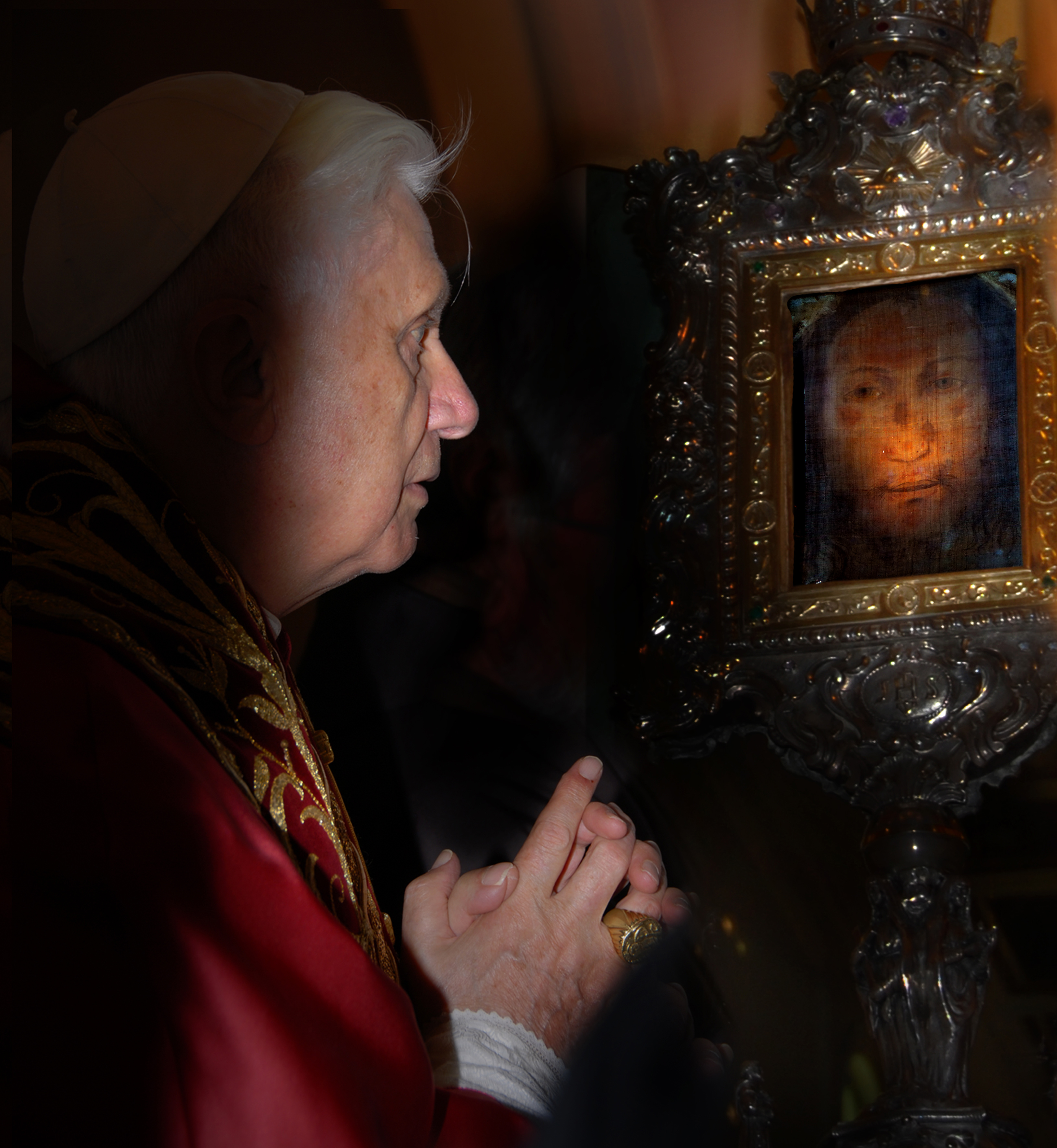
Pope Benedict XVI contemplates the Face on the Veil of Manoppello. September 1, 2006. (Photo: Paul Badde/EWTN)
“Our whole life should be directed toward encountering Him,” writes Benedict, “toward loving Him; and in it, a central place must be given to love of one’s neighbor, that love that in the light of The Crucified One, enables us to recognize the Face of Jesus in the poor, the weak, the suffering.” The pope goes on to explain the fruits of this contemplation: “From contemplation of the Face of God are born, joy, security, Peace.”
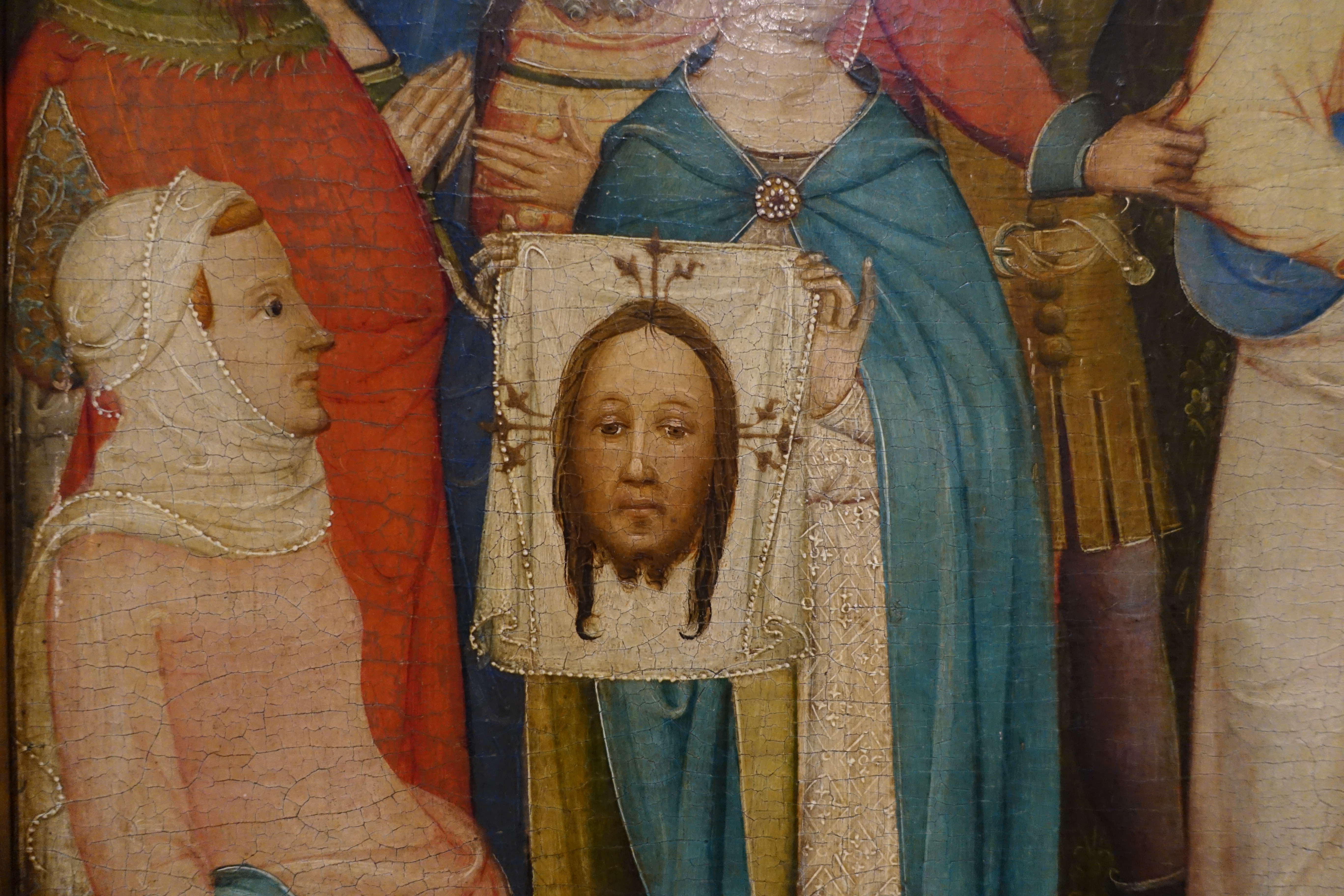
St. Therese of the Child Jesus and the Holy Face, Doctor of the Church, teaches us the “Little Way” of child-like confidence in God.
To be one of God’s “little ones” is to be the greatest in His Kingdom; requiring child-like confidence, humility and trust in God’s all-mighty power, mercy, and love. In the Gospel of Matthew we read: “Who is the greatest in the kingdom of heaven?” He called a child over, placed it in their midst, and said, “Amen I say to you, unless you turn and become like children, you will not enter the kingdom of heaven. Whoever humbles himself like this child is the greatest in the kingdom of heaven. and whoever receives one child such as this in my name receives me. Whoever causes one of these little ones who believe in me to sin, it would be better for him to have a great millstone hung around his neck and to be drowned in the depths of the sea… See that you do not despise one of the little ones, for I say to you that their angels in heaven always look upon the face of my heavenly Father.” (Mt. 18:2-7, 10)
The Holy Angels have worshipped and served Christ from the Incarnation to the Resurrection, and when He comes again, they will announce the Last Judgement. “With their whole beings the angels are servants and messengers of God. They ‘always behold the Face of my Father who is in heaven (Mt. 18:10) ‘they are the mighty ones who do his word, ‘hearkening to the voice of His word.(Ps 103:20)'” (CCC 329)
“When the dragon saw that it had been thrown down to each, it pursued the woman who had given birth to a male child.” (Rev. 12:13)
“Then war broke out in heaven; Michael and his angels battled against the dragon. Although the dragon and his angels fought back, they were overpowered and lost their place in heaven. The huge dragon, the ancient serpent known as the devil or Satan, the seducer of the whole world, was driven out; he was hurled down to earth and his minions with him” (Rev. 12)
“Who is like God!” St. Michael, holds before us the Holy Face of Jesus. (Sculpture by Cody Swanson, Old St. Patrick’s New Orleans. photo: Patricia Enk)
The center of this battle raging between Angels and demons –in heaven and on earth — is the Incarnate Word of God made flesh, Jesus Christ. It is Jesus–in His “little ones”–who is rejected, reviled and persecuted. The devil, who knows his time is short, wants to obliterate the Face of God, not only in churches that have vandalized and desecrated, but in the souls of human beings. The battle lines have been drawn between the culture of life and the culture of death–especially of the littlest and weakest among us. The devil’s particular object of hatred is the woman and the unborn. Some can no longer recognize that a child in the womb is a human being. Many persons reject their God-given identity as male and female. Racial hatred is causing deeper and deeper division, and human trafficking increases as humanity is blinded to the Face of God in their neighbor made in His image and likeness. Now Ai presents new threats to humanity, reducing a human person to a number; an algorithm.
The Holy Angels and the Saints point us to contemplation of the Face of Christ as a sign of hope for the world. Like the Holy Angels we should keep our eyes fixed on the Face of God in worship; Like St. Therese, and all the Saints, we need to become like a little child, who despite the darkness, surrenders to the crosses of life, and seeks the Face of God in humility and trust. We must also be like a “Veronica,” that is “a true image” of the Face of Jesus in our charity and compassion for others. Of course, the best example is set by Our Blessed Mother, who always looked at the Holy Face of her Son through the veil of faith; “Blessed is she who believed” in hope “that what was spoken to her by the Lord would be fulfilled!” (Luke 1:45) “To recite the Rosary is nothing other than to contemplate with Mary the Face of Christ.” (Rosarium Virginis Mariae)
The Face of the Risen Christ is the banner of victory over sin and death!
“Then I heard a loud voice in heaven say: ‘Now have salvation and power come, the reign of our God and the authority of his Anointed One. For the accuser of our brothers is cast out, who night and day accused then before our God. They defeated him by the blood of the Lamb and by the word of their testimony; love for life did not deter them from death. So rejoice, you heavens, and you the dwell therein! But woe to you, earth and sea, for the devil has come down upon you! His fury knows no limits, for he knows his time is short’ (Rev 12).”
St. Michael Prayer — St. Michael, the Archangel, defend us in battle. Be our protection against the wickedness and snares of the Devil. May God rebuke him, we humbly pray, and do thou, O Prince of the heavenly hosts, by the power of God, thrust into hell Satan, and all the evil spirits, who prowl about the world seeking the ruin of souls. Amen.
Prayer to Our Lady of the Angels, who, by her great humility, crushed the head of Satan:
Sublime Queen of Heaven, exalted Lady of the Angels, you have the power and commission given by God to crush the head of Satan. Therefore, we humbly beseech you to send to our aid your heavenly legions, so that, under your command and by your power, they may pursue the hellish spirits, fight them everywhere, ward off their impudent attacks, and fling them back into the abyss. Who is like God? You holy angels and archangels, defend and protect us. Good, kind mother, you remain always our love and our hope! Mother of God, send us the holy angels to defend us and keep the evil one far from us. Amen.
“This face is that of Jesus, and it is a great miracle, always love him.”
–Servant of God, Padre Domenico da Cese
Servant of God, Padre Domenico da Cese 1915-1978
In the photo above Padre Domenico appears to intently contemplate a square, white cloth–but the seemingly blank cloth is actually so much more–it is something miraculous! You will see in the many photos below, by Alexandra Prandell and Paul Badde, that what at first appears as a plain white cloth is actually the Holy Veil of Manoppello which bears the Holy Face of Jesus–on a veil so sheer that one could read a book through it–and yet, according to the the light and position of the viewer, the Holy Face of Jesus is visible. Padre Domenico personally believed that the veil was the Sudarium Veil placed on the Face of Jesus in the Tomb in addition to other burial cloths, and that the veil captured the first moment of the Resurrection.
Looking through the Veil of the Holy Face one may see through the open doors of the Basilica. (Photo: Alexandra Prandell)
Holy Face becomes visible in the light. (Photo: Alexandra Prandell)
The Holy Face as it appears in dim light. (Photo: Alexandra Prandell
The byssus Veil of Manoppello, which is thought to be one of the burial cloths of Jesus, photo: Paul Badde/EWTN
The Servant of God, known as Padre Domenico da Cese, was born on March 27, 1905; he was baptized Emidio Petracca (named for St. Emidio (c.279-309 AD), the saint who is invoked for protection in earthquakes.) Padre Domenico’s love for the Blessed Mother was profoundly shaped by a childhood miracle: When little Emidio was four years old he became very ill with what was thought to be polio. His distraught mother placed him on the altar in a church dedicated to Mary, Mother of God, and after begging her intercession, his legs suddenly began to move and his paralysis was cured.
As a nine year old boy in 1915, young Emidio predicted the devastating Avenzzano earthquake in Italy. A 6.7 earthquake hit that region the next morning, killing more than 30,000 people, including two of his sisters and burying young Emidio and his father in the rubble of their church. A man he didn’t know pulled him from the rubble to safety, whose face he later recognized on his first visit as a friar to the Shrine of the Holy Face in Manoppello. When Padre Domenico knelt before the “Il Volto Santo” or Face of Jesus, the miraculous veil, he exclaimed, “This is the man who saved me from the rubble!”
A short time after Padre Domenico arrived in Manoppello the people were saying, “We have received a Saint!”
St. Pio called the Holy Face Veil of Manoppello “The greatest relic of the Church.”
Like his friend and fellow Capuchin, St. Padre Pio, the humble Padre Domenico was also a mystic and stigmatist who had extraordinary gifts of the Holy Spirit; such as the gift of “reading souls” and bi-location. Penitents who traveled from Manoppello to go to confession with Padre Pio were admonished by him for traveling such a distance when they already had a holy priest in Manoppello. He told them, ” Why did you come all the way here, so far? You’ve got a priest there, my spiritual son, he’s like me!” St. Padre Pio’s last documented case of bi-location, just before he died, was before the relic of the Holy Face of Jesus at the shrine of “Il Volto Santo” in Manoppello, where Padre Domenico was the rector. Padre Pio had told his fellow Capuchins that the Holy Face of Manoppello was the greatest relic of the Church.
In September of 1968, as Padre Pio lay dying in San Giovanni Rotundo (which is about 200 km south of Manoppello in Italy), his friend Padre Domenico da Cese had just unlocked the doors of the shrine of the Holy Face one morning, and was astounded to find Padre Pio in prayer, in the choir behind the altar before the sacred image of the Face of Jesus. St. Padre Pio spoke then to Padre Domenico saying, “I do not trust myself any more. I am coming to an end. Pray for me. Good-bye until we meet in Paradise.” Twenty-four hours later St. Padre Pio died in his cell in San Giovanni on September 23, 1968. Testimony was later given by witnesses that Padre Domenico da Cese was seen at Padre Pio’s funeral (another case of bi-location). A film was even taken (here) which shows Padre Domenico walking slowly in Padre Pio’s funeral procession, even though Padre Domenico had never left the shrine in Manoppello.
Padre Domenico shared with everyone his ardent love and devotion for the Holy Face of Manoppello, also known as “Il Volto Santo” — a miraculous veil which transmits supernatural beauty, and at the same time indescribable suffering. It is the Face of Mercy, Love and Peace. He would tell pilgrims, “This face is that of Jesus, and it is a great miracle, always love him.” Padre Domenico had done much research on the sheer byssus veil, the image of which is not made with any paint or pigment, and compared the iridescent quality of the colors to the wings of butterflies which also reflect iridescent color naturally. He also made studies of the Face on the Shroud of Turin, and its similarities to the Holy Face of Manoppello. He believed with all his heart that it was the face of the same man, and he was convinced that, like the Shroud of Turin, the Veil of Manoppello was one of the many burial cloths in Jesus’s tomb–the holy sudarium which covered the Face of Jesus in death–and also miraculously bears witness to His Resurrection.
The Holy Veil of Manoppello (Photo: Alexandra Prandell)
On September 13 of 1978 while visiting Turin to venerate the Holy Face on the Shroud during a rare exposition, Padre Domenico, who was a giant of a man, was hit by the smallest car, a Fiat, as he was stepping out into a street. After suffering for several days in a hospital, and forgiving the man who had hit him, he died on September 17th, offering his life for the Holy Face on the Veil–the Face of the man who saved him as a child.
The penetrating and gentle gaze of the Holy Face of Manoppello, Italy Photo: Paul Badde/EWTN
Prayer for the intercession of Servant of God Padre Domenico da Cese
Oh God, you gave Padre Domenico the capacity of recognizing in the poor and the suffering the very Holy Face of your beloved Son, whose devotion he promoted with such zeal, through his intercession obtain for me the humility of heart, and simplicity of the little ones to whom you have revealed the secrets of the Kingdom, and in my hour of trial give me the strength to overcome the seductions of evil in order to put Satan to flight, and to merit, at the end of my earthly pilgrimage, to be able to contemplate the Holy Face of Jesus in the glory of paradise.
Though unworthy as I am of your Divine favors, I ask that you might grant, through the intercession of your faithful servant Padre Domenico, the grace I humbly ask of you…
Amen.
For more about Servant of God Padre Domenico da Cese, including books, and prayer cards: https://www.padredomenico.org
+++
To learn more about his incredible life and passionate love for the Holy Face you can watch this wonderful video of his life:
or this wonderful, short video about Padre Domenico (here).
Video of superimposed images of the face on Shroud of Turin and the Veil of Manoppello, Italy